
Most IMGs ruin their USCE case logs by tracking the wrong things. Or tracking nothing at all.
If you treat your case log like a random diary instead of a strategic document, you are throwing away one of the few competitive edges you can still control as an IMG.
Let me break this down very specifically.
Why Your Case Log Matters More As an IMG
US grads get the benefit of the doubt. You do not.
Programs look at you and silently ask three questions:
- Can this person function in the US system?
- Do they actually see patients, or just shadow around?
- If I rank them, am I going to regret it halfway through PGY-1?
Your case log, if done properly, answers all three.
Not in a formal way (you are not uploading a giant spreadsheet to ERAS), but in a background way that touches everything:
– How you answer application questions
– How precise your personal statement feels
– The detail in your LOR writers’ comments
– How specific and “real” your interview answers sound
Serious IMGs treat their case log like raw material for the entire application. The weak ones try to “remember some cases” the night before they write their personal statement.
Guess which group gets interviews.
Core Principles: What Makes a Case Log “IMG-Friendly”
Before I give you templates and fields, you need the rules of the game.
An IMG-friendly case log must do four things:
- Prove you did real, hands-on USCE
- Show you understand US-style documentation and reasoning
- Demonstrate progressive complexity and responsibility
- Give you reusable, concrete stories for applications and interviews
This means your log cannot be:
- Just a list of diagnoses
- Just procedures you saw
- Just “interesting” cases without context
It has to look like you worked as close to an intern as your role allowed.
The Minimum Data You Should Track for Every Case
There are essential fields you log every time. If you skip these, you are wasting your effort.
At a minimum, each entry should include:
- Date
- Rotation site and attending
- Setting (inpatient ward, ICU, outpatient clinic, ED, etc.)
- Your role (observer, active participant, wrote note, presented, scrubbed, etc.)
- Chief complaint
- Final (or working) diagnosis
- Level of involvement (history, exam, note, orders, plan discussion, follow-up)
- Key learning point / reflection
You do not need full H&Ps. That is not the point. The point is to build a structured archive of “I actually did things in a US hospital.”
To make this concrete, here is what a stripped-down but high-yield structure looks like.
| Category | Key Fields to Capture |
|---|---|
| Logistics | Date, Site, Attending, Rotation Type |
| Setting | Inpatient/Outpatient/ED/ICU/Subspecialty |
| Clinical Core | Chief Complaint, Diagnosis, Disposition |
| Your Role | History, Exam, Note, Presentation, Orders |
| Skills | Procedures, Documentation, Communication |
| Reflection | Learning Point, Systems/Guideline Used |
How Detailed Should Each Entry Be?
You are not writing a novel. You are building a searchable index.
Most cases: 3–6 bullet-type items or short sentences.
Select cases (the ones that might become PS/interview material): more detailed, one short paragraph.
Here is a realistic example for internal medicine:
07/15/2026 – University Hospital – IM Inpatient – Attending: Dr. Patel
Setting: Telemetry floor
Chief Complaint: Shortness of breath
Diagnosis: Acute decompensated HFrEF, atrial fibrillation with RVR
My role: Obtained full history, performed focused exam, presented to resident, wrote initial progress note (reviewed and edited by resident), followed patient 4 days
Skills: Interpreted CXR and basic echo findings with resident, reconciled meds, counseled on sodium/fluid restriction
Learning: Applied ACC/AHA HF guidelines to adjust GDMT; learned to titrate IV furosemide and manage rate control with IV metoprolol
That single entry can be repurposed into:
- A PS paragraph on heart failure care in the US vs home country
- An interview answer about managing complex inpatients
- A talking point for “tell me about a patient you followed over time”
You log once. You reuse repeatedly.
What to Track by Rotation Type (and What Programs Care About)
Different specialties want proof of slightly different competencies. Your core structure stays the same, but you emphasize different things.
Internal Medicine / Family Medicine
What programs want to see indirectly:
- Breadth of diagnoses (chronic disease, acute admissions, geriatrics, multi-morbidity)
- Longitudinal follow-up
- Comfort with US outpatient and inpatient systems
In your log, pay attention to:
- Chronic disease management: diabetes, hypertension, COPD, CHF, CKD
- Preventive care: cancer screening, vaccinations, risk factor modification
- Polypharmacy and medication reconciliation
- Complex social situations: adherence issues, lack of insurance, language barriers
Good entries will mention things like:
“Adjusted basal-bolus insulin regimen using carbohydrate counting education,”
or
“Participated in Medicare annual wellness visit, reconciled meds, updated preventive screening.”
These phrases scream “I understand primary care in the US” in ways a generic “saw patients with diabetes” never will.
Surgery / Surgical Subspecialties
Here, they care a lot about:
- Exposure to the OR and pre/post-op care
- Specific procedures you scrubbed on
- Basic technical tasks (suturing, knot tying, sterile technique)
Case log add-ons for surgery:
- Procedure name (CPT-like, but plain language is fine)
- Your role: observer / scrubbed in / assisted with retraction / closed skin / stapled / placed Foley, etc.
- Perioperative duties: pre-op H&P, post-op checks, drain management, wound checks
Example:
09/02/2026 – Community Hospital – General Surgery – Attending: Dr. Nguyen
Setting: OR + Post-op floor
Procedure: Laparoscopic cholecystectomy for symptomatic cholelithiasis
My role: Scrubbed, assisted with retraction, helped with port placement, closed skin with simple interrupted sutures under supervision
Periop: Wrote pre-op H&P draft, assisted with post-op day 1 assessment and discharge instructions
Learning: Reviewed indications/contraindications, recognized key anatomic landmarks (Calot triangle), learned post-op pain and DVT prophylaxis protocols
That is an “I functioned in the US OR” entry. Much stronger than “assisted in several surgeries.”
Pediatrics
Programs want reassurance that:
- You can communicate with both children and parents
- You understand vaccination schedules and developmental milestones
- You grasp US child-protection and consent norms
Track:
- Age group (infant, toddler, school-age, adolescent)
- Setting: outpatient well-child, ED, inpatient, NICU
- Growth/development issues seen or assessed
- Vaccine discussions and catch-up schedules
- Any safeguarding / CPS involvement you observed
Psychiatry
They look for:
- Experience with US psychiatric emergencies and safety protocols
- Comfort with mental status exams
- Collaborative work with multidisciplinary teams (social work, psychology, nursing)
Include:
- Setting: inpatient psych, C/L, outpatient clinic, ED psych
- Type of presentation: mood disorder, psychosis, substance use, suicidality
- Tools: PHQ-9, GAD-7, Columbia-Suicide Severity Rating Scale, etc.
- Your role in safety planning, collateral history, and team discussions
I have seen strong psych applicants use their logs to give razor-sharp interview answers on how involuntary holds differ between their home country and the US. That comes from structured tracking.
The “Responsibility Gradient”: Show You Did More Than Shadow
The single most IMG-friendly element you can bake into your log is explicit documentation of your responsibility level.
You want to be able to show progression across rotations:
- Early USCE: more observation, basic histories, simple notes
- Later USCE: full H&Ps, independent presentations, management discussions
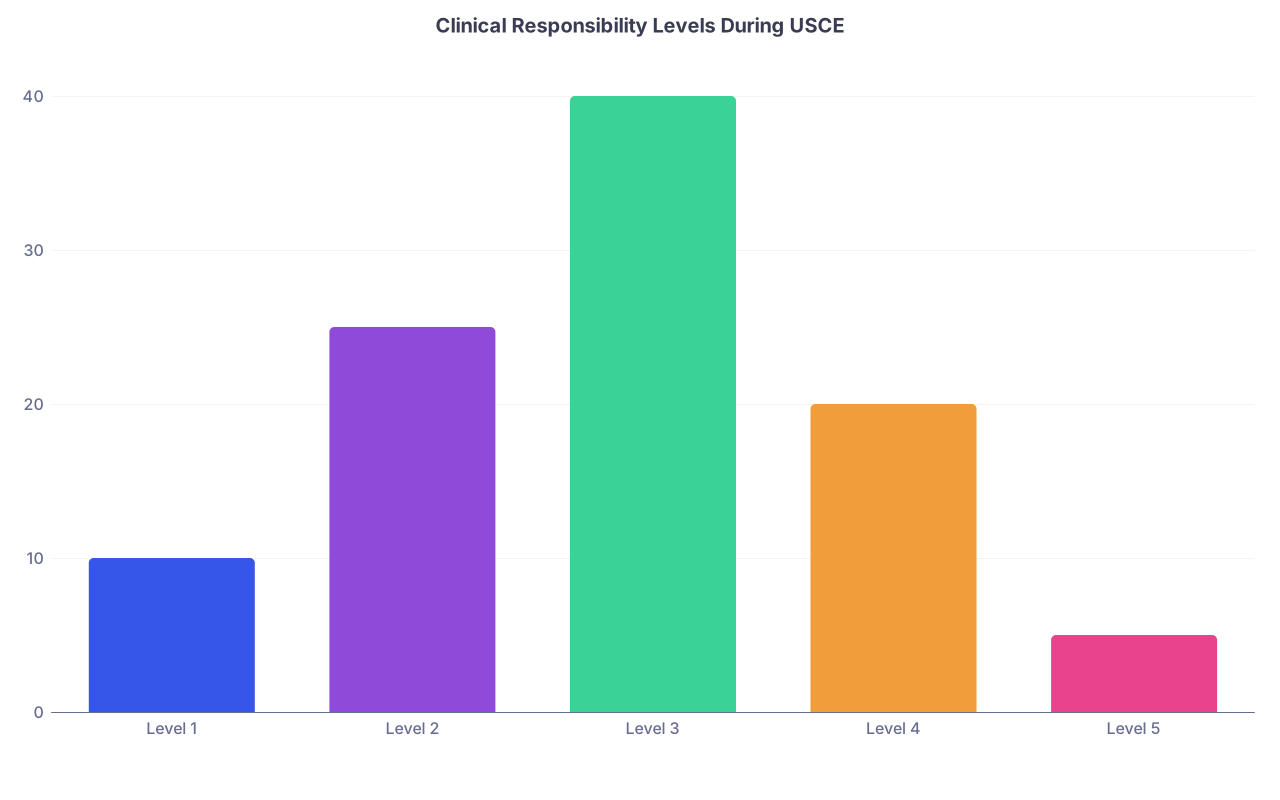
Build a simple scale into your log:
1 – Observer only (no patient interaction)
2 – Took history / partial exam under direct supervision
3 – Performed full H&P and presented to team
4 – Wrote notes in EMR (even if not officially signed as yours)
5 – Participated in management decisions / follow-up planning
| Category | Value |
|---|---|
| Level 1 | 10 |
| Level 2 | 25 |
| Level 3 | 40 |
| Level 4 | 20 |
| Level 5 | 5 |
You do not need to overcomplicate this. Just add one line per case:
Responsibility level: 3 (full H&P + presentation)
Later, you can look back at the distribution and say, very credibly in an interview:
“I completed approximately 120 patient encounters at level 3 or higher, where I took full histories, performed exams, and presented assessment and plans to the team.”
That sounds like someone who did actual work. Not a tourist in a white coat.
Track These 7 High-Yield “Hidden” Elements
Most IMGs only track diagnoses and procedures. That is fine for a logbook, useless for an application.
Here are seven categories almost nobody tracks well, which massively strengthen IMG applications when documented consistently.
1. Guidelines and Protocols Used
US programs love to see that you think in guideline language.
In your learning/reflection line, explicitly note when you applied or discussed:
- ACC/AHA, ADA, GOLD, JNC, IDSA, ACOG, NCCN, etc.
- Hospital-specific protocols: sepsis bundle, DKA pathway, stroke alert process
Example: “Applied 2021 ADA guidelines to modify outpatient DM regimen.”
This is gold for interviews: “Tell me about how you keep up with medical knowledge.”
2. Communication and Difficult Conversations
Any time you:
- Broke bad news (even if you only observed but reflected)
- Discussed code status/goals of care
- Used an interpreter
- Dealt with an angry family
Add it. One simple line.
Patterns of these entries give you excellent, real stories for questions like “Tell me about a difficult patient interaction.”
3. Systems Issues and Safety Events
You are entering a system that worships “systems-based practice” and “quality improvement.”
Log:
- Near-misses you saw (wrong dose caught before administration)
- Handover issues
- EMR glitches affecting care
- Any QI projects or audits you touched during the rotation
Later, you might turn this into a QI-themed interview answer, which most IMGs wing poorly.
4. Interprofessional Collaboration
Do not just track physicians.
Note specific times you worked with:
- Nurses
- Pharmacists
- Physical/occupational therapists
- Case managers / social workers
Example: “Coordinated with PT and case manager to plan safe discharge and home PT for post-op hip fracture patient.”
That line alone is more US-centric than ten generic “interesting cases.”
5. Follow-Up and Longitudinal Care
Programs care whether you can think beyond admission.
Flag whenever you:
- Followed a patient for several days
- Saw a patient in clinic after hospital discharge
- Called to check lab results or imaging and adjusted management
Make a symbol or tag in your log for “followed >3 days” or “saw in multiple settings.” These become great continuity-of-care stories.
6. Technical/Procedural Skills Appropriate to Level
For IMGs, overclaiming procedures is a classic error. Do not do it.
Instead, track realistically:
- What you observed
- What you assisted with
- What you physically did under supervision
And always specify your role clearly.
Better to have:
“Observed 15 central lines, assisted in sterile prep x3, aspirated fluid for arthrocentesis x1 under supervision”
than
“Performed multiple procedures” with no detail.
7. Cultural and System Differences
You are an IMG. Use that.
Any time you notice:
- A process very different from your home country
- A cultural expectation around consent, autonomy, privacy that surprised you
Note it briefly. These reflections turn into sophisticated answers about adapting to the US system.
How to Structure and Maintain the Log Without Losing Your Mind
You are busy. Call is brutal. Clinics run late. If you do not have a system, your case log dies by week 2.
The Non-Negotiable Rule: Daily Capture
You must capture something the same day.
But “capture” can be rough:
- Jot quick notes on your phone (HIPAA-safe: no names, no MRNs, no dates of birth)
- Keep a small pocket notebook with initials only and chief complaint
- Email yourself a daily summary with de-identified cases
Then, once or twice a week, transfer to your structured log (Google Sheet, Excel, Notion, whatever).

| Step | Description |
|---|---|
| Step 1 | See Patients |
| Step 2 | Same Day Rough Notes |
| Step 3 | Deidentify Info |
| Step 4 | Weekly Structured Entry |
| Step 5 | Flag High-Yield Cases |
| Step 6 | Use for PS and Interview Prep |
The people who try to “catch up” a month later end up making up details. Interviewers can smell it.
Simple, Effective Spreadsheet Layout
Columns I recommend:
- Date
- Site / City / Type (academic vs community)
- Rotation (IM, FM, Surgery, etc.)
- Setting (inpatient, outpatient, ICU, ED)
- Attending
- Chief Complaint
- Diagnosis
- Responsibility Level (1–5)
- Core Tasks (H, E, Note, Presentation, Orders discussion, Procedure)
- Guidelines/Protocols Used
- Special Tag (Communication, Systems, Procedure, Follow-up, Ethics)
- Learning / Reflection (1–2 lines)
That is it. You may end up with 200–400 entries across all USCE. Completely manageable.
De-Identification and HIPAA: Do Not Be the Cautionary Tale
I have watched one IMG nearly lose a letter because they were proudly showing a “detailed” case log with MRNs and full dates in an email screenshot.
Do not be that person.
Basic rules:
- Never record names, full dates of birth, addresses, phone numbers, MRNs
- Do not store screenshots from EMR unless your institution explicitly allows anonymized teaching use (most do not)
- For rare diseases or very unique cases, be especially vague with time/place combinations
You only need this level of detail:
“65-year-old male with new diagnosis of colon cancer admitted in March for GI bleed at university hospital.”
That is enough for your memory and completely safe.
Turning the Case Log into Application Firepower
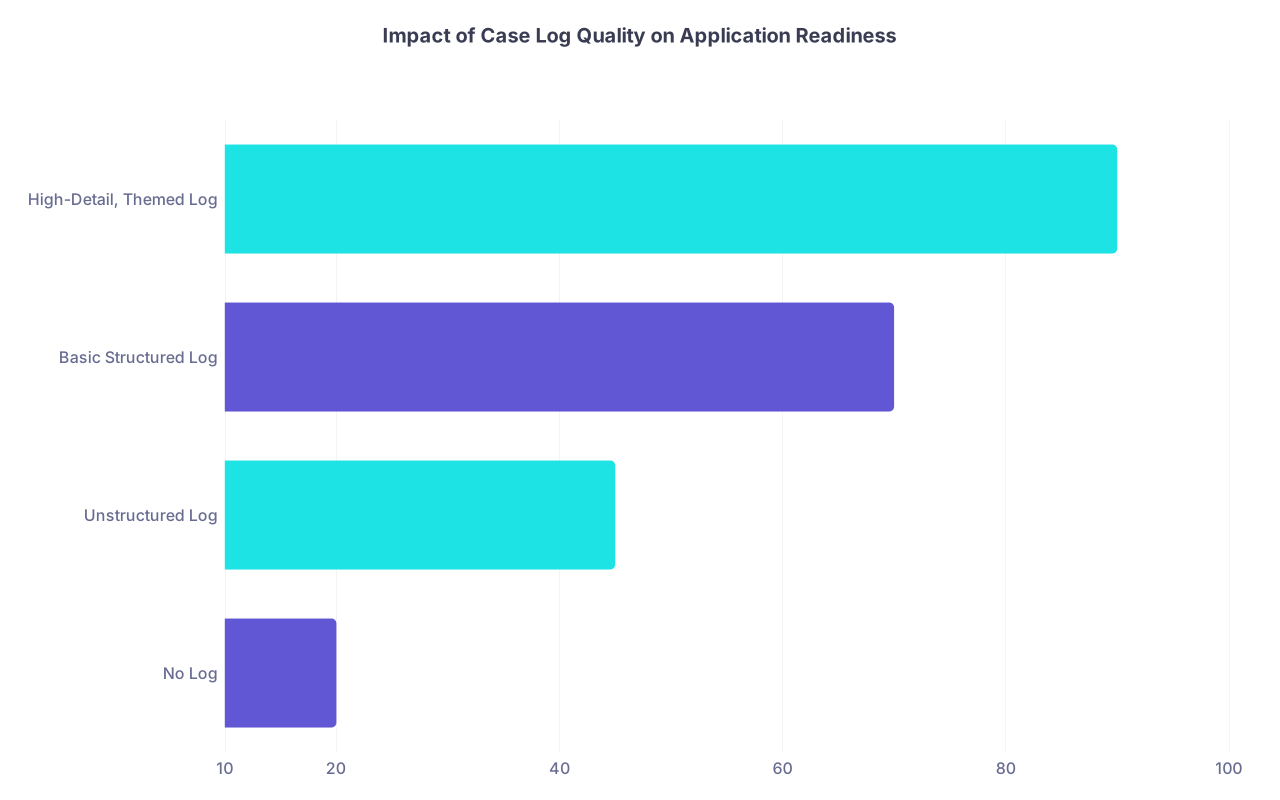
If you stop at “I have a log,” you are missing the real value.
Here is how a strong IMG actually uses it.
1. Personal Statement
You should not be inventing PS content from scratch. You should be scrolling your log, scanning for themes:
- Repeated exposure to a type of patient (e.g., heart failure, underserved, geriatrics)
- Cases where you had strong emotions or ethical tension
- Moments when US system differences hit you hard
Pick 2–3 anchor cases and reread those entries. Use the real details (without identifiable data) to ground your PS in reality.
Programs are tired of PSs that sound like ChatGPT hallucinations mixed with cliché “since I was a child.” Your log is your antidote.
2. ERAS Experiences Section
You will list “US Clinical Experience – Internal Medicine, X Hospital” etc.
Knowing your real case volume and roles lets you write much more specific bullets:
Instead of:
“Observed inpatient care and presented patients on rounds.”
You can say:
“Completed >60 inpatient encounters at level 3 or higher, performing full histories, physical exams, and oral presentations to the medical team; drafted daily notes in EMR under supervision.”
That comes directly from your responsibility-level tracking.
3. Letters of Recommendation
- Offer to send them a very short “case highlights” summary from your log: 5–10 cases where you were particularly involved.
- Attending reads it, remembers you better, mentions your hands-on participation more concretely.
I have seen this transform vague “hardworking, punctual” letters into “He independently gathered a complex history on a patient with decompensated cirrhosis, synthesized the information, and presented a thoughtful assessment and plan.”
4. Interview Prep
This is where the log pays off the most.
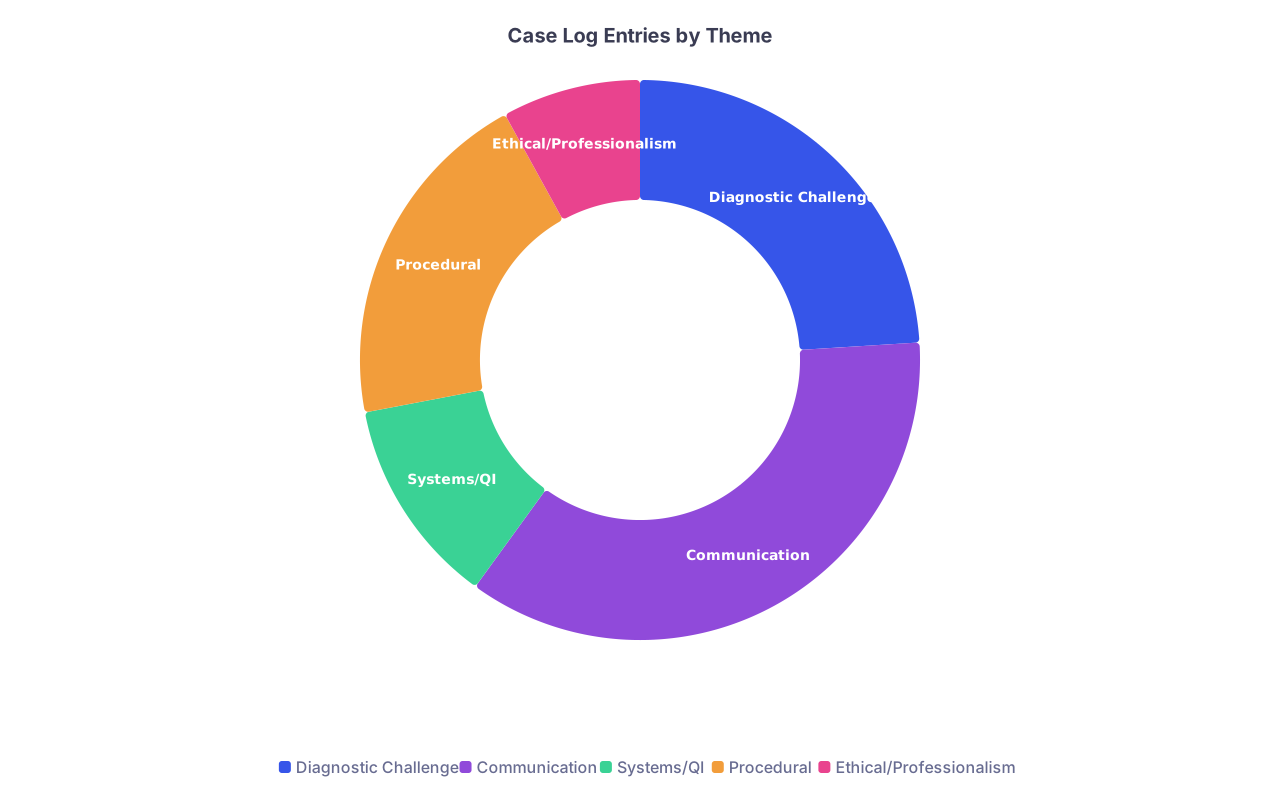
Sit down with your spreadsheet and categorize cases by theme:
- A challenging diagnostic dilemma
- A difficult communication or cultural issue
- A time you made or caught a mistake
- A time you worked effectively in a team
- A time you dealt with an ethical question
Mark 1–2 cases in each category. Those become your prepared answers for:
- “Tell me about a difficult patient.”
- “Tell me about a mistake you made.”
- “Describe a time you had a conflict on a team.”
Your answers will be concrete, time-anchored, and obviously real. Interviewers remember that.
| Category | Value |
|---|---|
| Diagnostic Challenge | 30 |
| Communication | 45 |
| Systems/QI | 15 |
| Procedural | 25 |
| Ethical/Professionalism | 10 |
What “Good” Volume Looks Like (And What Is Fake)
Programs will not ask for your raw log, but they will infer.
Typical realistic numbers over 4–6 weeks of active USCE in a busy service:
- Internal Medicine inpatient: 50–100 distinct patient encounters at some level
- Outpatient clinic (FM/IM): 80–150 patient visits observed/assisted
- Surgery: 20–40 OR cases, more ward/clinic contacts
If you claim “over 500 inpatient encounters in 4 weeks” in an interview, you sound unserious or dishonest. Your log protects you from exaggeration because your numbers are grounded.

One Example of a Simple, Powerful Case Log Template
If you want a bare-bones but high-yield column setup, it could be:
- Date
- Site / City
- Rotation / Specialty
- Setting (IP/OP/ED/ICU/OR)
- Attending
- Chief Complaint
- Diagnosis
- Responsibility Level (1–5)
- Tasks (H/E/Note/Present/Procedure/Follow-up)
- Guidelines/Protocols (short text)
- Tag (Comm / Systems / Procedure / Ethics / Follow-Up)
- Learning Point (1–2 sentences)
That is it. Copy-pasteable into any spreadsheet.

Common Mistakes IMGs Make With Case Logs
I will be blunt. These errors make your effort almost useless.
- Logging only “interesting” rare cases. Programs care more about bread-and-butter medicine.
- Writing long narratives but no structure. You cannot quickly extract anything when you actually need it.
- Including identifiable information. That can legitimately damage your application.
- Backfilling logs from memory weeks later. They become vague, generic, and repetitive.
- Never actually using the log for PS, ERAS, or interviews. A case log sitting in Google Drive helps nobody.
Avoid these, and you already outperform most of your competition.
How Early Should You Start This as an IMG?
Ideally: from your first USCE day.
Realistically: start now, even if you already finished some rotations.
For past rotations, reconstruct what you can:
- Email yourself / check old schedules to remember attendings and sites
- Build approximate case numbers and a few anchor cases you remember well
- Then move forward with real-time tracking in your next rotation
You are not creating legal documentation. You are creating a memory scaffold.
| Category | Value |
|---|---|
| No Log | 20 |
| Unstructured Log | 45 |
| Basic Structured Log | 70 |
| High-Detail, Themed Log | 90 |
FAQs
1. Should I ever submit my full case log to programs or attach it in ERAS?
No. Programs do not want to sift through your spreadsheet. The log is for you: to write accurate, specific application content and to prepare for interviews. The only exception is if a very specific observership or externship program explicitly asks for a record of cases, in which case you format a clean, deidentified summary, not your raw daily notes.
2. How do I handle cases where my role was mostly observation?
You still log them, but clearly label responsibility as level 1–2 and be honest about your role. Observation is not useless; some of those cases will still teach you guidelines, systems, or communication strategies. Just do not oversell them in your application. When describing “hands-on” experience, rely mainly on level 3–5 cases.
3. Is it better to log fewer cases in more detail or more cases with less detail?
If you must choose, favor breadth with structured brevity. Aim to capture all or most encounters in a minimal format, then select perhaps 20–30 key cases to annotate in more depth for personal statement and interview purposes. The combination gives you both credible numbers and rich stories.
4. What if my USCE is mostly outpatient clinic—will my case log still help?
Yes, if you lean into what outpatient does best. Track chronic disease management, preventive care, continuity, behavioral change counseling, and social determinants of health. Programs in IM, FM, and many other fields value outpatient experience highly. A well-structured outpatient case log often looks more “US system aware” than a chaotic inpatient month where the student just followed the team around.
Key Takeaways:
- A serious, structured case log is one of the few high-yield tools an IMG fully controls during USCE.
- Track not only diagnoses and procedures, but your responsibility level, guidelines used, communication challenges, and systems issues.
- Use the log aggressively—for your personal statement, ERAS entries, letters, and especially interview stories—so your application reflects real, specific US clinical experience, not vague claims.