
The biggest lie IMGs hear is that “you can worry about USCE and LORs later.”
If you are in your final year and thinking that, you are already late.
This guide is your damage control plan.
You are an IMG in final year. You need:
- Solid, recent US clinical experience (USCE).
- At least 2–3 strong U.S. letters of recommendation (LORs).
- All aligned with your target specialty.
You do not have time to improvise. You need a month‑by‑month attack plan.
Below is a structured timeline assuming:
- You are in final year now.
- You plan to apply to the next ERAS cycle (September).
If your dates are shifted, keep the sequence and compress or extend as needed.
Big Picture: 12‑Month Strategy for USCE + LORs
At this point you should stop thinking in vague seasons (“I’ll do an observership in the spring”) and start thinking in exact months.
Overall Year Breakdown
- Months −12 to −10 before ERAS (Oct–Dec)
Research, shortlist, and book USCE. Fix documents, vaccinations, visa plan. - Months −9 to −7 (Jan–Mar)
Confirm rotations, fund them, and schedule them around exams and graduation. - Months −6 to −4 (Apr–Jun)
Start first rotations, learn U.S. hospital culture, secure your first LOR. - Months −3 to −1 (Jul–Sep)
Do highest‑yield rotations, get 2nd and 3rd LORs, finalize ERAS, ask for LOR uploads. - Months 0 to +3 (Oct–Dec, application season)
Make late rotations work for post‑submission LORs, interview prep, specialty backup planning.
Here is the brutal truth: the strongest IMG applications I have seen had USCE completed by June, so the LORs were ready and uploaded before September 15. That is your gold standard.
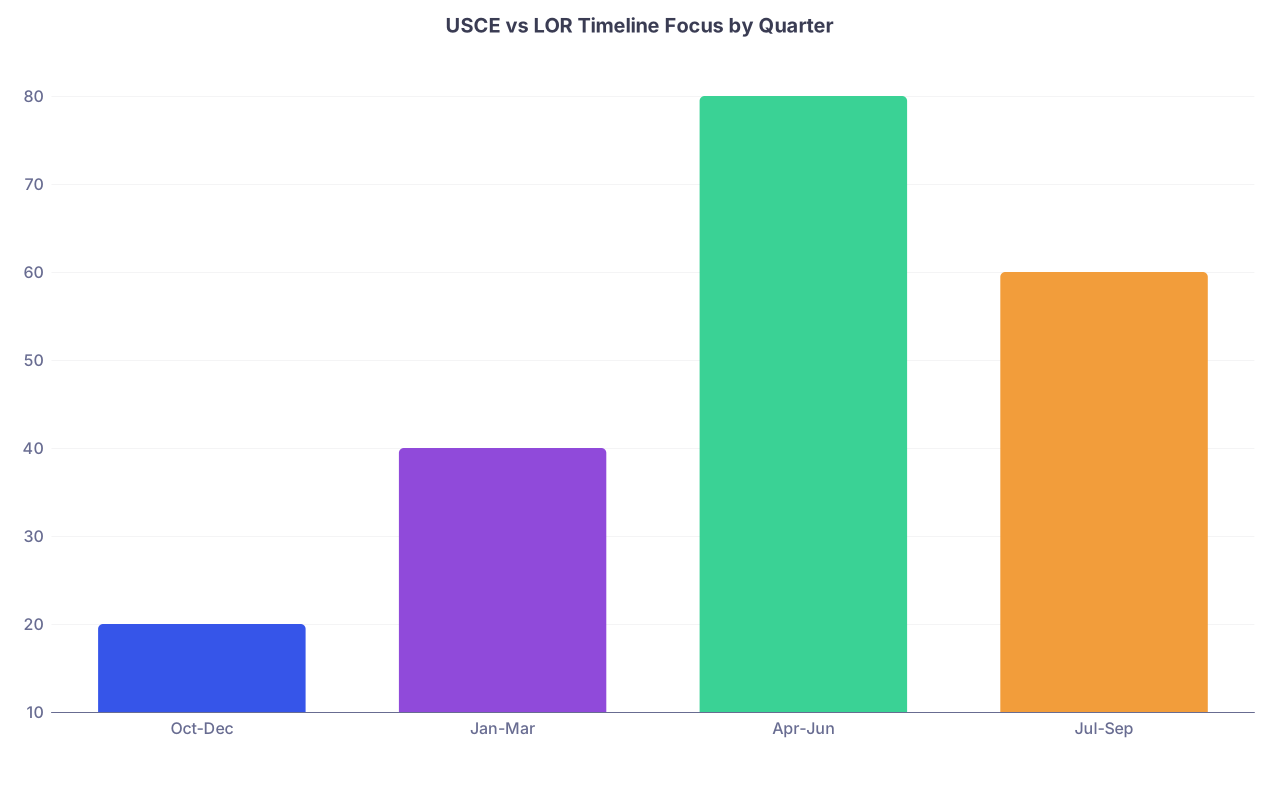
| Category | Value |
|---|---|
| Oct-Dec | 20 |
| Jan-Mar | 40 |
| Apr-Jun | 80 |
| Jul-Sep | 60 |
Months −12 to −10: Foundation – Research, Documents, and Strategy
At this point you should stop passively “collecting information” and start building a USCE pipeline.
Month −12 (October): Decide Your Target and Make a List
Choose 1–2 target specialties
You cannot chase everything. Pick:- One realistic specialty (e.g., Internal Medicine, Family Medicine, Pediatrics).
- Optional stretch specialty (e.g., Neurology, Psychiatry).
Map how many USCE blocks you realistically can do
- Each U.S. rotation is usually 4 weeks.
- Many IMGs manage 2–3 blocks in final year if they plan early.
- If you can only afford 1, then that 1 has to be flawless and ideally in your target specialty.
Start a USCE program spreadsheet
Columns:- Program name
- Type (hands‑on vs observership)
- Specialty
- Tuition/fees
- Visa type
- LOR policy (Who writes? How many? Uploaded to ERAS?)
- Application deadlines
- Start date options
Common sources:
- Hospital‑based visiting clerkships (e.g., some community programs tied to university affiliates)
- Paid externship companies (careful, quality varies)
- Individual physicians offering observerships (via networking, alumni, social media groups)
| Option Type | Hands-On | Cost Range/4 weeks | LOR Likelihood |
|---|---|---|---|
| University Clerkship | Yes | $2,000–$4,000 | High |
| Community Hospital Externship | Yes | $1,800–$3,500 | High |
| Office-Based Observership | No | $0–$1,000 | Medium |
| Remote/Tele-Observership | No | $200–$800 | Low |
Opinion: remote “observerships” are almost useless for LORs. Use them only if it is your absolute last resort.
Month −11 (November): Fix Your Documents and Health Requirements
At this point you should lock in your eligibility. Programs will not wait while you’re chasing immunizations.
You should:
- Get a passport valid for at least 2–3 years.
- Start or update vaccinations/lab titers:
- Hep B (with titer), MMR, Varicella, Tdap, Flu shot, COVID (as required).
- Get:
- Quantiferon TB test or PPD.
- Physical exam / health clearance from your school or physician.
- Request:
- Good standing letter from your medical school (many programs require this).
Simultaneously, begin email outreach:
- Your med school alumni who matched in the U.S.
- Any U.S. physicians you can connect to through professors or family.
The ask is simple:
“Can I do a 4‑week observership or externship with you between [Month] and [Month] in [specialty]?”
Month −10 (December): Shortlist and Apply for Rotations
By now you should not be “browsing.” You apply.
You should:
- Finalize 3–5 top USCE targets that:
- Match your specialty.
- Are within your budget.
- Offer a real chance at LORs.
Apply to more than the number of rotations you need. Some will reject you. Others will ghost you.
Aim to book blocks in:
- April–May–June: first USCE and first LOR.
- July–August: high‑yield LOR for ERAS.
- Optional: September rotation if your graduation allows, for later LORs.
Months −9 to −7: Lock Rotations, Plan Funding, Align with Exams
Now you move from “maybe” to “confirmed.”
Month −9 (January): Confirm Offers and Fix Dates
At this point you should be accepting offers and paying deposits.
You should:
- Check for:
- Overlaps with your final exams, thesis, graduation requirements.
- Visa appointment lead times (this alone can wreck your timeline).
- Prioritize:
- At least 1–2 rotations before ERAS opens (i.e., finished by June/July).
- At least 1 rotation in your strongest specialty.
If you have Step 1/2 outstanding, slot USCE after exam dates. Do not attempt full‑time USCE while studying intensively for a Step exam. You will underperform in both.
Month −8 (February): Build Your USCE Skill Baseline
You want to arrive in the U.S. not as a beginner, but as someone who can “plug in” quickly.
You should:
- Start reading U.S.‑style resources:
- Case Files series for your specialty.
- Hospital notes, H&P examples, SOAP notes.
- Practice:
- Presenting cases in 5 minutes out loud.
- Writing a short HPI + assessment/plan in English.
Create a simple USCE readiness checklist:
- Can I present a patient in under 2 minutes?
- Do I know basic U.S. abbreviations (PRN, BID, NPO, etc.)?
- Can I write a coherent one‑line summary?
If the answer is “no” to any of these, fix it now. Not when you are being watched by an attending.
Month −7 (March): Financial and Visa Logistics
At this point, you should be finalizing the money and visa side. No rotation happens without these.
You should:
- Calculate total estimated cost:
- Program fees + housing + local transport + food + visa fees + flights.
- Secure:
- Proof of funds if needed (bank statements, sponsor letters).
- For visas:
- Book your embassy appointment early. During busy seasons, slots vanish.
- Gather documents: DS‑160 (if B1/B2), invitation letters, enrollment verification, ties to home country.
If something looks impossible financially, this is the time to:
- Drop one rotation and concentrate on making fewer rotations excellent.
- Choose cheaper housing options (hostels, shared rooms, extended‑stay hotels) near hospitals.
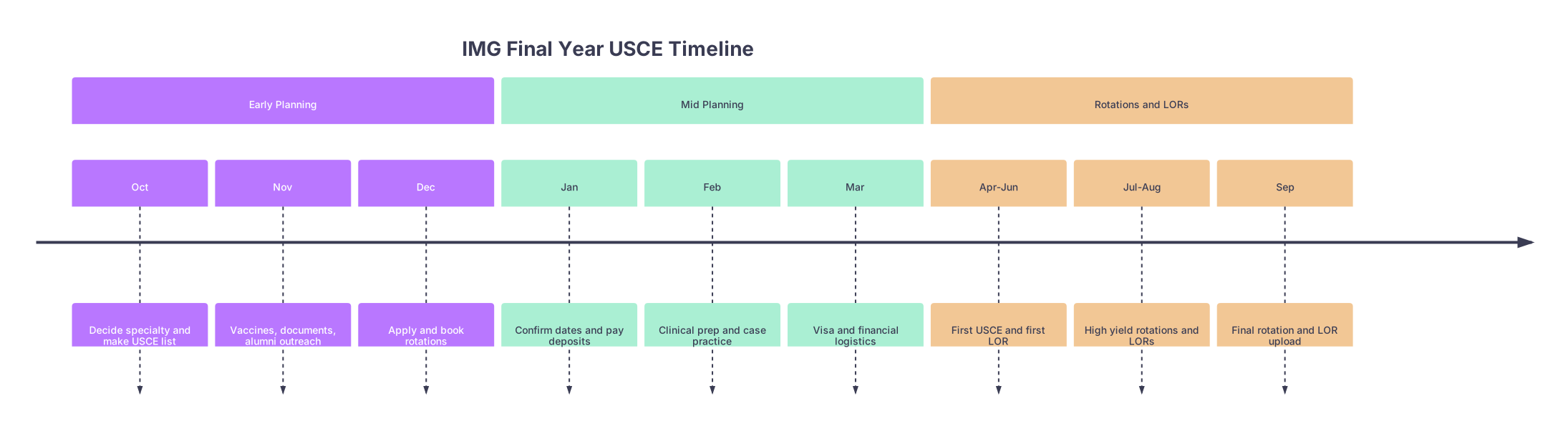
| Period | Event |
|---|---|
| Early Planning - Oct | Decide specialty and make USCE list |
| Early Planning - Nov | Vaccines, documents, alumni outreach |
| Early Planning - Dec | Apply and book rotations |
| Mid Planning - Jan | Confirm dates and pay deposits |
| Mid Planning - Feb | Clinical prep and case practice |
| Mid Planning - Mar | Visa and financial logistics |
| Rotations and LORs - Apr-Jun | First USCE and first LOR |
| Rotations and LORs - Jul-Aug | High yield rotations and LORs |
| Rotations and LORs - Sep | Final rotation and LOR upload |
Months −6 to −4: First USCE and First LOR
Now you are on the field. Performance matters.
Month −6 (April): Start Your First Rotation
At this point you should be on U.S. soil or about to arrive.
During the first 1–2 weeks, your job is to:
- Learn:
- How to pre‑round, write notes, and present in this specific hospital.
- The names of residents, fellows, attendings. Use them.
- Show:
- Punctuality (be early, not on time).
- Engagement (ask targeted questions, not “teach me everything”).
- Reliability (finish tasks, follow‑up, never disappear).
By week 3, you should be thinking strategically about LORs:
- Identify the attending who:
- Has seen you the most.
- Is known by residents to write strong letters.
- Signal interest:
- “I am applying to Internal Medicine this September; I would like to work closely with you to earn a strong letter.”
Month −5 (May): Convert Performance into a LOR
At this point you should be earning and then securing your first LOR.
By the final week of the rotation, you:
- Schedule a brief meeting or catch them after rounds:
- “Dr. X, I am applying to [specialty] this year. Based on our work together, would you feel comfortable writing me a strong letter of recommendation?”
- If they hesitate, that is a no. Thank them and pivot to another attending if possible.
When they agree:
- Provide:
- Your CV
- USMLE scores (if available)
- A short bullet list of cases/projects where you contributed.
- Clarify:
- That you will apply through ERAS.
- That you will send the ERAS LOR request link as soon as it is available.
Important: Do not ask the first week. Do not wait three months after you leave.
Month −4 (June): Debrief and Plan Your Strongest Rotations
Now you have:
- 1 completed USCE.
- Ideally 1 LOR promised.
You should:
- Honestly evaluate your performance:
- Did residents trust you with tasks?
- Did you present confidently by the end?
- Any negative feedback or awkwardness?
Fix issues before your July/August high‑stakes rotations:
- If your presentations were weak:
- Practice daily. Use cases from UWorld or AMBOSS.
- If your knowledge gaps were exposed:
- Build a daily 1‑hour reading habit in your specialty.
Also, confirm:
- Your next USCE dates (July/August).
- That your June transcripts / school paperwork will not block your ERAS registration in a few months.
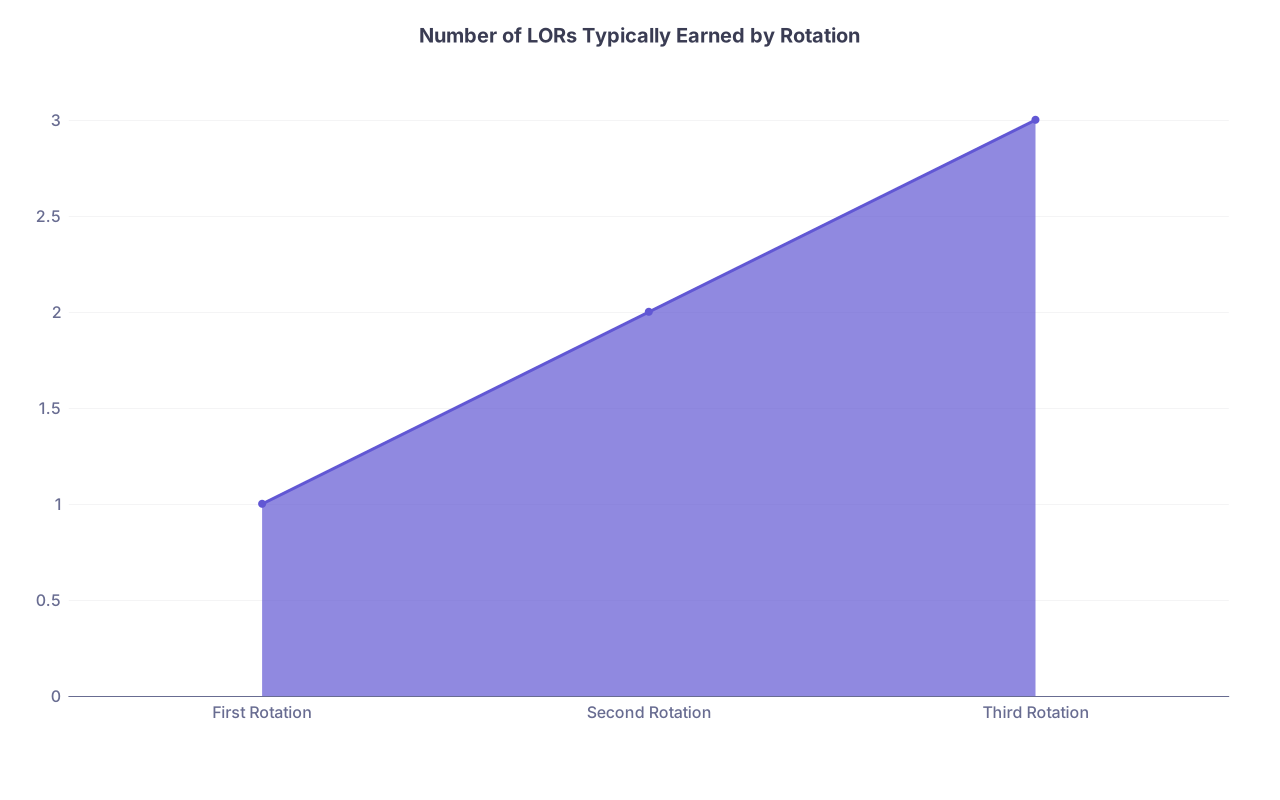
| Category | Value |
|---|---|
| First Rotation | 1 |
| Second Rotation | 2 |
| Third Rotation | 3 |
Months −3 to −1: High‑Yield Rotations, Final LORs, and ERAS
This is the critical window. You cannot afford mistakes.
Month −3 (July): High‑Impact Rotation #1
At this point you should be in a rotation tightly aligned to your specialty.
Example: IMGs applying to IM doing a July inpatient IM externship.
Your goals this month:
- Secure:
- Your second LOR from a U.S. physician in this specialty.
- Show:
- Improvement from your first rotation: smoother notes, more independent thinking, better communication.
- Start preparing ERAS content:
- Personal statement drafts (customized to specialty).
- Experience descriptions (including this and previous USCE).
During week 3–4:
- Repeat the LOR conversation:
“Dr. Y, I am applying to Internal Medicine this September. Would you feel comfortable writing a strong letter of recommendation based on my performance this month?”
Make sure your best letter writers are:
- In your target specialty.
- At institutions with at least some reputation (community programs are fine if the attending is known and detailed).
Month −2 (August): High‑Impact Rotation #2 and ERAS Build
If you can squeeze a second high‑yield rotation before ERAS opens, do it here.
You should:
- Aim for:
- Third LOR (ideally second from same specialty, or a related one like Cardiology for IM).
- Meanwhile, in the evenings:
- Finalize ERAS personal statement.
- Complete experience entries with strong, specific bullets.
- Decide which LORs are assigned to which programs (e.g., Psych vs IM).
Critically:
- Confirm with your letter writers:
- They understand ERAS process.
- They know to upload letters ideally before mid‑September.
By the end of August you should:
- Have at least 2 confirmed U.S. LORs, ideally 3.
- Have USCE documented in ERAS experience section.
- Have your CV tight and consistent.
Month −1 (September): Final Push and LOR Upload
At this point, ERAS opens for applicants (early September) and then for programs (mid‑September).
If you are rotating in September:
- Focus on not burning out.
- Still push for a LOR, but understand it might arrive after application submission; that is fine.
You should:
- Register ERAS and:
- Upload personal statement.
- Upload CV and experiences.
- Enter and assign LOR writers in ERAS.
- Remind your attendings:
- Send polite emails with ERAS letter requests and your final CV.
- Ask if they can upload by September 15 or as soon as possible after.
Submit ERAS applications early in the opening window, even if 1 LOR is pending. Programs continue to receive LORs after submission.

Months 0 to +3: Application Season – Optimize What You Have
You have pressed submit. Now the strategy shifts.
Month 0 (October): Late LORs and Program Updates
At this point you should:
- Check which LORs are uploaded.
- If a strong September rotation letter comes in:
- Consider sending brief update emails to a subset of programs, especially those where:
- The attending is from a recognizable institution.
- The LOR is clearly powerful.
- Consider sending brief update emails to a subset of programs, especially those where:
Do not spam every program. Choose carefully.
Use this month to:
- Practice interview answers that highlight your USCE:
- “Tell me about a challenging case you saw in the U.S.”
- “What did you learn from your U.S. rotations?”
Month +1 (November): Interview Peak
If your USCE + LOR strategy worked, at this point you should start seeing interview invites.
You should:
- Be ready to discuss:
- Each U.S. rotation on your CV, with specific examples.
- How your LOR writers know you and what you did with them.
- Maintain relationships:
- Send thank you updates to key letter writers when you start getting interviews.
- They often advocate for you informally if they know where you applied.
Months +2 to +3 (December–January): Late Opportunities and Backup
If interviews are few or none:
- Do not panic, but do not stay passive.
You should:
- Consider:
- Extra USCE or research experience to strengthen a reapplication.
- Networking with program coordinators and faculty at institutions where you rotated.
- Ask:
- Your LOR writers for honest feedback on your competitiveness and what else they believe you need.

Common Mistakes in Final‑Year USCE / LOR Planning
You want to avoid the patterns I see every single year.
Booking rotations too late
Doing all your USCE in October–December means your LORs arrive after most interviews are scheduled. Bad timing.Too many low‑yield observerships
Three tele‑observerships are not better than one strong hands‑on externship with a real letter.Never explicitly asking for a LOR
Admiring a nice attending and then leaving without asking for a letter is self‑sabotage.Rotations in random specialties
IM rotation, then Dermatology, then Plastic Surgery, then applying to Family Medicine. Looks unfocused.Ignoring language and presentation skills
Content knowledge is not enough if you cannot present clearly to U.S. teams.

FAQ (Exactly 3 Questions)
1. Is one month of USCE enough to get interviews as an IMG?
One month is rarely enough unless you have a very strong overall profile (high Steps, research, home connections, green card, etc.). Realistically, you should aim for 2–3 months of USCE, with at least 2 months in your target specialty. If finances limit you to one month, choose:
- Hands‑on > observership.
- Specialty‑aligned > random specialty.
- A site known to give detailed LORs > a fancy name that barely knows you.
2. Do LORs from my home country help if I already have U.S. letters?
They are secondary. Once you have 2–3 solid U.S. LORs, add at most 1 strong home‑country letter from someone who knows you deeply (e.g., department chair, long‑term mentor). Programs strongly prefer U.S. letters because they reflect how you function in the U.S. system. Overloading ERAS with 4–5 home letters just dilutes the impact of your best U.S. ones.
3. What if my attending has not uploaded the LOR by September 15?
You still submit your ERAS on time. LORs can be uploaded after submission and will be forwarded to programs. You should:
- Send a clear, polite reminder with your ERAS request link.
- Offer a short bullet list of your contributions to make writing easier.
- If someone repeatedly delays, prioritize your other letters in ERAS assignments. A late but strong letter is better than a rushed, generic one—but never delay your entire application waiting for one LOR.
Open your calendar (digital or paper) right now and block out specific 4‑week windows for USCE between April and August. Then fill those blocks with real program names by the end of this week. That single concrete step moves you from hoping to actually building USCE and LORs in time.