
Last week, a friend from my med school group chat sent a screenshot of a PD saying, “Honestly, I don’t know this school” during an interview. That one sentence nuked her confidence for days. And the truth is… a lot of us IMGs secretly live in fear of that exact moment.
You did the work. You passed the exams. You sacrificed years, money, sleep, your twenties. But you keep circling one question in your head like a vulture: What if my foreign school is ‘lesser known’ and that alone kills my chances?
Let’s talk about that honestly. No sugarcoating, but no doom spiral either.
The Ugly Truth First: Yes, School Name Matters (But Not How You Think)
Let me just say it so your brain stops whispering it at 2 a.m.:
Yes. Being from a lesser-known foreign medical school can hurt you if everything else in your application is average.
Programs are drowning in applications. A lot of them don’t know your school. Many will never have had a resident from there. Some coordinators literally skim with mental shortcuts like:
- “Oh, we’ve had grads from X university, they’re usually solid.”
- “Never heard of this place… move on unless something pops.”
It’s lazy. It’s unfair. But it happens.
The name of your school becomes a proxy when:
- Your US scores are borderline or average
- You have no US clinical experience
- Your application looks generic, like any random ERAS template
In that situation, an unknown school is just one more reason to say “no” quickly.
But here’s the part your anxiety keeps muting: your school name is not the final word. It’s just your starting disadvantage. And applicants overcome that every single match cycle.
What “Lesser Known” Actually Signals to Programs
When a PD sees a school they don’t recognize, they don’t automatically think “bad.” They think “unknown risk.”
What they’re really asking is:
- Can I trust this transcript?
- Are their clinicals comparable to US standards?
- Does this school routinely produce residents who can function on Day 1?
They don’t want to gamble on someone who’ll fall apart on nights.
So the burden on you is stupidly high, yes. You’re not just proving you belong. You’re kind of representing your whole school whether you like it or not.
But that also gives you a strategy: you have to give them other things they can trust.
The Levers You Actually Control (When Your School Name Doesn’t Help You)
Here’s the hard reality: you can’t change your school. You can’t reprint your diploma.
So you double-down on the parts you can move.
| Lever | How Programs Read It |
|---|---|
| USMLE / COMLEX Scores | Objective, comparable, trusted |
| US Clinical Experience | “Can this person function here?” |
| Letters of Recommendation | “Would I work with this person?” |
| Visa / Gap Issues | Risk, logistics, commitment |
1. Scores: The “Trust Me” Currency
If your school doesn’t speak for you, your scores have to.
Do you need a 270? No. Stop torturing yourself with Reddit flex posts.
But if you’re from a lesser-known school:
- A borderline pass or low score + unknown school = big risk to them
- A strong score (for that specialty) + unknown school = “Okay, this person at least can handle the test side.”
Scores alone won’t save you, but low scores will hurt you much more when your school name doesn’t help.
2. US Clinical Experience: The Proof You Can Function Here
Programs trust US evaluations more than your dean’s letter from abroad. Brutal, but true.
Strong USCE (preferably hands-on, not just observerships) does two things for a lesser-known IMG:
- Shows you’ve seen US systems, EMR, team structure
- Gives American attendings a chance to vouch for you
If your school name doesn’t ring a bell, a letter that says:
“I would rank this applicant in the top 10% of students I’ve worked with over the past 10 years, including US grads”
…suddenly matters way more than the school on your diploma.
3. Letters: Stronger Than Your School’s Reputation
You can’t magic your school into being well-known.
But you can borrow the reputation of people who are known.
Atlantic Health, NYC hospitals, Cook County, UM-affiliated community programs, etc. If someone with their name on PubMed or a PD the program knows is saying, “This IMG is legit,” it lowers the risk.
A generic letter: “Hardworking, on time, willing to learn” = wallpaper.
A real letter: specific cases, specific strengths, clear ranking = impact.
4. Your Narrative: “This Is Why I’m Not a Random Applicant”
A weak personal statement is deadly for an IMG from a lesser-known school because it reinforces the “generic foreign grad” stereotype.
You need to answer, clearly:
- Why this specialty, not just “I like helping people”
- Why the US, not just “better opportunities”
- Why your path looks like this (gaps, transfers, repeats, scores)
If everything about you feels random, your school being unknown just blends into that noise.
How Programs Actually Screen Lesser-Known IMGs (The Part No One Tells You)
You know what’s scarier than being from a lesser-known school?
Not knowing how many doors close before they even look at your file.
Here’s roughly how it tends to go for IMGs:

| Step | Description |
|---|---|
| Step 1 | ERAS Submitted |
| Step 2 | Automatic Filters |
| Step 3 | Auto Reject |
| Step 4 | Human Review |
| Step 5 | Compare to Previous Residents |
| Step 6 | Look at Scores and USCE |
| Step 7 | Possible Interview |
| Step 8 | Interview Invite |
| Step 9 | School Known? |
Notice something?
Your school name only really matters after you’ve survived the filters.
So your job is:
- Build an application that actually survives the initial screening.
- Make the program forget they were ever nervous about your school by the time they meet you.
If you’re getting zero interviews, it’s usually not just your school. It’s your school + scores + filters + visa + no USCE + something else.
Coping With the Psychological Side: The Constant Comparison Trap
Let’s be honest: it’s not only about match odds. It’s also about pride and shame.
You see:
- US MDs posting “Matched to derm at [cool place]!”
- US DOs with worse scores than you matching IM
- Other IMGs from “fancy” foreign schools bragging about interviews
And your brain makes a straight line:
“They’re better. My school is garbage. I bet PDs laugh when they see it.”
This is what I’ve seen over and over (and felt myself):
- You start pre-rejecting yourself from programs.
- You under-apply because “they’d never take someone from my school.”
- You go into interviews apologizing for your school without realizing.
That “lesser-known” school becomes your whole identity. And that’s dangerous.
You can’t walk into an interview already convinced you’re the underclass outsider. PDs smell that insecurity from a mile away. They’re not looking just for high scores; they’re looking for people who can stand on their own two feet when a nurse is yelling, pages are going off, and a patient is crumping.
A shaky “maybe I belong?” energy does not help.
No, you don’t need fake confidence.
You just need, “I know my background isn’t traditional, but I also know I can carry my weight on your team.”
That’s believable.
Practical Ways to Offset a Lesser-Known School (That Don’t Require Magic)
Here’s where your anxiety usually goes:
“I need a 270, four US publications, and a green card or I’m dead.”
No. You need enough signals to neutralize the “unknown school” fear.
Very concretely:
- Get at least one strong US letter in your chosen specialty
- Have someone in your ERAS contacts that a PD could actually recognize or email
- Use your personal statement to frame your story instead of letting them guess
- Be aggressive about email communication with programs where you do have a connection (rotation, observership, mentor)
And yes, you probably need to apply widely. Wider than your ego wants. Wider than your bank account would prefer.
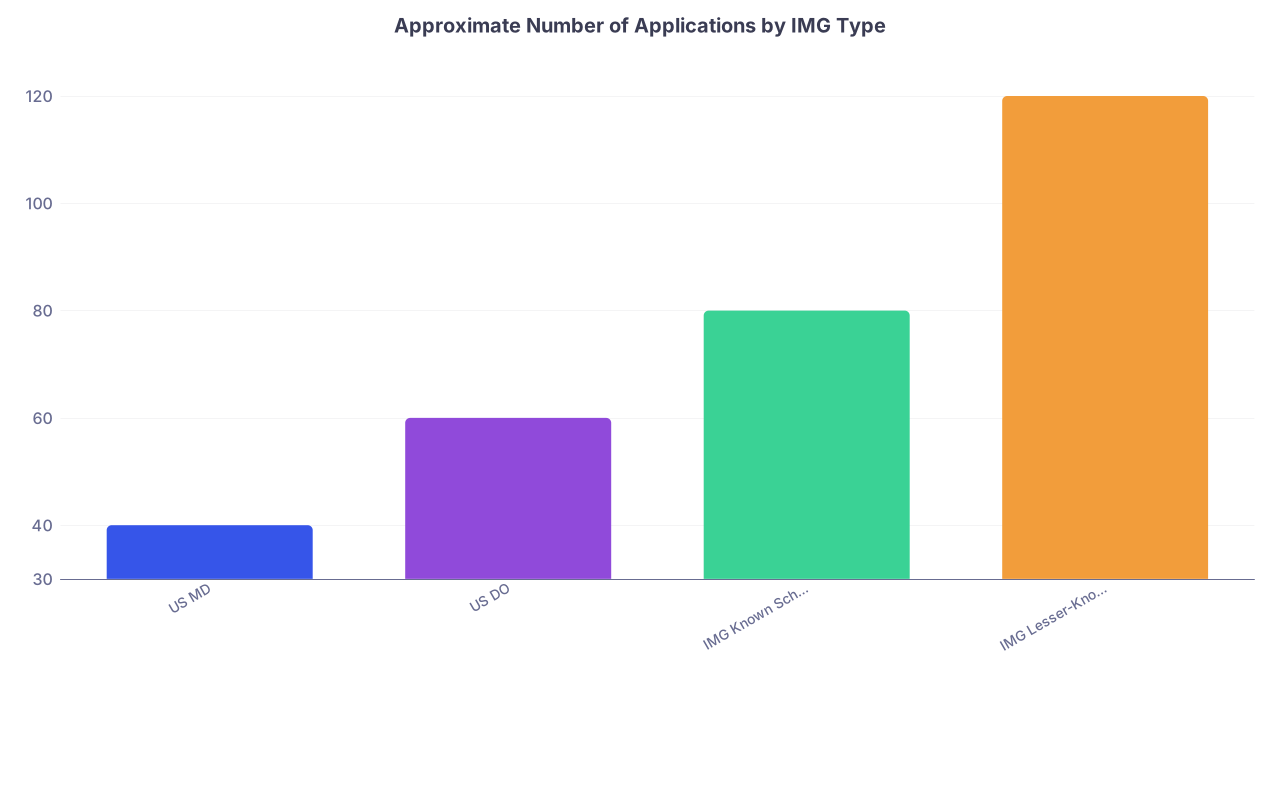
| Category | Value |
|---|---|
| US MD | 40 |
| US DO | 60 |
| IMG Known School | 80 |
| IMG Lesser-Known School | 120 |
Is this ridiculous? Absolutely. But pretending it isn’t how the game works won’t help you.
Red Flags You Can’t Ignore (That Get Blamed on “School Name” But Aren’t)
Sometimes people say, “I didn’t match because my school is unknown,” and then you see their profile and think… no, that’s not the only issue.
Things that quietly destroy applications from lesser-known schools:
- Multiple exam failures with no clear upward trend or explanation
- Huge unexplained gaps in training (1+ years sitting at home “preparing”)
- No US clinical experience at all trying to match into competitive specialties
- Sloppy ERAS: typos, vague descriptions, half-filled activities
- Applying to like 30 programs in a competitive field and calling it “trying my best”
Programs may say, “We’re not familiar with your school,” because it’s polite. What they mean is, “Your profile was too risky and your school didn’t help offset that.”
Brutal. But helpful, if you’re still early enough to fix things for a future cycle.
How IMGs From Lesser-Known Schools Actually Succeed
Not hypotheticals. I’ve watched people do this.
The guy from an obscure Caribbean school who matched IM because he had:
- 250+ on Step 2
- 6 months USCE
- 3 strong letters from US academic centers
- A personal statement that literally started with a code situation he handled on a rotation
The woman from a tiny Eastern European school who got FM:
- Step 1 pass, Step 2 in the mid-230s
- 4 months FM and IM rotations in the Midwest
- PD from one of those rotations personally called another PD to recommend her
The older grad (6-year gap) from a low-profile Asian school:
- Spent 2 years doing research in the US
- Got on a couple of papers and posters
- Slowly built relationships and networked his way to interviews
None of them changed their school. They just overcompensated in every other area until the school became a footnote.
Reframing the Doubt: From “Lesser Known” to “Less Convenient”
Your school isn’t a curse. It’s a handicap. Like starting the race 20 meters behind everyone else.
Annoying? Yes.
Impossible? No.
It just means:
- You don’t have the luxury of half-baked attempts.
- You can’t rely on programs coming to you.
- You must make your application scream, “I’m worth the extra look.”
There will be programs that auto-reject you the moment they see “IMG” or a school they don’t know. Those places were never yours. Don’t let them own more space in your head than they already do.
Focus on the ones that:
- Take IMGs consistently
- Have residents who look like you on their current roster
- Have accepted someone from any random foreign school in the last 3–5 years
Those programs may not be your dream city or dream prestige. They might be far, cold, or unknown to your family. But they can be your start.
And a lot of IMGs from “random” schools end up being the backbone of hospitals all over the US. No one in the ICU at 3 a.m. cares where you went to med school if you can manage their ventilator.
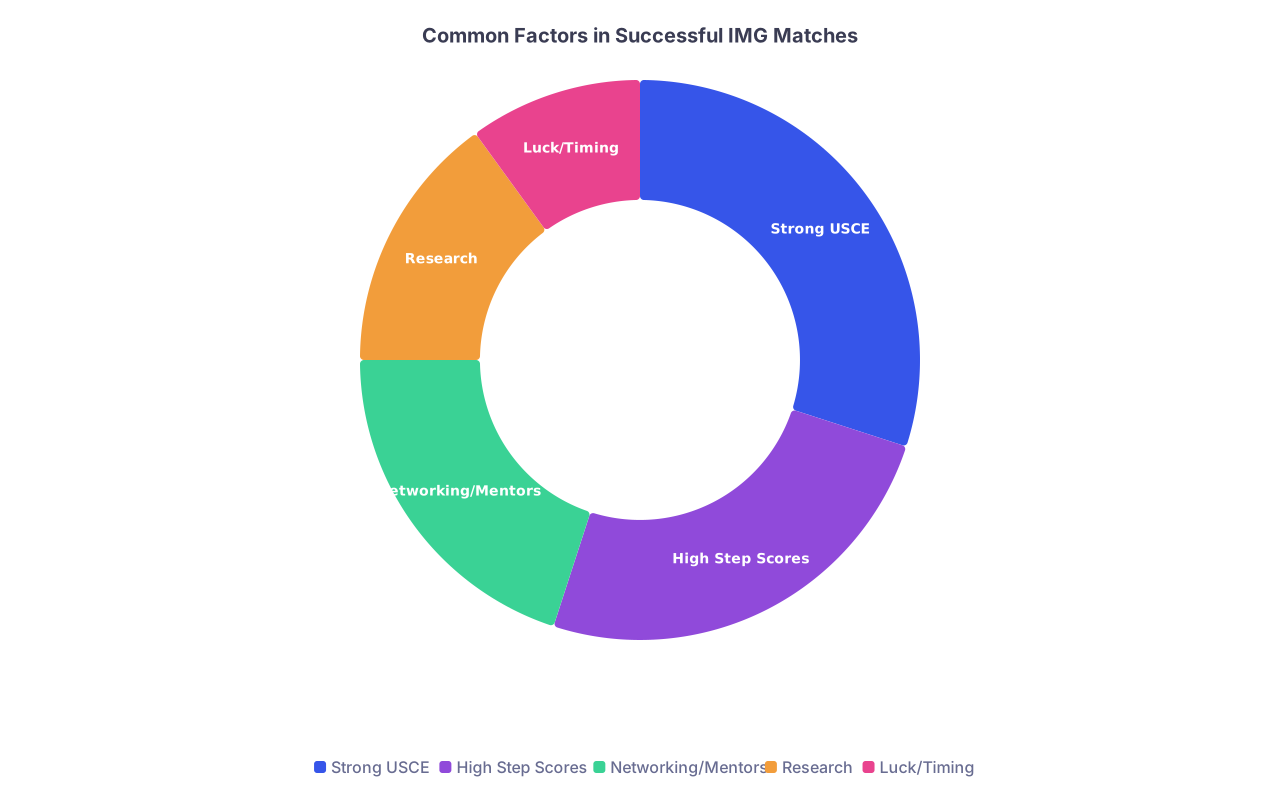
| Category | Value |
|---|---|
| Strong USCE | 30 |
| High Step Scores | 25 |
| Networking/Mentors | 20 |
| Research | 15 |
| Luck/Timing | 10 |
What You Can Actually Do Today
You’re probably already overwhelmed and half-convinced you’re doomed. So let’s bring this down to something small and real.
Today, not “someday,” do this:
- Open a blank document. Title it: “How I’m Offsetting My Lesser-Known School.”
- Make four headings: Scores, USCE, Letters, Narrative.
- Under each, write:
- Where you are right now
- Where you need to be for your specialty
- The next concrete step (not some vague “work harder,” but “email Dr. X about a possible observership,” “book NBMEs for Step 2,” “rewrite PS opening paragraph with a specific patient story”)
Don’t solve your whole match journey tonight. Just move one square forward.
Because no, your school name isn’t going to change. But how you respond to it absolutely can.
FAQ (Exactly 4 Questions)
1. Is my lesser-known foreign medical school a dealbreaker for US residency?
Not automatically. It’s a disadvantage, not a death sentence. Programs use school reputation as one piece of their risk assessment. If everything else in your file is weak or average, an unknown school can tip you into “no.” If you have strong scores, meaningful US clinical experience, and solid letters, a lesser-known school becomes one detail instead of the whole story.
2. Should I mention or “defend” my school in my personal statement or interviews?
Don’t go on a rant defending your school. It sounds defensive and weird. But if there’s something positive and concrete—like your school’s strong clinical exposure, unique patient population, or early hands-on training—you can casually weave that in as context. For example: “At my medical school, we started seeing patients from second year, which pushed me to grow quickly in clinical communication.” You’re framing, not apologizing.
3. How do I know if programs will even consider someone from my school?
Look at their current and recent residents. If you see:
- IMGs from a variety of schools (not just the same 2–3 “famous” ones),
- People with similar backgrounds (visa, country, graduation year),
that’s a green light. If you see zero IMGs or only big-name foreign schools, your odds drop. Doesn’t mean don’t apply at all, but don’t build your whole strategy on those places.
4. If I don’t match once, is it over for someone from a lesser-known school?
No, but your second attempt has to be strategic, not just “apply again and hope.” Programs will ask: “What changed?” Between cycles you need something new and meaningful—better Step 2 score, USCE, research, a gap explained by real work, not just studying. A reapplicant from a lesser-known school with the exact same profile as last year just looks like a repeated risk. A reapplicant who clearly upgraded their profile looks persistent and serious.
Open your ERAS CV or your current planning doc right now and scroll to the “Education” section where your school name sits. Then move your cursor down and start typing under Work, Experiences, or Exams. That empty space under your school? That’s where you prove they were wrong to underestimate you.