
The residency system was not built for IMGs who graduate off‑cycle. You’re playing a game whose calendar assumes you don’t exist.
Good news: you can still win. But only if you stop pretending you’re “just a little off” and build a completely custom timeline that matches your actual graduation date and exam status.
I’m going to walk you month‑by‑month through what to do so you:
- Do not end up with a mysterious “gap” on your CV
- Do not miss critical ERAS or Match deadlines
- Do not sit unemployed and panicked while everyone else starts intern year
We’ll anchor everything around your actual graduation month and work backwards and forwards.
Step 0: Identify Your Anchor Point (Today + Graduation Month)
Before any planning, you need two fixed points:
- Your expected graduation month and year
- The Match cycle you’re realistically targeting
US residency starts July 1. The National Resident Matching Program (NRMP) Match runs once a year. If you graduate off‑cycle (e.g., November, February, April), you’re automatically out of sync.
At this point you should:
Write down:
- Exact graduation month/year (e.g., February 2026)
- When you’ll actually have diploma and final transcript
- Whether your school has early “completion” vs formal graduation
Clarify exam status:
- Step 1: not started / in progress / passed
- Step 2 CK: same
- OET + Pathways/ECFMG certification: not started / in progress / complete
Decide the first realistic Match you could join.
You need:- All required USMLEs done
- ECFMG certification (or guaranteed in time)
- Time to build at least some US clinical experience (ideally)
Use this quick reality check:
| Graduation Month | Earliest *Realistic* Match | Risk of Large Gap |
|---|---|---|
| Jan–Mar | Next cycle (same year’s Match) | Low–Moderate |
| Apr–Jun | Next year’s Match | Moderate |
| Jul–Sep | Next year’s Match | Low–Moderate |
| Oct–Dec | Next year’s Match or year after | High if poorly planned |
Now we build a custom timeline. I’ll use a concrete example, then show how to shift it for your date.
Example Case: February Graduate Targeting the Next Year’s Match
Let’s say you graduate February 2026 and you’re targeting the 2027 Match (to start residency July 2027). That gives you ~17 months from graduation to residency start.
Here’s your high‑level year:
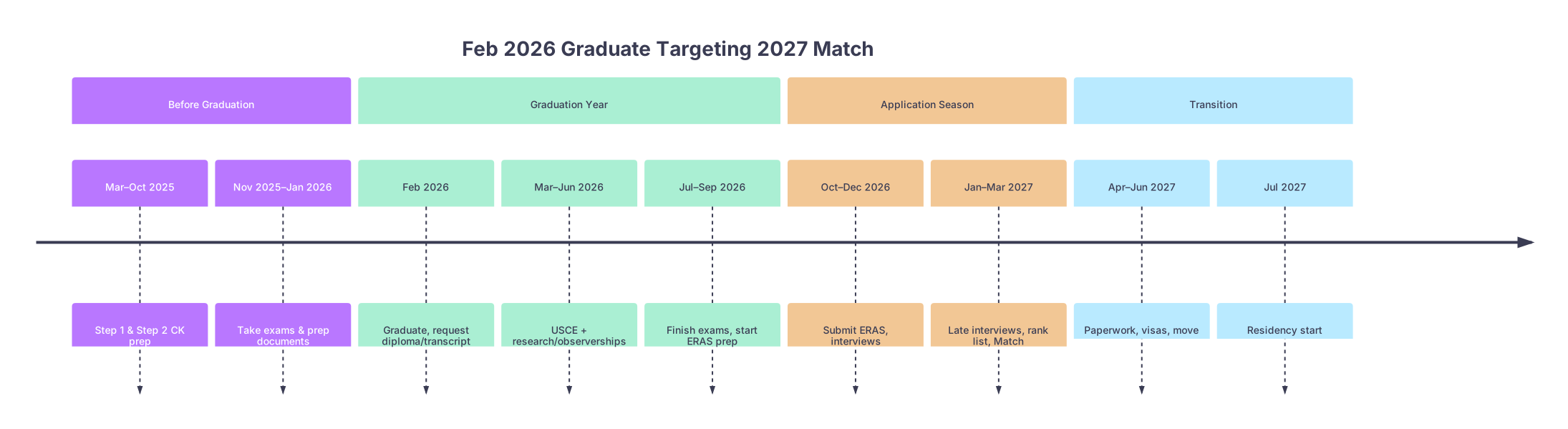
| Period | Event |
|---|---|
| Before Graduation - Mar–Oct 2025 | Step 1 & Step 2 CK prep |
| Before Graduation - Nov 2025–Jan 2026 | Take exams & prep documents |
| Graduation Year - Feb 2026 | Graduate, request diploma/transcript |
| Graduation Year - Mar–Jun 2026 | USCE + research/observerships |
| Graduation Year - Jul–Sep 2026 | Finish exams, start ERAS prep |
| Application Season - Oct–Dec 2026 | Submit ERAS, interviews |
| Application Season - Jan–Mar 2027 | Late interviews, rank list, Match |
| Transition - Apr–Jun 2027 | Paperwork, visas, move |
| Transition - Jul 2027 | Residency start |
Now let’s break it down chronologically, with “at this point you should…” for every phase.
12–18 Months Before Your Target Match: Lock Exams and Decide Your Story
This is usually before you even graduate.
At this point (12–18 months pre‑Match) you should:
Make a brutal, honest exam calendar.
- Block exact months for:
- Step 1 study
- Step 2 CK study
- Pick realistic test windows:
- “End of August” is not a plan. “August 15–30 Prometric window” is a plan.
- Build in a 4–6 week buffer for retake, especially for Step 2 CK if you’re applying competitive specialties.
- Block exact months for:
Decide your narrative for the off‑cycle graduation. Programs will eventually ask: “Why are you graduating in February and applying next September?”
Your answer must sound planned, not accidental. Examples:- “I intentionally structured a research year and US clinical experience between graduation and residency.”
- “My school has a February graduation calendar; I used the interval to complete targeted US rotations and research aligned with internal medicine.”
Start early US connections (if possible).
- Email program coordinators about observerships or upcoming rotations for the year after graduation
- Identify hospitals that accept IMGs for hands‑on electives while still a student
Clarify ECFMG pathway/requirements.
- Check current ECFMG certification pathway required for your year
- List documents you’ll need from your school and likely processing times
If you’re already inside this window and behind on exams, slow down here and re‑target your Match year. Forcing a rushed attempt with weak scores plus no USCE is how people end up with 2‑year gaps.
6–9 Months Before Graduation: Build a No‑Gap Bridge
Now you’re inside the final stretch before graduation.
At this point you should:
Time your exams so that scores arrive before main application prep.
- Aim Step 1 no later than 3–6 months before graduation
- Aim Step 2 CK no later than 1–3 months after graduation, unless you’re super ready earlier
Map your first post‑grad 12 months on one page.
Use months across the top; fill in with specific roles, not vague hopes.
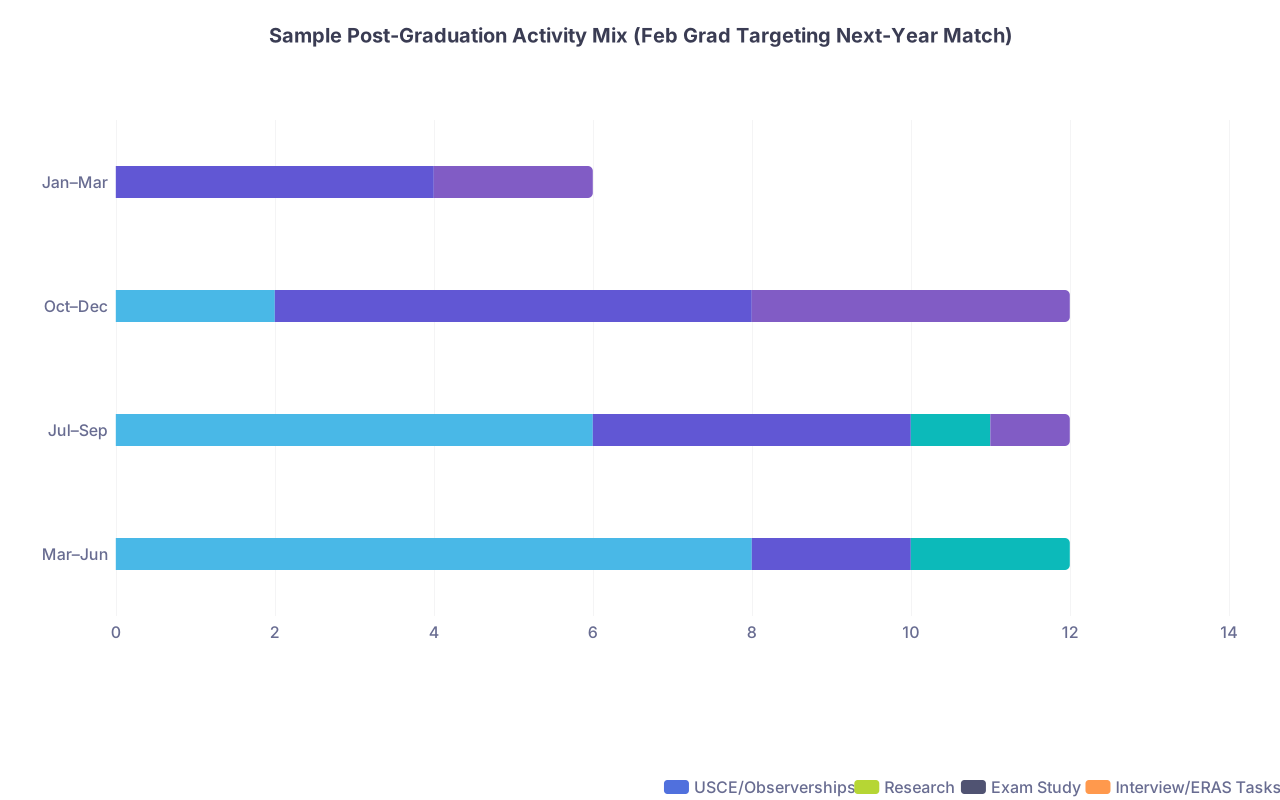
| Category | USCE/Observerships | Research | Exam Study | Interview/ERAS Tasks |
|---|---|---|---|---|
| Mar–Jun | 8 | 2 | 2 | 0 |
| Jul–Sep | 6 | 4 | 1 | 1 |
| Oct–Dec | 2 | 6 | 0 | 4 |
| Jan–Mar | 0 | 4 | 0 | 2 |
Here the values roughly represent weeks per block, not perfect but it forces you to think in time chunks.
Secure something that starts immediately after graduation. You want no blank months like:
- “February 2026: Graduated”
- “March–June 2026: ???”
Fix that with:
- Research assistant role (paid or volunteer)
- Longitudinal observership
- Tele‑research with US mentor
- Even structured exam prep + tutoring work can be framed as a clear plan, if documented well
Graduation Month (Month 0): Close the Student Chapter Cleanly
Using our February grad example: February 2026.
At this point you should:
Get your documents in motion immediately.
- Request:
- Final transcript
- Diploma
- Any dean’s letters / school performance documents
- Make sure your school knows these are for ECFMG and residency; missing stamps and wrong formats cause months of delay.
- Request:
Start your first structured post‑grad role within 2–4 weeks of graduation. Examples:
- March 1: start a 3‑month observership in internal medicine at a community hospital
- March 15: start a part‑time research assistant role at a university
Write down a “Post‑Graduation Plan Statement” (for yourself). One paragraph that explains:
- Why you chose each activity
- How long each role will last
- How it all points toward your specialty
This will later become:
- Your CV entries
- Your personal statement content
- Your answer when an interviewer says: “Tell me about what you did after graduation.”
Months 1–6 After Graduation: Visible, Continuous Activity Only
For our February grad: March–August 2026.
These are the months where IMGs either build a sharp, impressive profile or quietly vanish into a “gap year.”
At this point you should:
Maintain at least one continuous, easy‑to‑explain main role. Examples:
- March–August: Research fellow in cardiology, University X
- April–September: Observership in internal medicine + outpatient clinic assistant
You can layer exam prep and short observerships on top, but you want a single main line item covering this time.
Stack letters of recommendation (LORs).
- Aim for:
- 2–3 US letters in your chosen specialty
- 1 home‑country letter if strong and recent
- Ask for letters at the end of each rotation or major project, not all at once in August.
- Aim for:
Finish remaining exams. Timeline suggestion:
- Step 2 CK by June–July
- OET + ECFMG requirements by August–September
Document everything.
- Keep a simple log:
- Dates of roles
- Duties (what you actually did)
- Specific patient populations, systems, or skills
- This will save you when filling ERAS and answering “Tell me about this research position.”
- Keep a simple log:
3–4 Months Before ERAS Opens: Build the Application Spine
ERAS typically opens for applicants in June; programs start seeing applications in September.
For a 2027 Match, think April–June 2026 as the spine‑building phase.
At this point you should:
Draft your CV chronologically with zero blank months after graduation.
- Every month from February 2026 onward must be covered by:
- Education
- USCE / observership
- Research
- Work (clinical or non‑clinical, but explainable)
- Structured exam prep / teaching, if nothing else is available
- Every month from February 2026 onward must be covered by:
Create a “Gap Defense” paragraph. Even if you’ve been busy, you need a cohesive explanation. For example:
“Following my February 2026 graduation, I structured a year focused on US‑based clinical exposure in internal medicine, research in heart failure, and completion of my USMLEs. This period allowed me to adapt to the US system, strengthen my clinical reasoning, and confirm my commitment to an internal medicine residency.”
Start ERAS components early:
- Personal statement outlines (not the night before)
- List of programs: filter by:
- IMG‑friendly
- Accepts off‑cycle grads / no strict graduation year cutoffs
- Talk to recent IMGs with similar timelines; copy what worked.
ERAS Application Season: June–September (Year Before July Start)
For the 2027 Match, ERAS opens June 2026, and you’ll submit around September 2026.
At this point you should:
June–July: Lock down all “formalities.”
- USMLE scores in
- OET done, ECFMG pathway on track
- At least 3–4 LORs uploaded or promised with specific dates
- CV reviewed to ensure:
- Every month post‑graduation accounted for
- No unexplained gaps
July–August: Finalize narrative and program list.
- Personal statement includes:
- One short, clean paragraph on your off‑cycle timeline and how you used it
- Avoid apologizing; frame it as deliberate and productive
- Program list:
- Prioritize places that historically rank IMGs who graduated >1–2 years ago
- Check program websites for “no older than X years from graduation” rules
- Personal statement includes:
September: Submit early.
- IMGs graduating off‑cycle cannot afford to be late submitters
- When programs already worry about gaps and recency, a late file is a red flag
Interview Season: October–January
You’ve submitted ERAS. Now the main job is to keep your timeline tight and current.
At this point you should:
Extend or overlap activities during interview season.
- Do not let everything end in September and then do “nothing but interviews” for 4 months.
Options: - Continue research on flexible hours
- Join tele‑research, data work, or quality improvement projects you can do from home
- Short outpatient observerships that allow schedule changes
- Do not let everything end in September and then do “nothing but interviews” for 4 months.
Prepare concise answers to these questions:
- “What have you been doing since graduation?”
- “Why did you not apply right after graduation?”
- “How has your observership/research prepared you for residency?”
Each answer should:
- Start with a clear summary
- Name specific dates and roles
- End by tying your activities to being more prepared now than if you’d applied earlier
Update programs if your role changes.
- If you finish one observership and start another:
- Update your CV
- Consider sending a brief update letter to top programs, showing continuity
- If you finish one observership and start another:
What If You Already Have a Gap?
Some of you are not planning ahead. You’re already sitting with 6–18 months of “nothing much” after graduation.
Fine. Then your timeline starts now, not at graduation.
At this point you should:
Define the gap precisely.
- “July 2023 – March 2024: unsupervised exam prep + family duties.”
- Write it in one sentence. Don’t dodge it.
Build a “Gap Repair” year: Month‑by‑Month
For the next 12 months, you want:
Months 1–3:
- Start something structured: research assistant, scribe, observership, tele‑research, or even structured clinical documentation assistant roles
- Finish any missing exams
Months 4–6:
- Add a second clinical or research experience, preferably US‑based
- Secure at least 1–2 strong LORs
Months 7–9:
- Polish ERAS pieces
- Keep at least one role ongoing to show continuity
Months 10–12:
- Maintain involvement during application and interview season
- If possible, extend your main role through the July residency start
Your explanation becomes:
“After graduation in 2023, I had a 9‑month period focused on exam preparation and significant family responsibilities. Once those stabilized, I structured the past 12 months around US clinical experience in [X], research in [Y], and preparation for residency. That shift clarified my commitment and better prepared me for an internal medicine internship.”
That’s salvageable. A vague “I was just studying and waiting” with nothing current is not.
Shifting the Framework to Your Graduation Month
The February‑to‑July example is just a model. You can shift the entire structure.
Here’s how to adapt:
List major Match milestones:
- ERAS opens: June (year before July start)
- ERAS submission peak: September
- Interviews: October–January
- Rank list: February
- Match Day: March
- Residency start: July
Place your graduation date on this line. Then ask:
- Do I have at least 6–9 months between graduation and my target ERAS submission?
- Can I realistically do:
- All USMLEs
- ECFMG certification
- At least 3–6 months of meaningful activity
before that ERAS date?
If yes: target the next ERAS.
If no: accept that you’re likely targeting ERAS the following year and design a full, structured plan for that entire period.
Quick Visual: Risk of Application Gaps by Planning Quality
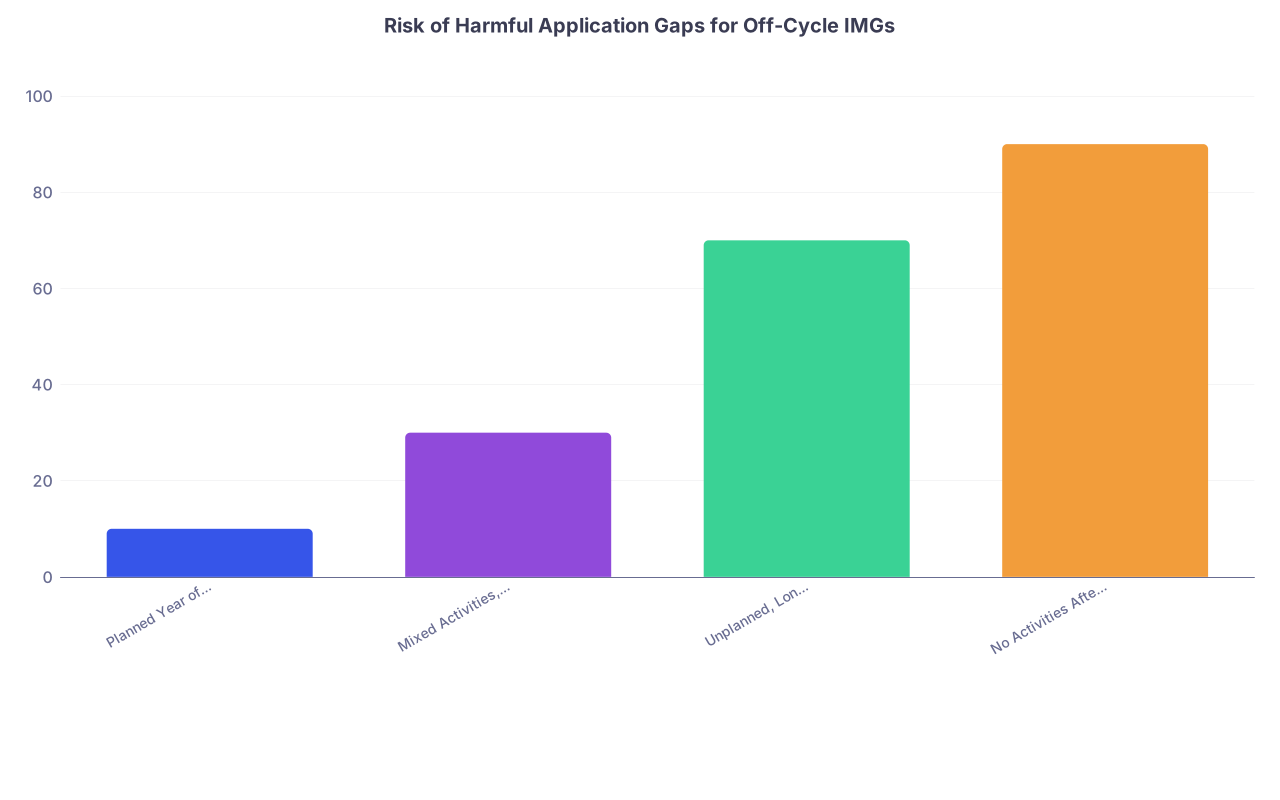
| Category | Value |
|---|---|
| Planned Year of USCE/Research | 10 |
| Mixed Activities, Minor Gaps | 30 |
| Unplanned, Long Gap | 70 |
| No Activities After Grad | 90 |
The numbers are conceptual, but the pattern is real: the less intentional your calendar, the more programs assume something’s wrong.
Final 3 Months Before Residency Start: Close the Loop
Once you match (or SOAP in), you’re not done. Off‑cycle IMGs still get tripped here with visas, licensing, and “what were you doing between Match and July?”
At this point (Match to July) you should:
Maintain visible activity until at least June.
- Continued research
- Continued observership
- Teaching (if structured and documentable)
Handle logistics early:
- Visa paperwork
- State licensure requirements
- Immunizations, background checks, etc.
Be able to say, during orientation, “Here’s what I’ve been doing this spring.” Not: “Just waiting and traveling.”
If You Remember Nothing Else
Your off‑cycle graduation is not the problem. Unstructured time after graduation is.
Programs care about:
- Recency of clinical experience
- Continuity of effort
- Credible explanation for any gaps
You fix this by:
- Planning backwards from your target Match
- Ensuring every month after graduation is tied to a role or exam goal
- Writing a simple, confident story that connects your timeline to your specialty
Today, do this:
Open a blank page and write out every month from your graduation date to your target residency start. Fill in what you actually did or will do. If anything is blank, that’s your next task to fix.