
Should I Explain My Visa Situation in My IMG Personal Statement?
Are programs quietly screening you out because they don’t know your visa status—or because you won’t stop talking about it in the wrong place?
Let me be direct: your personal statement is not an immigration essay. It’s a fit-and-story essay. But visa status does matter for IMGs, and pretending it doesn’t is naive. The trick is knowing where and how to address it so you don’t either (1) confuse programs or (2) waste prime real estate in your statement.
Here’s the decision framework you actually need.
The Core Answer: Should You Mention Visa Status in the Personal Statement?
Most of the time: no, you should not explain your visa situation in detail in your personal statement.
You have better places to put it:
- ERAS demographic/visa fields
- CV / ERAS experiences
- Program emails if clarification is needed
Your personal statement should primarily answer three questions:
- Who are you as a physician and human?
- Why this specialty?
- Why you’ll be a good resident and future colleague?
Visa status rarely helps answer those.
That said, there are three situations where a brief mention is appropriate:
- Your immigration story is central to your motivation for medicine or your specialty.
- Your visa situation caused a major, otherwise confusing gap or delay.
- You’re clarifying something very specific and relevant (e.g., you’re already fully work-authorized, no visa sponsorship required).
Everything else? Keep it out.
What Programs Actually Care About With Visa Issues
Programs are not reading your essay thinking, “Let me emotionally connect to your DS-160 journey.” They want quick, practical answers:
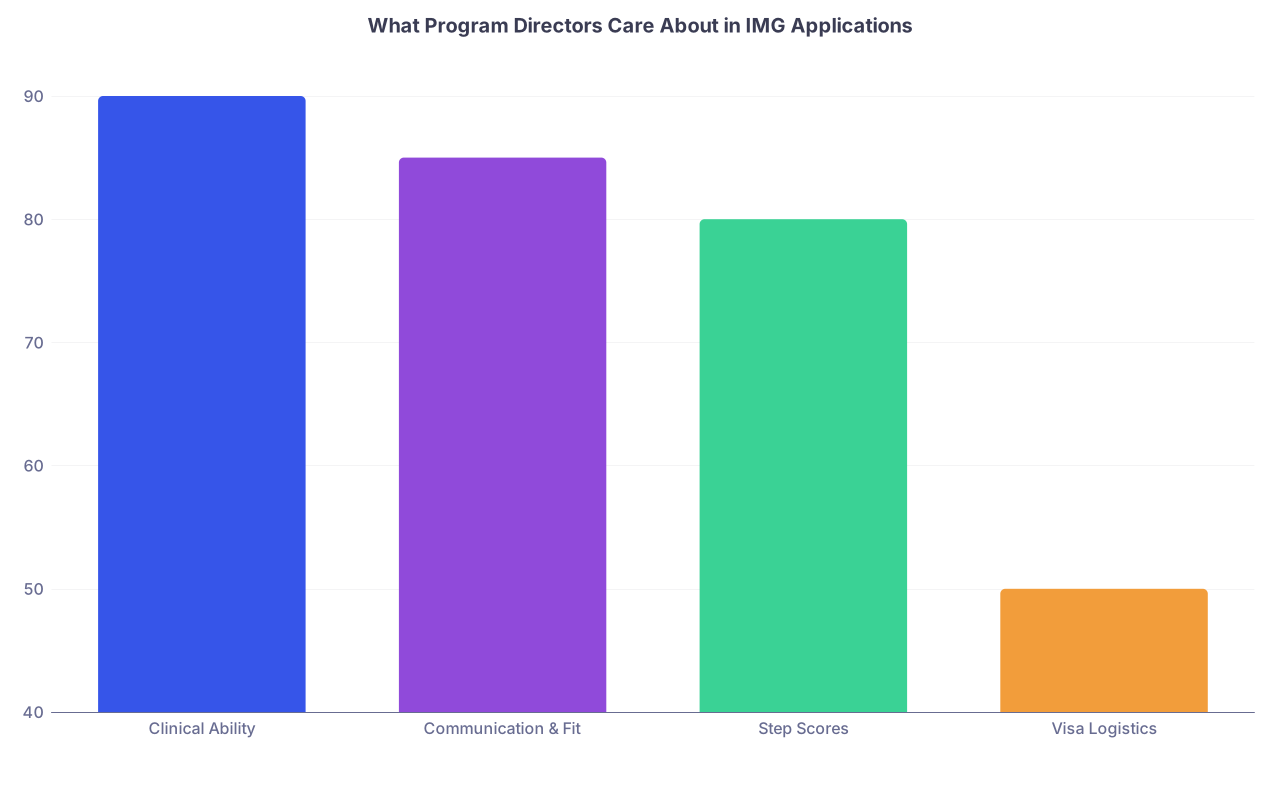
| Category | Value |
|---|---|
| Clinical Ability | 90 |
| Communication & Fit | 85 |
| Step Scores | 80 |
| Visa Logistics | 50 |
Visa is important. But it is logistics, not identity.
What programs need to know:
- Do you need sponsorship? Yes/No.
- Which visa type? J-1, H-1B, none?
- Are you eligible for that visa (Step scores, graduation year, ECFMG status, etc.)?
- Are there any red flags (previous denials, out of status, etc.) that might make things messy?
Notice how none of those require a paragraph in your personal statement.
You communicate most of this cleanly through:
- ERAS application fields (there’s literally a spot for visa info).
- Program websites (to see if they even sponsor your visa type).
- Direct emails if something is unusual or unclear.
Your personal statement is the worst place to try to “reassure” them about complex visa technicalities. It usually creates more questions than answers.
When You Should Not Talk About Visa in the Statement
Let’s cut out the obvious mistakes first. Do not put visa content in your personal statement if:
You’re just trying to “reassure” that you’re committed to staying in the US.
Something like:
“I am very committed to living in the United States and hope you will sponsor my visa.”
That’s a turn-off. Residency is not a favor they’re doing for you; it’s a job you are competing for. This sounds needy and misdirected.You’re using it as a bargaining pitch.
“I already have a pending green card, so I will be an easy candidate to sponsor.”
That’s fine to mention in ERAS or a short note elsewhere, but in a personal statement it sounds transactional and out of place.You’re explaining basic facts already captured elsewhere.
“I am an international medical graduate from India and will require J-1 visa sponsorship.”
ERAS does this for you. Wasting space in your statement on this looks unsophisticated.You’re trying to pre-argue with immigration officers through your essay.
Long stories about visa denials, embassy interviews, family immigration struggles—these belong in a legal conversation, not a residency personal statement, unless they’re genuinely core to why and how you practice medicine.
If reading your draft, you notice multiple references to:
“visa,” “sponsor,” “green card,” “immigration,” “status,” “USCIS”
You’re probably pushing it too far.
When It Does Belong: Three Legitimate Scenarios
There are narrow, valid reasons to mention your visa context.
1. Your immigration journey is central to your motivation
If your immigration path is literally why you became a physician or chose your specialty, then yes, it can be part of the story.
Example that belongs:
- You grew up undocumented or as a child of immigrants, saw your family avoid healthcare, and that experience directly shaped your passion for primary care, public health, or advocacy.
- You spent months in a refugee camp where the only clinician was a volunteer physician, and that experience is the opening story of why you pursued medicine.
Even then, you frame it as:
- Experience → Insight → Motivation to serve → Specialty choice
Not: - Paperwork → Consulate issues → Visa type explanation.
You’re allowed to mention the word “visa” in that kind of story. Just don’t turn it into an immigration legal brief.
2. Your visa situation created or explains a gap
If there’s a glaring timeline issue that will raise questions, and the reason is visa-related, a short, surgical explanation in the PS can be appropriate.
Example:
- You had to delay starting observerships for a year due to processing.
- You were unable to re-enter the US for several months after a consular delay, and this halted your US clinical experience.
How to do this well:
- One or two sentences.
- Neutral, factual, no whining, no blame.
- Then immediately pivot back to what you did to stay clinically and academically engaged.
Something like: “After medical school, my initial US plans were delayed by several months due to a prolonged visa processing period. During that time, I continued clinical work in my home country and completed an online nephrology course, which ultimately strengthened my interest in internal medicine.”
That’s enough. Don’t list the forms, the embassy, the dates, the emotions. Keep it clean.
3. You’re clarifying that you don’t need sponsorship
If you’re an IMG who is fully work-authorized—green card, citizen, EAD, etc.—and your application might otherwise confuse programs, a subtle mention can help.
For example, Caribbean grads or Canadians often do this wrong. They either never mention it and get wrongly filtered as “visa needing,” or they scream it in the first line.
Balanced approach:
- Put the official status in the ERAS demographics section.
- Maybe a single clarifying sentence baked naturally into your story, if relevant.
Example: “Having completed my clinical rotations in the United States and now holding permanent residency, I am eager to continue my training here in internal medicine.”
That’s it. You don’t need:
“I DO NOT REQUIRE VISA SPONSORSHIP” in all caps anywhere in your statement. That belongs in a CV header or ERAS field, not the narrative.
Where To Put Visa Information Instead (The Smart Way)
You want programs to be clear about your status—but you don’t want to burn your statement doing HR’s job.
Here’s the better structure:

| Step | Description |
|---|---|
| Step 1 | Visa Status |
| Step 2 | ERAS Demographics |
| Step 3 | Program Selection by Sponsorship |
| Step 4 | Targeted Emails for Complex Cases |
| Step 5 | Brief Mention in PS Only if Central |
ERAS Application
There are dedicated fields for citizenship and visa needs. Use them accurately.
Don’t play games. Don’t think “If I don’t say anything, maybe they won’t notice.” They will.Program List Strategy
Before you apply, use program websites, FREIDA, and prior applicant experience to see:- Do they sponsor J-1?
- Do they sponsor H-1B?
- Do they explicitly say “No visa sponsorship”?
Apply accordingly. Don’t write a moving essay begging for H-1B at a program that flatly says they don’t sponsor it.
Communication With Programs (Only When Needed)
If you have a truly unusual situation—pending asylum, change of status, complicated history—you handle that via email, not your personal statement. Usually:- Short, factual email to the program coordinator.
- Ask if your situation is compatible with their sponsorship options.
CV / Documents
Some IMGs put a short line under their name:
“US Permanent Resident – No visa sponsorship required”
That’s more appropriate than filling your personal statement with immigration commentary.
Examples: Good vs Bad Visa Mentions in Personal Statements
Let’s make this very concrete.

| Type | Example Snippet |
|---|---|
| Bad | "As an IMG who will require H-1B sponsorship, I hope your program will consider supporting my visa. This is very important for my future in the United States." |
| Good | "After an unexpected delay in visa processing, I used the additional months to work in a busy internal medicine clinic in my home country, strengthening my interest in chronic disease management." |
| Bad | "My immigration journey has been long and complicated, involving multiple visa denials and appeals. This experience has shaped who I am." |
| Good | "Growing up as an immigrant child in a medically underserved community, I saw how language and fear of the system kept families from care. That early experience is why I am drawn to family medicine." |
| Good (clarifying) | "Having completed my USMLE exams and now holding US permanent residency, I am committed to pursuing my training in psychiatry in the United States." |
Notice the pattern:
- Good examples: short, relevant, clinical or motivational angle, then move on.
- Bad examples: emotional dumping, sponsorship begging, or legal detail.
How Much Space Should It Take If You Include It?
Almost always: 1–3 sentences total. Not per paragraph. Total.
Think of your personal statement as about 700–900 words. Visa content should be:
- 0 words in most IMGs.
- 20–50 words in the exceptions above.
If a full paragraph is about your immigration or visa history, you’re off track. Cut it.
Common IMG Fears About Visa and the Personal Statement
Let’s address a few myths I hear constantly.
“If I don’t explain my visa, programs will reject me.”
No. Programs reject IMGs mostly for:
- Weak scores
- Old graduation year with no recent clinical activity
- Poor communication
- No US experience
Visa is a factor, but your core competitiveness matters more.
Your main job is to:
- Make your status clear in ERAS fields.
- Apply to programs that actually sponsor what you need.
The personal statement won’t magically fix a bad visa fit.
“If I talk about my immigration struggle, they’ll feel sympathy and rank me higher.”
They’re not selecting residents based on who suffered the most. They’re selecting based on:
- Who they trust at 3 a.m. with a crashing patient.
- Who works well with nurses and patients.
- Who won’t be a nightmare with licensing, visas, and HR.
A powerful story can help them remember you. But you walk a thin line. If it reads like a pity essay or a request for special treatment, it backfires.
“I should push that I have a green card everywhere so I look ‘easier’ to take.”
You should certainly make it clear you don’t need sponsorship. That helps.
But if your entire personal brand is “I’m easy to sponsor,” you’ve missed the point. They still care about:
- Your clinical ability
- Your work ethic
- Your specialty fit
Use your statement to demonstrate those, not your immigration convenience.
A Simple Checklist Before You Mention Visa in Your PS
Before you include any visa-related line, ask yourself:
- Does this clarify something that would otherwise confuse them?
- Is this directly connected to my motivation, character, or clinical growth?
- Can this be said more appropriately in ERAS fields, CV, or email?
- Is this 1–3 sentences, max?
- If I removed this sentence, would my statement actually be stronger and tighter?
If questions 1 and 2 are “no,” or 3 is “yes,” cut it.
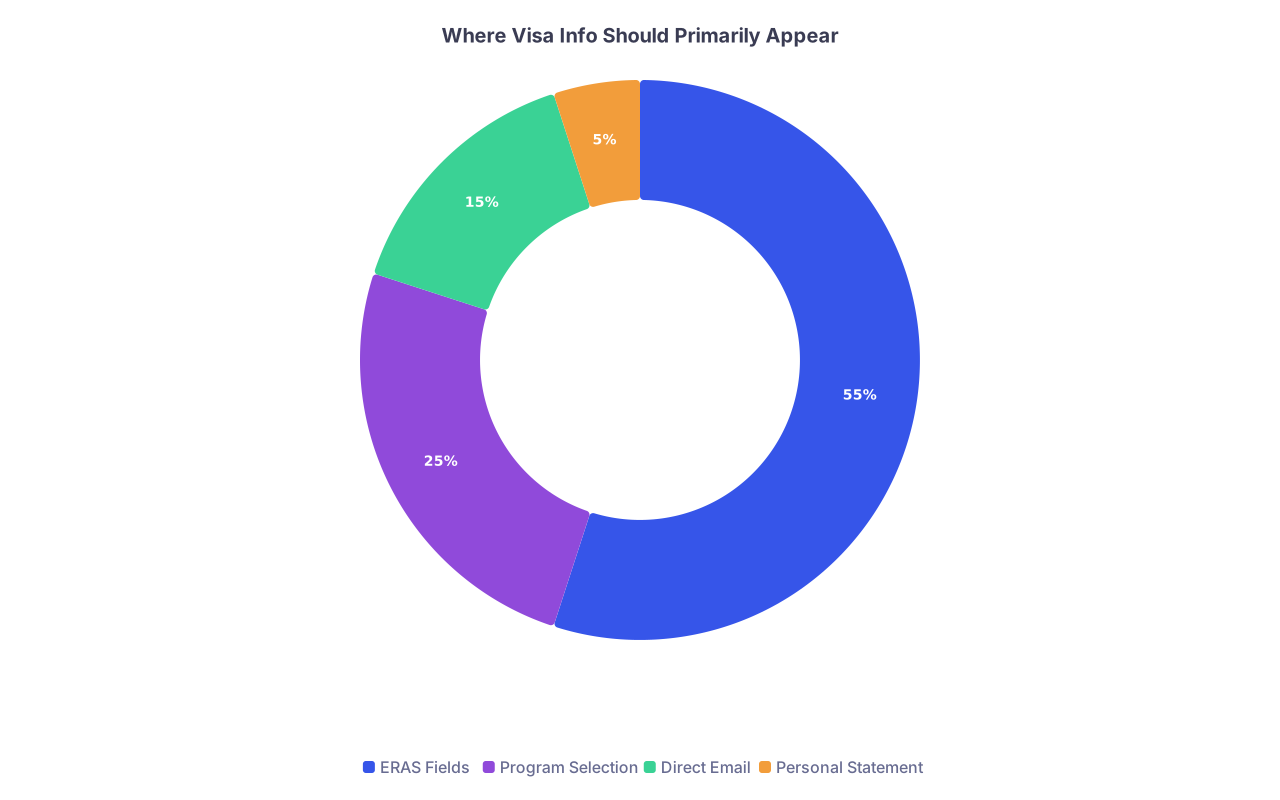
| Category | Value |
|---|---|
| ERAS Fields | 55 |
| Program Selection | 25 |
| Direct Email | 15 |
| Personal Statement | 5 |

Bottom Line: What You Should Actually Do
Here’s what I’d recommend, bluntly:
Default: Do not discuss your visa in the personal statement.
Use the PS to show who you are, why this specialty, and why you’ll be a strong resident.Exception: Mention visa context briefly only if it explains a gap or is central to your story.
One to three sentences. Factual and tied to your clinical or personal growth.Be precise and honest in ERAS, and apply where your visa is realistic.
That’s where the real visa battle is won, not in a paragraph of your essay.
If you get those three pieces right, your personal statement can do what it’s supposed to do: make them want to meet you—not manage your paperwork.