Most IMGs are wasting time emailing programs. But a smart 10% of emails actually help. The rest hurt you or do nothing.
Here’s the answer you’re looking for:
Yes, it can be worth emailing programs as an IMG after submitting ERAS — if you do it in a targeted, professional, and strategic way. Random mass emails? Delete button material. Thoughtful, specific messages to the right programs at the right time? That’s where you can squeeze out a small but real advantage.
Let’s walk through exactly when it’s worth it, when it’s pointless, and what to say if you decide to hit send.
The Core Truth: What Program Directors Actually Think
I’ll be blunt: most program directors hate generic applicant emails.
They’re drowning in applications already. Then on top of that, they get:
- “Dear Program Director, I am a hardworking IMG…”
- “Kindly consider my application…”
- “I am very interested in your esteemed program…”
Those get ignored. Or worse, they create a negative impression.
But I’ve seen emails that worked. The difference?
They were:
- Relevant
- Specific
- Timed well
- Rare (not spam)
Think of emailing as a small, situational tool. It won’t rescue a weak application. But it can:
- Put your name back on a radar
- Clarify something important (visa, USCE, exam updates)
- Signal genuine interest in a believable way
That’s it. No magic. A nudge, not a game-changer.
When It Is Worth Emailing as an IMG
Here’s when emailing programs actually makes sense.
1. You Have a Real, Concrete Update
Not “I am still very interested.” Nobody cares.
Good reasons to email with an update:
- You passed Step 3
- You improved your OET/IELTS or got ECFMG certified
- You added new US clinical experience or a strong letter
- You ranked in the top X% of your class and just got proof
- You changed your visa status (e.g., from needing J-1 to having a green card)
In that case, you’re giving them new data that might bump you over their internal screen.
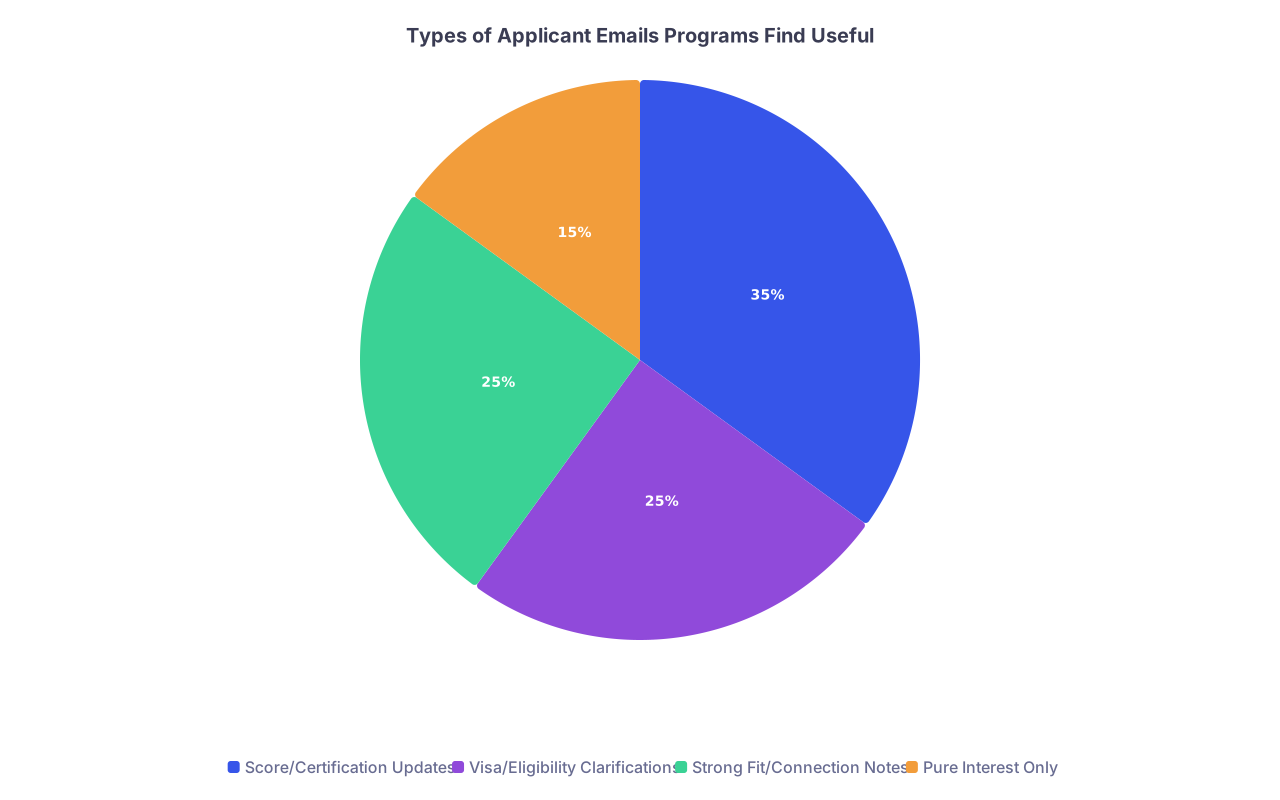
| Category | Value |
|---|---|
| Score/Certification Updates | 35 |
| Visa/Eligibility Clarifications | 25 |
| Strong Fit/Connection Notes | 25 |
| Pure Interest Only | 15 |
Notice what’s at the bottom: “I’m very interested” with nothing else attached.
2. You Have a Legit Geographic or Personal Connection
Programs want people who might actually come and actually stay. If you can show that, email is worth it.
Legit reasons:
- You live in their state or city
- Your spouse/partner works nearby
- You have family in that region
- You went to undergrad or did research there
- You did an observership/externship at that hospital or nearby
Take Internal Medicine at a mid-tier community hospital in Ohio. They see:
Applicant A: “I am very, very interested in your program.”
Applicant B: Lives 20 minutes away, spouse has a job in the area, did an observership in their health system.
You know who feels safer to invite.
3. You Need to Clarify Visa or Eligibility Questions
Many IMGs are screened out just because a program thinks they won’t be eligible or are too complex visa-wise.
Worth emailing if:
- Their website has outdated info on visa sponsorship
- You already have EAD, green card, or citizenship they may not expect
- You can accept both J-1 and H-1B (and that’s not obvious in ERAS)
The email isn’t “please give me an interview”; it’s more like, “Just to confirm I’m fully eligible for your program under your current policies.”
That can keep you in a pile you might’ve been kicked out of.
4. You Did an Observership/Rotation There or in Their System
If you’ve been physically in that hospital, that’s a good reason to reach out. But respect the hierarchy.
Reasonable steps:
- Ask your attending/preceptor if they’re comfortable advocating or emailing the PD.
- If they say yes, that’s 10x more powerful than you emailing yourself.
- If they say no or can’t, then you can send a short email referencing your time there (with their permission to mention them).
This is one of the few situations where emailing can really move the needle.
When It’s a Waste (or Makes You Look Bad)
Now the other side. Here’s when you should not bother.
1. Mass Generic Emails to 100+ Programs
You know this is spam. They know this is spam.
Red flags:
- Same generic paragraph sent to dozens of programs
- No real connection, no update, just “kindly consider my application”
- You CC or BCC people (yes, people actually do this; yes, it’s disastrous)
This doesn’t increase your chances. It just risks annoying the very people deciding your fate.
2. Emailing Right After You Submit ERAS Just to “Show Interest”
They just got 3,000+ applications. They haven’t even set up filters yet. Your “I’m interested” email is background noise.
No update. No special tie. No specific reason.
Skip it.
3. Begging or Sounding Desperate
You might feel desperate. Don’t sound desperate.
Bad patterns:
- “This is my dream and last chance, please help me.”
- Over-explaining low scores in an email (they already saw them)
- Sending multiple follow-ups when they don’t respond
Programs want colleagues, not crises.
4. Trying to “Argue” Your Way Into an Interview
Once a program has decided not to invite you, arguing won’t help. You won’t logically convince them with a paragraph.
If you’re emailing after invitations went out, there are only a couple of situations where it’s useful:
- You have a very strong tie (family, spouse job, prior rotation)
- You have a major new update (Step 3 passed, new visa status)
Otherwise, you’re just asking them to overturn a decision. They usually don’t.
Who to Email, When, and How Many
Here’s how to be strategic instead of just “sending emails.”
Who to Email
Best targets:
- Programs where you are already reasonably aligned on:
- Scores
- Visa type
- Graduation year cutoff
- Required USCE
- Programs in areas where you have real ties
- Programs where you rotated / did observerships / research
Avoid:
- Super high-tier academic programs as an average or weaker IMG. Email won’t bridge that gap.
- Programs that clearly say “Do not email about application status.” Respect that.
When to Email
Rough guide for a typical ERAS season:
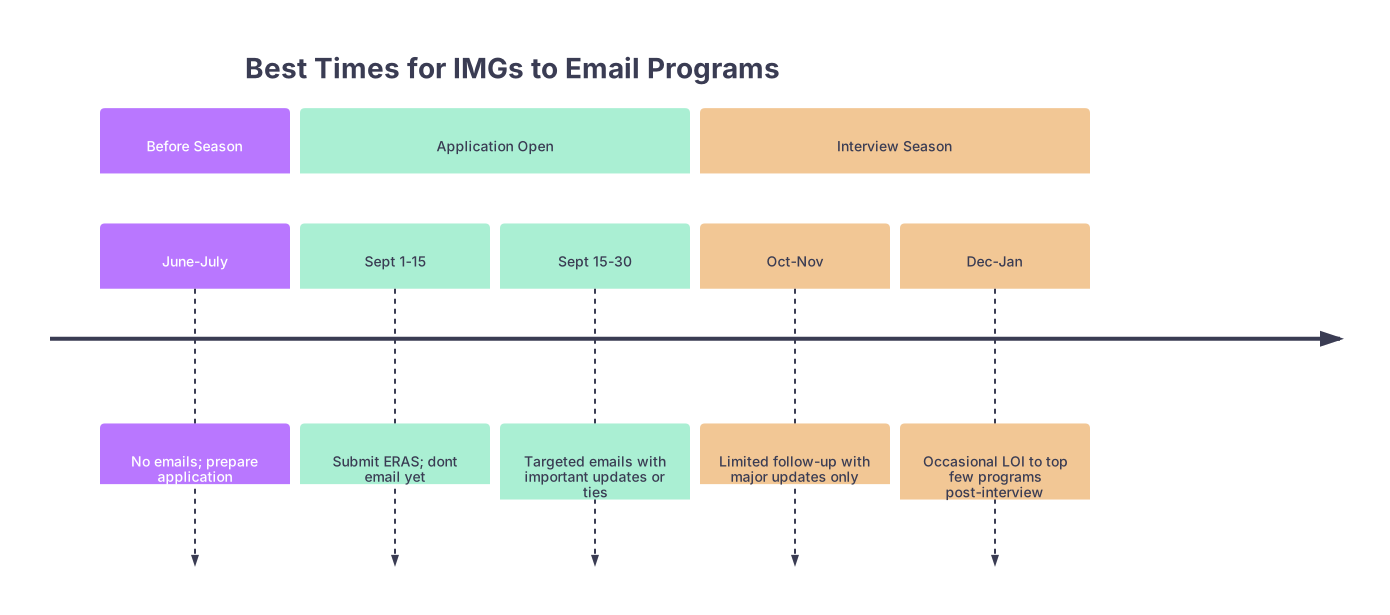
| Period | Event |
|---|---|
| Before Season - June-July | No emails; prepare application |
| Application Open - Sept 1-15 | Submit ERAS; dont email yet |
| Application Open - Sept 15-30 | Targeted emails with important updates or ties |
| Interview Season - Oct-Nov | Limited follow-up with major updates only |
| Interview Season - Dec-Jan | Occasional LOI to top few programs post-interview |
Don’t send everything in one burst. Stagger a few, see if you get any traction, then adjust.
How Many Programs to Email
For most IMGs, a realistic range is:
- 10–30 max really targeted, high-yield programs
If you’re emailing 80+ programs, that’s not targeted anymore. That’s spam-by-volume.
Exactly What to Say: Templates That Don’t Suck
Here’s what you actually want.
1. Update + Interest Email (Pre-interview)
Subject: Application Update – [Your Name], [Specialty] Applicant
Body:
Dear Dr. [Last Name],
I hope you’re well. My name is [Name], an IMG from [School/Country], and I’ve applied to your [Specialty] residency program this season.
Since submitting my ERAS application, I’ve had two updates that may be relevant to your review: – I passed Step 3 with a score of [###].
– I completed an additional four-week [inpatient/outpatient] rotation in [Specialty] at [US institution], with a new letter of recommendation uploaded to ERAS.I’m particularly interested in [Program Name] because of [1–2 specific, believable reasons: location near family/spouse job, community-based training, specific clinic, your rotation there, etc.].
Thank you for your time and for considering my application.
Sincerely,
[Your Full Name]
AAMC ID: [########]
That’s it. Short, factual, not begging.
2. Strong Geographic/Personal Tie Email
Subject: [Your Name] – Strong Local Connection to [Program City]
Dear Dr. [Last Name],
My name is [Name], and I’m an IMG [brief descriptor, e.g., “from X University, currently living in Y city”]. I’ve applied to your [Specialty] residency program this season.
I wanted to briefly mention my strong connection to [city/region]. I have been living in [City] since [Year], and my [spouse/parents/siblings] are also based here. My spouse currently works at [employer], and we plan to remain in this area long term.
Given my local ties and interest in [community-based care/underserved populations/whatever genuinely fits your story], [Program Name] is one of my top choices.
Thank you very much for your time and consideration.
Sincerely,
[Name]
AAMC ID: [########]
Again: clear, honest, not emotional blackmail.
Common IMG Misconceptions About Emailing
Let me kill a few myths quickly.

“If I don’t email, they’ll think I’m not interested.”
No. Your ERAS application itself is interest. Many programs don’t care at all about pre-interview emails.
Interest may matter more after interviews, but again, within reason.
“Emails can only help, never hurt.”
Wrong. Sloppy or needy emails do hurt.
- Unprofessional English
- Poor formatting
- Too frequent follow-ups
- Emotional tone, begging, guilt-tripping
You’re applying to be a physician-colleague. Your email is a mini professionalism test.
“If I haven’t heard anything by November, I should start emailing everywhere.”
If you’re totally shut out by November, emailing isn’t the magic fix. Your global strategy probably needs rethinking:
- Wrong specialty
- Too few community programs
- Visa issues
- Weak USCE or letters
A few targeted emails won’t rescue a fundamentally mismatched application list.
A Simple Decision Framework: Should You Email?
Use this checklist. If you can’t honestly check at least 2–3 of these, don’t bother.
| Question | Yes/No |
|---|---|
| Do I have a **new, meaningful update** since ERAS? | |
| Do I have a **clear geographic/personal tie** to this program or area? | |
| Am I **within their basic filters** (scores, year cutoffs, visa)? | |
| Can I explain why I fit **this specific program**, not just the specialty? | |
| Can I send this email **without sounding desperate or generic**? |
If the answers are mostly “no,” put your energy elsewhere:
More applications (if early), SOAP planning, or improving your profile for next cycle.
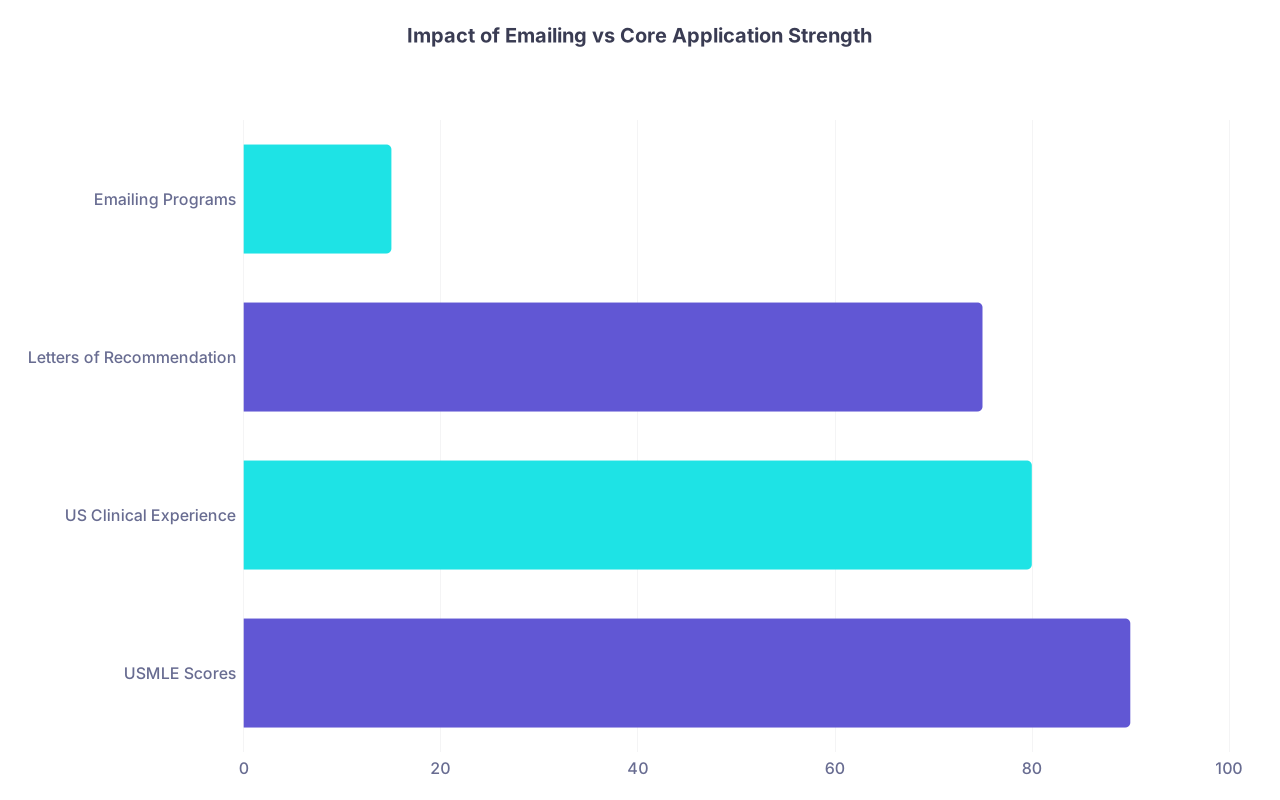
| Category | Value |
|---|---|
| USMLE Scores | 90 |
| US Clinical Experience | 80 |
| Letters of Recommendation | 75 |
| Emailing Programs | 15 |
Email is a 10–15% side play, not the main game.
How This Plays Out in Real Life (Two Quick Scenarios)
Scenario 1: High-Yield Email
- IMG, Step 1 233, Step 2 241, graduated 2 years ago
- Lives 30 minutes from a community IM program
- Spouse works in that hospital system
- Has 2 months of USCE + solid letters
- Emails PD with concise note about local ties and new Step 3 pass
Outcome I’ve actually seen:
They get flagged for a closer look. Not guaranteed, but they land an interview.
Scenario 2: Low-Yield Spam
- IMG, Step 2 215, graduated 7 years ago
- Needs H-1B, minimal USCE
- Mass emails 100 programs: “Dear Sir/Madam, kindly consider my application. I will work very hard.”
Outcome:
Ignored everywhere. A couple of PDs roll their eyes. Zero actual benefit.
The difference isn’t luck. It’s strategy and realism.

Final Take: Is It Worth Emailing Programs as an IMG?
Yes — but only if you treat emailing as a precise tool, not a rescue line.
If you:
- Have real updates or strong ties
- Respect program realities (filters, volume, policies)
- Write short, professional, specific messages
- Limit it to a focused list of programs
…then emailing can give you a small but real edge at a few programs.
If you:
- Spam dozens of programs
- Beg or sound desperate
- Ignore visa and score realities
- Send generic “please consider me” messages
…you’re wasting your time and slightly damaging your image.
Use it wisely, or don’t use it at all.

FAQ (Exactly 7 Questions)
1. Should I email programs before they send out any interview invitations?
You can, but only if you have something meaningful to say: a significant update, a strong local tie, or a clarification about eligibility/visa. Sending a pure “I’m very interested” email right after ERAS opens is basically noise. If you have nothing substantial to add, don’t email early just to “show interest.”
2. How many follow-up emails are acceptable if I get no response?
Usually zero. At most, one email per program in the pre-interview phase, and one post-interview if you’re sending a letter of interest/intent. If they don’t reply, accept that as your answer. Repeated follow-ups look unprofessional and can hurt you.
3. Can emailing get me an interview if my scores are below their cutoff?
Almost never. Most programs use hard filters for USMLE scores, year of graduation, and visa type. If you’re below those thresholds, your email probably won’t even reach the PD in a useful way. Focus your energy on applying to programs where you at least meet their basic criteria.
4. Should I email the program coordinator or the program director?
If you’re providing a meaningful update or expressing specific interest, send it to the program director and CC the coordinator. Keep it short and respectful of their time. Don’t send separate, multiple versions of the same email to everyone in the program.
5. Is it helpful to say a program is my “number one choice” before I even interview?
No. That usually sounds fake. Programs know applicants apply broadly. Save “top choice” or “number one” language for after an interview and limit it to a tiny number of programs you’d genuinely rank at or near the top. Over-using that phrase kills your credibility.
6. Can I send the same email template to multiple programs?
You can reuse structure but not content. If the only thing you’re changing is the program name, it’s too generic. Each email should have at least one or two lines that clearly show you understand that specific program or have a unique tie to them. If you can’t find anything specific to say, don’t email.
7. Do programs ever blacklist applicants for emailing too much?
“Blacklist” is strong, but yes, repeated annoying emails can absolutely hurt your chances. PDs and coordinators remember names that flood their inbox or come off as unprofessional. One targeted, well-written email is fine. Three or four pushy ones? Now your name is remembered for the wrong reason.
Key points:
- Emailing programs as an IMG is only worth it when you have real updates or genuine ties — not just generic interest.
- Keep emails rare, targeted, and professional; anything spammy or desperate does more harm than good.
- Your scores, USCE, and letters matter 10x more than any email. Use email as a small strategic nudge, not your main strategy.