
It’s July. You just got your Step 2 CK score, you’ve got your ECFMG certificate in sight, and now every WhatsApp group you’re in is arguing about one thing:
“Bro, do an observership first.”
“No, externship or nothing. Observerships are useless.”
You’re staring at two open tabs: one is a $3,000 “hands-on externship” in Florida; the other is a $1,200 observership with a supposedly “big-name” academic hospital. You can afford one. Maybe two. But you cannot afford to waste time or money.
Here’s the answer you’re actually looking for: whether you should do an observership or an externship first depends on your current profile, your graduation year, and how close you are to applying. Not what your cousin’s friend did five years ago.
Let’s sort this out.
Quick Definitions (So We’re Talking About the Same Thing)
First, clear up the language. Programs and services use these terms sloppily, and that’s how people get scammed.
Observership
You watch. You do not touch. No orders, no notes, no billing, no procedures. You may attend rounds, clinics, teaching conferences. You’re a shadow, maybe with some discussion at the end of the day.Externship
You function like a US medical student (MS3/MS4). You might:- Take histories and do physicals
- Present to attendings or residents
- Write unofficial notes (or official if the institution allows it)
- Be evaluated in a structured way
- Sometimes perform simple procedures (phlebotomy, IVs, etc.)
Hands-on vs. Hands-off
Programs love this phrase. Ignore the label; ask what you will actually do day to day. I’ve seen “hands-on externship” where the only “hands-on” part was holding the patient’s chart.
If you remember nothing else: externship = closest to US med student role; observership = watching and talking.
The Real Question: What’s Your Situation?
The right answer depends on who you are. Let’s break this into three common IMG profiles.
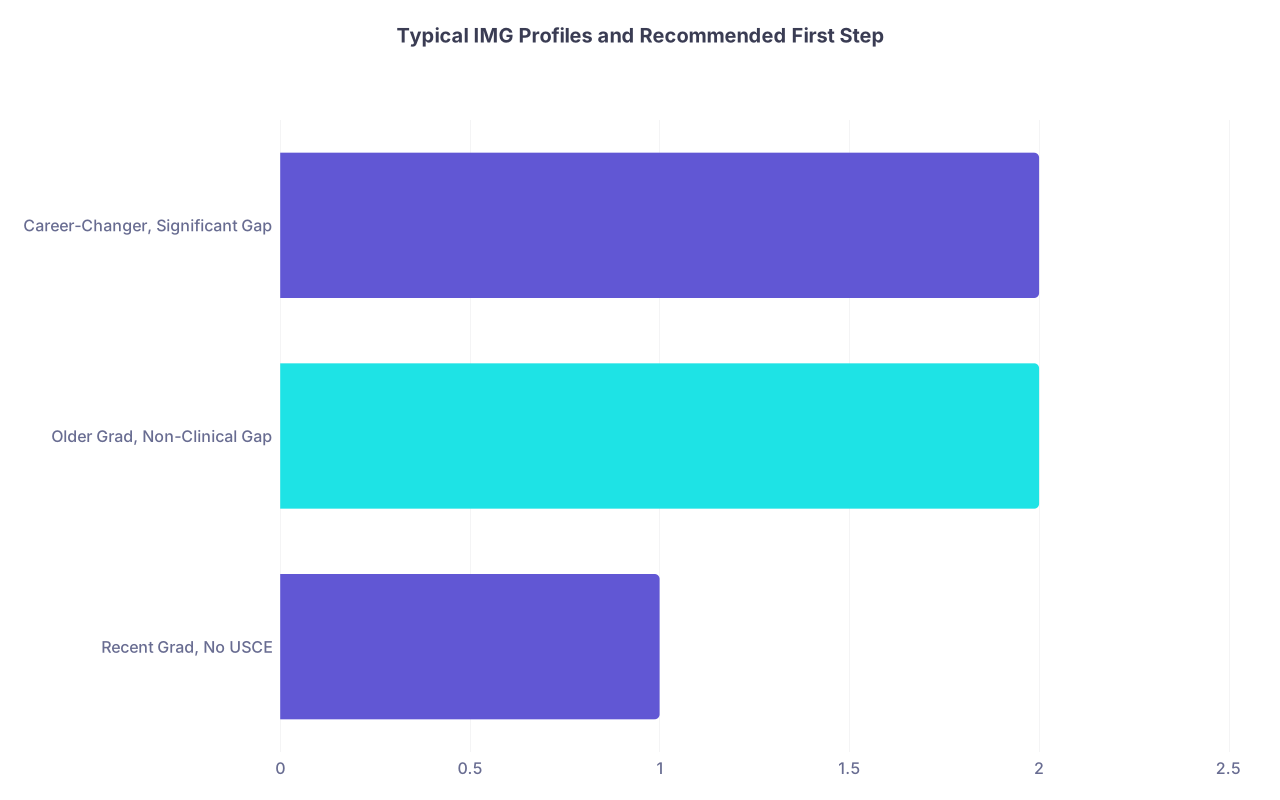
| Category | Value |
|---|---|
| Recent Grad, No USCE | 1 |
| Older Grad, Non-Clinical Gap | 2 |
| Career-Changer, Significant Gap | 2 |
Legend (for values):
1 = Externship first
2 = Observership first
1. Recent Graduate (≤2 years) with No or Minimal USCE
If you’re applying in the next 1–2 cycles and you’re under 2 years from graduation:
- You should prioritize externships first if:
- You can get real hands-on responsibility
- You’re on a service that routinely writes LORs for IMGs
- The supervising physician is affiliated with an ACGME program in your target specialty
Why? Because programs want evidence that:
- You can function in the US system
- You know how to present succinctly
- You’ve seen EMR, orders, US-style rounding
An externship gives program directors more confidence than a pure observership. It looks closer to US clinical rotations.
2. Older Graduate (3–7 years out) with Clinical Experience Abroad
If you’re mid-gap but still clinically active (hospital work, residency abroad, etc.):
- Either can work, but the sequence matters:
- If you’ve never seen US-style care → do an observership first (1–2 months) to learn the system, language, and culture.
- Then follow with a strong externship once you understand basic workflow.
This is where I’ve seen people mess up. They jump straight into an externship, get overwhelmed, present poorly, and end up with a bland or weak letter like “she attended regularly and showed interest.” Waste of money.
For you, observership → externship is often the smarter order.
3. Significant Gap (≥7 years), Career Change, or Non-Clinical Work
If you’ve been away from bedside medicine for a long stretch:
- You probably need to rebuild clinical identity gradually:
- Start with a longer observership (2–3 months), ideally at a teaching hospital
- Use that time to re-learn clinical reasoning, current guidelines, and US documentation expectations
- Then try to secure an externship only if your knowledge and stamina are up to par
If your knowledge is rusty and you jump into an externship first, you risk looking unsafe or slow. That sticks.
What Actually Matters to Program Directors
Let me be blunt: program directors don’t sit there ranking “externship vs observership” like a game show.
They care about:
US-based clinical experience recency
Within the last 1–2 years is ideal.Strength and specificity of your letters of recommendation
Do they say:- You rounded daily?
- You took responsibility for patients?
- You communicated effectively with staff and patients?
- You were at the level of a US senior medical student?
Setting and relevance
Academic or community hospital with a residency program in your target specialty > random clinic with no teaching culture.Continuity and progression
A story like:
“Started with observership to understand US system → did externship where I took on more responsibility → continued with research or another clinical role.”
Externship has a higher ceiling (better potential for strong letters and real responsibility) but also a higher risk (if you’re not ready, your performance can look weak).
Observership has a lower ceiling but is safer, especially if you’re unsure about your current clinical speed, English in clinical situations, or comfort with US hospital culture.
When You Should Do an Externship First
You should do an externship first if most of these are true:
- You’re within 0–3 years of graduation
- You’ve been clinically active (internship, residency, or strong hospital work)
- Your English and communication skills are solid enough to present cases and discuss plans
- You’re planning to apply in the next 6–18 months
- You can handle being evaluated under pressure right now
In that situation, an externship first maximizes return on time and money. Programs will take your application more seriously if they see:
- 1–3 months of “US clinical experience (hands-on)” in the specialty you’re applying to
- LORs saying “performed at or above the level of our US senior medical students”
What a Good First Externship Looks Like
Look for:
- Service with residents and attendings (not just a solo private doc)
- Clear expectations that you’ll:
- Pre-round on patients
- Present on rounds
- Write notes (even if they’re “student notes”)
- Discuss assessments and plans
- A track record of generating strong LORs for IMGs who went on to match
If the website or coordinator can’t answer:
“What exactly will I be expected to do day to day?”
Walk away.
When You Should Do an Observership First
Choose observership first if any of these hit home:
- You’ve never stepped inside a US hospital before
- You’re more than ~3–4 years from graduation and not in active clinical practice
- You’re nervous about oral English, accents, and fast clinical conversations
- You don’t know what US rounds, documentation, or hierarchy look like
- You’ve been burned by poor feedback in prior clinical evaluations and need to rebuild confidence
Then observership does three things for you:
De-risk your externship later.
You’ll know what attendings expect, how residents present, how fast decisions get made.Give you language and cultural tuning.
How to talk about code status, how nurses expect orders to be phrased, how US patients phrase symptoms.Help you decide your target environment.
Maybe you realize you hate big academic centers and would rather go for community programs.
What a Good First Observership Looks Like
You’re not just sitting in the back corner silently.
Good observership = you:
- Sit in on rounds and clinics
- Are allowed to ask questions between patients
- Get informal teaching (“Ok, what’s your differential here?”)
- Attend conferences, M&M, teaching rounds
- Have at least one person willing to comment on your professionalism and curiosity for a future letter
No, the letter from an observership won’t be as strong as from a full externship. But as a “starter” move, it can be exactly what you need.
How Programs Actually View Observerships vs Externships
Let me simplify how this looks on the PD’s mental scale:
| Type | Rough Value Level | Comment |
|---|---|---|
| US Sub-I / Core Rotation | 10/10 | Gold standard |
| Strong Externship | 8–9/10 | Very helpful |
| Weak Externship | 5–6/10 | Better than nothing, not great |
| Strong Observership | 4–5/10 | Helps, but limited |
| Fluffy Observership | 1–2/10 | Almost no impact |
That’s why the question is not “observership or externship?”
It’s “given my current readiness, which one will lead to my best performance and best letters?”
A strong observership (engaged, inquisitive, with a solid letter) is more valuable than a half-disaster externship where you look lost.
Building a Smart Sequence: 6–18 Month Plan
If you have 6–18 months before the match, this is a sane sequence for many IMGs.
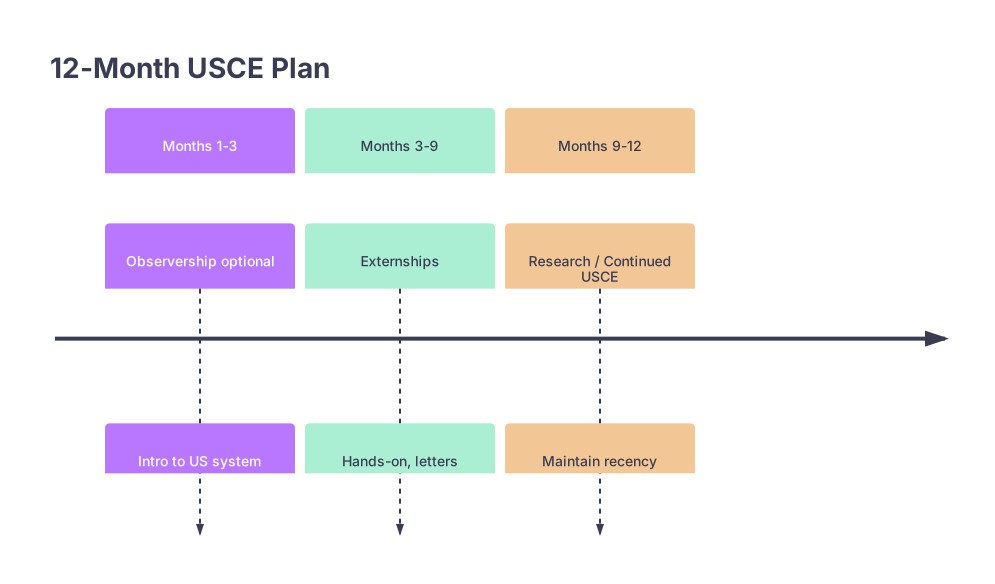
| Period | Event |
|---|---|
| Months 1-3 - Observership optional | Intro to US system |
| Months 3-9 - Externships | Hands-on, letters |
| Months 9-12 - Research / Continued USCE | Maintain recency |
Example 1: Recent Grad, Applying Next Cycle
- Month 1–2: Externship in Internal Medicine at a community hospital with strong IMG history
- Month 3–4: Externship in the same or related specialty at an academic center
- Use both for LORs, then apply
Example 2: 5 Years Out, Non-US Experience Only
- Month 1–2: Observership in your target specialty to learn the system and build comfort
- Month 3–4: Externship where you actively participate
- Months 5–6: Research or another externship/observership for continuity and another LOR
- Then apply
How to Choose Between Two Real Offers
Say you’re holding:
- Offer A: Observership at a big-name academic center with a residency program in your specialty
- Offer B: Externship at a smaller community hospital, less famous, but more hands-on
Here’s the hierarchy I’d use to decide which to do first:
Timing relative to your application
- If you’re applying within 6–9 months → lean toward externship first (need strong LORs quickly)
- If you’re >12 months away and rusty → observership first may be smarter
How much responsibility you’ll actually have
- If Offer B lets you function like a sub-I and you’re ready → externship first
- If Offer B is basically “sit and watch” with a different title, it’s no better than A
LOR potential
- Who writes letters? Faculty directly supervising you? Any track record of IMGs matching from that doc or service?
Your confidence level
- If you’re honestly not ready for a high-pressure hands-on role, you’ll gain more by doing an observership first, even if it hurts your pride.
Red Flags and Common Traps
I’ve watched too many IMGs waste thousands. Avoid this:
Paying big money for “externships” in:
- Non-teaching offices
- Urgent care chains
- Settings where you never once present a patient to anyone
Accepting vague language like:
- “You will observe and sometimes may interact with patients”
- “Hands-on experience under supervision” (without clarity)
Believing “big name hospital” automatically equals strong letter. It doesn’t. A generic letter from Famous Hospital that barely mentions your actual clinical work is less useful than a detailed letter from a mid-tier but teaching-focused community program.
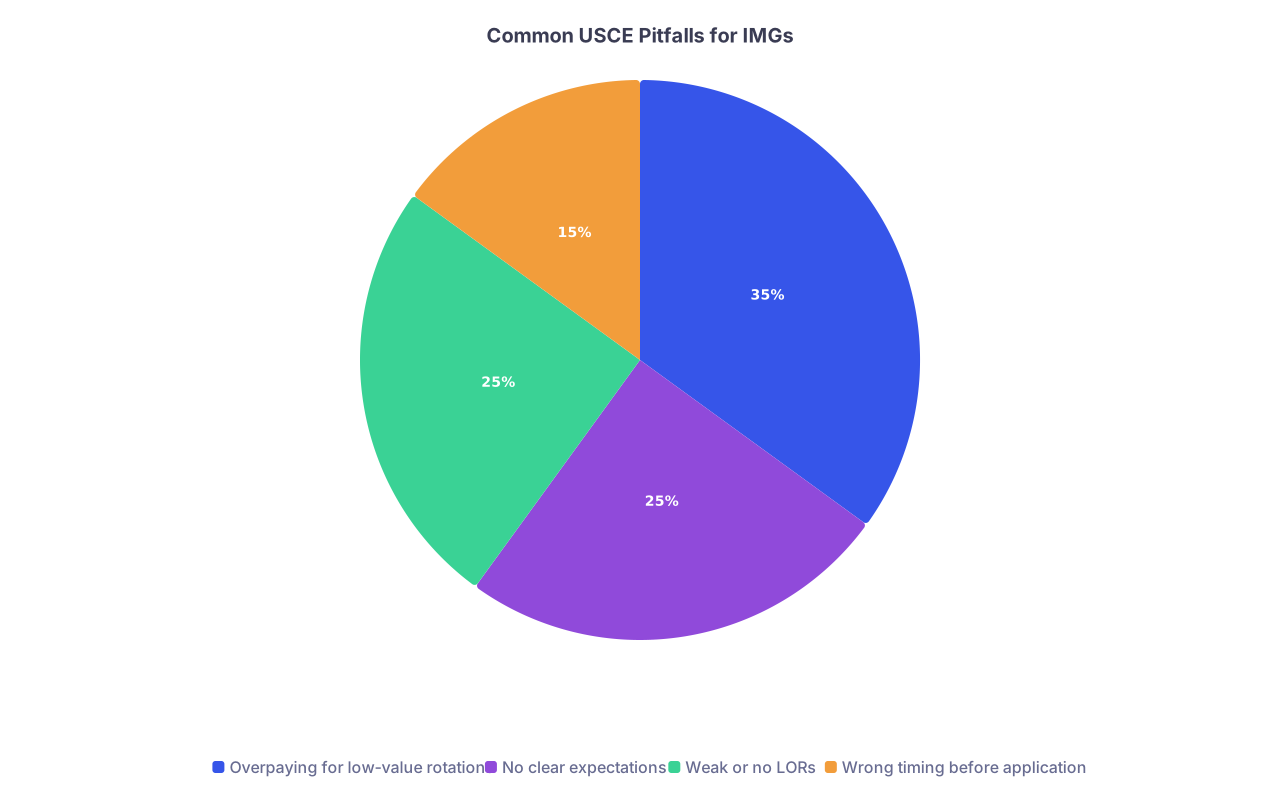
| Category | Value |
|---|---|
| Overpaying for low-value rotations | 35 |
| No clear expectations | 25 |
| Weak or no LORs | 25 |
| Wrong timing before application | 15 |
How Many Months of Each Do You Really Need?
For most IMGs aiming at Internal Medicine, Family Medicine, Pediatrics, Psych, etc.:
- Minimum:
2–3 months of USCE, with at least 1–2 months being hands-on if possible - Competitive target:
3–6 months total USCE, mixed observership/externship, but with multiple strong letters from people who actually saw you work
More than that can help a bit, but after ~6 months, it’s diminishing returns unless you’re also doing research or something else notable.
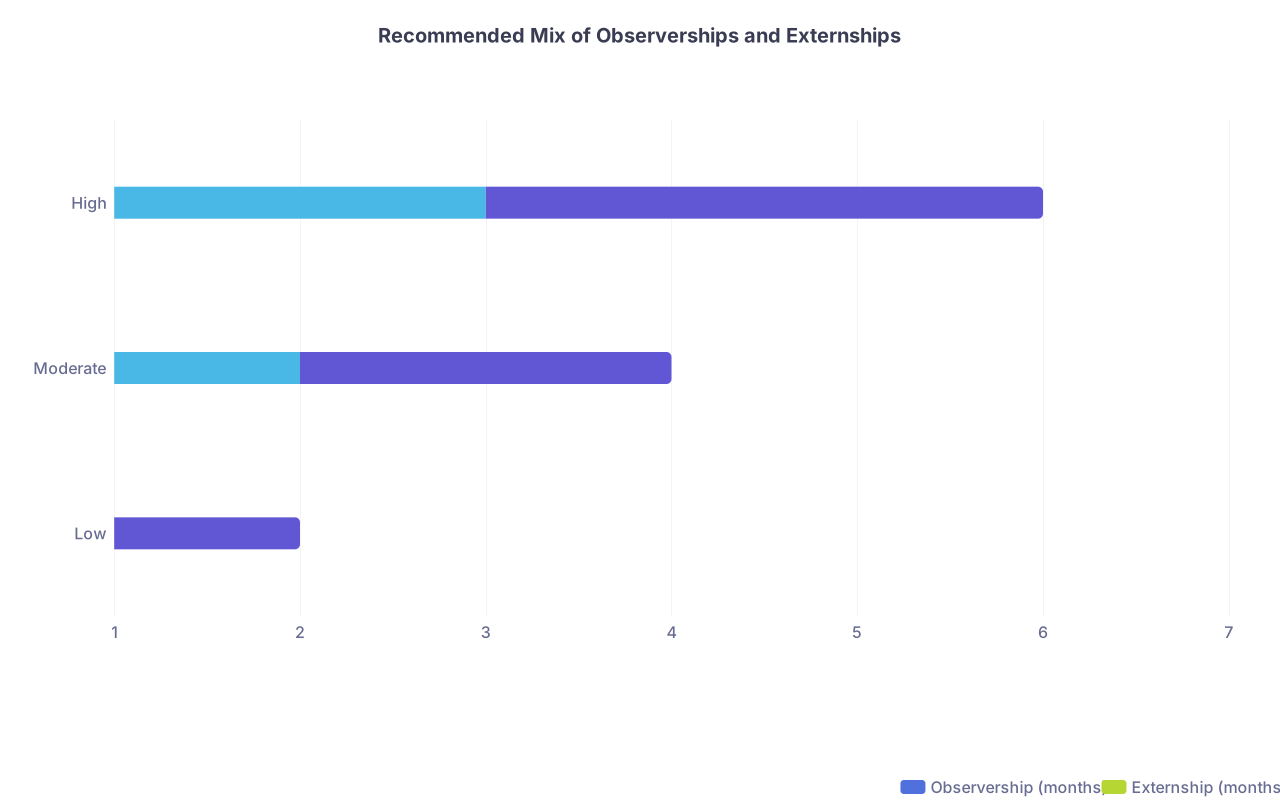
| Category | Observership (months) | Externship (months) |
|---|---|---|
| Low | 1 | 1 |
| Moderate | 2 | 2 |
| High | 3 | 3 |
FAQs
1. Are observerships useless for the Match?
No. They’re not equal to a strong externship, but they’re far from useless. A good observership can:
- Give you your first USCE for your CV
- Provide 1 LOR that comments on professionalism, curiosity, and clinical reasoning (even if not hands-on)
- Prepare you to perform better in later externships
They become “useless” only when you’re literally invisible on the team and nobody can say anything specific about you.
2. If I can only afford one rotation, should it be an observership or externship?
If you’re ≤3 years from graduation and clinically active, externship.
If you’re older with a big gap or weak English in clinical settings and you’re truly not ready to be evaluated hands-on, then observership first is safer—but understand that for application strength, a real externship carries more weight.
3. Can I get strong letters from an observership?
You can get decent letters. Strong letters usually require the writer to see you take responsibility and make decisions. With observerships, what they can honestly say is often limited to:
- Your punctuality
- Your interest level
- Your knowledge during discussions
Still useful, but not as powerful as “this person managed a mini-patient load at the level of a US MS4.”
4. Does the name of the hospital matter more than “hands-on” vs “observership”?
For most IMGs, the quality of your role and letter matters more than the brand name. A detailed letter from a mid-tier community program where you really worked is usually better than a short, generic letter from a top-10 name where you just observed. If you can get both name and responsibility, great. But don’t choose brand name over practical value blindly.
5. What should I actually write on ERAS: observership or externship?
Be honest. Call it what it is in reality, not what the company marketed to you. ERAS has fields like “Role” and “Experience description.” If you didn’t write notes or see patients independently, do not label it “externship” and then describe duties you never had. Program directors can sniff out inflated descriptions quickly, especially when the letter doesn’t match.
Key takeaways:
- If you’re relatively recent and clinically active, externship first usually gives you the highest return—if you’re ready to be evaluated.
- If you’re older, rusty, or brand new to US hospitals, observership first, then externship is often the smarter, safer progression.
- The ultimate goal isn’t “collect rotations”; it’s produce 2–3 strong, specific US letters that show you can function like a US senior medical student in real clinical settings.