
It’s late December. You’re an IMG on an observership in the U.S., standing outside a patient’s room while the attending chats with the resident. You just finished presenting your patient. You think it went… okay? The attending nods, looks at you, then tells the resident quietly but clearly enough for you to hear:
“He’s actually a strong clinician.”
Your heart jumps. That sounds good. But what did they really just say? Is that code for “great hands-on, but we’ll never rank him”? Is it just politeness? Is it gold?
Let me translate what’s actually happening in that moment, because I’ve been on the other side of that conversation. I’ve watched faculty use that phrase in selection meetings and on rotations. And it doesn’t mean what most IMGs think it means.
The Code Language Faculty Use About IMGs
Here’s the unfiltered truth: when faculty talk about IMGs in committees, they almost never speak in direct, blunt terms in front of you. They use code.
For IMGs, these are the greatest hits:
- “Hardworking”
- “Very dedicated”
- “Strong clinician”
- “Good with patients”
- “Pleasant to work with”
Almost none of those phrases tell you what actually matters for your residency chances. Program directors care about a few concrete things: reliability, independence, clinical reasoning, communication, and whether you make the resident’s life easier or harder. Everything else is commentary.
“Strong clinician” is one of those phrases that sounds like it should mean “top of the list.” It doesn’t.
Let me walk you through how that phrase is actually used in three different contexts: on the wards, in letters, and in ranking meetings.
Because in each context, the signal is different.
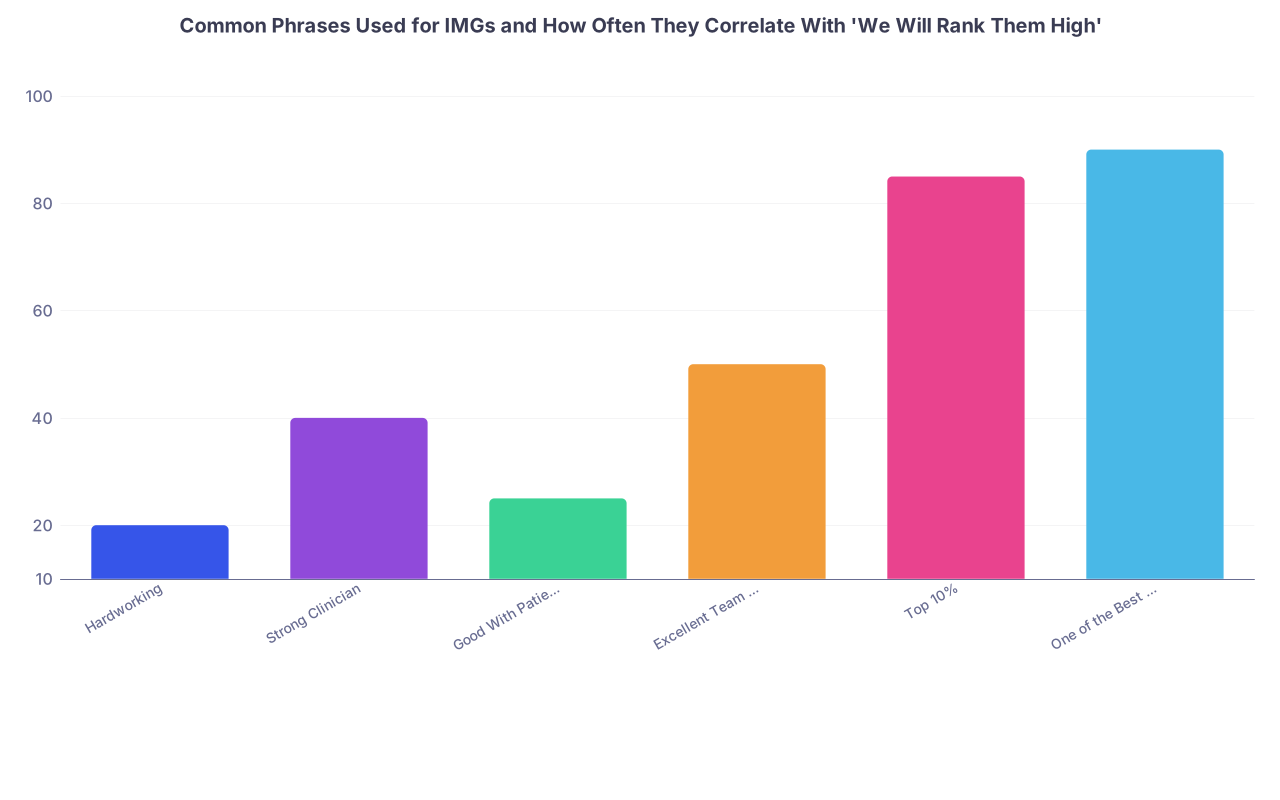
| Category | Value |
|---|---|
| Hardworking | 20 |
| Strong Clinician | 40 |
| Good With Patients | 25 |
| Excellent Team Player | 50 |
| Top 10% | 85 |
| One of the Best IMGs | 90 |
On the Wards: Real-Time Use of “Strong Clinician”
On rounds, when an attending calls an IMG a “strong clinician” to a resident or another faculty member, it almost always means one of four things. These are not equal.
1. The Best Version: “I Trust This Person With Patients”
Sometimes, “strong clinician” is exactly what it sounds like: this person can actually take care of patients at a level close to (or equal to) our interns.
How you can tell it’s this meaning:
- They let you see patients first and present independently.
- They ask your opinion on management more than once.
- They let you call consults or write draft notes (even if they don’t get filed under your name).
- Residents go to you for data, not just for scut.
I’ve seen this with an IMG on an internal medicine service: USMLE 243/250, 3 years of solid medicine experience abroad. Day 3 of the rotation, the senior resident said in the workroom, “He’s basically functioning at intern level.” Attending’s response: “Yeah, he’s a strong clinician.”
Translation: We’d actually feel okay if this person were in our call pool. That is high praise. If your attending ever uses “strong clinician” and gives you real responsibility, that’s as good as it sounds.
2. The Patch: “Their Knowledge is Fine, Their Communication is Rough”
This is where a lot of IMGs land.
Faculty see that you can take a history, do an exam, interpret basic labs, and you don’t miss obvious red flags. But: your presentations are disorganized, your written English is clunky, or your accent plus speed makes you hard to follow.
So they reach for: “He’s a strong clinician,” as a way of saying, “He’s not polished, but at the bedside he’s okay.”
Signs this is the meaning:
- You frequently get interrupted during presentations.
- They say things like, “Your bedside manner is excellent,” but rarely comment on your organization or clarity.
- You get praise in vague terms: “very good clinically,” “solid physician,” but no one mentions leadership, teaching, or top-tier ranking.
Does this help you for residency? Some. It tells the resident: “Trust him to get the blood cultures and not forget the troponin.” It does not automatically mean they’re going to push hard to get you on their rank list.
3. The Consolation Prize: “Good With Patients, But Probably Not Competitive Here”
Here’s the one IMGs hate hearing, and you rarely realize it’s happening in real time.
Faculty sometimes use “strong clinician” when they like you as a doctor, but they know your CV is not competitive for their program: low scores, multiple attempts, big gaps, no real research, visa issues. They don’t want to crush you, especially if you’re clearly caring and motivated.
So they say to the team, and later even in your face: “You’re a strong clinician,” “Patients really like you,” “Any program would be lucky to have you.”
I’ve seen this exact combo: IMG with Step 1: 214 on third attempt, Step 2: 223, trying for university internal medicine. Sweet, hardworking, clinically safe. After rounds, an attending said, “He’s a strong clinician; he’ll be great wherever he ends up.” Then, in the selection meeting three months later: “We liked him but he’s not at our usual metrics. Maybe okay for prelim if we needed one.”
Brutal but true. In that context, “strong clinician” is their way of saying, “Not dangerous. Decent doctor. But not enough on paper for us.”
4. The Political Cover: “I Don’t Want to Argue About This IMG”
Sometimes you get caught in someone else’s politics.
The resident may complain that you’re “too slow,” “asking too many questions,” or “need too much supervision.” Another resident may defend you. The attending wants to shut it down without burning anyone. So:
Attending: “Look, he’s a strong clinician. Let’s just keep expectations clear and give him discrete tasks.”
Translation: “He’s not terrible, but he’s not worth fighting over. I’m not going to write a bad eval, but I’m not going to make this a hill to die on either.”
In that case, the phrase means: neutral. Not bad enough to tank you. Not good enough to rescue you.
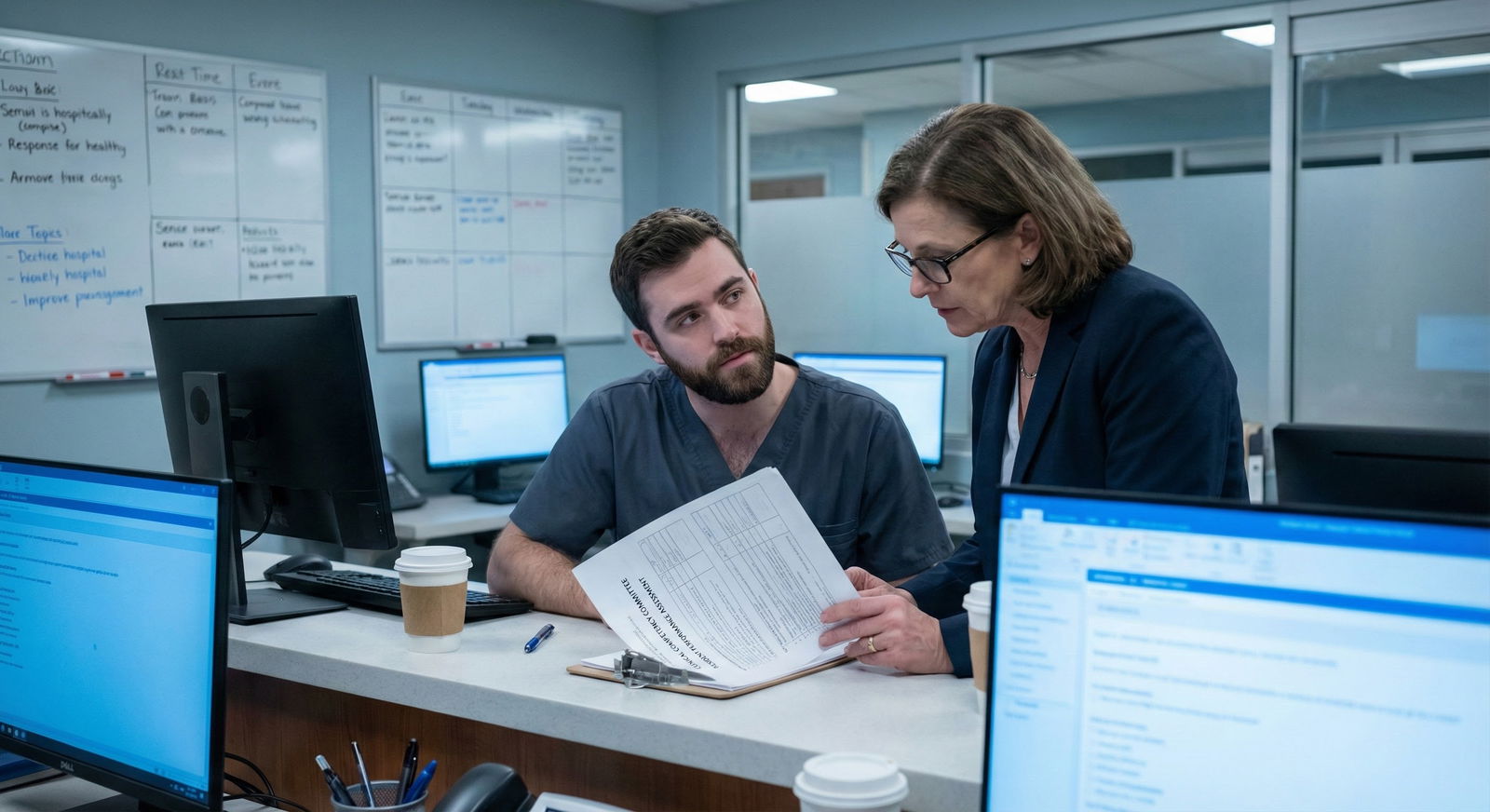
In Letters: When “Strong Clinician” Appears on Paper
The more dangerous context for you is when “strong clinician” shows up in a letter of recommendation.
Letter-writing for IMGs is full of polite code. Program directors read between the lines because they have to. Nobody writes openly negative letters anymore; they just dampen the enthusiasm.
Here’s how “strong clinician” grades out on a PD’s internal scale, based on how it’s used.
The Letter Hierarchy They Won’t Tell You
Let me translate a few standard phrases you’ll see in IMG letters:
| Phrase in Letter | How PDs Read It |
|---|---|
| One of the best students I’ve worked with | Top tier, pay attention |
| Outstanding clinician | Probably top 10–20% on service |
| Very strong clinician | Solid, safe, above average |
| Strong clinician | Fine, not exceptional |
| Good clinician | Baseline, maybe lukewarm |
Now connect that to your chances.
“Strong clinician” by itself, without any superlatives, usually puts you in the: “we could work with this person; not a star” bucket.
What program directors look for is enthusiasm density. How often does the writer commit?
Compare:
“Dr. X is a strong clinician. He performs thorough histories and physicals and is able to generate appropriate differential diagnoses and management plans. He will make a good addition to any residency program.”
Versus:
“Dr. X is one of the strongest IMGs I have worked with in the last five years. He is not only a strong clinician, but shows clinical judgment and efficiency at the level of an intern. I would rank him in the top 10% of all students I have supervised, including U.S. graduates.”
First letter: boilerplate. Second letter: someone is sticking their neck out.
When an attending likes you but doesn’t want to overstate, they use “strong clinician” as their safety phrase. It’s the “I’m saying something positive without betting my reputation” line.
If your letter has no rank phrases (“top 10%,” “one of the best,” “among the strongest,” “superb,” “outstanding”) and the peak compliment is “strong clinician,” that letter is supportive but weak. It will not rescue mediocre scores or a thin CV.
When “Strong Clinician” Is Actually Gold
Occasionally, context flips this.
If the letter comes from a place where the writer is known to be stingy with praise, or from a specialty that’s notoriously harsh (surgery, for example), a line like:
“In summary, I consider her a strong clinician and would be pleased to have her as a resident in our program.”
from a well-known name with a U.S. academic title can hold more weight than a fluffy, over-the-top letter from a no-name private hospital.
Program directors rank sources. A low-key, “strong clinician” from a respected academic chair can be worth more than nine “excellent”s from a community preceptor no one recognizes.
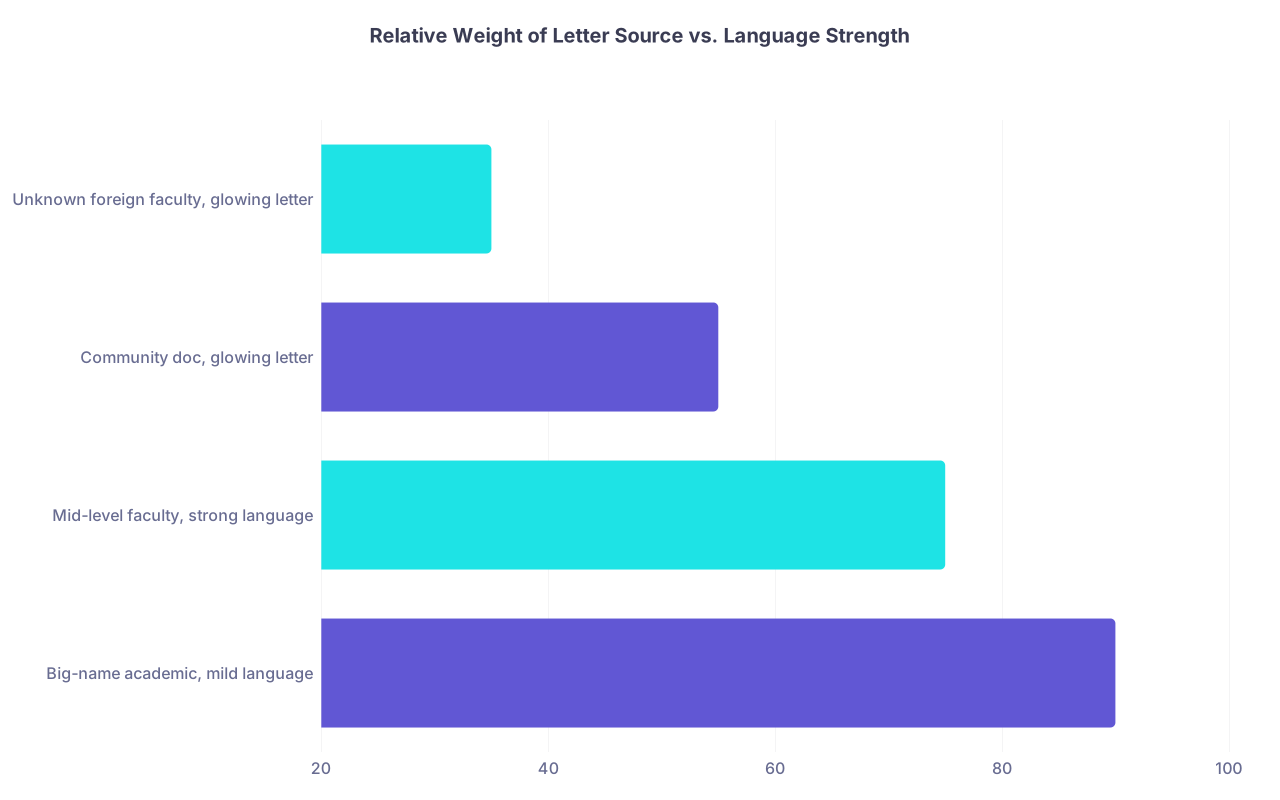
| Category | Value |
|---|---|
| Big-name academic, mild language | 90 |
| Mid-level faculty, strong language | 75 |
| Community doc, glowing letter | 55 |
| Unknown foreign faculty, glowing letter | 35 |
In Rank Meetings: How That Phrase Gets Weaponized (Or Ignored)
The most important setting where that phrase comes up is one you never see: the rank meeting.
Picture the scene. Conference room. Coffee. Stack of applicants. On the screen: your ERAS file. Someone in the room has actually worked with you. Everyone else has just read your scores and your CV.
When your name comes up, the chair or PD turns to that attending: “So what do you think of Dr. ___?”
Now watch how “strong clinician” plays out.
Version 1: The Advocate
This is where you want to be.
“I worked with her for four weeks on the wards. She’s a strong clinician – honestly, functioning at or above intern level. She was seeing a full list, calling consults with appropriate questions, very safe, and the residents loved working with her. I’d be happy to have her in our program.”
Notice the add-ons after “strong clinician”: “intern level,” “full list,” “residents loved working with her,” “happy to have her.”
Those extra clauses are what move your name up the list. “Strong clinician” here is just the opening label.
This is how someone with average scores but real trust on the wards gets ranked higher than a 260 who was awkward and unreliable.
Version 2: The Neutralizer
“I think he’s a strong clinician. He was fine on the rotation. No major concerns.”
That’s the kiss of death for a borderline IMG. Because what the PD hears is: “This person is safe. But forgettable.”
And in a pool of hundreds of IMGs, forgettable might as well be invisible.
If your application is already borderline (visa, lower scores, older grad), a neutral “strong clinician” does nothing. It won’t hurt you. It also won’t give anyone ammunition to argue for you when the list gets tight.
Version 3: The Soft No
This is the version nobody explains to you.
Committee member: “You worked with her, right? Should we consider her strongly?”
Attending: “She’s a strong clinician. But we have a lot of very competitive candidates this year. I don’t think she stands out compared to our U.S. grads.”
There’s your rejection, wrapped in nice language.
That’s a polite way of saying, “She’s fine. If we were a smaller or less competitive program, maybe. But here, no.”
Notice again: “strong clinician” is attached to a limiting clause: “doesn’t stand out,” “many competitive candidates,” “our usual standards.”
How to Turn “Strong Clinician” Into Something That Actually Helps You
You can’t control exactly what phrase they use. But you can control what they mean when they say it.
Here’s what faculty are really paying attention to when they decide whether “strong clinician” is a throwaway compliment or code for “this person is worth fighting for.”
1. Can You Function Like an Intern, Not an Observer?
Programs are not looking for “good students.” They’re looking for “low-maintenance interns.”
The IMGs who get labeled “strong clinician” in the best sense are the ones who, by week 2:
- Carry their own list of patients mentally.
- Anticipate the next step without being told (“We should probably trend lactate again, right?”).
- Call out safety issues before anyone else.
- Do not constantly ask, “What do you want me to do?” but instead say, “I can do X or Y. Which would be more helpful?”
Attendings remember one thing above all: did you make the team’s life easier or harder?
I watched a PD move an IMG way up the list because during a brutal call month, the IMG quietly took over pre-rounding on two extra patients every day, never missed key labs, and wrote draft notes that saved the intern 30–40 minutes each morning. The PD’s line in the meeting:
“She’s a very strong clinician for where she is. She basically functioned as a sub-intern. I’d take her in a heartbeat.”
That’s what you’re aiming for.
2. Do You Actually Think, Or Do You Just Collect Data?
Here’s the dirty secret about a lot of IMGs: they’re excellent at thorough histories and physicals, but shaky at prioritizing and synthesizing.
If, every time you present, you sound like this:
“Mr. X is a 64-year-old male with a past medical history significant for, um, hypertension, diabetes, hyperlipidemia, BPH, status post cholecystectomy 10 years ago, who presents with…”
And by the time you reach the assessment, everyone’s glazed over. Then at the end you say, “So… that’s all.”
You will never be “strong” in the way that matters. You’re just detailed. Not the same thing.
The IMG who gets the real compliment sounds like:
“64-year-old man with poorly controlled diabetes presenting with 2 days of dyspnea and orthopnea, found to have pulmonary edema on CXR and elevated BNP, consistent with new decompensated heart failure. The main issues today are volume status, blood pressure control, and working up the underlying etiology.”
Then they shut up. And when asked, they can justify their plan.
If an attending feels you reason, not just regurgitate, “strong clinician” becomes a real endorsement, not a consolation line.
3. Do Residents Want You Back?
Attendings don’t work with you as closely as residents do. They listen very carefully to resident sentiment.
If the senior says, “Honestly, she was great. I’d be happy to have her as an intern,” that carries a lot of weight.
The resident version of “strong clinician” is:
“She got stuff done without me nagging her. She cared about the patients. She didn’t freak out when things got busy.”
If you annoy the residents, no amount of bedside charm will rescue you. They have more chances than you think to silently kill your application.
4. Do You Make Them Nervous?
There is one kind of IMG that gets never called a “strong clinician,” no matter how “nice” faculty are trying to be: the unsafe one.
If you:
- Miss obvious red flags.
- Don’t know when to ask for help.
- Argue with instructions in a way that suggests you didn’t understand the reasoning.
- Cut corners on the exam or documentation.
You’re done. At that point, best case you get, “pleasant, still developing clinically,” or something equally damning.
So at minimum, get to “safe.” “Strong” is built on top of that.

| Step | Description |
|---|---|
| Step 1 | Your Ward Performance |
| Step 2 | Neutral/Negative Comments |
| Step 3 | Strong Clinician = Consolation Prize |
| Step 4 | Strong Clinician = Solid but Not Standout |
| Step 5 | Strong Clinician = True Endorsement |
| Step 6 | Safe? |
| Step 7 | Independent? |
| Step 8 | Good Reasoning? |
How to Read It When You Hear It About Yourself
You’re not in the rank meeting, but you are hearing things on the wards and in casual conversations. So how do you interpret: “You’re a strong clinician”?
Ignore the words. Look at the behavior around them.
If after calling you a “strong clinician” they:
- Offer to write you a letter without you begging.
- Tell you explicitly, “I would be happy to have you in our program.”
- Ask what specialties you’re applying to and give targeted advice.
- Introduce you to the PD or chief residents.
That’s real. They’re not just being polite.
If they call you a “strong clinician” and then:
- Never follow up about a letter.
- Don’t respond to your email about an LOR for weeks.
- Dodge any concrete statements about “I would rank you highly” or “I’ll support your application here.”
Then it was probably the consolation or neutral version.
You can even be a bit bold. I’ve seen IMGs do this well:
“Dr. Smith, I really appreciate your feedback about being a strong clinician. I’m very interested in internal medicine here. Do you feel I’d be a competitive candidate for your program?”
If they hesitate, or pivot to generic advice about casting a wide net, you have your answer.
The Bottom Line: What “Strong Clinician” Should Mean For You
Do not get hypnotized by that phrase. It’s used for too many different purposes.
Here’s what you actually need to walk away with:
“Strong clinician” can mean anything from “safe, nice, but forgettable” to “I trust you at intern level.” The meaning is not in the phrase; it’s in the context and what comes after it.
What really moves your application is not that compliment alone, but whether someone will go to bat for you: explicit advocacy in letters and rank meetings, specific language about your level (“intern-level,” “top 10%”), and visible trust on the wards.
Your goal as an IMG is not to sound smart or be “hardworking.” Your goal is to function like a low-maintenance, safe, thinking intern whom residents would gladly work with again. When you do that, “strong clinician” stops being code and starts being exactly what you want it to be: a reason they fight to get you on the list.