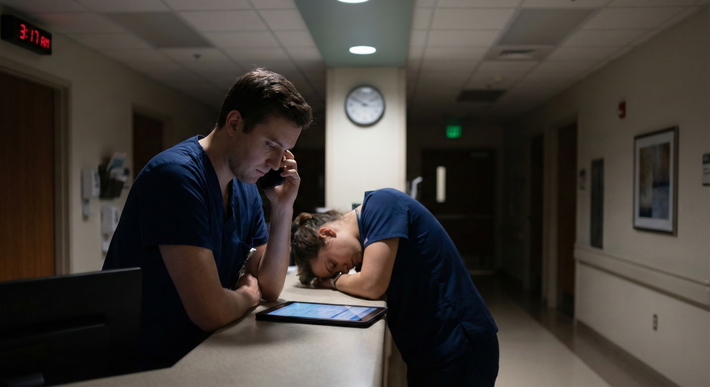
The lie is that interns “don’t have time” for a life. The truth is uglier and weirder: you’ll have time, but not energy, and that’s what really threatens your hobbies.
I’m not going to sugarcoat this because you can smell that from a mile away. You’re not actually asking, “Will I have time to play guitar / run / paint / lift / bake?”
You’re asking:
“Am I about to become a miserable shell of a person who only eats hospital graham crackers and scrolls Epic in their sleep and forgets who they are outside of ‘Dr. So-and-so’?”
Let’s break it down like an actual human who has watched people go through this, not like a brochure.
How Much Life You Actually Keep (And What Dies First)
Here’s the uncomfortable baseline: you won’t lose all your hobbies.
But you will lose the version of you who could do them whenever you felt like it.
Most interns end up with three categories of hobbies:
- The hobbies that go into hibernation
- The hobbies that shrink but survive
- The one or two that weirdly become non-negotiable
Let’s be brutally honest about typical intern time and energy.
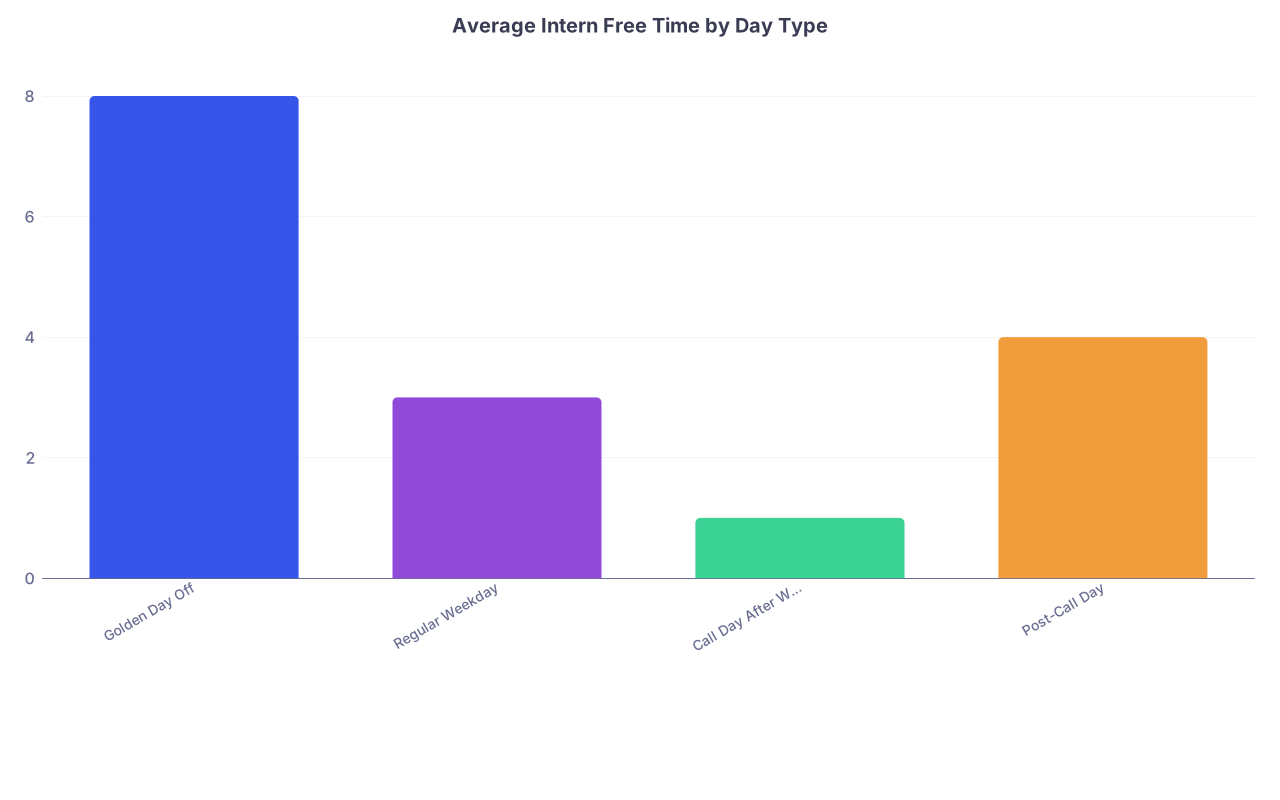
| Category | Value |
|---|---|
| Golden Day Off | 8 |
| Regular Weekday | 3 |
| Call Day After Work | 1 |
| Post-Call Day | 4 |
This is awake free time that’s actually usable, not counting commuting, showering, or the 45 minutes you spend staring at your phone in a dissociative haze.
So what usually happens?
- Long, setup-heavy hobbies (rock climbing trips, multi-hour DnD campaigns, elaborate baking, orchestra-level music) often get paused or cut way down.
- Lightweight, low-friction hobbies (journal for 5 minutes, short runs, 20-minute sketching, a few songs on guitar) often survive but shrink.
- One or two “sanity anchors” (lifting, running, reading, gaming) can become almost sacred—not because you’re disciplined, but because you’ll fall apart without them.
The scary part is you don’t fully control which ones land in which bucket. Your schedule and your exhaustion level decide a lot of it for you.
Reality Check by Rotation: Will You Have a Life?
Internship isn’t one monolithic block of misery. It’s a patchwork of rotations that each destroy your life in their own special way.
The Big Picture: Rotations vs. Actual Life
| Rotation Type | Hours/Day (Typical) | Life Outside Work | Hobby Survival |
|---|---|---|---|
| Inpatient Wards | 11–14 | Barely | Micro-hobbies |
| ICU | 12–14 | Almost none | Single anchor |
| Nights | 10–12 | Weird, flipped | Solo hobbies |
| Outpatient/Clinic | 8–9 | Somewhat normal | Hobbies revive |
| Elective | 6–8 | Best shot at life | Multiple hobbies |
Inpatient Wards (Where Fun Goes to Die… Temporarily)
This is where your fear is coming from, probably. Those classic 6 a.m. pre-rounds, 7 a.m. conference, 5–7 p.m. sign-out days.
Here’s what usually survives:
- 1 hobby that can be done in 30 minutes or less
- Anything you can do without leaving your apartment
- Anything you can do while half-dead (Netflix, low-effort gaming, knitting, journaling)
Things that usually don’t:
- Driving 30 minutes to a climbing gym
- Regular late-night social plans
- Classes with fixed times, like a weekly pottery class at 7 p.m.
I’ve seen interns try to keep 3–4 real hobbies going through wards. It goes the same way:
Week 1: “I can totally keep lifting 4x/week and my language app and my book club.”
Week 4: “I slept in my scrubs and had trail mix for breakfast at 3 p.m.”
ICU (You Become a Creature)
ICU is like wards but more intense, and more emotionally draining. Even if the hours are similar, the emotional hangover is brutal.
On paper, you might have 2–3 hours free. In real life, you “have” 45 usable minutes and a desire to stare at the wall.
What survives:
- One low-friction physical thing (short run, quick lift, long walk)
- Or one mental escape (TV show, game, manga, whatever)
- That’s it. Honestly.
And you’ll still feel guilty for “not doing enough.”
Nights (You Have Time, But Everyone Else Is Asleep)
Weirdly, some interns actually get more hobby time on nights, but it’s socially useless.
You might:
- Play guitar at 10 a.m.
- Lift at a 24-hour gym when it’s empty
- Read in the middle of the “day” when your friends are working
Your social hobbies suffer. Your solo ones might do okay if you’re not totally wrecked.
Outpatient + Electives (Where Your Hobbies Come Back From the Dead)
Here’s the hope you’re afraid to trust: you will get rotations where you feel almost like a person again.
During light clinic or electives, people:
- Rejoin their running group
- Go to actual dinners
- Restart instruments
- Travel on weekends
- Remember they like things
The whiplash is real. One month you’re microwaving ramen in the call room, the next you’re going to a friend’s wedding and staying awake the whole time.
The Real Threat: Not Time, But Identity Erosion
You’re not only scared of losing hobbies. You’re scared of losing yourself.
Here’s what I’ve seen that feeds that fear:
- You start saying things like, “I used to paint,” “I used to write,” “I used to run marathons.”
- People introduce you as “the intern” more than as anything else.
- Your days off become “catch up on life logistics” instead of “do something I actually like.”
You start thinking:
If I don’t play piano for a year, am I still “someone who plays piano?”
If I don’t write for six months, am I lying when I say “I like writing?”
That’s the part that hurts, not the missed gym sessions.
So here’s the mindset that actually helps:
You’re not abandoning hobbies. You’re putting some into forced partial remission.
Hobbies aren’t all-or-nothing. They can be:
- Scaled down
- Temporarily paused
- Rotated in and out depending on your block
You don’t have to be “the serious runner” during ICU. You can be “the person who jogs once a week so they don’t scream.”
What Interns Who Do Keep Hobbies Actually Do Differently
Not the “perfect” ones. The barely-holding-it-together-but-still-human ones.
1. They Pick One Non-Negotiable
Not five. Not three. One.
It might be:
- Lift 2x/week, even if it’s short
- Run twice a week
- 15 minutes of guitar
- Read 10 pages every night
- One creative thing every Sunday (bake, paint, whatever)
The point isn’t performance. It’s continuity. Being able to say “I still do this.”
2. They Make Rules That Match Reality, Not Aspirations
Bad rule:
“I’ll go to the gym every day after work.”
Better rule:
“On non-call days, I’ll do 20–30 minutes of movement at home or gym, even if it’s just walking.”
Bad rule:
“I’ll write a short story every week.”
Better rule:
“On my golden day off, I’ll write for 45 minutes, even if I hate everything I produce.”
3. They Lower the Bar for What “Counts”
You’re going to have to kill the perfectionist part of you that thinks: “If I’m not doing it properly, there’s no point.”
Stuff that does count during intern year:
- Playing guitar for 10 minutes between laundry cycles
- Reading 5 pages of a book before bed
- Half a workout instead of a full routine
- Sketching in a notebook for 15 minutes
If you treat all of that as “not real,” you’ll never feel like you did anything, even when you did.
4. They Accept Rotational “Seasons” of Hobby Life
You don’t have to maintain the same level of everything year-round.
Try thinking in blocks:
- “On wards: I’ll just keep my one anchor hobby alive.”
- “On outpatient: I’ll bring back 1–2 more.”
- “On electives: I’ll remind myself what life feels like and lean into it.”
Stop expecting ICU-you to behave like elective-you. That disconnect will wreck you.
What You Can Do Now (Before You Even Start)
The anxiety loves to live in the vague. So let’s make it less vague.
Step 1: Decide Your “Anchor Hobbies”
Pick:
- 1 thing physical
- 1 thing mental/emotional/creative
Examples:
- Physical: lifting, running, yoga, walks, at-home workouts
- Mental/creative: reading, music, drawing, journaling, gaming (yes, that counts), language app
You’re not marrying them forever. You’re just saying, “These are the ones I’ll protect the most.”
Step 2: Design the 15-Minute Version
Literally make a “minimum version” for each:
- Running: 1 mile or 10-minute jog
- Lifting: 2 compound movements, 2 sets each
- Guitar: play 2 songs, finger exercises, done
- Writing: 10 minutes of freewriting
- Drawing: one small sketch, even if it sucks
Write it somewhere. Because when you’re exhausted, your brain will tell you “there’s no point.” You want to be able to point to something concrete and say: this counts.
Step 3: Expect to Grieve Some Things
There’s loss here, even if it’s temporary.
You will miss:
- That hobby you used to do for hours without checking a pager
- The freedom to plan weeks ahead and trust you’ll be awake enough
- The version of yourself who wasn’t tired 95% of the time
You’re allowed to be sad without making it into a story about how you’re “failing” at balance.
What If You Do Lose Almost Everything for a While?
Let’s say worst case happens: You hit a brutal stretch—back-to-back wards, ICU, nights—and realize, “I haven’t really done any of my hobbies in 2–3 months.”
Scary thought: “Is this just who I am now?”
No.
I’ve watched interns who:
- Didn’t touch a piano for 9 months then went back to weekly playing in PGY-2
- Barely ran all intern year, then trained for a half marathon later
- Stopped drawing completely, then started again on outpatient blocks
Skills feel gone, identity feels hollow, and it’s very easy to catastrophize that into, “I’ve lost this forever.”
But humans are disturbingly good at picking things back up. Rusty, yes. Gone, no.
If you do lose almost all your hobbies for a stretch, the main thing is this:
Don’t let the shame of stopping keep you from restarting.
You’re not weak for being flattened by intern year. You’re normal.
Visualizing the Year: Your Hobbies Aren’t a Straight Line
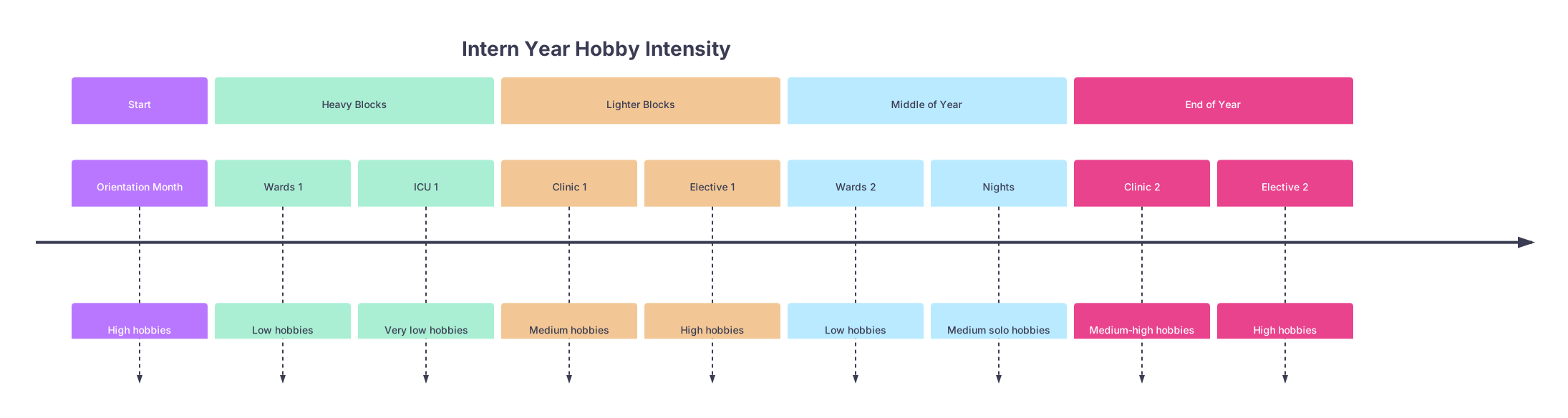
| Period | Event |
|---|---|
| Start - Orientation Month | High hobbies |
| Heavy Blocks - Wards 1 | Low hobbies |
| Heavy Blocks - ICU 1 | Very low hobbies |
| Lighter Blocks - Clinic 1 | Medium hobbies |
| Lighter Blocks - Elective 1 | High hobbies |
| Middle of Year - Wards 2 | Low hobbies |
| Middle of Year - Nights | Medium solo hobbies |
| End of Year - Clinic 2 | Medium-high hobbies |
| End of Year - Elective 2 | High hobbies |
It’s not “you have a life” vs “you don’t.”
It’s more like: “Sometimes you’re a human. Sometimes you’re a goblin. The ratio changes month to month.”
Guilt, Comparison, and the Social Media Lie
You’ll see:
- Co-residents posting about their 5 a.m. lifts
- People baking sourdough on their days off
- That one intern who somehow runs marathons and has an aesthetic apartment and brings homemade lunches
You will compare yourself. And you will come up short.
What you don’t see:
- Their support system at home
- Their actual fatigue level
- Their missed hobbies
- The cost of maintaining that online image
Your job isn’t to be the intern with the best work-life Instagram. Your job is to get through this year intact enough that you still recognize yourself when it’s over.
One More Thing You’re Not Saying Out Loud
Underneath “Will I lose my hobbies?” there’s often this deeper fear:
“If medicine eats everything I love, was this a mistake?”
You’re afraid of waking up five years from now and realizing:
- You stopped writing
- You stopped playing music
- You stopped running
- You stopped doing all the things that made you, you
And all you are is your job.
I won’t lie: that’s a risk if you never push back. Medicine will happily fill every available corner of your life if you let it.
But asking this question now—before you even start—is actually a good sign. It means you already see the trap. You’re already suspicious of the “medicine is my whole personality” narrative.
That suspicion? Hang on to it. It’s what will make you fight, even a little, to keep one or two small things yours.



FAQ (Exactly 5 Questions)
1. Will I realistically have time for any hobbies as an intern?
Yes, but not every day and not at the level you’re used to. Think 10–30 minutes of something on many days, and a few longer blocks on days off or lighter rotations. You probably won’t maintain 4–5 serious hobbies, but you can keep one or two alive in a smaller form.
2. Should I even bother signing up for a league/team/class before intern year?
Be careful with anything that’s rigid and frequent, like a team that plays 3 nights a week or a class with strict attendance. A once-a-week thing with flexible attendance can work, especially during outpatient blocks. But during wards/ICU, you’ll likely miss a lot and feel guilty. If you do it, go in expecting inconsistency.
3. What if I start intern year strong with hobbies and then completely fall off by winter?
That’s extremely common. It doesn’t mean you’re weak or that those hobbies are gone forever. Treat it like a bad block of training, not the end of your identity. When you get to a lighter rotation, pick one thing and restart in the smallest possible way. Don’t wait to “feel ready.” You won’t.
4. Is it better to focus on physical or creative hobbies during intern year?
If you can, keep one of each. Physical (running, lifting, yoga, walking) helps you not completely disintegrate mentally. Creative/mental (music, writing, drawing, reading, gaming) helps you feel like a person and not just a body that moves from room to room. If you truly can only keep one, pick the one that makes you feel most like yourself.
5. How do I stop feeling guilty when I “waste” my day off on rest instead of hobbies?
Days off are triage. Sometimes sleep is the hobby. You don’t owe productivity to anyone on your free day. If all you can manage is laundry, a nap, and one 20-minute thing you vaguely enjoy, that still counts. You’re not failing at balance—you’re surviving a year that’s objectively too much for one human.
Bottom line:
- You probably won’t lose all your hobbies, but they’ll get smaller, messier, and more seasonal than you want.
- One or two “anchor” hobbies in tiny, imperfect doses can keep you from feeling like medicine ate your whole personality.
- Intern year is not the final verdict on who you are; it’s a brutal season. Your job isn’t to “do it all”—it’s to get through it with at least a few pieces of yourself still recognizable.