
The fastest way for a physician to light six figures on fire isn’t a bad car lease. It’s day‑trading between cases.
You’re not losing to the market. You’re losing to time, attention, and overconfidence. And if you keep treating trading like a side quest during clinic, you’re setting yourself up for financial, professional, and even legal trouble.
Let’s walk through the errors I see over and over from doctors who “just trade a bit on the side” between patients.
1. Treating Day‑Trading Like a Harmless Hobby
Between cases is the worst time to discover you’re a gambler with an MD.
The big mistake: assuming that because you’re smart and disciplined in medicine, you’re automatically smart and disciplined in markets. You’re not. Not by default.
Common signs you’ve slipped from “investor” into “day‑trader with an excuse”:
- You’re checking your phone for price moves between patients
- You place trades from the work computer or hospital Wi‑Fi
- You tell yourself it’s “just a few thousand to play with”
- You feel a hit of adrenaline when your phone buzzes with a “fill” notification
Here’s what doctors miss: day‑trading is not a casual activity. It’s a full‑time, screen‑glued job in an environment designed to eat part‑timers alive.
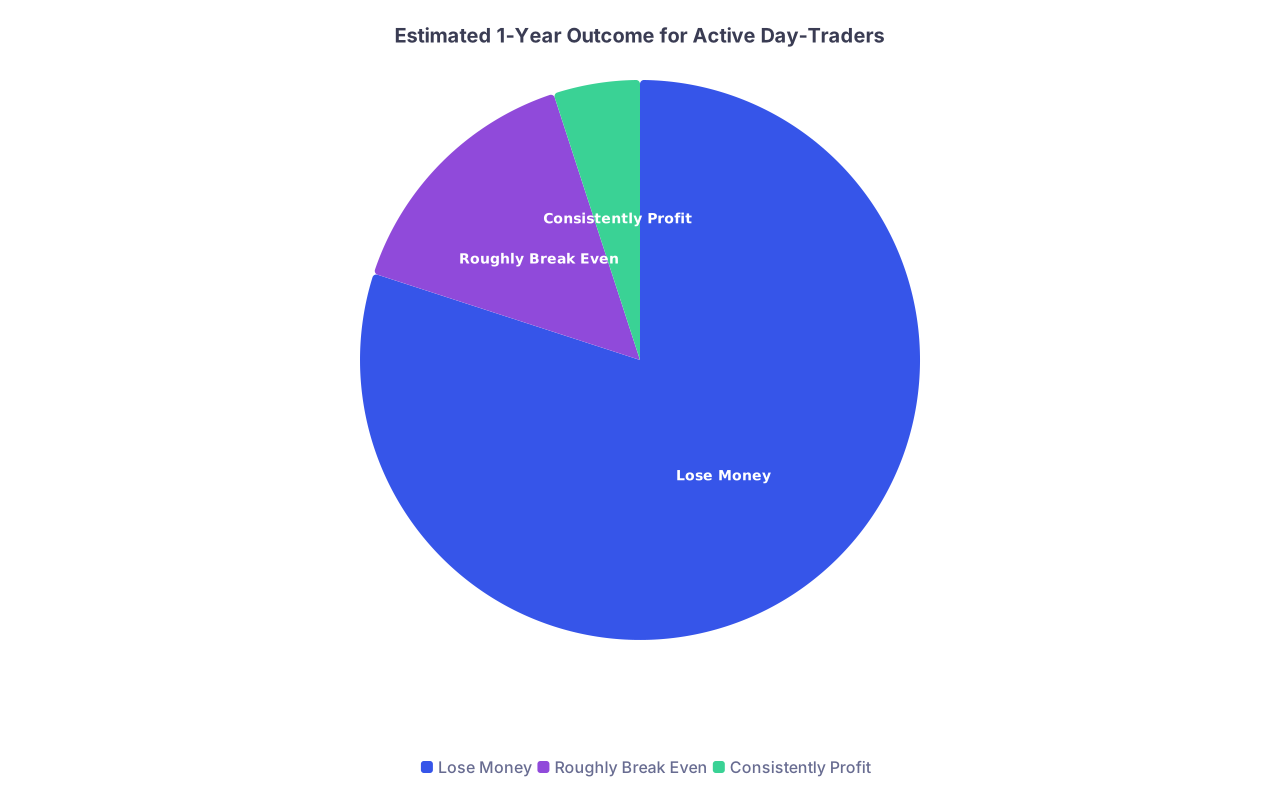
| Category | Value |
|---|---|
| Lose Money | 80 |
| Roughly Break Even | 15 |
| Consistently Profit | 5 |
You don’t need perfect data to see the point. Most active traders lose. The minority who win:
- Have tight risk rules
- Treat it as a business
- Are not glancing at charts between consults
Bottom line: If you wouldn’t do a complex procedure “on the side” while half‑distracted, don’t do real‑time trading like that either.
2. Trading From the Hospital or Clinic Network
This one can blow up more than your brokerage account.
I’ve watched physicians pull up their brokerage platform on workstations that also display PHI, toggle windows when someone walks in, and assume, “IT has bigger things to worry about.”
That’s naïve.
Here’s what you’re risking when you trade on:
- Hospital Wi‑Fi
- EMR‑connected workstations
- Shared clinic computers
You open yourself to:
- Compliance questions – Why are you running non‑clinical software on clinical hardware?
- Security concerns – If your trading tools use screen capture, plug‑ins, or external scripts, that’s a problem.
- Time‑use audits – If there’s ever a complaint about your availability or “ghosting” patients, IT logs can suddenly matter.

Worst‑case scenario: an adverse patient event happens around the same time your activity logs show you were actively trading or on a trading site. You’ve just handed a plaintiff attorney a story they love.
Avoid this mistake:
- Never trade on EMR workstations
- Don’t install or run trading platforms on work computers
- Avoid hospital/clinic Wi‑Fi for trading altogether; use your own device and cellular if you absolutely must look
If you need to actively trade, do it off‑site, off‑shift, on your own equipment. Period.
3. Letting Market Screens Compete With Patient Care
The most dangerous thing about day‑trading for clinicians isn’t the money. It’s the distraction.
I’ve seen this pattern:
- Surgeon places a tight stop just before going into a 3‑hour case
- Market whipsaws, stop triggers
- Pager buzzes, watch pings, phone vibrates in pocket
- Attention splits – even if hands stay steady
Or the outpatient version:
- You glance at your P&L between patients
- One position is down far more than expected
- Now you’re in the next room, nodding while the patient talks, but your brain is replaying the candle chart
That’s not just unprofessional; it’s dangerous.
You’re trained to maintain focus under stress. But that doesn’t mean you’re immune to:
- Emotional spillover from losses
- Impulsive “revenge trades” during a lunch break
- Rushing through charting to “get back to the screen”
If something goes wrong clinically and your trading activity is discoverable (and it usually is), you don’t want that narrative in a deposition:
“Doctor, isn’t it true that at 10:13 am, during the time you were responsible for Ms. X, you were placing stock trades on your mobile device?”
Rule of thumb: If you’re responsible for patient care in real time, you shouldn’t be responsible for real‑time trading decisions at the same time.
4. Overconfidence: “I’m a Doctor, I Can Figure This Out”
Medical training selects for people who can grind through years of complexity. That same trait will destroy you in leveraged markets if you’re not careful.
Here’s the pattern I’ve seen too many times:
- Physician reads a few books/podcasts on options or day‑trading
- Opens a margin account
- Starts with small wins (“this isn’t that hard”)
- Increases position size
- Then hits a volatility spike they didn’t see coming
Overconfidence errors show up as:
- Using margin because “it’s just 2x, I’m being conservative”
- Trading options you don’t fully understand (iron condors, spreads, naked puts)
- Concentrated positions in biotech, med‑device, or “AI in health” stocks because you “know medicine”
Let me be blunt: your domain expertise in medicine does not create an edge in short‑term price movements. At all.
| Behavior | Why It Backfires |
|---|---|
| Trading on “medical insight” | Market already priced it in or doesn’t care |
| Scaling up after early wins | Early luck mistaken for skill |
| Ignoring position sizing | One bad day erases months of gains |
| Writing options for income | Rare events cause catastrophic loss |
You wouldn’t do a complex procedure based on one weekend course. Yet many physicians will trade complex derivatives after a few YouTube videos and a subreddit.
Guardrail: Treat every lever (margin, options, short‑selling) as if it’s a loaded syringe. If you can’t explain exactly how you could lose money—and how much—without notes, don’t use it.
5. Ignoring Pattern Day Trader and Tax Rules
This is where “little side trading” quietly becomes a regulatory mess.
Under FINRA rules, you’re a Pattern Day Trader (PDT) if:
- You have a margin account
- And you execute 4 or more day trades in 5 business days
- And those day trades are more than 6% of your total trades in that period
Once flagged as PDT, you must maintain at least $25,000 in the account or face restrictions. A lot of physicians drift into PDT status accidentally.
| Issue | Typical Mistake |
|---|---|
| PDT Rule | Accidental 4+ day trades in 5 days |
| Wash Sales | Harvesting losses but rebuying too soon |
| Short-Term Taxes | Underestimating tax hit on quick flips |
| State Taxes | Ignoring high-tax state impact |
On the tax side, frequent trading between cases leads to:
- Short‑term capital gains (taxed at ordinary income rates)
- Wash sale violations if you sell for a loss and rebuy within 30 days
- Nightmare 1099s with dozens or hundreds of line items
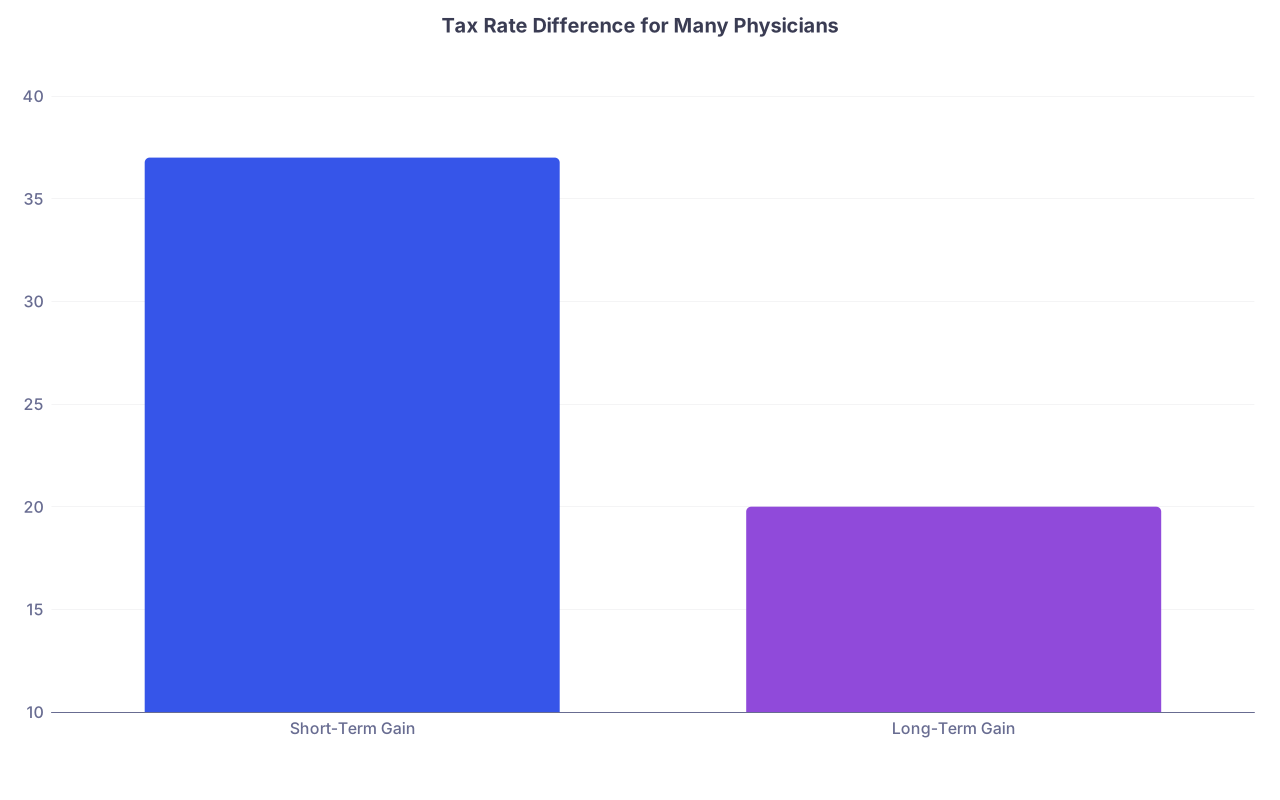
| Category | Value |
|---|---|
| Short-Term Gain | 37 |
| Long-Term Gain | 20 |
Rough example: you’re in the 37% federal bracket. Short‑term trading gains are taxed around 37% + state. Long‑term capital gains might be around 15–20% + state, depending on your income.
Day‑trading as a high‑income doc means:
- You’re likely in the top bracket
- You’re generating mostly short‑term gains
- You’re sending a huge chunk of any success straight to the IRS
Lose big? You still owe taxes on your prior gains if they were in a different year.
Avoid the trap:
- Know exactly how PDT rules work before you place your first intraday round trip
- Decide whether you want to risk being classified as a trader or stay an investor
- Get a CPA who actually understands active trading if you insist on doing this
6. Misusing Emergency Funds and Future Tuition Money
This mistake is brutal because you don’t feel it until it’s too late.
I’ve seen:
- Attendings “grow” their kids’ 529 money through options
- Fellows day‑trade with their emergency fund during market boredom
- Residents swing‑trade with money they mentally earmarked for board expenses
Day‑trading has one brutal feature: losses can be fast, big, and irreversible.
That tuition payment due in three months? That board exam fee? The down payment sitting in a “just for a month” trading account?
You might:
- Get margin‑called on a gap down
- See a biotech stock halt on bad news
- Watch an options position go to near‑zero overnight
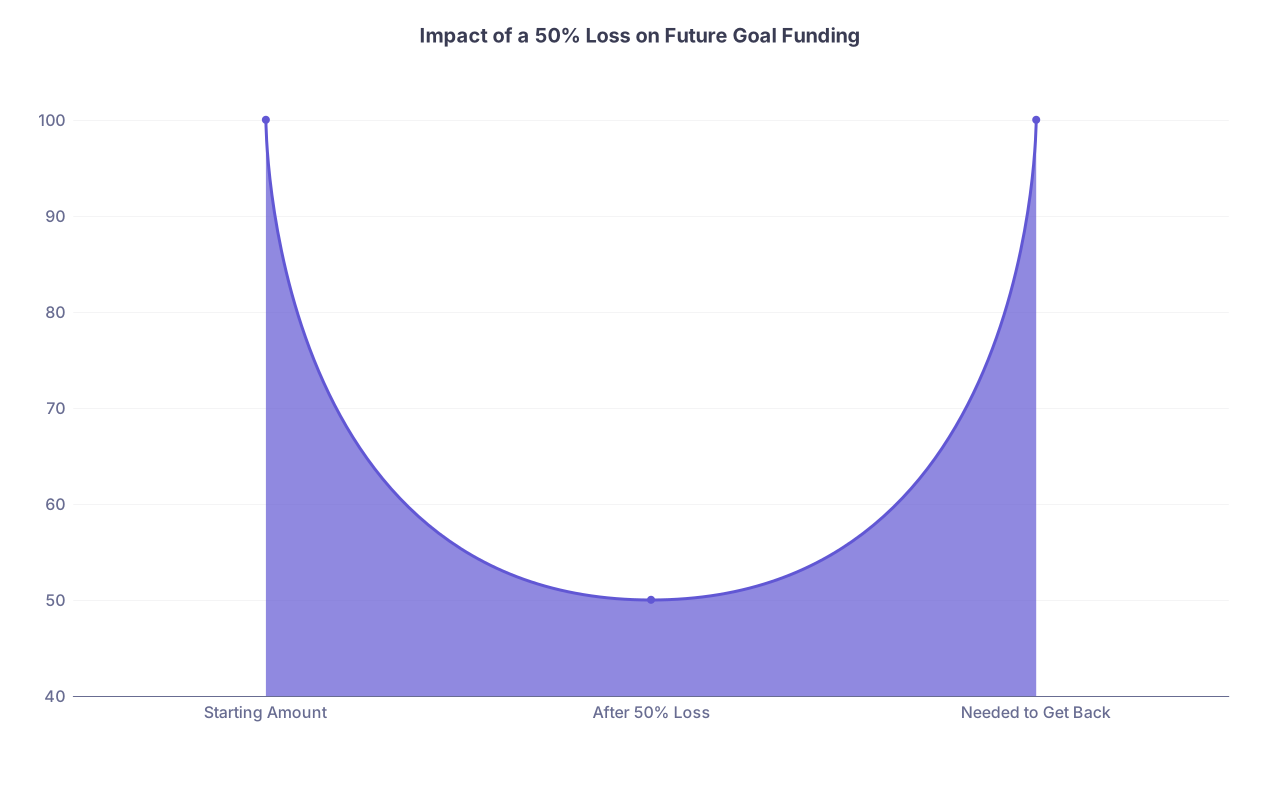
| Category | Value |
|---|---|
| Starting Amount | 100 |
| After 50% Loss | 50 |
| Needed to Get Back | 100 |
You lose 50%, you need 100% gain just to get back to even. There’s no “attending salary” big enough to make that painless when you’re talking about:
- House down payments
- College funds
- Practice buy‑ins
Iron rule: Money with a time‑bound purpose—next 5 years, sometimes longer—has no business in day‑trades. Use boring accounts for boring, critical money.
7. Confusing Entertainment With a Financial Strategy
Say it plainly: for many physicians, day‑trading is just socially acceptable gambling with better graphs.
The market setup is perfect for addiction:
- Constant feedback loops
- Hit of dopamine on green days
- Forums and Discord groups cheering each other on
- The illusion of control with charts and indicators
Signs you’re using trading as entertainment:
- You feel “itchy” if you haven’t placed a trade in a few days
- You catch yourself scanning charts even when you’ve promised to stop
- You hide your true trading P&L from your partner
- You’re chasing the feeling of “being right,” not building wealth

There are cheaper hobbies:
- $20/month for Netflix
- $100 lesson on a new sport
- Even blackjack in Vegas with a fixed loss limit
Plenty of docs pretend their trading is “serious wealth building” when it’s really stress‑relief and ego gratification wrapped together. That’s dangerous, because you’ll rationalize scaling up your bets.
If you truly want entertainment, call it that. Cap it at a tiny percentage of net worth (1–3%) and accept it might all go to zero.
8. Neglecting Real Wealth Builders Because Trading Feels “Active”
This one is quiet but expensive.
While you’re compulsively checking quotes between cases, you’re often not doing the boring things that actually make physicians wealthy:
- Maxing all tax‑advantaged accounts (401k/403b, 457b, HSA, backdoor Roth)
- Strategizing student loan payoff vs. forgiveness
- Planning asset protection (malpractice, umbrella, proper titling)
- Buying into your group or ASC at the right time
I’ve seen attendings with:
- Six‑figure day‑trading losses
- Unfunded 529s
- No umbrella policy
- Minimal disability coverage
Why? Because markets feel more “fun” and “immediate” than:
- Reading group partnership agreements
- Comparing disability policy riders
- Sitting down with a CFP/CPA for two hours
| High-Impact (Boring) | Low-Impact (Exciting) |
|---|---|
| Maxing retirement accounts | Intraday options scalping |
| Paying high-interest debt | Penny stock speculation |
| Umbrella & disability | Meme stock chasing |
| Basic index investing | Crypto day‑trading |
Every hour you spend obsessing over tick charts is an hour you’re not tightening the foundational parts of your financial life. Over a decade, that trade‑off is huge.
9. Failing to Separate Roles: Physician, Owner, and Trader
Between cases, you’re wearing multiple hats:
- Clinician
- Employee/partner
- Sometimes medical director or business owner
- Parent, spouse, human who needs sleep
Trying to add “live trader” into that mix during work hours muddies boundaries.
Where this becomes a legal/ethical issue:
- Conflict of interest – if you ever have non‑public info (e.g., clinical trials, internal data) and trade related securities
- Professionalism – patients, staff, and colleagues see you preoccupied with the market instead of the work
- Documentation risk – rushed notes because you wanted to “just manage a position real quick”

Here’s the harsh truth: the more hats you wear during a clinical day, the higher your chance of screwing one up badly. Trading is the easiest one to cut—so cut it.
10. No Written Rules, No Exit Plan
Most between‑cases traders have:
- No written trading plan
- No max loss per day/week
- No clear stop criteria for “this isn’t working, I’m done”
They “feel it out.” That works until:
- Two or three bad weeks in a row
- Market regime changes (volatility spike or grind)
- Personal stress increases (family, malpractice scare, admin drama)
Then they double down, widen stops, “average down,” and tell themselves it’ll “come back.”
Professional traders have:
- Daily loss limits
- Clear risk per trade
- Well‑defined setups, not vibes
- Performance metrics that determine if they keep trading or shut it down
You can’t experiment with this casually in 5‑minute bursts between consults and expect not to pay a price.
If you insist on day‑trading anyway, at minimum write:
- Max % of net worth you’ll ever use for this
- Max % loss per trade, per day, per month
- A specific dollar loss at which you stop completely for at least 3–6 months
- A statement of purpose: is this entertainment, skill development, or actual income plan?
And then tape it somewhere you’ll see before you log in.
Actionable Next Step
Today, not “sometime,” do this:
Open your brokerage app and classify every single dollar in it as either:
- Long‑term wealth
- Short‑term speculation/entertainment
If any long‑term, mission‑critical money (down payment, tuition, emergency fund, upcoming tax bill) is sitting in positions you actively tinker with between cases, move it out to a boring, safer account before your next clinic session.
FAQ (Exactly 5 Questions)
1. Is it ever reasonable for a physician to day‑trade at all?
Yes—but not between cases, and not with meaningful money. If you’re going to do it, it should be:
- Off‑hours, on your own equipment and network
- With a tiny slice of your net worth (think 1–3%, not 20–30%)
- After your core financial plan is solid (retirement, insurance, debt strategy, emergency fund)
If you’re still paying off high‑interest debt or haven’t maxed retirement accounts, your money has better jobs than day‑trading.
2. What’s the safest way for a doctor to “play” in the market without blowing up?
The safest approach is to:
- Keep 90–99% of your investments in diversified, low‑cost index funds or similar core holdings
- Define a strict “play money” amount (small) in a separate account
- Never use margin or complex options in that play account
- Agree in advance that if it goes to zero, you won’t add more until at least a year has passed
If you can’t watch it drop 50–100% without emotional turmoil, it’s not play money.
3. Could trading during downtime ever create malpractice or legal risk?
It absolutely can. If there’s an adverse outcome and any investigation or lawsuit happens, opposing counsel may look at:
- Device logs
- EMR access times
- Wi‑Fi usage
- Activity on workstations
If it shows you were trading or on trading sites near the time of the event, that can undermine your defense, even if the care itself met standards. You do not want to hand anyone that narrative.
4. What about swing trading instead of day‑trading—is that safer for physicians?
Swing trading (holding for days to weeks) avoids some intraday distraction, but it’s not automatically safe. You still face:
- Short‑term tax rates
- Overnight gaps on news
- The temptation to “just check one thing” between patients
If you must trade more actively, swing trading outside of clinical hours with proper position sizing is less insane than day‑trading between cases—but only after your broader financial life is in order.
5. How can I tell if my trading has become a problem rather than a hobby?
Red flags:
- You check your portfolio multiple times during clinic or call
- Trading losses or gains affect your mood with patients or at home
- You hide trades or account balances from your partner
- You’ve broken your own rules about max losses or position size
- You’ve delayed or skipped funding retirement/529s/insurance to add more to your trading account
If any of those sound familiar, scale back immediately, and consider talking to a financial planner—or, if the compulsion feels strong, a therapist familiar with behavioral addictions.