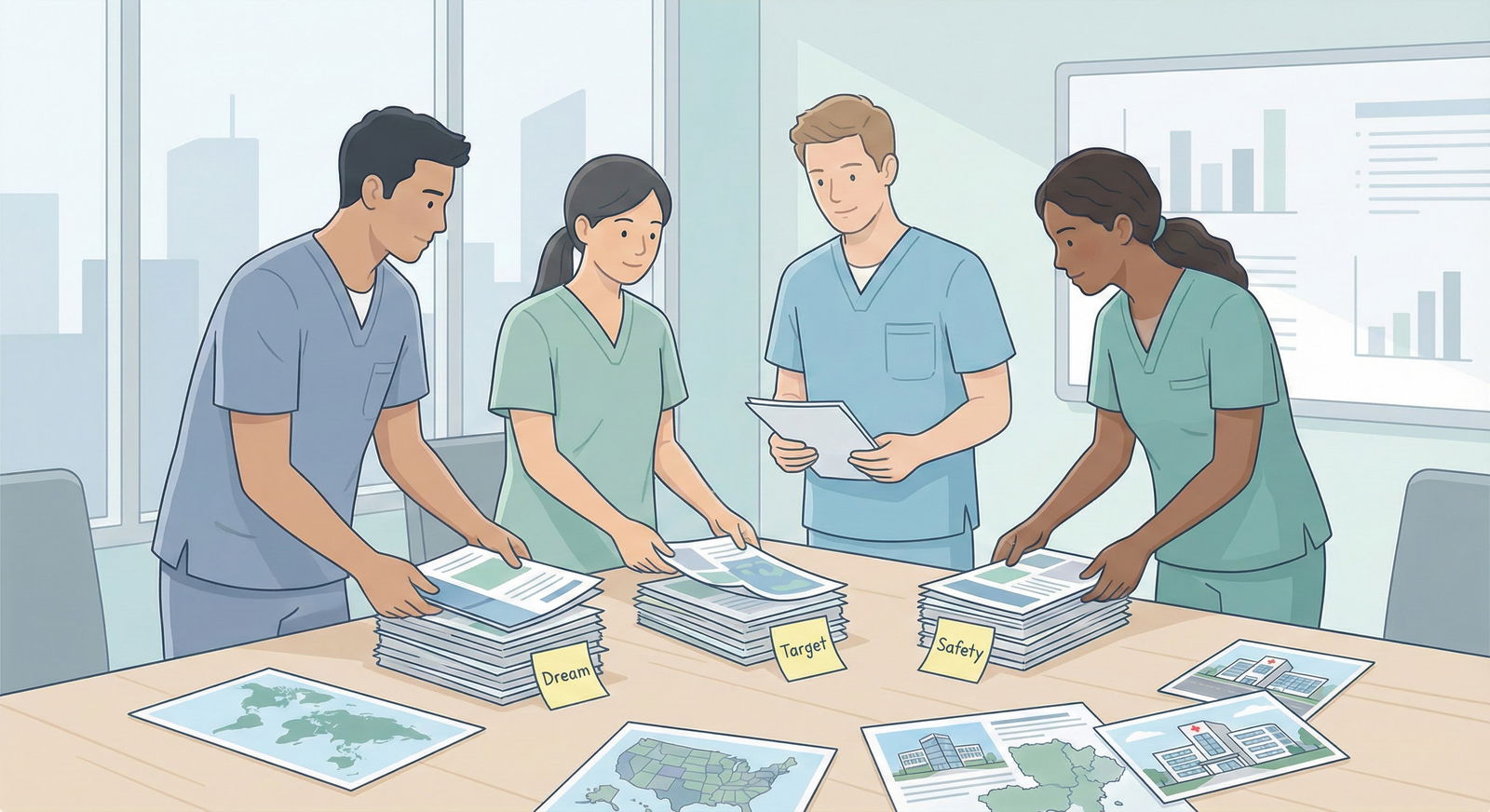
It is 2:15 a.m. on a Tuesday. You are the only resident physically in the ED at a 200-bed community hospital. The attending is upstairs admitting a sick COPD patient. A nurse pops her head in: “Room 8 needs a central line. Pressure is 70 systolic. Ultrasound is already in there.”
There is no line team. No IR at night. No fellow to “help get access.” It is you, your attending (when they get back), and whatever equipment and skills you have actually mastered.
This is where the question becomes real: if you match into a less competitive specialty at a community program—family medicine, internal medicine, psych, prelim/transitional year, maybe even community EM—what will your technology exposure and procedural experience actually look like?
You have probably heard both myths:
- “Community programs = tons of procedures, no technology.”
- “Academic centers = crazy tech, but you never get to touch it.”
Both are wrong in their pure forms. Reality is more nuanced. Let me break it down specialty by specialty, and then program by program, because that is how you should be thinking if you care about procedures and tools.
1. First, be honest about what “less competitive” actually means
I am not talking about derm, ortho, plastics, or IR. You are here for the lower-pressure side of the match:
- Family Medicine
- Psychiatry
- Internal Medicine (categorical, non-elite community)
- Pediatrics (community-heavy)
- Transitional year / prelim medicine
- Some community Emergency Medicine programs (ACGME accredited but not name-brand)
Within these, there is a wide range: a low-volume rural FM program with 4 residents per year is a different universe from a big urban community IM program with 36 residents and multiple fellowships.
But the main reality: you generally have more opportunity to “do” rather than just “observe” if the program is well-run and not flooded with subspecialty fellows. Whether that “doing” involves central lines and ventilators or Nexplanons, colposcopies, and procedural sedation depends heavily on the specialty and the hospital’s capabilities.
2. Core technology and procedures by specialty: what is realistic?
Family Medicine – community heavy, tech-light but hands-on
Family medicine in community programs is where people get surprised. No, you will not be driving the Da Vinci robot. But you can come out with very real, very practical procedural skills that matter in day-to-day practice if the program is built for it.
Typical technology exposure in community FM:
Point-of-care ultrasound (POCUS) – this is the big one.
- At decent FM programs: bedside FAST exams, evaluation of early pregnancy, simple cardiac views, IVC assessment, basic soft tissue.
- At better programs: ultrasound-guided joint injections, paracentesis, lumbar puncture, nerve blocks.
Office-based imaging and monitoring:
- Basic EKG interpretation (routine and acute)
- Holter and event monitor ordering and interpretation
- Continuous glucose monitoring (CGM) systems and corresponding software
- Spirometry in clinic
Procedural equipment:
- Derm kits (shave excision, punch biopsy, cryotherapy)
- Colposcopy units
- LARC (IUD, Nexplanon) insertion sets
- Simple ultrasound in clinic for OB and procedures if the program leadership actually values it
Procedural volume – where FM can shine in community settings:
If the program is thoughtful, residents can walk away with:
- Dozens of IUD/Nexplanon placements and removals
- Regular joint injections (knees, shoulders, trochanteric bursitis)
- Simple skin excisions, punch biopsies, cyst removals
- OB procedures if there is a strong maternity track (vaginal deliveries, laceration repairs, sometimes forceps/vacuum, circumcisions)
The main determinant is program culture, not technology availability. Many community FM programs have an ultrasound machine and colposcope in clinic, but the residents barely touch them because nobody is intentional about getting them trained.
Internal Medicine – bread and butter hospital procedures + basic ICU tech
Community internal medicine programs are where you usually see a stronger link between technology, procedures, and autonomy.
Technology exposure in a non-elite community IM program:
POCUS again (and this time, it matters even more)
- Cardiac: LV function estimates, pericardial effusion, gross valve issues
- Lung: B-lines, pneumothorax, pleural effusions
- Abdominal: ascites, bladder scans, hydronephrosis
- Vascular: DVT screening, IJ for line placement
ICU tech (if the hospital actually has a functioning ICU and uses residents)
- Mechanical ventilation basics – conventional modes, vent setting tweaks, recognizing asynchrony
- Non-invasive ventilation (BiPAP/CPAP) management
- Central monitoring, telemetry interpretation
Other systems:
- PACS for advanced imaging – CT, MRI review alongside radiology
- EHR-based decision-support tools – sepsis alerts, anticoagulation dosing aids
- Tele-ICU or tele-neurology systems (stroke codes, intensivist consults)
Procedural exposure in community IM:
This is where some low-prestige IM programs are quietly better than big-name academic centers—for people who care about skills.
You can realistically expect, if the program does not coddle you and you are aggressive about opportunities:
- Central venous catheters (IJ, femoral; subclavian less common but still possible)
- Arterial lines (varies a lot by ICU culture)
- Paracenteses (tons, if there is a chronic liver population)
- Thoracenteses
- Lumbar punctures
- Bedside joint aspirations sometimes
- Bedside temporary dialysis catheter placement at some programs
But there are two huge caveats:
- If the hospital has heavy IR coverage and a culture of “send it to IR for everything,” your numbers will drop.
- If there is a pulmonary/critical care fellowship, residents may get pushed aside for lines and procedures, especially in the ICU.
So you do not just ask, “Do you have an ICU?” You ask specific questions like: “Who typically does central lines at night?” “How many paracenteses did your average graduate log last year?”
I have seen community IM grads with 100+ lines and 80+ paras. I have also seen others with single digits because IR took everything and the ICU was basically closed to residents.
Psychiatry – tech is evolving, but procedures are niche
Psych in community programs is a different game. Your “procedures” are not lines and tubes. They are somatic treatments and emergent behavioral interventions.
Technology exposure in community psych:
ECT (electroconvulsive therapy) – more tech than people realize
- You will see anesthesia machines, EEG leads, stimulus dosing consoles
- In good programs, you actively participate in stimulus titration, seizure monitoring, and post-ictal management
TMS (transcranial magnetic stimulation)
- Programming treatment parameters, coil positioning, session monitoring
Ketamine / esketamine infusion protocols
- Infusion pump management
- Monitoring systems (BP/HR/O2) during sessions
Telepsychiatry platforms – this is exploding in community hospitals
Procedural/“hands-on” exposure:
Not many “classic” procedures:
- IM injections, restraints, emergency medication protocols – yes, you will be very comfortable here
- Occasional simple medical procedures if you are on combined units or C/L services, but that is not the core
Psych is the least procedural of this group, even in community settings. If you are obsessed with doing physical procedures, psychiatry will not scratch that itch, no matter how you spin it.
Pediatrics – limited scope, high acuity when it hits
For community peds, technology and procedures are very hospital-specific.
Smaller community hospitals often ship out truly sick kids. That kills your chance to gain deep NICU/PICU procedural numbers. Larger children’s hospitals with residencies are often academic and more competitive.
Technology exposure in community-heavy peds:
Newborn nursery and basic NICU:
- CPAP/high-flow systems, phototherapy units, bilirubin monitoring
- Some ventilator exposure if there is a level II or level III NICU on site
ED and inpatient:
- Peds-appropriate POCUS is still relatively early but growing – IV access, soft tissue, bladder, intussusception screening in some places
- Nebulizer and O2 delivery systems, pulse oximetry trends, etc.
Procedural exposure:
- Newborn circumcisions (if FM/OB have not claimed them all)
- LPs in infants and young kids – this is a big competency check
- IV access (especially if there is no vascular team)
- Laceration repairs
- Possibly intubations and umbilical lines if there is a NICU with resident involvement
Again, a lot depends on who else is in the building. If anesthesia and neonatology own everything, residents just watch.
Transitional Year / Prelim Medicine – short, intense, heavily program-dependent
Transitional year (TY) and prelim medicine spots, especially at less competitive community hospitals, can be procedural gold mines or deserts.
You are there for 1 year. The question is volume, not finesse.
At a solid community TY/prelim:
- You might get a compact dose of:
- Central lines
- Paracenteses
- ABGs, occasional A-lines
- LPs
- Chest tube assist, maybe a few primary placements
But I have also seen prelims stuck on floor medicine without ICU exposure, doing none of that.
If your advanced specialty later is competitive and not procedural (like radiology, anesthesia—procedural in a different sense, derm, ophtho), TY procedural volume is nice but not life-changing. If you want real procedural skill for hospitalist work later, then the quality of this year matters more.
3. Technology gap: academic vs community – and how it actually affects you
Let us be blunt. If you match at a top-quartile academic program, you will be surrounded by:
- ECMO circuits
- Balloon pumps
- TAVR valves
- Bronch towers and stent equipment
- Cutting-edge radiation oncology planning systems
- Robotic ORs running all day
At a small or mid-sized community program, you may see very little of that. Or you will see it done by visiting specialists who do not want residents touching anything.
So does that matter for your career?
Where academic tech truly does beat community exposure
There are certain areas where community setups simply cannot match:
- Advanced interventional cardiology exposure (cath lab as a real learning environment, not just “watching”)
- ECMO management, transplant medicine, LVADs
- Complex interventional pulmonary (EBUS, navigational bronch, pleural interventions)
- Cutting-edge oncology infusions and trial protocols
If your long-game is a high-end subspecialty fellowship at a big academic center, there is real value to being in that ecosystem early. Not mandatory—but helpful.
Where community programs quietly win
Procedures that matter for real-world generalist practice:
- Central lines without a line team bailing you out
- Paracentesis under pressure when the IR schedule is full until Thursday
- Thoracentesis at the bedside using POCUS
- Running codes where you are actually leading, not whispering behind the attending and 3 fellows
Also, tech that is actually available to you in practice:
- Community hospital-grade ultrasound
- EKGs, basic imaging, inpatient monitors
- Outpatient procedural kits and simple office-based devices
You do not need ECMO experience to be an excellent hospitalist. You do need to not panic when you cannot get a peripheral IV at 3 a.m.
4. Concrete differences you will see on the ground
Let us make this tangible with some contrasts.
| Area | Academic Center Resident | Community Hospital Resident |
|---|---|---|
| Central lines | Often done by ICU team/fellows | Often resident responsibility |
| Paracentesis | IR or procedure service | Medicine team with POCUS |
| Thoracentesis | Pulm/IR dominated | Resident-performed in many programs |
| ECT/TMS | Available, but may be siloed | Available or absent, high variability |
| OB procedures (FM) | Shared with OB residents/fellows | Often owned by FM residents |
And visually, how does that procedural volume tend to differ?
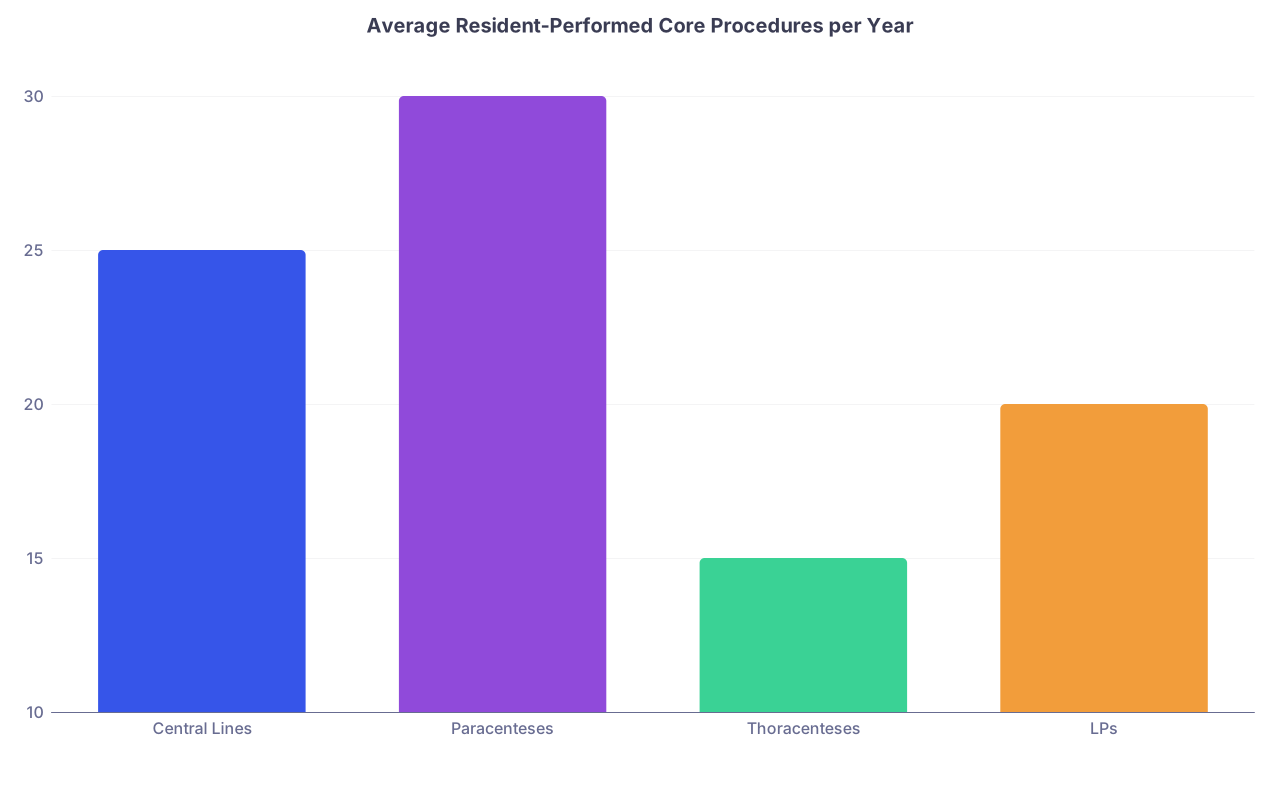
| Category | Value |
|---|---|
| Central Lines | 25 |
| Paracenteses | 30 |
| Thoracenteses | 15 |
| LPs | 20 |
Numbers vary wildly by program. But that ratio—more ownership, fewer competing learners—is typical for strong community sites without heavy fellow presence.
5. Red flags and green flags when you care about procedures and tech
If you want to maximize both procedural autonomy and meaningful technology exposure at a less competitive community program, here is where most applicants screw up: they listen only to the PD’s sales pitch.
You have to interrogate the system. Precisely.
Green flags
POCUS is in the curriculum, not just “we have an ultrasound machine in the closet.”
- Ask: “Do you have a formal POCUS curriculum?”
- “Who teaches it?”
- “Do you track ultrasound-guided procedures in a log?”
Clear resident ownership of specific procedures.
- IM: “Who does lines at night?”
- FM: “Who typically does LARCs and colposcopies—faculty, residents, or outside specialists?”
- Peds: “Who attempts newborn LPs and intubations first?”
Residents can tell you their approximate numbers. Not vague “we do a lot.”
- “How many central lines did you personally do as a PGY-2?”
- “How many ECT sessions did you run?”
- “How many deliveries or circumcisions have you done?”
No or minimal competing fellowships in your procedural domains.
- A pulmonary/CC fellowship at a small hospital often kills IM line/thora exposure.
- OB fellowship presence (MFM, etc.) sometimes sidelines FM/OB tracks.
Actual support for simulation and skills labs.
- Central line mannequins, LP trainers
- Protected time to learn equipment before doing it in real patients
Red flags
- “IR does all of that” repeated for every hospital-based procedure.
- Residents shrugging when you ask about POCUS: “We have a machine… I think the ICU uses it sometimes.”
- PD answers every procedural question with “It depends what you are interested in” but cannot give typical graduate numbers.
- Heavy presence of procedure-oriented fellows in a small or mid-size hospital.
- Nursing or RT saying on your tour: “We usually just call anesthesia for those.”
If you hear that, your hands-on exposure is going to be thin.
6. How to choose if you specifically care about procedural competence
This is where you have to be ruthless with your priorities.
If your goal is:
- Community hospitalist
- Full-scope outpatient rural FM
- EM in non-academic settings
- Hospital-based peds in a regional center
Then you want three things:
- High resident autonomy.
- Minimal procedural competition.
- Enough technology to learn relevant skills: POCUS, vents, basic ICU tools, common outpatient procedure equipment.
Let me be specific about trade-offs.
Example trade-offs by specialty
Family Medicine
If you want procedures:
Prefer:
- FM programs with OB tracks, strong maternity care, and in-clinic procedural focus.
- Programs where FM residents do colposcopy, LARC, skin procedures, and joint injections regularly.
Avoid:
- FM programs that ship all OB out, or where OB residents/faculty do everything.
- Clinics where “we send all skin to derm” and “we send all GYN procedures to OB-GYN.”
Internal Medicine
If procedures and ICU competence matter:
Prefer:
- Community IM with a resident-run ICU, no or minimal pulm/CC fellowship.
- Documented high line, paracentesis, thoracentesis, and POCUS volume.
Avoid:
- IM programs where IR owns every procedure and lines are “consult only.”
- Hospitals where intensivists/fellows perform all key ICU procedures.
Psychiatry
If you care about somatic treatments:
Prefer:
- Programs with active ECT and TMS services, and residents clearly running sessions.
- Exposure to ketamine/esketamine with residents integrated into protocols.
Avoid:
- Programs that “have ECT” but it is run by a separate service and residents “can observe if interested” = code for “you will not really learn it.”
Practical questions to ask residents directly
Phrase them exactly like this if you want honest answers:
- “On a typical night float as a PGY-2, what procedures are you actually doing?”
- “Who gets called first for a paracentesis or thoracentesis?”
- “How many central lines did you log last year?”
- “If somebody crashes in the ED, are you running the code or just standing in the back?”
- “Do you ever tell IR, ‘We will handle this one’?”
You will see their face change. Residents know how much is on paper and how much actually happens.
7. Using less competitive programs strategically for tech and procedures
There is a weird advantage if you are willing to go where others do not want to go.
Less competitive community programs at “unsexy” locations often have:
- Fewer residents
- No or few fellows
- Sicker, older populations
- Thin staffing at night
Which means:
- If there is a central line to be done at 3 a.m., there is no one else. You do it.
- If IR is not in-house and the patient is bleeding into their belly, that paracentesis is yours.
- If the rural OB service is short, your FM or IM team might be the only ones confident enough to get hands-on.
This is how some “no-name” graduates end up far more clinically competent—and more comfortable with core procedures—than people from certain brand-name places.
But you do have to verify that:
- The hospital actually supports resident autonomy
- You are taught correctly (not just thrown in blindly)
- There is actual technology present for what you want to learn (e.g., ultrasound, ICU monitors, basic procedural kits)
8. One realistic pathway: building real procedural skill at a modest community program
To make this more concrete, here is what a smart approach looks like at a solid but non-elite community IM or FM program.
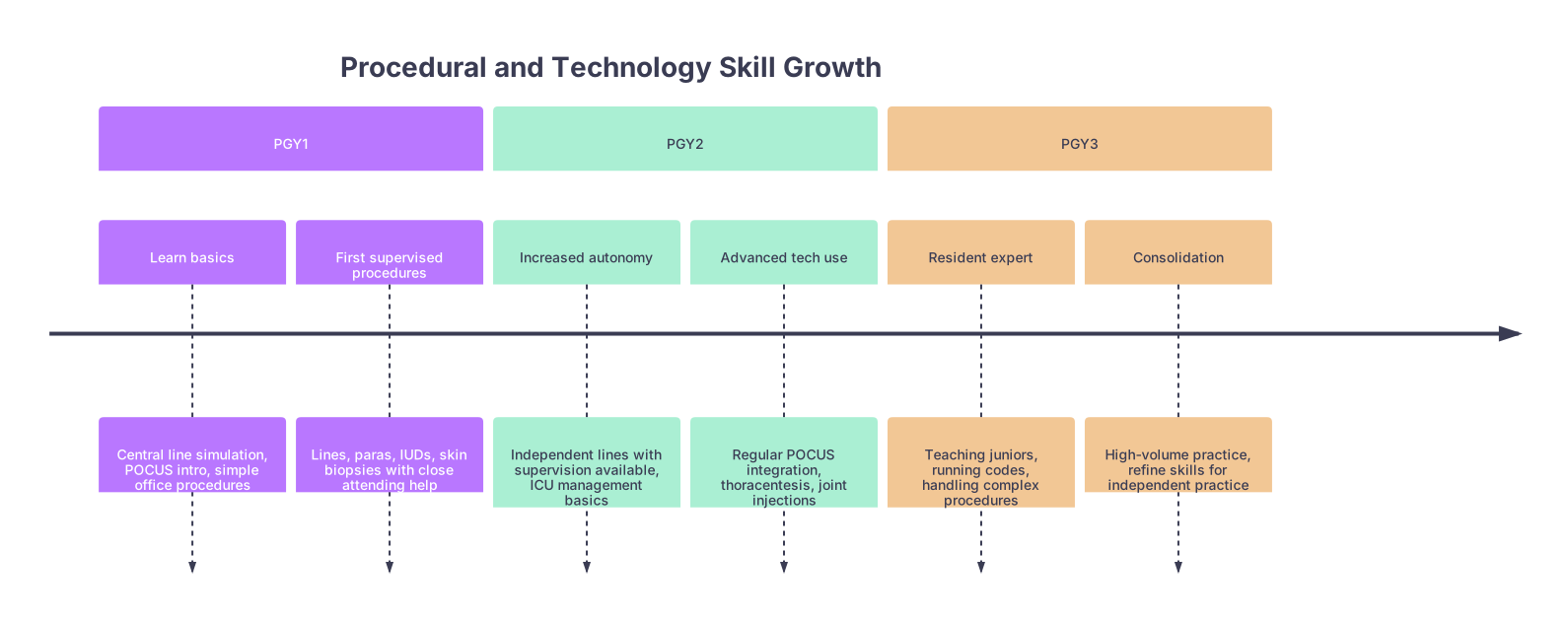
| Period | Event |
|---|---|
| PGY1 - Learn basics | Central line simulation, POCUS intro, simple office procedures |
| PGY1 - First supervised procedures | Lines, paras, IUDs, skin biopsies with close attending help |
| PGY2 - Increased autonomy | Independent lines with supervision available, ICU management basics |
| PGY2 - Advanced tech use | Regular POCUS integration, thoracentesis, joint injections |
| PGY3 - Resident expert | Teaching juniors, running codes, handling complex procedures |
| PGY3 - Consolidation | High-volume practice, refine skills for independent practice |
You consciously:
- Volunteer for procedures every time the opportunity arises.
- Log everything. Aggressively.
- Ask to be credentialed in POCUS basics.
- Seek out clinic days heavy in procedures—LARC, derm, joint, colposcopy.
- Take ICU rotations seriously, not as “survival months.”
By the end of 3 years, you are not a technician. But you are very comfortable with the tools and procedures that matter in the real world.
9. Quick reality check: what you will not get at most less competitive community programs
You will not reliably get:
- Robotic surgery console time as a resident in FM, IM, peds, or psych.
- Deep immersion in transplant medicine or ECMO.
- Cutting-edge advanced interventional cardiology or interventional radiology skills.
- High-end academic bench-to-bedside tech trials.
And that is fine. Those are subspecialty, fellowship-level domains.
If your plan is:
- Cardiology with a goal of doing complex interventional work
- Pulm/CC aiming for advanced bronch and ECMO-heavy ICUs
- Academic oncologist doing trial-heavy practice
Then you probably want at least one strong academic step in the chain, preferably residency. A less competitive, low-tech community path will make your road longer and harder.
But if your goal is:
- Community hospitalist
- Full-spectrum FM in a real-world setting
- Bread-and-butter inpatient peds or psych in regional hospitals
Then a well-chosen, less competitive community program can give you better relevant procedural autonomy and enough technology exposure to function very well.
10. Final takeaways
I will keep this short.
- “Less competitive community” does not mean “worse training” for procedures and practical technology. Sometimes it is the opposite, if you pick the right environment.
- Your best friends are POCUS, bedside procedures, and genuine resident autonomy. If fellows, IR, or subspecialists own everything, your experience will be hollow.
- Do not trust brochures. Ask residents surgical, specific questions about who actually does which procedures, when, and how often—and choose programs where residents own the work.