
The least competitive specialties are not “easy modes.” They are different jobs with different failure points—and the inpatient vs clinic balance is one of the most misunderstood parts of that choice.
Let me be very direct: if you pick a low-competitiveness specialty only because “it’s easier to match” and you ignore whether it is clinic-heavy or inpatient-heavy, you are setting yourself up for burnout within 2–3 years. I have watched that movie more than once.
Let’s break this down specifically—by specialty, by environment, and by what your day actually looks like.
Big Picture: Clinic-Heavy vs Inpatient-Heavy in Low-Competitiveness Fields
First, orient yourself to the terrain. Among the least competitive or relatively less competitive specialties, the bulk of choices fall into two buckets:
- Clinic-heavy (mostly outpatient, some inpatient exposure)
- Inpatient-heavy (ward-based, consults, admissions, discharges)
There are hybrids, but the dominant flavor of residency life will be one or the other.
Here is a rough categorization focused on the less competitive end of the spectrum in the U.S. (NRMP data, trends up to 2024):
| Specialty | Competitiveness Tier* | Primary Setting |
|---|---|---|
| Family Medicine | Least competitive | Clinic-heavy |
| Psychiatry | Low–moderate | Clinic-heavy |
| Pediatrics (categorical) | Low–moderate | Inpatient-heavy |
| Neurology (categorical) | Low–moderate | Inpatient-heavy |
| PM&R (Physical Med & Rehab) | Low–moderate | Mixed leaning clinic |
| Preventive Medicine | Least competitive | Clinic/administrative |
| Geriatrics (after IM/FM) | Least competitive | Clinic-heavy |
*“Competitiveness” here is relative—compared to fields like dermatology, plastics, ENT, ortho, ophtho, radiology. Locally, some programs are still hard to get.
Core Differences That Actually Affect Your Life
Forget vague “outpatient vs inpatient” for a second. What you should be asking is:
- What is my time pressure like?
- How much cognitive complexity vs pure volume?
- How often do I deal with crises?
- How often do I have to coordinate 6 other people for one decision?
That is where clinic-heavy vs inpatient-heavy in these specialties actually bites.
Work Rhythm
Clinic-heavy:
- Days carved into 15–30 minute chunks.
- Stable physical environment: same room, same chair, same EMR, different faces.
- Interruptions: phone messages, refills, prior auths, “nurse needs an order,” but much more controllable.
- You feel the pressure as “my schedule is full” and “I’m behind on notes.”
Inpatient-heavy:
- Days carved around rounds, admissions, discharges, and random mayhem.
- Unstable environment: wards, ICU, ED, consults, family meetings in stairwells.
- Interruptions: pages, codes, “can you please see this new consult,” bed control calling about discharge.
- You feel the pressure as “I have 4 active fires and I am the hose.”
Some people thrive on the unpredictability. Others find it exhausting and soul-sucking by PGY-2. You need to know which type you are.
Cognitive Load vs Emotional Load
Clinic-heavy low-competitiveness specialties (FM, psych, geri, a lot of PM&R):
- Cognitive load is broad, not deep. You juggle many problems lightly rather than one catastrophic problem intensely.
- Emotional load is high: longitudinal relationships, social determinants, chronic suffering, non-adherence, vague symptoms.
- You live with uncertainty and chronicity. The problems rarely “end.”
Inpatient-heavy low-competitiveness specialties (peds, neurology, many IM tracks even if not in this article’s focus):
- Cognitive load is intense and often acute.
- Emotional load spikes around crises: codes, bad news, ICU transfers, child abuse cases (peds), devastating strokes (neuro).
- You see clean endpoints more often: they get better and go home, they worsen and go to ICU, or they die.
Neither style is “easier.” They just wound you differently.
Clinic-Heavy, Less Competitive Specialties: What Your Life Actually Looks Like
Let’s talk about the big ones: Family Medicine, Psychiatry, Geriatrics (via IM/FM), and a chunk of PM&R and Preventive Medicine.
Family Medicine: The Classic Clinic-Heavy “Least Competitive” Field
If you want to understand outpatient-heavy work, look at a community FM program.
Residency reality:
- PGY-1: Many inpatient months (wards, ICU, OB) because accreditation bodies still want you competent in hospital medicine and emergencies.
- PGY-2 and PGY-3: Gradual shift to clinic dominance—your continuity clinic becomes the anchor of your week.
- Typical schedule: 3–5 half-days of clinic per week in PGY-1, 6–8 half-days by PGY-3, plus call and some inpatient blocks.
What your clinic day looks like (attending-level, post-residency, full panel):
- 18–24 patients per day is common in community practices; academic may be less, pure private sometimes more.
- 15–20 minute slots for routine visits. Double-booking is routine in some systems. New patients, annuals, and complex visits may get 30 minutes.
- Problems are often stacked: “I’m here for a refill” turns into diabetes, depression, back pain, and a housing crisis in one visit.
Types of problems:
- Bread-and-butter: HTN, DM, hyperlipidemia, obesity, URI, MSK pain.
- Chronic multi-morbidity: the 72-year-old with CHF, CKD3, COPD, and early dementia whose son lives 3 states away.
- Psych overlay on everything: depression, anxiety, trauma, substance use.
Pressure points:
- Time. Your biggest enemy in outpatient FM is the clock. You will constantly be running 30–60 minutes behind if the system is inefficient or if you do not learn ruthless visit triage.
- Documentation and inbox load: Lab follow-ups, refills, patient portal messages, disability paperwork, FMLA, DMV forms. The workday does not end when the last patient leaves.
- Boundary management: Saying “no” without being cruel or unhelpful. “No, I will not write that you are permanently disabled because your back hurts today.”
What makes FM clinic-heavy life sustainable:
- Matching your job to your values. If you genuinely like continuity, problem-solving in social context, and broad-scope medicine, this can be deeply satisfying.
- Controlling pace and practice setting: FQHC vs private vs concierge vs academic. Same specialty, wildly different day-to-day life.
- Learning efficient communication: agenda setting at the start of the visit, using team-based care, delegating ruthlessly.
Where students screw up:
- They choose FM because “I like a little of everything” but hate chronic disease management and long-term relationships. That is a mismatch.
- They underestimate how much admin/inbox work comes with clinic-heavy practice.
- They romanticize “outpatient = lifestyle” without appreciating the hamster wheel feeling of 20 patients/day back-to-back.
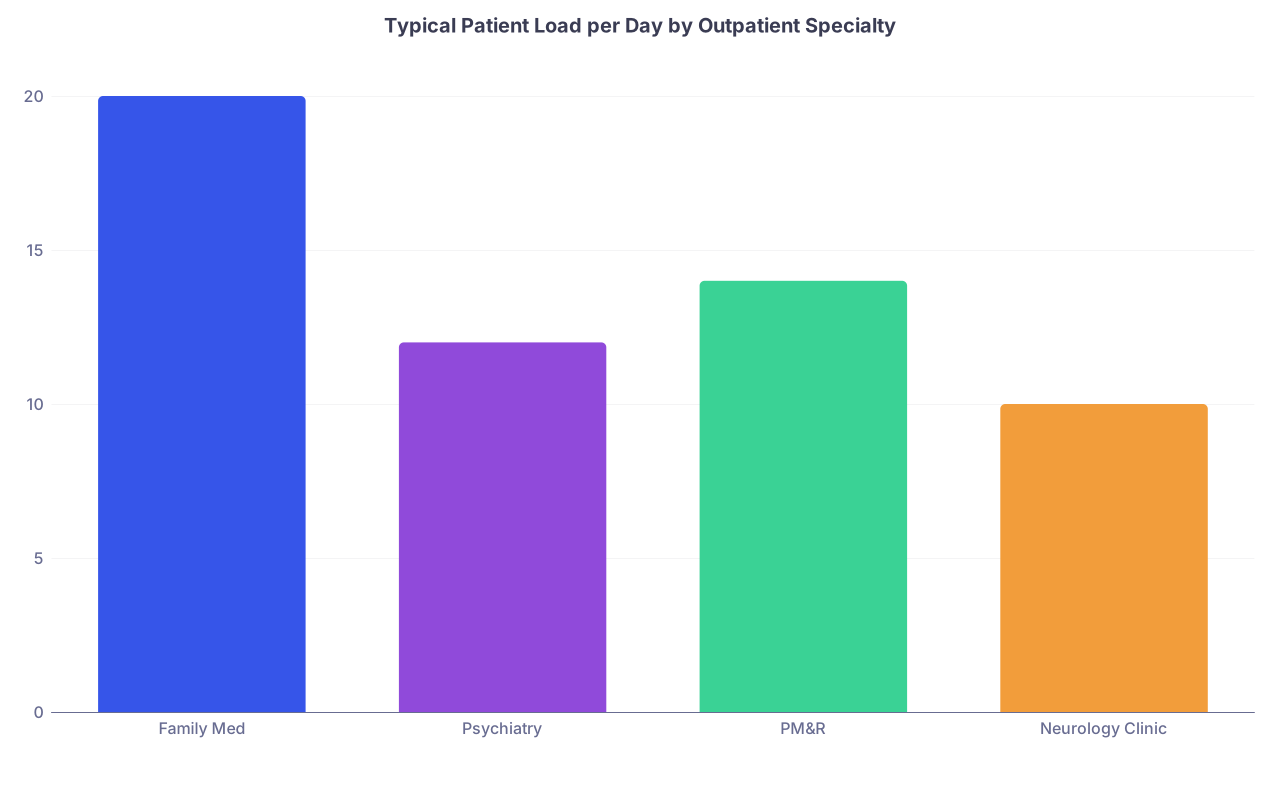
| Category | Value |
|---|---|
| Family Med | 20 |
| Psychiatry | 12 |
| PM&R | 14 |
| Neurology Clinic | 10 |
Psychiatry: Clinic-Heavy, But Not “Easy”
Psych is lower bar than derm or ortho, sure, but it is not trivial to match at good programs anymore. And the work is overwhelmingly outpatient by the time you are an attending.
Residency structure:
- PGY-1: Mix of medicine/neurology and psych, often with some inpatient psych months.
- PGY-2: Inpatient-heavy; you run psych units, consults.
- PGY-3: Big swing to outpatient and continuity clinics. This year sets your future clinic tempo and style.
- PGY-4: Electives, subspecialties (addiction, child, forensics), often mostly outpatient.
Attending-outpatient reality:
- 45–60 minute intake visits, then:
- 20–30 minute follow-ups in more “old-school” or academic models.
- 15-minute “med checks” in high-volume community setups.
- Caseload: Many psychiatrists carry 800–1200 patients on panel; you might see 8–14 per day depending on setting.
Nature of clinic work:
- Medication management: SSRIs, antipsychotics, mood stabilizers, stimulants, plus all the side-effect chess that comes with them.
- Diagnostic complexity: Bipolar vs unipolar, PTSD vs borderline, ADHD vs everything else. Often with incomplete collateral and unreliable historians.
- Systems issues: No beds available, no therapists nearby, no IOP, insurance nonsense.
Emotional and cognitive load:
- You sit in the emotional blast radius of trauma, psychosis, suicidality, and personality disorders all day.
- You must tolerate high levels of uncertainty; the “right answer” usually comes from pattern recognition and longitudinal observation, not from a lab test.
Who does well:
- People who can sit with distress without “fixing” it instantly.
- People who like long, detailed conversations and subtle pattern shifts.
- People who are comfortable drawing boundaries with manipulation and splitting in the room.
Who burns out:
- Students who choose psych because they think it is lighter, less “scut,” or more “9–5” but hate intense emotional labor and repetition.
- Those who underestimate how draining back-to-back heavy psych stories can be without good supervision and self-care.
Geriatrics (after IM or FM): Quietly Clinic-Heavy and Very Undersubscribed
Geriatrics fellowships are chronically unfilled. The work is mostly outpatient with some nursing home and consult work. Low competitiveness, yes. But not low complexity.
Real clinic content:
- Polypharmacy: 15–20 meds, each prescribed by different people over 10 years.
- Syndromes, not diseases: falls, frailty, cognitive decline, “failure to thrive.”
- Goals-of-care conversations: with family, caregivers, and sometimes patients who cannot fully participate.
If you like long visits (30–60 minutes), system-level thinking, and more focus on function than labs, geriatrics is a clinic-heavy niche that nobody is fighting you for. But you must be okay with slow progress and high mortality.
PM&R and Preventive Medicine: Mixed but Often Clinic-Leaning
PM&R:
- In residency, you will see a lot of inpatient rehab units: stroke, SCI, TBI.
- As an attending, many practice models are outpatient-heavy: MSK, sports, EMG clinics, spasticity management, prosthetics/orthotics.
- A clinic day might be 10–14 patients, lots of procedures (injections, EMG, ultrasound-guided stuff) combined with functional assessments.
Preventive Medicine:
- Almost never talked about in med school.
- Very low competitiveness, but job market and role clarity are highly variable.
- Work is a mix of clinic (occupational, employee health, travel medicine) and administrative/public health. Many days are more meetings than stethoscopes.
Inpatient-Heavy, Less Competitive Specialties: What Your Life Actually Looks Like
Now shift to the other side: Pediatrics and Neurology are the big examples that are relatively less competitive than surgical subspecialties but still predominantly inpatient-heavy in residency.
Pediatrics: Inpatient-Heavy Training, Mixed Adult Life
Categorical peds residency is not clinic-heavy. Students misunderstand this constantly.
Residency structure (typical academic peds):
- PGY-1: Majority inpatient wards, NICU, PICU, ED. A small continuity clinic (half-day per week).
- PGY-2: More complex inpatient, PICU, subspecialty services. Still a clinic half-day or so.
- PGY-3: Leadership roles on inpatient teams, some electives, some outpatient blocks. But overall, residency = predominantly inpatient.
Daily inpatient life:
- Large ward teams, 10–20 patients, sometimes more, depending on structure.
- Predawn prerounds on infants with 12 tubes and 15 meds.
- Constant coordination with parents, nurses, subspecialists, social work, case management.
Emotional context:
- Children with leukemia, congenital anomalies, severe prematurity.
- Accidental and non-accidental trauma.
- Death in pediatrics hits differently. I have seen residents shattered for weeks after one bad code.
As an attending, your environment depends massively on your niche:
- General peds outpatient clinic: now clinic-heavy. Vaccines, URIs, developmental checks.
- Hospitalist peds: still inpatient-heavy—admissions, bronchiolitis season, winter hell.
- PICU/NICU: hyper-inpatient, high-acuity, shift work and disasters.
Students mess this up when they:
- Fall in love with “playing with kids in clinic” on a 2-week outpatient block and forget residency is 3 years dominated by inpatient units.
- Underestimate how draining parents can be when terrified, sleep-deprived, or distrustful.
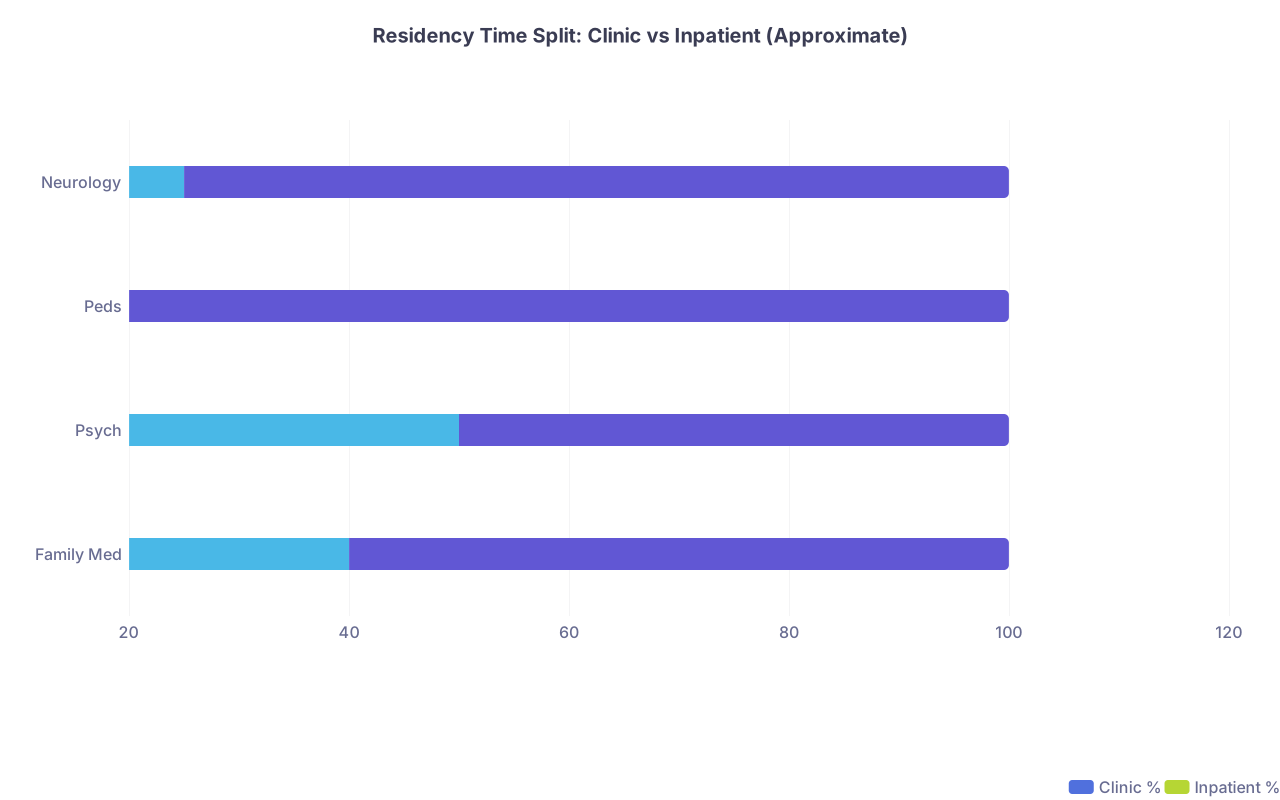
| Category | Clinic % | Inpatient % |
|---|---|---|
| Family Med | 40 | 60 |
| Psych | 50 | 50 |
| Peds | 20 | 80 |
| Neurology | 25 | 75 |
Neurology: More Inpatient Than Students Realize
Neurology looks like an “outpatient” field to preclinical students. Then they hit stroke month.
Residency structure:
- PGY-1: Usually a prelim/intern year, a lot of medicine and some neuro.
- PGY-2: Heavy inpatient—stroke service, general neuro, consults.
- PGY-3: Mix of inpatient and subspecialty electives; still substantial ward time.
- PGY-4: More outpatient and electives, but call and inpatient responsibilities persist.
Inpatient neurology reality:
- Stroke pages at 3 a.m., with the clock screaming at you for tPA / thrombectomy decisions.
- Long daily rounds: seizures, encephalopathy, demyelinating processes, rapidly evolving exam findings.
- Constant communication with ICU, ED, neurosurgery, IR, and anxious families.
As an attending, there are two broad flavors:
- Hospital-based neuro (stroke, neurohospitalist, neurocritical care): inpatient-dominant, shift-heavy, many crises.
- Outpatient neuro (epilepsy, movement disorders, MS, general neurology clinic): clinic-dominant but cognitively heavy, with lengthy visits and complex workups.
If you choose neurology because “it is not as competitive as radiology” but you hate inpatient chaos, you are going to suffer through residency. The neurology match may be friendlier than some surgical fields, but the day-to-day work is not gentle.
How To Decide Which Side You Belong On
Here is the real question: in the group of relatively less competitive specialties, where do you fit on the clinic–inpatient axis?
Do not answer that with vibes. Answer it with observed behavior.
Step 1: Look at Your Actual Reactions on Rotations
Forget what you tell people on rounds. Look at your gut.
Clinic-heavy clues you might thrive outpatient:
- On FM or outpatient psych, you did not mind the “another patient, another story, another EMR note” cycle. You liked building narratives over time.
- You enjoyed the detective work of chronic symptoms with no clear answer yet.
- You did not secretly count down until the day was over every clinic day.
Inpatient-heavy clues you might thrive in wards/units:
- You liked the adrenaline hit when a rapid response was called or a new acute neuro deficit rolled in.
- You preferred days that flew by in a blur of tasks, even if you got home tired.
- You found family meetings and tough conversations meaningful rather than purely draining.
Be honest with yourself. I have seen people who said they wanted outpatient lifestyle and yet noticeably lit up around codes and acute crises. That mismatch leads to miserable outpatient careers.
Step 2: Run a Realistic Day Simulation in Your Head
Not fantasy. Realistic.
For clinic-heavy FM or psych-style day, imagine:
- 9:00: 55-year-old with DM2, HbA1c 9.8, new neuropathy.
- 9:20: Anxiety f/u who wants another benzo refill and “hates therapy.”
- 9:40: Child with ADHD whose parents disagree on medication.
- 10:00: New patient with “chronic fatigue,” negative prior workup.
- 10:20: Double-booked acute visit—URI vs COVID vs “I need a letter for work.”
- Inbox between visits: 3 refill requests, 5 portal messages, lab result that needs a call.
For inpatient-heavy peds/neuro day, imagine:
- Pre-round on 8–14 patients before 9 a.m.
- 9:00–12:00: Rounds with team, writing orders while being interrupted repeatedly.
- 12:00–13:00: Try to eat while admitting 2 new patients from ED.
- Afternoon: Discharges, family meetings, consults, cross-cover issues.
- 4 new patients between 16:00–19:00 when you thought you might leave.
Which “hurts good” and which feels like slow torture?
Step 3: Accept That Competitiveness Should Be a Tiebreaker, Not the Main Driver
Among lower-competitiveness fields, you still have choices:
- Hate inpatient chaos but want broad medicine? FM clinic-heavy.
- Like psych more than organ-based disease? Psych clinic-heavy.
- Love acute care in kids? Peds hospitalist or PICU down the line (inpatient-heavy).
- Love cerebrovascular drama? Stroke or neurohospitalist (inpatient-heavy).
- Love function, rehab, procedures, and mixed settings? PM&R.
Use competitiveness to match within the cluster of specialties you already like, not to pick the whole cluster.
Leadership, Autonomy, and Team Dynamics
Clinic-heavy jobs:
- You are the point person in a smaller micro-team: MA, RN, maybe a social worker or pharmacist.
- Autonomy is high in clinical decision-making, but the system may impose metrics (A1c goals, statin rates, depression screening).
- Leadership is quieter: practice improvement, chronic disease registries, population health.
Inpatient-heavy jobs:
- You often lead bigger teams: interns, students, nurses, RTs, consultants.
- Autonomy is high but constrained by hospital policies, bed availability, and other services.
- Leadership is very visible: coordinating codes, deciding transfer to ICU, negotiating discharge plans.
If you like being in the center of a large moving machine, inpatient life will feel energizing. If you prefer deep one-on-one work and slower, deliberate thought, clinic-heavy paths are better.
Lifestyle Myths You Need To Kill Now
I have heard the same naive lines in MS3s for a decade. Let us kill the big ones.
“Outpatient is always better lifestyle.”
Not true. High-volume FM or community psych can feel like a treadmill. You may have fewer nights, but your brain never stops processing clinic backlogs.“Inpatient is always more intense and miserable.”
Not universally. Some hospitalist or neurohospitalist gigs have compressed shifts with lots of days off, and you leave the work at the hospital. No inbox at home. That boundary matters.“Least competitive means easy patients.”
Absolutely wrong. Underserved clinic FM, county psych, inpatient peds—those are some of the most complex, messy, system-failure-heavy patients you will ever see. They are not “easy cases”; they are often the ones nobody else could solve.“I can do anything for 3 years then switch.”
You can, but you pay a price. Mismatched residency (your temperament vs inpatient/clinic shape) creates burnout and shapes how you feel about medicine forever. Do not throw those years away assuming you will magically pivot later.
Concrete Examples: Same Competitiveness Band, Totally Different Feel
To make this real, imagine three residents, all roughly in the “less competitive” specialty band:
Resident A: Family Medicine, community program, clinic-heavy by PGY-3.
- Loves getting to know patients, hates night float.
- Annoyed by endless admin but enjoys catching subtle patterns over years.
Resident B: Pediatrics, mid-tier academic.
- Thrives on winter bronchiolitis season, likes the team buzz.
- Feels bored in continuity clinic and counts down the minutes in each well-child visit.
Resident C: Neurology, university program.
- Adrenaline junkie for stroke codes.
- Longs for the day when they can focus on stroke service 70% of the time and avoid half-day continuity clinic.
All three “matched easily enough” relative to ortho or derm. None of them are in easy jobs. Two of them are aligned with the clinic/inpatient balance. One is not and will likely either subspecialize to escape clinic or burn out.
A Final Reality Check Before You Lock In
If you are staring at a rank list or debating which broad lane to chase, ask yourself three blunt questions:
Do I want my primary stressor to be time pressure with one patient at a time (clinic-heavy) or cognitive overload plus coordination of multiple unstable patients (inpatient-heavy)?
Do I want deep, longitudinal relationships—even with non-adherent, complicated, sometimes frustrating patients—or do I prefer intense short bursts of interaction around acute illness?
When I replay my clinical experiences, are my top three “this is why I want to be a doctor” moments mostly outpatient visits or inpatient episodes?
Your honest answers will sort you faster than any Reddit thread or superficial “lifestyle” chart.
Key Takeaways
- “Least competitive” specialties still demand serious work; the real differentiator for your happiness is whether the field is clinic-heavy (FM, psych, geriatrics, much of PM&R) or inpatient-heavy during training (peds, neuro).
- Clinic-heavy paths concentrate stress into relentless visit volume, chronic disease management, and administrative overload, while inpatient-heavy paths concentrate stress into acute crises, team coordination, and high-acuity decisions.
- Choose your specialty based on the workday you can tolerate and grow in—clinic vs inpatient—not on perceived competitiveness alone. The match is one day; the job is decades.