
Last week a third-year I know walked out of the surgery workroom almost in tears. Not because of how brutal the day was, but because a resident laughed and said, “You’re too smart for family med, you’ll waste your score.” Her classmates piled on later: “You’re really going to do that?” She started wondering if she should change her entire career path… just so people would stop judging her.
If you’re even thinking about a so-called “less competitive” specialty, I’m guessing your brain is running the same miserable loop: What if they think I couldn’t match anywhere better? What if my attendings write weaker letters because they think I’m aiming low? What if people assume I wasn’t good enough for something ‘more impressive’?
Let’s actually pick this apart. Because the social pressure around specialty choice can get incredibly toxic, especially when you’re aiming for something that isn’t derm, ortho, ENT, plastics, or whatever the prestige flavor of the year is.
First: You’re Not Imagining It. The Status Game Is Real.
You’re not being dramatic. There really is a social hierarchy of specialties in most med school environments, and people wield it like a weapon.
You get comments like:
- “Oh, so you don’t like challenge?” when you say pediatrics.
- “You’re just gonna do psych and chill, huh?”
- “Anyone can match IM, why work this hard?”
- “PM&R? That’s like med-lite, right?”
And it’s rarely said outright, but you feel it:
- The slightly disappointed look when you tell an attending you’re thinking family medicine instead of cardiology.
- The way classmates stop taking you seriously once you stop talking about the “competitive” stuff.
- The “jokes” — always framed as jokes — about “wasting your board score.”
No, you’re not crazy. That’s real.
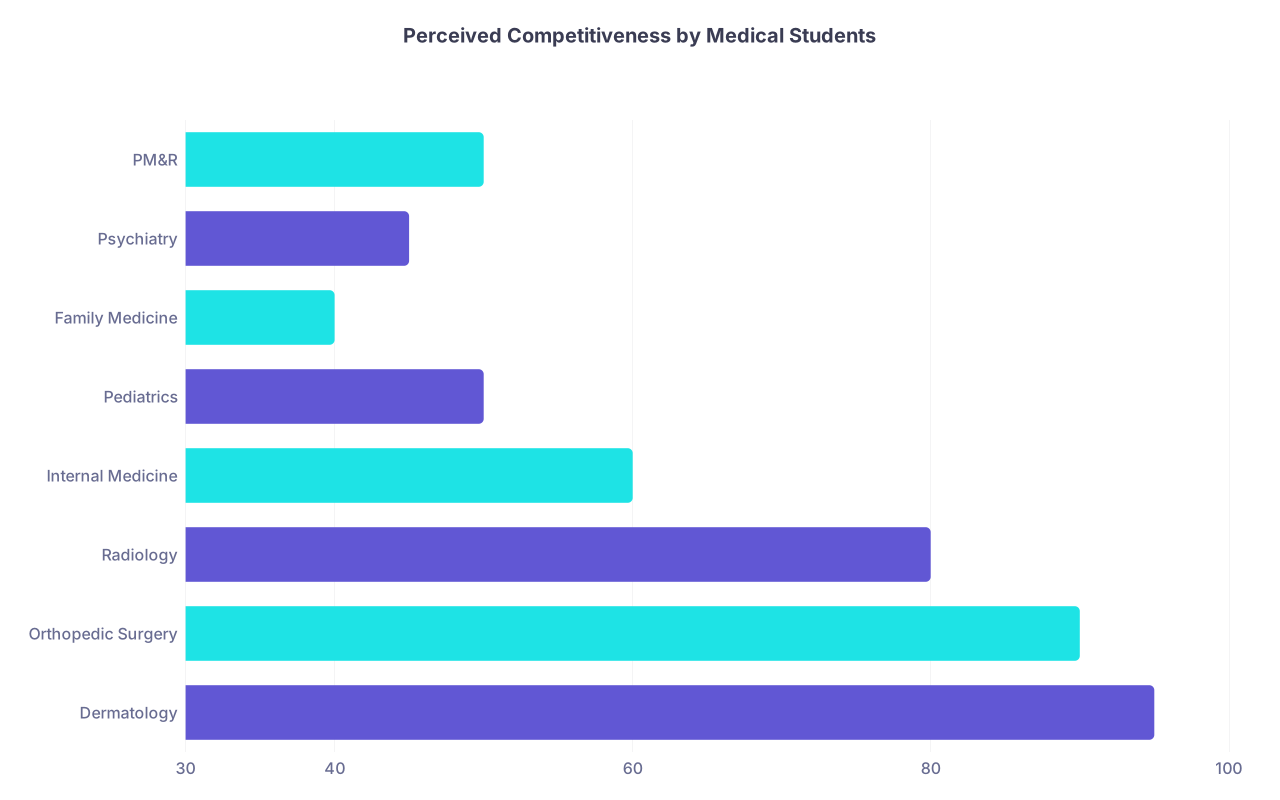
| Category | Value |
|---|---|
| Dermatology | 95 |
| Orthopedic Surgery | 90 |
| Radiology | 80 |
| Internal Medicine | 60 |
| Pediatrics | 50 |
| Family Medicine | 40 |
| Psychiatry | 45 |
| PM&R | 50 |
The dangerous part is what your brain does with this:
- “If they think it’s easy, they’ll assume I’m not capable.”
- “Program directors will think that too.”
- “Maybe I am taking the lazy way out.”
- “What if I regret not pushing for something more ‘impressive’?”
You start re-writing your whole identity based on other people’s insecurity and trash opinions.
Here’s the harsh truth: a lot of that judgment isn’t about you. It’s about:
- People needing to justify their own choice by looking down on others.
- Residents who are miserable and trying to feel superior to cope.
- Classmates who are threatened that you might be happy in a field they’ve been told is “lesser.”
Still hurts, though.
The Ugly Fear: “Everyone Will Think I Wasn’t Good Enough”
Let me just say the quiet part out loud, because I know it’s sitting in your chest:
You’re scared that if you choose a less competitive specialty, people will assume:
- Your scores weren’t high enough.
- Your CV was weak.
- You couldn’t cut it surgically or intellectually.
- You settled.
Even if none of that is true.
You could have a 260+ Step 2, honors everywhere, first-author research… and still feel almost embarrassed to say, “I want family medicine.” Because medicine has taught you this stupid formula:
Prestige of specialty = worth as a physician = worth as a person.
So if your classmates go:
- Derm
- Ortho
- ENT
- Radiology
…and you say:
- Psych
- Peds
- FM
- PM&R
Your brain translates that as: I lost. They won.
I’ve seen students literally hide their true interest until after Match Day. They’ll say things like, “I’m still deciding between IM and something more competitive,” when they know full well they want outpatient primary care. Because God forbid someone thinks they chose something “easy.”
Here’s the maddening part: people will make assumptions. You can’t control that. Someone will think, “They probably couldn’t match something better.” Some attending will silently decide you’re “not ambitious enough.” Some classmate will low-key pity you.
And still… you get one career. Not theirs. Yours.
The Reality: “Least Competitive” Is Mostly a Dumb Label
Let me be blunt. The way med students talk about “competitiveness” is shallow.
They treat it like:
- Higher board score averages = better specialty.
- Fewer spots = more elite.
- More procedures = more impressive.
- More money = more “worth it.”
But the actual work of being a good family doctor, pediatrician, psychiatrist, PM&R doc, general internist? It’s emotionally and cognitively brutal in ways the prestige-obsessed people conveniently ignore.
Here’s the ridiculous twist: some of the so-called “least competitive” specialties are the hardest in day-to-day practice.
| Specialty | Student Perception | Real-World Difficulty |
|---|---|---|
| Family Medicine | Easy, fallback | High complexity, broad scope |
| Pediatrics | Soft, less intense | Sick kids, anxious families |
| Psychiatry | Chill, low acuity | High emotional toll, safety concerns |
| PM&R | Light med | Neuro, MSK, chronic disability |
| Internal Med (categorical) | Generic backup | Sick adults, complex management |
Let’s be clear:
- Managing a medically complex, non-adherent patient with 8+ chronic conditions in 15 minutes is not “easy.”
- Sitting with suicidal patients, personality disorders, addiction — that’s not “easy.”
- Coordinating rehab plans, spasticity management, chronic pain — not “easy.”
- Calling parents at 3 AM about their crashing neonate — not “easy.”
So why are these “less competitive” to match? Stuff like:
- Lower reimbursement → fewer people want to do them.
- Lifestyle perceptions (good or bad).
- Less “sexy” research.
- Misunderstanding of what they actually do.
Competitiveness says a lot about:
- How many people want it.
- How many spots exist.
- How people perceive the field.
It says almost nothing about:
- How fulfilling it’ll be for you.
- Whether you’ll burn out.
- Whether you’ll like your actual day-to-day job.
How to Handle Classmates (and Attendings) Who Look Down On Your Choice
You’re not going to therapy-speak your way out of feeling judged. But you can have a plan for how to respond instead of freezing or apologizing.
Strategy 1: Name It Without Defending Your Worth
When someone says, “But you could do something more competitive,” try:
- “I could. I just don’t want to. I actually like [X] a lot more.”
- “Being competitive at matching isn’t the same as being a good doctor.”
- “I care more about liking my actual job than impressing other med students.”
Notice: you’re not justifying yourself with scores, grades, or “I could have done ortho.” That keeps you stuck in their value system.
Strategy 2: Shift From “I’m Sorry” Energy to “This Is a Decision”
You don’t need to sound defensive or apologetic. Say it like you’re telling them where you’re moving next year.
- “Yeah, I’m going into psych.”
- “I’m pretty set on family med at this point.”
- “I’m applying PM&R. I like long-term patient relationships and neuro/MSK.”
Short. Clear. Done. Their reaction is their problem.
Strategy 3: Limit Specialty Snob Time
If there’s a specific group that always makes you feel small:
- Stop workroom venting with them.
- Find one or two classmates who don’t treat everything like a status competition.
- Get in spaces where your specialty is respected — FM interest group, psych club, PM&R attendings.
Seriously, the room you’re in changes how sane you feel.
Program Directors Don’t Care About Your Classmates’ Opinions
Here’s another fear: What if program directors also think my choice is “lesser,” and that somehow affects how they read my app?
They care about:
- Do you actually understand their specialty?
- Have you shown consistent interest?
- Do you have letters from people in their field who respect you?
- Will you show up, do the work, not make everyone’s life harder?
They do not care that your friend matched ortho. They’re not ranking you against someone in plastics. They’re comparing you to other applicants in their field.
That means:
- If you love psych, they want to see psych rotations, psych letters, maybe some involvement in mental health work.
- If you love FM, they want to see continuity clinic, primary care electives, maybe community or underserved work.
- If you love PM&R, they want neuro/MSK exposure, rehab interest, maybe a physiatrist letter.
Not “highest possible prestige you could have aimed for.”
Honestly, a lot of PDs in these “less competitive” fields are quietly tired of the prestige nonsense. They know their residents are the ones holding the system together. They also know med students disrespect their specialties right up until they need them.
The Career-Level Reality: The Status Game Falls Apart Fast
This is the part your classmates don’t see because they’re still inside the med school bubble.
Once you’re out:
- Your patients don’t care what was “competitive” in 2026. They care if you listen.
- Your paycheck is your paycheck. No patient is impressed you made it through ortho call as an intern.
- Everyone is exhausted. No one’s handing out lifetime achievement awards for choosing a fancy specialty at age 25.
- Burned-out surgeons envy outpatient psych schedules. Burned-out internists fantasize about lifestyle specialties. Everyone is second-guessing something.
I’ve seen:
- A surgery resident look at a psych resident and say, “I think you won.”
- A derm attending say, “If I could do it again, I’d do peds. I hate this.”
- A radiologist quietly admit, “I miss patient interaction. I chased prestige. It wasn’t enough.”
And on the flip side:
- A family med doc in a small town who is beloved by an entire community.
- A PM&R doc who lights up talking about helping spinal cord injury patients walk again.
- A psychiatrist who says, “Even on my hardest days, I don’t wish I had chosen anything else.”
None of them care what their classmates thought in M3.
Practical Things You Can Do Right Now
Let’s talk concrete steps so you feel less like you’re just bracing for judgment all year.
1. Build a Small Protective Bubble
Find:
- 1–2 classmates who aren’t obsessed with prestige.
- 1–2 residents or attendings in your specialty who actually love their work.
Tell them the truth: “I’m leaning toward X, but I’m getting a lot of noise about it and it’s messing with my head.” Let them reality-check you.
2. Get Exposure to the Best Version of Your Specialty
You need proof your brain can hold onto when people act superior.
- Shadow someone in your field who genuinely loves it.
- Ask them what they’d say to a med student feeling judged for choosing it.
- Watch how they interact with patients, staff, their own life.
Anchor yourself to that instead of your class group chat.

3. Tighten Your “Why This Specialty” Story
Not for others. For you.
Write (literally write, not just think):
- 3 specific moments that made you feel, “Yes, this is my field.”
- 2 things about the day-to-day work you actually enjoy.
- 1 reason this fits your personality, not just your CV.
When people question you, this keeps you from spiraling. You’re not just vaguely “liking it.” You have receipts in your own memory.
4. Decide What You Won’t Apologize For
You need a line in your head you won’t cross. Something like:
- “I’m not apologizing for wanting a life outside of work.”
- “I’m not apologizing for caring more about patient continuity than OR time.”
- “I’m not apologizing for choosing something that fits me.”
You don’t have to say it out loud. But you have to know it.
The Fear Won’t Fully Go Away — But It Won’t Run Your Life
I’m not going to pretend you can mindset-hack your way to never caring what anyone thinks. You’re going to feel:
- A sting when someone makes a snide comment.
- A pang when everyone’s bragging about competitive matches.
- A wave of doubt when someone says, “You could do better.”
You might even question yourself right up to rank list certification.
That doesn’t mean you’re making the wrong choice. It means you’re making a choice in a culture that worships the wrong things.
You’re allowed to be anxious and still choose the specialty that actually fits your brain, your energy, your values.
You don’t owe anyone a “prestigious” burnout-prone career just so they can feel comfortable with your potential.
So, here’s what you can do today:
Write down the specialty you actually want at the top of a blank page. Under it, list three concrete reasons why that field fits you — not your scores, not your classmates, you. Then look at that first sentence: “I want to do ______.”
Ask yourself honestly: does that sentence feel like relief, or dread?
Start from that feeling. Not from other people’s status games.
FAQ (Exactly 6 Questions)
1. What if my classmates actually say I’m “wasting my score” by choosing a less competitive specialty?
You’re not responsible for how other people define “waste.” They’re using board scores as social currency; you’re trying to build a life. A 260 that gets you into a specialty that makes you miserable isn’t a flex. If you want a snappy answer, try: “I’d rather ‘waste’ my score than waste my career doing something I hate.”
2. Will choosing a “less competitive” specialty hurt me if I want to subspecialize later?
Usually not. What matters is how well you perform in residency, your letters, and how much you commit to that subspecialty’s world (research, electives, mentors). For example, a strong internal medicine resident can match cards or GI; a solid peds resident can get NICU, PICU, etc. Your friends’ opinions about your core specialty won’t change fellowship selection committees’ decisions.
3. What if attendings subtly pressure me toward more competitive fields because of my grades or scores?
You can thank them for the compliment without absorbing their agenda. “I appreciate that you think I’m capable of that, but I’m more interested in [your specialty] for [specific reasons].” If they keep pushing, that’s about them — prestige, money, ego — not about your actual life. You’re allowed to disappoint their fantasy of you.
4. Could choosing a less competitive specialty make people think I failed to match something else?
Yes, some people will assume that. You cannot control that narrative in everyone’s head. What you can control is being consistent: from now, talk and act like someone deliberately choosing this path, not “keeping doors open for more competitive options.” Over time, people believe coherence more than gossip.
5. What if I end up regretting not going for a more prestigious specialty when I see my classmates’ careers later?
You probably will have moments of “what if,” because humans do that about everything: jobs, partners, cities, whatever. But here’s the thing — they’ll also have moments of envying your lifestyle, your patient relationships, your sanity. The question isn’t, “Will I ever feel FOMO?” It’s, “Which set of tradeoffs do I want to live with every day?”
6. How do I know I’m not just choosing a ‘less competitive’ specialty because I’m scared to fail at a harder one?
Fair question. Ask yourself: if you were guaranteed a spot in any specialty with zero risk of failure, what would you pick? If you still choose the “less competitive” one, that’s your answer. If not, dig deeper: are you avoiding something you might actually love because of fear, or are you genuinely more drawn to the work, patients, and lifestyle of this field? Talk it through with someone who isn’t invested in your choice — mentor, therapist, or faculty in both fields.