
Prestige anxiety ruins more career decisions in medicine than low board scores do.
Let me just say the quiet part out loud: you’re not only asking, “What specialty do I like?” You’re asking, “If I pick something ‘less competitive,’ will everyone think I wasn’t good enough?”
You’re not crazy. That fear is real. You can feel it in how classmates react when someone says they’re doing derm vs family med. You hear it in the jokes about “ROAD” specialties and “just primary care.” You notice how everyone suddenly becomes an expert on “tiers” and “competitiveness” once Step scores show up.
And if you’re even considering an “easier” field, your brain starts spinning:
What if people think I couldn’t hack it?
What if attendings stop taking me seriously?
What if I could have matched something more competitive and I waste my potential?
What if I regret choosing lifestyle over prestige?
Let’s go through this systematically, because this mix of ego, fear, and real structural bias in medicine is exactly the kind of thing that can push you into the wrong specialty for the wrong reasons.
First: “Least Competitive” Is Way More Complicated Than You Think
The whole idea that some specialties are “easy” is lazy thinking.
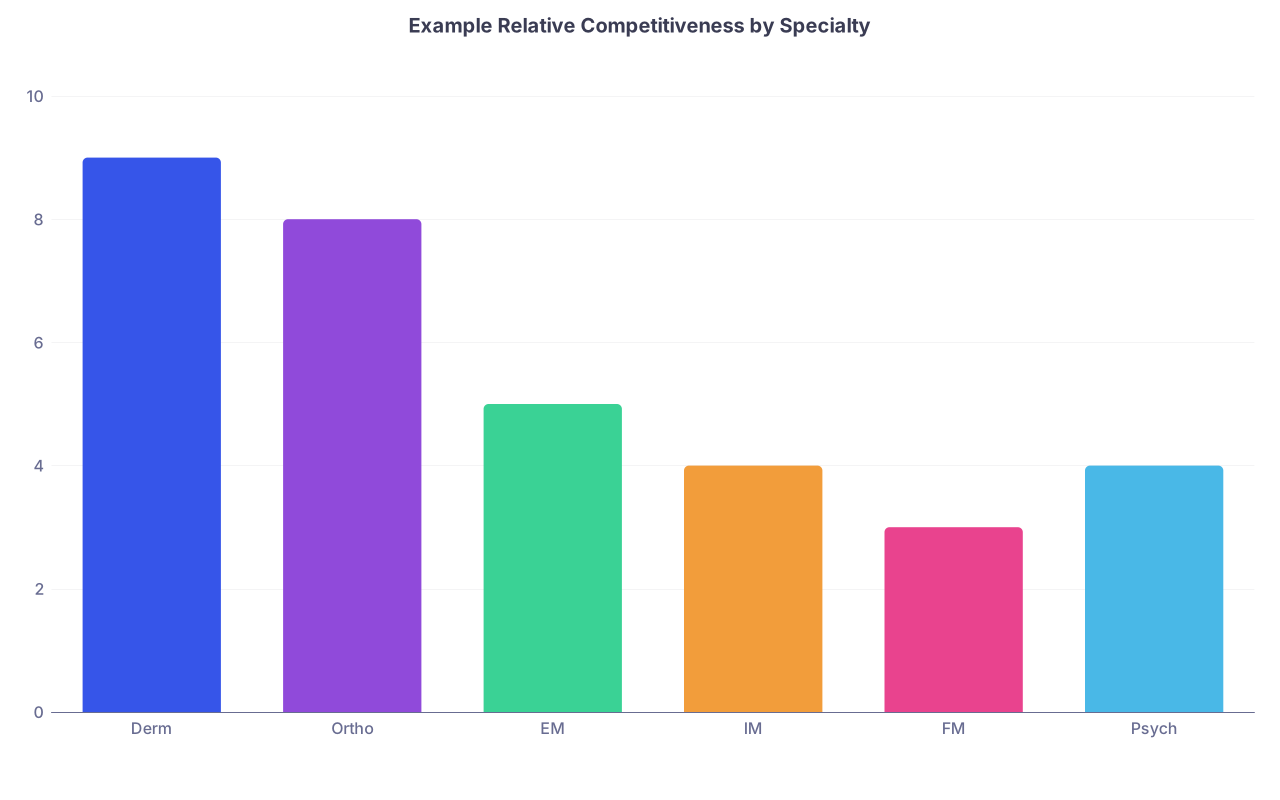
| Category | Value |
|---|---|
| Derm | 9 |
| Ortho | 8 |
| EM | 5 |
| IM | 4 |
| FM | 3 |
| Psych | 4 |
That chart is the kind of thing people obsess over: a rough sense of competitiveness (based on Step scores, fill rates, etc.). It feeds this hierarchy in everyone’s head.
The problem? It ignores:
- How brutal certain “less competitive” jobs can be in real life
- How insanely good some primary care docs, psychs, and hospitalists have to be to keep complex patients alive
- How different the applicant pools are
I’ve seen students with 250+ scores and honors in everything struggle to get EM interviews in a saturated region. I’ve seen “average” students waltz into solid radiology spots because they had a strong home program and good mentoring. And I’ve seen excellent people choose family medicine or psych on purpose and be treated like they “settled.”
So yes, some specialties are statistically less competitive to enter. That does not mean:
- The work is easy
- The path is effortless
- The people are less skilled
- The respect you get is automatically lower
It only means: fewer people fight for those spots and the bar for entry metrics is lower. That’s it.
The Ugly Truth: Yes, Some People Will Judge You
I’m not going to sugarcoat this.
If you choose a less competitive field—family medicine, psych, peds, PM&R, maybe some community internal med—certain people will make assumptions.
The classic ones:
- “Couldn’t cut it for something harder”
- “Just wants lifestyle”
- “Smart, but wasted potential”
- “Oh… you could have done derm/surg/whatever”
You’ll hear it in subtle ways:
The attending who goes, “You’re applying psych? But your scores are great! Why?”
The classmate who says, “You’re not even trying for [insert shiny specialty]?”
The surgeon who calls primary care “triage for real doctors.” Yes, people still say garbage like that.
So if your question is: Will anyone, ever, think less of me for choosing an ‘easier’ field?
Answer: Yes. Some will. Especially in training environments where prestige is currency.
But here’s the part your anxiety is skipping:
Those people are not the ones whose respect actually matters long-term.
Who matters?
- Your patients
- Your colleagues in your own field
- The consultants you work with regularly who see how you practice
- The people who might hire you in the future
And those people care about something very boring and very non-Instagramable: whether you’re good, reliable, safe, and not awful to work with.
Respect in Medicine Is Earned Very Differently Than You Think
You think respect is:
“What specialty are you in?”
“What were your Step scores?”
“Where did you match?”
That stuff only dominates during med school and early residency, when everyone’s insecure and obsessed with comparing metrics.
Once you’re out a few years, respect looks different. It sounds like:
“I love when Dr. X is on—she actually calls you back and knows her patients.”
“If I ever get depressed, I’m seeing Dr. Y. That guy gets it.”
“Don’t mess with Dr. Z; he’s the one they bring the disasters to.”

I’ve watched this happen again and again:
- The flashy specialty resident who everyone admired for matching ortho… turns out sloppy with notes, late on follow-through, rough with patients. Respect plummets.
- The quiet family med resident everyone low-key dismissed ends up the person all the nurses trust with complex patients. Everyone breathes easier when she’s on call.
- The psych attending who was “just psych” in med school becomes the lifeline for burned-out colleagues and the calm voice when there’s a suicidal patient in the ED.
Point is: day-to-day, the actual work you do and how you show up matters more than the perceived competitiveness of the field.
But your anxious brain is stuck back in M2 hallway conversations. Understandable. Hard to shake.
“Am I Wasting My Potential If I Don’t Pick the Hardest Thing I Can Get Into?”
This one is brutal. Especially if you’ve always been “the smart one.”
You’re used to:
- Taking the hardest classes
- Aiming for the highest score range
- Being told, “You can do anything, you’re too smart to just do X”
So now you’re staring at specialties thinking:
“If I can match derm, ortho, plastics, rad onc… shouldn’t I? Wouldn’t choosing something else mean I gave up?”
Here’s the uncomfortable answer:
You absolutely can waste your potential.
But not the way you think.
You waste your potential by:
- Picking a prestige specialty you don’t actually like and burning out
- Ending up mediocre because you never wanted to be there in the first place
- Spending your whole career resentful because the lifestyle doesn’t fit the rest of your life
- Becoming that attending who tells residents, “Don’t do what I did”
You do not waste your potential by:
- Being an insanely good family doc in a rural town that would literally fall apart without you
- Becoming a psych attending who keeps patients alive and pulls colleagues back from the edge
- Being a pediatrician who can read a worried parent in 30 seconds and defuse a crisis
- Becoming the go-to hospitalist who catches the subtle things others miss
You’re confusing difficulty of entry with value of work.
They are not the same metric.
The “Least Competitive” Fields and What Respect Actually Looks Like There
Let’s talk about a few of the so-called “easier” specialties you’re probably worried about.
| Specialty | Stereotype | Reality of Respect |
|---|---|---|
| Family Med | Easy, low paid | Trusted first contact, community anchor |
| Psychiatry | Talk only, not real medicine | High demand, complex risk management |
| Pediatrics | Cute kids, easy medicine | Emotionally heavy, nuance with families |
| Internal Med (community) | Failed subspecialty | Backbone of hospital care |
| PM&R | “Physical therapy doctor” | Procedure heavy, quality-of-life expert |
Family Medicine
The stereotype: “Wasn’t good enough for something harder.”
Reality: You’re the one juggling 15 problems in a 15-minute visit, coordinating every specialist, and being the only person who knows the whole picture.
Is there some condescension from certain specialists? Yes. Do most of them calm down when they realize you actually send appropriate consults, know guidelines, and aren’t just punting everything? Also yes.
Psychiatry
The stereotype: “Didn’t like real medicine” or “just talks.”
Reality: Massive demand, insane responsibility, constant risk calculations with meds, suicidality, substance use, comorbidities.
People pretend psych is easy until they have a violent patient, a suicidal intern, or a colleague with addiction. Then suddenly psych is “vital” and “heroic.”
Pediatrics
The stereotype: “Fun, easy, kids are cute.”
Reality: Dosing is unforgiving, parents are terrified, and a missed subtle sign can be catastrophic.
Respect comes in quiet ways: from nurses, from parents, from other services when they realize you actually know your stuff and catch pathology early.
Community Internal Medicine / Hospitalist
The stereotype: “Couldn’t get cards/GI/whatever.”
Reality: You make the hospital run. You deal with everything from sepsis to CHF to mystery fevers at 3 a.m.
If you’re good, surgeons, subspecialists, and ED docs will quietly be very relieved when your name is on the list.
Will It Limit Leadership, Academics, or Influence?
This is another reasonable fear:
“If I choose a ‘less competitive’ specialty, am I locking myself out of leadership or academic respect?”
Short answer: No. But the path looks different.
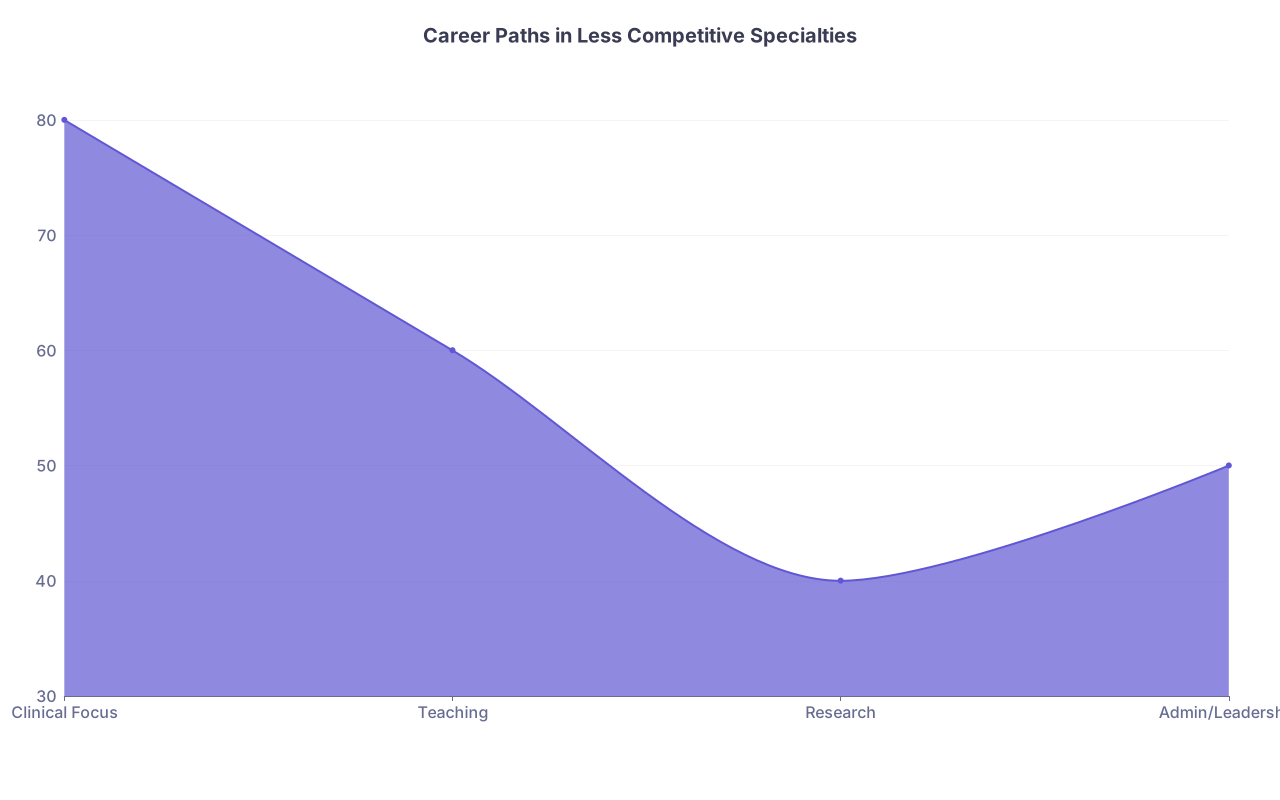
| Category | Value |
|---|---|
| Clinical Focus | 80 |
| Teaching | 60 |
| Research | 40 |
| Admin/Leadership | 50 |
That’s a rough sketch of how flexible these careers can be. You can absolutely:
- Be program director for a psych or FM residency
- Become a department chair in pediatrics or PM&R
- Lead quality improvement across a hospital as a hospitalist
- Do legit research in any of these fields
Are you going to be the “rockstar” who everyone at conferences swarms? Maybe not (though some are). But you can absolutely be respected, influential, and a leader.
Prestige doesn’t just come from matching into derm at a top-5 program. It comes from:
- Being ridiculously good at what you do
- Showing up consistently
- Building something — a clinic, a program, a research line, a community resource
The Real Risk: Choosing Based on Shame or Ego
You’re really asking two questions:
- Will I be respected if I pick an easier field?
- Will I hate myself for not pushing for something more competitive?
You have to answer both.
Here’s the trap I’ve watched too many people fall into:
They pick a “prestigious” specialty to silence the voice that says, “You weren’t good enough.”
They match. Everyone claps. They feel powerful for a while.
Then real life hits. The actual day-to-day job is nothing like what they want to do with their brain, time, or body. But now they’re stuck.
Compare that to the person who takes prestige off the table and asks:
- Whose problems do I actually like solving?
- What patient population can I tolerate (or even enjoy) for decades?
- What kind of day-to-day intensity can I manage without breaking?
If those answers point you toward a “less competitive” field and you still feel sick with shame, that’s not a sign you picked wrong.
That’s a sign the culture has messed with your head.

| Step | Description |
|---|---|
| Step 1 | Start Choosing Specialty |
| Step 2 | Consider Competitive Fields First |
| Step 3 | Explore Interests Honestly |
| Step 4 | Apply Competitive Field |
| Step 5 | Reevaluate Priorities |
| Step 6 | Select Best Fit Specialty |
| Step 7 | Prestige Anxiety High |
| Step 8 | Aligns With Lifestyle and Values |
How to Know If It’s Really About Respect vs Fit
Here’s a quick gut-check you can do with yourself:
Imagine two universes.
Universe 1:
You match the “prestige” field: ortho, derm, neurosurg, whatever your brain has decided is superior.
But the work is… fine. Not awful, not thrilling. The lifestyle is borderline. You don’t hate it, but you’re not lit up by it either. People are impressed when you tell them what you do.
Universe 2:
You match the “less competitive” specialty: psych, FM, peds, hospitalist.
You genuinely enjoy the majority of your days. Patients are your kind of complicated. Co-workers respect you. When you say your specialty at parties, some people mildly judge you or are unimpressed. Others say “thank God for you.”
Which universe actually gives you less anxiety long-term?
If your honest answer is Universe 1, okay—lean into that and own it. But if your gut knows Universe 2 is better and you’re still dragging yourself toward Universe 1 only to look “impressive”…
That’s not ambition. That’s fear wearing ambition’s clothes.
FAQ (Exactly 6 Questions)
1. Will attendings secretly think I wasn’t good enough if I choose a less competitive specialty?
Some will. Especially the ones who worship metrics and prestige. But the ones you actually want respect from—the ones who care about patient care, reliability, and clinical judgment—will judge you on how you practice, not what field you picked. Over time, consistent competence beats initial specialty bias almost every time.
2. Will choosing an “easier” field hurt my chances of leadership or an academic career?
No. You can become program director, division chief, department chair, or a respected educator in any specialty, including the least competitive ones. What changes is the path: you’ll build your reputation on teaching, clinical excellence, QI, or research within that field. You won’t be excluded from leadership just because you chose family med or psych.
3. What if I match a less competitive field and always wonder if I could’ve done something “better”?
Regret usually comes from choosing against your own preferences, not from choosing something “less shiny.” If you genuinely like the work, the patient population, and the lifestyle, the “could I have done derm?” question fades. If you pick based on shame (“I don’t want anyone to think I failed”), that nagging feeling will follow you no matter what you match.
4. Are least competitive specialties actually easier day-to-day?
Often no. They might be easier to enter, but not easier to do. Primary care, psych, and hospitalist medicine deal with complex patients, high cognitive load, and long-term emotional weight. Many surgeons will openly admit they’d be overwhelmed managing the chaos of polypharmacy, chronic disease, and vague complaints all day.
5. How do I separate what I truly want from what I feel pressured to want?
Watch your emotional reaction when you picture the actual daily work. Not the title. Not the salary. The work. Picture a clinic day, an inpatient service, the kinds of consults you’d get. If part of you relaxes at the idea of psych clinic but tenses at the idea of 6 hours in the OR, don’t ignore that. Your body is usually more honest than your ego.
6. Bottom line: will choosing an “easier” specialty limit my respect forever?
Not if you’re good at what you do and you pick a field you actually care about. You might get side-eyed during med school and residency by people who equate worth with competitiveness. But five, ten years out, people respect the colleague who shows up, knows their patients, and doesn’t make everyone else’s life harder. That can be you—in any specialty.
Key points to keep:
- “Least competitive” describes entry difficulty, not the value or difficulty of the work itself.
- Some people will judge your specialty choice—but the respect that matters most comes from how you practice, not what you picked.
- Choosing a specialty out of fear of looking “less than” is a much bigger long-term risk than choosing a so-called easier field that actually fits you.