
It’s August. You’ve just started (or are about to start) your post‑bacc or SMP. You know you need killer letters of recommendation in 10–12 months… but right now you barely know anyone’s name, let alone who’ll vouch for you as “top 5% I’ve taught.”
Here’s the hard truth: strong LORs are built, not requested. And for post‑bacc and SMP students, you’re on a compressed timeline. You don’t have four years to slowly impress people. You have one year. Sometimes less.
So you need a plan that’s time‑based, not vibes‑based.
Below is a one‑year, month‑by‑month and then week‑by‑week playbook. At each point I’ll be blunt about what you should actually be doing to set up strong, detailed letters instead of generic “they did well in my course” fluff.
Big Picture: Your One‑Year LOR Strategy
You’re trying to secure at least:
- 2 strong science letters (ideally from rigorous, graded courses in your program)
- 1 additional letter (could be PI, clinical supervisor, program director, or non‑science professor)
- Optional: 1 character / longitudinal mentor letter (advising, volunteering, long‑term clinical)
And you’re trying to do it in about 10–12 months.
Here’s the rough arc:
- Months 1–2: Identify targets and get on their radar
- Months 3–5: Demonstrate performance and reliability
- Months 6–8: Deepen mentorship; start explicit LOR positioning
- Months 9–11: Lock in letters, provide materials, and confirm uploads
- Month 12: Clean‑up, backups, and thank‑yous
Let’s get more concrete.
Months 1–2: Scouting and First Impressions
At this point you should be:
- Learning names, styles, and expectations of potential letter writers
- Establishing yourself as professional and serious from day one
- Choosing 3–5 realistic LOR “targets” to invest in
Week 1–2: Day‑One Habits
You walk into orientation and the first week of class. Most students are anonymous. You can’t afford that.
In the first two weeks:
Identify likely letter writers
Think: faculty who are:- Teaching rigorous core science or graduate‑level courses
- Known for writing letters (ask upper‑class students quietly)
- Accessible and actually meet with students
Examples:
- SMP: Director of Graduate Studies, major course directors (Physiology, Pathophysiology, Pharmacology)
- Post‑bacc: Organic Chemistry, Biochemistry, upper‑level Bio, key lab instructors
Introduce yourself briefly after class or in office hours
Script is simple:- Name, quick background (career changer or GPA rehab, prior degree)
- Why you’re in the program
- 1 question showing you’re thinking ahead (“How do you recommend I study for this class to perform at the top level?”)
Set professional norms early
- Email from a professional address
- Show up on time, sit closer to the front, engage without hijacking the class
- Keep a clean record: no late work, no missed quizzes, no excuses
At this stage, you’re not asking for anything. You’re just making sure you’re not random‑person‑in‑row‑five.
Week 3–4: Start Showing You’re Serious
Now you’re a few lectures in. Midterms are coming.
In weeks 3–4:
Attend one office hours session per targeted professor
Bring:
- One conceptual question from lecture
- One deeper question that connects to your path (“I’m trying to show I can handle medical‑school level rigor—how do you recommend I approach this class?”)
After your first quiz/exam:
- If you did well: go over the exam quickly and ask about what distinguishes “A” work from “top of the class”
- If you did average / below: show a short written analysis of what you missed and how you’ll adjust
At this point you should have:
- 2–3 faculty you’ve spoken with at least once
- A clear sense of which courses you can realistically dominate
Months 3–5: Performance + Reliability (Your LOR Foundation)
Now it’s not about being nice or “eager.” It’s about numbers and consistency. Faculty write strong letters when you:
- Perform at the top of the course
- Are visibly engaged and reliable
- Make their life easier, not harder
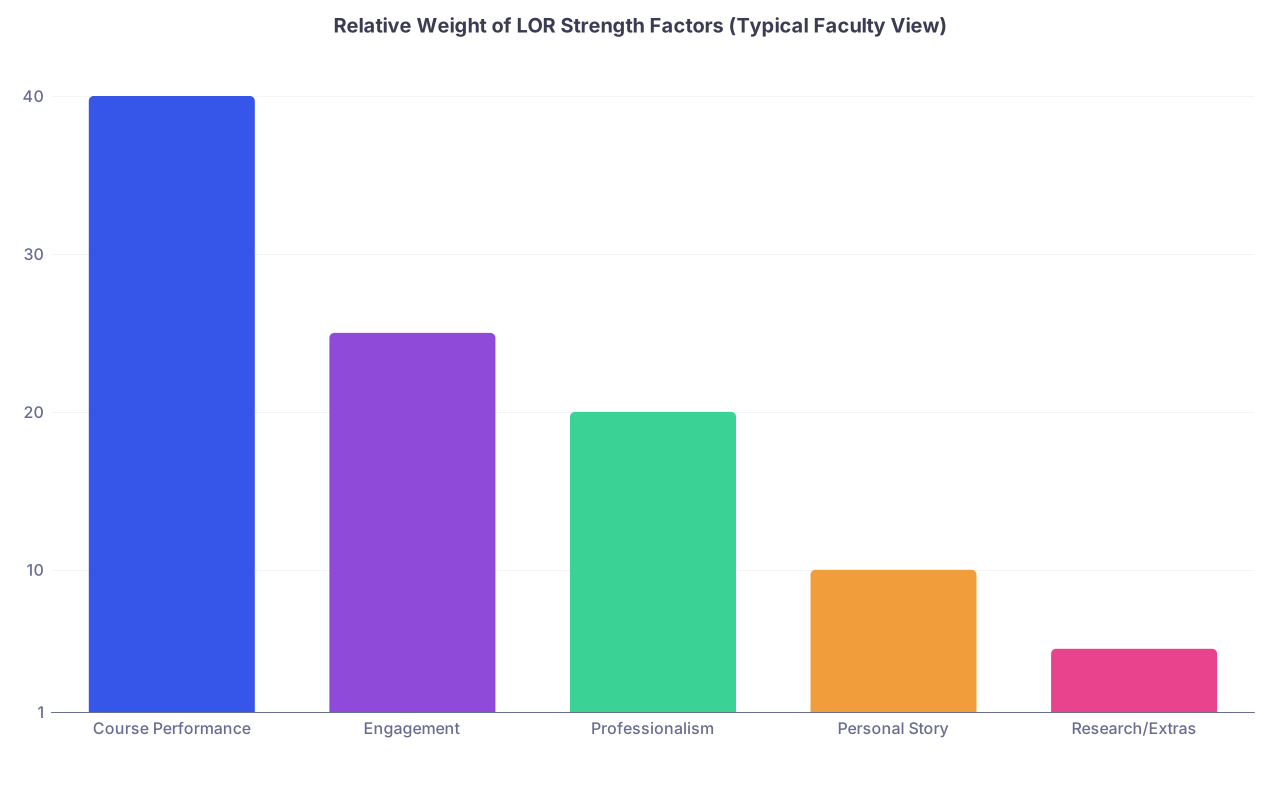
| Category | Value |
|---|---|
| Course Performance | 40 |
| Engagement | 25 |
| Professionalism | 20 |
| Personal Story | 10 |
| Research/Extras | 5 |
Month 3: Midterms and Visibility
At this point you should be:
Running a post‑exam routine for targeted courses:
- Review the graded exam
- Identify patterns in your mistakes
- Meet with the professor or TA at least once to go over it
Showing up consistently:
- No disappearing for weeks then suddenly asking for help
- One short, thoughtful contribution in class every week or two is enough
The goal: when your name comes up in their inbox next year, they immediately picture your face and work ethic.
Month 4: Consolidate Your “Top Student” Status
This is where people start to fall off. They’re tired, exams pile up, and the curve gets brutal. You can’t afford to fade.
During month 4:
Double down on your strongest 2–3 faculty:
- Attend office hours every 2–3 weeks
- Ask for feedback: “Based on my performance so far, what would you recommend I do to be in the top tier of this class?”
Start revealing your larger story, briefly:
- Career‑changer post‑bacc? Explain your prior degree and shift to medicine.
- SMP GPA repair? Acknowledge the prior stumble without oversharing; focus on what’s changed and your trajectory now.
You’re not yet asking for letters. You’re building context so when you do, they actually know what they’re endorsing.
Month 5: Early Mentorship Moves
Now you should be thinking: Which 2–3 people could actually write something like “one of the best students I’ve worked with in the last 5 years”?
In month 5:
For your top 1–2 prospects, schedule a short meeting (15–20 min):
- Share your long‑term plan (MD vs DO, timeline for applying)
- Ask explicitly for advice, not a letter:
“I’m hoping to apply in the 20XX cycle. From your perspective, what would I need to demonstrate in this program over the next year to be a strong candidate?”
If you’re in an SMP with research or thesis options:
- Ask about projects, small roles, or independent readings that could deepen your relationship with one faculty member
At this point you should have:
- 2–3 faculty who know your face, story, and academic performance
- Grades that are on track to be A/A‑ in your targeted LOR courses
Months 6–8: Positioning and The Soft Ask
Now you shift from “impressing” to “positioning.” You want these people mentally prepared to write for you months before you formally ask.
Month 6: Quietly Testing Willingness
You’ve gotten a midterm grade or two. You know where you stand.
In month 6:
- For at least two faculty you respect:
- Send a short email asking to discuss your progress and future plans
- In that meeting, say something like:
“I’m working toward applying to medical school next [spring/summer]. If I continue to perform at this level, do you feel you’d know me well enough to eventually write a strong letter for my application?”
Notice: strong letter, not “a letter.” Watch their reaction.
Green flags:
- “Yes, absolutely. You’ve been one of my strongest students.”
- “If you keep this up, I’d be happy to.”
Yellow/red flags:
- “I don’t really know you that well yet…”
- “I only write letters for students who are with me for two semesters.”
- Vague or lukewarm response
If you get a yellow flag, do not argue. Just treat them as a backup and cultivate someone else harder.
Month 7: Deepen One Relationship
At this point you should be identifying a primary mentor‑letter writer. This is the person whose letter will anchor your application.
Think:
- Program director
- SMP thesis or research mentor
- Course director you’ve worked with across more than one term or in multiple roles
In month 7:
Increase substantive contact:
- Office hours or meetings once a month
- Update them briefly on your progress and any new responsibilities (volunteering, clinical work, MCAT plans)
If they’re research‑active:
- Ask if you can assist with something realistic: data abstraction, literature reviews, clinical shadowing in their clinic (if they’re an MD/DO), etc.
You’re aiming for them to see you in multiple contexts: classroom, office hours, possibly research or project work.
Month 8: Timing and Logistics Planning
You’re now 2/3 of the way through the year. Application season is basically around the corner.
In month 8:
Clarify your application timeline with each potential writer:
- “I’m planning to submit my primary application in June. Letters are ideally in by [late June/early July]. Does that timing work for you?”
Start collecting the materials they’ll need:
- Draft personal statement
- CV or resume
- Unofficial transcript from your program
- Short bullet list: courses you took with them, grades, specific projects or contributions
- Any official “letter request” forms (Interfolio, committee letter system, AMCAS letter ID, AACOMAS ID, etc.)
You’re not formally asking yet. You’re getting your logistics clean so once you ask, they don’t get stuck waiting on you.
Months 9–11: The Formal Ask and Follow‑Through
This is the part most students rush and screw up. You won’t.
At this point you should be:
- Making formal, explicit LOR asks
- Giving at least 4–6 weeks notice
- Tracking completion like a project manager
Month 9: The Formal Ask (In Person If Possible)
In month 9 (usually late spring for a June primary submission):
Ask in person when possible. Then follow with email.
Script in person:- Thank them for their mentorship/teaching
- “I’m applying to medical school this coming cycle, and I’d be honored if you’d be willing to write a strong, supportive letter of recommendation for me.”
Again, “strong, supportive” is deliberate. You’re giving them an out.
If they say yes, immediately follow up by email that day:
- Subject: “Letter of Recommendation Request – [Your Name]”
- Include:
- Your CV
- Draft personal statement (even rough)
- Unofficial transcript
- Bullet list of things they might highlight (top 5% in class, led X project, came to office hours regularly, etc.)
- Clear deadline, ideally 1–2 weeks before your actual internal deadline
If they hesitate, back off gracefully:
- “I really appreciate your honesty; I’ll ask someone who knows me better. Thank you again for your guidance this year.”
Do not chase lukewarm writers. A mediocre letter can quietly sink an otherwise strong app.
Month 10: Reminders and Backups
At this point you should have:
- 2–3 confirmed “yes” responses
- Deadlines clearly communicated
- All systems (AMCAS/AACOMAS/Interfolio or school’s committee) set up with correct letter entries
In month 10:
Send a polite reminder 10–14 days before the deadline:
- Keep it short:
“Dear Dr. X, Just a quick reminder that my medical school letter of recommendation is due on [date] in the AMCAS system. Let me know if you need any additional information from me. Thank you again for your support.”
- Keep it short:
If they miss the first deadline:
- Wait 3–5 days, then send a second reminder with a specific new date
- If silence continues, activate a backup writer you’ve been cultivating (this is why you didn’t put all your chips on one person)
| Letter Type | Ideal Writer Example | Priority |
|---|---|---|
| Science Faculty #1 | SMP Physiology course director | High |
| Science Faculty #2 | Post-bacc Biochemistry professor | High |
| Program/Thesis Mentor | SMP director or PI | High |
| Clinical/Service | Long-term clinical supervisor | Medium |
| Character/Other | Pre-health advisor or non-sci prof | Optional |
Month 11: Verification and Damage Control
By month 11, you’re probably submitting secondaries or close to it. LORs should be in.
At this point you should:
- Log into AMCAS/AACOMAS/Interfolio and verify receipt of each letter
- If one is missing:
- Email the writer with a brief, respectful note:
- Mention that schools are beginning to review your file
- Ask if they still anticipate being able to complete the letter
- If they can’t, immediately swap in your backup
- Email the writer with a brief, respectful note:
This is also when some SMPs finalize their program letters or committee letters. Make sure:
- You’ve completed any required evaluation forms or self‑assessments
- Your portfolio (CV, statement, evaluations) is updated and accessible
Month 12: Final Touches, Thank‑Yous, and Future Proofing
At this point you should already have letters in and applications out. You’re not done.
Thank‑Yous (Do Not Skip This)
After letters are submitted:
- Send individual thank‑you emails:
- Acknowledge the time and thought involved
- Briefly update them once you get interview invites and especially after you receive an acceptance
Later (when you have an acceptance):
- Send a short update:
- “I wanted to share the good news that I’ve been accepted to [School]. Your support and letter of recommendation played a major role in making this possible. Thank you again.”
Faculty remember the students who close the loop.
Future Proofing (If You Might Reapply)
If you’re borderline and might need to reapply:
- Ask your strongest letter writers:
- “If I need to reapply next cycle, would you be open to updating or reusing your letter?”
- Save:
- Copies of your CV, statement, and the exact list of schools you applied to this cycle
- Notes on which faculty were enthusiastic and timely vs. slow or hard to reach
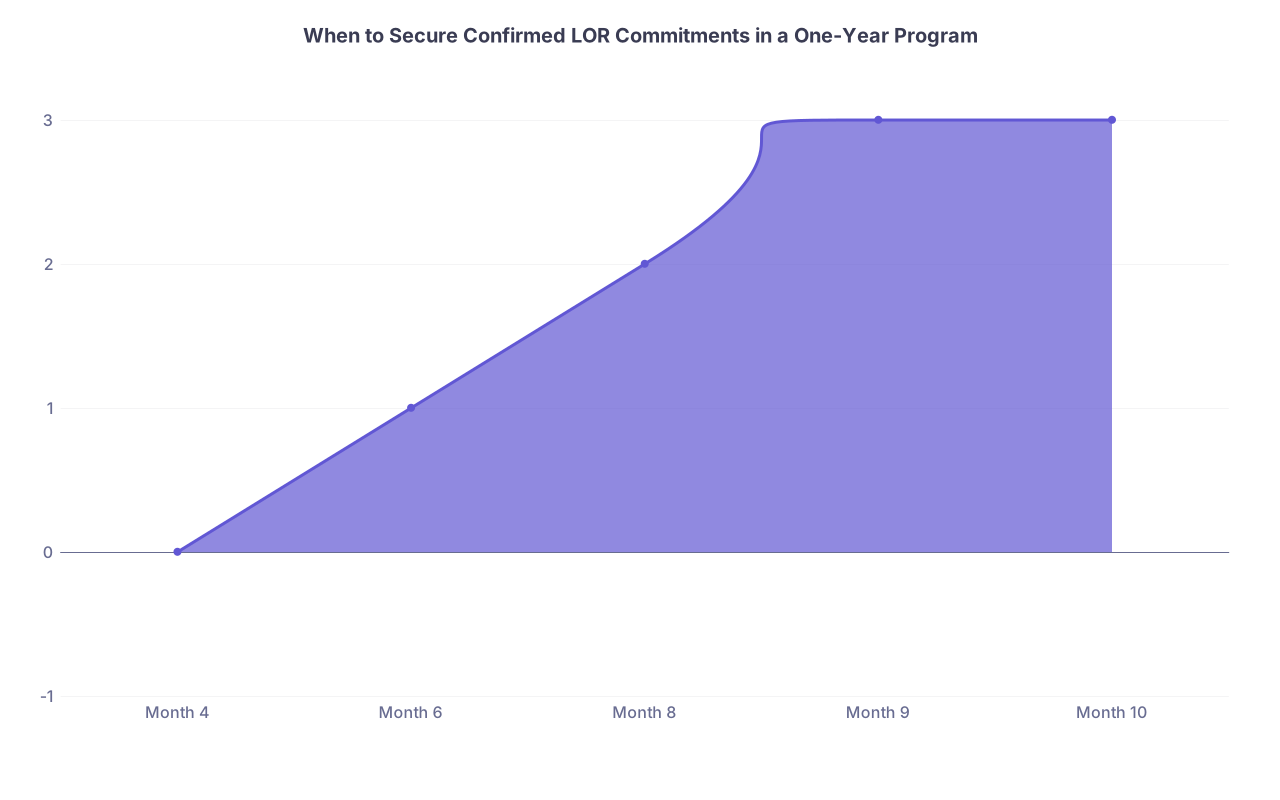
| Category | Value |
|---|---|
| Month 4 | 0 |
| Month 6 | 1 |
| Month 8 | 2 |
| Month 9 | 3 |
| Month 10 | 3 |
Quick Timeline Snapshot: Month‑by‑Month
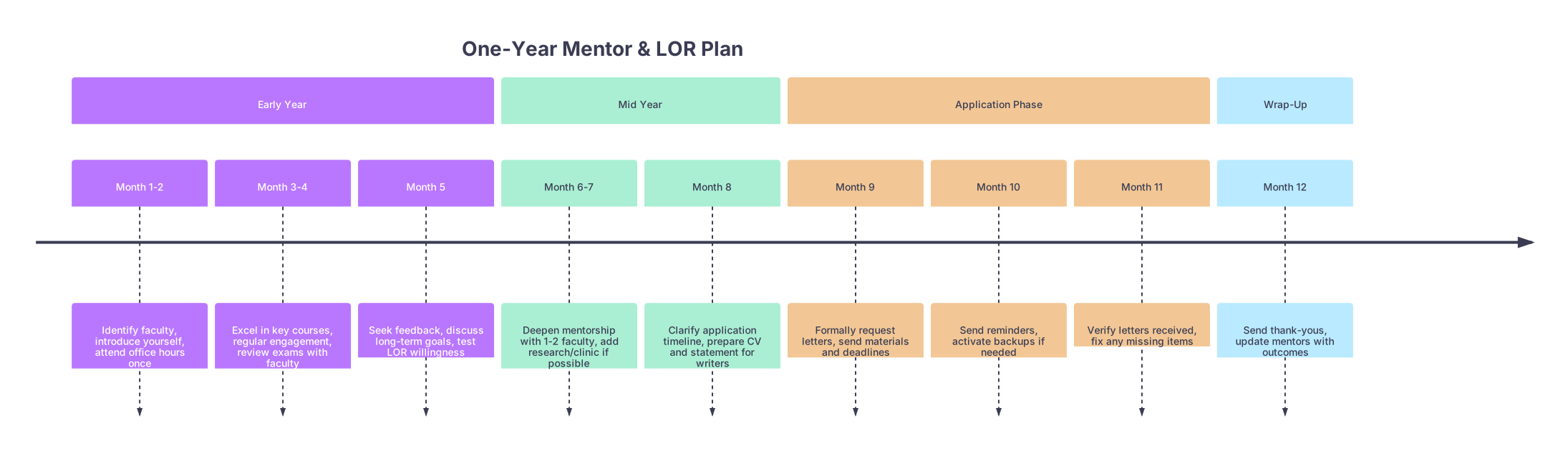
| Period | Event |
|---|---|
| Early Year - Month 1-2 | Identify faculty, introduce yourself, attend office hours once |
| Early Year - Month 3-4 | Excel in key courses, regular engagement, review exams with faculty |
| Early Year - Month 5 | Seek feedback, discuss long-term goals, test LOR willingness |
| Mid Year - Month 6-7 | Deepen mentorship with 1-2 faculty, add research/clinic if possible |
| Mid Year - Month 8 | Clarify application timeline, prepare CV and statement for writers |
| Application Phase - Month 9 | Formally request letters, send materials and deadlines |
| Application Phase - Month 10 | Send reminders, activate backups if needed |
| Application Phase - Month 11 | Verify letters received, fix any missing items |
| Wrap-Up - Month 12 | Send thank-yous, update mentors with outcomes |
Final 30‑Day Checklist Before LOR Requests
In the 30 days before you make formal asks, you should:
Have:
- Draft personal statement
- Up‑to‑date CV
- Unofficial transcripts (undergrad + post‑bacc/SMP)
Do:
- One final check‑in with each targeted writer
- Confirm they know your intended specialty interest (if any) and application timeline
- Prepare a one‑page LOR info sheet for each writer:
- Why you’re applying to medicine
- 3–5 bullet points they might highlight
- Any specific programs or mission fits that matter to you
You’re making it as easy as possible for them to write a detailed, specific letter quickly.
Core Takeaways
- Strong LORs in a one‑year post‑bacc or SMP are the result of a structured, year‑long plan, not a last‑minute email.
- At each stage—months 1–2, 3–5, 6–8, 9–11—you should know exactly what you’re doing to build, test, and then secure your letters.
- Never settle for lukewarm writers; invest early in 3–5 potential mentors and narrow down to the 2–3 who are both enthusiastic and can credibly say you’re among the best they’ve taught.