
Seven Conversation Mistakes That Turn a Strong Mentor into a Weak LOR Writer
What do you say in that 10‑minute meeting that quietly turns “I’d be happy to write you a strong letter” into “This student was in my class and got an A”?
I’ve watched that happen more times than I like. Strong mentors. Impressive students. Then a short, awkward conversation turns a potentially game‑changing letter of recommendation into a lukewarm, generic paragraph that might as well not exist.
You think the key is picking the “right” letter writer. That’s only half the game. The other half is how you talk to them.
Let me walk you through the seven specific conversation mistakes that sabotage your letters of recommendation — and what to say instead if you don’t want to get burned.
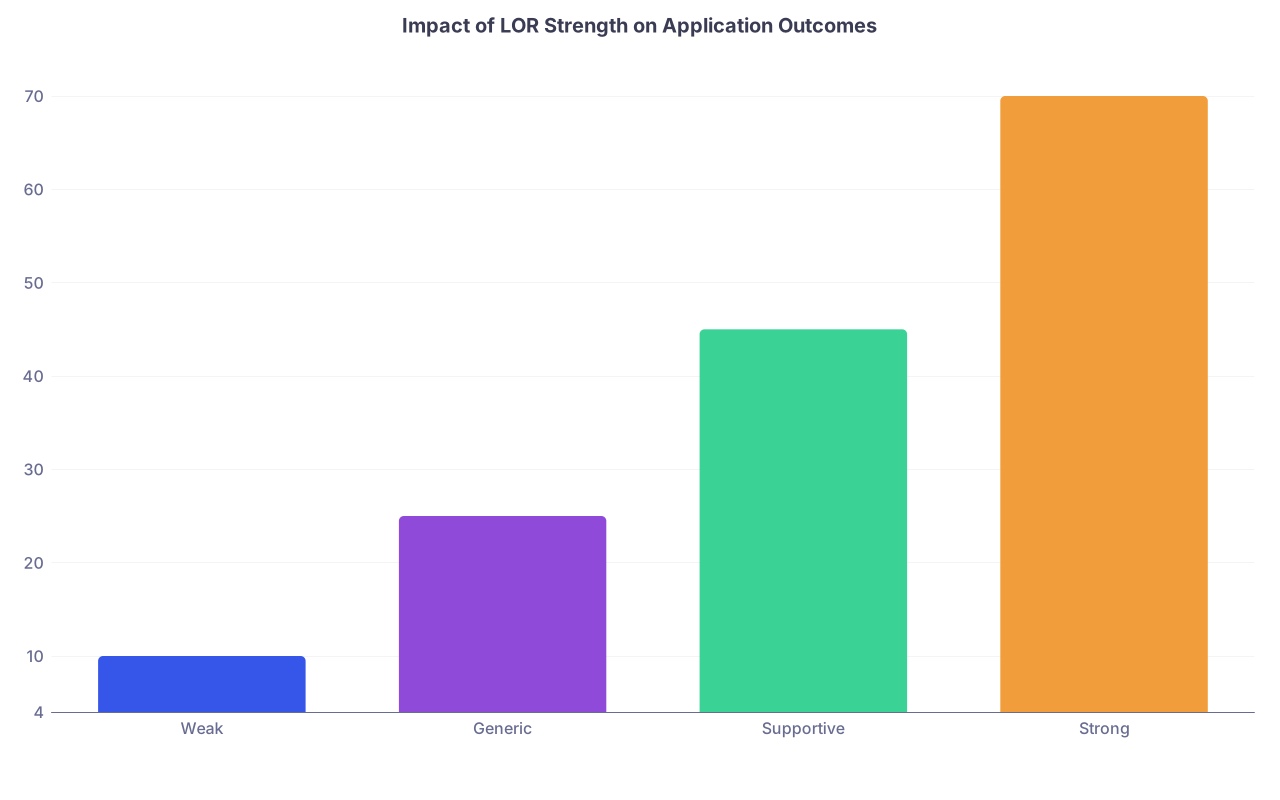
| Category | Value |
|---|---|
| Weak | 10 |
| Generic | 25 |
| Supportive | 45 |
| Strong | 70 |
(Illustrative: relative acceptance odds rising sharply with stronger letters.)
1. Treating “Can you write me a letter?” Like a Yes/No Question
The classic rookie move: you sit down and blurt out, “Could you write me a letter of recommendation?” They say “Sure,” and you think you’re done.
You are not done. You might have just locked in a weak letter.
Here’s the problem: most faculty hate saying no. They’ll agree to write something even if:
- They barely remember you
- They’re not enthusiastic
- They don’t think they can write anything specific
Result? A generic, vague, “they attended my class and did well” letter. Committees smell that from a mile away.
What you should NOT say:
- “Can you write me a letter?”
- “Would you mind writing me a LOR?”
- “I just need another science letter to complete my file.”
Those phrases scream: “Any letter is fine.” Which is never true in medicine.
What to say instead: You need to give them an explicit off‑ramp.
Try something like:
- “Would you feel comfortable writing me a strong letter of recommendation for medical school?”
- “If you don’t feel you know me well enough to write a strong letter, I completely understand and would rather you say no.”
That second sentence is crucial. It gives them permission to protect you.
I’ve heard faculty say this directly after a bad ask: “They just asked if I could write a letter; I said yes. They didn’t ask if I knew them well. I’ll write something neutral.” You do not want to be that student.
Avoid this mistake by:
- Always including the word “strong”
- Always offering an easy way to decline
- Watching their face and body language when they respond — hesitation is a red flag
If they say “I can write you a letter,” but they avoid the word “strong,” do not ignore that. That’s your warning.
2. Making the Conversation All About Logistics, Not About You
Another common misstep: you finally get the meeting… and turn it into a calendar discussion.
You spend the whole time on:
- Deadlines
- Where to upload the letter
- How many schools you’re applying to
- Whether it’s AMCAS or AACOMAS
Then you leave and realize: they still barely know your story.
Here’s the ugly reality: a lot of “meh” letters come from mentors who never got any real material to work with. They know your grade and your CV bullets. That’s it.
So the letter becomes:
- “X was in my course”
- “They earned an A”
- “They attended office hours”
- “They were respectful and punctual”
That’s a description, not an endorsement.
Your job in that conversation is to feed them narrative ammunition. Specific stories. Traits with evidence. Context.
Don’t turn the meeting into:
- “Okay, the deadline’s June 15th, and here’s the link, and I’m applying to about 25 schools…”
- And nothing else.
They can get logistics by email. They can’t get your story from a portal link.
Use the meeting to:
- Tell them your “why medicine” in 2–3 minutes
- Highlight 2–3 traits you hope they can speak to (with examples)
- Connect what you did with them to your bigger trajectory
For example:
- “Working on our immunology project confirmed I enjoy thinking through complex clinical problems; it’s part of why I’m interested in internal medicine down the line.”
- “When I presented that research poster at the regional conference, that was the first time I felt like I could contribute something small but real to the field.”
That gives them a frame. Now they can write: “I have directly observed their growing interest in clinical reasoning and research communication…”
Avoid this mistake by:
- Keeping logistics to the last 2–3 minutes only
- Walking in ready to tell 1–2 specific stories they might not fully remember
- Leaving them with a strong sense of who you are, not just when the letter is due

3. Over‑selling, Under‑proving: Talking in Adjectives Instead of Examples
This one’s more subtle but just as destructive.
Students sit down and say things like:
- “I’m very passionate about medicine.”
- “I’m a hard worker.”
- “I’m really dedicated to patient care.”
- “I’m a strong leader.”
You think you’re helping. You’re not. You’re forcing your mentor to either:
- Repeat what you said without proof (weak), or
- Hunt through their memory for evidence they may not remember (impossible if they barely saw you outside class)
Adjectives without examples kill letters. Committees want:
- Specific situations
- Concrete behavior
- Comparisons to peers
If everything they can write could be said about any halfway decent premed, your letter adds zero value.
Bad conversation pattern:
- You: “I’m very empathetic and passionate, and patients always say they feel comfortable with me.”
- Mentor (internally): “Okay, but when did I see that? I can’t just quote you.”
Better pattern:
- You: “During my volunteering at County General, I was assigned to a Spanish‑speaking patient who was really anxious about a procedure…”
- Then you tell the story of what you did, what you learned, and how that changed your approach.
Now your mentor can write:
- “They described a situation at County General where they recognized language and cultural barriers and took initiative to…”
- “This example reflects their maturity and patient‑centered mindset…”
Avoid this mistake by:
- Preparing 2–3 short stories that show — not claim — your qualities
- Using phrases like, “One example that might be helpful for your letter is…”
- Letting your mentor supply the adjectives; you supply the evidence
Remember: the best letters sound like the writer discovered your qualities, not like you dictated them.
4. Being Vague About Your Goals and Fit for Medicine
A mentor cannot write a compelling letter for a ghost.
If you talk like this:
- “I think I want to do something clinical.”
- “I’m still kind of figuring out what exactly I want.”
- “I just know I want to help people.”
You might think you’re being humble and honest. What they hear is: “I have no clear idea what I’m doing.”
A strong letter needs direction. Not that you must know your future subspecialty at 20 years old. But your mentor needs:
- A credible “why medicine” beyond clichés
- A rough sense of what kind of physician you hope to be
- How your experiences so far point in that direction
Vague conversation = vague letter.
I’ve seen letters that literally say:
- “They are interested in a career in health care.”
- “They are considering medical school.”
- “They have expressed an interest in helping people.”
That’s pre‑med brochure language. Useless.
Instead, talk like this:
- “I’m especially drawn to longitudinal care and getting to know patients over years, which is why primary care and internal medicine really appeal to me.”
- “Shadowing in the ER was exciting, but the palliative care rotation was what really stuck with me — I found meaning in those longer conversations.”
Now they can write:
- “They have shown thoughtful reflection about the type of physician they hope to become…”
- “They are drawn to longitudinal relationships and complex, chronic care…”
Avoid this mistake by:
- Doing your own work on your “why medicine” before you meet
- Being specific but flexible (it’s fine to say, “I’m leaning toward X, but still open”)
- Connecting their experience with you to your developing direction
If you sound lost, your letter will sound weak, even if they like you.

| Step | Description |
|---|---|
| Step 1 | Schedule meeting |
| Step 2 | Open with appreciation |
| Step 3 | Ask for strong letter with opt-out |
| Step 4 | Share why medicine & goals |
| Step 5 | Highlight 2-3 specific examples |
| Step 6 | Clarify logistics & deadlines |
| Step 7 | Offer supporting materials |
5. Asking for a Letter Too Casually or Too Late
Here’s where a lot of strong mentors quietly downgrade their letter without telling you.
The mistakes:
- Asking in passing after class: “Oh, by the way, could you write me a LOR?”
- Dropping by office hours two weeks before a hard deadline
- Emailing with, “This is due in 5 days, sorry for the short notice…”
Faculty remember that. And it bleeds into how they write.
I’ve literally heard: “They asked me last‑minute in the hallway. I’ll submit something, but I’m not going to kill myself over it.” That’s how “weakly positive” letters get written.
Signs you’re doing it wrong:
- You’re nervous they’ll say no, so you spring it on them quickly
- You keep telling yourself “I’ll ask when it’s less awkward,” and suddenly it’s late May
- You send a “hopeful” email instead of asking for a real meeting
A strong letter is a favor that requires time and thought. If you treat it like an administrative stamp, that’s exactly the energy it will have.
Correct approach:
- Ask 2–3 months before you need it, when possible
- Request a short meeting: “Would you have 15–20 minutes to talk about a potential letter of recommendation?”
- In that meeting, show you’ve thought ahead: list of schools, timeline, draft personal statement if you have it
Key conversation lines:
- “I know this is a significant favor, so I wanted to reach out early.”
- “I’d really value the chance to talk briefly in person because your perspective on my application is important to me.”
That signals respect. People write better letters for students who respect their time.
Avoid this mistake by:
- Building a simple timeline for letter asks and sticking to it
- Never ambushing someone with a request as they rush out of a lecture
- Treating the request like a serious professional ask, not a quick checkbox

6. Failing to Equip Them: “Let Me Know If You Need Anything” (And Then Vanishing)
This one irritates mentors more than you realize.
You say:
- “I can send you my CV if that helps.”
- “Let me know if you need anything else from me.”
- And then you wait for them to chase you.
They won’t.
So they write from what they remember:
- One course
- One lab project
- Maybe a vague impression of you as “nice” or “hard‑working”
That’s not a strong medical school letter. That’s a participation report.
You cannot expect them to dig through their memory and your grades and magically reconstruct your entire professional identity. They’re writing dozens of letters a year—nothing personal, but you’re one of many.
You need to hand them the raw material.
Minimum you should proactively offer:
- Updated CV or resume
- Draft of your personal statement (even if rough)
- A short bullet list of:
- Schools or program types you’re applying to
- Key themes/qualities you hope your application shows
- Specific things they’ve seen you do that you’d love them to highlight
| Document | Why It Matters |
|---|---|
| CV/Resume | Shows breadth, leadership, timeline |
| Personal Statement | Clarifies your motivation & story |
| Grade/Transcript | Context for academic performance |
| Bullet Point List | Guides specific anecdotes & traits |
| Deadline Summary | Helps them prioritize & plan |
How to say this in conversation:
- “I’ve brought a copy of my CV and a draft personal statement if that would be helpful.”
- “I also made a short list of experiences we’ve shared that you might or might not want to mention, but I thought could be useful.”
- “If there’s anything else you prefer your students provide, I’m happy to send it.”
Notice: you’re not telling them what to write. You’re making their job easier. Most good mentors actually appreciate this.
Avoid this mistake by:
- Bringing print or digital copies to the meeting — not offering vaguely
- Following up the same day with a clean email summarizing what you discussed and attaching documents
- Keeping your materials organized and easy to skim
If they have to hunt for information, they will write you a shorter, more generic letter. Predictable outcome.
7. Ignoring Red Flags and Forcing a “Strong” Letter Out of the Wrong Person
Here’s the hardest one to swallow: sometimes the mistake isn’t how you ask. It’s who you ask. And how you react when they subtly warn you off.
Red flags in the conversation that too many students ignore:
- “I can write you a letter” (without strong, enthusiastic language)
- “I mostly remember your grade, but I can say you did well.”
- “I don’t usually write many medical school letters, but I suppose I can.”
- A long pause before they answer, followed by something noncommittal
If your gut feels off, listen to it.
I’ve seen students push through because:
- “But they’re famous in this field.”
- “They’re a big name; the name alone will help.”
- “They’re the only PI I’ve worked with, I have to use them.”
No. A big name with a lukewarm letter hurts you more than a lesser‑known mentor who writes with conviction and detail.
Selection committees have read tens of thousands of letters. They know exactly what it means when a Nobel‑adjacent PI writes: “X completed tasks assigned to them reliably.”
If you hear hedging, you must be willing to pivot.
In the conversation, give them another escape hatch:
- “If you feel you can’t write a very positive and detailed letter, I completely understand and can ask someone else.”
- “I only want you to say yes if you really feel you can strongly support my application.”
If they jump in with: “No, I definitely can” and give real reasons — good. If they sigh in relief and say, “You might be better off with someone who knows you more personally,” believe them.
Avoid this mistake by:
- Prioritizing enthusiasm and specificity over name prestige
- Asking mentors who’ve seen you:
- Think under pressure
- Interact with others
- Grow over time
- Being brave enough to seek additional letter writers if one turns out weaker than you hoped
Never bully or guilt someone into writing you a “strong” letter. You cannot force enthusiasm into existence.
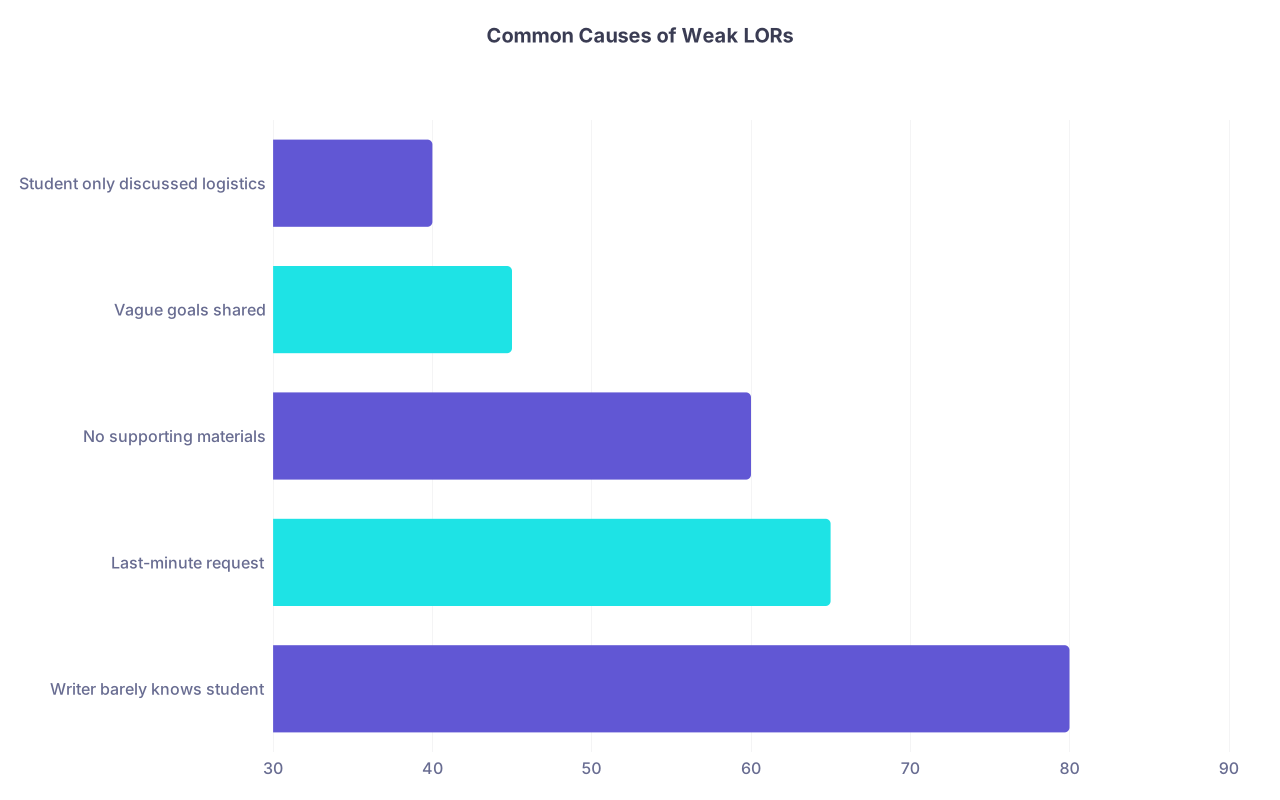
| Category | Value |
|---|---|
| Writer barely knows student | 80 |
| Last-minute request | 65 |
| No supporting materials | 60 |
| Vague goals shared | 45 |
| Student only discussed logistics | 40 |
How to Structure the Conversation So You Don’t Screw This Up
If you want a simple conversational roadmap that avoids all seven mistakes, here it is.
Roughly 10–20 minutes:
Open with context and appreciation (1–2 minutes)
- “Thank you for meeting with me. I’ve really valued [class/lab/mentorship] with you this year…”
Ask clearly for a strong letter with an out (2 minutes)
- “I’m applying to medical school this upcoming cycle and I was wondering if you’d feel comfortable writing me a strong letter of recommendation. If you don’t feel you know me well enough, I completely understand.”
Share your “why medicine” and direction (3–5 minutes)
- Short, specific explanation of what’s drawing you to medicine and, if you have one, a tentative area of interest.
Remind them of specific shared experiences (3–5 minutes)
- “One example that might be helpful for your letter is…”
- 2–3 concrete stories where they witnessed your growth, curiosity, work ethic, or character.
Offer materials and clarify logistics (3–5 minutes)
- “I brought my CV and a draft of my personal statement; I can also email them to you.”
- “My earliest deadlines are around [date], and I can send you a summary email today.”
End respectfully
- “Thank you again for considering this, and please do tell me if at any point you feel you’re not able to submit a strong letter — I’d really appreciate the honesty.”
This structure protects you from most of the landmines we just walked through.

Final Takeaways
Keep these three points burned into your brain:
The wrong conversation turns good mentors into weak letter writers. If you only talk logistics, use vague adjectives, or ask too late, you’re almost guaranteeing a generic letter.
Always ask for a strong letter and give them an easy way to say no. Their hesitation now is far better than a lukewarm letter later.
Your job is to supply the story and the evidence. Concrete examples, clear goals, and well‑organized materials turn a bland “They did well” into “You should absolutely take this future physician.”
Do not waste good mentorship on bad conversations.