

Addiction medicine is one of the lowest paid internal medicine subspecialties—and that is exactly why most people misunderstand it.
If you are an internist thinking about certification, call, and compensation in addiction medicine, you are not choosing between “rich” and “poor” specialties. You are choosing between misunderstood, underpriced work and a niche where your leverage comes from how intelligently you structure your career. Let me break this down concretely.
1. What “Addiction Medicine for Internists” Actually Means
Most internists who land in addiction medicine do not start out planning it. They back into it from:
- Being the “bupe person” on a hospitalist service
- Running a chaotic continuity clinic with 30%+ patients with AUD/OUD
- Getting roped into designing the “opioid stewardship” committee
- Working in a VA or safety‑net system where SUD is practically the default comorbidity
The specialty sits at an awkward intersection:
- It is not formally an ACGME IM subspecialty like cardiology or GI (it is a multispecialty subspecialty under ABMS).
- It is heavily medicine-driven in hospital settings: withdrawal management, complex comorbidities, decompensated cirrhosis, infections from IV drug use, etc.
- Outpatient, it behaves more like psychiatry with procedures stripped out and heavy dependence on counseling and care coordination.
So when I say “addiction medicine for internists,” I am talking about three main practice patterns:
- Hospital‑based addiction consult service (often layered onto a hospitalist job)
- Outpatient addiction clinic (part‑time or full‑time, often combined with primary care)
- Hybrid roles in VA, academic centers, correctional care, or integrated behavioral health setups
You are not going to be doing caths or scopes. You will be spending time:
- Starting and managing buprenorphine or methadone (where permitted)
- Managing alcohol withdrawal and long‑term AUD pharmacotherapy
- Handling comorbidities: HIV, HCV, COPD, heart failure, CKD, psychiatric co‑morbidities
- Navigating prior authorizations, pharmacy issues, and social determinants that would make a social worker cry
That mix has a very specific impact on your certification path, your call structure, and your pay. Let’s tackle those one at a time.
2. Certification Pathways: How an Internist Becomes an Addiction Specialist
The certification landscape in addiction medicine has been messy for years. For internal medicine residents and attendings, there are two big buckets:
- American Board of Preventive Medicine (ABPM) – Addiction Medicine
- Practice / waiver‑driven competence (no board)
The “Real” Board Certification: ABPM Addiction Medicine
Addiction Medicine is an official subspecialty under ABPM, open to multiple primary boards (IM, FM, psych, EM, etc.). For you as an internist, this is the gold‑standard path.
There are two routes you need to understand:
- The fellowship route (the long‑term standard)
- The practice pathway (time‑limited, phasing out)
| Pathway | Training Required | Typical Duration | Status |
|---|---|---|---|
| ACGME Fellowship | 1-year addiction fellowship | 12 months | Long-term standard |
| Practice Pathway | Substantial addiction practice, no fellowship | N/A | Time-limited |
| Non-Boarded | No formal certification | N/A | Always possible |
ACGME Addiction Medicine Fellowship after IM
This is the clean, defensible route for a PGY‑3 internal medicine resident planning a future in addiction work.
Typical profile:
- 3 years internal medicine residency (categorical)
- 1 year ACGME‑accredited addiction medicine fellowship
Fellowships sit in multiple homes: IM departments, psychiatry departments, sometimes family or preventive medicine. You will see gaps:
- Academic IM‑oriented programs:
- University of Washington
- Boston Medical Center
- University of Colorado
- Psych‑anchored but IM‑friendly programs:
- Yale
- Columbia
- University of Michigan
What fellowship actually teaches you beyond “I know how to prescribe bupe already”:
- System‑level models of care: ED induction, bridge clinics, integrated primary care/SUD models
- Higher‑complexity cases: pregnancy + OUD, adolescents, methamphetamine use disorder, polysubstance chaos
- Advanced withdrawal management, especially for complicated benzo and alcohol withdrawal
- Research, teaching, and policy – these matter if you want an academic job or leadership
On completion, you are eligible for the ABPM Addiction Medicine exam, which gets you recognized as “board‑certified in addiction medicine” in a way HR departments, hospitals, and credentialing committees actually respect.
Practice Pathway (Time‑Limited)
There has been (and in some settings still is, depending on the specific deadline cycles) a practice pathway where experienced clinicians can sit for the addiction medicine board without fellowship if they document sufficient:
- Direct clinical work in addiction medicine
- CME and training hours in SUD care
- Scope of practice aligned with the exam blueprint
If you are already several years into practice and have built a heavy SUD panel, this might still be an option depending on timing. But long term, assume:
- The default expectation for new grads will be 1‑year fellowship
- Practice pathways always get narrower, not broader
The Non‑Fellowship, Non‑Board Route
You can absolutely be an internist who:
- Has deep experience in SUD
- Prescribes buprenorphine
- Runs a “high‑touch” primary care clinic with integrated addiction services
…without any board certification in addiction medicine.
For many FQHCs, rural hospitals, and small groups, this is quietly the norm. The downside:
- Less leverage in salary negotiation
- Harder to land academic titles or leadership of formal addiction programs
- Perception issues: administrators like the phrase “board‑certified”
From a pure competence standpoint, I have seen non‑boarded internists who manage SUD better than some fellowship‑trained folks. But certification does matter for doors you can open.
3. What Call Really Looks Like in Addiction Medicine
Let me be very clear: addiction medicine call is usually less about “codes at 3AM” and more about “clinical decision support in a system that is set up poorly.” The misery or sanity comes from how your role is structured.
Common Addiction Medicine Practice Models and Call
Here is how call typically looks by setting.
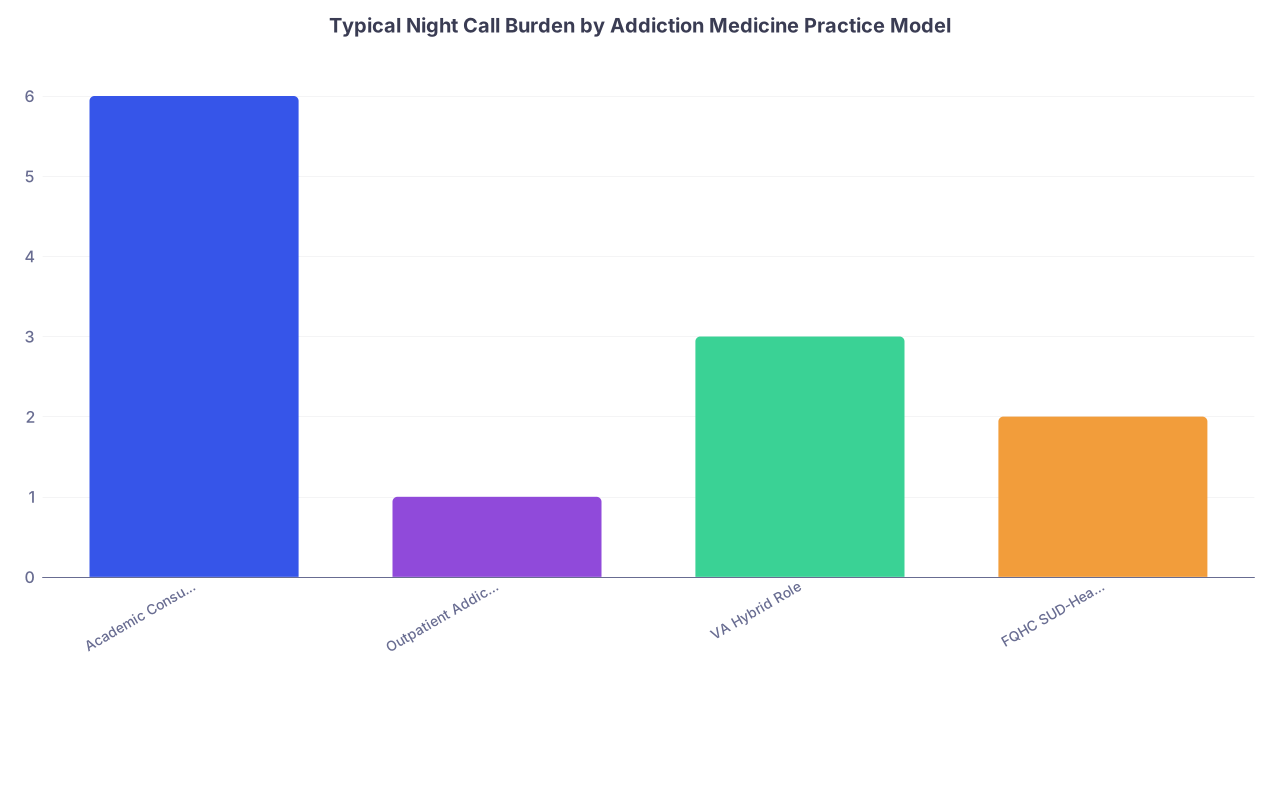
| Category | Value |
|---|---|
| Academic Consult Service | 6 |
| Outpatient Addiction Clinic | 1 |
| VA Hybrid Role | 3 |
| FQHC SUD-Heavy Primary Care | 2 |
Values above roughly reflect “nights per month with real interruptions,” not just being on paper call.
1. Academic Hospital‑Based Consult Service
You are often:
- An addiction medicine attending covering a consult service
- Sometimes double‑hatted as a hospitalist (or at least credentialed)
- Backbone of all “please come help us with this withdrawal/OUD nightmare patient”
Call structure:
- Daytime: New consults, follow‑ups, teaching residents/fellows
- Nights / Weekends:
- Most programs have home call for addiction attendings
- Realistically: occasional calls about complex inductions, self‑directed discharges, or withdrawal risk
- True middle‑of‑the‑night emergencies are uncommon; they are usually handled by hospitalists / ED with standing protocols
If you are also on the hospitalist schedule, that is where your brutal night work comes from, not the addiction piece.
2. Outpatient Addiction Medicine Clinic (Standalone or Integrated)
Pure outpatient, no hospital privileges? Your life can be extremely reasonable.
Common setup:
- 4–5 days/week clinic
- Some mix of in‑person and telehealth
- Message pool and refill responsibilities shared among several providers
- Very limited true after‑hours demands if boundaries are enforced
Night call here is mostly:
- Medication‑related questions (rare, if you educate well)
- Pharmacy issues (prior auth the next business day, not 2AM)
- Maybe call for a small detox unit, if attached
You are not managing septic shock or acute GI bleeds. You are not on a 1‑in‑4 in‑house call rotation like some surgical fields.
3. VA or Large Integrated Systems (Hybrid Roles)
These jobs look attractive on paper because:
- Predictable schedules
- Strong institutional support for MAT, naloxone distribution, integrated BH
- Pension, federal benefits, and relative job security
Call usually:
- Minimal or none for pure outpatient VA addiction roles
- If you are part‑time hospitalist, your call is from the medicine side
- Some systems have “telephone backup” for residential SUD programs
4. FQHC / Safety‑Net Primary Care with Heavy Addiction Panel
Here, you are basically PCP + SUD prescriber:
- You see diabetes and COPD sandwiched between two OUD patients
- You probably carry the highest‑risk patients in the building
- You are constantly triaging social chaos
Call structure:
- Often shared across all PCPs (1 in 6–10) for after‑hours triage
- Most calls are primary care questions, not pure addiction emergencies
- You may get weekend agitation from patients whose bupe refill or pharmacy access failed
Still, compared to inpatient subspecialties, the night‑to‑night violence on your sleep is substantially less.
Compared With Other IM Subspecialties
You asked for specialty‑specific residency insights, so here is the comparison you actually care about.
| Subspecialty | Typical Night/Weekend Burden | Nature of Call |
|---|---|---|
| Cardiology | High | True emergencies, STEMI |
| GI | High | Bleeds, urgent scopes |
| Pulm/Crit | Very high | ICU, vents, codes |
| Nephrology | Moderate | Dialysis issues, AKI |
| Endocrine | Low | Mostly phone, rare emergent |
| Addiction Medicine | Low–Moderate (role-dependent) | Phone triage, rare emergent |
Addiction medicine, when well‑structured, is far kinder on your circadian rhythm than cardiology, GI, or critical care. Easily on par with endocrine or rheumatology in many setups.
4. Compensation: Why Addiction Medicine Sits at the Bottom of the IM Pay Ladder
Here is the blunt truth: addiction medicine is low paid not because it is “easy,” but because the billing structure and practice environments are terrible at monetizing physician time.
Where Addiction Medicine Typically Sits in the Pay Stack
Numbers vary yearly, but typical ballpark ranges (for full‑time attending) look like this:
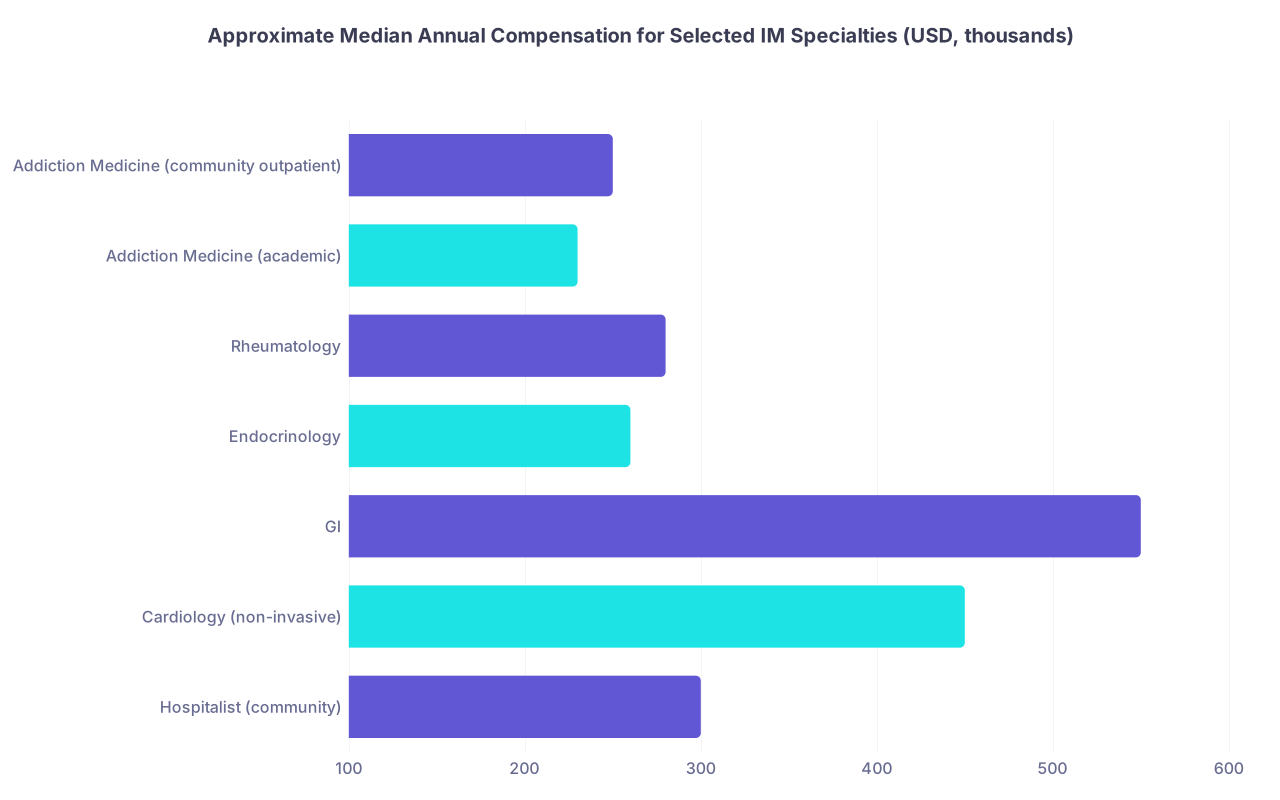
| Category | Value |
|---|---|
| Hospitalist (community) | 300 |
| Cardiology (non-invasive) | 450 |
| GI | 550 |
| Endocrinology | 260 |
| Rheumatology | 280 |
| Addiction Medicine (academic) | 230 |
| Addiction Medicine (community outpatient) | 250 |
This is not exact survey data, but it tracks real offers I have seen:
- Academic addiction medicine attending: $200–260k
- Community addiction clinic, non‑RVU heavy: $230–280k
- FQHC with addiction focus: $210–260k (plus loan repayment if you are lucky)
- VA addiction physician: $240–290k with federal benefits
You can find boutique private practices or high‑end telehealth jobs that hit $300k+, but they are the exception, not the rule.
Why the Pay is Lower: The Unromantic Billing Reality
Three main reasons your paycheck lags behind procedure‑heavy subspecialties:
Visit type and length
- 30–40 minute visits for MAT induction or complex SUD management
- Heavy counseling and care coordination that does not bill well
- Limited throughput compared to a high‑volume hospitalist or cardiology clinic
Payer mix
- Safety‑net settings, Medicaid‑heavy panels, uninsured patients
- Substance use disorders cluster in populations with weaker insurance, less reliable payment
Lack of procedures
- No stress tests, caths, echos, EMGs, scopes, etc.
- You are an E/M machine with some added complexity bonuses, but not much else
This is exactly why addiction medicine gets listed among the “lowest paid” internal medicine niches—even though the work is cognitively demanding and emotionally brutal at times.
Income Levers You Actually Control
If you are stuck at the bottom of the pay scale, it should at least be on purpose. There are ways to move the needle.
1. Hybrid Jobs (Hospitalist + Addiction)
This is the common solution residents back into:
- 0.5 FTE hospitalist (~$150k)
- 0.5 FTE addiction medicine (~$125k)
- Combined total: $275k+ with varied work and more engaged days
You keep your hospitalist skill set fresh. You also have a clearer path to internal compensation negotiation because hospitalist RVUs are legible to administrators even if addiction RVUs are not.
2. Academic vs Community vs VA vs FQHC
Here is the tradeoff structure in plain terms:
| Setting | Typical Pay | Call | Pros |
|---|---|---|---|
| Academic | Lowest | Light, consult-based | Teaching, research, prestige |
| Community | Moderate | Varies | More autonomy, negotiable |
| VA | Moderate | Usually low | Benefits, stability |
| FQHC | Low–Moderate | Light–moderate | Loan repayment, mission |
Academic addiction medicine:
- Great for those who want to teach, write, and lead system‑level change
- Terrible if your primary goal is maximizing personal income
Community outpatient addiction practice:
- Better earning potential, especially if tied to a large multispecialty group
- More flexibility to build integrated primary care + SUD models that can bill reasonably
VA:
- Decent salary once you include pension and benefits
- Typically a sane workday, strong institutional support for MAT
FQHC:
- Often the lowest raw paycheck
- But combine HRSA loan repayment and you suddenly remove $200–300k of debt, which functionally boosts your net worth faster than a modest higher salary somewhere else
3. Telehealth and Niche Private Models
Since COVID, tele‑addiction exploded. Not all of it is ethical, and some of it is financially unsustainable. But certain setups work:
- Tele‑MAT clinics focusing on buprenorphine and long‑acting injectables
- Hybrid models with in‑person intake then tele follow‑ups
- Cash‑pay boutique practices for professionals with SUD (physicians, lawyers, executives)
These can push your income into the $300k+ range if structured well:
- 10–14 visits per day
- Mix of 30‑minute intakes and 15–20‑minute follow ups
- Smart delegation to counselors and case managers
But you need to understand business fundamentals—payer contracting, compliance, documentation. Otherwise you are one audit away from disaster.
5. What This Looks Like in Residency and Early Career
Let us shift from theory to how this plays out during residency and your first 3–5 years after.
As an IM Resident: Signals That Addiction Medicine Fits You
You know you lean this way if:
- You are the intern who actually sits with the patient in withdrawal and talks through their story rather than just titrating benzos and walking away
- You end up informally coaching co‑residents on how to start bupe in the ED or on the floor
- You are less excited by managing troponin trends than by unraveling why a patient keeps cycling in and out with cellulitis and sepsis from IV use
Concrete steps you should take as a resident:
- Seek out any addiction medicine elective your program or nearby institution offers
- Ask to be placed on consult services that manage SUD, pain, and complex withdrawal
- Get comfortable with:
- CIWA/withdrawal protocols
- Bupe induction (standard, micro‑induction, post‑overdose ED starts)
- AUD pharmacotherapies: naltrexone (oral and IM), acamprosate, disulfiram
If your program is weak in this area, you can still build your skill set using:
- Online CME from ASAM (American Society of Addiction Medicine)
- Clinical time with local methadone clinics or FQHCs that do MAT
- Research or QI projects on hospital‑based SUD care
Choosing Between Fellowship vs Direct Practice
You have essentially three tracks post‑residency:
- Go straight into a hospitalist job or primary care job with strong SUD focus, no fellowship
- Do an addiction medicine fellowship then take an academic or system‑level role
- Hybrid: 1–2 years hospitalist to pay down debt, then fellowship once you know you want this
My blunt recommendations:
- If you want to be the addiction medicine person at an academic center, run a consult service, or have protected time for teaching and research → do the fellowship.
- If you want to be a pragmatic clinician in a community setting, combining addiction with primary care or hospitalist work, and do not care about titles → you can skip fellowship, particularly if the practice pathway window is still open for you.
- If you are debt‑crushed, a quick jump to high‑pay hospitalist work before fellowship is completely rational.
Early Career: Avoiding the Trap of “Mission Work, Mission Pay”
I have watched multiple early‑career internists burn out because they took the first addiction‑heavy job that flattered their sense of mission, and then realized 2 years later:
- They were paid like underpowered primary care
- They were doing the hardest emotional work in the building
- They had no pathway to leadership or pay progression
So, be ruthless when you evaluate offers:
- Ask to see actual RVU expectations and historical productivity for addiction docs in that system
- Ask how many minutes per follow‑up visit you are scheduled for; 15‑minute visits for complex SUD is a red flag
- Ask who handles social work, case management, and therapy; if all of it is “you,” your day will be impossible
- Ask specifically: “What are your concrete financial and FTE supports for addiction medicine? Do you bill it like primary care, psych, or something else?”
You are not just an altruist plugging a hole. You are a subspecialist providing high‑risk care that the rest of the system either cannot or will not do.
6. Bottom Line: Who Should Actually Choose Addiction Medicine as an Internist?
You should pursue addiction medicine if:
- You care more about longitudinal transformation than procedural adrenaline.
- You can tolerate chaos, relapse, and the slow arc of behavior change without becoming cynical.
- You are willing to accept lower top‑end pay in exchange for better lifestyle, deep patient relationships, and very high real‑world impact.
You should be cautious if:
- Your primary driver is income maximization relative to your peers.
- You need a rigid, predictable patient population that follows instructions reliably.
- You hate dealing with social work, housing, probation, or messy chart notes that document 80% non‑medical barriers.
For many internists, the smart solution is not all‑or‑nothing. The best setups I have seen:
- 50–70% addiction medicine
- 30–50% either hospitalist or general IM clinic
- Enough diversity to keep skills broad and income reasonable
- Enough addiction focus to build true expertise and career satisfaction
Key Takeaways
- Addiction medicine for internists is a cognitively demanding, procedure‑light subspecialty with relatively low compensation but excellent lifestyle potential compared with other IM subspecialties.
- The cleanest path to recognized expertise is an ACGME addiction medicine fellowship followed by ABPM board certification, but motivated internists can still build strong SUD practices with or without fellowship depending on timing and goals.
- Your financial and lifestyle outcomes depend far more on how you structure your role—academic vs community, hybrid vs pure addiction, VA/FQHC vs private—than on the specialty label alone.


