

Last month a third-year pediatrics resident told me, “I love my patients, but I am drowning. My friends in anesthesia are making more in moonlighting than I will as an attending.” She wasn’t being dramatic. She’d run the numbers. Loans, cost of living, fellowship years, and then a salary that barely moved the needle. And she felt trapped.
If you’re already deep into a low-paying residency and regretting it, you’re not alone—and you’re not stuck. But the longer you wait to act, the fewer real options you have. Let’s walk through what actually works in this situation, step by step.
Step 1: Get Brutally Clear on What’s Actually Wrong
Before you blow up your career, you have to separate three different problems that tend to blur together:
- You hate the work
- You like the work but hate the lifestyle
- You’re okay with both, but the money is scaring you
Those are different problems. They have different exits.
Ask yourself, and actually write this out:
- What parts of my day do I actively dread? (clinic? call? documentation? specific patient population?)
- If my salary as an attending in this specialty magically doubled, would I still want to leave?
- If I could do this same specialty but with 30–40% fewer hours, would I stay?
- Do I feel misaligned with the content of the work (e.g., chronic disease, primary care, psych) or the conditions of residency?
If, in your gut, the answer is: “Even if they paid me $600k, I don’t want to do this for 30 years” — that’s a specialty mismatch.
If the answer is: “I actually like the medicine, but this lifestyle and eventual salary are not worth the sacrifice” — that’s mostly a financial + structure problem, and the tactics are different.
Do this first. Otherwise, you’ll chase the wrong exit.
Step 2: Know the Landscape for Low-Paying Specialties
You probably already know you’re in the “low-paid” bucket, but let’s be concrete.
| Specialty | Approx Median Attending Income (USD) |
|---|---|
| Pediatrics (General) | 230,000 |
| Psychiatry | 280,000 |
| Family Medicine | 250,000 |
| Internal Med (Generalist) | 260,000 |
| Geriatrics | 240,000 |
Numbers move around year to year and by region, but this is the ballpark. Now overlay:
- Your total debt
- Your interest rate
- Your city’s cost of living
- Your family responsibilities (kids, partner, dependents)
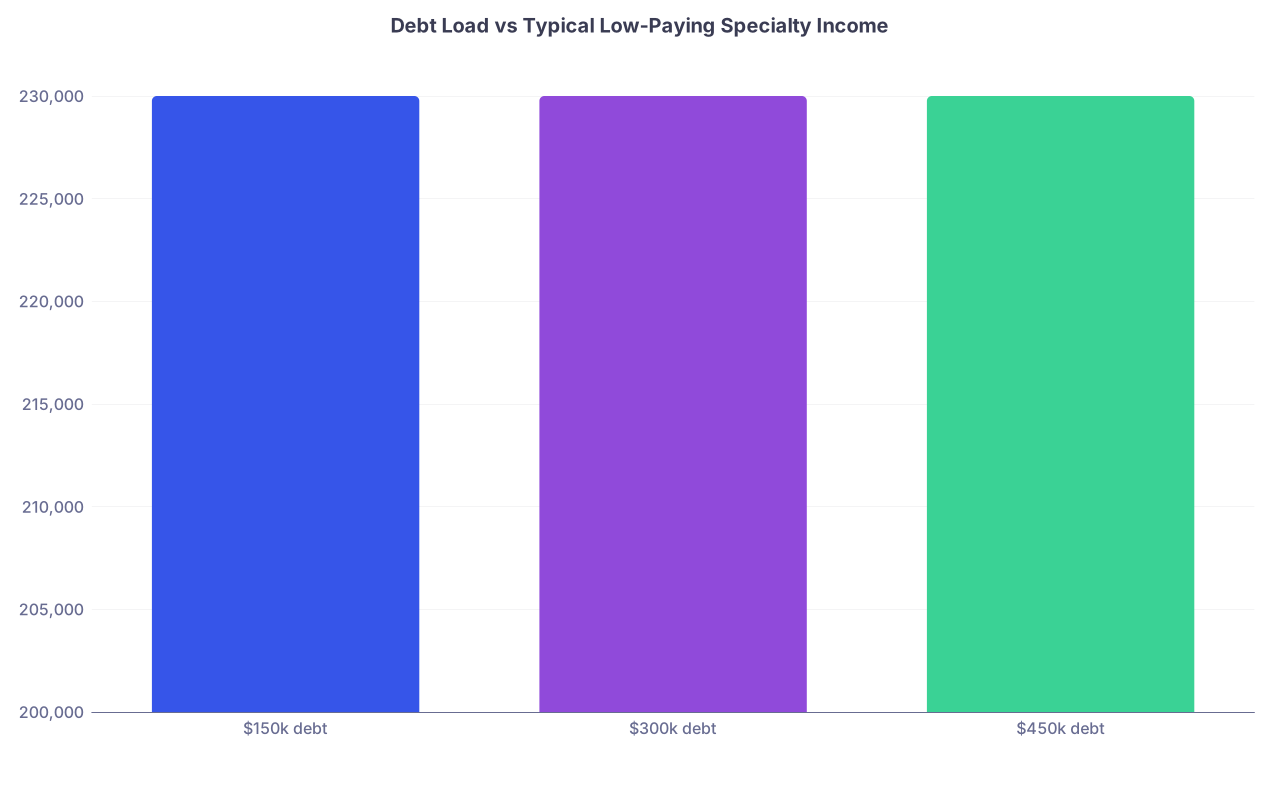
| Category | Value |
|---|---|
| $150k debt | 230000 |
| $300k debt | 230000 |
| $450k debt | 230000 |
If you’re sitting on $400k+ in loans with 7–8% interest, those pediatrics or primary care numbers suddenly look very tight, especially if you’re in a major coastal city.
This isn’t “being greedy.” It’s math. Ignoring that math is how people end up burned out and bitter at 40.
Step 3: The Five Main Exit Routes (Ranked by Disruption)
Here’s the part you actually care about. You’re already in a low-paying residency and regretting it. What now?
1. Stay in the Specialty but Change the Job Type (Least Disruptive)
You do not have to leave your specialty to dramatically change your life.
For many low-paid fields, the difference between “this is unsustainable” and “this is actually fine” is:
- Academic vs private
- Employed vs partnership
- Pure clinical vs mixed (admin, consulting, telehealth, etc.)
- High COL city vs lower COL region
Example:
A general pediatrician in a coastal academic center making ~$180–200k with high call and endless RVU pressure vs a community pediatrics job in a lower COL region with:
- $250–270k base
- 4-day clinic week
- Modest call, sometimes no inpatient
- Signing bonus and loan repayment
Same specialty. Completely different life.
If you like your specialty’s patients and work, explore these levers first:
- Geography: Are you willing to move? Move = money, like it or not.
- Practice setting: Academic tends to pay less; private/community pays more.
- Sub-niches:
- Psych: outpatient med management vs inpatient vs TMS/ketamine clinics
- FM/IM: direct primary care, concierge, occupational medicine, hospitalist
- Peds: urgent care, hospitalist, NICU step-down, specialty clinics
This option assumes you finish residency (maybe plus fellowship) but change the way you practice.
2. Use Fellowship as a Pay / Lifestyle Upgrade
In a lot of the low-paying specialties, the base specialty is not the endpoint if you want financial breathing room.
Example: Internal Medicine
- General IM clinic doc: ~$240–270k
- Cards / GI / Heme-Onc: $450–700k+ depending on region/practice
Example: Psychiatry
- General outpatient in academic center: ~$230–260k
- Interventional psych, niche outpatient practice, or forensic psych: $300–400k+
Example: Pediatrics
- General peds: ~$220–250k
- Peds subspecialties: lots are still low, but peds cards, PICU, neonatology in certain markets can push higher, especially in private groups.
Not all fellowships are financially smart. Plenty add years of training and don’t improve income meaningfully. You need to be cold-blooded here.

Do this:
- Identify 2–3 fellowships that might interest you.
- For each one, talk to at least:
- 1–2 current fellows
- 1 junior attending (0–5 years out) in private practice
- 1 attending in academic practice
- Ask specific numbers:
- Starting salary
- Typical RVU or productivity expectations
- Average hours/week
- Realistic ceiling in private practice after 5–7 years
Then, do the math with your loan burden and your age.
If you’re PGY-3 now, adding a 3-year fellowship and not finishing until your early 30s might still make sense. If you’re older, that calculus changes.
3. Lateral Transfer to a Different Residency (Most Underused Option)
You can change specialties after you’ve already started (or even finished) another residency. People do it every year. It’s not common, but it’s not mythical either.
This is your biggest “true exit” from a low-paying field into a better-compensated one, short of leaving medicine entirely.
The ugly truths:
- It’s easier earlier: PGY-1 or early PGY-2 are the best windows. PGY-3+ gets harder, not impossible.
- You may have to repeat a year (or more). A lot of programs do not fully credit prior training.
- Competitive fields (derm, plastics, ortho, optho, rad onc) are nearly closed at this stage unless you have a ridiculous application and strong connections.
- But transitioning to EM (less than before), anesthesia, radiology, even some surgical prelims → categorical is possible if you’re strategic.
Here’s what the process usually looks like:
- Quietly decide you’re serious. Do not vent to everyone in your program.
- Update your CV, personal statement, and get your USMLE/COMLEX scores in order.
- Identify realistic target specialties where your background is an asset (IM → anesthesia, FM → EM in community programs, peds → child psych, etc.).
- Start networking quietly:
- Alumni from your med school in those fields
- Attendings you know who have friends in those specialties
- Cold emails to program coordinators asking about off-cycle PGY-2+ positions
- Apply for:
- Off-cycle openings announced by programs
- SOAP-like positions (rare but happen)
- Next Match cycle if you can afford to wait
This is where a lot of residents get stuck: they feel guilty “betraying” their program. Look, your current specialty will not pay your loans when you are 45 and broke. You owe them professionalism, not your entire future.

| Step | Description |
|---|---|
| Step 1 | Current Low Paying Residency |
| Step 2 | Consider New Specialty |
| Step 3 | Consider Job Type or Fellowship |
| Step 4 | Research Target Specialties |
| Step 5 | Network and Contact Programs |
| Step 6 | Apply and Transfer |
| Step 7 | Consider Next Match Cycle |
| Step 8 | Hate the Work? |
| Step 9 | Off cycle Spot Found? |
You do need to be upfront once you have an offer. Until then, you gather options. Then you have an honest conversation with your PD about transition and letters (some will help, some will be neutral, a few will be obstructive—plan for all three).
4. Non-Clinical / Hybrid Paths (Adjacency Play)
Some people realize they don’t actually want to do patient care full time. If that’s you, you can redirect your residency foundation toward something else:
Common directions:
- Industry: pharma, biotech, med devices, clinical research
- Tech/healthtech: startups, digital health, telemedicine platforms
- Admin: hospital leadership, quality improvement, informatics (with extra training)
- Consulting: health care consulting firms, payer side (insurers, PBMs)
The mistake I see: Residents quit clinical work too early, without finishing any board certification. That closes doors.
If you’re already halfway or more through residency, unless you’re truly falling apart mentally, it’s often smarter to:
- Finish residency
- Get board-certified
- Then pivot into a hybrid or non-clinical role while doing some part-time clinical to keep your license alive
That combination (BC physician + any non-clinical experience) is much more powerful than “two years of unfinished residency and I hate my specialty.”

5. Full Exit from Medicine (Nuclear Option)
Yes, some people leave medicine entirely. No, it’s not “failure.” Sometimes it’s the only way out of brutally mismatched careers and mental health collapse.
But walking out mid-residency with $300–500k of debt and no clearly monetizable plan is how you end up stuck and resentful.
If you go this route, here’s the minimum due diligence:
- Talk to at least 3 people who have actually done it (not just “thought about it”)
- Map out realistic salaries in your new field for the first 5 years, not fantasy top-end numbers
- Factor in loan repayment without PSLF (since you’ll often lose that route when you leave clinical medicine or move to private/non-qualifying employment)
- Consider finishing at least your intern year to have something formal on your CV
This option should be chosen with eyes completely open, not as a panicked escape during a rough month of nights.
Step 4: Money Levers You Can Pull Inside Your Current Path
Sometimes you don’t need to change specialty at all. You just need to stop bleeding financially.
Here are levers that residents in low-paying specialties often ignore:
-
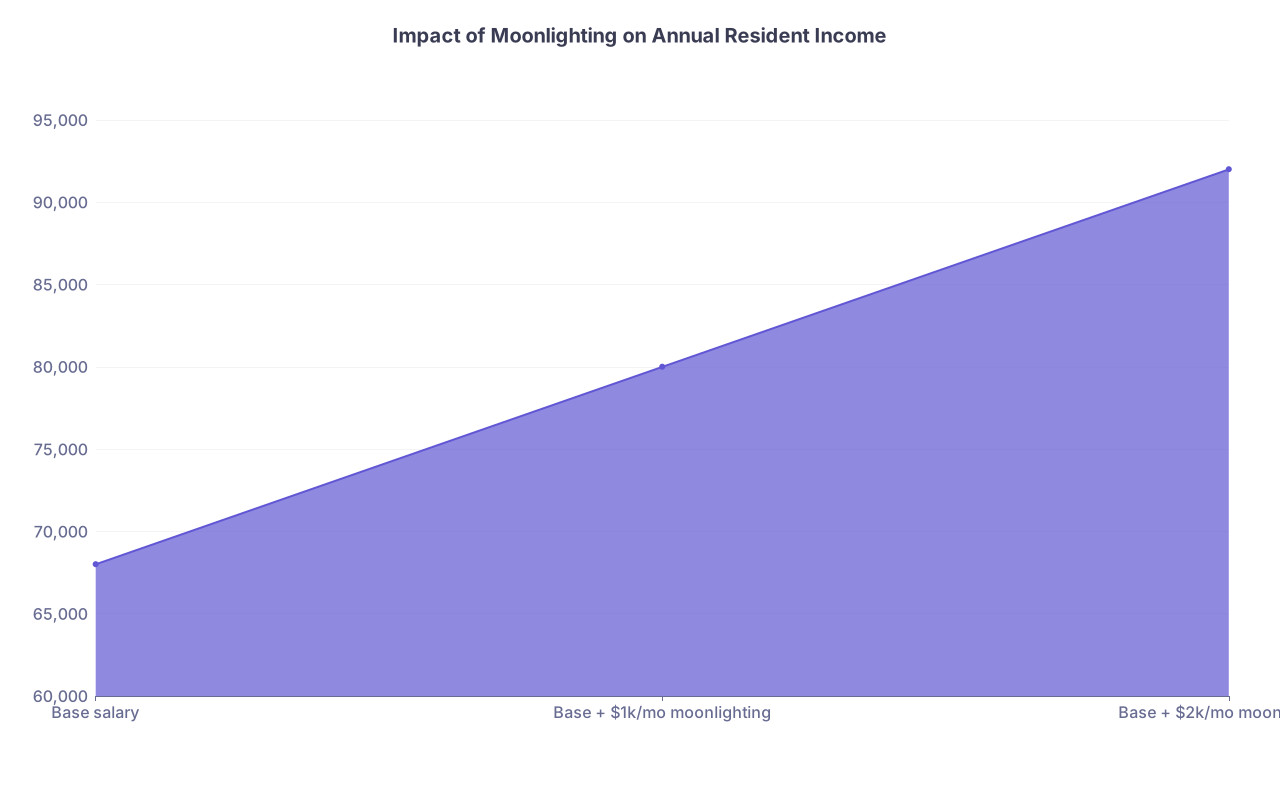
- Psych, FM, IM, peds often have decent moonlighting once you’re a senior resident.
- Even $1,000–$2,000/month extra, aimed directly at high-interest loans or building a 3–6 month emergency fund, changes your risk tolerance.
Location shift after training:
Moving from NYC/SF/Boston to a mid-sized city or rural region can turn a “low-paid” $250k salary into an actually comfortable life.PSLF / loan programs:
Public Service Loan Forgiveness, NHSC, state loan repayment programs. If you lock into that path properly (correct loan type, correct repayment plan), your low-paying specialty can work financially.Lifestyle compression during residency:
I’ve seen residents in pediatrics with $500/month car payments. That’s self-inflicted pain. If you’re going to stay in a low-paid field, you cannot also live like an anesthesiologist.
| Category | Value |
|---|---|
| Base salary | 68000 |
| Base + $1k/mo moonlighting | 80000 |
| Base + $2k/mo moonlighting | 92000 |
Step 5: How to Have the Hard Conversations
Once you’ve identified a likely exit path, you’re going to have to talk to:
- Your program director
- Possibly your DIO / GME office
- Maybe your family, partner, or support system, about big life changes
Do not walk into your PD’s office with vibes and vague dissatisfaction. Walk in with:
- A clear statement: “I’ve realized I’m not a good long-term fit for [specialty] because [specific, non-emotional reasons].”
- A sketched plan: “I am exploring transferring into [X] or pursuing [Y fellowship/non-clinical option] and wanted your honest take on feasibility.”
- A calm tone: direct, respectful, not defensive, not accusing.
Your PD has three main concerns:
- Patient care and coverage
- Program reputation (not being seen as a revolving door)
- How your situation affects other residents
If you present as someone thoughtful, proactive, and professional, you’re much more likely to get neutral or even helpful support—even if they’re disappointed.

Step 6: Build a 6–12 Month Action Plan
You can’t fix this next week. But you can absolutely change your trajectory in 6–12 months.
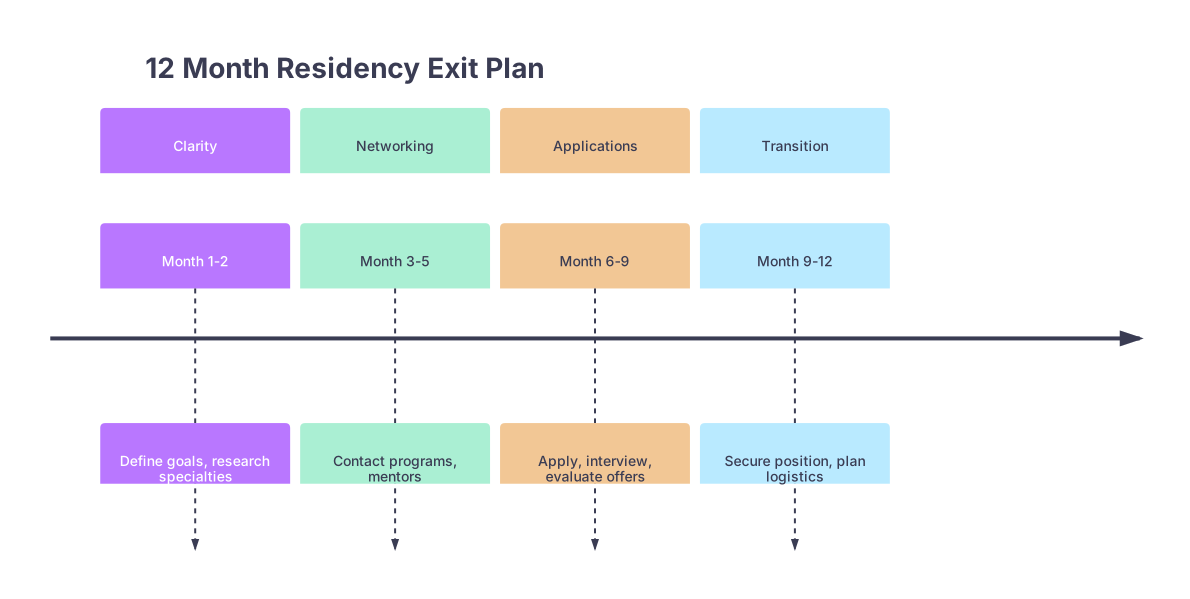
Example 6–12 month plan for a PGY-2 who wants to leave low-paying specialty A for higher-paying specialty B:
Months 1–2:
- Clarify target specialty and locations (be realistic)
- Update CV, get old LOR writers re-engaged
- Quietly start talking to attendings in target field
Months 3–5:
- Reach out to programs about off-cycle PGY-2/3 openings
- Prepare for potential interviews (know why you’re switching, not just “for money”)
- Continue solid performance in current program to avoid burning bridges
Months 6–9:
- Apply to any open positions
- If none, decide: stick it out and re-apply in next Match vs pivot to fellowship or higher-paying job paths inside current specialty
Months 9–12:
- Secure new training position or lock in a financially-optimized job/fellowship in your current area
- Adjust personal finances to support any transition gap
Overlay your own constraints (family, visas, etc.) but keep the same structure: clarity → networking → options → decision.
| Period | Event |
|---|---|
| Clarity - Month 1-2 | Define goals, research specialties |
| Networking - Month 3-5 | Contact programs, mentors |
| Applications - Month 6-9 | Apply, interview, evaluate offers |
| Transition - Month 9-12 | Secure position, plan logistics |
Quick Reality Check: When You Probably Should Not Jump
You’re in a low-paying residency and hating it. But some situations are warning signs that this is the wrong moment to nuke everything:
- You’re in the middle of a single brutal rotation (ICU, nights, abusive attending) and your mood tanked this month
- You’re severely sleep-deprived and not thinking straight
- You have zero financial cushion and no clear next step
- Your main driver is comparison (“my friends in ortho just bought houses”) rather than true misalignment
In those cases, tighten your finances, get some mental health support, and re-evaluate after a few months of relative stability.
FAQ (Exactly 5 Questions)
1. Is it “too late” to change specialties if I’m already PGY-3 or PGY-4?
Not automatically. It gets harder, not impossible. Transitional moves (IM → anesthesia, FM → EM in certain community programs, peds → psych/child psych) are more realistic than trying to jump into derm or ortho late. You may have to repeat some training years. The key is showing programs you’re not impulsive, you have a track record of solid performance, and you clearly understand what you’re moving toward, not just what you’re escaping.
2. Will switching to a higher-paying specialty actually “fix” my burnout?
Sometimes. If your primary issue is financial stress and feeling undervalued, more pay plus better hours can help a lot. But if you fundamentally hate clinical medicine, or you’re struggling with depression/anxiety, a high-paying specialty will not magically fix that. Before you blow up your career for money, get your mental health evaluated and be honest about whether the work itself is the problem.
3. Does finishing residency in a low-paying specialty help if I want to go non-clinical later?
Yes. Being board-certified is a huge credibility asset for industry, consulting, admin, or tech roles. A finished residency + board certification is usually better than “2 years of incomplete training” when you’re pitching yourself outside of direct patient care. The main exception: if staying is actively destroying your mental health or you have an immediate, concrete, well-paying non-clinical opportunity.
4. Should I tell my program director early that I’m thinking of leaving?
Not before you’ve done real homework and have a concrete direction. Telling them you’re “thinking about maybe leaving” with no plan puts them in a bind and can backfire on you. Do your research first, quietly explore options, then talk to them when you’re reasonably sure of your direction and can have an adult conversation about timing, references, and patient care responsibilities.
5. How much should money actually matter in choosing to stay or leave a specialty?
More than medical culture likes to admit. You’re not a monk. If the numbers literally don’t work—massive loans, high COL, low ceiling income—then ignoring that will burn you later. But money shouldn’t be the only driver. A miserable $600k/year job is still a miserable life. Aim for a realistic balance: the work is at least tolerable (ideally meaningful), and the money is enough to give you stability, options, and breathing room.
Key points to leave you with:
- You’re not trapped. Even from a low-paying residency, you have options—internal shifts, fellowships, specialty changes, hybrid or non-clinical paths.
- Do not make this a vague emotional decision. Get specific: what’s wrong, what you want instead, what paths exist, and what the numbers say.
- Treat this like a 6–12 month project, not a late-night panic move. If you act methodically now, you won’t be having this same regret conversation in ten years.


