

Inside Adolescent Medicine: Why This Niche Stays One of the Lowest Paid
You are a PGY-2 in pediatrics, dragging yourself out of yet another continuity clinic. Your schedule next month includes a rotation with “Adolescent Medicine” and you hear a senior mutter in the workroom, “Great people, awful money.” Someone else chimes in: “Yeah, love the patients, but you’d better marry rich.”
You start Googling salaries and fellowship options, and sure enough: adolescent medicine shows up near the bottom of every compensation table. Consistently. Meanwhile, your surgery friends are talking RVUs like they are trading stocks.
Let me be blunt: adolescent medicine is one of the most clinically complex, emotionally demanding, socially vital fields in pediatrics and internal medicine. And the system pays it like a hobby.
If you are considering this niche, you need clear eyes. The work, the training path, and especially the paycheck. I will walk you through why adolescent medicine stays among the lowest paid specialties, what the daily work really looks like, and who still thrives in it despite the numbers.
What Adolescent Medicine Actually Is (Not the Cartoon Version)
People outside pediatrics have this cartoon image: adolescent medicine = acne, sports physicals, and contraception refills.
That is the surface. The real core of adolescent medicine is high‑complexity, relationship‑heavy, psychosocially dense care for ages roughly 11–25 (exact range varies by practice). You are the de facto specialist for:
- Eating disorders
- Complex contraception and menstrual disorders
- Gender dysphoria and gender‑affirming care
- Sexual health, STIs, HIV prevention
- Substance use in youth
- Chronic pain and somatic symptom disorders
- Depression, anxiety, self‑harm, suicidality
- Youth with chronic conditions transitioning to adult care
Most adolescent specialists I know joke that they are “half psychiatrist, half endocrinologist, half social worker” – and yes, they know that is three halves.
You see the kid whose BMI dropped from the 60th to the 10th percentile in eight months. The 16‑year‑old whose PHQ‑9 is 19, but the parent says, “She is just on her phone too much.” The 14‑year‑old who overdosed on “just a few extra” sertraline tablets. The 19‑year‑old trans patient who is finally ready to disclose to their parents but wants you in the room.
Take this seriously: the cognitive load per visit is high. The procedural load? Almost nonexistent. That mismatch is a big part of why compensation is so poor.
Training Path: How You Get There (and What You Trade)
There are three main entry points into adolescent medicine fellowship in the United States:
- Pediatrics residency (most common)
- Internal medicine or med‑peds
- Family medicine
Then you add a 3‑year fellowship in adolescent medicine at most ACGME‑accredited programs. Some pediatrics programs have 2‑year research‑light tracks, but 3 is more typical if you’re doing a traditional academic fellowship.
So you are:
- 3 years: pediatrics/IM/FM
- +3 years: adolescent medicine fellowship
- = 6 years post‑med school before you are “done”
Now compare that to:
- Hospitalist pediatrics: 3 years, then job
- General pediatrics outpatient: 3 years, then job
- Many adult primary care jobs: 3 years IM/FM, then job
You are extending training for a subspecialty that will almost always pay less than general peds and often less than hospitalist work. That is unusual in medicine. Normally adding fellowship increases your earning potential. In adolescent medicine, it frequently does the opposite.
| Pathway | Training Years | Typical Compensation Range* |
|---|---|---|
| General Pediatrics | 3 | $190k–$240k |
| Peds Hospitalist | 3–4 | $220k–$280k |
| Adolescent Medicine (Peds) | 6 | $170k–$220k |
| Adult Endocrinology | 5–6 | $220k–280k |
| Child Psychiatry | 5–6 | $240k–320k |
*Broad, pre‑tax ballparks in the U.S., vary by region and practice type, but the ranking pattern holds.
So you spend more years training, to do more complex cognitive work, and you get paid less than the generalist you used to be. That should get your attention.
What the Day‑to‑Day Looks Like
Picture a typical half‑day in a hospital‑based adolescent clinic.
You have 6–8 slots, maybe fewer if it is an eating disorder clinic. That is it. Because each visit is 30–60 minutes and often runs over. You walk into every room knowing this is not going to be a quick “strep or not” decision.
Common visit types:
New eating disorder evaluation:
– 60–90 minutes
– Coordination with therapist, dietitian, sometimes inpatient team
– High‑risk decision making: Do you send them to the ED? Admit? Can they manage outpatient?Contraception counseling:
– 30–45 minutes
– Confidential time with patient alone
– Then time with parent, then back alone with patient to clarify what they actually wantGender‑affirming care:
– 45–60 minutes
– Psych history, family dynamics, social transition status, labs, cross‑disciplinary coordinationDepression, self‑harm, suicide risk:
– 30–60 minutes
– Safety planning, risk stratification, family engagement, maybe calling psychiatry, school, crisis services
Meanwhile, your colleagues in procedural subspecialties are knocking out dozens of billable procedures per week. You are writing long notes, fielding phone calls from schools and therapists, and reviewing long MyChart messages at 9 PM.
This is the core economic problem: adolescent medicine is high‑intensity cognitive and counseling work with limited procedure‑based revenue.
Why Adolescent Medicine Stays One of the Lowest Paid
Let me break this down into specific economic drivers. None of them are subtle.
1. Procedure‑Light, Time‑Heavy, Code‑Unfriendly
The fee‑for‑service world pays for:
- Procedures
- High‑acuity inpatient care
- High‑RVU imaging and interventions
It pays poorly for:
- Counseling
- Prevention
- Coordination of care
Adolescent medicine sits directly in the second bucket.
You bill mostly E/M codes with maybe a few add‑on codes (prolonged services, collaborative care if your institution uses it well, brief procedures like IUD placement if you have the setup). But the core remains long visits that generate less RVU per hour than quick visits or procedure blocks.
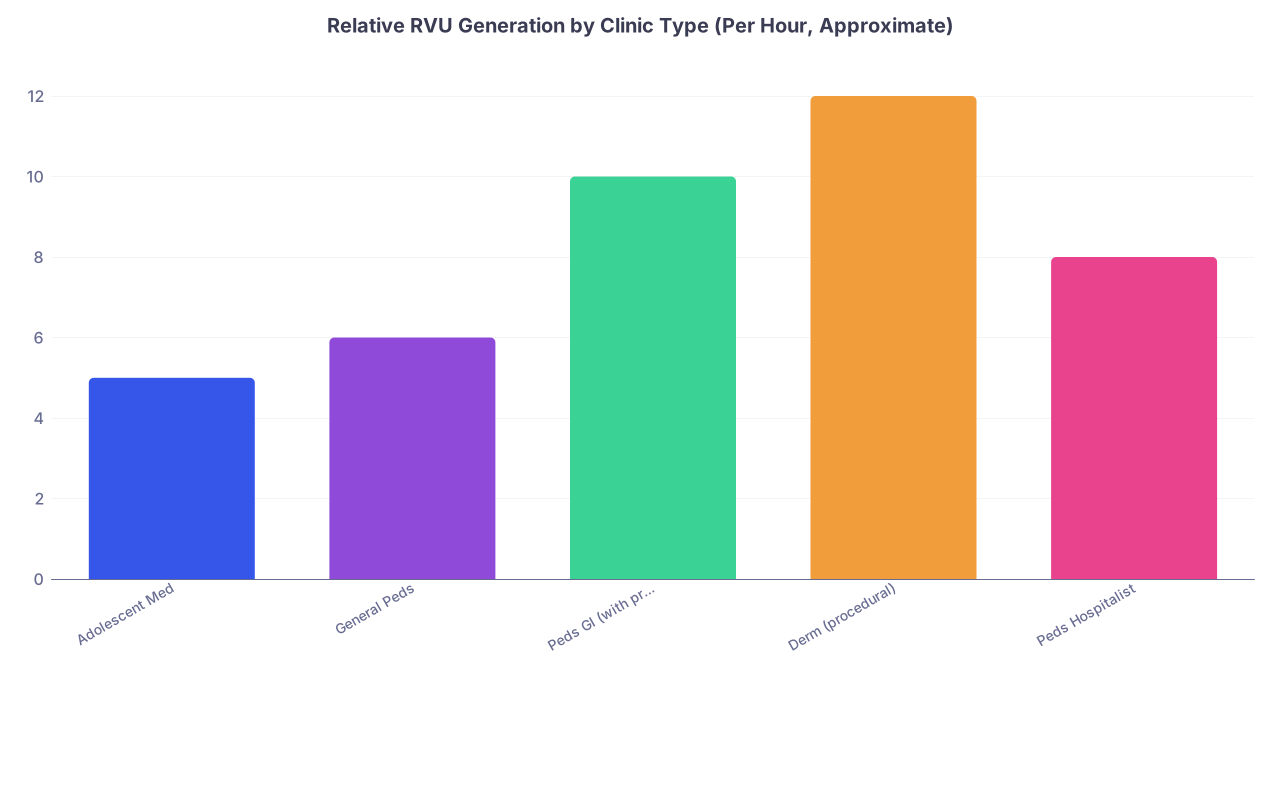
| Category | Value |
|---|---|
| Adolescent Med | 5 |
| General Peds | 6 |
| Peds GI (with procedures) | 10 |
| Derm (procedural) | 12 |
| Peds Hospitalist | 8 |
Those numbers are rough, but that is the pattern I see when I look at real productivity reports. Adolescent visits are longer, more complex, and ironically generate less RVU per hour than shorter, lower‑complexity visits in other settings.
Even when complexity is high (e.g., level 4 or 5 outpatient E/M codes), payer behavior and documentation requirements create friction. You might have legitimately complex visits but fail to capture the maximum level because you are juggling suicide risk and parent conflict, not perfect bullet documentation.
2. Peds + Primary Care Discount
Adolescent medicine is anchored in pediatrics and family medicine. Both are structurally underpaid compared with adult procedural subspecialties. You are operating inside an already low‑baseline economic ecosystem.
Compare median offers for a new inpatient pediatric hospitalist in many regions (say $230–260k) with adolescent med faculty offers (commonly $170–210k). Same institution, same cost of living. The logic is perverse: you are more “specialized” but less profitable.
On the adult side, if you come from internal medicine or family medicine, your fellowship does not suddenly let you bill at a “subspecialist” rate like cardiology or GI. You are still in the primary care compensation band in almost every RVU model.
3. Hospital Revenue: You Are Not Their Cash Cow
Hospitals love:
- OR time
- Cardiac cath labs
- Interventional radiology
- Neonatal and PICU stays with long lengths of stay
Adolescent medicine rarely touches those levers. Your patients are often outpatient, and even when admitted (e.g., for medical stabilization of an eating disorder), those stays are resource‑intensive with mediocre reimbursement. Longer LOS, tons of allied health involvement, psychiatric overlays, and frequent insurance pushback.
Administrators look at service lines and ask, bluntly: who is generating revenue, who is neutral, who is a drain? Adolescent medicine falls in the ambiguous middle:
- High community value (public health, prevention, system reputation)
- Low direct financial return per unit time
So when compensation models are built, adolescent medicine does not get the kind of RVU multipliers or “protected” salary floors that cardiothoracic surgeons or interventional neurologists get. You are competing within the pediatrics pot. And that pot is small.
4. Weak Private Practice Leverage
Could you escape this by hanging your own shingle, seeing only self‑pay families who value your time? Theoretically, yes. Practically, hard.
Barriers:
- Adolescent patients are tied to insurance, parents’ benefits, and pediatric practices.
- Many of the highest‑need teens come from lower socioeconomic backgrounds. They are not paying concierge rates.
- You need integrated behavioral health, nutrition, maybe social work. Hard to assemble solo.
- Referral streams are controlled by big pediatric groups and health systems.
A few adolescent specialists carve out boutique practices in high‑income urban areas focusing on reproductive health, eating disorders, or transition care. They can do quite well, financially. But that is not the median job. The median job is an academic or hospital‑employed position with prescribed RVU targets and limited negotiation room.
5. The “Soft” Specialty Stereotype
There is an unspoken hierarchy in medicine. Cutting and scoping sit at the top. Prevention, counseling, and “social stuff” sit near the bottom.
Adolescent medicine has an image problem: it is seen as “soft.” Lots of talking. Feelings. Schools. Social determinants. Gender. Sexuality. All the things some senior decision‑makers still roll their eyes at.
That bias leaks into:
- Salary committee discussions
- RVU target setting
- Institutional prioritization of space, staff, and protected time
No one says it in an HR document, but you feel it. When the budget tightens, adolescent clinic expansion dies first. When the hospital adds another orthopedic surgeon and needs clinic rooms, your half‑day gets compressed.
Where the Jobs Actually Are (and What They Pay)
Let’s stop hand‑waving and look at the real job landscape.
Most adolescent medicine positions in the U.S. are:
- Academic medical centers
- Children’s hospitals
- Large integrated systems with pediatric subspecialty clinics
- FQHCs or community clinics with a teen health focus
Less common but growing:
- Standalone eating disorder centers
- Gender clinics
- School‑based or college health systems bringing in adolescent medicine expertise
A very simplified income snapshot, focusing on attending‑level positions:
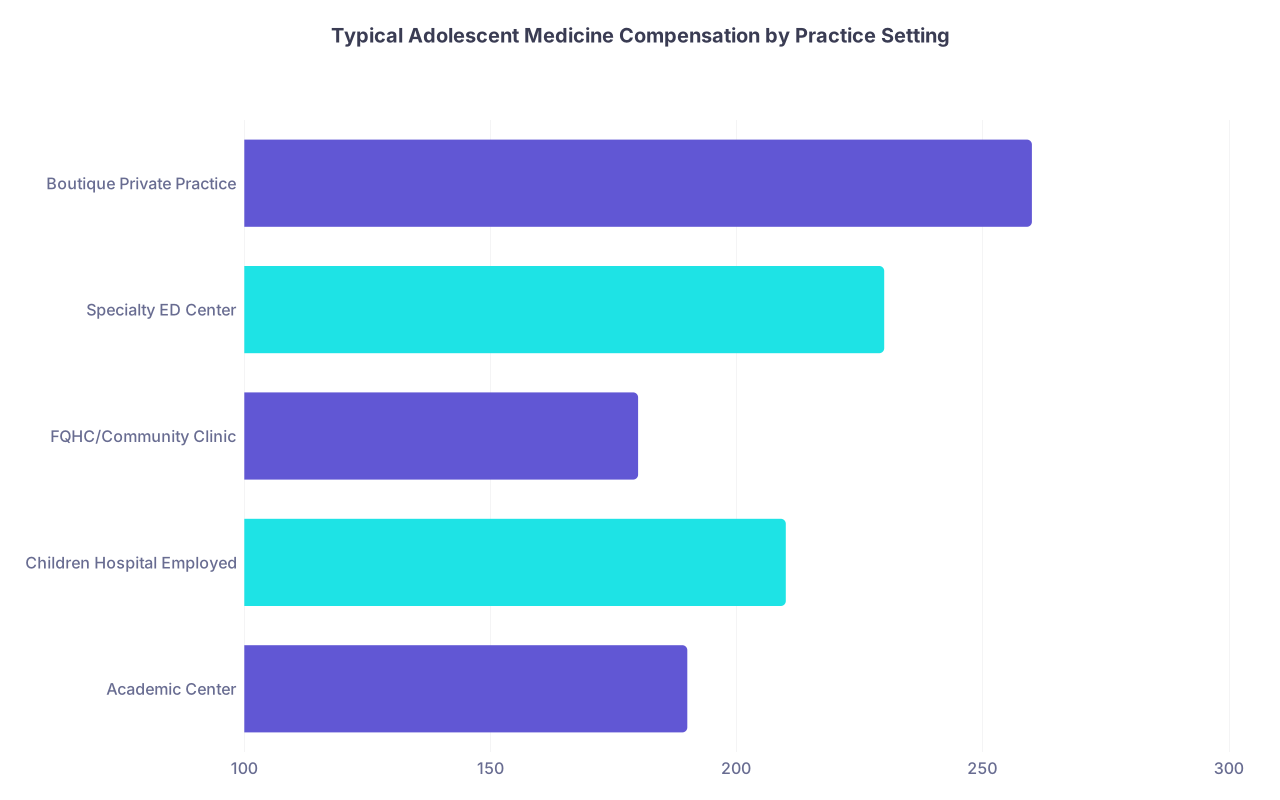
| Category | Value |
|---|---|
| Academic Center | 190 |
| Children Hospital Employed | 210 |
| FQHC/Community Clinic | 180 |
| Specialty ED Center | 230 |
| Boutique Private Practice | 260 |
Again, broad strokes. There are outliers, especially in high‑cost urban markets with strong institutional support. But adolescent medicine sits at the bottom tier of physician compensation almost regardless of setting, except in rare boutique or leadership roles.
The Fellowship Experience: What You Gain (That Does Not Show Up in Salary)
So why do smart, debt‑burdened residents still choose this path? Because the content of the work actually matters to them.
During fellowship you get robust training in:
- Eating disorders: medical stabilization, outpatient management, refeeding, co‑management with psychiatry and nutrition.
- Complex contraception: LARC in challenging cases, menstrual suppression in disabled youth, PCOS management.
- Gender‑affirming care: puberty blockers, hormone therapy, lab monitoring, multidisciplinary team dynamics.
- Youth mental health and substance use: screening, brief interventions, motivational interviewing, safety planning.
- Adolescent‑specific ethics and confidentiality: minors’ rights, consent, reproductive health law, confidentiality vs safety.
Plus a ton of sideways skills that general pediatrics never has time to teach properly:
- How to talk to teenagers in ways they do not immediately shut down.
- How to manage parents who are anxious, angry, or in denial without blowing up rapport.
- How to make actual safety plans that families can execute.
I have seen fellows transform from nervous, “Uh… so are you sexually active?” mumbler to clinicians who can, in 2 minutes, establish trust with a sullen 15‑year‑old who has told three previous providers nothing.
None of that shows up in your compensation line. It shows up when your 17‑year‑old patient looks you in the eye and admits she has been thinking about killing herself, and then does not do it because you built that bridge and pulled in the right supports.
That is the trade.
Career Trajectories: How People in Adolescent Medicine Actually Advance
The base salary may be low, but your ceiling is not fixed if you are deliberate. There are a few common paths people take to improve both impact and income.
1. Classic Academic Track
You join a children’s hospital or academic med center as faculty. Roles evolve into:
- Clinic + inpatient consults
- Teaching residents and med students
- Research in adolescent health, public health, health services, eating disorders, HIV prevention
Compensation can increase over time with:
- Promotions (assistant → associate → full professor)
- Funded research (some institutions provide salary support through grants)
- Leadership roles (clinic director, division chief)
But be realistic: even as division chief, you may not crack what a mid‑career hospitalist earns in some markets. This is not neurosurgery.
2. Administrative and Leadership Roles
Adolescent specialists bring expertise that hospital systems increasingly need:
- Medical director of adolescent programs
- Lead for institutional suicide prevention initiatives
- Director of eating disorder program
- Medical director of gender clinic or LGBTQ+ youth program
- Student health or college health leadership
Leadership stipends and administrative FTE carved into your job can nudge compensation upward. Still usually not top‑decile, but more respectable.
3. Sub‑Niche Expertise that Commands Higher Pay
Certain focus areas pay better because patients or institutions are willing to dedicate more resources:
- Eating disorder centers (especially private, high‑volume programs)
- High‑end college health services at elite universities
- Multidisciplinary gender clinics with philanthropic or system support
You become “the” person for a high‑visibility problem. Suddenly open roles are few, but better funded. That is one of the few leverage points in this field.
The Debt and Lifestyle Equation: Be Honest with Yourself
This is where a lot of people get burned: they fall in love with the patients and the content, and they do not run the math.
Let’s say you graduate med school with $250k in loans at roughly 6–7%. You do 3 years of peds, then 3 years of adolescent fellowship. Income progression might look like:
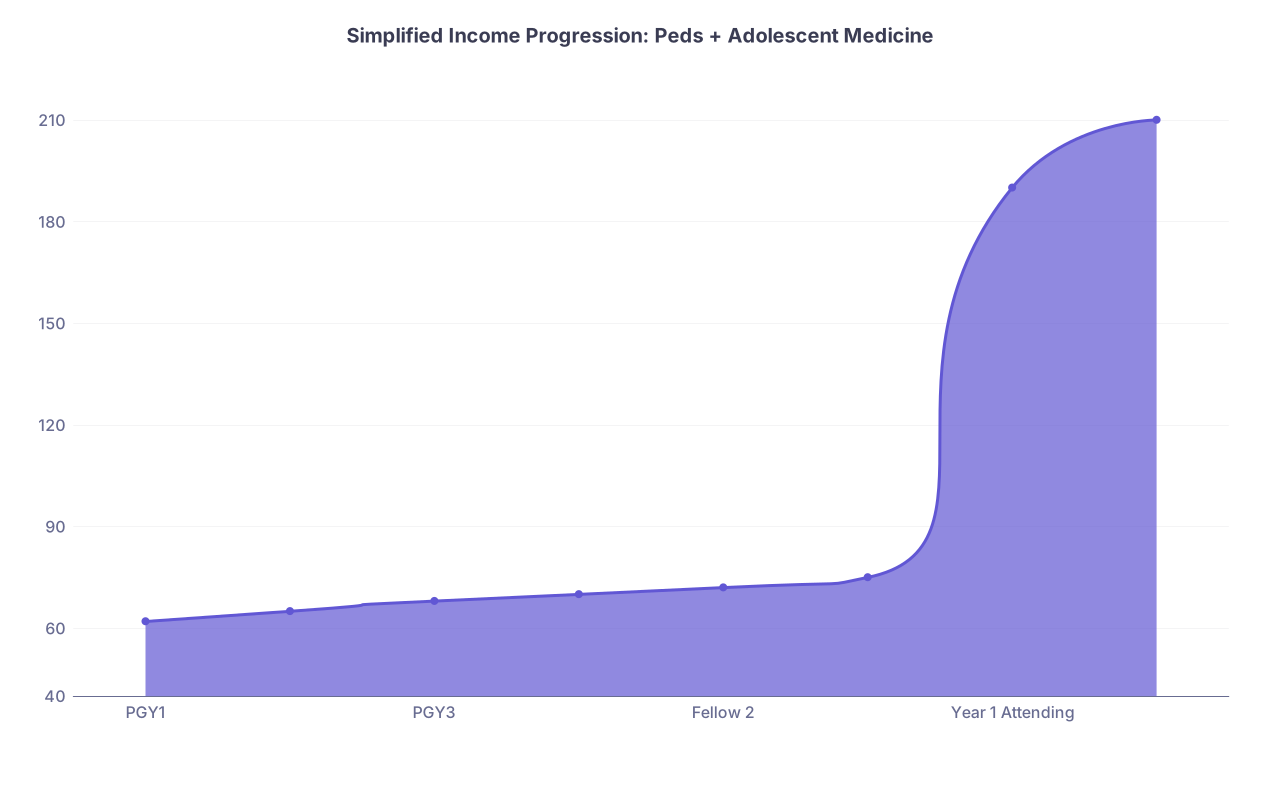
| Category | Value |
|---|---|
| PGY1 | 62 |
| PGY2 | 65 |
| PGY3 | 68 |
| Fellow 1 | 70 |
| Fellow 2 | 72 |
| Fellow 3 | 75 |
| Year 1 Attending | 190 |
| Year 5 Attending | 210 |
Compare that to:
- 3 years peds, then straight into hospitalist pediatrics or outpatient general peds, with starting salaries in the $210–240k range and potential raises from there.
- Or non‑fellowship adult primary care with signing bonuses and loan repayment.
You are effectively giving up:
- 3 years of higher attending income
- Faster loan repayment
- Compound investment growth
That does not mean it is wrong to do the fellowship. It means you need to go in with eyes open and a plan:
- Will you aim for PSLF (Public Service Loan Forgiveness) by staying at a nonprofit institution for 10 years?
- Will your partner’s income and benefits offset the difference?
- Are you okay living in lower‑cost regions or choosing less glamorous cities if that is where jobs exist?
I have seen fellows realize too late that their fantasy life (major coastal city, private schools for kids, big house, frequent travel) does not match their actual earning trajectory. The cognitive dissonance is brutal.
Who Adolescent Medicine Is Actually Good For
Let me be explicit. This specialty is right for you only if several things are true.
You should strongly consider adolescent medicine if:
- You genuinely like talking with teenagers and young adults, including the resistant, angry, and quiet ones.
- You find long, messy visits about identity, family conflict, and mental health more satisfying than rapid‑fire brief visits.
- You would rather manage an anorexia relapse thoughtfully than place a central line.
- You are comfortable with ambiguity and chronic risk. Your patients do not get “fixed.” They are works in progress.
- You are willing to accept being paid below average for physicians for your entire career, in exchange for work that feels morally coherent to you.
You should probably stay away if:
- You expect your fellowship to increase your earning power. It almost certainly will not.
- You hate documentation, complex communication, and phone calls. This job is 50% talking and writing, minimum.
- You are planning on a very high‑cost lifestyle that absolutely requires high six‑figure income.
- You dislike conflict with parents or schools. You will be in those conflicts constantly.
Adolescent medicine is not a fallback. It is a values‑driven choice.
Misconceptions I Hear All the Time (From Residents and Faculty)
Let me knock out a few recurrent myths I hear on wards and in clinic.
“Maybe it pays low now, but mental health is such a big issue, pay will rise.”
Unlikely in any dramatic way under current reimbursement structures. Mental health focus does not equal higher RVUs. If anything, payers push harder to limit “expensive talk time.”
“I’ll just do adolescent medicine and then pick up shifts as a hospitalist to make more.”
Possible at some institutions, but you risk burning out fast: you will be doing two emotionally heavy jobs. And most systems pay you at your base rate blended across FTE; they do not hand you surgeon‑level wages for extra shifts just because you took on more work.
“Maybe I can negotiate a higher salary with my fellowship skills.”
You have more leverage at hiring if you bring something rare: eating disorder expertise, integrated research funding, or leadership in a high‑priority area (suicide prevention, gender care). Generic adolescent medicine training alone does not move the negotiating needle much in most institutions.
How to Explore This Field Without Committing Blindly
If you are still tempted, good. It means something about this work is resonating. Test that before signing up for 3 years of fellowship.
Concrete steps:
- Do an adolescent medicine elective as a senior resident, ideally in an academic center with full‑spectrum services.
- Ask to sit in on eating disorder multidisciplinary rounds, not just clinic. Watch how drained people look at 4 PM.
- Talk candidly with a junior attending in adolescent medicine about their actual W‑2 numbers, loan status, and lifestyle. Not the glossy brochure version.
- Compare a week of adolescent clinic with a week of hospitalist or general peds. Which exhaustion feels more meaningful to you?
And then, if you still feel pulled toward this work, you will be choosing it with full knowledge of the financial trade, not as a surprise later.
Key Takeaways
- Adolescent medicine is one of the lowest paid specialties because it is procedure‑light, time‑intensive, and anchored in under‑reimbursed pediatrics and primary care, with minimal institutional revenue leverage.
- Training is long (often 6 years post‑med school), and compensation often ends up lower than what you could earn as a general pediatrician or hospitalist with no fellowship at all.
- The people who thrive in this field do it because the work itself – complex, relationship‑heavy, high‑stakes care for teens and young adults – matters more to them than maximizing their income.


