

What happens when your parents are already telling people you’re going to be a dermatologist or orthopedic surgeon… and you’re quietly googling pediatrics, family medicine, or psych salaries at 2 AM?
Because that’s the real nightmare, right? Not just “what specialty should I pick,” but: What if I pick the “wrong” one and everyone thinks I wasted my potential?
Let’s talk about that.
The Silent Panic: “Am I Throwing Money (and My Parents’ Sacrifice) Away?”
You already know the money numbers. You’ve seen the Medscape charts. You know:
- Ortho, neurosurgery, derm, radiology = big money
- Peds, family med, psych, PM&R, IM (if you don’t subspecialize) = the “lowest paid specialties”
So your brain goes:
- “I’m graduating with $250k in loans and I want to do pediatrics. Am I insane?”
- “My parents worked themselves to death for me to ‘make it’… and I want to be a psychiatrist?”
- “What if at 45 I regret not chasing a high-earning field and it’s too late to switch?”
And then another ugly thought:
“What if my family is actually… disappointed in me?”
I’m going to be blunt: I’ve seen all of this play out in real people. At places like Ohio State, UCSF, community programs, you name it. The cardiology-obsessed mom. The dad who keeps saying “but plastic surgeons make how much?” The uncle who sends you salary screenshots like it’s helpful.
Here’s the part nobody tells you: a lot of those people in “high-earning” fields are quietly miserable. Trapped. Counting the years until they can cut down their hours or retire. Some of them would kill to do what you’re scared to choose.
Money Reality Check: Are You Actually Ruining Your Financial Future?
Let’s rip this band-aid off. Numbers first, feelings second.
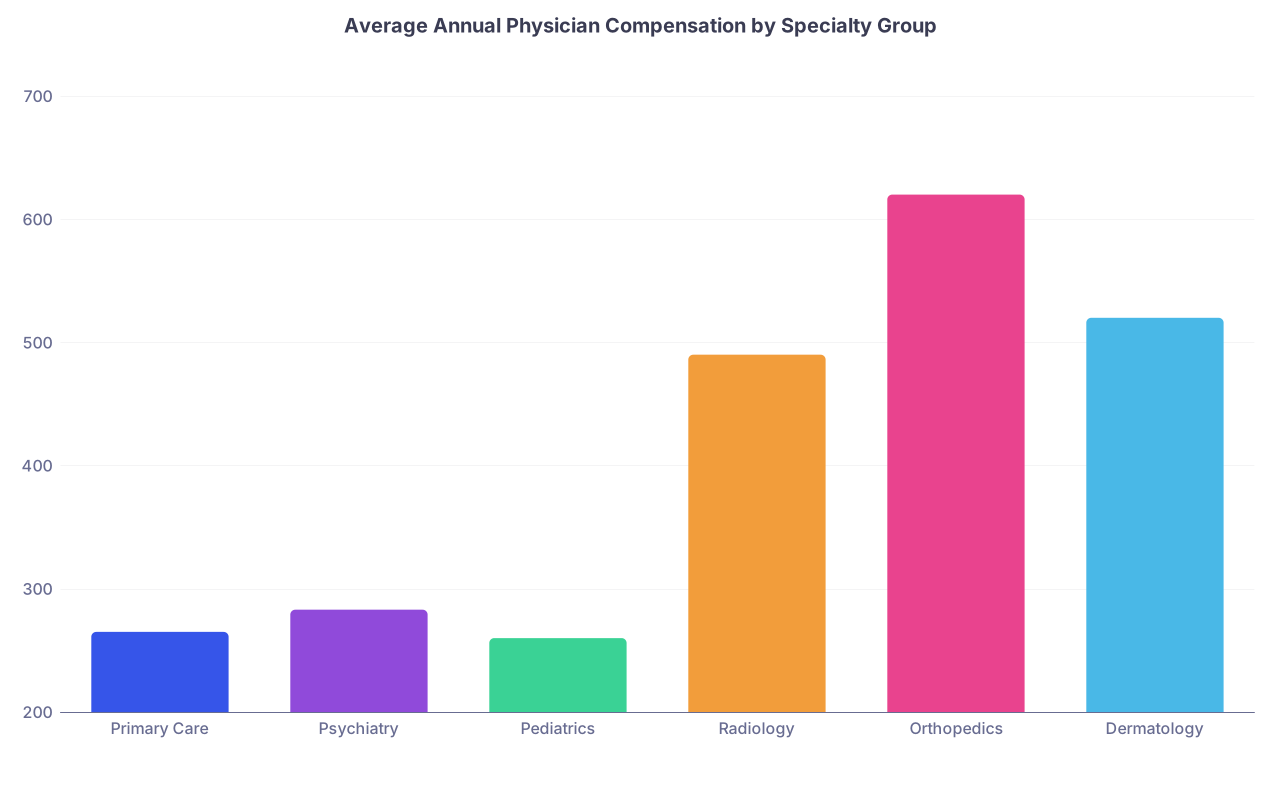
| Category | Value |
|---|---|
| Primary Care | 265 |
| Psychiatry | 283 |
| Pediatrics | 260 |
| Radiology | 490 |
| Orthopedics | 620 |
| Dermatology | 520 |
Are the “low-paying” specialties lower? Yes. Dramatically lower? Depends on what you compare to.
Low relative to orthopedics? For sure.
Low relative to the general population? Absolutely not.
A few hard truths that help calm the spiral:
Even “low-paid” physicians are still in the top income brackets in the country.
Pediatricians, family doctors, psychiatrists are not starving. The stress is more: “I can’t have a $3M house in a coastal city” than “I can’t afford groceries.”Debt is scary, but there are actual tools:
- Income-driven repayment (IDR)
- Public Service Loan Forgiveness (PSLF)
- Refinancing later when your income stabilizes
I’ve watched primary care docs with $300k debt still get married, have kids, own homes, live decently. Slower start, yes. Hopeless? No.
Lifestyle costs more than your specialty choice.
A pediatrician in a mid-cost city who lives reasonably can be more financially comfortable than a plastic surgeon with private school x3 kids, giant mortgage, and lifestyle creep in Manhattan.
Your fear isn’t totally irrational. It just needs context. You’re not choosing between “financial security” and “poverty.” You’re choosing between “very high income” and “high income but lower ceiling.” That’s different.
The Family Pressure: When Their Dreams Don’t Match Your Life
This part hurts the most because the numbers are easier to argue with than culture, guilt, and expectations.
I’ve seen versions of this:
- Immigrant parents who say: “We didn’t come to this country for you to be just a pediatrician.”
- Relatives bragging: “She’s going to be a surgeon!” when you’re 100% sure you’re not.
- Parents sending you links: “Dermatologist average salary” with a smiling emoji.
You know what that does? It makes you feel like:
- Choosing a lower-paid specialty = disrespecting their sacrifice
- Doing what you love = selfish
- Anything less than “max money” = failure
Here’s the ugly secret: a lot of that pressure isn’t actually about you. It’s about:
- Their fear of instability (because maybe they lived it)
- Their need to prove to their community that they “made it” through you
- Their misunderstanding of what modern medicine actually looks like
And they don’t see the 3 AM Rapid Response, the call nights, the post-ICU crying-in-your-car moments. They just see “doctor = rich.”
You’re allowed to name the thing you’re afraid of out loud:
“I’m scared my parents will think I wasted my potential if I don’t chase the highest paid specialty.”
You’re not crazy for thinking that. You’re honest.
What Actually Happens If You Pick a Lower-Paid Specialty?
Let me walk through the nightmare version your brain is probably playing on loop.
You choose pediatrics / family med / psych / PM&R / general IM:
- You match. You’re relieved… and also low-key ashamed to tell certain relatives.
- At family gatherings: “So… you didn’t want to be a surgeon?” followed by the tone you hate.
- Your mom says, “As long as you’re happy,” but you can feel the “but” in the room.
Fast-forward 5–10 years:
- You’re working hard, maybe still paying loans, not rolling in money… but:
- You know your patients.
- You sleep at home more nights than not.
- You’re not dreading every Monday.
Meanwhile, some of the people who chased high-earning specialties only for the money:
- On their 4th burnout episode.
- Seriously talking about quitting medicine.
- Stuck because the golden handcuffs are real and the lifestyle bills have to be paid.
Who “won” here?
Let me be blunt: I have never seen someone who’s deeply aligned with their specialty say, “I wish I’d chosen something I hated for an extra few hundred thousand a year.” I have seen the opposite. Many times.
“But What If I Regret Not Going Higher-Paid Later?”
This one hits hard at 2 AM.
You’re imagining yourself at 45:
- Kids, mortgage, loans (some left), retirement to fund
- Watching your surgeon friends buy vacation homes
- Wondering if you sold yourself short
So what’s the worst-case scenario… really?
Here’s what I’ve actually seen people do when they had that “did I under-earn?” feeling:
- Internal medicine → later did cards/GI/heme-onc fellowship
- Psych → opened a private practice, doubled income
- Family med → urgent care, sports med, admin roles, medical directorships
- PM&R → pain, sports, spine
It’s not like you lock yourself into one salary forever. You have levers:
- Geographical move (yes, rural Wisconsin pays more than downtown Boston)
- Side gigs: consulting, telehealth, admin, teaching, med-legal work
- Practice structure: academic vs private vs hospital-employed
You’re not choosing a single lifetime income number with your Match rank list. You’re choosing a field where you’ll spend decades. If you hate it, that’s the real trap.
Having The Awkward Conversation With Your Family (Without Imploding)
You’re probably dreading The Talk more than the actual specialty decision.
No script fixes everything, but you need something more concrete than, “I just feel like it.”
Try this structure:
Lead with respect, not defensiveness.
“I know you’ve sacrificed a lot and you want me to be secure. I take that seriously.”Acknowledge their main fear: money/security.
“You’re worried that if I don’t pick a high-paying specialty, I’ll struggle financially or regret it later. I’ve thought about that too.”Bring them real numbers.
Sample Average Compensation Ranges Path Approx Range (USD) Pediatrics / Family Med $230k–$280k Psychiatry $260k–$320k Hospitalist (IM) $280k–$350k Orthopedic Surgery $550k–$700k Dermatology $450k–$550k Then add: “These numbers are all high compared to most jobs. I’ll still be able to support a family and pay loans.”
Explain the human cost of the wrong fit.
“The specialties that make the most money also often come with very demanding call schedules and physical strain. If I’m miserable, I’m at higher risk of burnout, depression, even making mistakes. That’s not safety either.”State your choice with calm finality.
“I’ve thought about this seriously. I’m choosing [specialty], and I’m going to make sure I’m financially smart about it.”
You don’t need them to fully get it. You need them to accept that this is your life. That’ll come slowly, not in a single dramatic conversation.
How To Protect Your Future Self If You Choose a Lower-Paid Specialty
If your anxious brain is screaming, “Okay but what do I actually do to not end up broke and regretful?” — good. Use that.
Here’s how people in “lower-paid” fields stay both sane and solvent:
Be strategic about location.
A pediatrician in rural or mid-sized cities can earn a lot more than one at a prestige coastal academic center. Prestige doesn’t pay your loans. Patients do.Use loan programs like it’s your job.
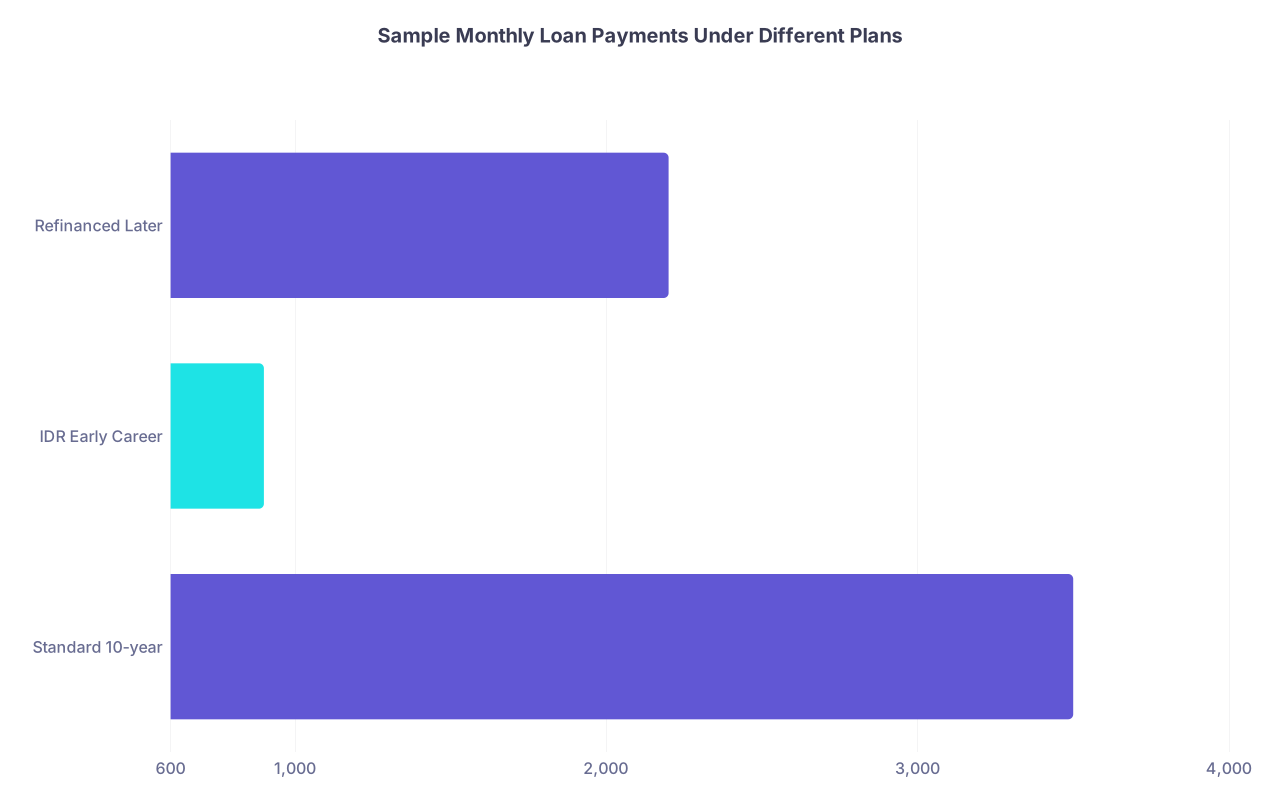
Sample Monthly Loan Payments Under Different Plans Category Value Standard 10-year 3500 IDR Early Career 900 Refinanced Later 2200 IDR + PSLF + smart refinancing later = massive difference in actual take-home.
Don’t sleepwalk into lifestyle inflation.
The fastest way to feel “poor as a doctor” is to spend like your top-earning classmates while earning significantly less. Comparison is poison.Build optionality.
Learn a niche. Do a fellowship if it makes sense. Get comfortable with one or two side income streams you can scale up later if you want (telepsych, consulting, etc.).Take burnout seriously from day one.
If your specialty gives you more control over your schedule, that’s not “wasted potential.” That’s buying back your mental health.
The Emotional Grief: Letting Go of the Fantasy Version of You
There’s a version of you your family probably made up:
- The surgeon with the perfect house
- The dermatologist with the “normal” hours and high pay
- The cardiologist whose title impresses everyone at weddings
And honestly? You might’ve believed in that version at one point too.
So when you feel drawn to psych, peds, FM, hospice, PM&R, whatever — it can feel like a weird grief. Like you’re letting go of the “shiny” version of you.
You’re not crazy if this makes you sad.
But here’s the part you’re underestimating:
Years from now, your life won’t be defined by the reaction your aunt had when you told her you’re “just” a pediatrician. It’ll be defined by:
- Whether you dread walking into work
- Whether you feel like you’re doing work that fits your brain and your heart
- Whether you have enough energy left to have an actual life outside the hospital
And spoiler: patients do not care what your RVU bonus is. They care if you listen, if you show up, if you’re present. That’s the stuff that keeps most doctors going when the system is on fire.
A Quick Reality Snapshot: Stress vs Pay
You’re not just picking based on money. You’re picking based on how you want your days to feel.
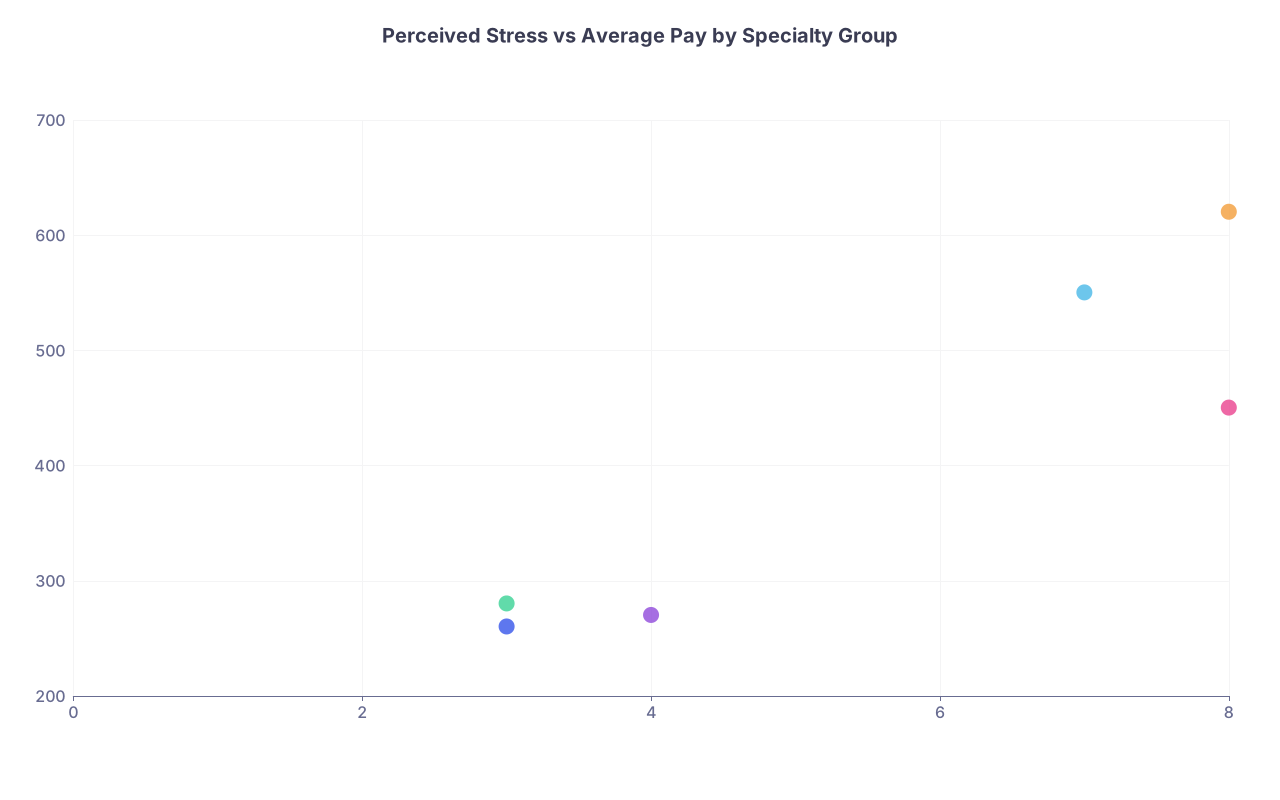
| Category | Value |
|---|---|
| Peds | 3,260 |
| FM | 4,270 |
| Psych | 3,280 |
| Ortho | 8,620 |
| Gen Surg | 8,450 |
| Cards | 7,550 |
(Totally rough numbers here, but you get the idea: more money usually comes with more intensity.)
High pay can absolutely be worth it for some people; they love the procedures, the adrenaline, the complexity. They should do those fields.
But if you’re reading this, you probably feel a pit in your stomach at the thought of that lifestyle. Listen to that.
FAQs
1. What if my parents actually say, “We’re disappointed. You could have done more”?
Then they say it. It will hurt. But it doesn’t make them right.
You are not a retirement plan. You are not a trophy. You are a person who has to wake up every day and live the consequences of this choice long after they’re gone. It’s okay to internally think, “You don’t understand medicine the way I do,” and still love them. Disappointment is an emotion; it’s not a command.
2. Am I being selfish if I don’t choose the specialty that maximizes income for my future family?
Choosing a specialty you’ll resent and burn out from is not “selfless.” It’s reckless. Your future kids don’t need a parent who makes $700k and is never home, hates their job, and drinks too much. They need a parent who is present, somewhat emotionally stable, and not obliterated by work. You can support a family just fine as a “low-paid” physician who manages money decently.
3. What if I actually like a high-paying specialty but I’m scared I’m just chasing money?
Then you need to test that interest hard. Shadow more, do electives, talk to attendings who are 10–20 years in and actually happy. If you genuinely enjoy the work and the lifestyle is something you can tolerate, it’s not “selling out” to choose it. Just be honest with yourself: would you still pick it at half the pay? If the answer is “yes, probably,” you’re fine.
4. Is it harder to switch into a higher-paying specialty later if I change my mind?
Yes. Switching from peds to derm or FM to ortho later is extremely difficult and logistically messy. That’s why you should explore now. But you can often shift within your field to higher-paying niches (hospitalist work, certain fellowships, admin roles, private practice). You’re not stuck at the bottom of a pay scale forever.
5. How do I stop obsessively comparing myself to classmates choosing high-earning fields?
You probably won’t stop completely. But you can limit the triggers. Mute certain group chats. Stop looking up other people’s projected incomes. Focus on what your days will look like, not just your W-2. And remember: some of those people are already envying you for being allowed to pick something more “chill.” Everybody’s comparing; no one feels like they “won” completely.
6. What if I choose a low-paid specialty and the system gets worse — more workload, less pay?
That fear is valid for all of medicine, not just low-paid specialties. The system is changing, often not in our favor. Your best protection isn’t chasing the highest-paying field; it’s building flexibility: living below your means, keeping your skills sharp, staying open to roles outside pure clinical work (admin, informatics, teaching, telehealth). Misery is not a hedge against system collapse. Adaptability is.
Core things to remember:
- You’re not choosing between “rich” and “poor”; you’re choosing your daily life for decades.
- Your family’s expectations don’t get to own your entire future; they had their shot at choosing their path.
- You can build a stable, meaningful, financially decent life in a lower-earning specialty if you’re deliberate — and you’ll probably sleep better at night actually liking what you do.


