
You are not the first physician to sign a contract without fully understanding the malpractice clause—and you will not be the last.
Let me be blunt: a scary malpractice section in your contract feels like a ticking time bomb. Tail coverage, occurrence vs. claims-made, indemnification, nose coverage, vicarious liability… it reads like it was written to make you feel stupid and trapped.
You signed anyway. Maybe you were rushing. Maybe you were desperate for a job. Maybe you trusted the recruiter who said, “This is all standard, don’t worry.”
And now you’re worrying.
Good. Because this does matter—but it’s usually fixable, or at least manageable, once you know what you’re actually dealing with.
Let’s unpack this carefully so you can stop imagining the absolute worst-case scenario 24/7.
Step 1: Stop Panicking and Get the Facts in Writing
Your brain is probably doing that thing where it jumps straight to, “I’m going to be sued, lose my license, go bankrupt, and never match into another job again.”
Slow down.
Right now, you don’t actually know what you signed. You remember vibes, not details. That’s normal.
Here’s what you do today:
- Pull up the signed contract and the actual malpractice policy details (not just the contract summary).
- Look for the malpractice section—usually labeled “Professional Liability,” “Malpractice Insurance,” or “Insurance and Indemnification.”
- Highlight every word you don’t fully understand.
You’re looking for phrases like:
- “claims-made”
- “occurrence”
- “tail coverage”
- “nose coverage”
- “indemnify,” “hold harmless,” “defend”
- “limits of liability”
- “prior acts”
- “consent to settle” or “hammer clause”
If you don’t see half of those words, don’t assume that’s good. Sometimes what’s missing is the real problem—like no mention of who pays for tail.

| Step | Description |
|---|---|
| Step 1 | Signed contract |
| Step 2 | Find malpractice section |
| Step 3 | Claims made or occurrence |
| Step 4 | Ask HR/administrator in writing |
| Step 5 | Check who pays tail and limits |
| Step 6 | Consult malpractice savvy lawyer |
| Step 7 | Type of coverage named? |
The goal of this first step is simple: move from “I’m vaguely terrified” to “I know exactly what I agreed to, even if I don’t like it.”
You can’t fix a contract you don’t understand.
Step 2: Figure Out What Kind of Policy You’re Actually Under
This is the part everyone pretends to understand but almost nobody really does when they first sign.
Claims-Made vs Occurrence (This Matters a Lot)
You need to know which one you have.
Occurrence policy
Covers incidents that occur during the policy period, no matter when the claim is filed. You usually don’t need tail when you leave.Claims-made policy
Covers claims that are made (reported) while the policy is active and you’re covered. When you leave, the clock basically stops—unless you buy tail or get new coverage that includes prior acts.
Most employers use claims-made because it’s cheaper for them. Which is why docs get stuck with brutal tail costs when they leave.
| Feature | Claims-Made | Occurrence |
|---|---|---|
| Common for jobs? | Very common | Less common |
| Need tail? | Usually yes | Usually no |
| Premium cost | Lower at first, then increases | Higher, more stable |
| Who gets burned if leaving? | Doctor, if tail not covered | Usually nobody, already covered |
If your contract doesn’t say which kind, ask in writing. “Can you please confirm whether my malpractice coverage is claims-made or occurrence, and who is responsible for tail coverage on termination?”
You want their answer in email, not a casual hallway comment.
Step 3: The Tail Coverage Panic (Aka: “Am I on the Hook for $50k?”)
This is usually the big fear: “I signed something that says I pay tail. Tail is outrageously expensive. I’m doomed.”
You’re not doomed. But you might be exposed if you just walk away without planning.
What tail coverage actually is
Tail coverage extends your claims-made policy after you leave, so if a claim arises from care you provided while employed, you’re still covered.
Without tail, you can be personally sued for stuff you did at your old job, even though you’re long gone. It’s not theoretical—I’ve seen people get hit with claims for care they provided 2–3 years prior.
Tail can cost:
- Roughly 150–250% of your final year’s premium (not your first year, the highest year)
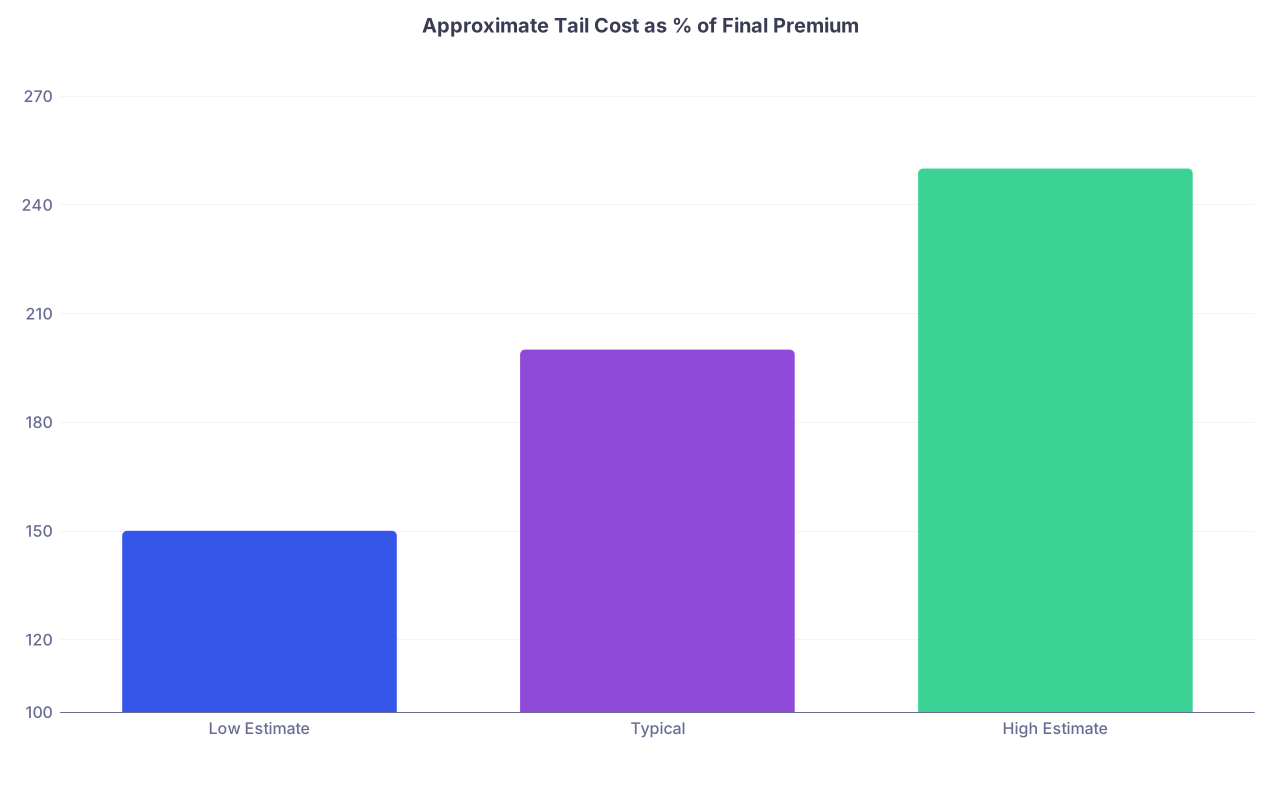
| Category | Value |
|---|---|
| Low Estimate | 150 |
| Typical | 200 |
| High Estimate | 250 |
So yes, it can be brutal. But you need actual numbers, not just fear.
Ask your employer or carrier:
- “What’s my current annual malpractice premium?”
- “What’s the estimated cost of tail if I left after 1 year? After 3 years? After 5 years?”
Once you know that, you can:
- Negotiate later if you have leverage (promotion, new contract, threat of leaving).
- Plan ahead financially rather than getting ambushed when you resign.
- Make smarter decisions about how long to stay.
Step 4: Watch for the Truly Dangerous Landmines
Some contract language is annoying. Some language is genuinely dangerous to you.
Two big things that make my stomach drop when I see them:
1. Indemnification / “Hold Harmless” in favor of the employer
If your contract says you “indemnify, defend, and hold harmless” the hospital or group for malpractice claims or your “negligent acts,” that’s a massive red flag.
Translation:
If things go south, you may be contractually promising to:
- Pay them back for what they pay out
- Cover their legal costs
- Take the financial hit, even though they technically carry malpractice insurance
Is it enforceable everywhere? Not always in the full scary way it’s written. But it gives them ammo, and it’s bad enough that you should not ignore it.
2. You don’t control consent to settle
Look for language about “consent to settle” or a “hammer clause.”
If your carrier can settle a case with or without your consent, that settlement will follow you. It’ll show up when you apply for:
- New hospital privileges
- A new job
- State licenses
- Credentialing
And if there’s a hammer clause, it might say:
- If you refuse to settle, and the ultimate judgment is more than their recommended settlement, you eat the difference.
Which is… horrifying.

Step 5: Talk to a Real Lawyer (Not Reddit, Not Your Co-Resident)
You can Google and panic yourself into paralysis, or you can pay someone who reads these for a living.
You want:
- A health-care / physician contract attorney
NOT just a random general lawyer, and definitely not only the hospital’s “friendly” HR person.
What they can actually do for you after you’ve already signed:
- Tell you what’s enforceable vs. scary fluff
- Identify the worst clauses that might still be negotiable
- Suggest amendments or addendums if you’re re-signing or renewing
- Help you strategize your exit plan so you don’t get crushed by tail
Yes, it costs money. But the cost of:
- Bad tail coverage
- Enforceable indemnification
- A policy gap
is way, way higher. I’ve seen people lose more in a single settlement gap than they would have ever paid a lawyer in their entire career.
Even if you can’t change this contract now, knowledge helps you:
- Avoid the same trap with your next contract
- Time your departure more safely
- Push back if the employer tries to shift costs they shouldn’t
Step 6: If You Want to Leave: Don’t Just Resign and Hope
Let’s say your worst fear is real:
You signed a claims-made contract where you pay tail, and tail is like $40k–$80k.
Do not send your resignation letter and just… see what happens.
You have options to mitigate the damage:
Try to negotiate tail on the way out
- Especially if they really want you to stay
- Or you’re willing to train your replacement
- Or you have leverage (high RVUs, difficult-to-replace specialty)
Look for nose coverage at your next job
Your new employer’s malpractice policy can sometimes include your “prior acts” from the old job, which may reduce or eliminate the need for tail. Not always, but it’s a real thing. Ask explicitly:
“Will your malpractice policy cover my prior acts from my current position, or do I need to purchase separate tail?”Time your departure
Some policies / groups reduce tail costs the longer you stay.
Leaving at 11.5 months might cost way more than leaving after 3 years. You need real numbers from the carrier to decide.

| Category | Value |
|---|---|
| Year 1 | 25000 |
| Year 2 | 40000 |
| Year 3 | 50000 |
| Year 5 | 55000 |
Consider a payment plan
Sometimes carriers or employers will allow tail to be paid over time, not in one monstrous lump.Document everything
Any promises made about covering tail? Get them in writing. Verbals don’t exist when money is on the line.
Step 7: Accept the Mistake, Then Use It as Leverage With Yourself
Here’s the part nobody says out loud:
Almost every attending I know has at least one contract they regret signing. Usually the first one. Sometimes the second too.
You signed something you didn’t fully understand. Yeah. That’s not great. But it is extremely normal.
So:
- Yes, learn from it.
- Yes, get professional help now.
- No, don’t let this spiral into “I’m irresponsible and shouldn’t even be a doctor.”
You’re still allowed to protect yourself going forward.
For the next contract, you:
Never sign before:
- You know exactly what kind of malpractice coverage it is
- You know who pays tail
- You understand indemnification language
Budget a few hundred to a thousand dollars for a contract review
That’s less than the cost of a single unnecessary tail payment by orders of magnitude.

Quick Reality Check: Worst-Case vs Likely Reality
Your brain is probably here:
- “I’ll get sued for millions.”
- “They’ll cancel my coverage.”
- “I’ll never get another job if I have any claim on my record.”
- “I’m going to go bankrupt paying tail and legal fees.”
Here’s the more honest reality:
Will you likely be named in a suit at some point?
Statistically, for many specialties—yes.Does that mean you’ll personally pay out of pocket?
Almost always no, if you have active coverage or appropriate tail.Is tail painful?
Often, yes. Disastrous? Not if you plan for it, negotiate when you can, and don’t let gaps occur.Did signing this contract ruin your career?
No. It just raised the difficulty level on one part of the game. Annoying, but survivable.
You’re not powerless. You’re just late to the party on understanding this stuff. Most of us were.
Very Practical To-Do List for This Week
If you want to feel less sick about this, do these things now, not “sometime.”
- Read your contract’s malpractice section line by line. Underline every term you don’t fully understand.
- Email HR / admin these two questions:
- “Can you confirm whether my malpractice coverage is claims-made or occurrence?”
- “If I terminate my employment, who is responsible for purchasing tail coverage?”
- Call the malpractice carrier and ask:
- Current annual premium
- Estimated tail cost at 1, 3, and 5 years
- Book a consult with a healthcare contract lawyer. Send them:
- Your contract
- The malpractice policy summary, if available
- Any emails you’ve received explaining coverage
- Start a “departure plan” document—even if you’re not leaving now. Knowing what you’d face if you did walk away is weirdly calming.

FAQ (Exactly 5 Questions)
1. Can I get out of a bad malpractice clause after I’ve already signed the contract?
Sometimes, but don’t count on a miracle. If you have leverage—high productivity, hard-to-replace specialty, strong relationship with leadership—you can sometimes renegotiate at renewal or when they really want you to stay. A lawyer can help draft an amendment shifting tail to the employer, softening indemnification, or clarifying coverage gaps. But employers rarely “fix” things out of kindness—you usually need a reason they benefit too.
2. What happens if I just leave and don’t buy tail coverage?
Worst-case? A claim gets filed later for something you did while employed, and there’s no active policy covering that date of care. You could be personally sued. Your personal assets and future earnings could be at risk, and your ability to get re-credentialed can be hammered. Also, future employers and hospitals may see the gap and wonder why it exists. It’s one of the top “do not mess with this” issues.
3. My contract doesn’t mention tail coverage at all. Is that good or bad?
Honestly, usually bad or at least ambiguous. If it’s silent, that doesn’t magically mean your employer pays. It often means: “We didn’t say, so when you leave, we’ll decide how hard we want to fight you about it.” You need written clarification from HR or admin, and ideally from the carrier too. A short contract addendum can spell it out. Silence is not safety.
4. I’m a resident/fellow signing my first attending contract. Did I already screw up?
Probably not permanently, but maybe a little. Most first-time attendings don’t really understand malpractice terms, and employers know that. If you’ve already signed, do the review steps now and talk to a lawyer before your start date, or before any auto-renewal window closes. At minimum, you’ll know exactly what not to repeat on your second contract. And if it’s truly terrible, you may still have time to renegotiate or walk away before you begin.
5. Will one malpractice claim or settlement destroy my career?
In most cases, no. Many perfectly good physicians have one or more claims or settlements on their record. Credentialing committees look at patterns, severity, and your specialty. One OB claim in 15 years of practice is very different from six high-severity cases in five years. What really destroys careers is: lying about claims, having coverage gaps, or being uninsurable because of repeated high-risk behavior. Solid, continuous coverage—and no gaps when you change jobs—is your best protection.
Open your contract right now and find the malpractice section. Read the first paragraph and circle every term that makes your stomach drop. That’s your starting list to take to a lawyer this week.