
You are here
It’s January of your PGY‑2 year. You just survived another brutal stretch of nights, your co-resident casually mentioned they’re pulling in an extra $2–3k a month moonlighting at a nearby community ED, and now your brain is doing the math.
Loans. Credit cards. That used Honda that sounds like it might not make it through winter.
You find a posting: “Inpatient moonlighting, $110/hr, malpractice provided.”
Your immediate thought: “Perfect.”
Your next thought: “Do I actually believe that? Or am I about to blow a hole in my future by skipping malpractice details?”
This is where most residents screw up: they treat malpractice coverage as background noise instead of the main event of moonlighting. You’re not just selling hours. You’re selling professional risk — in someone else’s building, on someone else’s patients, often with your own name as attending of record.
Let’s walk this the way your brain actually works: by timeline.
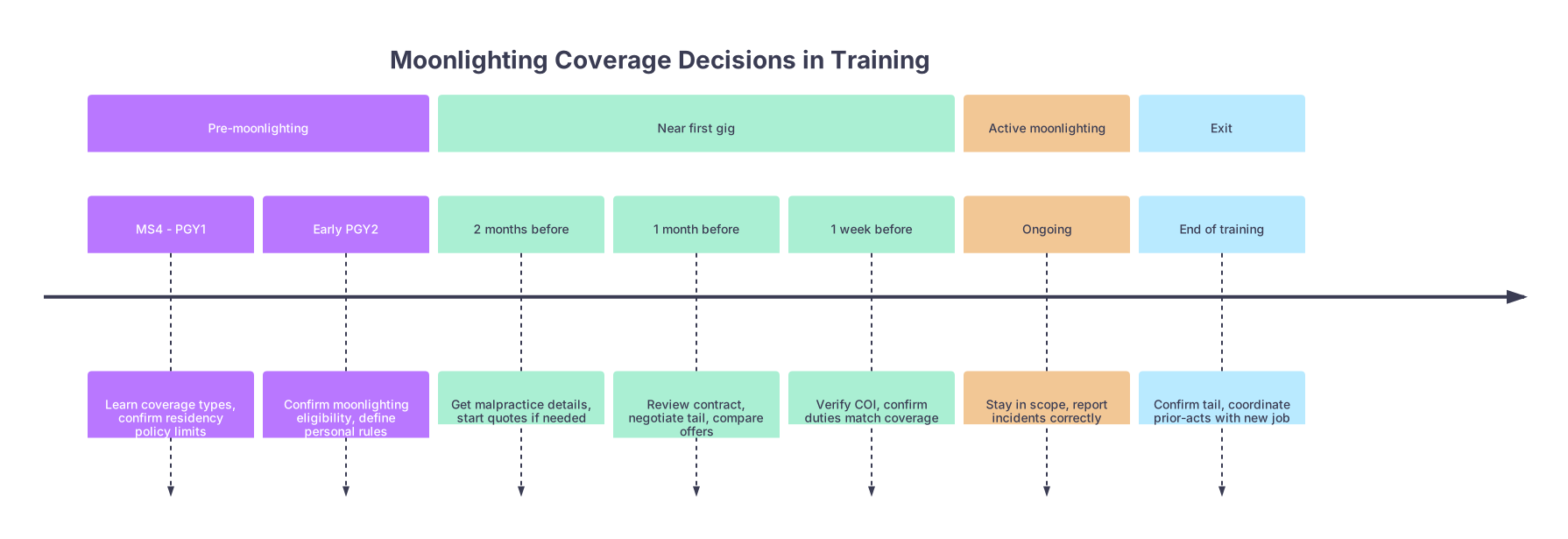
What you should be doing before you even think about moonlighting, when offers start appearing, right before you sign, and once you’re actively working.
We’ll go roughly:
- MS4 / PGY‑1: Foundations and “future-proofing”
- Early PGY‑2: First real moonlighting thoughts
- 1–2 months before first moonlighting shift: Contracts and coverage
- Week before starting: Final checks
- During moonlighting: Ongoing risk management
- End of training / changing jobs: Tail headaches and how not to get burned
MS4 & PGY‑1: Set yourself up so future-you doesn’t get wrecked
At this point you’re probably not allowed to moonlight yet. Good. Now’s the time to quietly build the knowledge base 98% of residents are missing when money clouds their judgment.
At this point you should…
- Understand the three basic malpractice setups you’ll see with moonlighting
You’re going to see variations of these three:
| Setup Type | Who Buys Policy | Typical Risk Level |
|---|---|---|
| Employer-provided occurrence | Hospital/Group | Lowest |
| Employer-provided claims-made (with tail) | Hospital/Group | Low–Moderate |
| You buy your own individual policy | You | Highly variable |
Occurrence coverage (gold standard):
- Covers you for incidents that happen during the policy period, regardless of when the claim is filed.
- No tail needed.
- If a moonlighting job truly gives you occurrence coverage, that is ideal.
Claims-made coverage (most common):
- Covers you only if:
- The incident happened while the policy was active, and
- The claim is filed while the policy is still active (or during a tail period).
- When you leave, you need tail coverage or nose/prior-acts from your next policy.
- Covers you only if:
Individual moonlighting policy (you buy it):
- Often needed for things like:
- Telemedicine gigs
- Small practice urgent care shifts
- Cosmetic/concierge clinic work
- Here, every detail is your responsibility: limits, scope, tail.
- Often needed for things like:
- Know what your residency policy does not cover
Your training malpractice usually:
- Covers only:
- Activities within your residency
- At approved sites
- Under the scope of your training program
It usually does not cover:
- Independent moonlighting at outside hospitals
- Telemedicine under your own Tax ID
- Private cosmetic or cash-based work
- “Helping out” a friend’s clinic for cash
By late PGY‑1, you should have:
- Read your GME handbook section on:
- Moonlighting
- Malpractice coverage
- Asked your program coordinator directly:
- “Does our residency malpractice cover any moonlighting?”
- “Is there any scenario where it does?”
Write down the answers. Future you will forget.
Early PGY‑2: First serious moonlighting planning window
This is when most programs begin to allow internal or external moonlighting. It’s also when people rush.
At this point you should…
- Confirm whether you’re even allowed to moonlight
- Check:
- ACGME rules for your specialty
- Program-specific policies
- Duty hour restrictions (including moonlighting hours)
- Get this in writing:
- Program director or GME office email explicitly approving moonlighting type:
- “Internal only”
- “External allowed”
- “No independent practice”
- Program director or GME office email explicitly approving moonlighting type:
- Create a short personal rule: when you will demand extra coverage
Something like:
“If the moonlighting site does not give me written proof of malpractice that:
– Names me individually,
– Is primary (not contingent on my residency policy), and
– Covers limits of at least $1M/$3M,
then I will not work without buying my own policy or getting that fixed.”
Decide this rule before you see dollar signs.
- Start a short list of potential moonlighting targets
Typical types:
- Internal hospitalist night coverage
- Community EDs
- LTACHs / SNFs coverage
- Psychiatry call coverage
- Tele-urgent care or tele-psych
- Cosmetic or IV-hydration clinics (these are malpractice landmines, by the way)
Create a simple comparison sheet.
| Site | Type | Malpractice Provided? | Coverage Type | Limits |
|---|---|---|---|---|
| Community ED A | ED | Yes | Claims-made | 1M/3M |
| Hospitalist B | Inpatient | Yes | Occurrence | 1M/3M |
| Telemed C | Telemedicine | No | N/A | N/A |
If a site can’t clearly answer these questions? That’s already a red flag.
1–2 Months Before Your First Moonlighting Shift: Lock down coverage details
This is the critical window. This is when people get sloppy and sign first, ask questions later.
At this point you should…
- Get the exact malpractice terms in writing before you agree to anything
Ask the site (or group) these very direct questions:
- “Is malpractice coverage provided for all my moonlighting work here?”
- “Is it occurrence or claims-made?”
- “What are the limits?” (You want to see something like $1M/$3M or higher.)
- “Does your carrier require tail coverage when I leave?”
- “If tail is needed, who pays for it? Is that in the contract?”
If they say “we cover you” but won’t put it in the contract language? Walk. I’ve seen that blow up in people’s faces three years later.
- Match coverage type to risk level of the moonlighting work
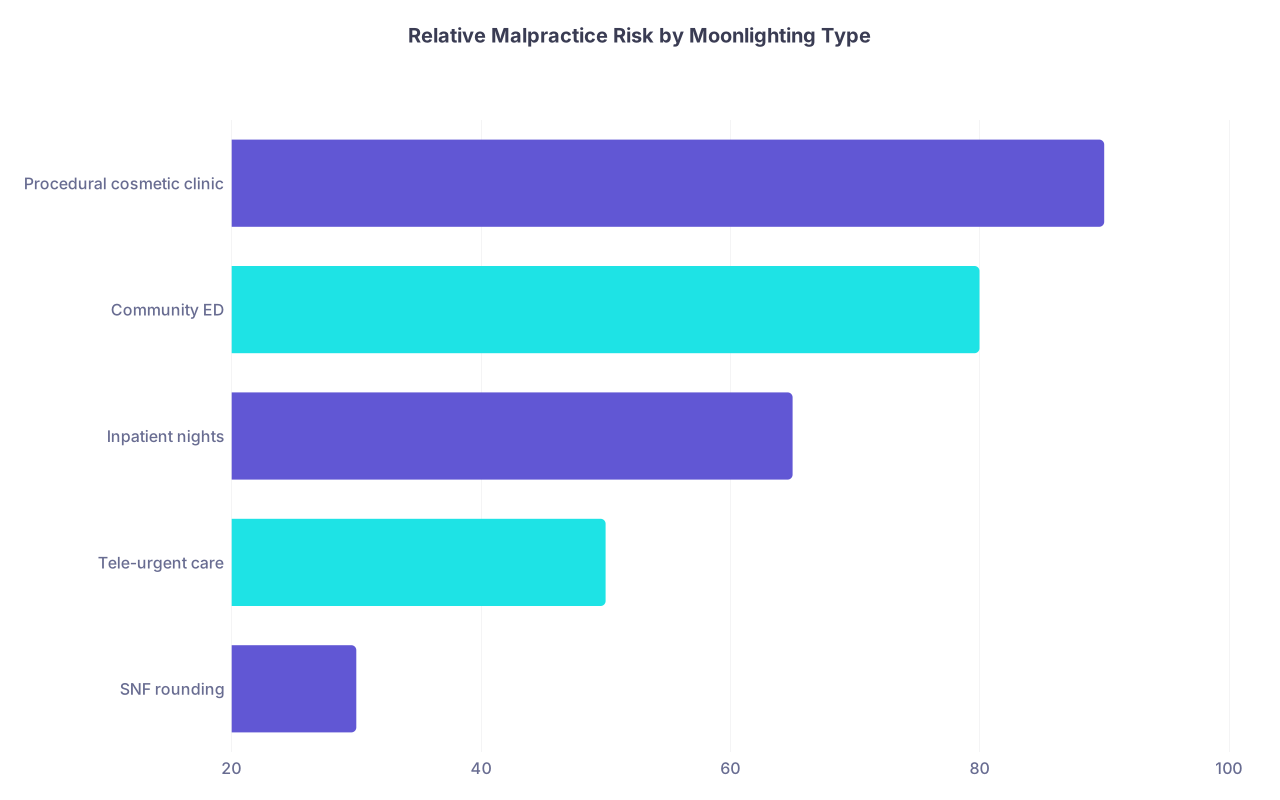
Use this as a rough “do I need to be aggressive about malpractice?” guide:
| Category | Value |
|---|---|
| SNF rounding | 30 |
| Tele-urgent care | 50 |
| Inpatient nights | 65 |
| Community ED | 80 |
| Procedural cosmetic clinic | 90 |
- Lower but not zero: SNF rounding, low-acuity overnight coverage
- Moderate: Tele-urgent care, inpatient nights at a small hospital
- High: ED work, solo hospitalist roles with admissions + cross-cover
- Very high: Cosmetic/procedural clinics, anything cash-based with aggressive marketing
The higher the risk, the more unforgiving a bad policy will be.
- Decide if you need extra personal coverage on top
You especially consider buying your own policy when:
- The site does not provide coverage
- Their coverage is minimal (e.g. $100k/$300k — absurd in many states)
- You’re working:
- As a true independent contractor
- Through your own PLLC/PC
- In telemedicine under your own license in multiple states
For your own policy, you’ll have to choose:
- Occurrence vs claims-made
- Limits (1M/3M is a common minimum target)
- Scope (what procedures, which settings, which states)
At this moment — 1–2 months out — you should be:
- Getting quotes from at least 2–3 carriers or brokers
- Sending them:
- CV
- License info
- Description of moonlighting duties
- Expected annual hours or patients per month
3–4 Weeks Before First Shift: Contract and tail coverage decisions
You’ve got the offer. It mentions malpractice in vague language. Time to get precise.
At this point you should…
- Read the malpractice paragraphs like a lawyer, not a tired resident
The contract should clearly state:
- “Employer shall provide professional liability insurance for Physician with limits of at least $X per claim and $Y in the aggregate.”
- Coverage type stated:
- “occurrence basis” or
- “claims-made basis”
- Tail language:
- If claims-made:
- “Employer shall purchase tail coverage”
or - “Physician shall be responsible for purchasing tail coverage”
- “Employer shall purchase tail coverage”
- If claims-made:
Look for:
- Indemnification clauses:
- If it says you’ll indemnify them for your negligence — that’s bad.
- Any clause where:
- Your residency or home institution is listed as backup coverage
- That’s not how this should work.
- If claims-made, decide on your tail strategy now, not later
Tail coverage matters when:
- You stop moonlighting at that site
- The policy ends
- A claim shows up after you’re gone
Common problems I’ve seen:
- Resident takes a 1-year moonlighting gig with a group that:
- Uses claims-made coverage
- Requires the physician to buy tail
- Tail ends up costing:
- 150–250% of the annual premium
- They leave for fellowship with a $12–20k tail bill hanging over them
At this stage, you should be doing:
- Scenario math:
- “If I quit after 12 months, what exactly is my tail bill?”
- “Can I negotiate them paying part/all of tail after X months of service?”
- If they won’t budge:
- Re-run the math on whether this gig is actually worth it
- Compare the total financial picture — not just hourly rate
Quick example:
Job A:
- $110/hr
- 4 shifts/month, 12 hrs each: 48 hrs =
$5,280/month ($63k/year) - Employer-provided occurrence policy, no tail cost
Job B:
- $130/hr
- Same hours:
$6,240/month ($75k/year) - Claims-made policy, you buy tail
- Estimated annual premium: $8k
- Tail (when you leave): 2x premium = $16k
You’re not actually taking home $12k more with Job B.
Realistically you’re trading cleaner risk for maybe $4–5k difference, if nothing else goes sideways. At some point, it’s not worth it.
1 Week Before First Moonlighting Shift: Final coverage and documentation check
Now we’re in the “don’t screw this up” window.
At this point you should…
- Have physical or digital proof of coverage
You should have:
- Certificate of insurance (COI) showing:
- Your name
- Carrier
- Policy number
- Coverage limits
- Effective dates
- Or, if it’s an individual policy you bought:
- Full declarations page
- Endorsements listing:
- All practice sites
- All states where you’ll work
- Any procedural privileges you use
This is where a lot of residents realize their “we cover you” was hand-waving. Better to discover that before you touch a patient.
- Confirm that your coverage aligns with your actual duties
Ask yourself:
- Am I doing:
- Sedations?
- Intubations?
- Line placements?
- OB deliveries?
- Does the policy explicitly include these?
If your job description says “non-procedural coverage only” but actual practice pressure says “hey can you do this central line since you’re here” — that’s an exposure.
- Double-check state licensing + telemedicine rules if working remotely
For tele gigs:
- Verify:
- You’re licensed in every state where patients will be located.
- Your policy covers telemedicine specifically (not all do).
- Ask the carrier:
- “If I see patients in X, Y, Z states on this teleplatform, am I fully covered?”
If their answer is vague? Push until it’s explicit, or walk.
During Moonlighting: How to not accidentally void your coverage
Coverage doesn’t magically protect you if you ignore the conditions baked into it.
At this point you should…
- Stay ruthlessly within scope
- Do not:
- Perform procedures outside your privileges
- Take call for services you’re not privileged for
- Sign out notes as attending on cases you did not actually see
If you’re pressured:
- Use phrases like:
- “My malpractice coverage is limited to X. Doing Y would fall outside my covered scope.”
- Administrators understand that language more than “I’m uncomfortable.”
- Insist on being credentialed properly
Your malpractice carrier expects:
- You are:
- Fully licensed
- Credentialed and privileged at that site
- Shortcuts like:
- “We’ll put you under Dr. X’s privileges for now”
- “Just log in under this generic account until credentialing finishes”
That’s how coverage arguments start after the fact.
You must:
- Know whether your policy is:
- “Incident reporting” based:
- You report when something concerning happens
- Or “claim reporting” based:
- You report only when an actual claim or suit is filed
- “Incident reporting” based:
Most residents under-report things because they’re afraid. But if your policy expects early reporting and you never mention an obvious bad outcome? That can bite you later.
End of Training or Leaving a Moonlighting Gig: Tail and transitions
This is where people get blindsided with either a massive bill or a coverage gap.
At this point you should…
- Revisit every moonlighting arrangement you had in training
Make a simple grid for yourself:
| Site | Coverage Type | Who Owes Tail? | Confirmed Tail Status |
|---|---|---|---|
| Community ED A | Claims-made | Employer | Confirmed in writing |
| Telemed C | Claims-made | You | Tail purchased |
| Hospitalist B | Occurrence | None | N/A |
Contact each prior site/group and ask:
- “Is my malpractice policy with you still active?”
- “If not, did you secure tail coverage on my behalf?”
- “Can you send written confirmation of current and tail coverage?”
- If you bought your own claims-made policy, buy tail before it lapses
Tail deadlines are brutal:
- Often:
- You have 30–60 days after policy end to exercise tail
- Miss that, and you cannot buy it later
At this point you must:
- Decide:
- Pay the tail
- Or hope you never get sued
That’s not a gamble I recommend. Plaintiffs’ attorneys love delayed, poorly documented resident-era moonlighting.
- Coordinate with your new employer’s malpractice (“nose” coverage)
Some attending jobs offer:
- “Prior-acts” or “nose coverage”
- Their new policy picks up your past exposure from a prior job
- This can sometimes substitute for tail on a prior claims-made policy
You need very specific language to feel safe:
- “Policy provides prior-acts coverage for Physician from [date] to [date] for services rendered at [site] under [entity].”
Not:
- “We’ll take care of you.”
- “You’ll be fine, this is common.”
Quick visual: When coverage decisions hit on the training timeline
| Period | Event |
|---|---|
| Pre-moonlighting - MS4 - PGY1 | Learn coverage types, confirm residency policy limits |
| Pre-moonlighting - Early PGY2 | Confirm moonlighting eligibility, define personal rules |
| Near first gig - 2 months before | Get malpractice details, start quotes if needed |
| Near first gig - 1 month before | Review contract, negotiate tail, compare offers |
| Near first gig - 1 week before | Verify COI, confirm duties match coverage |
| Active moonlighting - Ongoing | Stay in scope, report incidents correctly |
| Exit - End of training | Confirm tail, coordinate prior-acts with new job |
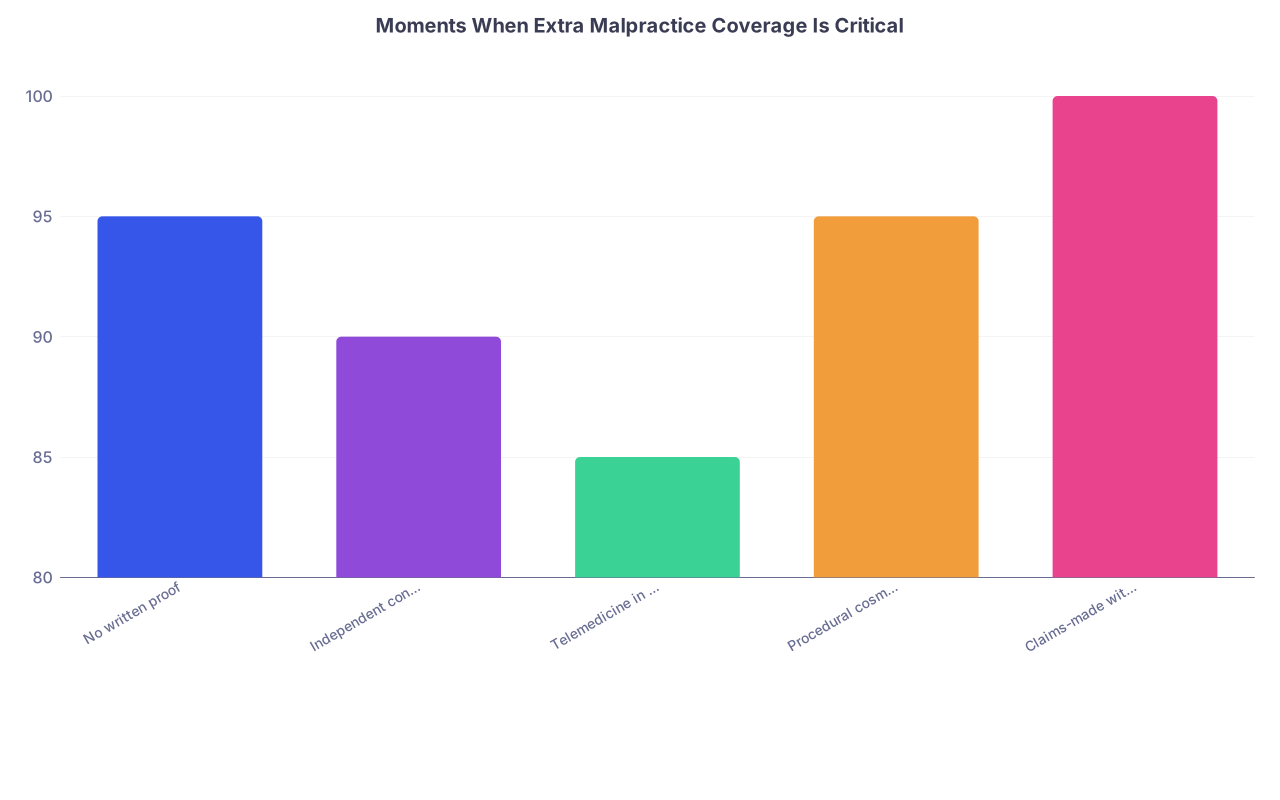
When to absolutely secure extra malpractice coverage (non-negotiable moments)
If you remember nothing else, remember this short list. These are the “do not start working until this is fixed” scenarios.
| Category | Value |
|---|---|
| No written proof | 95 |
| Independent contractor | 90 |
| Telemedicine in multiple states | 85 |
| Procedural cosmetic work | 95 |
| Claims-made with no tail | 100 |
You must secure your own malpractice (or walk away) when:
- The site says “you’re covered” but:
- Won’t give a COI
- Won’t name limits
- Won’t specify coverage type
- You’re billed as an “independent contractor” and:
- There’s no clear policy naming you as an insured
- You’re doing:
- Telemedicine under your own name/platform
- In multiple states with unclear coverage
- You’re doing:
- Cosmetic work
- Procedures with real complication risk (liposuction, implants, etc.)
- Any cash-based “med spa” setup that sounds lawsuit-prone
- You have a claims-made policy from a prior moonlighting job and:
- No one else is providing prior-acts
- No one else is paying for tail
In all of these, delay the shift until coverage is concrete. If the site refuses? They’ve just told you exactly how much they value your long-term risk.
Final recap: What should be on your personal timeline radar?
Three key moves:
Early PGY‑2: Decide your non-negotiables for moonlighting malpractice before you see a single hourly rate. That prevents you from rationalizing bad deals later.
1–2 months before any new moonlighting gig: Get concrete, written answers about coverage type, limits, and tail responsibility. If anything is vague or oral-only, assume you’re not covered.
At exit (end of training or leaving a site): Audit every place you ever moonlighted, confirm who provided tail or prior-acts, and fix gaps while you still can — before a future plaintiff attorney finds them for you.