
The biggest malpractice mistake residents make is not clinical. It is paperwork. They assume “the hospital handles it” and then change programs or moonlight into a coverage gap big enough to drive a lawsuit through.
You are moving from residency to fellowship. That means your risk profile, employer, and sometimes state are all changing. Your malpractice coverage must change with it, on a schedule, not reactively.
I will walk you through exactly when to review, upgrade, or add coverage—month by month before fellowship, then during fellowship, then as you exit again.
12–18 Months Before Fellowship: Set the Foundation (Even Before You Match)
At this point you should stop thinking of malpractice as a background HR item and start treating it as part of your professional “infrastructure.”
Step 1: Learn what you have right now (as a resident)
During PGY-2 or early PGY-3 (for 3-year programs):
By now you should:
- Pull your residency contract and benefits summary.
- Email GME or risk management and ask, in writing:
- Is my coverage claims-made or occurrence?
- Who is the named insured (me or the institution)?
- What are the policy limits (per claim / aggregate)?
- Does the policy cover moonlighting? If yes, what kind?
You want concrete answers like:
- “Claims-made, 1M/3M, institutional policy, covers in-house moonlighting only”
- Or “Occurrence policy, 1M/3M, institution is named, no external moonlighting coverage”
If they dodge the claims-made vs occurrence question, push back. That distinction dictates your tail coverage problem later.
| Policy Type | What It Means | Tail Needed? |
|---|---|---|
| Occurrence | Covers events that occur in policy year | No |
| Claims-made | Covers claims *filed* while active | Yes (if you leave) |
At this point you should not buy anything. You are only gathering intel.
9–12 Months Before Fellowship Start: As You Apply & Interview
Now you are on the fellowship interview trail. This is when coverage questions belong in your notebook, not as an afterthought.
Step 2: Ask every fellowship program about malpractice during interviews
On interviews (or shortly after, by email) you should ask:
- “What type of malpractice coverage do fellows receive—claims-made or occurrence?”
- “What are the limits? $1M/$3M? $2M/$4M?”
- “Is there coverage for:
- independent procedures?
- research-related patient care?
- off-site clinics or outreach work?”
- “Do you cover tail when fellows graduate, or are they responsible?”
You are not being difficult. You are being an adult professional. I have seen fellows blindsided by a $20,000 tail bill no one mentioned during recruitment.
Log the answers in a simple table for each program.
4–6 Months Before Fellowship Start: After You Match
You matched. Now the real malpractice planning begins.
At this point you should have:
- Your fellowship contract (or draft)
- A tentative start date
- Some idea of whether you will moonlight as a fellow
Step 3: Do a dual-coverage review (residency + future fellowship)
During this window (about February–April for a July start):
Re-confirm residency coverage end date.
- Is it the last day you are on payroll?
- Does it extend through any remaining vacation?
Clarify fellowship coverage start date.
- Is it your first “official” day (orientation) or first clinical day?
- Is there any gap between residency end and fellowship start?
Check jurisdiction changes.
- Are you moving states? Different tort environment, different limits.
- Ask the fellowship: “What are the standard limits in this state for trainees?”
Ask explicitly about tail coverage for residency.
- If residency coverage is claims-made, who buys the tail:
- Institution
- You
- Shared arrangement
- If residency coverage is claims-made, who buys the tail:
You want the answer in writing. Email GME and say something like:
“Can you confirm whether the institution provides tail coverage for the residency malpractice policy after graduation? If so, is there any time limit or condition?”
If they say it is “automatic,” ask them to confirm that in a brief email. Screenshots of benefit booklets will not impress a future plaintiff attorney. Written confirmation will.
1–3 Months Before Fellowship: This Is the Critical Review Window
This is when you decide whether to review only, upgrade, or add coverage on top of what fellowship provides.
At this point you should clear one afternoon, open a spreadsheet, and go through this checklist.
Step 4: Residency tail decision (if needed)
If your residency policy is occurrence, you are done. You do not need tail coverage for residency years.
If your residency policy is claims-made, then:
If the residency program buys tail for you:
- Confirm:
- Does it cover all prior years?
- Is there any time limit (e.g., 5-year extended reporting)?
- File the documentation in a permanent folder (cloud + physical).
- Confirm:
If you must buy your own tail:
- Ask the carrier (or GME) for a tail quote 3–6 months before your end date.
- Typical range I have seen:
- 150–250% of your last annual premium (for attendings).
- Cheaper for residents, often group-negotiated, but still several thousand dollars.
If fellowship is at the same institution:
- Ask if they will do “nose” coverage (prior acts) or convert your existing coverage forward so you avoid a tail at this transition.
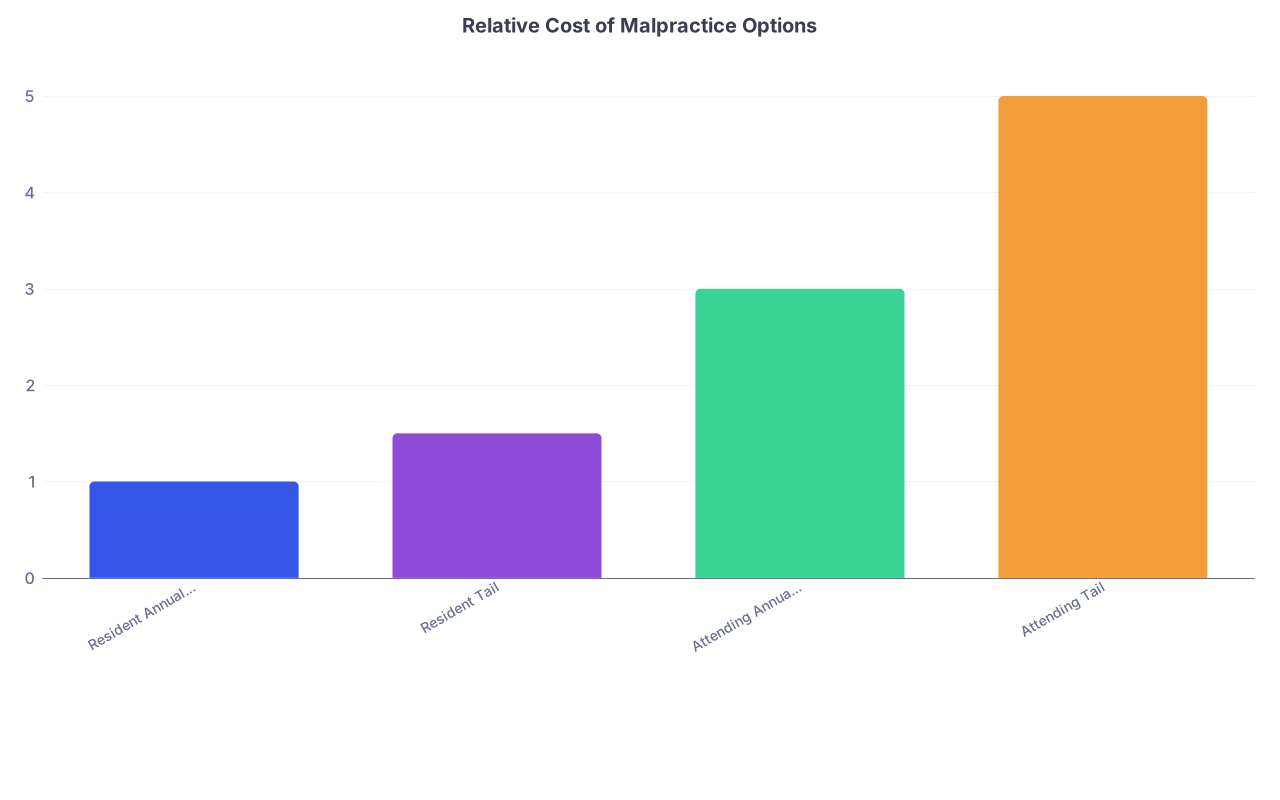
| Category | Value |
|---|---|
| Resident Annual Premium | 1 |
| Resident Tail | 1.5 |
| Attending Annual Premium | 3 |
| Attending Tail | 5 |
You do not want to be figuring this out in June while studying for boards and moving apartments.
Step 5: Analyze fellowship malpractice coverage for gaps
Pull the fellowship policy details (or benefits summary) and look for:
- Type: claims-made or occurrence
- Limits: Commonly:
- $1M per claim / $3M aggregate
- $2M / $4M in more litigious states
- Scope:
- Activities covered:
- Inpatient, outpatient, procedures within the training program
- Official rotations at affiliate hospitals
- Activities not covered:
- External moonlighting
- Locums work
- Telemedicine outside the sponsoring institution
- Side consulting
- Activities covered:
At this point you should draw a simple box in your notes:
- Inside the box: all work that clearly falls within “fellowship duties”
- Outside the box: anything you plan to do that is independent of the fellowship
Anything outside the box needs separate coverage or an explicit rider.
0–1 Month Before Fellowship Start: Decision Time
Now you decide whether to:
- Review only (no further action)
- Upgrade coverage (higher limits / broader scope)
- Add coverage (separate policy for moonlighting or side gigs)
When to review only
You can reasonably stop at review when all of the following are true:
- Residency policy is occurrence (or tail fully provided in writing).
- Fellowship coverage is:
- Occurrence or claims-made with tail covered by the institution.
- Limits at or above usual local standard ($1M/$3M or better).
- Covers all your planned clinical activity (no external work).
- You are not moonlighting, doing locums, or independent telemedicine.
In that case, your job is simple:
- Save:
- Copies of residency and fellowship coverage certificates.
- Written confirmations about tail and limits.
- Create a “Malpractice History” document listing:
- Dates of coverage
- Carriers
- Policy types
- Limits
This will be extremely useful later for privileges, job applications, and credentialing.
When to upgrade coverage
You should push to upgrade when:
Limits are clearly below norm for your specialty and region.
Example: You are going into interventional cardiology fellowship and the institution provides $1M/$3M in a state where most hospitals carry $2M/$5M or higher for invasive specialties.You perform higher-risk procedures than the average fellow.
- Heavy procedural subspecialties:
- Interventional cardiology
- GI with advanced endoscopy
- IR
- Surgical oncology
- Running independent clinics, high volume, minimal supervision.
- Heavy procedural subspecialties:
You have personal assets worth protecting.
Yes, you are “just” a fellow, but if you have:- Married with a dual-income spouse
- Real estate equity
- Significant savings or investments
You do not want to rely on the bare minimum coverage.
At this point you should:
- Talk to risk management and ask:
- “Are higher limits available for fellows?”
- “Can I pay the additional premium personally?”
- If the institution will not adjust limits:
- Talk to a malpractice broker about a personal excess policy.
It is not common, but in some states you can buy a secondary layer that sits above the institutional coverage.
- Talk to a malpractice broker about a personal excess policy.
Is this overkill for many fellows? Yes. But if you are doing high-risk procedures in a litigious state, underinsured is reckless.
When to add separate coverage
You should add a separate malpractice policy if:
- You plan to:
- Moonlight outside the fellowship institution
- Do locums on off weeks
- Provide telemedicine across state lines
- Engage in paid consulting that involves patient care decisions
Do not accept verbal reassurance like “our coverage extends if you are using our EMR.” That is not how policies work.
For external moonlighting, the timeline usually looks like this:
2–3 months before starting moonlighting:
- Confirm whether the moonlighting site provides coverage.
- Ask for:
- Policy type
- Limits
- Whether you are named individually or only under a facility umbrella.
If coverage is not provided, or is limited:
- Contact a malpractice broker and ask for:
- A part-time or moonlighting policy.
- Coverage limits at least equal to or higher than your fellowship coverage.
- Contact a malpractice broker and ask for:
Coordinate dates:
- Moonlighting coverage must:
- Start before your first independent shift.
- Preferably be occurrence if short-term, to avoid another tail hassle.
- Moonlighting coverage must:
Fellowship Year 1: Ongoing Review and Adjustments
You are in the fellowship now. You signed. You started. The malpractice conversation is not over.
At this point you should:
Month 1–2 of Fellowship: Confirm everything you were promised
- Get proof of coverage:
- Certificate of Insurance (COI)
- Policy summary from risk management
- Check:
- Start date
- Named insured (you vs institution)
- Limits
- Policy type
If anything does not match what you were told during recruitment, raise it immediately. Not in month 10.
Month 3–6: As your role evolves
Your risk profile might change mid-fellowship:
- You start:
- Leading procedures independently
- Staffing your own continuity clinic
- Covering higher-acuity services at night
At this point you should ask:
- “Does my malpractice coverage specifically recognize my fellowship role and scope?”
- “Are there any activities I am doing now that were not contemplated when the policy was set?”
If you expand into consulting, side telemedicine, or new moonlighting, re-run the “add coverage” analysis above.
6–9 Months Before Fellowship End: Planning Your Next Transition
You are repeating the same cycle—now from fellowship to attending (or another fellowship).
Do not wait until Match or job offer to think about malpractice again.
At this point you should:
Clarify fellowship tail obligations.
- Is the fellowship coverage claims-made?
- Does the institution provide tail for fellows when they leave?
- Request written confirmation, as you did for residency.
Understand job or next fellowship coverage.
- Most attending positions:
- Either provide malpractice as part of employment (hospital / academic)
- Or require you to purchase your own (private practice / locums)
- Most attending positions:
Plan for gaps between fellowship and job start.
- If you have:
- A 2–3 month gap
- Independent locums work during that gap
- You may need a short-term occurrence policy just for that period.
- If you have:
Fellowship Exit: The Second Tail Decision
Right before completing fellowship, you will face the same fork:
If the fellowship coverage is occurrence:
- No tail needed. Archive the documents.
If it is claims-made:
- Confirm who pays for tail.
- Get a written statement from risk management:
- “The institution provides extended reporting (tail) coverage for fellows upon completion of training at no cost to the fellow.”
If they do not provide tail:
- Ask for a quote at least 3–4 months before end date.
- If your new employer is in the same state and with the same carrier:
- Ask if they can assume your prior acts instead of buying a tail.
- Sometimes cheaper and administratively easier.
Visual Timeline: Residency to Fellowship Malpractice Tasks
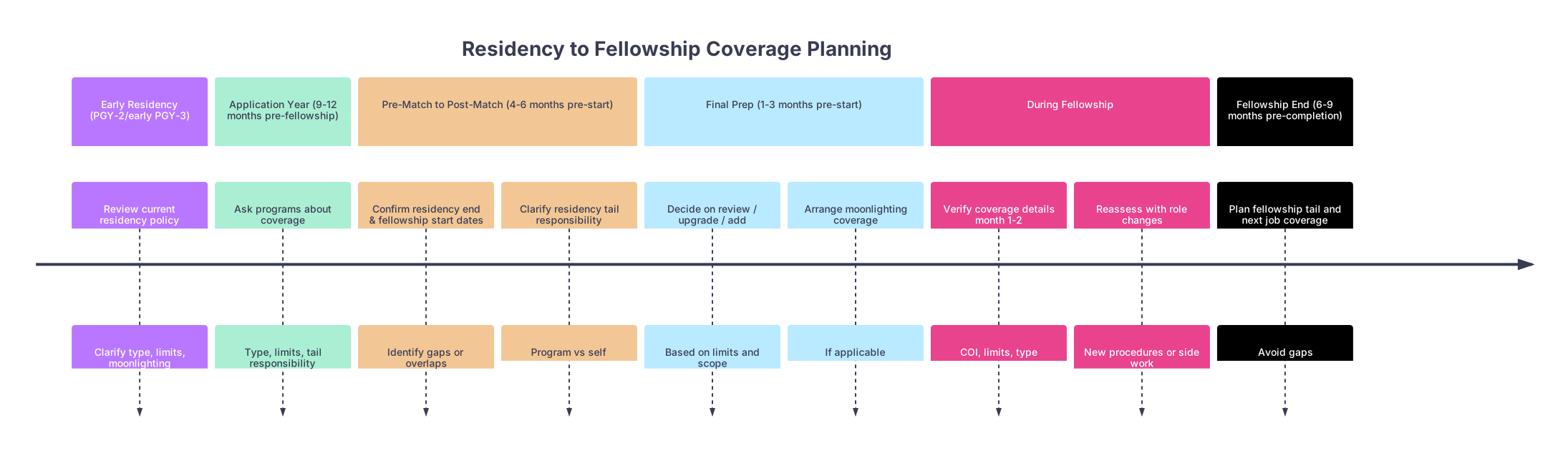
| Period | Event |
|---|---|
| Early Residency (PGY-2/early PGY-3) - Review current residency policy | Clarify type, limits, moonlighting |
| Application Year (9-12 months pre-fellowship) - Ask programs about coverage | Type, limits, tail responsibility |
| Pre-Match to Post-Match (4-6 months pre-start) - Confirm residency end & fellowship start dates | Identify gaps or overlaps |
| Pre-Match to Post-Match (4-6 months pre-start) - Clarify residency tail responsibility | Program vs self |
| Final Prep (1-3 months pre-start) - Decide on review / upgrade / add | Based on limits and scope |
| Final Prep (1-3 months pre-start) - Arrange moonlighting coverage | If applicable |
| During Fellowship - Verify coverage details month 1-2 | COI, limits, type |
| During Fellowship - Reassess with role changes | New procedures or side work |
| Fellowship End (6-9 months pre-completion) - Plan fellowship tail and next job coverage | Avoid gaps |
Quick Reference: When to Review vs Upgrade vs Add
| Situation | Action | Timing |
|---|---|---|
| Staying fully within fellowship duties | Review | 1–3 months before start |
| Low limits for high-risk fellowship | Upgrade | 1–3 months before start |
| External moonlighting or locums | Add | 2–3 months before first shift |
| Moving states with different standard limits | Review/Upgrade | 3–6 months before move |
| Claims-made with unclear tail responsibility | Review/Maybe Add Tail | 3–6 months before end |
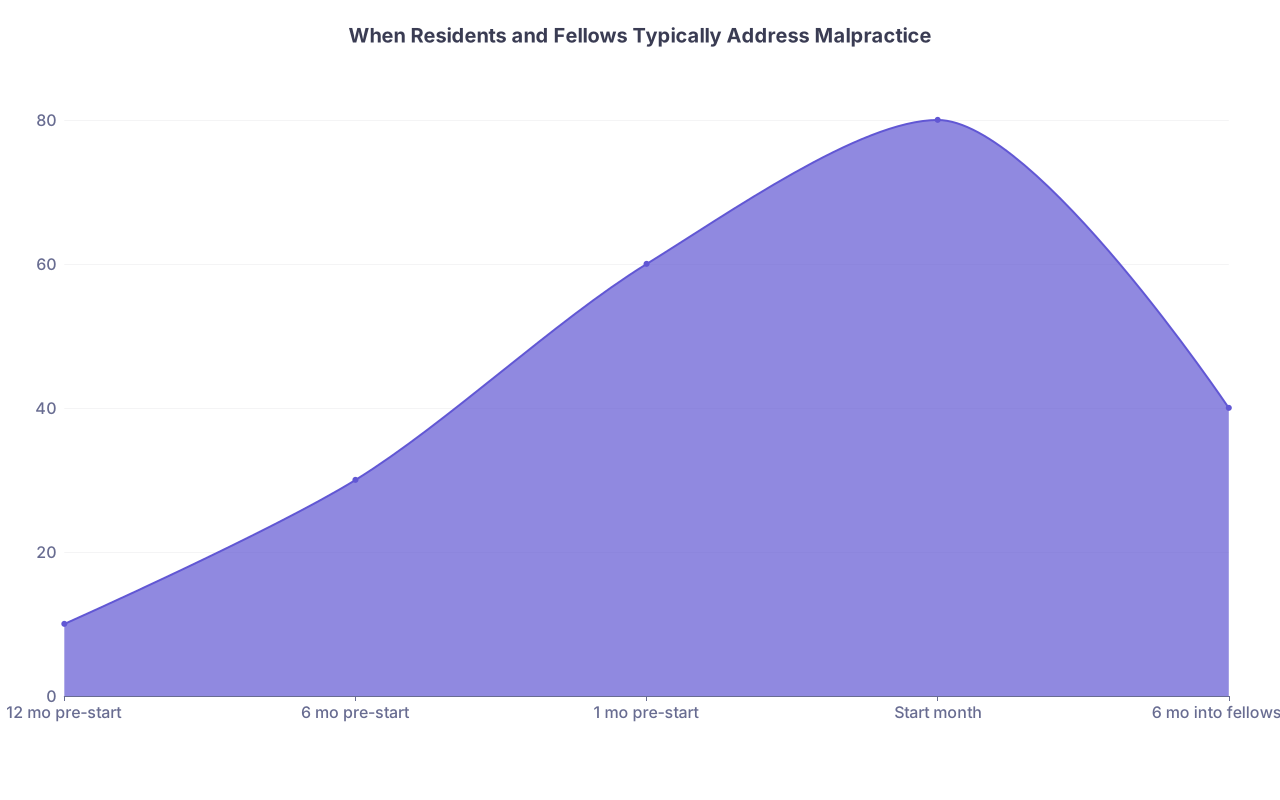
| Category | Value |
|---|---|
| 12 mo pre-start | 10 |
| 6 mo pre-start | 30 |
| 1 mo pre-start | 60 |
| Start month | 80 |
| 6 mo into fellowship | 40 |
Final Thoughts: The Three Things You Actually Need To Do
Keep it simple. From residency to fellowship, your malpractice plan comes down to three non-negotiables:
- Know your policy type and who buys tail. For both residency and fellowship. In writing. Claims-made without a clear tail plan is a liability time bomb.
- Match coverage to your real work. If you are doing more, riskier, or external clinical activity than the “standard fellow,” your coverage needs to reflect that reality.
- Work ahead by 3–6 months at every transition. Do not try to solve coverage, tail, moonlighting, and a cross-country move in the same frantic June.
Follow that timeline, and your malpractice story stays boring. Which is exactly what you want.