
It is sixty days before your malpractice policy renews. A reminder email just landed in your inbox with a cheerful subject line: “Your renewal is coming up!” You have three open charts, two pending prior auths, and the last thing you want to think about is retroactive dates and tail coverage. But this is exactly the point in the year when small mistakes with your malpractice insurance can cost you six figures later.
This guide walks you through the renewal cycle in the order you should actually do things—month-by-month, then week-by-week as you get closer, and finally day-of-renewal checks. I am assuming you already have coverage and are practicing; this is about what to review and update every single year so your protection keeps up with your career.
90–60 Days Before Renewal: Big-Picture Review
At this point you should stop thinking “auto-renew” and start thinking “annual risk audit.”
The goal in this window: decide if your current policy type, limits, and carrier still make sense.
Step 1: Confirm the basics of your current policy
Pull your current declarations page (dec page) and find:
- Policy type:
- Claims-made
- Occurrence
- Retroactive date (for claims-made): the date from which incidents are covered
- Limits: usually formatted as per-claim / aggregate (e.g., $1M / $3M)
- Named insured: you individually, your practice entity, or both
- Endorsements: e.g., moonlighting, telemedicine, cosmetic procedures
- Exclusions: specific procedures, locations, or patient types
If you cannot locate all of this on one or two pages, your carrier is making this harder than it should be.
| Scenario | Common Structure |
|---|---|
| Employed hospitalist | Claims-made, $1M/$3M |
| Office-based outpatient solo | Claims-made, $1M/$3M |
| High-risk surgery | Claims-made, $2M/$4M+ |
| Part-time telemedicine only | Claims-made, lower limits |
| Academic with moonlighting | Employer + separate moon |
Step 2: Re-check policy type vs your career plans
This is the place where many physicians sleepwalk.
- Claims-made:
- Cheaper early.
- Requires tail if you leave the carrier or stop practicing.
- Renewal usually includes “step factors” that raise your premium for the first 4–5 years.
- Occurrence:
- More expensive each year.
- No tail needed; each policy year stands alone.
- Harder to get in some high-risk specialties or states.
If you are:
- Planning to retire in the next 2–5 years
- Considering changing groups or going independent
- Moving states or adding telemedicine licenses
…you need to think about tail now, not three days before your last clinic session.
Step 3: Decide if you might change carriers this cycle
You do not shop this every year, but you should at least ask whether you should.
Good reasons to explore quotes 60–90 days out:
- Premium went up more than 5–10% without any claims or scope changes
- You added procedures or telemedicine and they are charging ridiculous surcharges
- You are moving states and your current carrier has weak coverage in the new location
- Your group is changing carriers and you need to compare the independent route
At this point, if you are even mildly unhappy, request quotes from:
- Your state medical society’s endorsed carrier
- 1–2 large national malpractice carriers
- A reputable broker who works with multiple companies (not just a single carrier rep)
Give them your current dec page, CV, and practice profile. Tell them your renewal date and that you want quotes at least 30 days before.
60–30 Days Before Renewal: Update Your Practice Profile
You cannot renew correctly with last year’s practice description if your life has changed. And it probably has.
At this point you should be cleaning up what underwriters think you do all day.
Step 4: Update your exposure details
Carriers price based on risk. If your risk moved and the policy did not, someone will be unhappy later. Often you.
Update:
- Clinical hours per week
- Patient mix: peds vs adults; OB vs GYN-only; inpatient vs outpatient
- Procedures and scope:
- New: e.g., office-based procedures, joint injections, cosmetic injections, minor surgeries
- Stopped: e.g., you no longer do OB deliveries, no longer first-assist in the OR
- Locations:
- New clinic sites
- Telemedicine in new states
- On-call responsibilities: frequency and level of responsibility
If you cut back from full-time to 0.5 FTE twelve months ago and no one told the carrier, you may be overpaying significantly. I have watched people eat $5–10k per year for three years simply because no one bothered to submit an updated hours statement.
Step 5: Check entity and additional insureds
Look at who is actually covered:
- You as an individual (your name specifically listed)
- Professional corporation / LLC / PLLC
- Group practice entity
- Hospital or ASC where you work as an independent contractor
Life changes that should trigger updates:
- You formed your own LLC or S-corp this year
- You joined a new group or left an old one
- Your hospital contract now requires them to be named as “additional insured”
- You started moonlighting or locums
The mistake I see constantly: physician assumes their new LLC is automatically covered under their personal policy. Then the suit names both physician and LLC. Only one is actually insured. Bad day.
30–14 Days Before Renewal: Deep Dive Into Coverage Terms
At this point you should already have:
- All changes to your practice profile identified
- Any competitive quotes either in hand or expected soon
Now you get into the details most people skip.
Step 6: Re-assess limits and defense provisions
Look for:
- Limits:
- Most common: $1M per claim / $3M aggregate
- High-risk fields or plaintiff-friendly states often justify $2M / $4M
- If your hospital or group contract mandates specific limits, confirm they still match
- Defense costs:
- “Outside the limits” is better. Your legal fees do not erode the indemnity limit.
- “Inside the limits” means a long, expensive defense can burn most of your coverage.
- Consent to settle:
- “True consent to settle” is ideal. They cannot settle without your written consent.
- “Hammer clause” = if you refuse a recommended settlement, you may be responsible for amounts above what they could have settled for.
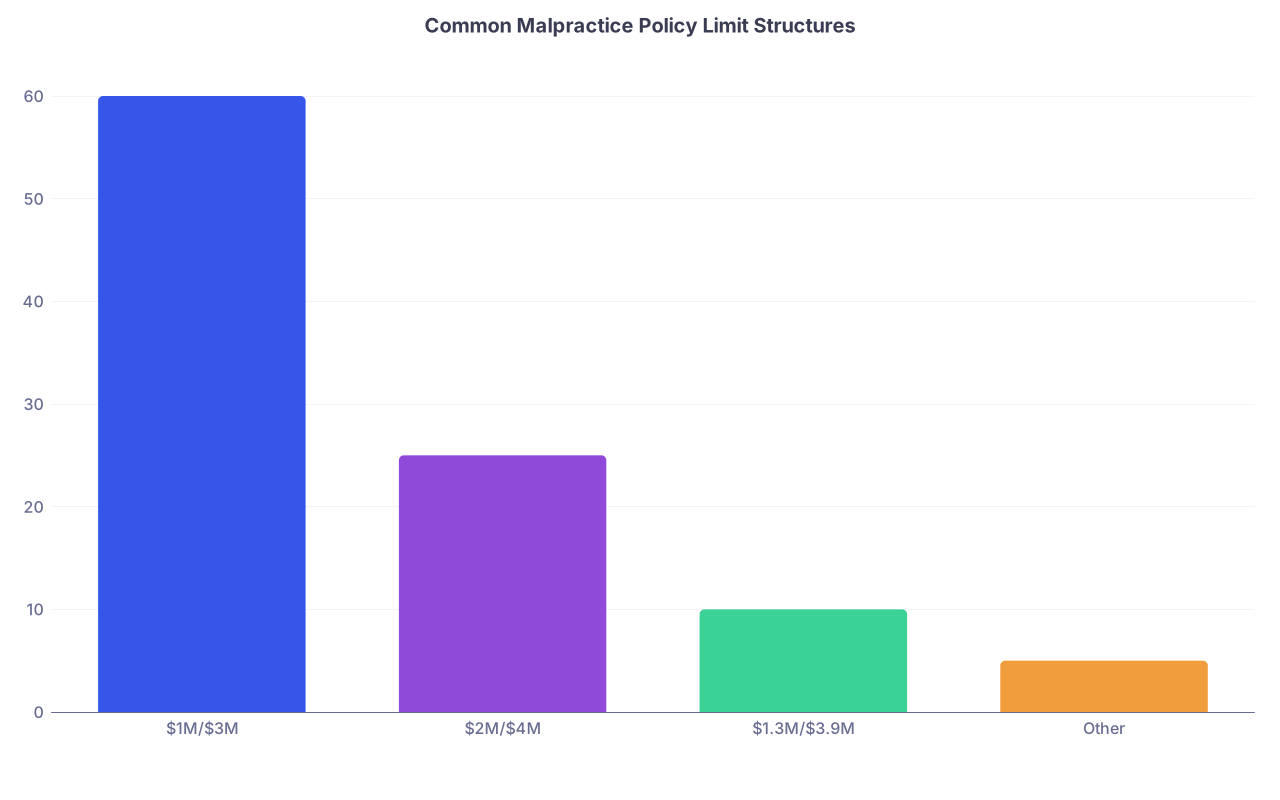
| Category | Value |
|---|---|
| $1M/$3M | 60 |
| $2M/$4M | 25 |
| $1.3M/$3.9M | 10 |
| Other | 5 |
If your policy has defense costs inside the limits and a weak consent-to-settle clause, that is a strong reason to reconsider the carrier at renewal, especially in surgical or OB specialties.
Step 7: Claims-made specifics: retro dates, tail, and prior acts
If you are on a claims-made policy, this section is not optional.
Check:
- Retroactive date: this should never move forward. Ever. If it does, years of your past work are suddenly uninsured.
- Step factor: typically years 1–5 your premium rises each year as exposure “matures.” After that, it should stabilize.
- Tail coverage terms:
- Cost if you leave (often 150–250% of your mature premium)
- Any free tail provisions:
- Death
- Permanent disability
- Retirement after X years with the carrier and above a certain age
If you are contemplating:
- Retirement within the next renewal cycle or two
- Changing states or practice type
- Leaving an employed position where the hospital “covers your malpractice”
You need to understand to the dollar what tail costs would look like and who is contractually responsible for paying it (you vs employer vs shared).
14–7 Days Before Renewal: Final Alignment With Real Life
Now you move from theory to your actual risk footprint.
At this point you should reconcile: your practice, your contracts, and your policy.
Step 8: Compare policy to your employment/contract obligations
Pull:
- Employment contracts
- Hospital/ASC medical staff bylaws requirements
- Locums or telemedicine contracts
Look for:
- Required limits (often spelled out)
- Requirement to name them as additional insured
- Requirement to carry tail for X years after termination
- Requirement to use a specific carrier or rating (AM Best rating, etc.)
Then confirm:
- Your limits meet or exceed contracts
- All required entities are listed as additional insureds or covered entities
- You understand who pays for tail in each relationship
The number of physicians who have never read the malpractice paragraph in their contract is… not small.
Step 9: Address any changes in risk profile or red flags
Ask yourself honestly:
- Any near-misses or adverse events this year?
- Any board complaints, peer review issues, or privileging actions?
- Any scope expansions (for example, sedation, office-based surgery, higher acuity)?
No, you do not voluntarily confess every bad outcome to your insurer. But if you significantly changed your risk profile (new procedures, higher-risk patients, more call), you must make sure the policy actually covers that. Sometimes it needs an endorsement. Sometimes the carrier refuses, and that is your signal to shop around.
7–1 Day Before Renewal: Concrete Checklist
This is where you stop planning and actually lock things down. Treat it like closing a chart: no loose ends.
At this point you should have your final quote(s) and decision made.
Day-minus-7 to Day-minus-3: The “No Surprises” Call
Pick up the phone. Speak to a human at your carrier or broker.
Confirm, out loud:
- Policy type and retroactive date (for claims-made)
- Limits of liability (per-claim and aggregate)
- Named insureds and additional insureds
- All locations and states of practice
- Whether telemedicine is covered and in which states
- Any endorsements for special procedures or part-time status
- Total premium and payment schedule
- Whether any underwriting changes are pending (for example, a claim under review that will change pricing)
If something is different from what you believe, fix it now. Not after the renewal is already processed.
Day-minus-3 to Day-minus-1: Documentation
Make sure you have:
- Updated dec page (with the new effective dates)
- Certificate(s) of insurance for employers, hospitals, ASCs
- Written confirmation of tail terms if planning future changes
Save PDFs in multiple places: personal encrypted storage, practice management system, and whatever HR portal your employer uses.
Renewal Day: Final Sanity Check
On the actual renewal date, your goal is dead simple: avoid gaps.
You want:
- Old policy end: 12:01 a.m.
- New policy start: 12:01 a.m. same day
- No gap. Not even one day.
If changing carriers:
- Confirm prior acts coverage: your new carrier must cover your prior dates back to your original retro date, or you must buy tail from the old carrier.
- Make sure both the old and new dec pages reflect consistent dates.
- Do not cancel the old policy until the new one is fully bound and you have documentation.
If staying with same carrier:
- Confirm auto-renewal processed and payment cleared (or payroll deduction set).
- Update any credentialing portals that require new expiration dates.
Post-Renewal (First 2 Weeks): Clean-Up and Future-Proofing
Most physicians skip this step. That is a mistake.
At this point you should ensure every party who cares about your coverage has the updated information.
Step 10: Push updated proof of coverage where needed
Within two weeks of renewal:
- Upload new COI (certificate of insurance) to:
- Hospital staff office portal
- ASC credentialing
- Group practice HR system
- Locums agencies or telemedicine platforms
- Verify that no one is holding your schedule or OR time hostage due to “expired” paperwork
Step 11: Set up better reminders for next year
Right after renewal, while details are fresh:
- Create calendar events at:
- 90 days before next renewal (for big-picture review)
- 45 days before (for practice updates)
- 10 days before (for final check)
- Keep a short “practice changes log” for the year:
- New procedures added
- Hours significantly changed
- New locations or states
- Employment or entity changes
Next year, that log will save you an hour of digging through emails and memories.
Quick Yearly Renewal Timeline (At-a-Glance)
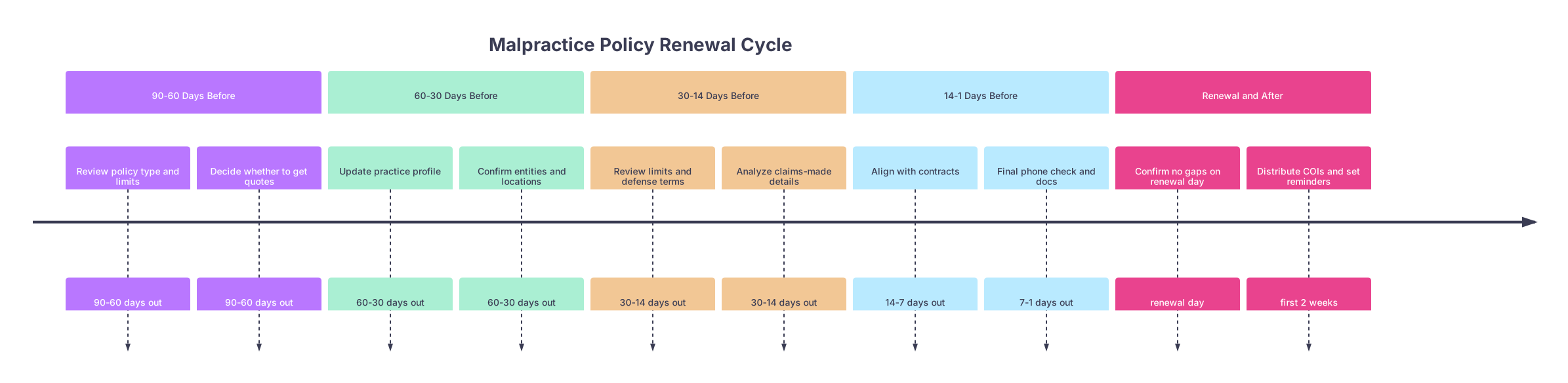
| Period | Event |
|---|---|
| 90-60 Days Before - Review policy type and limits | 90-60 days out |
| 90-60 Days Before - Decide whether to get quotes | 90-60 days out |
| 60-30 Days Before - Update practice profile | 60-30 days out |
| 60-30 Days Before - Confirm entities and locations | 60-30 days out |
| 30-14 Days Before - Review limits and defense terms | 30-14 days out |
| 30-14 Days Before - Analyze claims-made details | 30-14 days out |
| 14-1 Days Before - Align with contracts | 14-7 days out |
| 14-1 Days Before - Final phone check and docs | 7-1 days out |
| Renewal and After - Confirm no gaps on renewal day | renewal day |
| Renewal and After - Distribute COIs and set reminders | first 2 weeks |
Common Pitfalls To Avoid Each Cycle
You want to avoid the mistakes that show up in actual lawsuits and credentialing fights, not hypothetical ones.
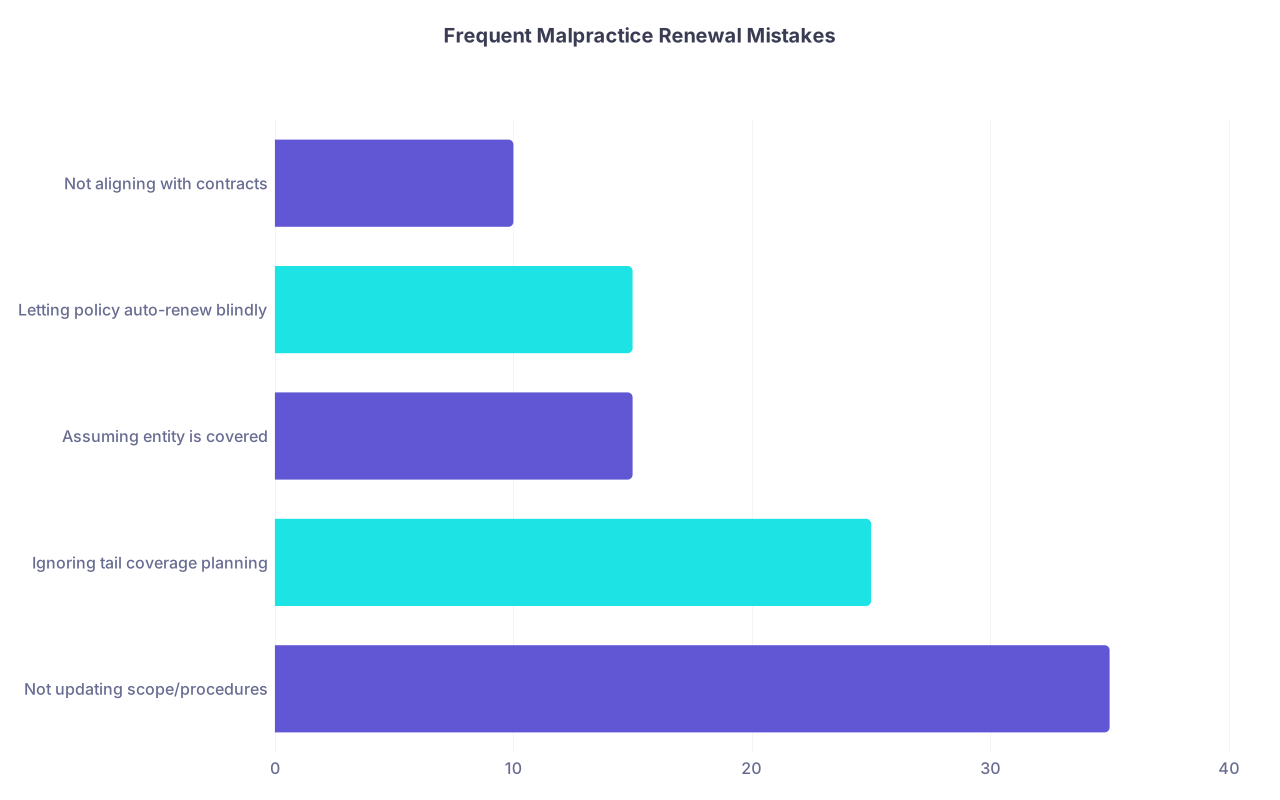
| Category | Value |
|---|---|
| Not updating scope/procedures | 35 |
| Ignoring tail coverage planning | 25 |
| Assuming entity is covered | 15 |
| Letting policy auto-renew blindly | 15 |
| Not aligning with contracts | 10 |
The “greatest hits” I have seen:
- Dropping OB or high-risk procedures and failing to notify carrier → overpaying for years
- Changing jobs where old employer paid for coverage, then discovering you personally owe tens of thousands for tail
- Forming a new LLC or practice entity, never adding it to the policy, then getting that entity sued
- Expanding to telemedicine in a new state with no coverage there
- Letting the policy auto-renew five years in a row without once checking limits or defense terms
Do a tight annual review and these become someone else’s horror story, not yours.