
The biggest mistake doctors make when returning to clinical work is assuming their old malpractice policy will quietly “wake up” with them. It will not.
If you’ve been out of practice—parental leave, burnout break, admin role, non-clinical job, disability, overseas work—you’re sitting on a legal and financial landmine if you start seeing patients before you’ve correctly reactivated (or replaced) your malpractice coverage. Hospitals, plaintiffs’ attorneys, and state boards will not care that you were “just easing back in.”
Here’s how to handle this like an adult who’s seen some things.
Step 1: Get Clear On Your Exact Situation Before You Call Anyone
Do not start with an insurance broker. Start with a notebook and brutal honesty.
You need four facts in writing:
Last day you clinically treated patients in a way that required malpractice coverage.
Not your last “employed” day. The last patient encounter. That urgent care shift you picked up two months later counts.Policy type you had when you stopped: occurrence vs claims-made.
If you don’t know, dig up:- Old policy declarations page
- HR email with your coverage details
- Credentialing packet showing policy type and limits
How that policy ended: cancelled, non-renewed, tail purchased, or converted.
Ask: did someone buy tail for you (employer, group)? Did the insurer offer free tail (retirement, disability, death, “incident-free” benefits)?Your planned return:
- Date you want to start seeing patients
- Clinical setting (hospital employed, locums, telehealth, private practice, PRN)
- Volume and procedures (low-risk clinic vs high-risk procedures)
If you can’t answer these, you’re not ready to make any decisions. You’ll get steamrolled into whatever is easiest for the broker, not what actually protects you.
Step 2: Understand What You’re Reactivating (or Not)
You’re dealing with three separate issues:
- Coverage for past work
- Coverage for future work
- The gap in between
Quick refresher (without the fluff)
Occurrence policy
Covers incidents that occurred during the policy period, no matter when the claim is filed. If you had true occurrence coverage, you don’t need tail for that period.Claims-made policy
Covers claims that are made and reported while the policy is active (and after the retroactive date). When the policy ends, the risk of a future lawsuit remains. That’s what tail is for.Tail coverage (Extended Reporting Endorsement)
Attaches to a ended claims-made policy. Lets you report claims in the future for events that happened during that past policy’s covered period.Nose/prior acts coverage
New insurer takes on coverage for your prior work by adopting your original retroactive date. This is part of the new policy, not a separate “tail.”
If those terms are still fuzzy, pause here and re-read. The rest of your decisions depend on knowing exactly which of these you’re dealing with.
Step 3: Map Your Real-World Scenario
Here’s what most people are actually dealing with.
| Scenario | Past Work Coverage Need | New Work Coverage Need |
|---|---|---|
| Employed, claims-made with no tail | Tail or nose required | New claims-made or occurrence |
| Employed, claims-made with tail | No further action for past period | New policy starting fresh |
| Employed, occurrence policy | No tail needed | New occurrence or claims-made |
| Long break 3+ years, no coverage in between | Verify tail/prior acts | New policy, clean application |
| Switching states/specialties | Prior acts decision is key | High scrutiny on underwriting |
Now let’s get specific.
Step 4: If You Previously Had Claims-Made Coverage
This is where most people get burned.
A. Figure out whether you already have tail
You need written proof, not a vague memory of your old CMO saying “You’re covered.”
Email or call:
- Former employer HR
- Risk management department
- The malpractice carrier directly
Ask, in plain language:
- “Was my policy a claims-made policy or occurrence?”
- “When did coverage start and end?”
- “Was tail coverage purchased when I left?”
- “If yes, what period does the tail cover and for how long?”
Get the policy number and tail endorsement if it exists.
If tail was bought and confirmed in writing, good. That past period is handled. Now you just need coverage going forward.
If tail was not bought and you had a claims-made policy, then as of now, anything you did during that period is exposed. No safety net.
B. Decide: buy tail vs get prior acts (“nose”) with new coverage
You have two main options:
Buy tail from your old carrier
Pros:- Familiar with your history
- Clean separation between past and future periods
Cons:
- Huge one-time cost (often 150–250% of your last annual premium)
- Must usually be bought right when you leave or within a tight window
Get prior acts with your new policy
Pros:- Often more affordable than standalone tail
- One carrier for past and future after switch
Cons:
- New carrier must agree to adopt your retro date
- They may exclude higher-risk services or charge a painful premium
- Not always available if you’ve had a big gap or claims
If your break has already happened and you didn’t get tail when you left, your leverage is weaker. Some carriers will still sell you late tail; others will offer a more expensive prior acts endorsement. Either way, do not ignore this.
Step 5: If You Previously Had Occurrence Coverage
You’re in better shape.
If your prior coverage was truly occurrence:
- You do not need tail for that period.
- That past clinical work is protected as long as the claim arises from care during the covered dates.
You still need a new policy going forward; your old occurrence policy doesn’t “restart.” It only covers what happened while it was in force.
Your return-to-work task list:
- Confirm in writing that the prior policy was occurrence.
- Keep the declarations page and policy indefinitely.
- Shop for new coverage like a clean slate—no prior acts needed.
Occasionally, people think they had occurrence when they actually had claims-made with a flat-rated premium. Do not trust your memory here. Get the document.
Step 6: Coordinate With Your New/Returning Employer
Many physicians assume, “My new hospital job will cover malpractice. Done.” That’s naïve.
You have to ask targeted questions and get the answers in your contract or an addendum, not just in conversation.
Ask:
- What type of coverage is provided—claims-made or occurrence?
- What are the limits per claim and aggregate?
- Who pays for tail when employment ends?
- Will they cover prior acts from my previous practice?
- When does coverage actually begin—orientation, first clinic day, credentialing completion?
If it’s an employed position with claims-made and they expect you to pay tail when you leave, that’s a financial liability you’re agreeing to. Could be six figures in some high-risk specialties.
If they say they’ll cover prior acts, confirm that the carrier has agreed in writing to adopt your retro date. Employer promises are useless if underwriting says no.
Step 7: Returning as Locums, Telehealth, or Part-Time
This is where things get messy fast, and I’ve seen people burned badly.
Locums
Locums companies often say, “We provide coverage.” That’s not the whole story.
Clarify:
- Is it claims-made or occurrence?
- If claims-made, who pays for tail?
- What are the policy limits?
- Is coverage per assignment or continuous?
- Are YOU the named insured, or is it the locums agency/group?
If you string together several locums gigs with claims-made coverage and no tail, you may be walking away from a trail of uncovered risk.
Sometimes, buying your own independent policy is smarter, then negotiating a rate that reflects you bringing your own coverage. Not always possible, but worth asking.
Telehealth
State lines matter more than you think.
- You may need coverage in each state where your patients are located.
- Some carriers specifically exclude telehealth or limit it.
- Corporate telehealth platforms may have “global” policies that protect the company first, you second.
Never assume a startup’s GC has thought through physician individual exposure. Ask for the policy, not just a one-page summary.
Very Part-Time or “Just Helping Out”
No, “just covering call one weekend a month” is not magically lower risk.
Tell the carrier the real scope:
- Hours per week/month
- Types of procedures
- On-call responsibilities
- Supervisory roles (NPs, PAs)
You may qualify for a part-time rate. But if you under-report and get sued for a full-time exposure, the insurer can come after you for misrepresentation. They do this.
Step 8: Dealing With a Long Gap in Clinical Work
If you’ve been out 2+ years, insurers start getting skittish. Five years or more, and underwriting questions get more intense.
Expect:
- Detailed timeline: what you did during the gap (admin, research, non-medical job, illness, overseas work).
- Questions about licenses: were you ever disciplined? Kept active? Lapsed and reinstated?
- CME and re-entry: some carriers want proof you’ve kept skills reasonably up to date.
Your move:
- Prepare a clean, chronological CV with no unexplained gaps.
- Keep your explanation simple and factual: “Family leave,” “Non-clinical role in pharma,” “Full-time caregiver for parent,” etc.
- If you did any moonlighting or “unofficial” clinical work, disclose it. Better they decline you now than deny you later.
If your clinical break was due to impairment or professional issues (substance use, board action), you need a very careful strategy and probably an attorney or experienced broker who’s seen this movie before.
Step 9: Watch the Dates Like a Hawk
Claims-made coverage lives and dies on dates. You cross a date line the wrong way, you have a coverage hole.
You want:
- No gap between your prior policy end date (or tail effective date) and your new policy start date.
- Retroactive date on new policy that matches your original date, if you’re securing prior acts.
- Written confirmation that any coverage “activation” lines up with when you’re actually going to see patients.
Wrong way:
Policy ends June 30. New policy starts July 15. You do a “favor” clinic day July 10. Anything from that clinic day is uncovered.
Right way:
If you must have a gap before full return, do not see patients during the gap. No “shadowing” that turns into a curbside that turns into a note in the chart.
Step 10: Understand the Money Side Before You Commit
Reactivating coverage is not just checking a box. It’s a financial decision.
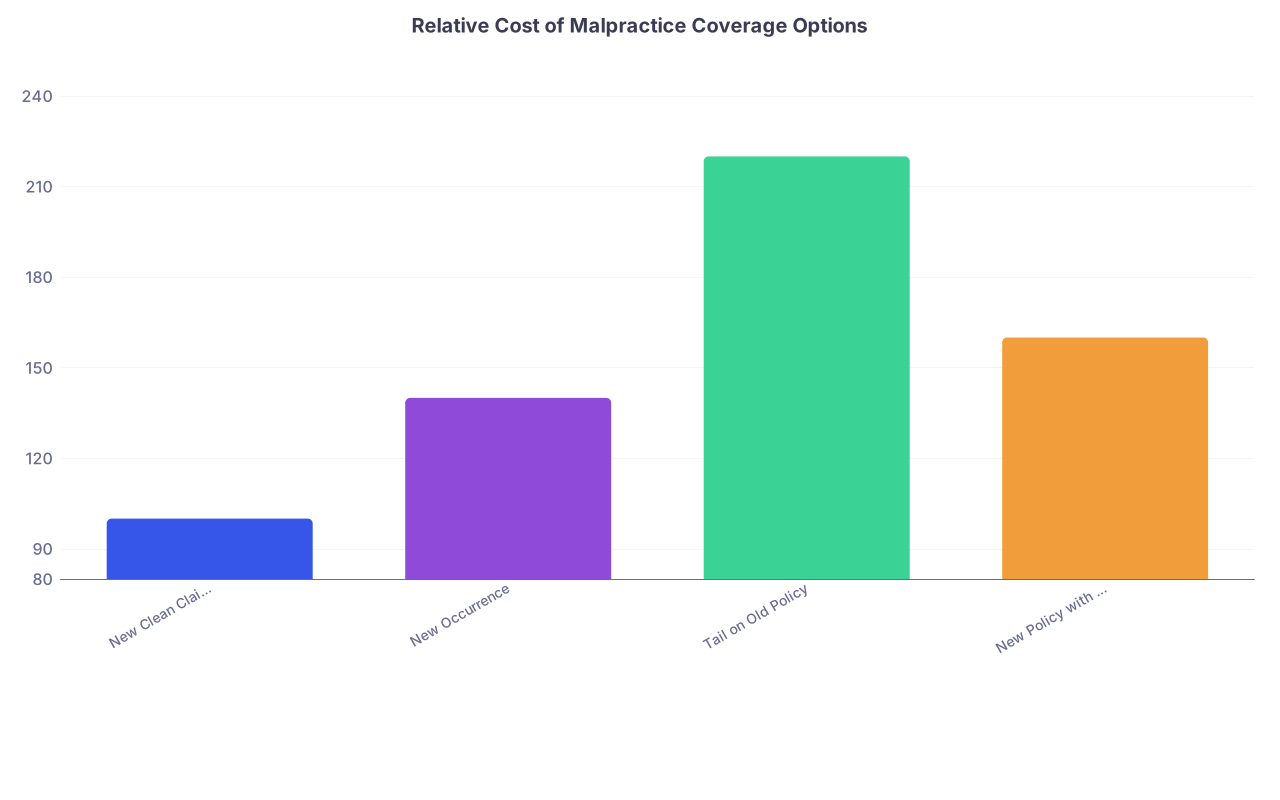
Here’s how costs typically break down:
| Category | Value |
|---|---|
| New Clean Claims-Made | 100 |
| New Occurrence | 140 |
| Tail on Old Policy | 220 |
| New Policy with Prior Acts | 160 |
Interpret that roughly as:
- New, clean claims-made: baseline 100
- New occurrence: 30–50% more
- Tail on old policy: ~200%+ of last year’s premium
- New policy with prior acts: more than clean, less than full tail (varies a lot)
If you’re re-entering part-time or in a lower-risk role, ask about:
- Part-time premiums
- Reduced scope discounts (no OB, no procedures, no ICU, etc.)
- Risk-management credits for CME and training
- Group rates if joining a practice that already has coverage
Do not just accept the first quote. A good broker who works with multiple carriers is worth it here.
Step 11: Line This Up With Hospital Credentialing and State Requirements
Another trap: hospitals and boards care about your coverage trail.
Expect:
- Credentialing to ask for proof of current coverage and past policies.
- State boards (in some states) to require continuous coverage if you hold an active license and practice clinically.
- Some states requiring minimum limits to issue or renew hospital privileges.
So when you’re planning your return:
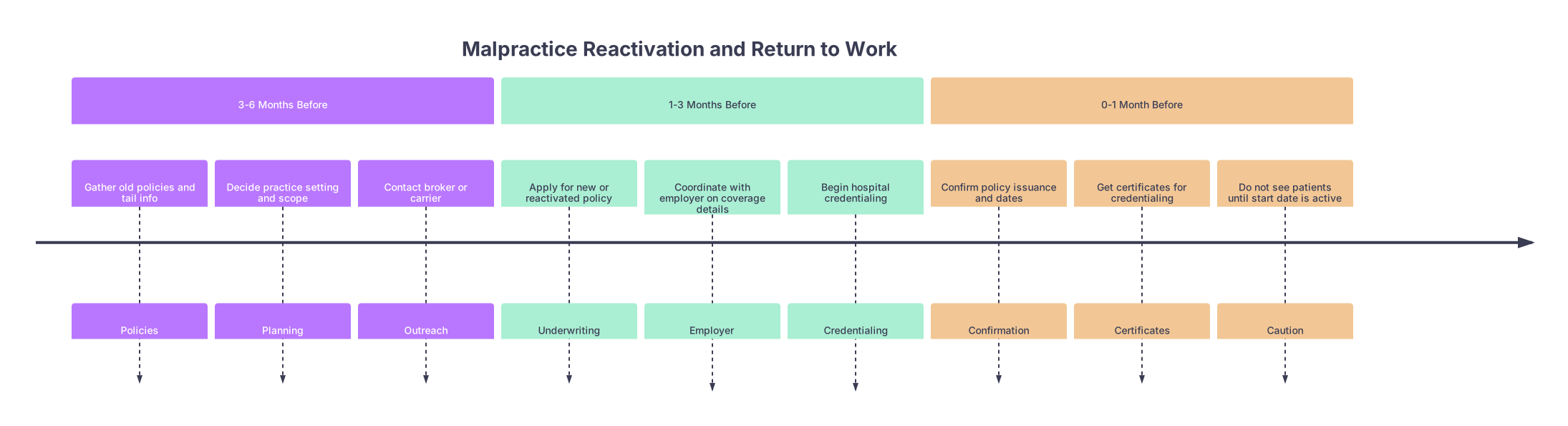
- Start the coverage and credentialing conversations 3–6 months before your planned start date.
- Keep PDFs of all policy documents and endorsements organized by date.
- Don’t let your new job offer letter set a start date that’s impossible for coverage and credentialing to meet.
Here’s roughly how your timeline should look:
| Period | Event |
|---|---|
| 3-6 Months Before - Gather old policies and tail info | Policies |
| 3-6 Months Before - Decide practice setting and scope | Planning |
| 3-6 Months Before - Contact broker or carrier | Outreach |
| 1-3 Months Before - Apply for new or reactivated policy | Underwriting |
| 1-3 Months Before - Coordinate with employer on coverage details | Employer |
| 1-3 Months Before - Begin hospital credentialing | Credentialing |
| 0-1 Month Before - Confirm policy issuance and dates | Confirmation |
| 0-1 Month Before - Get certificates for credentialing | Certificates |
| 0-1 Month Before - Do not see patients until start date is active | Caution |
Step 12: Red Flags and Dumb Moves to Avoid
A short, honest list of things that cause disasters:
- Starting clinic “just for a few patients” while your coverage is “being finalized.”
- Assuming employer-provided coverage includes tail. Often it does not.
- Assuming past employer bought tail because “they always do that.” No.
- Switching to locums and not understanding who owns the policy and who owns the tail obligation.
- Letting your new policy start date be later than your first scheduled patient.
- Hiding prior claims or board actions on an application. Underwriters will find them.
- Using out-of-date policy documents without confirming with the carrier that they’re still accurate.
You don’t have to be a malpractice expert. You just have to be slightly more paranoid than the average physician.
Step 13: When You Should Get Professional Help
If any of the following are true, stop DIY-ing this:
- You’ve had a previous malpractice claim, even if dismissed.
- You were out due to impairment, disability, or board action.
- Your old employer closed, merged, or went bankrupt.
- You practiced abroad with questionable coverage.
- You’re changing to a much higher-risk specialty or adding high-risk procedures.
In those cases, talk to:
- An experienced malpractice insurance broker (not a random agent who mostly sells home/auto).
- Potentially a healthcare attorney if there’s any regulatory or board history.
Yes, they cost money. So does a seven-figure uninsured judgment.
Final Check: Before You See Your First Patient Again
Before you walk into that exam room, you should be able to answer—clearly, in one sentence each:
- Who is my malpractice carrier right now?
- What dates does my current policy cover?
- What is my retroactive date, if any?
- Is my prior clinical work fully covered by occurrence, tail, or prior acts?
- Who pays for tail when my current job ends?
If you can’t answer those, you’re not ready to be back in clinical work. You’re gambling. And malpractice plaintiffs love gamblers.
| Category | Value |
|---|---|
| Past Coverage Clarified | 25 |
| New Coverage Secured | 35 |
| Dates Aligned | 20 |
| Employer Terms Verified | 20 |
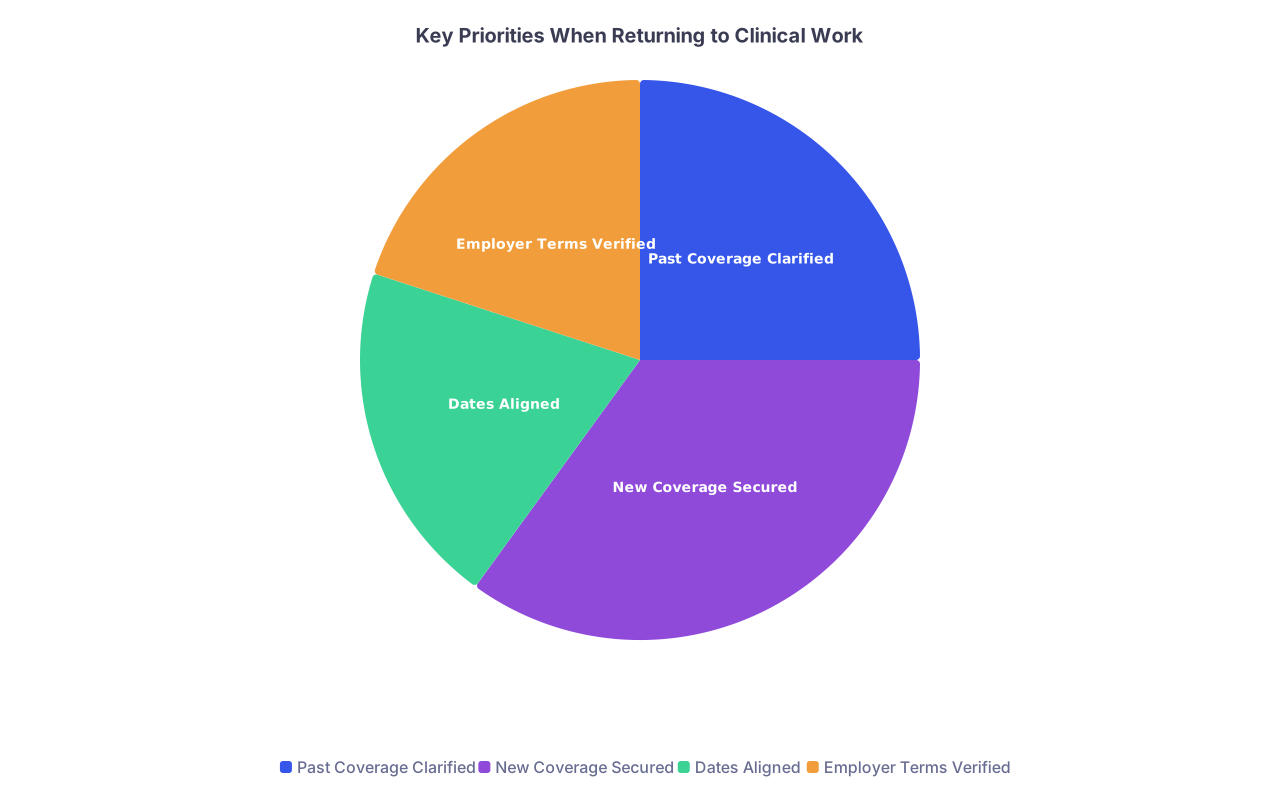
Bottom Line: What Actually Matters
Three things, and they’re simple:
Lock down your past.
Know exactly how your old work is covered—occurrence, tail, or prior acts. No guessing.Start your new coverage before you touch a chart.
Policy in force, dates checked, limits appropriate for your specialty and setting.Get the financial terms in writing.
Who provides coverage, who pays tail, and what happens when you leave. Your future self will thank you.