The way most clinicians use phones and social media today is a malpractice problem waiting to happen.
Not theoretical. Not overblown. I’ve watched real cases explode because of one sloppy text thread or an “off the record” DM.
You’re carrying a discoverable device in your pocket all day. Plaintiffs’ attorneys know it. Hospital risk managers know it. Malpractice insurers really know it. The only question is whether you start behaving like that’s true before or after you get burned.
Let’s walk through the digital habits that quietly expose you—and what to do instead.
The Biggest Lie: “It’s Just a Quick Text, It’s Fine”
Let me be blunt: informal clinical texting is one of the fastest ways to ruin a strong malpractice defense.
I’ve seen these exact patterns:
- Residents texting each other about a crashing patient with zero documentation in the chart
- Attendings giving curbside advice via iMessage with no record anywhere
- Surgeons texting PACU nurses “yeah that’s expected, just watch” instead of writing an actual order
- Group chats where people vent about “train wreck” patients who later sue
Those threads become Exhibit A.
Here’s why this is dangerous:
Everything is discoverable
Text, WhatsApp, iMessage, Signal, DMs—plaintiffs will fight to get them. And judges are increasingly willing to compel production.Out-of-context messages look terrible
Messaging is fast and sloppy by design. Missing words. No nuance. That’s exactly what makes it look reckless to a jury.Texts create a second, contradictory record
If the chart says “patient stable” and your text says “this guy is circling the drain,” your credibility is done.Screenshots never die
Even apps that claim “end-to-end encryption” or “disappearing messages” can’t save you from someone taking a screenshot.
Texting: Hard Rules You Ignore At Your Own Risk
Stop improvising. Set these non-negotiables for yourself:
- Do not provide substantive medical advice to patients via personal text or social media
- Do not confirm, adjust, or cancel treatment plans by text outside of a secure, approved platform
- Do not give curbside consults by text that you wouldn’t be willing to sign your name to in the chart
- Do not text photos of patients, wounds, rashes, monitors—even “de-identified”—from your personal phone “just for teaching”
Use institution-approved, HIPAA-compliant messaging when you genuinely need to text about a patient. And when it rises to the level of medical decision-making, put it in the medical record—properly.
If your hospital doesn’t have secure messaging and is still letting serious clinical discussions happen on random apps? That’s not “innovative.” That’s negligent.
The Social Media Flex That Becomes Exhibit A
Physicians still underestimate how hostile social media is to nuance and context. Plaintiffs’ attorneys don’t.
I’ve watched a plaintiff’s lawyer cross-examine a surgeon using:
- A sarcastic tweet about “non-compliant diabetics”
- An Instagram story joking about “frequent flyers”
- A meme about “Googling your symptoms and then arguing with me”
Did that content relate directly to that specific patient? No.
Did it help the jury see the doctor as arrogant and dismissive? Absolutely.
Social Media Posts That Will Haunt You
The patterns are predictable:
“De-identified” patient stories
You think: “I didn’t mention a name. It’s fine.”
Reality: Location, age, time stamp, condition, rare scenario—all can combine to identify someone. Especially in small communities or rare cases. And if the patient recognizes themselves and feels mocked? Enjoy your board complaint and HIPAA issue.Clinical war stories posted the same day
“I just had the craziest code…”
If timing matches a serious adverse event, it will be connected to that patient. Even if you don’t say so directly.Frustration posts about “difficult” patients
Screenshots of MyChart messages, even blurred. Snarky rants about certain demographics. Anything that can be framed as bias or contempt will be used.Oversharing medical opinions on hot-button topics
Abortion, vaccines, COVID, transgender care—whatever side you’re on. Plaintiffs will argue your personal beliefs clouded your judgment for their case.Photos from inside clinical areas
Even if you “crop out the face”:
- A unique tattoo
- A distinctive room layout
- A time-stamped monitor in the background
can all identify a patient.
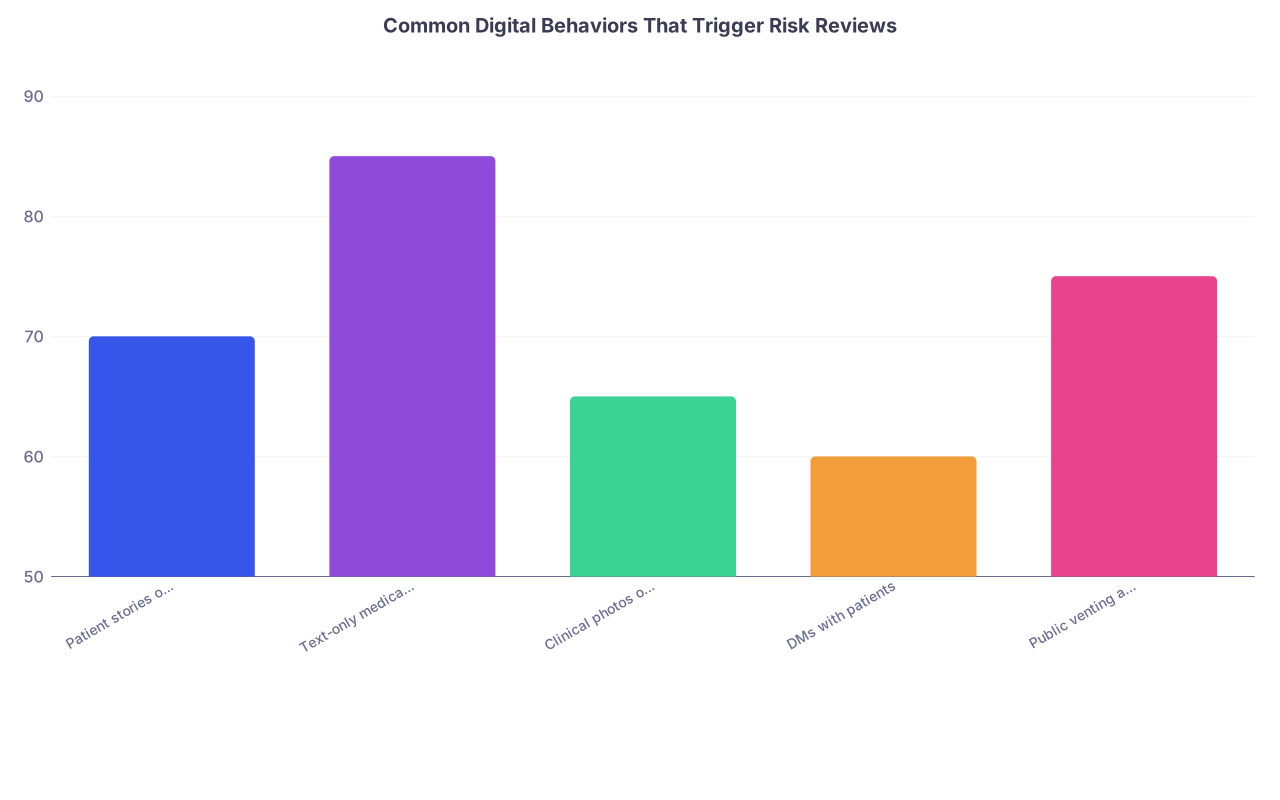
| Category | Value |
|---|---|
| Patient stories online | 70 |
| Text-only medical advice | 85 |
| Clinical photos on phone | 65 |
| DMs with patients | 60 |
| Public venting about patients | 75 |
The Professional Persona Trap
You’re told to “build a brand,” start a TikTok, be active on LinkedIn, show your personality. Fine—but don’t confuse marketing with immunity.
Two red flags:
Speaking in absolutes online about standards of care
“No competent cardiologist would ever…”
That sentence will be read back to you when the plaintiff’s expert describes what you actually did.Contradicting your own documentation
If your progress note says, “patient educated thoroughly about risks” and your blog post from the same week describes how “nobody reads consent forms anyway”—that contrast will not help you.
The “Friendly” DM With a Patient That Turns Into a Lawsuit
This one is ugly because it usually starts from good intentions.
You want to be accessible.
You reply to a patient’s Facebook message or Instagram DM “just this once.”
You’re trying to help.
Here’s what you’re not seeing:
You just blurred the treatment boundary
Now you’re both clinician and “online friend.” That dual role is a nightmare in front of a jury.You’ve effectively created undocumented care
If you advise, reassure, or interpret symptoms in DMs—and it’s not charted—you’re handing the plaintiff an argument that:- Care happened
- You controlled it
- You failed to document or follow through
The patient controls the receipts
They’ll save screenshots of every comforting message. Every reassurance. Every “it’s probably nothing.”
You probably didn’t screenshot diligently. Guess whose story looks better now.
Classic DM Scenarios That Blow Up Later
Patient: “My chest feels a little tight but I don’t want to go to the ER again.”
You: “It’s probably anxiety like last time, see how you feel in the morning.”
Outcome: NSTEMI overnight, delayed care allegation, “doctor told me not to go in.”Patient: “Can I stop the blood thinner now? I hate how I’m bruising.”
You: “If it’s really horrible, you can pause it for a few days.”
Outcome: Stroke. No documentation. Massive liability.Patient: Sends a photo of a post-op wound at 11:30 pm.
You: Glance at it, exhausted, send “Looks okay.”
Outcome: Necrotizing infection discovered 12 hours later. That “looks okay” message becomes a central argument.
You think you’re being a kind, responsive doctor. The legal system will frame you as careless and casual.
Non-Negotiable DM Rules
Adopt this language and stick to it:
- “I don’t manage medical issues by DM. Please call the office/after-hours line or go to the ER if you’re worried.”
- “For your privacy and safety, I can’t discuss your health here. Use the patient portal.”
- “This needs a proper evaluation; I encourage you to be seen in person.”
Then actually document in the chart when needed:
“Patient contacted clinician via social media; redirected to appropriate care channels; no clinical advice given.”
If that feels “cold” to you, you’re confusing good boundaries with lack of caring. The boundaries are what keep you able to keep practicing.
The Digital Record You Forgot Exists (Plaintiffs Didn’t)
Your malpractice exposure isn’t just what you say to patients. It’s everything you say about them—to anyone—on a digital medium.
Sloppy digital footprints I’ve seen come back:
- Group chats calling patients “drug seekers,” “train wrecks,” “psych,” or worse
- Emails between colleagues mocking a patient’s beliefs or appearance
- G-chat threads about “covering our tracks on that bad call”
- Slack channels in startups or telehealth companies where people joke about “firing” high-need patients
Those messages become a gold mine for plaintiff’s attorneys trying to prove:
- Bias
- Lack of caring
- Systemic indifference
- Consciousness of guilt
“But It Was Just Between Colleagues”
That argument dies the second litigation starts and data preservation kicks in.
Your hospital or employer can:
- Pull archived emails
- Image your work device
- Access internal chat logs
- Surrender them under subpoena
You don’t control that once it’s in the system.
| Digital Source | Typical Risk Level | Common Problems |
|---|---|---|
| Personal Texts | Very High | Undocumented advice, jokes, bias |
| Social Media Posts | High | De-identified stories, rants |
| Internal Chat (Slack) | High | Casual language, dark humor |
| Personal Email | Moderate | Off-the-record clinical talk |
| Patient Portal | Lower | Tone, rushed responses |
Notice I didn’t label anything “zero” risk. Because there isn’t such a thing once you hit “send.”
How This Ties Directly to Your Malpractice Insurance
Insurance isn’t just about paying claims. It’s also about whether you’re even insurable, at what rate, and under what conditions.
Here’s what most clinicians don’t realize:
Risky digital behavior can spike your premiums
Repeated complaints related to communication, boundary issues, or privacy breaches make you look like a bad bet.Certain conduct may jeopardize coverage
Some policies exclude coverage for:- Intentional privacy violations
- Certain regulatory fines (e.g., HIPAA penalties)
- Acts outside defined “professional services”
If your state medical board or the OCR hammers you for a social media privacy violation, your malpractice insurer may not cover that mess.
Your insurer’s risk team absolutely looks at this stuff
If you’re involved in a claim where texts/DMS/social media made things worse, expect:- Mandatory risk education
- “Suggestions” that sound a lot like requirements
- Possible non-renewal if patterns continue
Telemedicine + casual texting = double trouble
If you’re doing telehealth:- Is your platform compliant?
- Are you documenting appropriately?
- Are you letting patients bypass the platform by texting your personal phone?
Your telemed coverage may depend on using approved systems. Go off-platform, and you might be hanging out there personally.
Build Safe Digital Habits: A Practical Checklist
You cannot control whether someone sues you. You can absolutely control how ugly the digital evidence looks when they do.
Here’s a protective baseline:
1. Phone and Texting
- Use only institution-approved, secure messaging for clinical info
- No clinical photos on your personal phone—ever
- If you receive patient info by text accidentally:
- Respond with “Please call the office/patient portal”
- Document the interaction appropriately
- Get IT/risk involved if it contains sensitive content
2. Social Media
Before posting anything even remotely related to medicine, ask:
- Could any real person think this is about them?
- Could this be framed as mocking, biased, or dismissive?
- Would I be comfortable with this on a screen in front of a jury, next to my name and credentials?
If the answer is anything other than a confident yes, don’t post it.

| Step | Description |
|---|---|
| Step 1 | Patient contacts you on social media |
| Step 2 | General thanks or ignore |
| Step 3 | Do not give advice |
| Step 4 | Direct to portal or office |
| Step 5 | Advise ER or urgent care |
| Step 6 | Schedule follow up |
| Step 7 | Optional - document contact in chart |
| Step 8 | Clinical content? |
| Step 9 | Urgent symptoms? |
3. DMs and Direct Contact
- Create canned language responses for social media:
- “Thanks for reaching out. I’m not able to discuss medical issues here for privacy and safety reasons. Please contact the office or use the patient portal.”
- Do not get drawn into back-and-forth. One redirection, then stop.
- If you see something that suggests imminent harm (e.g., suicidality):
- Direct to emergency services
- Notify appropriate channels
- Document contemporaneously
4. Internal Communication
- Assume every email and message could be read by:
- Your patient
- A jury
- The medical board
- A journalist
- Strip out:
- Name-calling
- Sarcasm about patients
- “Cover your ass” language
Stick to facts. If you need to vent, do it offline, privately, without names.
The Mindset Shift That Actually Protects You
You’ll hear a lot of “be careful what you post” advice. It’s not enough. You need a fundamental mental shift:
Everything you create digitally is part of the medical-legal record. Even if it’s not in the chart.
Operate as if:
- Your phone is a subpoena magnet
- Your social feeds are public exhibits
- Your group chats are discoverable archives
- Your “off the record” venting is actually being recorded
That mindset doesn’t mean you never touch a phone. It means you use it like a professional with something to lose. Because you do.