
You matched as a dual-physician couple. Now the real logistics start.
It’s the week after Match. The champagne is flat, the Instagram posts are old news, and you’re staring at two PDFs:
- Your PGY-1 rotation schedule
- Your partner’s PGY-1 rotation schedule
Different programs. Maybe different hospitals. Maybe different cities.
You’re zooming in on tiny calendar boxes trying to figure out:
Who’s on nights? Who’s on wards? Can we even go to this wedding in October? When will we actually see each other?
This is the part no one teaches you. You did the couples match strategy, wrote coordinated personal statements, survived the interviews. Now you have to coordinate real life across two residency schedules that do not care about your relationship.
Here’s how to handle it like adults who want to stay sane and actually see each other.
Step 1: Sit down and do a ruthless calendar surgery
Do not just “glance” at your schedules and hope it’ll work out. That’s how resentment builds six months from now when one of you says, “You knew you were on nights then!”
Print your schedules. Both of them. Color pens. Highlighters. Get old school for one hour.
Then do this, in order:
Mark all guaranteed non-negotiables
Things like:- Orientation
- Required bootcamps (intern “school,” simulation weeks, etc.)
- In-service exams
- Board exams (Step 3, COMLEX, specialty in-service)
- Required continuity clinic days
Mark all “black-hole” rotations
These are rotations where flexibility is minimal and hours are brutal. Common offenders:- Surgery prelim/TY surgical months
- ICU rotations
- Night float blocks
- Trauma services
- ED if your shop is intense and inflexible
Mark the “friendlier” rotations
Rotations where people historically get:- More predictable hours
- Easier to trade shifts
- More weekend days off
Think:
- Outpatient electives
- Consult services at reasonable programs
- Pathology/radiology electives
- Research blocks
- Vacation blocks, if already assigned
Identify your joint high-risk periods
That’s where both of you are on:- ICU at the same time
- Nights at the same time
- Or one on ICU and one on nights (worst-case combo)
Identify your joint opportunity periods
Weeks where:- One of you is on elective and the other is on a lighter service
- Both of you have weekend days off
- One of you might be able to visit the other if you’re in different cities
You’re not trying to “fix” anything yet. You’re just mapping the battlefield.
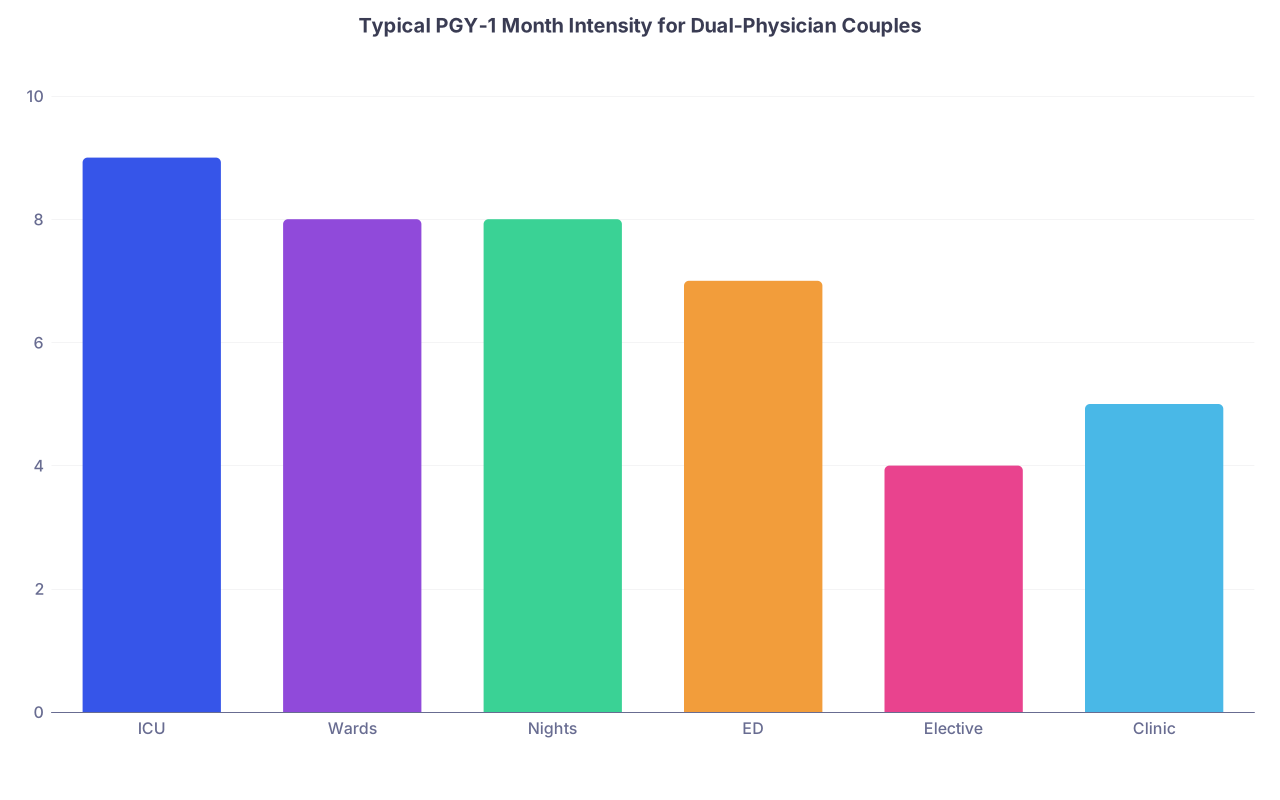
| Category | Value |
|---|---|
| ICU | 9 |
| Wards | 8 |
| Nights | 8 |
| ED | 7 |
| Elective | 4 |
| Clinic | 5 |
Step 2: Decide your couple’s priorities like you mean it
Two physicians. Limited flexibility. Someone’s life is going to be less ideal. The trick is to choose how.
You need to answer some blunt questions:
- Is living together non-negotiable, even if commutes are brutal?
- If you’re in different cities, what’s the minimum frequency you’re okay with seeing each other? Every week? Every 2 weeks? Once a month?
- Who has the more rigid program? (You know the answer. Say it out loud.)
- Which of you is more likely to need specific electives for fellowship? (Cards, GI, Derm, etc.)
Then sort your priorities into tiers:
Tier 1: Non-negotiable
Things like:- We will not go > X weeks without seeing each other.
- We both will be present for [wedding / important family event / IVF appointment / religious holiday].
- We will both protect at least one real vacation week together per year.
Tier 2: Strong preferences
Examples:- Try not to both be on nights at the same time.
- Try to align at least one weekend off per month.
- Try to schedule away rotations/electives at the same institution when possible.
Tier 3: Nice-to-haves
- Same call weekends when it’s tolerable.
- Similar day-off pattern.
- Lining up certain fellowships exposure years later.
Be honest: if everything is “non-negotiable,” nothing is. Residency does not care about your preferences. But program leadership is often surprisingly willing to help if you can articulate 1–2 critical things and show you’re flexible about the rest.
Step 3: Learn how your specific programs handle scheduling power
Every program has a scheduling power structure. You need to know who actually controls what.
Common models:
| Item | Usually Controlled By |
|---|---|
| Rotation order | Chief residents / scheduler |
| Vacation weeks | Chiefs, with PD oversight |
| Clinic days | Program / clinic manager |
| Night float timing | Chiefs / master schedule |
| Electives | Program coordinator |
Your job, early (April–May), is to quietly gather intel:
- Ask seniors: “If you really need a specific vacation week, who do you actually talk to?”
- Ask interns: “Have chiefs been good about couples’ scheduling or family needs?”
- Ask coordinators: “When do we submit vacation requests? Who approves swaps?”
Then you frame your asks correctly:
Wrong:
“I need to be off this week because it’s the only time my spouse can take off.”
Better:
“My partner is a resident at [Hospital X]. We’re a couples match. I know you have to balance the whole class, but if there’s any flexibility, I’d love to protect [specific week] for us to have one shared vacation this year. I’m flexible about all my other weeks and willing to take less popular times.”
Low drama. Specific. Shows you’re not trying to game the system, just making one meaningful ask.
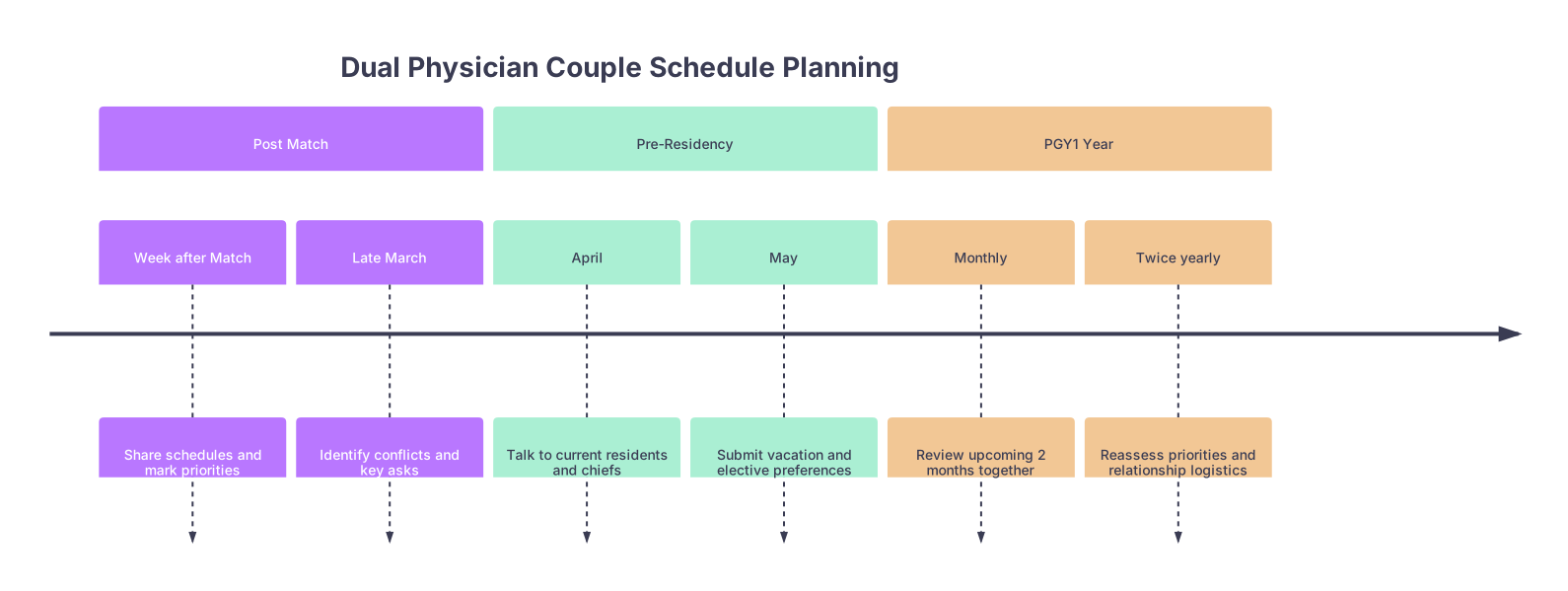
| Period | Event |
|---|---|
| Post Match - Week after Match | Share schedules and mark priorities |
| Post Match - Late March | Identify conflicts and key asks |
| Pre-Residency - April | Talk to current residents and chiefs |
| Pre-Residency - May | Submit vacation and elective preferences |
| PGY1 Year - Monthly | Review upcoming 2 months together |
| PGY1 Year - Twice yearly | Reassess priorities and relationship logistics |
Step 4: If you’re in the same city vs different cities
Very different playbooks here.
A. Same city (or same system)
Your core issue: time, not distance.
What you focus on:
Commute sanity
If you’re at different hospitals, do the math honestly:- One 45-minute commute and one 10-minute commute?
- Both 30 minutes?
Often it’s better for one of you to “take the hit” consistently instead of both suffering.
Decide who that is based on:
- Who has earlier OR start times
- Who has more call
- Who is more dangerous when sleep-deprived (surgical resident driving post-call vs outpatient psych, for example)
Aligning at least one recurring touchpoint
Aim for something you can rely on:- Weekly shared post-call brunch when one of you is off and the other can adjust.
- A fixed evening each week where phones go away and food is not from a hospital cafeteria.
Does this always work? No. But if you don’t plan it, it almost never happens.
Strategic use of “easier” months
When either of you has:- Elective
- Research
- Lighter outpatient month
That person takes on more:
- House logistics
- Cooking / groceries / laundry
- Planning any social thing you claim you still care about
Rotations won’t be fair. Your relationship can still be.
B. Different cities
Now distance is the problem. And it is a real problem. Do not pretend otherwise.
Your survival rules:
Lock down your visit cadence in advance
Start from reality:- Travel time
- Call schedules
- Budget
Then decide:
- Once a month minimum?
- Every 2–3 weeks rotating who travels?
Put those weekends in your calendar now, based on your current schedules. You’ll adjust later, but anchor them.
Prioritize getting real weekends together
Not:- You flying in Friday night post-call and leaving Sunday afternoon for pre-call Monday
You’ll resent those trips.
Look for:
- One of you on elective while the other has a lighter month
- Long weekends attached to a vacation day
- You flying in Friday night post-call and leaving Sunday afternoon for pre-call Monday
Communicate your asks to both programs with honesty
Example script to your chief or PD:“My partner matched at [Hospital Y] about 3 hours away. We’re trying to see each other roughly one weekend a month. If there’s any flexibility with my elective/vacation blocks, I’d be incredibly grateful for 1–2 weekends in [Month X/Y] where my call is lighter so I can travel. I’m absolutely willing to take less popular vacation weeks to make that work.”
People understand spouses in different cities. I’ve seen chiefs bend a lot for interns who show up, work hard, and do not abuse the privilege.

Step 5: How to ask for changes without being “that couple”
You have a limited number of “pull” requests per year before people start rolling their eyes. Use them carefully.
Here’s how to not be annoying about it:
Be early
You ask for swaps or vacation changes:- As soon as schedules come out
- Not 2 weeks before the month starts unless it’s a real emergency
Come with a solution, not a problem
Don’t say:- “I need this week off.”
Say:
- “I talked with [Resident X]. She’s willing to trade Weeks 2 and 4 of her vacation with me so I can line up a weekend with my spouse. It keeps coverage the same. Would you be okay approving that?”
Pick your battles
Save your hard ask for:- Your partner’s graduation
- A critical fertility appointment
- A once-in-a-decade family event
- Your only possible 5-day trip together that entire year
If you’re asking for changes every other month for someone’s birthday party, you’ll get tuned out.
Own the inconvenience
A little humility goes far:- “I know this is extra work to change. I really appreciate you even considering it.”
- “If it doesn’t work for the schedule, I completely understand. I’ll make do.”
You are not owed schedule magic. But programs will sometimes help if you make it easy for them and show you’re not taking advantage.
Step 6: Protecting your relationship inside the chaos
The calendar is only half the problem. The other half is what residency does to your brain.
You will each have days where:
- You’re exhausted
- You snap at each other
- You both feel like you’re doing more
Some rules that actually work:
Pre-agree on “interpretation rules”
Example:- If one of us is short or quiet on text on a rough day, default assumption is “they’re tired,” not “they’re mad.”
- If we send a “made it home” text post-call, the conversation can end there. No pressure.
Build one tiny daily habit
Not “we will have deep talks every night.” That will die by July.Something like:
- A 60-second voice memo on your walk to the car
- A photo of something from your day (even if it’s just the weather or your coffee)
- A “goodnight” text at whatever time night float allows
Micro contact counts. Depth can wait for actual days off.
Have a rule for conflict when one is post-call
Do not have big fights post-call. That’s how things get said that you both regret.Script:
- “I’m too tired to argue well right now. Can we park this until tomorrow?”
Decide your “no residency talk” guardrails
Sometimes your only shared brain space becomes complaining about work. That gets old. Fast.Consider:
- 30 minutes of “work dump” allowed when you’re together, then a shift to literally any other topic.
- One evening a week where residency talk is banned unless it’s major.
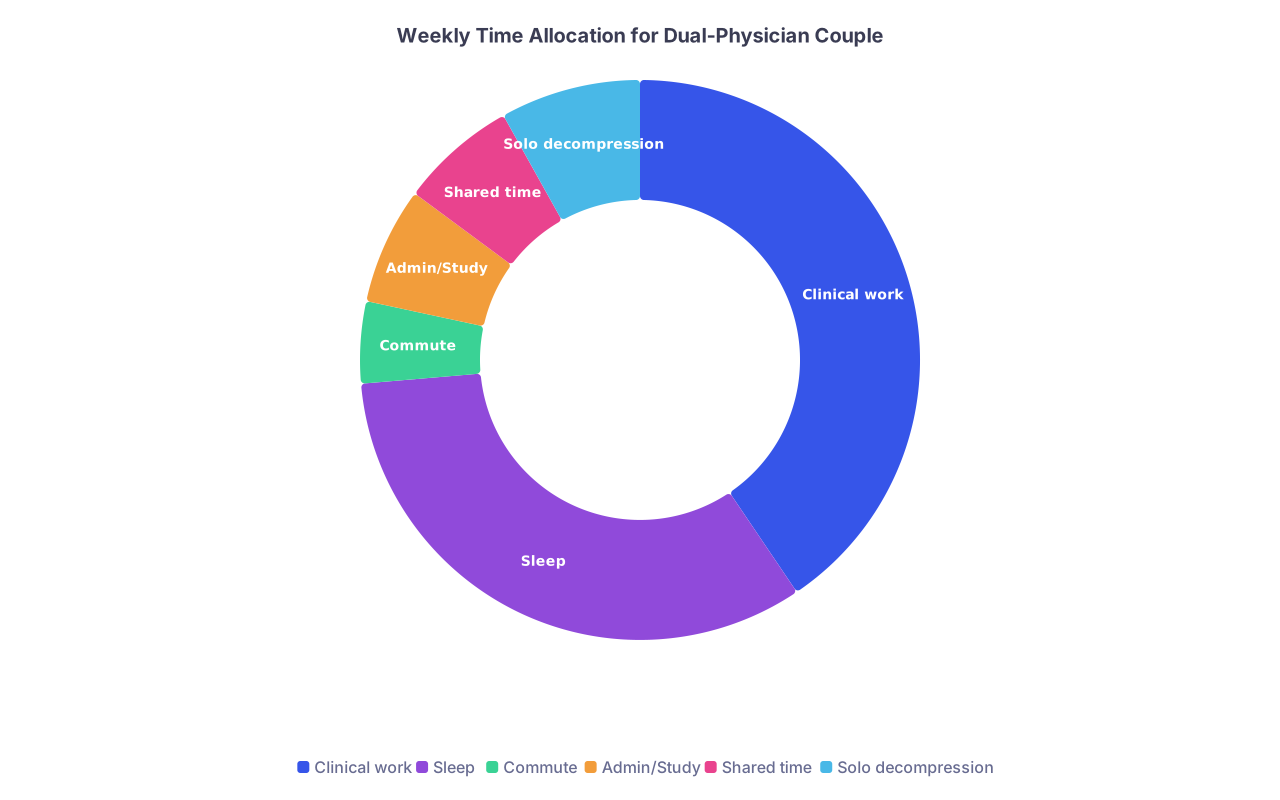
| Category | Value |
|---|---|
| Clinical work | 60 |
| Sleep | 49 |
| Commute | 7 |
| Admin/Study | 10 |
| Shared time | 10 |
| Solo decompression | 12 |
Step 7: When one schedule is objectively worse
This is common. One of you is at the malignant IM program where everyone is dead-eyed by January. The other is at the “people are actually nice here” place.
Power imbalance. You need to manage it.
The worse-schedule partner:
- Will be more tired.
- Will cancel more plans.
- Will be less emotionally available.
- Might feel guilty all the time.
The better-schedule partner:
- Will do more housework / logistics.
- Might resent it.
- Might feel like they can’t complain because “at least I’m less miserable.”
You both need to say these things out loud and agree on a deal:
- When the worse-schedule partner is on ICU/nights, the better-schedule partner owns 80–90% of logistics.
- When the worse-schedule partner hits an easier month, they intentionally take more on and give the other person a break.
- The better-schedule partner is allowed to have a hard day and complain, even if objectively their rotation is easier.
Unspoken score-keeping will wreck you faster than the hours.

Step 8: Think beyond PGY-1 — set up Year 2 and 3 on purpose
The danger is to white-knuckle PGY-1 and then realize PGY-2 is just as chaotic and totally unplanned.
Before PGY-2 schedules are locked, both of you should:
Talk to upper years about second- and third-year pain points
- Which rotations are travel-heavy?
- Which months are worst for couples?
- When do chiefs tend to place ICU/cardiac/trauma blocks?
Plan any big life moves around both schedules
Things like:- Moving to live together if you started in different cities
- Starting a family
- Major trips
Work backward from: - Lighter rotations
- Board exam timing
- Fellowship application years if applicable
Coordinate electives strategically
Some of the smartest dual-physician couples I’ve seen:- Aligned outpatient or research electives to be in the same building for a month.
- Arranged away rotations / visiting electives at each other’s institution to test the waters for fellowship or jobs.
You’re not just “surviving residency together.” You’re setting up the next decade of your life. Make at least a rough sketch.

Step 9: When it’s bad enough that something has to change
Sometimes, despite all the planning, it’s unsustainable:
- You haven’t seen each other in person for 2–3 months.
- One of you is burning out hard.
- A serious family/health situation hits.
You have more options than you think, but none of them are quick or easy:
- Temporary leave of absence for health or family reasons
- Swapping to a different program in the same city (rare but not impossible)
- Adjusting training length with a research year or chief year at a different time
- Reconsidering fellowship plans to end up geographically closer long-term
If you’re reaching this point, this is not a “talk to the chief casually” issue. You go to:
- Your program director
- GME office
- Sometimes a trusted faculty mentor
You present the situation clearly:
- What you’ve tried
- Why it’s not working
- What you’re asking for
Do not threaten. Do not demand. But do not minimize either. People can’t help if they don’t know how bad it is.

Your next concrete step today
Do one thing, not ten.
Right now, pull up both of your rotation schedules for PGY-1 and:
- Print them or put them side-by-side on your screen.
- Grab a pen or an annotation tool.
- Circle three things:
- The month that will be worst for both of you.
- The month that looks best for potential travel or a real vacation.
- One weekend you can tentatively target as your first “we actually see each other” weekend post-orientation.
Then text or sit down with your partner and say:
“Let’s be intentional about this before July hits and we lose our minds. Can we plan around these three things together?”
Start there. One conversation. One shared calendar. That’s how dual-physician couples actually survive the match.