You refresh the NRMP screen for the tenth time, just to make sure it still says the same thing. Matched. To that program. The one you convinced yourself was a long shot, a courtesy interview, a “good practice” rank. And instead of feeling pure relief, your stomach drops: “They must’ve made a mistake.”
Welcome to impostor syndrome, Match Day edition. It’s brutal. And if you matched higher than you expected, there’s a good chance you’re already rehearsing all the ways this is going to go wrong.
Let’s talk about why you actually belong there—even if your brain is screaming you don’t.
The “There’s Been a Mistake” Spiral
The hours after you see your match result can be weirdly dark.
Everyone’s cheering, your group chat is blowing up, your family is crying on FaceTime. And in the middle of it all, your brain quietly whispers:
- “They must’ve mixed up my application with someone else’s.”
- “They probably didn’t get their top choices and I was the backup.”
- “They don’t know the real me yet. Once they see, I’m done.”
I’ve watched people literally hide in the bathroom at their own Match Day celebration because they were sure someone would “figure it out” any second.
Here’s the thing you’re too anxious to admit to yourself: top programs are not handing out spots by accident. The match is algorithmic, ruthless, and ugly—but not random. You didn’t “sneak in.” You were ranked there.
And I know the next thought: “Yeah, but they overestimated me.”
Hold that. We’ll come back to it.
How You Actually Ended Up at That Program (Not the Fantasy Story in Your Head)
Your impostor brain is telling a very simplistic story:
“I got lucky. They must’ve whiffed on better candidates. If they’d seen my real weaknesses, I’d never be there.”
Reality is more complicated—and much less magical.
Most residents I’ve talked to who matched highly underestimate just how many data points went into that one rank:
- Application screen (scores, grades, letters, research, etc.)
- Committee review notes (yes, they really do write “strengths/weaknesses”)
- Interview impressions from multiple people
- Group discussion where people literally argue about you
- Comparing you against hundreds of other qualified applicants
None of that feels glamorous when you’re sitting alone at 1am panicking about starting intern year. But it does mean something very simple: they had options. They picked you.
Here’s a more honest internal narrative you’re not giving yourself credit for:
- You responded thoughtfully to questions.
- Someone on that committee went to bat for you.
- Your letters were probably stronger than you realize.
- Your perceived “average” research or leadership was enough for that program to say, “Yes. Let’s train this person.”
Programs aren’t aimlessly filling lines on a spreadsheet. They’re trying to choose people they’re willing to see at 3am on a terrible night, again and again, for years. If you’re on that list, that’s not an accident.
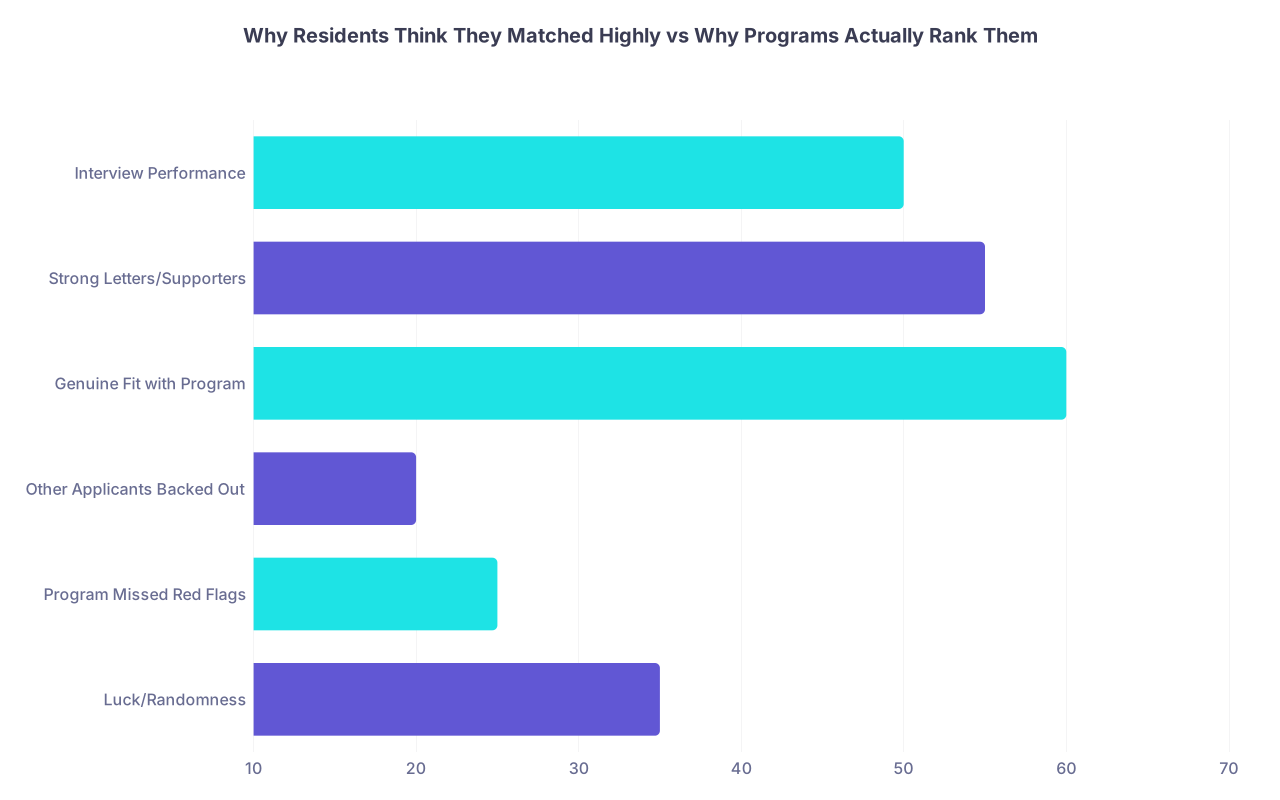
| Category | Value |
|---|---|
| Luck/Randomness | 35 |
| Program Missed Red Flags | 25 |
| Other Applicants Backed Out | 20 |
| Genuine Fit with Program | 60 |
| Strong Letters/Supporters | 55 |
| Interview Performance | 50 |
“But I’m Not Like the Others There”
This one hits hard.
You start Googling your co-interns. You see:
- Ivy undergrad
- A dozen publications
- Chief this, president of that
- “Interests: running marathons, triathlons, saving orphans, curing cancer”
And you’re sitting there like, “I like naps and I barely survived third year. I’m not built like these people.”
Let me cut through that noise:
Everyone curates their narrative. On paper, they look unstoppable. In real life, they:
- Forgot an essential step on a basic H&P on day one
- Mixed up potassium and phosphorus in front of an attending
- Went to the bathroom between pages to cry their eyes out at least once on nights
- Have at least one shelf exam or rotation they’re quietly ashamed of
You’re comparing your insides to their outsides. Of course that looks lopsided.
And here’s the brutal little secret: even the gunners at the top programs are terrified. I’ve heard a PGY-1 at a “top 5” IM program say, “I think they messed up ranking me. I’m not like the others.” Same exact words. Different name on the badge.
You’re not the odd one out. You’re just honest enough to say the quiet part out loud.
The Myth That Everyone Else Deserves It More
One thing impostor syndrome does really well: it turns everyone around you into a mythical, ultra-qualified, never-struggled demigod.
You: “My Step 2 wasn’t that great.”
Impostor brain: “Everyone else scored 270.”
You: “I only have one publication.”
Impostor brain: “Everyone else has an R01 by age 26.”
Reality? Most people in your class:
- Have at least one rotation they were mediocre at
- Have exam scores that are solid but not insane
- Have research that’s fine, not groundbreaking
- Have doubts that sound exactly like yours
It just doesn’t get posted in the GroupMe.
The match isn’t a purity contest: “Who suffered the most, who worked the hardest, who never messed up?” It’s: “Can this person show up, learn, work, grow, and not be a jerk?” You checked enough of those boxes for a highly competitive program to say yes.
“What If I Fail There?” (The Thought You’re Actually Scared Of)
Let’s get to the real monster under the bed:
You’re not actually scared you don’t belong. You’re scared you’ll prove you don’t belong.
You’re imagining:
- Freezing during rounds at a simple question
- Getting an angry page from a nurse you can’t answer
- Making a mistake that hurts someone
- A meeting where the PD says, “We made a mistake taking you”
I won’t sugarcoat this: you will mess up. You will say “I don’t know” so many times it echoes in your skull on your drive home. You will get feedback that stings.
But here’s why that still doesn’t mean you don’t belong there:
- Every intern messes up. At “elite” programs, they just do it in fancier hospitals.
- These programs are built to train people, not just showcase finished products.
- If they only wanted perfect people, they wouldn’t need residency at all. They’d just hire robots.
I’ve seen people go from “barely held it together MS3” to “rockstar senior resident” because they were hungry, coachable, and stubborn. Not because they were flawless from day one.
You are not being asked to be incredible on July 1. You’re being asked to be teachable.
The Ugly Double Standard You’re Applying to Yourself
Watch what you’re doing in your head.
If a classmate with your exact stats matched at your program, you’d probably say:
- “That’s awesome, you crushed it.”
- “You totally deserve it, you worked your ass off.”
- “They’re lucky to have you.”
But for yourself? Suddenly everything is conditional:
- “I only matched because…”
- “If they’d seen X, they never would’ve taken me.”
- “It’s not that impressive because…”
You’re running one grading scale for everyone else and a much harsher one for you. If you treated your friends the way you talk to yourself, they’d stop answering your texts.
This is not humility. It’s self-sabotage dressed up as realism.
You don’t become a better doctor by constantly convincing yourself you suck. At some point, “I don’t belong” stops being insight and starts being an excuse to stay small, not take responsibility, not try.
You matched there. Start letting that sentence be complete.
What Programs Actually Want From You on Day One
Let me lower the bar you’ve set in your head.
You think they want a walking UpToDate, an instant team leader, a procedural wizard. No.
Most programs want a PGY-1 who is:
- Not dangerous
- Ask-for-help early, not late
- Able to own mistakes and learn from them
- Not an ego bomb in the team dynamic
- Dependable enough that when you say you’ll do something, it happens (or you tell them why it didn’t)
No one expects you to walk in and function like their PGY-3 or their best co-intern. They expect you to be where you are and move forward.
You feel like an impostor because you’re comparing your expected Day 1 to everyone else’s Day 1000. Of course that’s going to look bad.

Concrete Ways to Survive the First Year When You’re Sure You Don’t Belong
You’re probably not looking for motivational posters. You’re looking for: “What do I actually do when I feel like this every day at sign-out?”
Here are things that actually help:
Say the quiet part out loud to someone safe.
Find one person—friend, co-intern, therapist, mentor—and say: “I feel like I don’t belong at this program.” The most common response you’ll hear? “Honestly, me too.”Decide in advance how you’ll interpret mistakes.
You will screw up. Before that happens, decide what story you’ll tell yourself:- Option A: “This proves I’m a fraud.”
- Option B: “This is miserable, but also exactly what training is for.”
Anchor to behaviors, not feelings.
You can feel like an impostor and still:- Pre-round thoroughly
- Ask good questions
- Read one short topic per day related to your patients
- Call your senior early when you’re unsure
Feelings are not veto power over your actions. They’re just noise.
Time-box the comparison trap.
If you’re going to stalk your co-interns’ profiles, fine. Give yourself 10 minutes. Timer on. After that? Shut it down. You can ruin an entire month spiraling on LinkedIn and PubMed.Keep a “receipts” file.
One screenshot folder or note on your phone. Put:- Good feedback comments
- Attending emails that say “Nice work”
- Moments that went well (“Handled that RRT without panicking”)
You’ll roll your eyes at this now. Then one night at 2am post-call you’ll need it.
| Impostor Thought | More Accurate Interpretation |
|---|---|
| "They must have ranked me by mistake." | Multiple people reviewed and discussed your file and still decided to rank you. |
| "Everyone here is smarter than me." | Everyone here is strong in some areas and weak in others, including you. |
| "If I ask questions, they’ll know I’m clueless." | Good residents ask questions early; dangerous ones stay silent. |
| "One bad day proves I shouldn’t be here." | One bad day is data, not destiny. Performance is a trend, not a single point. |

Why Your Program Actually Needs People Like You
Last thing, because your brain is going to fight this hardest.
Programs don’t just need the superstar, hyper-confident, “I’ve never doubted myself” types. Those people can be great, sure—but they can also be inflexible, unable to say “I was wrong,” or so focused on performance they forget the human being in the bed.
Anxious, self-doubting people—like you, since you’re reading this—bring a different set of strengths:
- You second-guess yourself, so you double-check orders. That prevents harm.
- You’re hyper-aware of how you’re perceived, so you tend to be kinder to nurses, RTs, and support staff. That builds trust.
- You remember what it feels like to be lost, so you explain things better to students and patients. That’s education and empathy rolled together.
The same wiring that drives your impostor syndrome also makes you careful, reflective, and less likely to bulldoze others. Programs need that. Patients really need that.
You can be anxious and still be excellent. Those are not opposites.
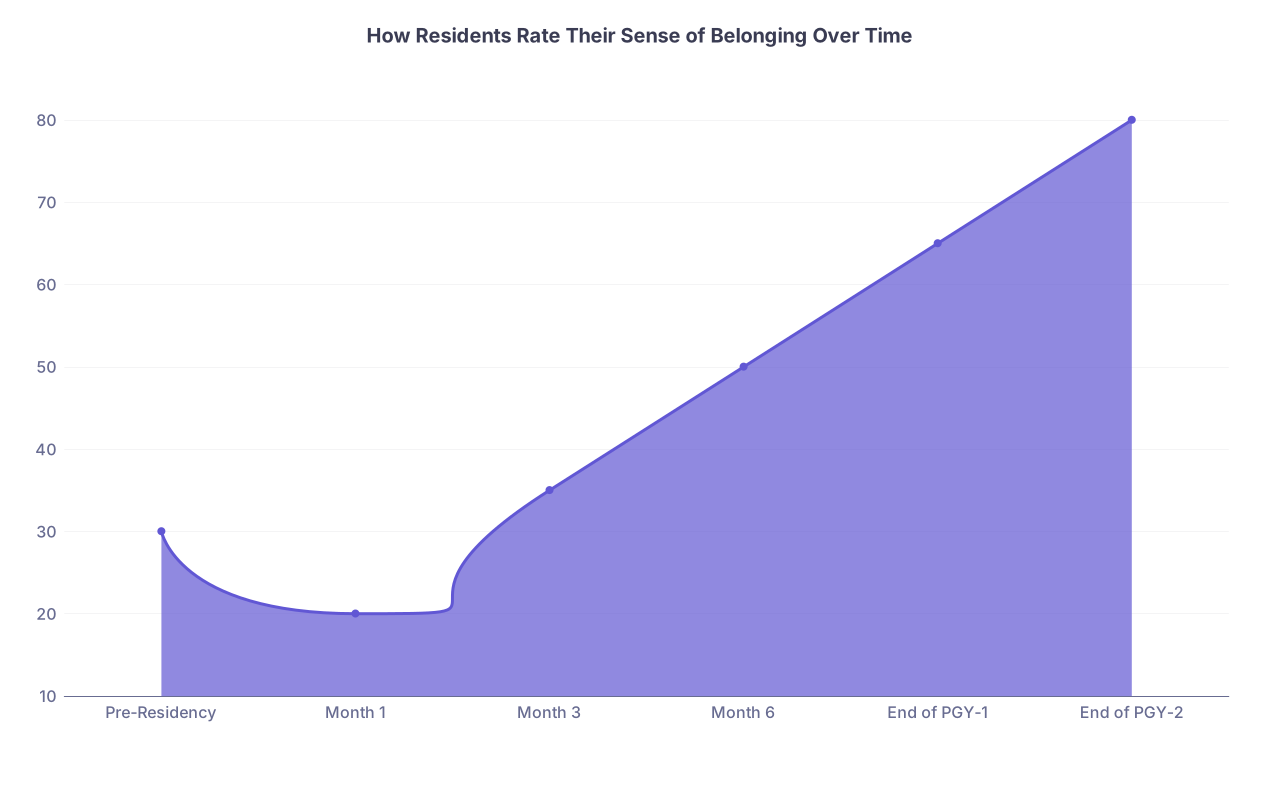
| Category | Value |
|---|---|
| Pre-Residency | 30 |
| Month 1 | 20 |
| Month 3 | 35 |
| Month 6 | 50 |
| End of PGY-1 | 65 |
| End of PGY-2 | 80 |
You Matched There. That’s the Evidence.
You’re waiting for some future moment where you “finally feel like you belong.”
Here’s the uncomfortable truth: that feeling doesn’t come first. The behavior does.
You show up. You do the work. You ask for help. You learn. You mess up and keep going. You collect enough days of that and, somewhere in PGY-2 or PGY-3, you catch yourself answering a junior’s question and think, “Oh. I actually know this. I’ve become the person I was scared of.”
You won’t notice the exact day it flips. But it will.
Until then, you’re going to have to live with this:
- You belong at that program because they chose you with eyes open.
- Feeling like an impostor does not mean you are one; it means you care and you’re uncomfortably stretching.
- You don’t have to “deserve” it in some cosmic sense. You just have to show up and grow into it.
You matched highly. Not by accident. Not because the algorithm glitched. Because a group of people looked at who you are right now and decided they’re willing to invest years in who you’ll become.
Your brain can keep freaking out in the background if it wants. But it doesn’t get to overrule that.