
The fantasy that you’ll match close to home is one of the biggest unspoken lies of this whole process.
You’re not crazy for feeling punched in the gut when the email said you matched… and then you saw the city and thought, “Wait. This far?” Everyone around you is saying “Congratulations!” and you’re just doing emotional math in your head: time zones, flights, holidays you’ll miss, parents getting older, little siblings growing up without you around.
You’re happy you matched. You’re also grieving the life you thought you were about to have. Both are real. Both are valid. And almost no one actually talks about this part.
Let’s talk about it.
The Emotional Whiplash: “I Matched… But I Feel Sick”
That split second of joy followed by dread? Normal. I’ve watched it happen in real time on Match Day: screaming, hugging, then someone in the corner quietly texting their mom, already negotiating distance.
Your brain is doing a few things at once:
- “I matched, I’m safe, my career lives”
- “I’m moving away from my support system”
- “I’m about to start the hardest job of my life… alone”
- “Did I screw up my rank list? Did I ruin my life?”
Let me be blunt: matching far from family is not a sign you failed. It’s usually a combination of:
- Specialty competitiveness
- Geographic preferences vs. program quality
- How realistic your list was
- Pure dumb luck
Programs don’t sit in a room saying, “Who can we relocate the farthest from their mom?” It just feels that way.
You’re allowed to mourn the geographic loss. You’re allowed to be angry that your best friend matched 20 minutes from home and you’re booking cross-country flights. That doesn’t mean you’re ungrateful or entitled. It means you’re human.
The Real Fears Underneath The Distance
It’s not just miles. It’s everything the miles represent.
I hear the same things over and over:
- “What if something happens to my parents and I’m not there?”
- “What if I burn out without my support system?”
- “What if I hate the city and I’m trapped for 3–7 years?”
- “What if long-distance with my partner doesn’t survive?”
- “What if I’m too tired to maintain relationships and end up totally alone?”
Let me answer these one by one in a non-sugarcoated way.
“What if something happens to my parents and I’m not there?”
That fear doesn’t fully go away. Even people who stay in-state have it. The truth:
- You will miss some moments. Happy and sad.
- You will miss some family events.
- You might not be there the hour something happens.
But: being far away doesn’t automatically mean you’ll abandon them. It just means “support” looks different:
- More calls, less physical presence
- Being the medical interpreter for your family over the phone
- Planning intentional visits instead of random drop-ins
Every resident I know who trained far away found ways to show up when it really mattered. Even with crappy schedules, programs almost always work with you when it’s serious (death in family, major illness). Is it perfect? No. Is it impossible? Also no.
“What if I burn out without my support system?”
You’re more likely to burn out if you don’t build a new support system where you’re going. Geographic distance from family increases the need for:
- Co-resident friends you actually trust
- At least one attending or senior who “gets” you
- Therapy or counseling (especially in PGY-1)
- A plan for basic adulting: sleep, food, movement, something that’s not medicine
You can’t copy-paste your current life into residency. Even people who stay close to home have to redesign their support. You’re just being forced to accept that earlier.
“What if I hate the city and I’m stuck?”
Honest answer: you might hate it at first. Most people do, a little.
But here’s what usually happens:
- First 3 months: “Everything is foreign, I hate driving here, why is rent like this.”
- Months 4–9: Find a grocery store, a coffee place, maybe a park or gym that doesn’t suck. A few co-residents become “my people.”
- End of PGY-1: You know your routes, you have a tiny set of routines, you’ve taken a couple days off and actually done something in the city. It’s not home, but it’s yours.
Are there residents who truly hate their city for all 3+ years? Yes. But that’s more often about program culture than geography. Geography is annoying. Toxic work culture is what actually breaks you. Those are different.
“What if my relationship doesn’t survive the distance?”
You might be scared to even say this out loud. I’ll say it for you: many relationships don’t make it. That’s not a moral failure; that’s life with conflicting timelines and stress.
But distance by itself doesn’t kill relationships. Disconnection does. Poor communication does. Resentment does.
Red flag mindset: “We’ll just make it work somehow.”
Better mindset: “We’re going to need a concrete plan for how we handle time zones, visits, budgets, and jealousy.”
You don’t have to decide everything before July. But you can’t ignore it and hope the distance will be gentle and reasonable. It won’t be.
What To Actually Do Between Match and Move
You’ve got a small window before internship starts. This is when your brain wants to catastrophize and also do nothing because it’s all overwhelming. Let’s shrink it down.

| Step | Description |
|---|---|
| Step 1 | Match Day |
| Step 2 | Feel all emotions |
| Step 3 | Talk honestly with family |
| Step 4 | Research new city |
| Step 5 | Plan visits and budget |
| Step 6 | Reach out to co-residents |
| Step 7 | Set up mental health support |
| Step 8 | Move and start orientation |
1. Have the Real Conversation With Family
Not the Instagram version. The real one.
Tell them:
- “I’m excited about the program, but I’m scared about the distance.”
- “I need to know we’ll make a plan for staying close.”
- “I’m worried I’ll disappear into residency and neglect you all. Please pull me back if I go off the grid.”
Then work through specifics:
- Expected visit frequency (holidays? 1–2 long weekends?)
- How often you’ll realistically call or video chat
- Whether they’d be willing/able to visit you (and when)
If you don’t define expectations now, you’re setting up future hurt feelings on both sides.
2. Get Concrete About Distance: Time, Money, Energy
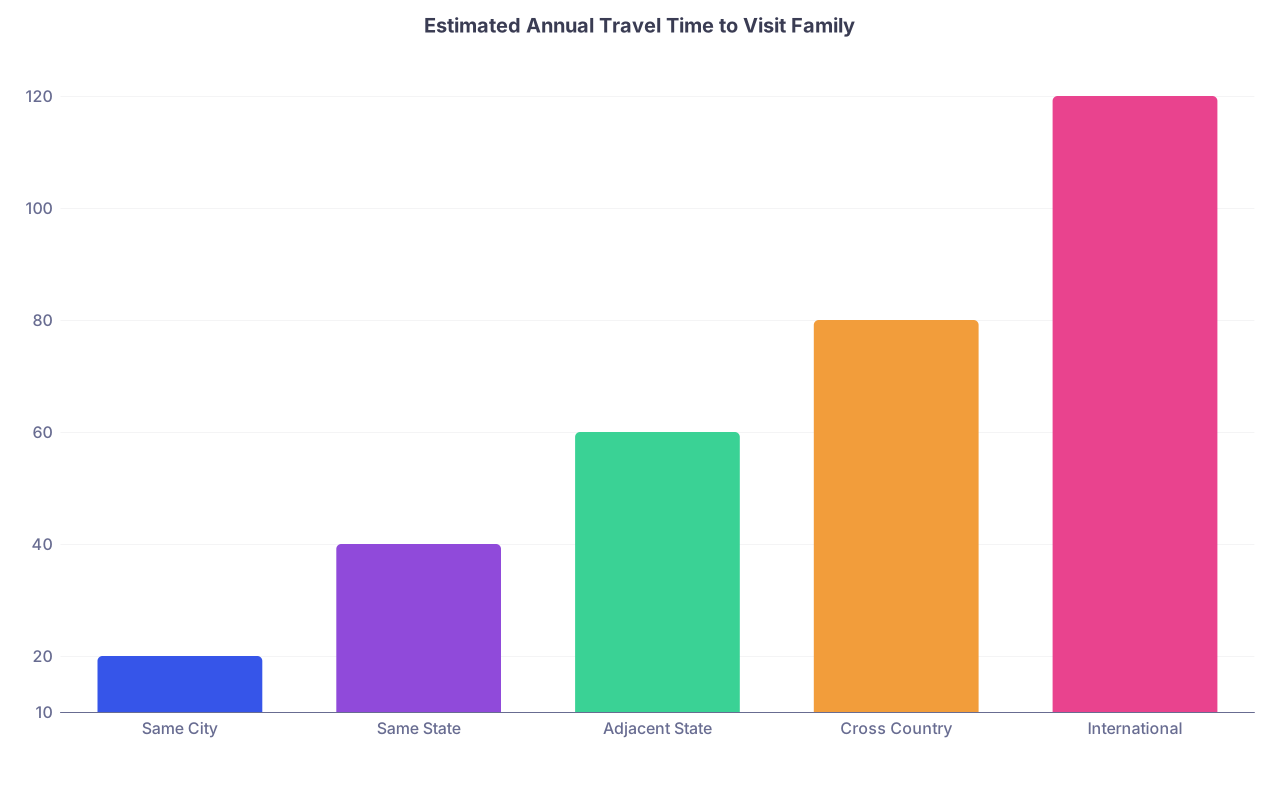
Distance feels less monstrous when you put numbers on it.
| Category | Value |
|---|---|
| Same City | 20 |
| Same State | 40 |
| Adjacent State | 60 |
| Cross Country | 80 |
| International | 120 |
Those numbers above? Rough total hours per year spent in transit for 3 round trips. Even cross-country is… a few days of travel, total. That doesn’t make it emotionally easy, but it’s less than your brain’s “I’ll never see them again” narrative.
Do this:
- Look up flights or drives for the year: price ranges, durations.
- Pick 2–3 likely visit times (e.g., Thanksgiving, one random 3-day weekend, maybe a week post-boards).
- Rough budget: flights + rideshares + gifts/food.
Does the budget suck? Probably. But now you’re dealing with a real number, not a vague doom cloud.
3. Stalk Your New City Like It’s Part Of UWorld
You don’t have to fall in love with it. Just make it less unknown.
Search for:
- Neighborhoods where residents typically live (ask the chiefs, they always know)
- Commute times to the hospital at 6 am, not just mid-day
- Safety data (not to be alarmist, just aware)
- Closest:
- 24h pharmacy
- Cheap grocery store
- Park or gym
- Coffee place that opens before 7 am
- Walkable areas for early morning or post-call decompression
You’re building a “minimum viable life,” not curating your dream aesthetic. Function over vibes.
Building a Support System Before You Even Arrive
The single biggest mistake people make when matching far away is thinking: “I’ll just figure out friends when I get there.” Then the job hits like a truck and they’re too exhausted to find a dentist, let alone a friend group.
1. Use Your Co-Intern Group
Ask the coordinator or chief residents if there’s a group chat for incoming interns. If there isn’t, offer to help start one. It can be simple:
- WhatsApp or GroupMe
- “Incoming IM Interns 2025–2026” or whatever
Then actually post in it:
- “Anyone else moving without family? Thinking of looking for housing near X neighborhood.”
- “Anyone flying in mid-June and wants to split a Costco run?”
- “Anyone interested in sharing a place?” (if that feels right)
You’re not trying to force instant best friends. You’re trying to identify two or three people who might end up being your “call when everything sucks” humans.
2. Identify Mental Health Backups
Residency programs love to say “We have mental health resources!” and then bury them in a 40-page PDF. Don’t wait until you’re crying in your car to figure out how to get help.
Before you move:
- Find out if the hospital has free or low-cost counseling for residents.
- Ask how to access it without going through your PD.
- See if your new insurance covers telehealth therapy (many do).
You might not need it right away. But when you’re 3 months into wards, 10 days into a 12-day stretch, and missing your family so much your chest hurts, you’ll want that number ready.
3. Bring Rituals With You
Tiny, stupid-seeming rituals make a huge difference when you’re far from home.
- Weekly Sunday call with your parents or siblings
- Friday-night “debrief” FaceTime with a friend from med school
- Shared photo album with your family where people just drop daily life pictures
- Watching a show “together” while on call-free days, texting during it
Residency will attack your identity. Being far from family makes that hit harder. Rituals anchor you.
Inside the First Months: What The Distance Actually Feels Like
Let’s be honest about PGY-1 far from home.
You’ll have days where:
- You’re on nights, everyone you love is asleep when you get off
- You miss a wedding, birthday, or funeral and feel like the worst person alive
- You’re driving home from a brutal code thinking, “I just want my mom,” regardless of how old you are
You will also have unexpected good things:
- Co-interns who start to feel like cousins you chose
- A nurse who checks in on you like an aunt
- A favorite attending who backs you up so hard you feel genuinely protected
- A random day off where you explore someplace new and think, “Okay… I could maybe survive here”
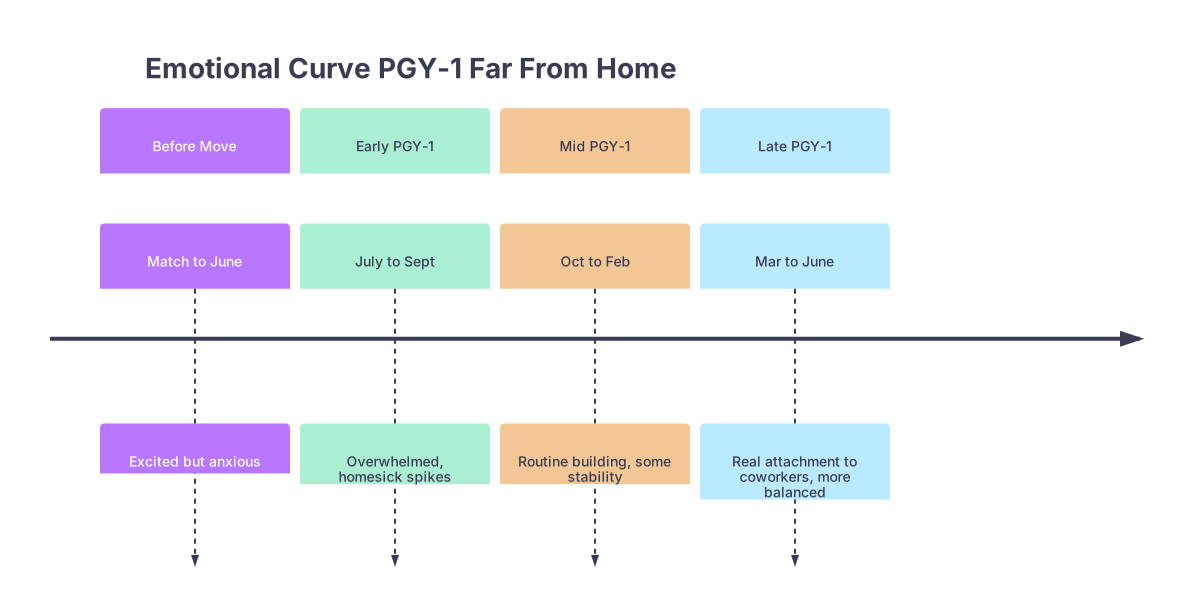
Here’s the pattern I’ve seen over and over:
| Period | Event |
|---|---|
| Before Move - Match to June | Excited but anxious |
| Early PGY-1 - July to Sept | Overwhelmed, homesick spikes |
| Mid PGY-1 - Oct to Feb | Routine building, some stability |
| Late PGY-1 - Mar to June | Real attachment to coworkers, more balanced |
The worst emotional collision is usually July–September:
- You don’t know what you’re doing
- You don’t know anyone well enough to be vulnerable
- You’re too tired to call home as much as you promised
- Everyone at home has started adapting without you
That period is survivable. Not by grinding through alone, but by treating “protecting my connections” like an actual task, not an optional luxury.
Making Peace With The Decision You Didn’t Fully Choose
You might keep looping back to: “Did I mess up my rank list? I should’ve ranked that slightly worse program closer to home higher.” That mental rerun can eat you alive.
Here’s the harsh truth: your rank list is frozen. No amount of self-blame rewrites it. The only thing you can change now is the story you tell yourself about what happened.
Two stories you could pick:
- “I chose wrong. I prioritized prestige or gut feeling and now I’m being punished with distance.”
- “I took a chance on a program that will challenge me, even if the geography hurts. I can be sad about the distance and still commit to making this work.”
Story #2 isn’t magical thinking. It’s you deciding not to rewrite history in the most self-cruel way possible.
If, after PGY-1, it truly isn’t working—if the program is toxic, if the distance is unmanageable, if your life circumstances change drastically—people do transfer. It’s not simple, but it happens. You’re not signing in blood that you’ll tolerate misery at all costs.
Practical Tiny Steps That Actually Help
You don’t need a life overhaul. You need a few controllable levers.
| Action | When To Do It |
|---|---|
| Schedule weekly family call | Before internship starts |
| Join co-intern group chat | As soon as it exists |
| Identify therapy options | Before or early PGY-1 |
| Plan 1–2 concrete visits | During pre-residency months |
| Save emergency travel fund | From first few paychecks |
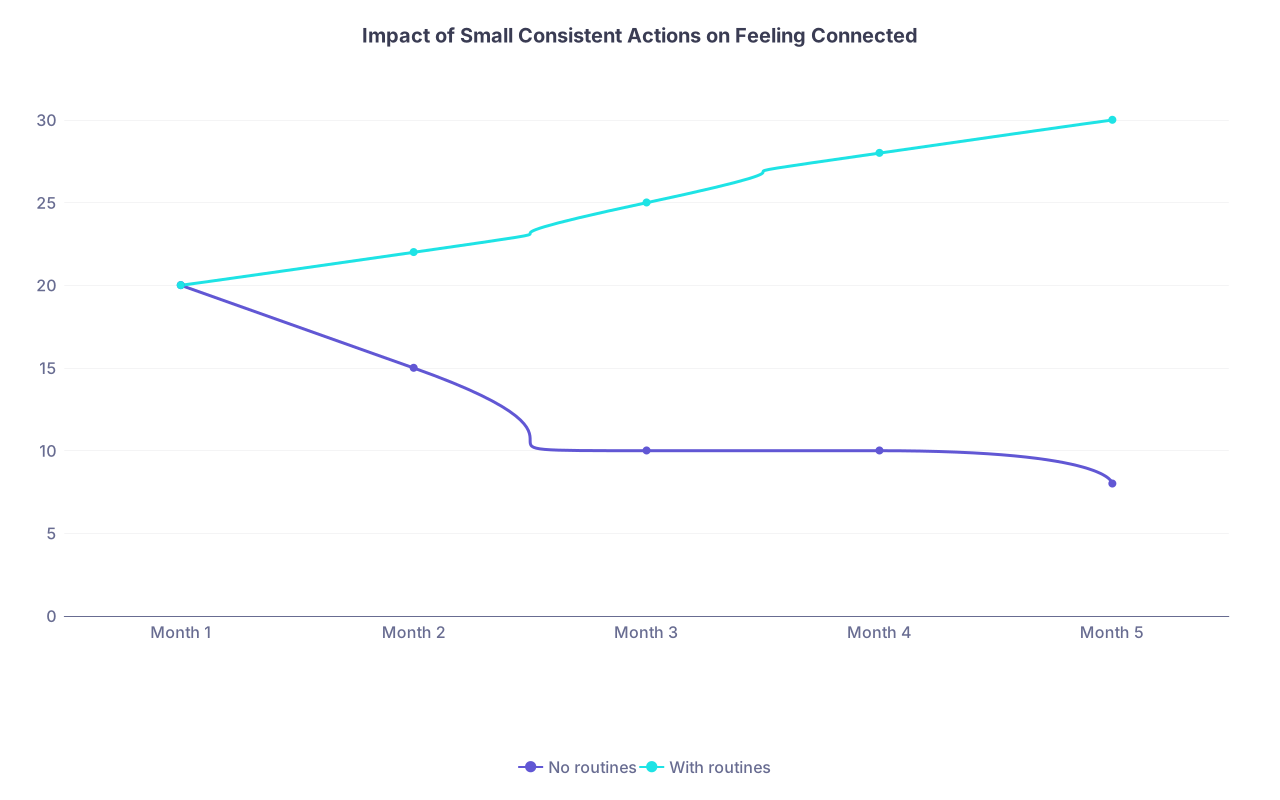
And one more nerdy but useful thing:
| Category | No routines | With routines |
|---|---|---|
| Month 1 | 20 | 20 |
| Month 2 | 15 | 22 |
| Month 3 | 10 | 25 |
| Month 4 | 10 | 28 |
| Month 5 | 8 | 30 |
Is that chart real data? No. But the shape is real: with even basic routines, the “I’m totally alone” feeling drops faster.
If You’re Already Spiraling
If your brain is doing the “I ruined my life” monologue on loop, create a simple rule for yourself:
No life decisions or final verdicts on your future during:
- Post-call days
- Between 10 pm and 7 am
- The week after any major bad day (death, code, big mistake)
Distance amplifies every low moment. That doesn’t mean the low moment is the full truth.
You can be:
- Sad you’re far from family
- Angry this is what training requires
- Worried about all the what-ifs
and still end up okay. Those emotions don’t predict your ending. They just describe the chapter you’re in.
You haven’t failed by matching far. You’ve joined a huge, quiet club of residents carrying homesickness under their white coats. Most of them adjust. Most of them are glad they stuck it out. A lot of them even end up weirdly grateful for the growth that came from getting yanked out of their comfort zone—though that usually comes much later.
For now, your job isn’t to love this. It’s to survive it without abandoning yourself or your people.