
It’s late March. Match results are out. Your email says you’re moving to a city you barely know, to a hospital you’ve maybe visited once, starting July 1. And right now you have: no apartment, no roommates, no idea where to live, and no real friends there.
Your classmates are posting “So excited to be moving to X!!” with cute partner photos and “roomie found!!” on Instagram. You’re sitting with twelve Zillow tabs open, a Google Map zoomed out way too far, and this horrible feeling that you’re already behind and somehow ruining intern year before it even starts.
Let’s talk about that. Honestly. Because I know exactly how ugly these thoughts get.
The worst-case scenarios running through your head (and what’s actually true)
Here’s what I’m guessing you’re thinking:
- “What if I can’t find any housing by July 1 and I start residency… homeless?”
- “Everyone else probably already has roommates. I’m going to be the weird loner who lives with someone’s grandpa or 4 random undergrads.”
- “If I don’t live near my co-interns, I’ll never make friends. I’ll just go to work, go home, and rot.”
- “The program will secretly judge me if my housing situation is chaos, and I’ll start off looking disorganized.”
Let me cut through that.
Do residents sometimes scramble for housing in June? Yes.
Do people start residency literally homeless? No. That’s not a thing programs let happen.
You might end up in less-than-dream housing at first. A sublet. A tiny studio. Someone’s basement. Shared housing with people you don’t love. That’s actually… very normal. A ton of residents treat year 1 housing as “temporary survival mode,” then move once they understand the city and their schedule.
Same with friends. Most interns do not arrive with fully formed friend groups. They meet people in orientation, at work, in call rooms at 2 a.m. People show up scared and awkward. You’re not the only one.
You’re not behind. You’re just anxious. (Reasonably anxious, honestly.)
So let’s break this into two pieces: housing, and humans.
Step 1: Stop thinking “perfect forever home,” start thinking “good enough for 6–12 months”
Your brain wants: the perfect apartment, perfect location, perfect roommate, under budget, walkable to everything. By July. In a city you don’t know.
That’s… unrealistic. And paralyzing.
The switch that helps:
You are not choosing your forever home. You are choosing an initial landing pad so you aren’t panicking during intern orientation.
What timeline actually looks like
Most people lock something in between late March and mid-June. You’re still in the window.
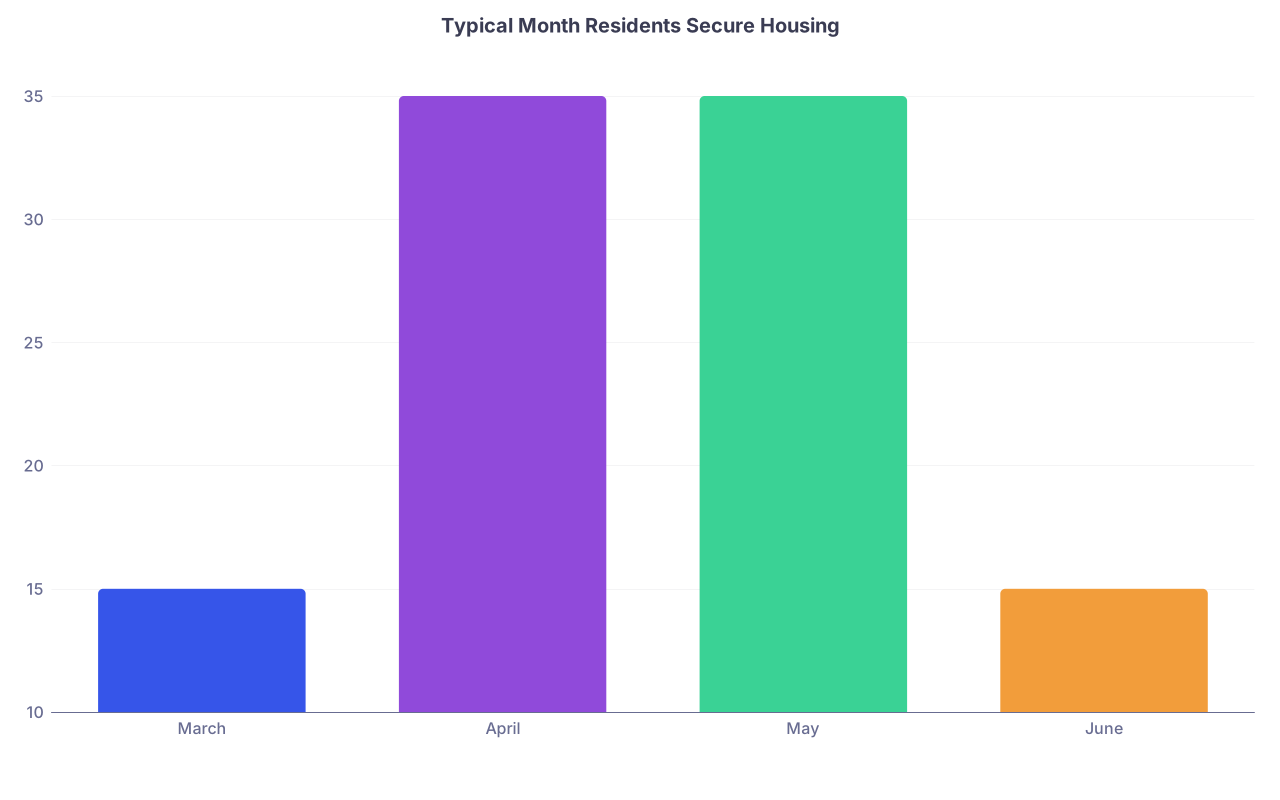
| Category | Value |
|---|---|
| March | 15 |
| April | 35 |
| May | 35 |
| June | 15 |
Translation: a huge chunk of people are scrambling in May and June. You’re not some disaster outlier if you’re still unsure in April or May.
What you actually need to decide first
Not “exact building” or “exact roommate.” Just three things:
How far are you realistically willing to commute?
For residency, “20 minutes” on paper often turns into 40 with traffic and parking. Under 30 minutes is ideal for intern year.Car or no car?
This changes everything. If you’ll have a car, you can live a bit further, but you must factor in parking near the hospital. Some places are a nightmare.Budget ceiling.
Not theoretical budget. Real budget after loan payments, car, insurance, etc. Intern pay is not glamorous. Brutal to admit, but better now than mid-year panic.
If you’re stuck, do this today: email or message a current resident and ask them three specific things: best neighborhoods for interns, where most interns actually live, and areas to avoid for safety or commute.
Step 2: Use residency-specific housing channels (not just Zillow and vibes)
Right now you’re probably refreshing Zillow, Apartments.com, and seeing either nothing in your price range, or everything requiring move-in dates that don’t line up.
You need resident-specific pipelines. These exist, but programs don’t always advertise them well.
Here’s where to look:
Program coordinator
Email them and literally say: “Do you have a listserv/Facebook/WhatsApp/Slack where outgoing residents post apartments or room openings?”
Half the time they say, “Oh yes, here’s the link,” like it’s obvious. It isn’t.GME office or hospital HR
Some hospitals maintain “housing bulletins” with postings from staff, residents, nurses who want roommates or are leaving their units.Residency class GroupMe/WhatsApp
A lot of programs set this up after Match. If you’re not in one yet, ask the coordinator to add you. People will start posting: “Anyone looking for a roommate?” “Anyone interested in a 2BR near X?”Outgoing PGY-3/PGY-4s
They’re moving. Which means their apartments and rooms are opening. And landlords love continuity. Incoming resident replacing outgoing resident is their dream.
You’re terrified you’ll be the last one picked, like dodgeball. Real talk: there is almost always more housing churn than incoming residents. The main issue is finding the channels, not “running out.”
To make this less abstract:
| Source | What You Might Find |
|---|---|
| Program listserv | Rooms in resident houses/apartments |
| Facebook groups | Sublets, short leases, roommates |
| WhatsApp/GroupMe | Co-interns seeking roommates |
| GME office board | Staff/resident rentals, roomshares |
| Outgoing seniors | Lease takeovers near hospital |
Step 3: Accept that a short-term or “meh” option is not failure
Your anxiety is probably saying something like:
“If I don’t find a nice long-term lease in the best neighborhood, I’ve already screwed up adulthood.”
No. Sometimes the smartest move is deliberate imperfection.
Situations that are actually fine:
- 3–6 month sublet near the hospital while you figure out the city
- Month-to-month room in a house with 2–3 other people you don’t plan to be best friends with
- Tiny studio that’s safe and close but not aesthetic enough for Instagram
You need three things for intern year housing:
- Safe
- Reasonably close
- Not financially destroying you
Everything else is bonus.

I’ve seen residents start in a depressing, dark studio with loud neighbors, then by PGY-2 move into a much better place with co-residents they met on the job. That’s the more typical path than “perfect day-one setup.”
Give yourself permission to treat Year 1 as Phase 1 housing.
Step 4: “What if I show up knowing absolutely no one?”
This is the part that probably scares you more than the housing. Pretending it’s just about apartments is easier than saying:
“I’m scared I’ll be alone.”
Here’s the unglamorous truth:
Most people show up alone or nearly alone. Even the ones who matched with a partner or friend still feel awkward and lost.
Residency is weirdly designed to force people together. You will have:
- Orientation in a room full of other people who also don’t know anyone
- Group chats that start buzzing with “Anyone want to grab dinner after orientation?”
- Workroom small talk, night float misery bonding, “we survived this call” breakfasts
It won’t be immediate soulmates. But the floor is pretty high: you will have people.
If you want to stack the deck a bit:
Find or create the class group chat
If it doesn’t exist, you starting one actually makes you look like a leader, not a try-hard. “Hey everyone, I’m [Name], incoming PGY-1. Made this so we can share housing info / questions / memes.”Send 1:1 messages that are low-pressure
“Hey, saw you’re also going to [Program]. I’m [Name], currently at [Med school]. Also frantically apartment hunting. How’s your search going?”
Yes, it feels awkward. But it works. People are relieved someone else is being brave first.
Step 5: What if you’re moving very late or your housing falls through?
This is the scenario your brain is looping:
“It’s June 25, my plan fell apart, and I have nowhere to live.”
Let’s be blunt about what you do then, because knowing there’s a backup plan can calm you down now.
Tell your program coordinator early, not at the last second.
Say: “My housing fell through unexpectedly. I’m working on backups but I may need short-term options for the first 1–2 weeks. Do other residents know of temporary rooms or sublets?”
They will not be shocked. This happens.Ask residents if anyone can host you short-term.
There is almost always someone with a spare room, a couch, or a partner who’s away for a few weeks.Book a short-term stay if you absolutely must
Even a cheap extended-stay hotel or Airbnb for 1–2 weeks while you lock in something longer is survivable. Annoying and expensive, yes. But survivable.
You are not going to be sleeping in your car and showing up on rounds. No one will let that stand.
To make that concrete:

| Step | Description |
|---|---|
| Step 1 | Housing falls through |
| Step 2 | Email coordinator |
| Step 3 | Ask resident group for temp room |
| Step 4 | Stay 1 to 2 weeks |
| Step 5 | Book short term Airbnb or hotel |
| Step 6 | Search for longer term place |
| Step 7 | Found temp housing |
Step 6: Social worst-case: “What if everyone else already has a group?”
This fear is loud:
“Everyone else will already have roommates, inside jokes, plans. I’ll be tagging along or eating alone after call.”
From watching multiple classes go through this: those super-bonded groups you see on social media? Most of them formed after orientation, not before. Or even mid-year after shared trauma on wards.
Here’s how it usually goes:
- July: Everyone is polite, slightly stiff, trying to seem competent
- August–September: People start grabbing coffee, complaining about schedules, forming text chains
- Late fall: True “these are my people” friendships start to solidify
You’re comparing your starting line to someone else’s Year 2 Instagram. It’s not a fair comparison.
To make this easier on yourself:
Say yes to the first 3 social invites, even if you’re tired
First happy hour, first “let’s try that taco place,” first board-game night someone hosts. You don’t have to stay forever, you just have to show up.Initiate small things that are low-commitment
“Anyone want to grab lunch after morning report?” sounds minor but becomes ritual.

You don’t need to become best friends with your co-interns in week one. You just need a few familiar faces and neutral relationships. The deeper stuff comes later.
Step 7: What to do TODAY so you’re not just doom-scrolling
You can’t fix all of this in one day, but you can move from “paralyzed doom” to “slightly less doomed and doing something.”
Pick 2–3 of these and actually do them right now:
- Email your program coordinator: ask for resident housing lists/groups and the incoming class chat
- DM or email one current resident: ask where most interns live and what neighborhoods they’d personally avoid
- Post in your incoming class group (if you’re in one): “Anyone still looking for a roommate or interested in living near X?”
- Identify 2–3 neighborhoods within your target commute and start a saved search with price filters on one website
- Tell one friend or family member: “I’m really anxious about housing/friends” instead of pretending you’re fine
None of this guarantees perfection. It does create momentum. And momentum + time usually beats anxiety.
FAQs
1. What if I don’t know yet whether I’ll have a car — should I still start looking?
Yes. Start anyway, just with two parallel tracks in mind. Ask current residents which neighborhoods work well for:
- Residents with cars (parking, traffic, safety)
- Residents without cars (public transit, walking, biking)
You don’t need the exact address today. You just need to shrink the map. Worst case, you pivot once your car situation is finalized — but at least you’ll already know which areas are viable for each scenario.
2. Is it bad if I don’t live with co-interns my first year?
Not bad. Common. Some people prefer a bit of separation between work and home. You can still be close friends with co-interns and live alone, or live with non-med people. The only time this becomes a real issue is if you isolate yourself completely — go to work, go home, never see anyone — because you’re too anxious to engage. That’s a social anxiety problem, not a housing-with-co-interns problem.
3. What if my housing ends up sketchy or noisy and I’m stuck in a lease?
Then it’s a miserable but temporary problem, not a life-ending one. A lot of residents have a “bad first apartment” story. You:
- Document serious issues (safety, infestations, no heat) and, if needed, reach out for legal/tenant support
- Spend more time out of the apartment (study in hospital library, hang out with co-residents)
- Start planning your exit as soon as your lease allows, and line up something better with the knowledge you’ve gained about the city
You’ll be tired and annoyed. You’ll also be okay. And you’ll be much savvier the second time.
4. I’m introverted and socially awkward. Will I actually make friends in residency?
Yes, unless you lock yourself in your room and avoid all human contact. Residency is intense forced proximity. You literally spend 60–80 hours a week embedded in teams. You don’t have to be the life of the party. You just need to be:
- Kind
- Reliable
- Willing to occasionally say yes to low-key social stuff
There are introverts, socially anxious people, and “I hate small talk” people in every program. They still end up with at least a small circle. You will too, even if it takes longer than you want.
Open your email right now and draft one message to your program coordinator asking about housing resources and your incoming class chat. Don’t overthink it. Just send it. That one tiny action will do more for you than another hour of scrolling listings and spiraling.