The MCAT does not test “all of biochemistry.” It tests a handful of specific enzyme traps that ruin borderline scores.
You do not need to memorize every intermediate in glycolysis. You do need to know exactly which enzyme is broken when a question hints at fasting hypoglycemia, or why a deficiency causes hemolytic anemia instead of liver failure. That is the level of precision the exam quietly expects.
Let me walk you through the pathways and enzymes that repeatedly show up. Not the whole textbook. Just the landmines.
The MCAT’s Real Biochem Game: Pattern, Not Volume
The MCAT uses biochemistry to do three things:
- Test your ability to read a pathway figure you have never seen before.
- Check whether you recognize a few high‑yield “named” enzymes and their logic.
- Force you to connect enzyme function to a clinical or experimental scenario.
If you’re trying to brute-force memorize every single enzyme name and intermediate, you are wasting time. You want:
- “Anchor” pathways: glycolysis, gluconeogenesis, TCA, ETC/oxidative phosphorylation, glycogen, PPP, urea cycle, β-oxidation, key amino acid derivatives.
- High-yield enzymes: the rate-limiting steps, the unique steps, and the ones tied to classic deficiencies.
Here is how I would structure targeted enzyme review for the MCAT: know the trap questions for each core pathway.
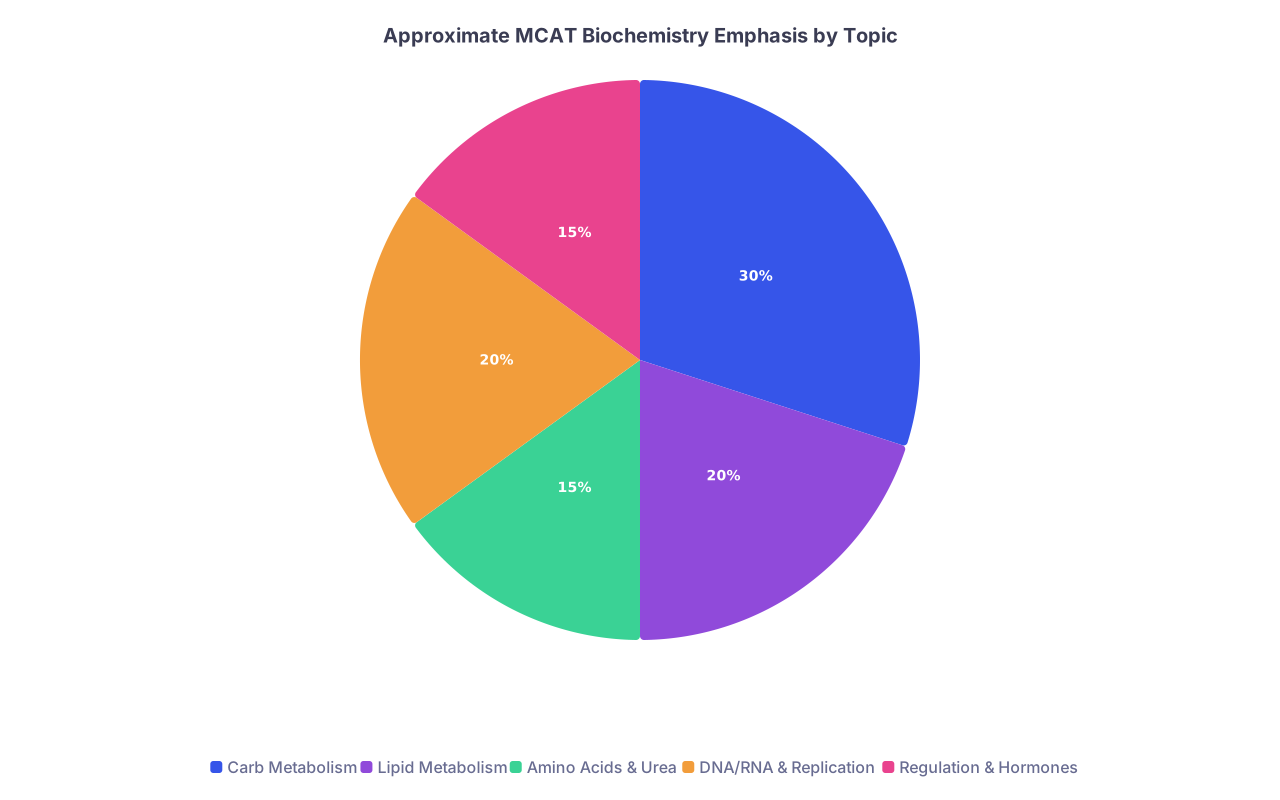
| Category | Value |
|---|---|
| Carb Metabolism | 30 |
| Lipid Metabolism | 20 |
| Amino Acids & Urea | 15 |
| DNA/RNA & Replication | 20 |
| Regulation & Hormones | 15 |
Glycolysis & Gluconeogenesis: The Irreversible Step Traps
MCAT questions love the “irreversible vs reversible” distinction and the fasting vs fed state.
The real enzymes glycolysis questions are about
You do not need to recite every step. You do need to be fluent with these:
- Hexokinase vs glucokinase
- Phosphofructokinase-1 (PFK-1)
- Pyruvate kinase
- Lactate dehydrogenase
- Pyruvate dehydrogenase complex (PDH)
What they hit you with:
1. Hexokinase vs glucokinase
Classic trap: both phosphorylate glucose to glucose-6-phosphate, but the questions test:
Location:
- Hexokinase: most tissues.
- Glucokinase: liver and pancreatic β-cells.
Km and affinity:
- Hexokinase: low Km (high affinity), saturated at low glucose.
- Glucokinase: high Km (low affinity), active only when glucose is high (postprandial).
Regulation:
- Hexokinase is inhibited by its product (G6P).
- Glucokinase is induced by insulin.
MCAT-style stem:
“A mutation causes pancreatic β‑cells to have decreased glucose uptake and reduced insulin secretion at moderately elevated blood glucose. Which enzyme is most likely affected?”
Correct: Glucokinase. If you pick hexokinase, you did not understand tissue specificity.
2. PFK-1 – the “committed step”
This is one of the most testable enzymes in all biochemistry.
- Role: Fructose-6-P → Fructose-1,6-bisphosphate
- Regulation:
- Activated by AMP, fructose-2,6-bisphosphate (F2,6-BP)
- Inhibited by ATP, citrate
They love the hormonal angle: insulin vs glucagon through PFK-2/FBPase-2 controlling F2,6-BP levels.
Trap wording: “Which hormone increases the activity of phosphofructokinase-1 in hepatocytes?”
Correct: Insulin, via increased F2,6-BP.
3. Pyruvate kinase
- Role: final irreversible step of glycolysis (PEP → pyruvate, generating ATP).
- Deficiency: hemolytic anemia due to lack of ATP in RBCs, causing rigid cells that are destroyed in spleen.
If a patient has:
- Chronic extravascular hemolysis
- Increased 2,3-BPG
- Normal G6PD
think pyruvate kinase deficiency.
4. Lactate dehydrogenase (LDH)
Anaerobic vs aerobic metabolism trap.
- Catalyzes: pyruvate ↔ lactate, regenerating NAD⁺ for glycolysis.
- If ETC is blocked (e.g., cyanide, CO), pyruvate is shunted to lactate.
- Clinical correlation: lactic acidosis, high NADH/NAD⁺ ratio.
MCAT angle: “Under hypoxic conditions, which reaction allows glycolysis to proceed by regenerating NAD⁺?”
LDH is the answer.
5. Pyruvate dehydrogenase (PDH)
You must know:
- Pyruvate → Acetyl-CoA (link between glycolysis and TCA).
- Requires multiple cofactors: “Tender Loving Care For Nancy”
- Thiamine (B1), Lipoic acid, CoA (B5), FAD (B2), NAD⁺ (B3).
PDH deficiency trap:
- Neurologic defects, lactic acidosis, elevated alanine (transamination of pyruvate).
- Worsens with high-carbohydrate intake.
- Treatment: ketogenic nutrients (high fat or ketogenic AAs like leucine, lysine).
They also love to blend this with thiamine deficiency (alcoholic who gets a glucose load → Wernicke worsening).
Gluconeogenesis: bypass enzymes they expect you to know
You do not need every intermediate. Only the “opposite” irreversible steps:
- Pyruvate carboxylase
- PEP carboxykinase
- Fructose-1,6-bisphosphatase
- Glucose-6-phosphatase
What matters:
- Location: mostly liver; kidney can contribute.
- Pyruvate carboxylase: pyruvate → OAA (mitochondria), requires biotin, activated by acetyl‑CoA.
- PEP carboxykinase: OAA → PEP, needs GTP.
- F-1,6-bisphosphatase: rate-limiting step of gluconeogenesis; inhibited by AMP and F2,6-BP.
- G6Pase: in ER of liver; absent in muscle – that is the MCAT trap.
MCAT-style twist: “Which tissue cannot contribute directly to blood glucose via glycogen breakdown?”
Answer: Skeletal muscle, because it lacks glucose-6-phosphatase.
TCA Cycle & Electron Transport: Where They Hide Conceptual Questions
They rarely ask you to identify the 6th step of TCA. They absolutely will test:
- Rate-limiting step
- NADH/FADH₂ production
- Where inhibitors act
High-yield enzymes:
- Citrate synthase
- Isocitrate dehydrogenase (rate-limiting)
- α-ketoglutarate dehydrogenase (similar cofactors to PDH)
- Succinate dehydrogenase (complex II of ETC)

| Step | Description |
|---|---|
| Step 1 | Glucose |
| Step 2 | Glycolysis |
| Step 3 | Pyruvate |
| Step 4 | PDH Complex |
| Step 5 | TCA Cycle |
| Step 6 | NADH/FADH2 |
| Step 7 | ETC/Oxidative Phosphorylation |
| Step 8 | Lactate |
Key traps:
- Rate-limiting enzyme of TCA: isocitrate dehydrogenase.
- Inhibitors of α‑ketoglutarate dehydrogenase and PDH: arsenic, deficiency of thiamine.
- Succinate dehydrogenase is both a TCA enzyme and Complex II of ETC. They love that dual identity.
For ETC/oxidative phosphorylation:
- Complex I: NADH dehydrogenase
- Complex II: succinate dehydrogenase (FADH₂)
- Complex IV: cytochrome c oxidase – inhibited by cyanide, CO.
- ATP synthase: driven by proton gradient.
High-yield conceptual questions:
- Uncouplers (e.g., 2,4-DNP, high-dose salicylates, brown fat UCP1) increase O₂ consumption, decrease ATP production, generate heat.
- Cyanide/CO: block electron transport, decrease O₂ consumption by tissues even if blood O₂ is normal or high.
They might give you an O₂ consumption graph for isolated mitochondria +/- an uncoupler vs a complex inhibitor and ask you to interpret. That is where understanding beats memorization.
Glycogen Metabolism: The Two Enzymes You Cannot Miss
You absolutely have to know:
- Glycogen synthase
- Glycogen phosphorylase
- Branching enzyme
- Debranching enzyme
And you must link glycogen phosphorylase to its hormonal control.
Core logic:
Glycogenesis (building):
- Glycogen synthase: rate-limiting, activated by insulin (dephosphorylated form active).
- Branching enzyme: creates α-1,6 branches.
Glycogenolysis (breaking):
- Glycogen phosphorylase: rate-limiting, activated by glucagon (liver), epinephrine, AMP (muscle), active when phosphorylated.
- Debranching enzyme: moves short chains (4:4 transferase) and cleaves α-1,6 bond (α-1,6-glucosidase).
They like to test the different consequences of liver vs muscle glycogen phosphorylase issues.
- Liver glycogen phosphorylase deficiency → Hers disease: mild fasting hypoglycemia, hepatomegaly.
- Muscle glycogen phosphorylase deficiency → McArdle: exercise intolerance, myoglobinuria, “second wind” phenomenon.
MCAT-style enzyme trap:
“Patient experiences painful muscle cramps and dark urine after intense exercise. Blood glucose is normal. Forearm exercise test shows no rise in lactate. Which enzyme is deficient?”
Answer: Muscle glycogen phosphorylase (McArdle). The normal glucose excludes liver enzyme problems.
Pentose Phosphate Pathway (HMP Shunt): Only Two Enzymes, One Disease
High-yield PPP is about:
- Glucose-6-phosphate dehydrogenase (G6PD)
- Transketolase (for thiamine linkage)
Roles:
- G6PD: rate-limiting, G6P → 6-phosphogluconolactone, generates NADPH.
- NADPH uses: reductive biosynthesis (FA, cholesterol), glutathione reduction, respiratory burst, cytochrome P450.
G6PD deficiency is a flagship MCAT topic:
- XR inheritance
- Triggered by oxidant stress: sulfa drugs, antimalarials (primaquine), fava beans, infections.
- RBCs vulnerable because they rely on NADPH to keep glutathione reduced.
- Hemolytic anemia, Heinz bodies, bite cells.
They may never mention G6PD directly. Instead: “Which pathway that generates NADPH is impaired?” or “Defect in which enzyme of the pentose phosphate pathway would increase susceptibility to oxidative damage?” Answer: G6PD.
Transketolase: they sneak this in with thiamine deficiency questions. RBC transketolase activity increases with thiamine administration. You do not need the full reaction, just know it uses thiamine as a cofactor.
Fructose & Galactose: The Classic Enzyme-Named Disorders
The exam writers love these because they are clean, discrete enzyme swaps.
Fructose metabolism
Key enzymes:
- Fructokinase
- Aldolase B
Classic trap: “essential fructosuria” vs “hereditary fructose intolerance.”
- Essential fructosuria
- Enzyme: fructokinase deficiency.
- Presentation: benign; fructose appears in urine and blood.
- Why benign: hexokinase can phosphorylate fructose to F6P, so it enters glycolysis.
What they test: “Which enzyme can partially compensate for fructokinase deficiency?” Answer: hexokinase.
- Hereditary fructose intolerance
- Enzyme: aldolase B deficiency.
- Mechanism: F1P accumulates, traps phosphate, inhibits glycogenolysis and gluconeogenesis.
- Symptoms: hypoglycemia, vomiting, hepatomegaly, after weaning.
- Treatment: avoid fructose and sucrose.
This is a favorite MCAT stem: “Infant becomes lethargic, vomits, and sweats after introduction of fruit juices. Labs show hypoglycemia and elevated liver enzymes. Deficiency of which enzyme?” Aldolase B.
Galactose metabolism
Key enzymes:
Galactokinase
Galactose-1-phosphate uridyltransferase (GALT)
Galactokinase deficiency
- Mild. Cataracts in infancy, galactosemia, galactosuria. “Failure to track objects,” “no social smile.”
Classic galactosemia (GALT deficiency)
- Severe. Presents with failure to thrive, jaundice, hepatomegaly, cataracts, intellectual disability if untreated.
- Mechanism: buildup of toxic galactitol in lens and galactose-1-P in tissues.
- Treatment: exclude galactose and lactose (galactose + glucose).
Common trap: they give you a baby with cataracts only and normal liver function → galactokinase deficiency. Baby with cataracts + liver + CNS issues → GALT deficiency.
Urea Cycle & Nitrogen Metabolism: OTC, CPS I, and the “Amino Acid Traps”
The MCAT does not require every urea cycle detail. It does expect:
- Carbamoyl phosphate synthetase I (CPS I)
- Ornithine transcarbamylase (OTC)
- Link between ammonia, urea, and amino acid catabolism.

Two classic enzyme traps:
CPS I deficiency
- Early-onset hyperammonemia, elevated blood NH₃, low BUN.
- No orotic acid in urine (that is the key distinction).
OTC deficiency (X-linked, most common urea cycle defect)
- Hyperammonemia, elevated orotic acid in blood and urine, no megaloblastic anemia.
- Normal or increased BUN? Typically decreased urea, but exam focuses on orotic acid.
They love to contrast OTC deficiency with orotic aciduria due to UMP synthase deficiency, which presents with megaloblastic anemia that does not improve with B12/folate, plus orotic acid in urine.
So:
- Hyperammonemia + orotic acid + no anemia → OTC.
- No hyperammonemia + orotic acid + megaloblastic anemia → UMP synthase problem.
Also know: carbamoyl phosphate in OTC deficiency gets shunted to pyrimidine synthesis → orotic acid. That small mechanistic detail is exactly the kind of thing an MCAT passage will mention in the figure and then ask you to apply in a question.
Lipid Metabolism: β-Oxidation, Carnitine, and Ketones
The MCAT does not expect you to memorize every step of fatty acid oxidation. It does expect you to understand:
- Carnitine shuttle
- Rate-limiting steps of fatty acid synthesis and β-oxidation
- Link to fasting states and ketone bodies
Key enzymes:
- Carnitine acyltransferase I (a.k.a. carnitine palmitoyltransferase I, CPT I)
- Acetyl-CoA carboxylase (fatty acid synthesis)
- HMG-CoA synthase & HMG-CoA reductase (do not mix those up)
Traps:
Carnitine deficiency or CPT I deficiency
- Impaired transport of LCFA into mitochondria → impaired β-oxidation.
- Symptoms: weakness, hypotonia, hypoketotic hypoglycemia.
- Hypoketotic is critical: no ketones because you cannot generate acetyl-CoA from FA.
Medium-chain acyl-CoA dehydrogenase deficiency (MCAD)
- Defective β-oxidation of medium-chain FAs.
- Presents in infancy or early childhood with fasting hypoketotic hypoglycemia, seizures, sudden death.
- Often triggered by long fasting.
Ketone pathways:
- HMG-CoA synthase: key for ketogenesis in liver.
- HMG-CoA reductase: key for cholesterol synthesis. Completely different function. Very easy to confuse when reading fast.
MCAT likes:
“A fasting child with history of seizures presents with vomiting and lethargy. Labs show low blood glucose and low ketone levels. Which pathway is most likely impaired?” Answer points to β-oxidation (e.g., MCAD or carnitine), not glycolysis.
Another question pattern: give you a figure of malonyl-CoA inhibiting CPT I, and then ask about how insulin vs glucagon affect fat oxidation. You should instantly know: insulin → high malonyl-CoA (via acetyl-CoA carboxylase) → inhibits β-oxidation.
Amino Acid Metabolism & Special Enzymes
This is where many students under-prepare. They remember “PKU” and forget almost everything else.
The MCAT expects you to know a few specific enzyme–disease pairs tied to amino acid metabolism and derivatives.
High-yield traps:
- Phenylalanine hydroxylase (PKU)
- Tyrosinase (albinism)
- Homogentisate oxidase (alkaptonuria)
- Branched-chain α-ketoacid dehydrogenase (maple syrup urine disease)
- Cystathionine β-synthase (homocystinuria)
- ALA synthase / ALA dehydratase / ferrochelatase (heme synthesis, especially lead)
| Disorder | Enzyme | Classic Clue |
|---|---|---|
| PKU | Phenylalanine hydroxylase | Musty odor, intellectual delay |
| Albinism | Tyrosinase | Lack of melanin, normal eyes |
| Maple syrup urine dz | BCKD complex | Sweet urine, infant lethargy |
| Homocystinuria | Cystathionine β-synthase | Marfanoid, lens down, clots |
| G6PD deficiency | G6PD | Hemolysis with oxidant drugs |
A few you must be fluent with:
1. Phenylalanine hydroxylase (PKU)
- Converts Phe → Tyr (needs BH₄).
- Deficiency (or BH₄ deficiency) → PKU: intellectual disability, growth retardation, seizures, musty body odor, fair skin.
- Treatment: decrease Phe, increase Tyr.
They may ask: “Why must tyrosine be supplemented in the diet?” Because it becomes an essential amino acid when this enzyme is deficient.
2. Branched-chain α‑ketoacid dehydrogenase (BCKD)
- Metabolizes branched AAs: leucine, isoleucine, valine.
- Deficiency: maple syrup urine disease.
- Presentation: vomiting, poor feeding, urine smells like maple syrup, CNS defects.
Cofactor pattern: same as PDH and α‑KG dehydrogenase (TLCFN). If they mention a thiamine-responsive form, that is the clue.
3. Homocystinuria via cystathionine β-synthase deficiency
- Homocysteine → cystathionine requires B6.
- Deficiency (or B6 deficiency) → elevated homocysteine.
- Clinical: marfanoid habitus, lens subluxation (down and in), thromboembolic events, osteoporosis.
Board-style vs MCAT-style: MCAT cares about the concept “homocysteine elevation increases thrombosis risk” and basic recognition of the enzyme.
4. Heme synthesis and lead poisoning
You do not need the full pathway but you must know the lead-sensitive enzymes:
- ALA dehydratase
- Ferrochelatase
Lead inhibits both, causing:
- Microcytic anemia
- Elevated protoporphyrin and ALA
- Neurologic symptoms, GI pain, “lead lines” on gums, wrist/foot drop in adults; developmental issues in kids.
Enzyme trap: if the stem says “elevated ALA, normal porphobilinogen,” think ALA dehydratase deficiency or lead poisoning. Ferrochelatase inhibition gives high protoporphyrin.
DNA/RNA Enzymes: Polymerases, Telomerase, Topoisomerase
These are fundamentally conceptual on the MCAT.
Core enzymes they test:
- DNA polymerase (prokaryotic I and III logic, but often generalized)
- RNA polymerase (I, II, III)
- Telomerase
- Topoisomerase (targets of fluoroquinolones)
- Reverse transcriptase (HIV and retroviruses)
Key traps:
- RNA polymerase II → mRNA. “II makes mRNA.”
- Telomerase is a reverse transcriptase (RNA-dependent DNA polymerase) that adds TTAGGG repeats to 3' ends.
- Topoisomerase II (DNA gyrase in bacteria) is inhibited by fluoroquinolones. They might ask how replication is affected.
MCAT-style question: “An experimental drug inhibits the ability of eukaryotic cells to add DNA repeats to the ends of linear chromosomes. Which enzyme is the most likely target?” Telomerase, not a DNA polymerase.
How to Actually Study These Enzyme Traps
You do not fix this by rereading Kaplan endlessly. You fix it by:
- Making a one-page sheet of “MCAT enzyme–disease” pairs.
- Making yourself explain, out loud or in writing, why deficiency causes each symptom.
- Doing passage-based questions and asking, “What subtle enzyme clue did they hide?”

| Step | Description |
|---|---|
| Step 1 | List High-Yield Enzymes |
| Step 2 | Make Enzyme-Disease Pairs |
| Step 3 | Explain Mechanisms in Your Own Words |
| Step 4 | Do 10-15 Targeted MCAT Questions |
| Step 5 | Update Weak Enzyme List |
A working plan might look like:
- Day 1: Carb metabolism (glycolysis, gluconeogenesis, glycogen, PPP).
- Day 2: Lipids, ketones, and the urea cycle.
- Day 3: Amino acid disorders and heme/porphyrin.
- Day 4: Nucleic acids and replication enzymes + integrated review questions.
You are not just memorizing names. You are memorizing:
- The direction of the reaction
- The tissue or subcellular location
- The regulation (hormone, allosteric)
- The clinical or experimental consequence of increasing or decreasing activity
Once you get to that level, the weird experimental passages become much less scary. If they invent a new inhibitor upstream of PFK-1, you know ATP use will fall, fructose-6-P will accumulate, and flux through glycolysis will drop. Easy elimination, even if the figure is ugly.
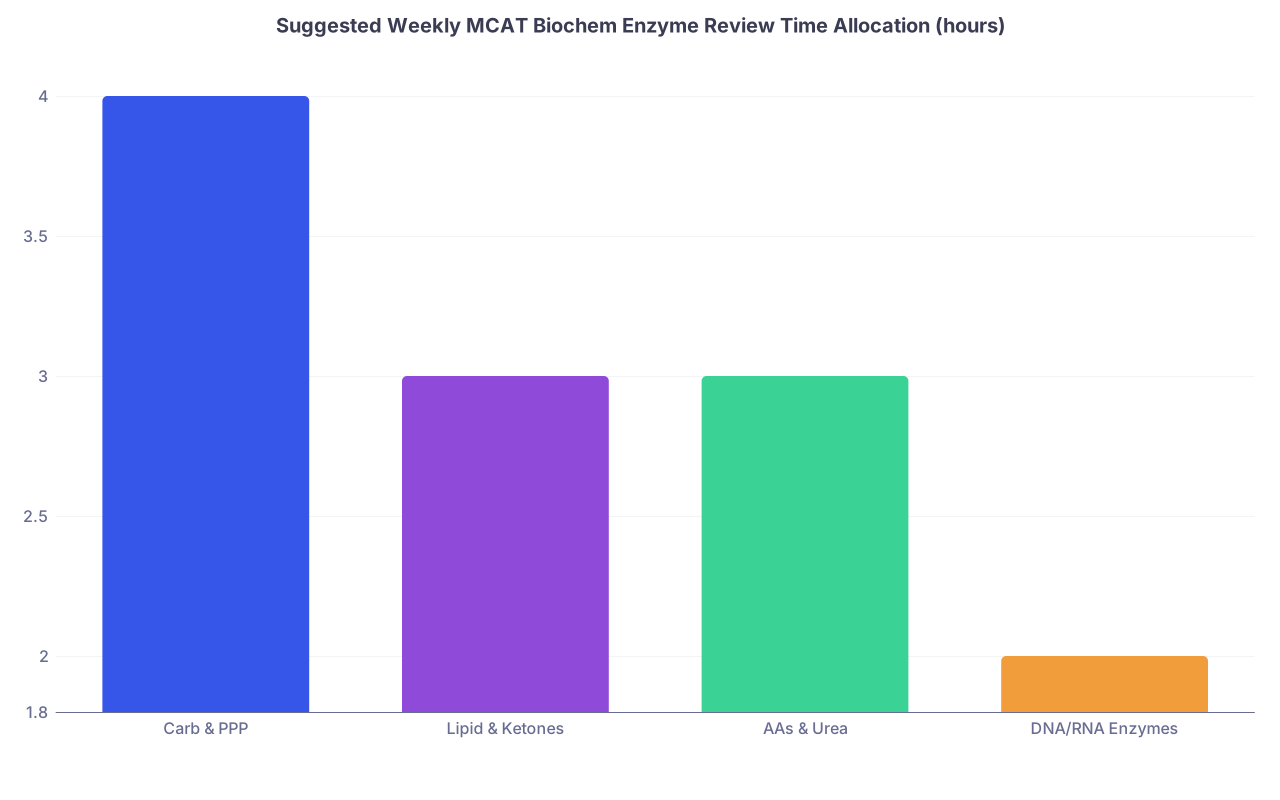
| Category | Value |
|---|---|
| Carb & PPP | 4 |
| Lipid & Ketones | 3 |
| AAs & Urea | 3 |
| DNA/RNA Enzymes | 2 |
Where This Fits in Your Overall MCAT Prep
Biochemistry pathways are not the whole exam. But they are the difference between an okay 126 in Bio/Biochem and a competitive 129–130+. Most people plateau because they keep “reviewing content” and never build that tight, enzyme-specific map in their head.
Once you have these enzyme traps dialed in, the next step is to embed them into real practice passages—AAMC, UWorld, whatever you are using—so that when they show you an unfamiliar pathway, you can quickly anchor it: “This step looks like a dehydrogenase → NADH produced → likely inhibited in high NADH states,” etc.
You are now ready to move from memorizing pathways to reading them like a language. The next major upgrade is learning how to dissect experimental MCAT figures under time pressure—but that is a separate skill set, and a separate conversation.