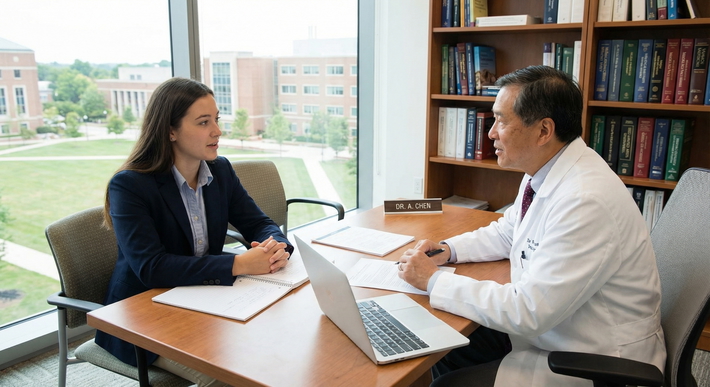
The way you spend the 120 minutes before your interview can make or break years of preparation. Most applicants wing it. The strongest ones run a script.
You need a script.
Below is a minute‑by‑minute, performance-focused morning-of interview routine designed for premeds and medical students. I’m assuming a 9:00 AM start time, in-person interview. I’ll note where to adjust for earlier times, virtual formats, and multi-interview days.
2–3 Days Before: Lock In the Morning Plan
At this point you should stop “kind of” planning and actually script the morning.
Pick your wake-up time
- Count backwards:
- 2 hours before interview: you arrive at the building
- 2.5 hours before: you leave your lodging
- 3.5 hours before: you wake up
- For a 9:00 AM interview:
- 6:00 AM – Wake
- 7:30 AM – Leave
- 8:00 AM – Arrive on campus
- Earlier interview? Shift everything but keep the 3‑3.5 hour buffer. Yes, even if you “don’t need that much time.” You do.
- Count backwards:
Decide your breakfast
- Choose exact foods now. No morning decisions.
- Rule: nothing new, nothing greasy, nothing heavy.
- Sample:
- Oatmeal with banana + peanut butter
- 1–2 eggs + toast + small fruit
- Yogurt + granola + water
- If staying at a hotel: check breakfast hours and options. If they start at 7 and you need to leave at 6:45? That’s a problem. Fix it now.
Plan your route
- Look up:
- Drive time or transit time
- Parking location and walking distance
- Security or check-in entry points
- Do a trial run the day before if you’re in town. Walk from parking to the exact lobby.
- Look up:
Prepare your “morning-of” packet
- Print or load (offline) the following:
- Schedule
- Interviewer names (if you have them)
- 5–7 bullet story prompts (not essays)
- 3–4 key program facts
- Put in a slim folder or padfolio. This is what you’ll touch during your “calm time” later.
- Print or load (offline) the following:
-
- Main alarm + backup 5–10 minutes later.
- If you’re paranoid (and you should be a little): ask a friend/family member to call you at wake time.
Night Before: Protect the Next Morning
At this point you should be behaving like a professional athlete before game day.
8:00–9:30 PM – Tighten logistics, then wind down
- Lay out:
- Suit, shirt, tie/scarf, belt, socks, shoes
- Undershirt/hosiery if you use them
- Watch (nothing flashy), minimal jewelry
- Pack bag:
- Wallet/ID
- Keys
- Phone + charged power bank
- Printed schedule
- Mints (not gum)
- Small snack (granola bar, nuts)
- Check weather:
- If rain: umbrella, alternate shoes, lint roller.
- If cold: coat that still looks professional.
- Put everything you’ll take by the door or on a single chair. No morning searching.
10:00–10:30 PM – Protect your sleep
- Set “Do Not Disturb” on your phone.
- Put phone out of reach from bed.
- Aim for 7–8 hours of sleep. You might get less from nerves. That’s fine; the point is to give yourself the chance.
- No new research, no “just one more” YouTube interview video. That’s anxiety bait.
Lights out: 10:30–11:00 PM for a 6:00 AM wake.
Morning of: The 120-Minute Performance Plan (For a 9:00 AM Interview)
At this point you stop “preparing” and start performing. This is your pre-game routine.
6:00–6:05 AM – Wake, breathe, don’t grab your phone yet
You’re up.
- Sit on the edge of the bed.
- Take 10 slow breaths:
- In for 4 seconds
- Hold for 2
- Out for 6
- Say (out loud, quietly): “This is just a conversation. I’ve done hard things before.” It’s cheesy. Do it anyway.
Now you can pick up your phone.
6:05–6:15 AM – Quick check, no rabbit holes
- Turn off alarms.
- Scan:
- Email for any urgent program updates (location change, cancellation).
- Texts from coordinators/family.
- Resist:
- News
- Social media
- Group chats
You’re not crowding your brain with noise. Just scanning for landmines.
6:15–6:30 AM – Shower + basic grooming
Fast, predictable, no changes to your usual routine.
- Shower: warm, not super hot (hot can make you feel drowsy).
- Grooming checklist:
- Hair: style the same way you’ve practiced, nothing new.
- Shaving: either clean-shaven or neatly trimmed if you normally wear facial hair.
- Teeth: brush + floss.
- Deodorant (not heavy cologne/perfume; no one wants to smell you from across the room).
You’re not putting on your suit yet. Just underclothes and something comfortable.
6:30–6:45 AM – Light stretching + voice warm-up
Yes, I’m serious. If your body is locked up and your voice is scratchy, you’ll feel off.
- 5–7 minutes: gentle movement
- Neck rolls
- Shoulder circles
- Touch toes / hamstring stretch
- 10–15 bodyweight squats
- 5 minutes: voice wake-up
- Hum lightly up and down (like you’re warming up to sing)
- Read a random paragraph out loud clearly
- Say your name, hometown, and “Tell me about yourself” opener once, conversationally
You’re not practicing full answers yet. You’re just getting your “instrument” online.
6:45–7:00 AM – Breakfast: Fuel, Don’t Experiment
At this point you should be eating exactly what you planned 2–3 days ago.
- Eat slowly. Put your phone away.
- Drink:
- Water first
- Coffee/tea only if you already drink it most mornings.
- Don’t go from “no caffeine ever” to a double espresso today.
- Avoid:
- Heavy dairy if you’re prone to phlegm
- Huge portions
- Orange juice chugging (acid + nerves = heartburn)
You’re aiming to feel slightly hungry by mid-morning, not stuffed.
7:00–7:10 AM – Bathroom, final grooming check
- Bathroom stop now, not “right before I leave.”
- Re-check:
- Hair in place
- Teeth (nothing stuck)
- Skin care if you use it (no shiny forehead)
- If you wear contacts:
- Put them in now, not later. Let your eyes adjust.
7:10–7:20 AM – Suit up with zero decisions
Your outfit is already chosen. Now you just execute.
- Put on:
- Undershirt or camisole
- Shirt/blouse (fully ironed/steamed – should’ve been done last night)
- Pants or skirt
- Socks/hosiery
- Shoes last, but try them on now to make sure nothing feels off.
Quick mirror check:
- Sit down and stand up in your outfit. Anything pulling awkwardly? Adjust now, not in the lobby.
7:20–7:30 AM – Mental priming: 10-minute script
At this point you should be dressed except maybe your jacket. Now you set your mental channel.
7:20–7:25 – Three key stories (headlines only)
Grab your folder or phone notes. Skim, don’t memorize.
- Pick 3–4 stories you know cold:
- A clinical or volunteer story that shows empathy
- A challenge or setback you handled
- A leadership/collaboration moment
- A “why this school/program” angle
- For each, mentally label:
- Situation
- What you did
- What changed
- What you learned
Just jog your memory. Do not start scripting full sentences.
7:25–7:30 – Identity reset
Two quick prompts to yourself:
- “If they remember only one thing about me, it’s that I’m someone who ______.”
- “If they ask nothing I expect, I’ll still show them I’m ______.”
Fill that blank with 2–3 traits max (e.g., curious, coachable, reliable under pressure). This prevents you from sounding generic when you get oddballs questions.
7:30–7:35 AM – Final gear check and leave
At this point you should be heading out the door.
- Grab:
- Keys
- Wallet/ID
- Phone
- Folder/padfolio
- Small snack
- Umbrella/coat if needed
- Shoes on, jacket on or over your arm.
Hard rule: you leave by this time even if you feel “weirdly early.”
7:35–8:00 AM – Commute: Calm body, alert mind
The commute is where people either spike their anxiety or level out.
If you’re driving
- No intense podcasts, no loud music, no interview prep audio.
- Playlist:
- Calm or neutral music
- Or silence
- Focus:
- Smooth driving, deep breathing at stoplights
- Brief mental rehearsal of your opening 30 seconds:
- How you’ll say hello
- How you’ll introduce yourself
If you’re in rideshare/public transit
- Don’t review your whole application. Panic move.
- Acceptable:
- Skim the schedule again
- Glance at your 3–4 key program facts
- Avoid:
- Deep internet rabbit holes
- Changing your answers/strategy at the last second
8:00–8:10 AM – Early arrival, environmental scan
You’re in the building or on campus now. Perfect.
- Confirm:
- Exact check-in location
- Bathrooms nearby
- Water fountain / bottle fill station
- If check-in isn’t open yet:
- Find a quiet corner or bench
- Take 5 long breaths
- Do a quick posture check: shoulders back, chin neutral, feet flat
You should not be the person pacing the lobby.
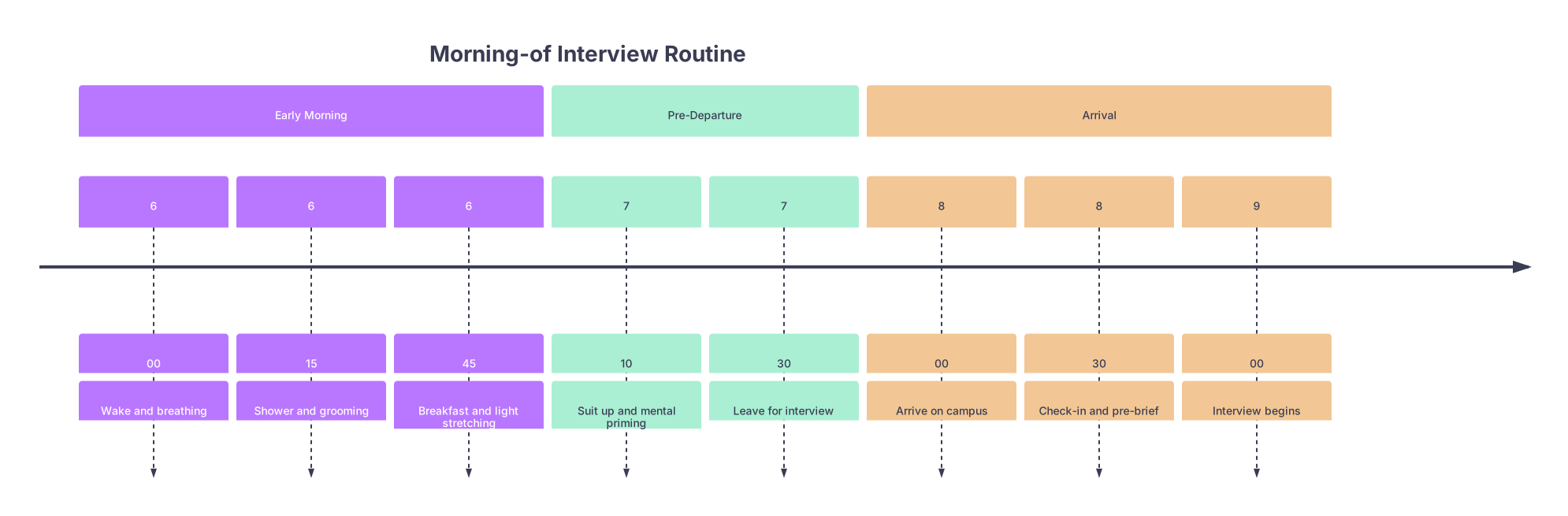
| Period | Event |
|---|---|
| Early Morning - 6 | 00 |
| Early Morning - 6 | 15 |
| Early Morning - 6 | 45 |
| Pre-Departure - 7 | 10 |
| Pre-Departure - 7 | 30 |
| Arrival - 8 | 00 |
| Arrival - 8 | 30 |
| Arrival - 9 | 00 |
8:10–8:25 AM – Bathroom, micro-adjustments, last warm-up
At this point you should be on-site and settling in.
- Head to the bathroom:
- Use it.
- Check hair, tie, collar, buttons, zippers.
- Quick hand wash (warm water) to take the chill off and calm nerves.
- Two-minute voice and posture tune:
- In the stall or private area, quietly:
- Hum for 30–60 seconds
- Say your name, where you’re from, and one sentence about why you’re excited to be here.
- Stand tall, roll shoulders back.
- In the stall or private area, quietly:
You’re preventing the “first words of the day are in the interview” problem.
8:25–8:35 AM – Check-in and social calibration
Now you move from “internal” to “external.”
- At check-in:
- Make eye contact with the coordinator.
- Use a full sentence:
- “Good morning, I’m [Name]. I’m here for the [time] interview day.”
- Sit where directed.
- If other applicants are there:
- Be friendly but not performative.
- You don’t need to dominate the conversation. This isn’t a group interview (unless it is; then different rules).
You’re calibrating to the room’s energy. If it’s quiet, you don’t start a loud debate about MCAT scores.
8:35–8:45 AM – Calm focus: 10 quiet minutes
This is where most people blow it. They either cram notes or spiral. You’re doing neither.
- Pull out your folder or notes.
- 10-minute script:
- Skim your 3–4 key stories (just headings or bullet fragments).
- Glance at:
- 2–3 reasons you like this program
- 1–2 questions you genuinely want to ask
- Close the folder. Put it away.
- Internal script:
- “By this time tomorrow, these interviews will be over. I’ve already done the hard work. I’m just showing them who I actually am.”
You’re locking out last-minute self-doubt. No rewriting your personality at 8:40 AM.
8:45–8:55 AM – Pre-interview activation
At this point you’re minutes away. You’re turning up your energy just a notch.
- Subtle physical activation:
- While seated:
- Press feet into the floor for 5 seconds, release.
- Squeeze your hands into fists for 5 seconds, release.
- Nobody will notice, but your body wakes up.
- While seated:
- Breathing:
- 4 rounds of:
- In through nose for 4
- Hold for 2
- Out through mouth for 6
- 4 rounds of:
- Posture:
- Sit on the front half of the chair.
- Back straight, shoulders relaxed, hands resting loosely.
You’re avoiding both slouchy-tired and hyper-tense.
8:55–9:00 AM – Walking to the room
This is the walk where people suddenly forget how to be human. You’re not going to.
- While you walk:
- Slow your pace half a step if you’re rushing.
- Match your breathing to your steps: in for 3 steps, out for 4–5.
- Mental script (keep it simple):
- “Curious, calm, kind.” Or whatever your 2–3 traits were.
- Right before the door:
- One normal breath in.
- Slight smile (not a grin, just soft).
Then you knock or enter when invited.
Virtual Interview Variation: Key Adjustments
If your interview is virtual, the timeline stays almost identical, with a few key swaps.
60 minutes before (instead of commute)
- Tech check:
- Restart your computer.
- Close all nonessential apps.
- Test:
- Camera framing (head and upper torso visible)
- Audio (mic not peaking, no echo)
- Backup:
- Phone nearby, charged
- Meeting link bookmarked
- Environment:
- Light in front of you, not behind.
- Neutral background (or at least not a messy bed).
- Family/roommates notified: no vacuuming, no loud TV.
30 minutes before (8:30–8:45)
- Join the platform early:
- Test the link to the waiting room if allowed.
- Turn off self-view if it makes you self-conscious.
- Same calm focus routine:
- 10 minutes of skim + breathing
- 2-minute voice warmup and posture check
5 minutes before
- Sit still, hands resting lightly.
- Eyes at camera level.
- Soft smile as you wait for the host to join.
Quick Reference: 9:00 AM Interview Morning Timeline
| Time | Task |
|---|---|
| 6:00–6:15 | Wake, breathing, quick check |
| 6:15–6:30 | Shower and grooming |
| 6:30–6:45 | Stretching and voice warm-up |
| 6:45–7:00 | Breakfast |
| 7:00–7:20 | Bathroom, suit up |
| 7:20–7:30 | Mental priming |
| 7:30–8:00 | Commute |
| 8:00–8:25 | Arrival, bathroom, micro-adjust |
| 8:25–8:35 | Check-in, social calibration |
| 8:35–8:45 | Calm focus with notes |
| 8:45–9:00 | Activation and walk to interview |
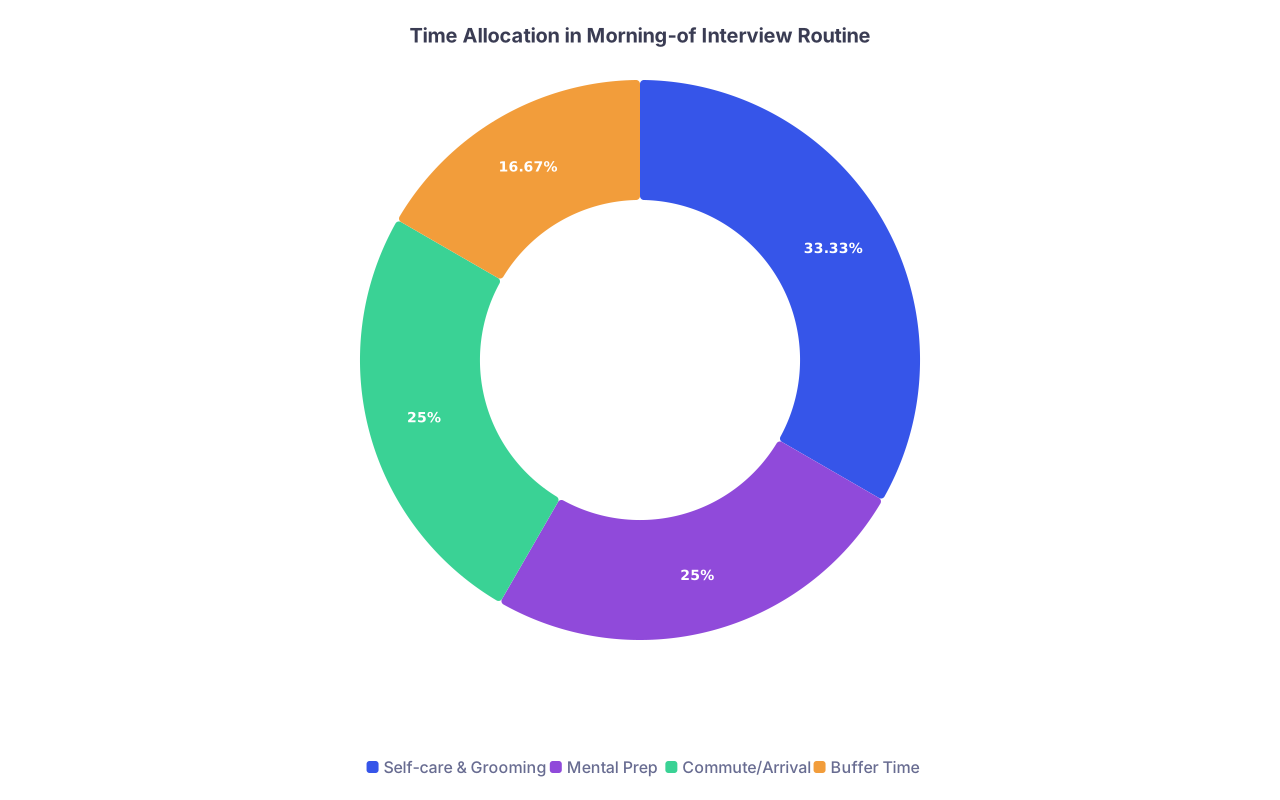
| Category | Value |
|---|---|
| Self-care & Grooming | 40 |
| Mental Prep | 30 |
| Commute/Arrival | 30 |
| Buffer Time | 20 |
Multi-Interview or MMI Days: Between Stations
If this is an MMI or a day with several interviews, you’ll basically repeat mini-cycles of this routine:
Between stations (2–5 minutes):
- One deep breath in, long exhale.
- Quick posture reset: shoulders back, feet grounded.
- Mentally label: “New room, fresh start.”
Don’t drag a mediocre previous station into the next one.
Snack and water between longer breaks, not constantly in your mouth. You don’t want to be chewing when they call your name.


Today’s next step is simple: open your calendar and block off a full “mock interview morning” two weeks before your real interview. During that block, follow this exact timeline down to the minute and see where you stumble. Fix the friction now, not at 6:00 AM on game day.