
Only 38% of U.S. med students feel their clinical duties help their Step 2 score; the rest say the wards mostly get in the way of studying.
They’re not entirely wrong. But they’re not entirely right either.
Let me ruin the neat narrative up front:
“More clinical hours = better Step scores” is wrong.
“Dedicated is all that matters” is also wrong.
The truth is messier, and it’s backed by actual data, not attending folklore or Reddit threads.
What the Data Actually Says About Clinical Time and Step Scores
First, split the problem:
- Step 1: now pass/fail, heavy on basic science and reasoning
- Step 2 CK: scored, clinically oriented, heavily tested on NBME-style vignettes
The relationship with clinical hours is different for each.
Step 1 and clinical time: mostly a distraction
Multiple U.S. schools that moved Step 1 after clerkships (Michigan, UCSF-style curricula, etc.) quietly reported the same thing in internal data: average scores dipped, variability increased, and students with weak foundations suffered the most.
Why? Because:
- Clinical time does not consistently reinforce the molecular, biochemical, and micro details Step 1 loves.
- The cognitive load of being a new clerk (notes, pages, social anxiety, “be a team player”) cannibalizes the bandwidth needed for dense, abstract study.
- The “I’ll just learn it on the wards” myth fails for basic science. You don’t see enough specific patterns frequently enough.
Most published Step 1 score predictors still come back to the same boring factors:
| Factor | Effect on Step 1 |
|---|---|
| MCAT score | Strong |
| Preclinical GPA | Strong |
| Question bank completion | Strong |
| Clinical hours | Weak/indirect |
| Clerkship grades | Minimal |
Clinical time might shape professionalism and comfort with patients. It does not rescue a shaky grasp of biochemistry or renal phys.
Step 2 CK and clinical time: helpful… up to a point
Step 2 is different. It actually cares about:
- Day-to-day bread-and-butter decisions
- “Next best step” logic
- Common inpatient and outpatient scenarios
Here, relevant clinical exposure does correlate modestly with higher scores—especially when:
- You see a high volume of common cases (medicine, peds, EM, OB)
- You’re actually thinking through plans, not just copying them from the intern’s note
- You pair clinical work with consistent question practice
But it’s not linear. Going from 0 to 40–50 clinical hours/week helps. Going from 50 to 80+ does not magically add more points. In fact, after a threshold, fatigue and reduced study time start erasing the benefits of “experience.”
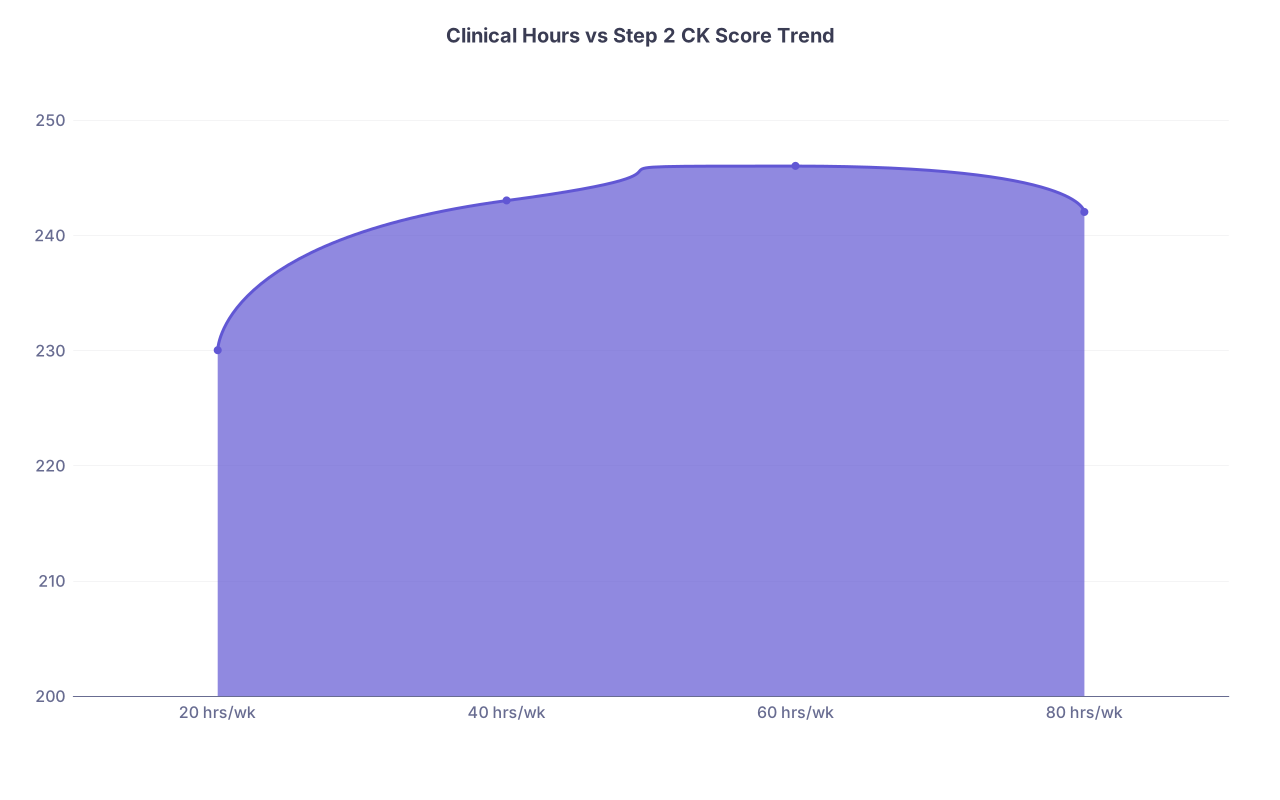
| Category | Value |
|---|---|
| 20 hrs/wk | 230 |
| 40 hrs/wk | 243 |
| 60 hrs/wk | 246 |
| 80 hrs/wk | 242 |
You can see the pattern. Moderate, structured clinical time plus questions beats either extreme: no clinical exposure or nonstop service work with zero studying.
The Big Myth: “Clinical Grind Builds Knowledge”
On rounds I’ve heard the same line from attendings and senior residents:
“Don’t worry so much about studying, just focus on the patients. The knowledge comes from taking care of them.”
This is, at best, half-true. At worst, it’s how students tank Step 2.
Here’s what actually happens on a typical medicine month:
- You pre-round, skim labs, copy-forward yesterday’s assessment, tweak a line, and pray you don’t get pimped on glomerulonephritis.
- Noon conference is half-listened to because you’re finishing notes or checking your phone for pages.
- The intern does most of the real ordering; you mirror them rather than reason from first principles.
You learn workflow. Hierarchy. Who to call for what.
You do not automatically learn guideline-based management across the full tested domain of Step 2.
Clinical grind builds recognition and comfort, not systematic coverage.
This is why I’ve seen plenty of students with:
- Glowing evals, “hardworking, great with patients”
- Solid honors in core clerkships
- Mediocre Step 2 scores (low 220s, sometimes lower)
Because they confused “being useful to the team” with “preparing for a national exam.”
Dedicated Time: Overrated, Misused, But Still Crucial
On the other side, you get the cult of “dedicated.”
“I’ll just survive third year and then crush dedicated for Step 2.”
Reality check: most schools give you 3–6 weeks quasi-dedicated before Step 2, often with some ongoing responsibilities.
Here’s the uncomfortable truth: dedicated time amplifies whatever you did before it. It does not magically fix a year of scattered, low-quality studying.
Students who score 250+ on Step 2 tend to have:
- A strong question-bank habit all year (UW/NBME style, not random apps)
- Basic knowledge already reasonably organized before dedicated
- Dedicated used for consolidation and high-yield refinements, not first exposure
Those who rely entirely on dedicated do something like this:
- Spend the first 7–10 days “organizing resources” and feeling overwhelmed
- Rush through 1.5–2 blocks of UWorld per day with no deep review
- Watch too many videos and take too few questions
- Collapse in the last week, realize NBME practice scores stalled
Dedicated matters. But if your idea of prep is:
“Clinical year now, learning later,”
you’ve already lost a big chunk of your score ceiling.
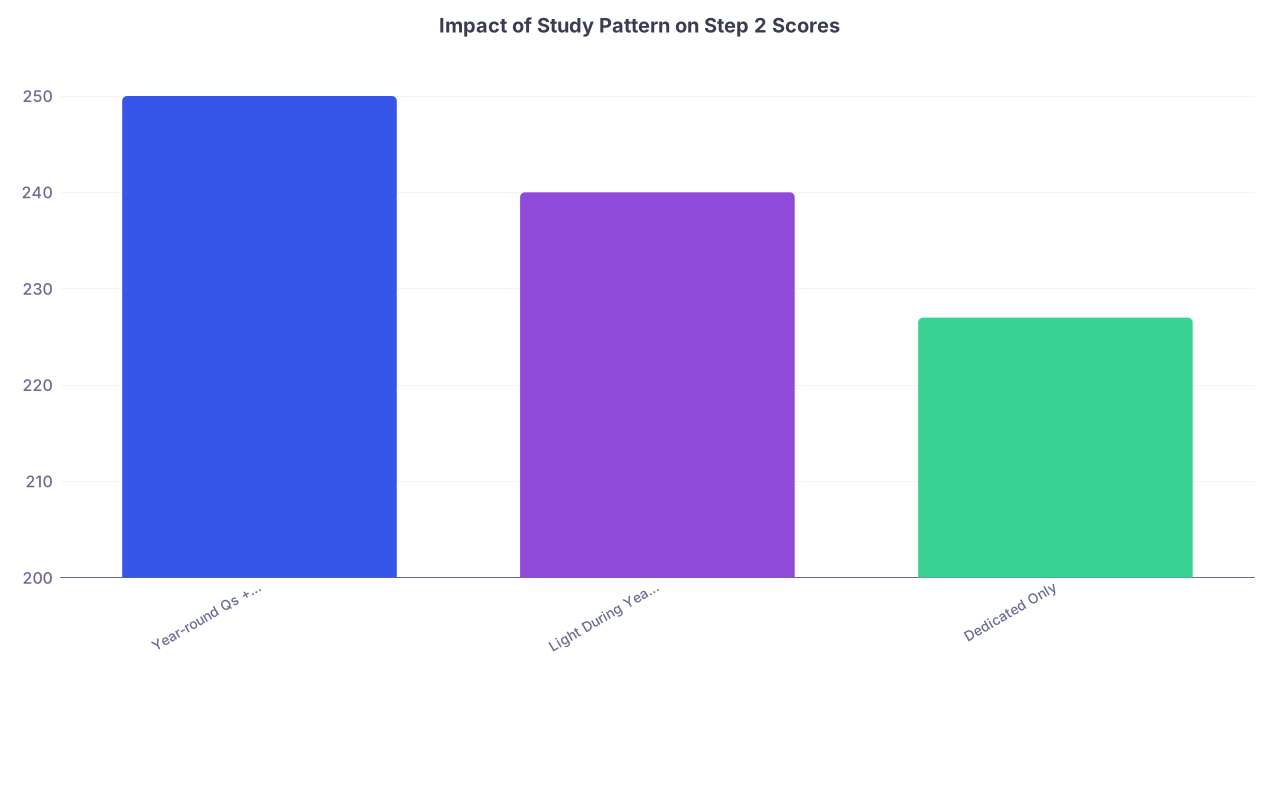
| Category | Value |
|---|---|
| Year-round Qs + Dedicated | 250 |
| Light During Year + Heavy Dedicated | 240 |
| Dedicated Only | 227 |
The gap here? Not fantasy. It’s what internal data from multiple schools quietly shows when they look at UWorld usage logs and NBME outcomes.
What Actually Raises Scores: The Interaction, Not the Hours
Forget the binary “clinical vs dedicated” argument. The right question is:
How do clinical time and study time interact for maximum score gain?
The clinical-to-study conversion rate
Think of clinical hours like “raw experience.” Step scores depend on how well you convert that into:
- Abstract frameworks
- Pattern recognition across many similar cases, not just the 5 you’ve seen
- Rehearsed responses to the style of NBME questions
That conversion happens through:
- Daily question practice
- Targeted review of your own misses
- Occasional, focused reading tied to real patients
You can see this clearly if you look at students with similar clinic hours but different question habits.
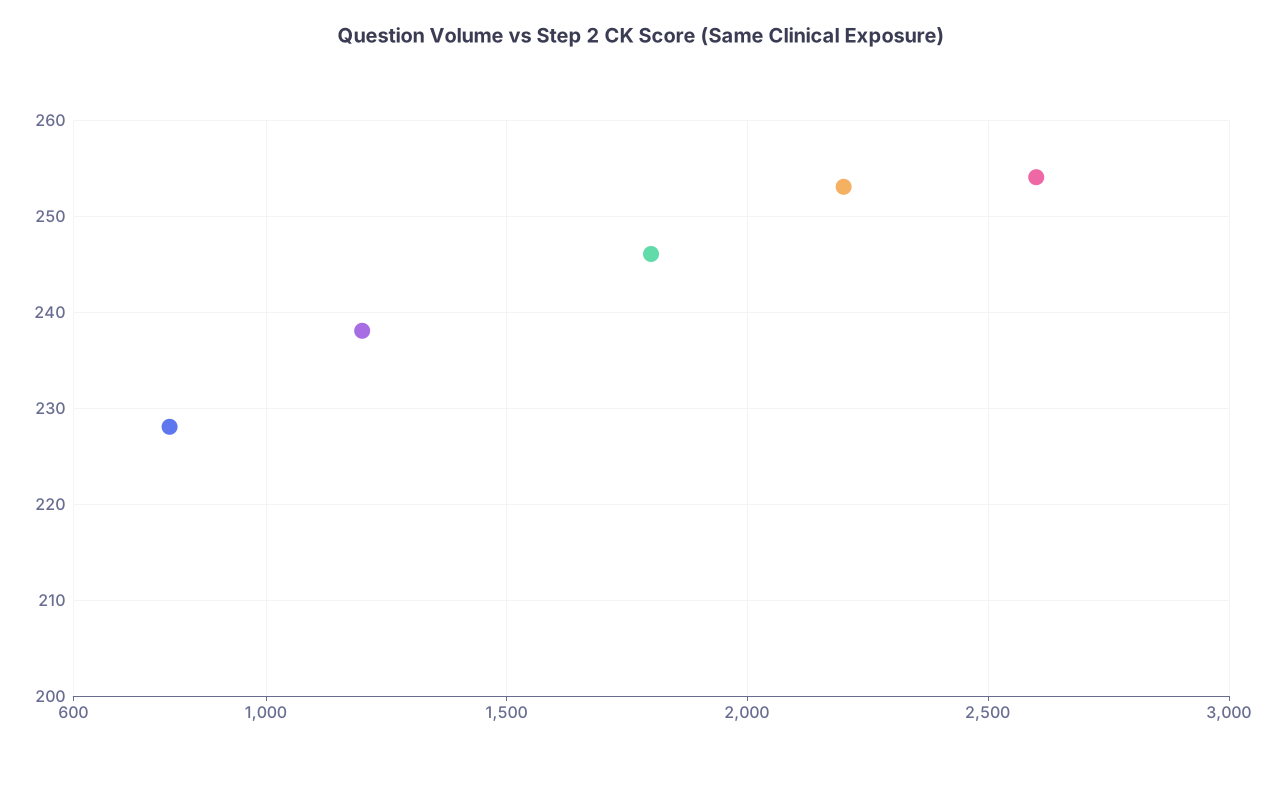
| Category | Value |
|---|---|
| Student A | 800,228 |
| Student B | 1200,238 |
| Student C | 1800,246 |
| Student D | 2200,253 |
| Student E | 2600,254 |
X-axis is total quality questions completed; Y-axis is Step 2 score. Same wards, different outcomes based on how aggressively they mined that experience and turned it into testable knowledge.
Where clinical time genuinely helps
Clinical hours raise your ceiling when:
- You see a lot of bread-and-butter: CAP, COPD/asthma, CHF, AFib, DKA, sepsis, chest pain, MSK injuries, prenatal care, common rashes, etc.
- You mentally answer: “What’s the next best step? What test? What treatment? What do I rule out first?” on every patient.
- You map every common patient to a question bank concept:
“This is literally that UWorld question on heparin-induced thrombocytopenia.”
I’ve seen weaker test-takers bump 10–15 points on Step 2 simply because they finally “got” CHF, DKA, and chest pain from real patients—and then hammered those topics in UWorld while on service.
The magic is the loop: real case → question → guideline → repetition.
The Hidden Killer: Unstructured, Low-Yield Clinical Time
Not all clinical hours are created equal. Some are almost useless for Step scores.
Low-yield patterns:
- Standing behind a resident during procedures, doing nothing
- Shadowing in super-narrow subspecialty clinics all month (e.g., retina clinic, interventional cardiology only)
- Being on bloated ward teams where you “own” 0–1 patients
- Being on rotations where the culture is: “Students here don’t need to know the guidelines, just write notes and show up”
You can do 70 hours/week of that and barely move your Step 2 score.
Compare that with a student on a busy community IM rotation:
- Carries 4–6 patients
- Actually writes the first draft of plans
- Gets pushed to justify “why that workup, why that drug, what guideline”
Same number of hours. Radically different Step impact.
How to Use Clinical Time Without Letting It Crush Your Score
Here’s the practical, non-sugar-coated version.
1. Accept that you cannot cram clinical knowledge
For Step 2, trying to do “nothing all year, everything in dedicated” is academic self-harm.
Minimum sustainable habits during clerkships:
- 10–20 high-quality questions per day on weekdays
- 20–40 per day on weekends
- Short, targeted review of explanations, not 5-hour Anki marathons every night
If you’re working 60–70 hours/week, that might mean:
- 10 questions at 5 a.m. before pre-rounding
- 10 questions after sign-out before sleep
Is it fun? No.
Does it work? Yes.
2. Anchor learning to real patients
You have to force the “exam lens” onto your clinical day. For each patient:
- Identify the core Step concept: “This is nephrotic syndrome vs nephritic,” “This is SIADH vs DI,” “This is unstable angina workup.”
- That evening or weekend, do 5–10 questions just on that concept.
- Jot 1–2 key takeaways in a running doc or notebook. Short. No essays.
Once you’ve done that 200+ times across the year, dedicated feels like rehearsal, not a mad scramble.
3. Protect micro-dedicated time
You probably won’t get a six-week step-free paradise. But almost every rotation has:
- Lighter weeks
- Chiller attendings
- Post-call days or admin time that mysteriously evaporates into doomscrolling
Turn those pockets into micro-dedicated:
- Half-days with 40–60 questions plus focused review
- Quick pass through high-yield tables (electrolytes, murmurs, pneumonia management, etc.)
You’re basically spreading “dedicated” across the whole year instead of waiting for a fictional future where you’re magically free and well-rested.
So… Clinical Hours vs Dedicated: Who Wins?
Neither. That’s the wrong fight.
Here’s what the data and experience actually support:
- For Step 1, clinical hours mostly steal time and energy from what matters: preclinical mastery and question banks. They’re not score boosters.
- For Step 2, moderate, real clinical responsibility combined with daily question work beats both extremes: constant service with no studying or pure book-worming with no patient exposure.
- Dedicated time is a multiplier, not a miracle. If your foundation from clerkship year is weak, dedicated just compresses your panic into a few weeks.
If you want to raise your Step score, stop arguing “wards vs dedicated.”
Instead, ask one harsher question:
“How much of my weekly life is actually moving me closer to NBME-style mastery—and how much is just looking like work?”