
The usual wellness advice med schools give you is too generic to touch real med student stress. You need tools engineered for 400‑page syllabi, 36‑hour calls, and shelf exams that can tank your class rank in one afternoon.
Let me break this down specifically: we are going to adapt core CBT (Cognitive Behavioral Therapy) tools to the exact problems you face as a medical student. Not abstract “stress.” Concrete scenarios:
- “I’m going to fail this block and never match.”
- “Everyone else knows more than I do on rounds.”
- “If I take a break, I will fall behind forever.”
- “One bad eval means I am done for competitive specialties.”
We are not doing vague mindfulness slogans. We are building mental habits as deliberately as you build Anki decks.
1. The CBT Frame: Why Med Students Crack in Predictable Ways
CBT, at its core, is simple: thoughts → emotions → behaviors → outcomes.
You are not just stressed because med school is “hard.” You are stressed because your brain is constantly running distorted thought patterns that amplify every real stressor by 3–5x. And med school is a perfect breeding ground for specific distortions:

Typical med-student cognitive distortions:
Catastrophizing
- Thought: “If I don’t honor this rotation, I will never match derm.”
- Reality: One rotation grade is data, not destiny.
All‑or‑nothing thinking
- Thought: “If I do not score 250+, I am not competitive at all.”
- Reality: Programs look at trends, letters, fit, clinical performance.
Mind reading
- Thought: “The attending paused after my answer. He thinks I’m clueless.”
- Reality: He might be thinking about the next patient, not you.
Discounting the positive
- Thought: “Yeah, I passed, but everyone else did better.”
- Reality: Passing a brutal exam while exhausted is not trivial.
Should statements
- Thought: “I should study 10 hours every day or I am lazy.”
- Reality: Human beings do not function like that long term. Residents do not even function like that consistently.
Here is the pattern: med students take normal ambition, then layer on distorted thinking, then try to “fix” it with more hours and less sleep. That is how burnout is manufactured.
CBT gives you a different equation:
- Catch the distorted thought.
- Challenge it with specific evidence.
- Replace it with something accurate and usable.
- Then change what you do next.
Predictably. Repeatedly. Like reps in the gym.
2. High‑Yield Tool #1: The 5‑Minute Thought Record for Exam Panic
The classic CBT tool is the thought record. Too slow in its original form for med school life. So we trim it to a 5‑minute version you can run between Pomodoro blocks or when your heart rate spikes before an exam.
The Situation
Use scenarios that actually happen to you, not textbook fluff.
Examples:
- Night before Step 1/2, you miss 50% of a UWorld block.
- You get a “borderline” comment in your mid‑rotation feedback.
- Someone in your group casually says they scored 260 “without even trying.”
The 5‑Step, 5‑Minute Thought Record (Adapted)
Write this down—notes app, scrap paper, margin of your notebook. Physically. Not in your head.
Trigger
One sentence: “Missed 50% of a UWorld block in cardio.”Automatic thought (uncensored)
“I am not smart enough. I will fail Step. I will not match.”Emotion + intensity (0–100%)
- Anxiety: 80%
- Shame: 70%
- Hopelessness: 50%
Challenge with evidence (2–3 bullets each side)
Evidence supporting the thought:
- This block was terrible.
- I have been inconsistent with studying this week.
Evidence against the thought:
- My last 5 blocks were in the 60–70% range.
- I passed every exam so far.
- I am still 6 weeks from the real test.
- I improved 10 percentage points in the last month.
Alternative, accurate thought
Not toxic positivity. Accurate.“This block was bad, probably due to fatigue and weak cardio coverage. My overall trend is improving. I still have time to target this area. This is a signal to adjust, not proof I will fail.”
Then quickly re‑rate your emotion intensity:
- Anxiety: drops from 80% → maybe 45–50%
- Shame: 70% → 30–40%
Still uncomfortable. But now workable. You can actually study instead of doom‑scrolling Reddit for three hours.
Use this once a day during heavy exam prep. Not for every thought—just the big spikes.
3. High‑Yield Tool #2: The Med School‑Specific Cognitive Distortion Checklist
You will not fix what you do not recognize. And med students repeat the same few mental errors over and over.
Create a tiny personal distortion checklist—8 items max—based on what actually crushes you. Start with this:
| Distortion | Typical Med Student Thought |
|---|---|
| Catastrophizing | "One bad shelf = no good residency for me" |
| All-or-nothing | "Honor or failure. Nothing in between" |
| Mind reading | "Attending thinks I'm incompetent" |
| Fortune telling | "I already know I will bomb this OSCE" |
| Discounting positive | "Good eval, but they were just being nice" |
| Overgeneralization | "I froze once, I always freeze with attendings" |
| Should statements | "I should never take a day off" |
| Personalization | "Team was quiet; I must have done something wrong" |
Now here is the adaptation that actually matters:
Print/write your list and keep it in:
- Inside cover of your white coat, or
- The back of your Step study notebook, or
- The first card in your “Mental Health” Anki deck.
When your stress spikes, you do a 10‑second scan:
“Which distortion am I using right now?”
Circle it or tick it.Then pair it with a pre‑written counter‑statement.
Example:
- Distortion: Catastrophizing
- Default thought: “If I do not honor medicine, I am done for cards fellowship.”
- Counter‑statement: “Cards will look at Step, letters, and overall pattern. One rotation matters, but it is not the entire file.”
You are essentially building “cognitive flashcards” to run against the garbage thoughts your brain throws at you automatically.
4. High‑Yield Tool #3: Behavioral Activation Designed Around Exam Blocks
A lot of med student “anxiety” is actually under‑recognized depression or burnout. The more you feel low, the less you do. The less you do, the more behind you get. The more behind you get, the worse you feel.
Classic CBT fix: behavioral activation—schedule and execute small, doable actions to rebuild momentum.
The tweak for med school: those actions must respect your exam cycles.
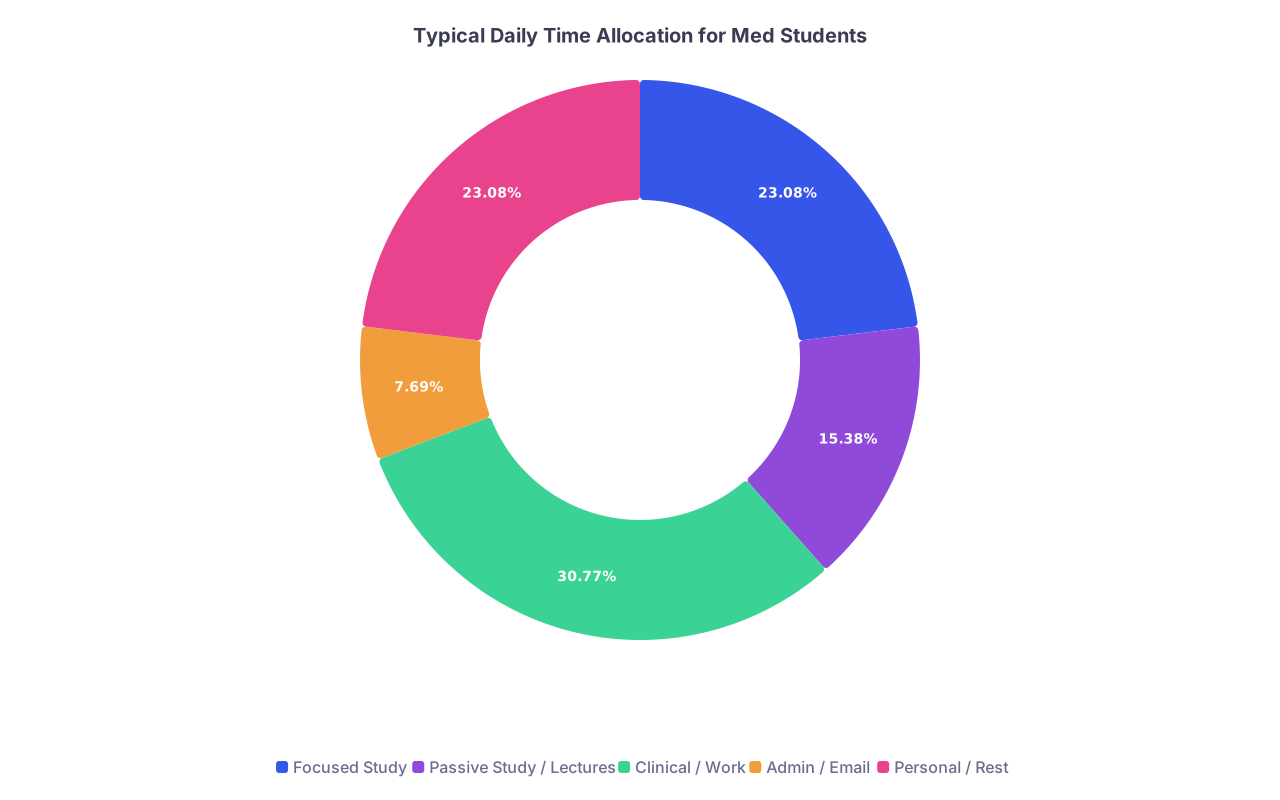
| Category | Value |
|---|---|
| Focused Study | 180 |
| Passive Study / Lectures | 120 |
| Clinical / Work | 240 |
| Admin / Email | 60 |
| Personal / Rest | 180 |
Step 1: Build a “Minimum Viable Study Day” (MVSD)
This is your bare minimum definition of “I stayed in the game today,” even on a terrible mental health day.
For example:
- 40 UWorld questions (tutor or timed, your choice)
- 50 Anki reviews
- 10 minutes of focused review of weak topic (e.g., arrhythmias EKGs)
That is it. Not your ideal day. Your survival day.
On days when your mood is crushed:
- You do only MVSD.
- Then you are done and allowed to rest without guilt.
This does two things:
- Protects your exam prep from collapsing completely.
- Protects your brain from the lie: “If I am not at 100%, I might as well do 0.”
Step 2: Schedule Non‑Study Activities with the Same Precision
When you are burned out, “do something fun” is meaningless. You will scroll on your phone and hate yourself.
Use behavioral activation like you would schedule a study block:
- 7:30–8:00: Breakfast + get some sun (literal walk outside, not window‑staring)
- 13:00–13:20: Walk around the block after lunch, no phone
- 21:30–22:00: Low‑key activity—novel, light show, or phone call with someone outside medicine
Write these like they are obligations. Because they are. Physiologic reset is not optional if you intend to survive 4+ years of this.
You are essentially programming your day to send your brain the signal: “Life is not only exams.”
5. High‑Yield Tool #4: Exam‑Day Cognitive Scripts (Not Affirmations)
Exam day is when CBT matters most. But you will not be able to think clearly enough to improvise. You need pre‑built scripts.
Notice: these are not fluffy affirmations. They are short, specific, believable statements you can repeat under time pressure.

| Step | Description |
|---|---|
| Step 1 | Wake up |
| Step 2 | Notice first anxious thought |
| Step 3 | Use Safety Script |
| Step 4 | Use Mistake Script |
| Step 5 | Use Focus Script |
| Step 6 | Start pre-exam routine |
| Step 7 | Catastrophizing? |
| Step 8 | Perfectionism? |
Script 1: The Safety Script (for “I will fail”)
“I have taken dozens of high‑stakes exams and passed. This exam is one data point, not a referendum on my worth or my future. My job today is simple: one question at a time, using the strategies I practiced.”
Used:
- On the walk to the test center.
- Waiting for the exam to load.
- Whenever your pulse spikes mid‑block.
Script 2: The Mistake Script (for spiraling after one bad question)
You know the pattern: you hit one weird pharm question, panic, and then miss 5 normal questions because you are still mentally stuck on the weird one.
Script:
“I am allowed to miss questions. Everyone who scores high misses questions. My job is to protect the rest of the block. Next question.”
Repeat it out loud in your head as you click “Next.”
Script 3: The End‑of‑Block Script (for post‑block collapse)
Between blocks, your brain will try to replay every guess you made. This kills your performance in the next block.
Use a block‑to‑block checkpoint:
- Stand up, stretch, breathe 4–6 slow breaths.
- Script: “That block is over and cannot be changed. I gained information about how they write questions. My only job now is to give full attention to this next set.”
This is CBT applied in real time: break rumination → redirect attention → prevent performance snowball.
Write your scripts on a notecard, memorize them, then physically copy them out the night before. That repetition matters.
6. High‑Yield Tool #5: CBT for Evaluation Anxiety and Rounds
Student performance anxiety on wards is not just “shyness.” It is a combination of distorted beliefs and poorly conditioned behavioral responses.
The core fears:
- “If I do not know every answer, they will think I am lazy or stupid.”
- “If I ask for help, I will look incompetent.”
- “If my eval is not glowing, fellowship doors will close forever.”
Let’s use CBT precisely here.
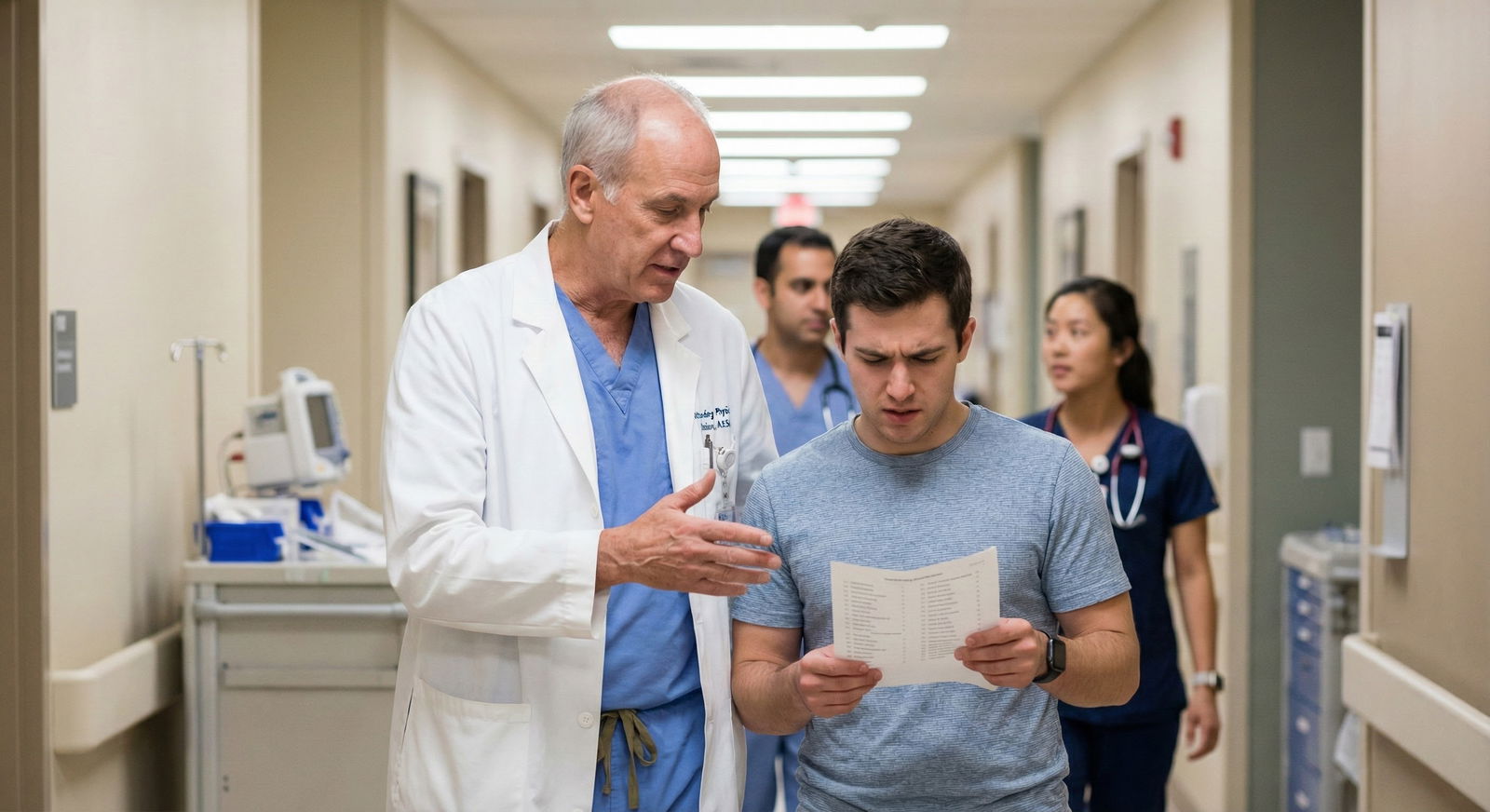
Step 1: Identify the Core Belief
For many students, the real core belief is:
“If I am not perfect, I am not worthy of respect or success.”
On rounds, that belief gets translated into:
- Dodging questions.
- Freezing even on things you know.
- Over‑apologizing or rambling.
Step 2: Build a New Standard: “Prepared, Teachable, Professional”
Borrow this. Replace “perfect” with:
“I am evaluated on preparedness, teachability, and professionalism—not omniscience.”
Then map it to behaviors that you can control:
- Prepared = I read 20–30 minutes about my top patient’s problem the night before.
- Teachable = I say “I am not sure, but I think…” and then listen and take notes.
- Professional = I am on time, I follow through, I treat staff respectfully.
Now your CBT targets shift from “know every fact” to “hit these three controllable domains.” Anxiety drops because you now have a defined game you can win.
Step 3: Pre‑Rounds Micro‑Script
Before you meet the team:
- “My goal today is not to impress with perfection. My goal is to be prepared, to think out loud, and to learn from feedback.”
Again: not affirmation. A behavioral target.
Step 4: Post‑Feedback Thought Record (Short Form)
You get mid‑rotation feedback:
“Good team player, but could be more confident speaking up.”
Your automatic thought: “They think I am incompetent. I ruined this rotation.”
Run a 2‑minute mini‑record:
- Trigger: Mid‑rotation feedback.
- Thought: “I ruined this rotation.”
- Emotion: Shame 80%, fear 70%.
- Evidence against: Feedback is actually partly positive; they are giving me a chance to improve mid‑rotation; no mention of “unsafe” or “unprofessional.”
- Alternative thought: “They see me as capable enough to improve. I have specific targets for the next two weeks. This is an opportunity, not a final verdict.”
Then turn it into a small behavioral experiment:
- “Tomorrow I will volunteer an answer on at least 2 patients, even if I am not 100% sure.”
That is therapy‑grade CBT. Inserted into normal med school life.
7. High‑Yield Tool #6: Structured Worry Time for Match / Future Anxiety
Future‑oriented anxiety (Step scores, specialty competitiveness, match odds) constantly bleeds into your study blocks. It kills deep work.
Classic CBT strategy: scheduled worry time. Modified for med students so you do not feel like you are ignoring real planning needs.
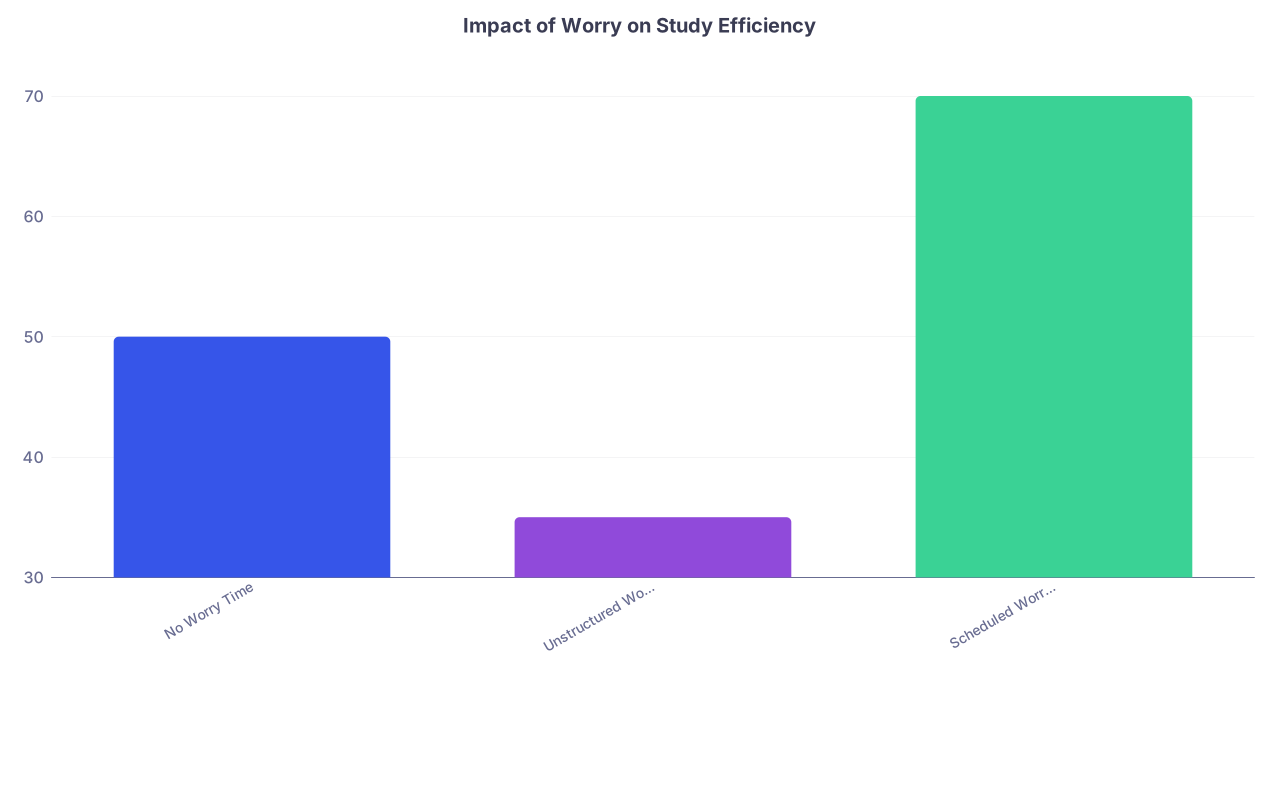
| Category | Value |
|---|---|
| No Worry Time | 50 |
| Unstructured Worry All Day | 35 |
| Scheduled Worry 20 min/day | 70 |
Step 1: Choose a Daily 20‑Minute “Worry Block”
For example:
- 19:40–20:00 after dinner.
Rules:
- During study hours: if a worry pops up (“What if I do not match ortho?”), you write it on a small list: “Worry list – 7/10” and tell yourself, “I will handle this at 19:40.” Then you return to the task.
- At 19:40, you sit down with that list and intentionally worry and plan.
Step 2: Use a 3‑Column Worry Worksheet
For each worry:
- Worry: “If I get an average Step score, I will not match [specialty].”
- What is controllable now?
- Today: Complete my UWorld block and Anki.
- This month: Set up a meeting with the advisor in that specialty.
- What is not controllable now?
- Exact percentile I will land in.
- Future program decisions two years from now.
Write down 1–2 concrete actions for the “controllable” side and schedule them. Explicitly acknowledge the “not controllable” side without trying to solve it.
You train your brain:
- There is a time and place to think about the future.
- Not every minute of the day.
Students who actually commit to 2–3 weeks of scheduled worry time consistently report two things:
- Better focus during study blocks.
- Less background dread, because they trust they will “get to it” later.
8. High‑Yield Tool #7: Med‑School‑Compatible Exposure for Performance Fear
Presentations. OSCEs. Pimping. Many students treat them as sudden‑death events. Avoiding them just keeps the fear alive.
CBT’s answer: graded exposure. And yes, you can do this without a therapist, if you respect the progression.

| Step | Description |
|---|---|
| Step 1 | Write out fear hierarchy |
| Step 2 | Very low stakes: practice alone |
| Step 3 | Low stakes: with one peer |
| Step 4 | Moderate stakes: small group |
| Step 5 | High stakes: actual rounds |
Step 1: Build a 0–10 Fear Ladder for One Situation
Example: “Presenting on rounds”
- 2/10: Practicing my one‑liner out loud alone.
- 4/10: Presenting a patient to a close classmate.
- 6/10: Presenting to a small group in a teaching session.
- 8/10: Presenting first on rounds but with notes.
- 9–10/10: Presenting first on rounds without notes, with a strict attending.
Step 2: Move Up One Level at a Time
For one week:
- Every evening, practice your one‑liner for a fake case, out loud, 5 minutes.
- Then do the same with a classmate: reciprocally present one patient to each other.
- Then, ask a resident if you can present one patient at the next teaching session.
You do not jump from “avoid at all costs” to “crush it in front of the chair of medicine.” You train your nervous system gradually.
The key CBT twist: while you do each exposure, you:
- Notice the catastrophic thought (“I will humiliate myself”).
- Stay in the situation long enough to see the disaster not happen.
- Then mentally label: “Anxiety spiked to 7, dropped to 3 in 5 minutes, and I survived.”
After 5–10 exposures, your brain finally believes you.
9. Putting It Together: A Weekly CBT Routine That Fits Real Schedules
You do not need to “do CBT” all day. You need to embed a few compact practices into a normal med student week.
Here is a realistic template.
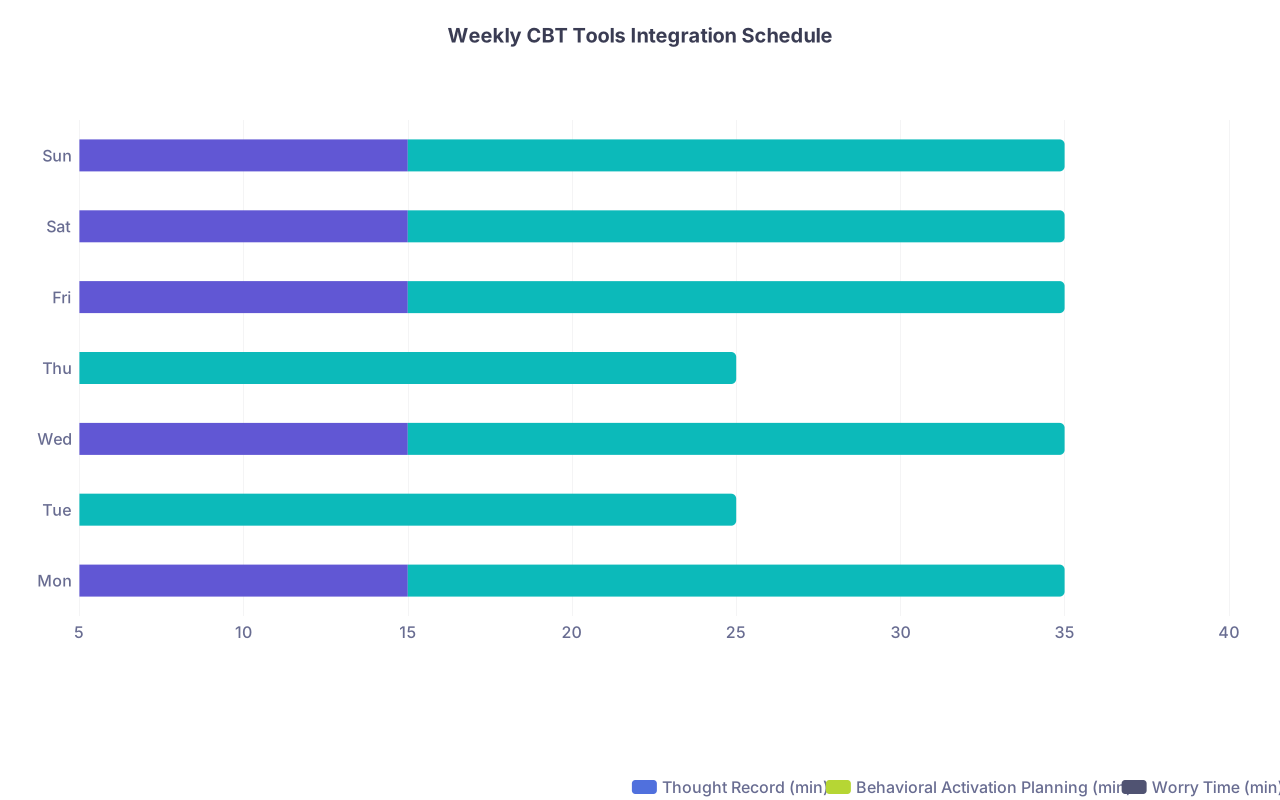
| Category | Thought Record (min) | Behavioral Activation Planning (min) | Worry Time (min) |
|---|---|---|---|
| Mon | 5 | 10 | 20 |
| Tue | 5 | 0 | 20 |
| Wed | 5 | 10 | 20 |
| Thu | 5 | 0 | 20 |
| Fri | 5 | 10 | 20 |
| Sat | 5 | 10 | 20 |
| Sun | 5 | 10 | 20 |
A sample pattern:
Daily (5 minutes):
One thought record on the biggest stressor that day (exam, attending, eval, family).Twice weekly (10–15 minutes):
Review your distortion checklist; update scripts; adjust your MVSD plan if needed.Daily (20 minutes):
Scheduled worry time for future‑focused anxiety.Once weekly (20–30 minutes):
One graded exposure step (presenting, asking questions, sim OSCE with a peer).
One sit‑down to look at actual exam performance trend and re‑anchor to data instead of vibes.
10. When CBT Is Not Enough (And How To Know)
I have seen students try to use “more CBT” as a way to avoid admitting they are clinically depressed, severely anxious, or dealing with trauma. That is not grit. That is denial.
CBT tools work best when:
- You can still attend class/rotations most days.
- You have some swings in mood (better days and worse days).
- You can experience at least occasional enjoyment.
You probably need professional help layered on top of CBT self‑work when:
- You are unable to get out of bed or go to clinical duties multiple days a week.
- You have persistent thoughts of self‑harm, wishing you were dead, or fantasizing about accidents.
- Panic attacks are frequent and unpredictable.
- You are using alcohol, benzos, or other substances to sleep or “turn off” daily.
- You feel detached, numb, or hopeless most of the time.
CBT is not a replacement for therapy, medication, or an actual treatment plan. It is a high‑yield toolkit you absolutely should have, but it is not the only tool in the box.
If you are seeing those red flags:
- Contact student mental health services, employee assistance programs, or your PCP.
- If your school is useless, use national hotlines or tele‑psychiatry. You are not the first med student in trouble; people know how to help you.
Key Takeaways
- Your stress is not just about workload. It is about predictable cognitive distortions med school amplifies.
- Compact CBT tools—5‑minute thought records, distortion checklists, exam‑day scripts, scheduled worry time—fit into a real med student schedule if you build them intentionally.
- Use CBT to change both what you think and what you do: minimum viable study days, graded exposure on wards, and deliberate behavioral activation keep you in the game without burning you out.