
It is 2:37 AM. You are on night float for your internal medicine clerkship. You just admitted a DKA, cross-covered a GI bleeder, and now you are staring at UWorld question 23/40 for the night—your eyes burning, brain foggy, and convinced you have undiagnosed early-onset dementia. Your shelf exam is in nine days. You cannot remember the mechanism of action of one single antibiotic.
You are not lazy. You are circadian‑wrecked.
Let me break this down specifically: this problem is not “time management” or “motivation.” It is neurobiology versus scheduling. If you treat it like a character flaw, you will dig yourself into a hole. If you treat it like a physiology problem with exam constraints, you can do a lot better than you think.
We are going to talk about exactly how to manage night float plus shelves in MS3: sleep, scheduling, what to study when, and how to keep your brain functional without pretending you are superhuman.
What Night Float Actually Does To Your Brain (And Why Shelf Studying Feels Impossible)
Night float is not just “being tired.” You are running against your own biology.
Under normal circumstances:
- Melatonin surges in the evening.
- Core body temperature drops overnight.
- Cognitive performance peaks mid‑day.
Night float flips that. Or at least, your schedule tries to, while your biology stubbornly refuses.
The result:
Working memory tanks.
The part of your brain that holds 4–7 pieces of information at once? It stops cooperating. That is why even simple UWorld stems feel impossible at 4 AM.Encoding new information becomes inefficient.
You can still recognize concepts you already learned. But deeply learning new material at 2–3 AM is like trying to upload a software patch over dial‑up internet.Sleep fragmentation destroys consolidation.
Shelf‑relevant information you cram intermittently between shifts never gets a solid chunk of deep and REM sleep to consolidate. You remember enough to feel like you studied. But a week later, half of it is gone.
So the first mental shift:
Your goal is not to be “productive” every spare minute overnight. Your goal is to strategically align type of study with time of day and your circadian state.
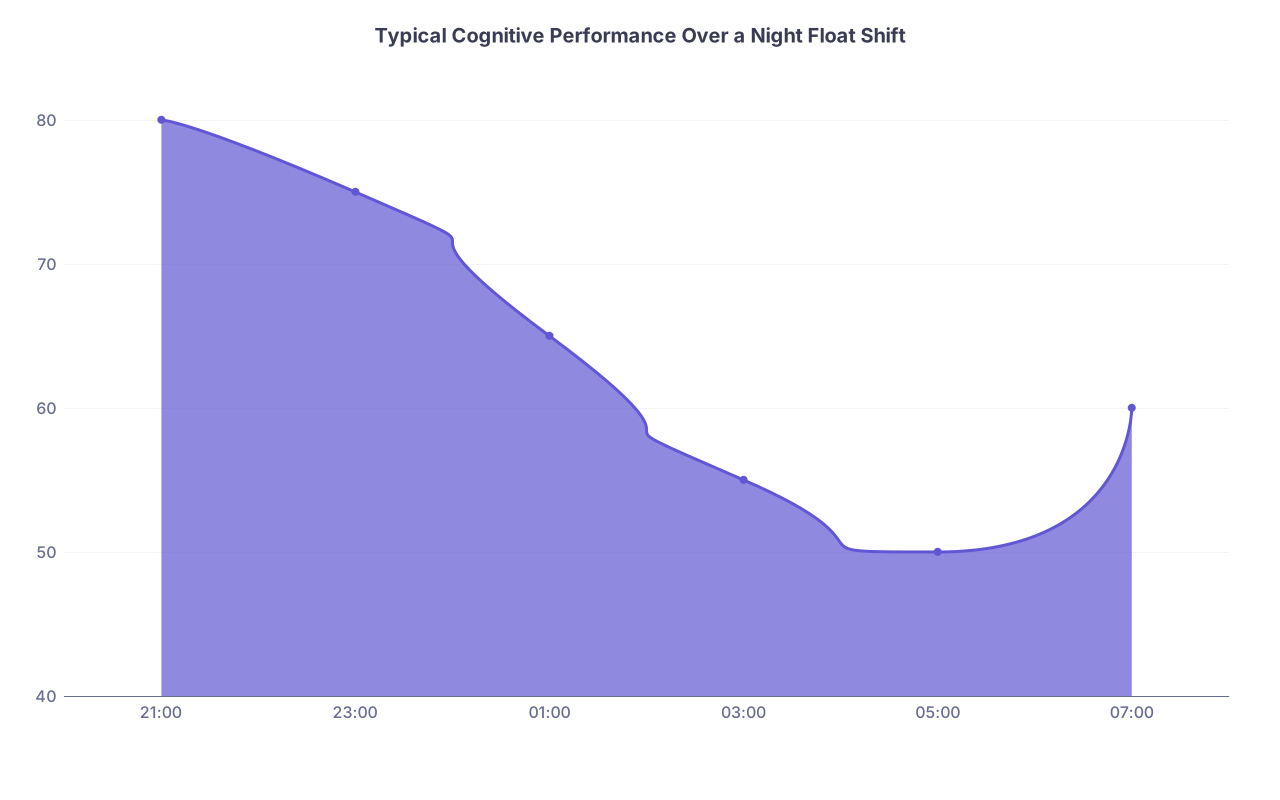
| Category | Value |
|---|---|
| 21:00 | 80 |
| 23:00 | 75 |
| 01:00 | 65 |
| 03:00 | 55 |
| 05:00 | 50 |
| 07:00 | 60 |
Step 1: Build A Realistic Sleep Framework Around Night Float
If you skip this and just “fit in studying where you can,” you will underperform on both the rotation and the shelf. You need a framework.
Assume a standard 12‑hour night float: 7 PM–7 AM or 6 PM–6 AM. Adjust by an hour either way for your site.
The Priority Hierarchy
I rank the priorities this way, and I do not budge on this:
- Adequate, protected sleep (core + nap)
- Clinical performance and safety
- High‑yield shelf review
- Extra questions, extra resources, fluff
If you sacrifice sleep for #3 and #4, #2 goes down. Attendings notice. You miss subtle clinical findings. You make sloppy notes. And ironically, you do worse on the shelf because your brain is running at 60%.
Target Sleep Architecture
For most MS3s on night float, the sweet spot looks like this:
- Core sleep block: 4.5–6 hours anchored in the late morning / early afternoon
- Pre‑shift nap: 60–90 minutes in the late afternoon, if your schedule allows
Example schedule for 7 PM–7 AM:
- 7:30–8:00 AM: Home, quick snack, dark room
- 8:30 AM–1:30 PM: Core sleep (5 hours)
- 1:30–2:00 PM: Light meal, hydration
- 2:00–4:00 PM: Shelf‑focused studying (this is your prime time)
- 4:00–5:00 PM: Nap (60–90 minutes)
- 5:00–6:00 PM: Wake, light food, commute, brief review / audio
This is not perfect, but it is physiologically plausible and sustainable for 5–14 nights.
Non‑Negotiable Sleep Rules
You do not have to be perfect, but you need directional discipline.
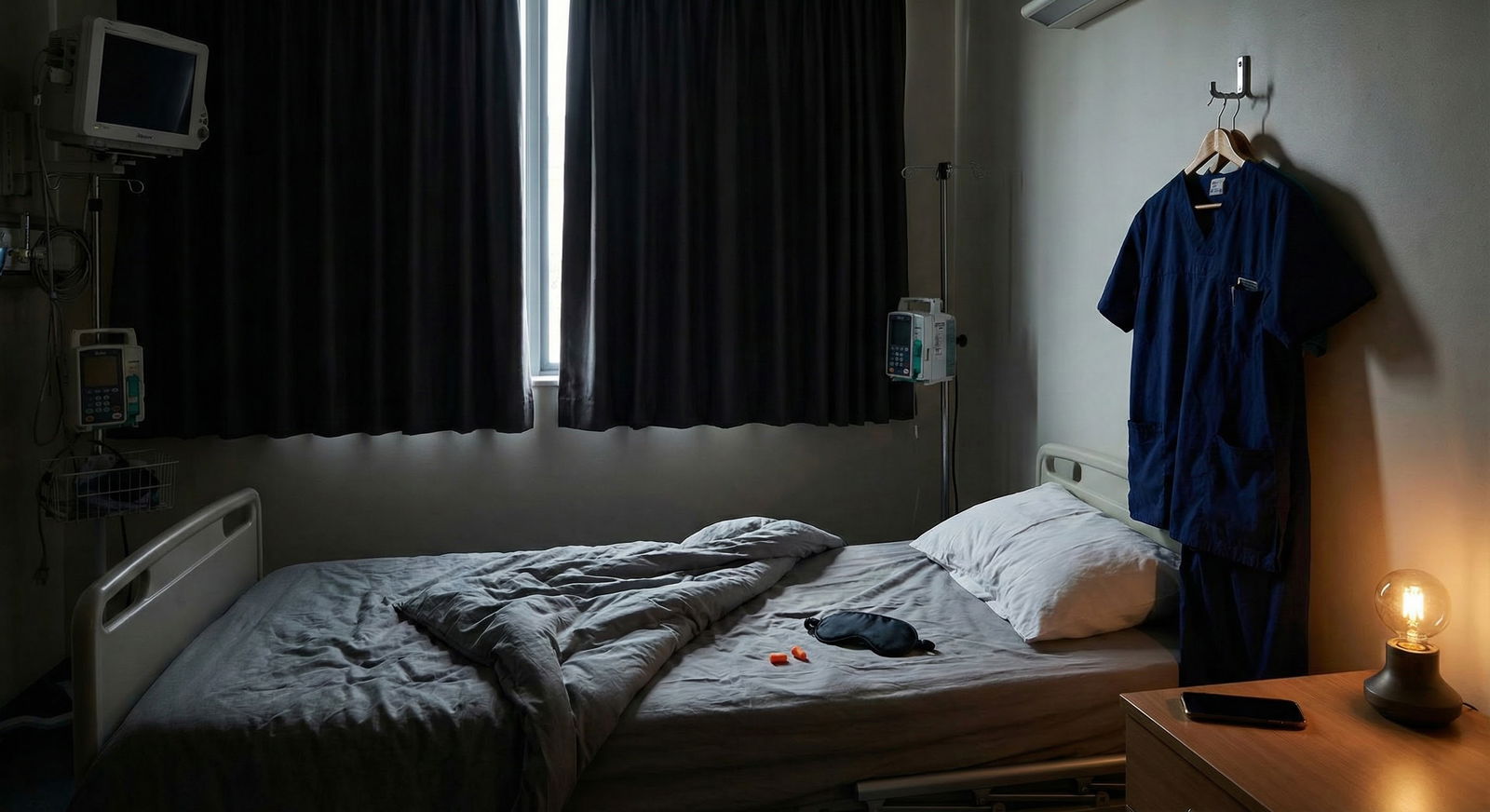
- Darken your room aggressively. Blackout curtains, towel under the door, phone face‑down. Daylight wrecks daytime sleep.
- Cold room, quiet environment. Use earplugs or white noise. You are not delicate; you are protecting latency and deep sleep.
- No “let me just scroll for 10 minutes” in bed. That turns into 45 minutes of blue‑light stimulation and you just burned 15–20% of your available sleep time.
- Caffeine cutoff: ideally 4–6 hours before your planned core sleep (so around 3–4 AM). Students who slam coffee at 6 AM “to survive signout” pay for it in terrible, shallow sleep.
You are trying to protect consistency more than absolute hours. 4.5–6 hours of solid, predictable sleep beats 7.5 hours in three scattered naps.
Step 2: Map Study Type To Time Of Day
Trying to brute force UWorld at 4 AM is a rookie mistake. You are working against neurobiology.
Here is how I align tasks with circadian‑driven brain function during night float.
When You Are Home and Awake (Post‑Sleep, Pre‑Shift): Deep Work Window
This is your gold. Protect it.
Ideal window: roughly 2 PM–5 PM.
Best uses:
- Timed question blocks (UWorld, AMBOSS, NBME practice)
- Reviewing missed questions in detail
- Active recall: Anki, flashcards, self‑quizzing
- High‑yield topic review (e.g., reading pneumonias, valve disease, OB triage algorithms)
This is when you do things that feel hard and require building or integrating knowledge.
Early Night on Shift (First 2–3 Hours): Light Cognitive Work
Usually 7–10 PM. You are still awake, but you are orienting to the night: crosscover calls, pages, new admits.
What works here:
- Shorter, untimed sets of questions (5–10 at a time) between pages
- Quick outline or cheat sheet building
- Reviewing your own notes from earlier that day
What does not work well:
- Starting a 40‑question block that you keep pausing
- Trying to learn brand‑new, complex material (you will remember fragments, not structure)
Middle of the Night (2–5 AM): Maintenance Mode Only
This is the dead zone. Circadian trough. Call volume can be weirdly high or weirdly quiet, but your brain is not designed to analyze nuance here.
Use this time for:
- Low‑stakes Anki / flashcards
- Passive review (e.g., reading explanations from earlier questions)
- Listening to short audio summaries if your hospital setup allows
Avoid:
- High‑stakes timed blocks
- Anything where you plan to “take detailed notes” — you will not review them effectively later
If the night is absolutely slammed clinically, you may not study at all. That is not a failure. You make it up in your post‑sleep block the next day.
| Time Window | Brain State | Best Study Type |
|---|---|---|
| 2–5 PM (pre‑shift) | Highest performance | Timed QBank, deep review, Anki |
| 7–10 PM (early shift) | Moderately sharp | Short question sets, light review |
| 2–5 AM (circadian low) | Impaired, foggy | Flashcards, passive review only |
Step 3: Rotation‑Specific Strategies (Because Not All Night Floats Are Equal)
Night float during psychiatry is not the same beast as night float during surgery. Let’s get specific.
Internal Medicine / Family Med Night Float
Shelf content: broad, heavy on management algorithms, multi‑system reasoning.
Realities:
- Crosscover pages constantly
- Admissions trickle overnight
- Some downtime for chunks of 20–30 minutes
Strategy:
- Prioritize UWorld / AMBOSS Internal Medicine during your pre‑shift block.
- Overnight, do short bursts: 5–10 questions at a time, pausing between pages.
- On lighter nights, you can do a full 20‑question set from a specific high‑yield topic (CHF, pneumonia, AKI, diabetes management).
Key: You do not need night float to be your heaviest study time. You need it not to be zero.
Surgery Night Float
Shelf content: weird mix of medicine, critical care, and surg‑specific things like trauma and pre‑op evaluation.
Realities:
- May be slammed with ED consults, traumas, post‑ops
- Often physically and emotionally draining (lacs, appys, potential MIs)
Strategy:
- Pre‑shift: do your highest cognitive load shelf work here. Surgery QBank, NBME practice, trauma and acute abdomen algorithms.
- During shift: if it is busy, skip shelf entirely and focus on staying safe and present. If it is quiet for an hour, do short, targeted review: trauma primary/secondary survey, SBO vs ileus, post‑op fever causes.
- Use downtime to integrate what you are seeing clinically with shelf concepts: “That SBO consult—what would they ask me about this on the exam?”
OB/GYN Night Float
Shelf content: pattern recognition, triage, EFM strips, OB emergencies.
Realities:
- Unpredictable: multiple laboring patients, triage, emergent sections
- Downtime often exists, but it is fragmented
Strategy:
- Pre‑shift: do question blocks on labor management, hypertensive disorders of pregnancy, bleeding in pregnancy.
- On shift: when stable, review concise algorithms: when to induce, when to section, decel patterns, shoulder dystocia steps.
- Do not waste your 2–5 PM brain on memorizing rare oncology or REI minutiae. That can go to lighter times or later in the rotation.
Psych, Neuro, Pediatrics, etc.
Rule of thumb:
- If the rotation is cognitively demanding but physically lighter (psych), you can probably carve out more small studying windows overnight.
- If the rotation is cognitively heavy AND logistically intense (neuro call with stroke codes), treat it more like surgery: big studying pre‑shift, minimal expectation on shift.
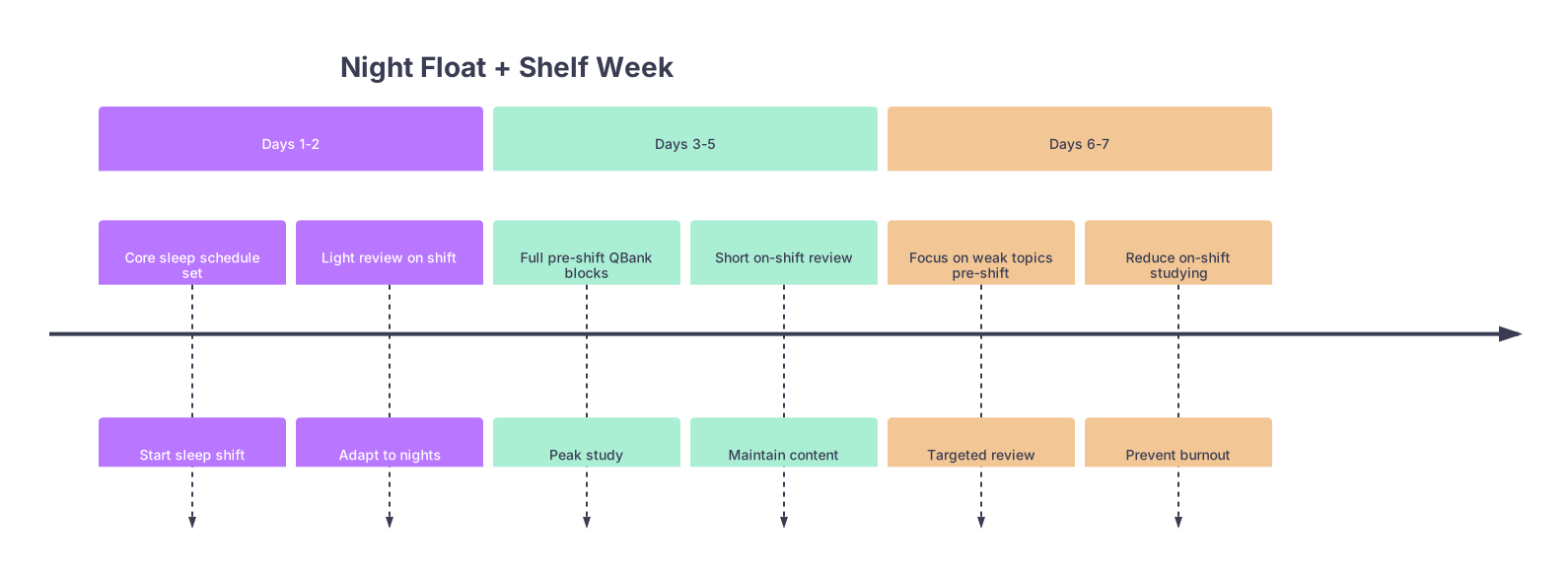
| Period | Event |
|---|---|
| Days 1-2 - Core sleep schedule set | Start sleep shift |
| Days 1-2 - Light review on shift | Adapt to nights |
| Days 3-5 - Full pre-shift QBank blocks | Peak study |
| Days 3-5 - Short on-shift review | Maintain content |
| Days 6-7 - Focus on weak topics pre-shift | Targeted review |
| Days 6-7 - Reduce on-shift studying | Prevent burnout |
Step 4: Designing a Shelf Study Plan That Survives Night Float
Now the practical piece: how to structure your overall shelf plan when night float eats 1–2 weeks of a 6‑ to 8‑week rotation.
Baseline Rule: Front‑Load Before Night Float
If you know night float is weeks 5–6 of your medicine rotation, you do not wait until week 4 to start UWorld.
Minimum expectation before starting night float:
- 60–70% of your main QBank for that clerkship completed
- At least one pass through your primary text / outline (e.g., OnlineMedEd videos + notes)
- Anki or equivalent on core topics established
Why? Because night float is terrible for learning fresh content. It is decent for:
- Reinforcing what you already know
- Identifying remaining weak spots
- Integrating clinical exposures with shelf knowledge
If night float hits in week 1–2 (some programs do this), then your first 3–5 days of the clerkship before starting nights should be disproportionately heavy on shelf prep.
Weekly Targeting During Night Float
You are not going to maintain your pre‑night‑float pace. That is fine. Make it explicit.
Example for a 7‑night block, assuming pre‑shift 2‑hour study windows:
- Goal: 200–250 QBank questions over the week, heavily biased toward weak systems.
- Structure:
- 20–30 timed questions per day in pre‑shift block
- Review each question carefully; log patterns of misses
- Optional: +10–15 easier, untimed questions overnight on 3–4 of the quieter nights
Protect one post‑night‑float day (after your last shift) as a low‑density catch‑up: sleep, then 40–50 slowly reviewed questions, light Anki, and identifying your “last 2‑week priorities” for the shelf.
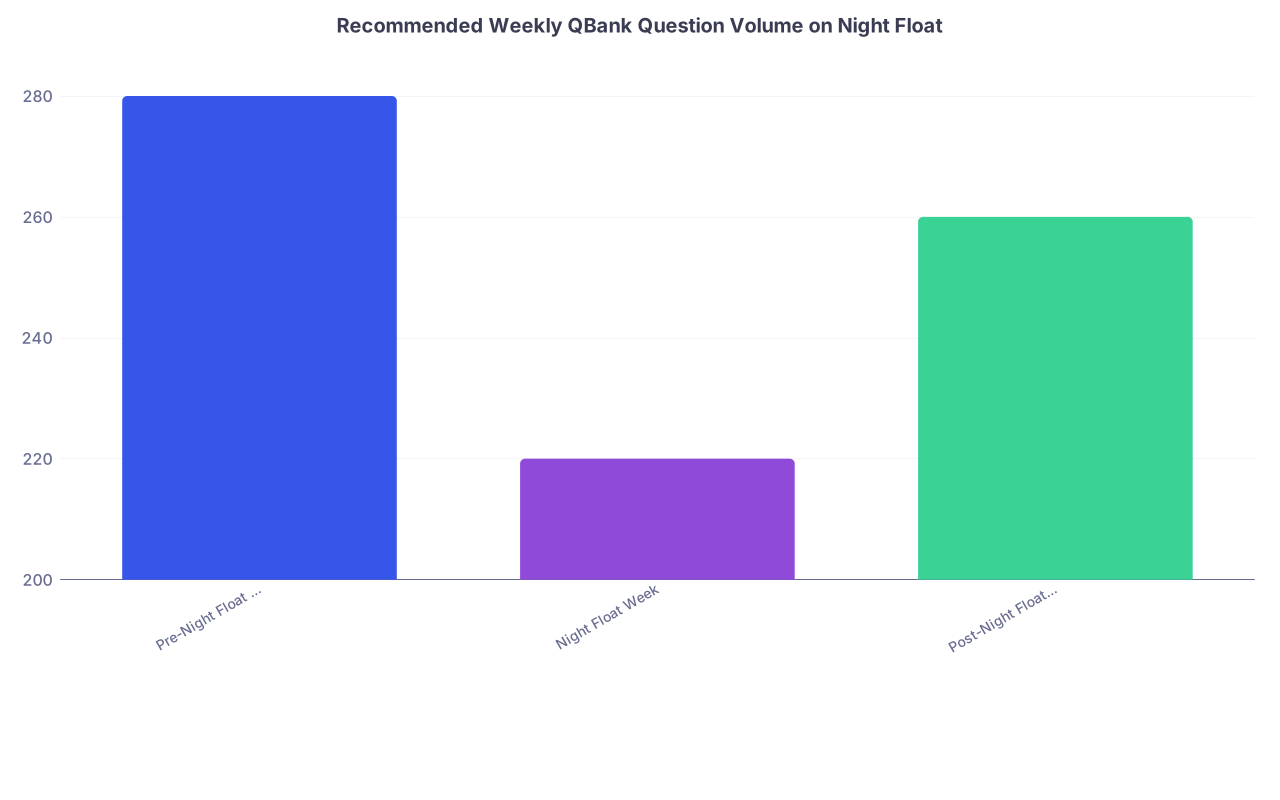
| Category | Value |
|---|---|
| Pre-Night Float Weeks | 280 |
| Night Float Week | 220 |
| Post-Night Float Weeks | 260 |
Step 5: Cognitive and Emotional Self‑Defense: Mental Health During Night Float
This is a mental health piece, so let us be blunt: night float can push people into some bad places.
Here is what I see commonly:
- Sense of isolation (you do not see your normal support system when you are awake)
- Catastrophic thinking about the shelf (“I am ruined, my score is going to tank”)
- Guilt for not studying “enough” on and off shift
- Physical symptoms: headache, GI upset, irritability, feeling oddly tearful
You cannot fully avoid these, but you can prevent them from owning you.
Contain the Catastrophizing
You need objective guardrails:
Set floor goals, not only “ideal goals.”
Example floor goals during night float:- 15–20 questions / day with full review
- 30–45 minutes of Anki
- Protected 4.5–6 hours of sleep
If you hit your floor, you did the day. Anything beyond that is a bonus, not the actual standard.
Define a “no self‑grade” rule during your most sleep‑deprived period.
Do not use your worst nights’ question performance as evidence you are stupid. Your frontal lobe is under‑resourced. You would not judge a GCS 13 patient’s baseline IQ.
Maintain Minimal Non‑Medical Contact
You will not have a full social life. You still need human connection.
- Schedule a quick 10‑minute call with a partner/family/friend 2–3 days during the week in your post‑sleep window.
- If you live with others, warn them: “I am on night float this week; here are the times I can actually talk and not be a zombie.”
Social isolation amplifies anxiety and makes shelf stress feel apocalyptic.
Use Micro‑Recovery Instead of Doom‑Scrolling
Those 10‑minute windows between pages? You have a choice:
- Mindless scroll that temporarily numbs you and wrecks your sleep drive later
OR - Micro‑recovery: stretch, walk, drink water, short breathing exercise, or literally just close your eyes in a dark room.
Even 2–3 micro‑recoveries a night can meaningfully lower sympathetic overdrive and help you fall asleep faster post‑shift.
Know When It Is Too Much
If you hit:
- Persistent inability to sleep even when exhausted
- Panic attacks, suicidal thoughts, or complete emotional blunting
- Cognitive failure to the point of missing basic clinical tasks
You speak to someone. Senior resident, chief, student affairs, counseling. This is not “being weak.” This is approaching unsafe.
Step 6: Last 10–14 Days Before the Shelf: Repair and Sharpen
The danger after night float: you either overcorrect (“I have to study 8 hours a day”) or you mentally check out.
Here is how I would structure the final run‑up if night float ends 1–2 weeks before your shelf.
Step A: Sleep Reset (2–3 Days)
Your first priority is re‑anchoring your circadian rhythm closer to exam conditions.
- Gradually move your sleep earlier by 2–3 hours per day rather than immediately trying to go to bed at 10 PM and failing.
- Use bright light in the morning and minimize light 1–2 hours before desired bedtime.
- Hold a stable wake time that matches your test day.
During these first 2–3 days, you still study, but the main win is restoring a brain that can actually perform on test day.
Step B: Identify and Attack Weak Zones
Use your QBank data and (if available) NBME practice exams to list your bottom 3–4 topics. Be concrete.
Example for Internal Medicine:
- ARDS and ventilator management
- Glomerulonephritis vs nephrotic syndromes
- Endocrine emergencies
Then:
- Spend 1 focused hour per topic: read, watch a targeted video, and then do 10–15 related questions.
- Build 1–2 summary sheets to review daily.
Step C: Simulate Test Conditions
At least once, ideally twice, in the last 10 days:
- Do a 2–3 block exam simulation at the same time of day as your real shelf.
- Sit in one place. Timed. No phone.
- Immediately review for content and pattern recognition: are you missing for lack of knowledge, misreading stems, or fatigue?
If you are still night‑shifty (sleepy mid‑day, wired late), this simulation will feel awful. Do it anyway. Your exam will not be at 2 AM.
Frequently Asked Questions (Exactly 4)
1. Should I use my on‑shift downtime to sleep or to study for shelves?
If you are carrying significant sleep debt (less than 4 hours/24 hours for 2+ days), sleep takes priority. A 20–40 minute nap overnight can prevent dangerous fatigue and may actually improve your retention of pre‑shift studying.
If you are reasonably rested and have a quiet stretch, then yes, use some of that time for low‑ to moderate‑intensity study: short question sets, Anki, or reviewing topics you already touched that day. Do not try to power through dense new material at 3 AM.
2. Is it even realistic to aim for a strong shelf score during a rotation with heavy night float?
Yes, but “strong” needs to be interpreted contextually. Many students score at or above their usual range with smart planning: front‑loading QBank before nights, protecting sleep, and using pre‑shift blocks for high‑yield study. Where people get hammered is waiting until night float to do the bulk of their studying, then blaming themselves. If you structured your rotation well and hit your floor goals during nights, you can absolutely still score in a competitive range.
3. How much caffeine is too much, and when should I cut it off?
As a rule of thumb: keep total caffeine under about 300–400 mg per 24 hours (so, roughly 2–3 standard coffees) and avoid caffeine in the 4–6 hours before your planned core sleep window. For a 8:30 AM–1:30 PM sleep block, that means last caffeine by around 3–4 AM. More than that, or later than that, and you start trading shelf‑prep alertness for trashing the very sleep you need to consolidate memory and function clinically.
4. My program gives me the day off before my shelf, but I am coming off a week of nights. How should I use that day?
Do not turn it into a 12‑hour panic study marathon. Use it strategically:
- Normalize your sleep as much as possible: modestly earlier bedtime the night before, wake up at the exam‑appropriate time.
- Do 1–2 light blocks of questions (20–40 total) in the morning or early afternoon, mainly to stay in “exam mode,” not to learn new information.
- Briefly review your highest‑yield summary sheets or flashcards.
- Shut it down early evening. No last‑minute 11 PM cramming. Protect your pre‑exam sleep above everything.
Key Takeaways
- Night float wrecks circadian rhythm; if you pretend it does not and try to study like you are on days, both your rotation performance and your shelf score suffer.
- Match the type of studying to your brain’s time‑of‑day capacity: heavy lifts in the pre‑shift block, light and reinforcing work overnight, almost nothing brand new at 3 AM.
- Front‑load serious shelf prep before night float, protect a realistic sleep framework while on nights, then use the last 10–14 days before the exam to reset your schedule, target weaknesses, and simulate test conditions.