
It’s 10:30 p.m. You’re on your third call shift this week, sitting in a dim workroom, half-charting, half-fighting tears. Your attending just walked by and casually said, “Everything okay?”
You paused. You thought about saying, “Honestly? No. I’m not sleeping, I’m anxious all the time, and I’m barely holding it together.”
Instead you said, “Yeah, I’m fine,” and went back to clicking boxes.
Now you’re wondering: Should you ever actually tell attendings about your mental health struggles? Or is that career suicide?
Here’s the direct answer:
You sometimes should — but not always, and not to everyone. And you should do it deliberately, not impulsively in the middle of a meltdown.
Let’s break down when it’s smart, when it’s risky, and how to do it in a way that protects both your health and your future.
The Core Question: What Are You Trying To Get?
Start here: What are you hoping will change if you tell them?
You’re usually after one (or more) of these:
- Safer workload or schedule (time off, leave, modified expectations)
- Immediate support for a crisis (you’re not safe, or you’re about to fail a rotation)
- Long-term mentorship and understanding
- Protection from being misjudged as “lazy,” “disengaged,” or “unprofessional”
Your strategy depends on which bucket you’re in.
If you want:
- Formal accommodations or leave → You should usually go through student health / disability / dean’s office first, not straight to random attendings.
- Help surviving this week → A targeted, limited disclosure to a trusted attending or chief might make sense.
- Ongoing mentorship → This can be a more open, relationship-based conversation with one or two carefully chosen people.
If you don’t know what you want and just feel desperate to unload?
Don’t start with your attending. Start with a therapist, student health, or someone whose literal job is to support you.
When It Makes Sense To Tell an Attending
This is where the internet advice is usually too extreme. “Never tell anyone anything” is just as bad as “We should all share everything.”
You’re a med student, not a confessional podcast.
Telling an attending can be a good move in these situations:
1. Your performance is slipping and someone is going to notice
You’re:
- Snapping at nurses
- Forgetting orders
- Chronically late
- Missing basic details you normally wouldn’t
If you say nothing, the default assumption from people who don’t know you is:
“Unprofessional. Not prepared. Doesn’t care enough.”
Sometimes a brief, strategic disclosure reframes what they’re seeing:
“I want to flag something so it doesn’t come across as disinterest or lack of effort. I’ve been working with a therapist for anxiety/depression, and it’s been rough this month. I’m still committed to this rotation and I’m getting help, but if you notice I’m quieter or a bit off, that’s the context. If there are specific concerns about my performance, I’d appreciate hearing them early so I can fix them.”
You didn’t dump your whole life story. You:
- Named the issue in general terms
- Emphasized you’re getting help
- Invited feedback
- Showed insight and responsibility
That usually lands better than pretending nothing’s wrong until you get a scathing evaluation.
2. You’re in an actual crisis and patient care could be unsafe
If you’re:
- Having active suicidal thoughts
- So sleep-deprived + depressed you’re making dangerous mistakes
- In panic attacks you can’t control
You have three priorities:
- Your safety
- Patient safety
- Your career (yes, but it’s third)
In this setting, you must get help from someone with authority — an attending, chief, program director, dean on call, or student health.
You can say something like:
“I’m not safe to be taking care of patients right now. I’ve been struggling with severe anxiety/depression and it’s escalated. I need to step away and get urgent help.”
Will this trigger documentation, maybe occupational health, and possibly time off? Yes.
Is that worse than harming a patient or yourself? No.
I’ve seen students try to white-knuckle through this. It ends badly. Every time.
3. You’re seeking understanding, not accommodations
Sometimes you don’t need a schedule change. You just want a mentor to know who you really are and understand why certain things are harder for you.
That’s often appropriate later in the rotation or after grades are in, with an attending you trust.
For example:
“During med school I’ve dealt with major depression / PTSD / OCD. I’m stable now and in treatment, but it’s shaped how I think about medicine and burnout. I share this selectively, but I’ve appreciated your perspective on wellness and wanted to mention it.”
You’re not asking them to fix anything. You’re letting them see the full picture.
This can be powerful. Some of your strongest career allies will come from moments like this — but it only works with the right person and timing.
When You Shouldn’t Tell Attendings (Yet)
There are absolutely times when I’d tell you to hold off or be very, very limited.
1. You don’t know this attending at all (and they don’t know you)
First week of rotation. You’ve met them twice. They barely remember your name.
Don’t unpack your trauma story on day 2. They don’t have context to interpret it, and you don’t know their biases yet.
Instead:
- Focus on doing your job as best you can
- Get support elsewhere (therapy, friends, Dean of Students, etc.)
- Reassess later if a relationship develops
2. You need formal accommodations (time off, testing changes, reduced call)
This is key: Attendings are not HR.
If you tell an attending “I have depression, I need fewer calls,” they’re often stuck. They don’t have the structure or authority to properly grant accommodations and may feel cornered.
For any official change to your duties, go through:
- Student affairs / dean’s office
- Disability services
- Student or employee health
Then your school or hospital communicates need-to-know info to attendings in a sanitized way:
“This student has an approved accommodation and will not be scheduled for overnight call”
—not—
“This student is depressed and fragile.”
That protects you.
3. You want emotional support, not professional help
You’re lonely, exhausted, and want someone older to say, “This is hard and you’re doing okay.”
That’s human. But most attendings are:
- Busy
- Not trained therapists
- Operating in a power dynamic where their words impact your grade
They can give you empathy and maybe some perspective, but they’re not your primary emotional support system. That role belongs to:
- Friends, partners, family
- Therapists
- Peer support groups
- School mental health services
Use attendings for what they’re good at: boundaries, structure, advocacy, and (sometimes) mentorship. Not as your therapist substitute.
How To Decide: A Simple Framework
Here’s a decision flow you can run through in 30 seconds.

| Step | Description |
|---|---|
| Step 1 | Struggling with mental health |
| Step 2 | Tell someone senior immediately |
| Step 3 | Go to dean/student health first |
| Step 4 | Consider brief, strategic disclosure to trusted attending |
| Step 5 | Share selectively with trusted mentor, later in rotation |
| Step 6 | Focus on treatment & support outside attending |
| Step 7 | Unsafe for you or patients? |
| Step 8 | Need formal time off or accommodations? |
| Step 9 | Performance clearly suffering on rotation? |
| Step 10 | Seeking mentorship/understanding? |
If you land on “tell an attending,” do it intentionally, not in a breakdown at 1 a.m. between pages.
How Much To Share (And How To Say It)
Think in layers, not all-or-nothing.
Layer 1: Vague but honest (often enough)
“I’ve been dealing with some health issues and working with my doctor and therapist. I’m stable and safe to work, but it’s been a bit harder than usual to keep up. I’m committed to this rotation and open to feedback if there are concerns.”
This often gets you understanding without oversharing.
Layer 2: Name it, but keep it brief
“I’ve been struggling with depression/anxiety and am in active treatment. I’m safe to work, but if I seem quieter or lower energy some days, that’s why. I’m not asking for any formal changes, just want to be transparent so you don’t misinterpret it as lack of interest.”
You’ve named the issue, signaled insight, and made it clear you’re managing it.
Layer 3: More detail (for mentors / serious situations)
Reserve this for:
- Long-term mentors
- Crisis conversations
- When your school or hospital is already involved
Here you might discuss:
- Past hospitalizations
- Specific triggers in training
- How your symptoms affect your function
Even then, stay anchored to function:
“What I can and can’t safely do,” not just “how bad I feel.”
Choosing Which Attending To Tell
Not all attendings are created equal. Some are safe; some are not.
What to look for:
- They’ve spoken respectfully about mental health (patients or colleagues)
- They don’t mock “burnout” or say “people just need to toughen up”
- Other students/residents trust them
- They’ve protected learners before (you’ll hear: “She’s tough but fair and actually has your back”)
Red flags:
- They call residents “snowflakes”
- They brag about never taking a sick day
- They gossip about other trainees’ struggles
- They’re volatile or punitive in feedback
If you have to guess how they’ll react, they’re not the right person.
Reality Check: Career Risk, Stigma, and Documentation
You’re not paranoid. There is stigma. Some people will judge, and yes, sometimes it winds up in your evaluation.
Here’s what usually happens in real life:
- Best case: Attending is supportive, adjusts expectations slightly, maybe advocates for you. No drama.
- Middle case: They’re neutral, say “thanks for telling me,” and nothing really changes.
- Worst case: They see you as less reliable, and your eval gets weirdly stiff: “Pleasant, did accept feedback, room to grow in resilience and independence.”
It’s not common, but it happens.
That’s why you:
- Are selective about who you tell
- Stay grounded in function and treatment, not only symptoms
- Use institutional channels for big changes (leave, schedule, testing)
Protecting Yourself While Still Getting Help
You don’t have to pick between “tell no one” and “bleed out emotionally on rounds.”
A balanced setup looks like this:
- You have real mental health care: therapist, maybe meds, regular follow-up
- You have non-evaluative supports: classmates, partner, family, support group
- You use school resources: dean of students, wellness office, student health
- You selectively tell 1–2 attendings or mentors you genuinely trust, when there’s a clear reason
And if your school or hospital culture is toxic?
Prioritize getting out alive and intact. Once you’re in a better environment (e.g., residency somewhere healthier), you can be more open.

Quick Comparison: Who To Talk To For What
| Need / Situation | Best Primary Contact |
|---|---|
| Urgent safety concern (you or patients) | On-call attending / dean / ER |
| Time off or formal leave | Dean of students / student health |
| Testing or schedule accommodations | Disability services / dean |
| Ongoing therapy and medication | Student mental health / psychiatry |
| Career impact and specialty choice | Trusted mentor or advisor |
| Context for current rotation behavior | Selected attending on that service |
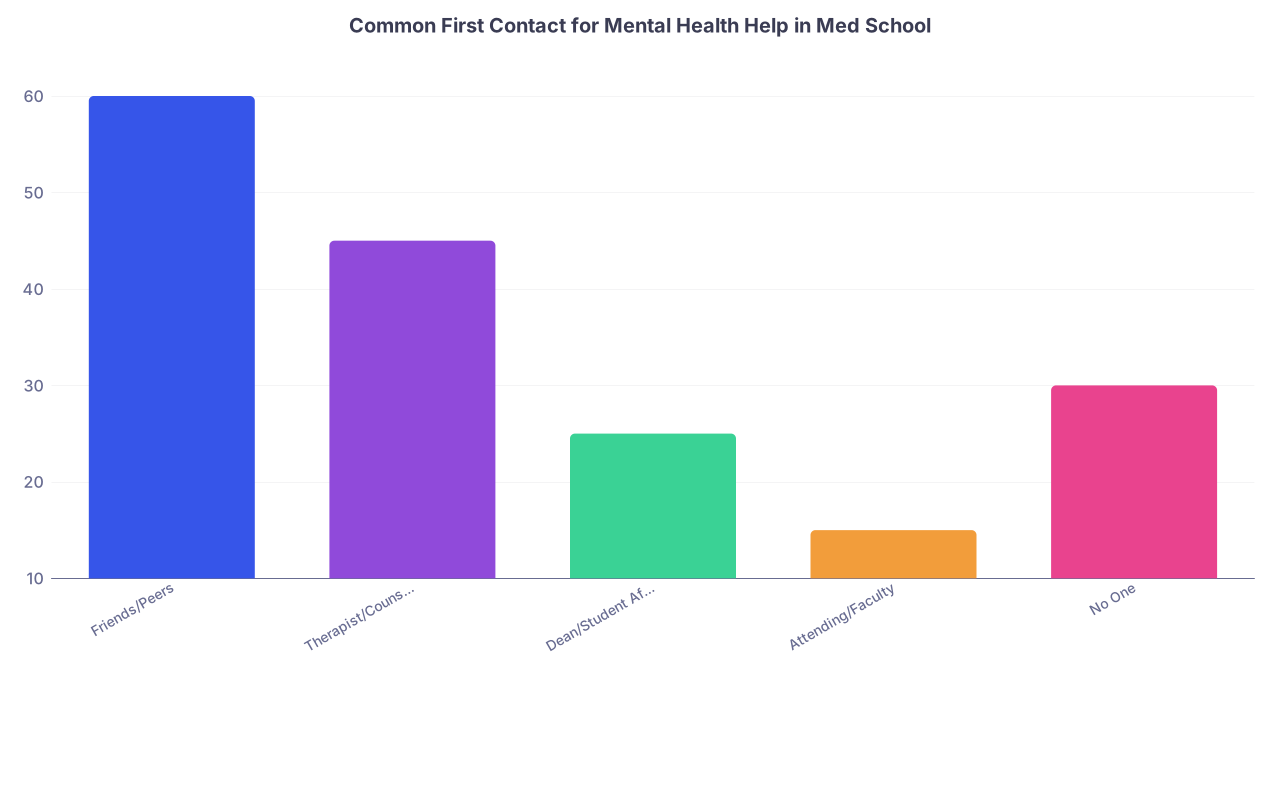
| Category | Value |
|---|---|
| Friends/Peers | 60 |
| Therapist/Counselor | 45 |
| Dean/Student Affairs | 25 |
| Attending/Faculty | 15 |
| No One | 30 |
FAQ: Mental Health Disclosure to Attendings (7 Questions)
1. Will telling an attending about my depression/anxiety go into my permanent record?
Usually, no — not as “this student has depression.” What can go into your record are performance comments: reliability, professionalism, communication. If your mental health is affecting those, they may comment on behavior, not diagnosis. Formal leave or accommodations will be recorded administratively, but not necessarily with a detailed diagnosis. Schools vary, but I rarely see diagnoses plastered all over an academic file.
2. Can mental health issues stop me from matching into residency?
Not automatically. Programs care about: failing exams, failed rotations, professionalism concerns, big unexplained gaps. If your mental health led to any of those, that’s where the risk lives. Plenty of residents with depression, anxiety, PTSD, ADHD match every year. The key is treatment, stability, and clear explanations for any red flags.
3. What if my attending reacts badly or dismissively when I share?
You document for yourself what was said, keep it neutral, and then shift your support elsewhere. Don’t argue or try to convert them. Protect your grade: do your work, stay professional, and loop in your dean or advisor if there’s retaliation or blatantly unfair feedback. One bad attending doesn’t get to define your entire trajectory.
4. Should I disclose a past psychiatric hospitalization to attendings?
Generally no, unless it’s directly relevant and you’re talking to a mentor you trust. Most of the time, “I’ve struggled with depression/anxiety and am in treatment and stable now” is plenty. Detailed history belongs with your clinicians and, if needed, your dean — not random supervising physicians.
5. Is it better to say ‘mental health’ or name the actual diagnosis?
For most interactions, “mental health” or “anxiety/depression” is enough. Naming something like bipolar disorder, PTSD, OCD, eating disorder, etc., can trigger more bias because people misunderstand them. I’d start broad unless there’s a concrete reason to be specific and you trust the person.
6. Do I have to tell anyone if I start antidepressants or see a therapist?
No. Treatment alone doesn’t require disclosure. You only need to tell someone in your institution if your functioning is impaired (you can’t do your job safely or reliably) or you’re requesting accommodations/leave. Plenty of students quietly start meds or therapy and never mention it on rotations.
7. Bottom line: So should I tell attendings about my mental health struggles or not?
Tell them when there’s a clear benefit: safety, preventing misinterpretation of your performance, or deepening a relationship with a trusted mentor. Don’t tell them as a first step, in a crisis with no plan, or to every attending you meet. Start with real treatment and institutional support, then choose 1–2 attendings carefully and speak in focused, functional terms.
Key points to walk away with:
- You don’t owe every attending your full mental health history; disclosure should be targeted and strategic.
- Use formal school channels (dean, student health, disability) for accommodations and leave; attendings are secondary, not your first line.
- When you do share, keep it brief, emphasize that you’re getting help, and anchor everything to your ability to function safely and learn.