
What Type of Therapist Is Best for Med Students and Residents?
What do you actually need more right now — someone to process your feelings, someone to give you tools, or someone who can help you sleep and stop the panic attacks before rounds?
That’s the core question behind, “What type of therapist is best for med students and residents?”
Let me be blunt: most med students and residents don’t need some vague “mental health support.” They need targeted, practical help that understands call schedules, exam pressure, and the constant low-level fear of screwing up and hurting someone.
Here’s the answer you’re looking for — with specifics.
The Short Answer: Start With These 3 Types
If you’re in med school or residency, the best fit usually comes from one of three buckets:
- A therapist who uses CBT or ACT (Cognitive Behavioral Therapy / Acceptance and Commitment Therapy)
- A therapist who knows medical training culture (ideally has worked with physicians/trainees before)
- A psychiatrist (often in combination with therapy) if you’ve got clear symptoms of moderate–severe anxiety, depression, insomnia, or panic that are wrecking your functioning
Everything else is detail.
Let’s break down the major types so you can stop googling and actually pick someone.
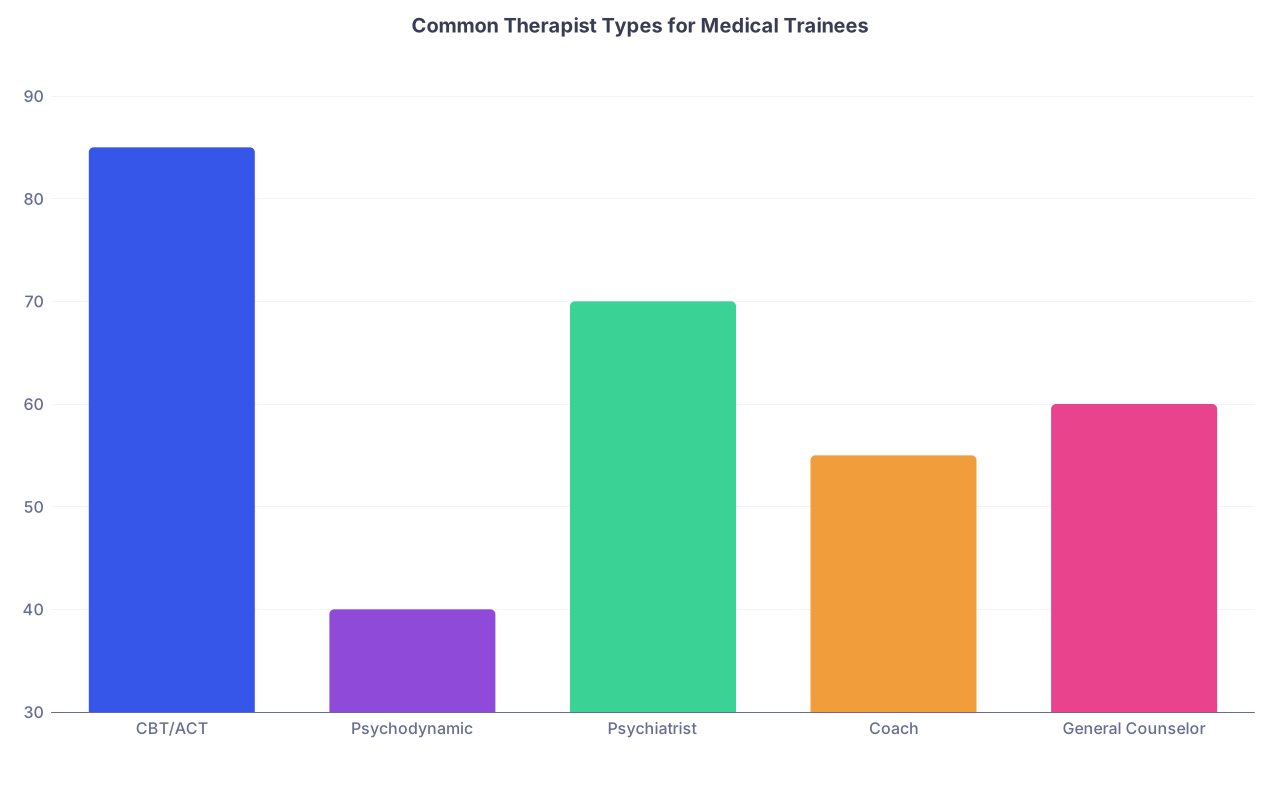
Major Therapist Types Med Students Should Know
| Category | Value |
|---|---|
| CBT/ACT | 85 |
| Psychodynamic | 40 |
| Psychiatrist | 70 |
| Coach | 55 |
| General Counselor | 60 |
(Values are rough “utility” scores for med trainees — not research-based, but based on what tends to actually help.)
1. CBT Therapist (Cognitive Behavioral Therapy)
If you’re overwhelmed by exams, perfectionism, and constant self-criticism, CBT is usually the workhorse.
What CBT is good at:
- Test anxiety and performance pressure
- Imposter syndrome (“Everyone else is smarter than me”)
- Catastrophic thinking (“If I fail this exam, my career is over”)
- Rumination after bad shifts or mistakes
- Procrastination and avoidance
Why it fits med training so well:
- Structured, goal-oriented, time-limited
- Uses worksheets, skills, and “homework” — which your med brain actually handles well
- Feels concrete and practical, not vague or floaty
What sessions are like: You’ll track thoughts, identify patterns (like all-or-nothing thinking, overgeneralizing, mind-reading attendings), and test them against reality. You’ll build very specific plans for coping with call, exams, or difficult attendings.
If you want tools, not just “how do you feel about that?” — start here.
2. ACT Therapist (Acceptance and Commitment Therapy)
Think of ACT as CBT’s cousin that’s more about “how do I live with this?” than “how do I get rid of this?”
ACT is especially good for:
- Chronic stress that’s not going away (newsflash: residency)
- Burnout and emotional exhaustion
- Moral distress / regret about patient care decisions
- Feeling detached, numb, or like you’re “going through the motions”
Core ACT ideas you’ll probably relate to:
- Your thoughts aren’t facts; they’re mental events
- You can feel like trash and still act in line with your values
- Instead of fighting every anxious thought, you can let them be background noise
ACT therapists often use mindfulness, values clarification, and committed action. Less “fix my anxiety forever,” more “help me live a meaningful life with this anxiety in the background.”
For a lot of residents, that’s more realistic than some fantasy of “stress-free training.”

3. Psychodynamic / Insight-Oriented Therapist
This is the classic “let’s explore where this comes from” therapy. Less homework, more narrative.
Useful for:
- Longstanding patterns: people-pleasing, never saying no, over-functioning
- Repeating unhealthy relationships (dating, family, colleagues)
- Old wounds that med training keeps poking (shame, criticism, rejection)
- Feeling like your whole identity is “med student” or “resident” and you don’t know who you are outside of that
When it works well, this type of therapy helps you understand why you react the way you do on the wards, during feedback, or with authority figures. A lot of trainees realize their response to a malignant attending is basically a replay of how they dealt with a critical parent or teacher.
Is it the best first line if you’re barely sleeping and crying in the call room? Usually not. But as a medium- to long-term option, it can be powerful.
Do You Need a Psychiatrist, Therapist, or Both?
This is where a lot of people get stuck.
Here’s the clean version:
- If your main problems are patterns of thinking, coping, relationships, and behavior → start with a therapist (CBT/ACT/psychodynamic).
- If you’re dealing with significant depression, panic, severe anxiety, suicidal thoughts, or sleep is basically non-existent → you likely need a psychiatrist involved as well.
- Best case for many med students/residents: therapy + psychiatrist working together.
| Problem / Symptom | Best First Step |
|---|---|
| Test anxiety, imposter syndrome | CBT/ACT therapist |
| Burnout, depersonalization | ACT or psychodynamic therapist |
| Severe insomnia, panic attacks | Psychiatrist (+ therapy) |
| Suicidal thoughts, self-harm | Psychiatrist / crisis care ASAP |
| Relationship issues, boundary problems | Psychodynamic or CBT therapist |
| ADHD evaluation / meds questions | Psychiatrist or neuropsych eval |
A quick heuristic:
If you’re functioning but miserable → therapist first.
If you’re barely functioning → psychiatrist plus therapist.
The Most Important Factor: Do They Get Medical Training?
You can have the “perfect” theoretical orientation, and the whole thing still falls flat if your therapist doesn’t understand:
- What call actually is
- That you can’t “just take a week off” in the middle of inpatient
- Why feedback from attendings hits like a truck
- The Step / Shelf / in-house exam stack and what “failing” does to your record
- Why “just quit” is not a helpful suggestion three years into med school with $250k loans
You want someone who either:
- Regularly works with med students, residents, or physicians, or
- Has experience with other high-stakes professions (pilots, firefighters, lawyers) and is willing to learn your world
Ask them directly in a consult:
- “Do you work with medical trainees or physicians?”
- “How do you typically help someone dealing with call schedules and exam pressure?”
- “How do you handle documentation and confidentiality for trainees?”
If they give you generic wellness-speak and obviously don’t know what “Step 2” or “golden weekend” means, that’s a yellow flag. Not a dealbreaker, but you’ll spend time explaining context instead of doing work.

| Step | Description |
|---|---|
| Step 1 | Notice distress |
| Step 2 | Find psychiatrist |
| Step 3 | Find therapist |
| Step 4 | CBT/ACT |
| Step 5 | ACT |
| Step 6 | Psychodynamic |
| Step 7 | Consider therapy add-on |
| Step 8 | Check they know med culture |
| Step 9 | Functioning? |
| Step 10 | Main issue? |
University Counseling vs Private Practice vs Resident Wellness
You’ve basically got three main routes.
1. School Counseling Center
Pros:
- Free or very cheap
- Usually quick to get an intake
- Often have experience with students under high academic pressure
Cons:
- Session limits (6–12/year is common)
- May not be truly separate from the med school culture, even if technically confidential
- High turnover; you might have to switch therapists
Good for: short-term support, crisis stabilization, starting somewhere when money is tight.
2. Private Practice (In-Person or Telehealth)
Pros:
- More choice of specialty (CBT/ACT, trauma-informed, physician-focused, etc.)
- More stable long-term relationship
- You can pick someone entirely outside your institution, which many people prefer
Cons:
- Cost. Insurance battles. Out-of-network nonsense.
- You have to do more legwork to find someone who fits.
Good for: ongoing therapy, more privacy, tailoring to your needs.
3. Resident/Physician Wellness Programs
Pros:
- They typically “get it” — lots of experience with burnout, call, medical errors, impairment concerns
- Sometimes free or subsidized
- Often emphasize confidentiality strongly
Cons:
- You may still worry (often unnecessarily) about word getting back to leadership
- Sometimes focused more on brief interventions or coaching than deep work
Good for: residents especially, or med students at big academic centers with solid wellness infrastructure.
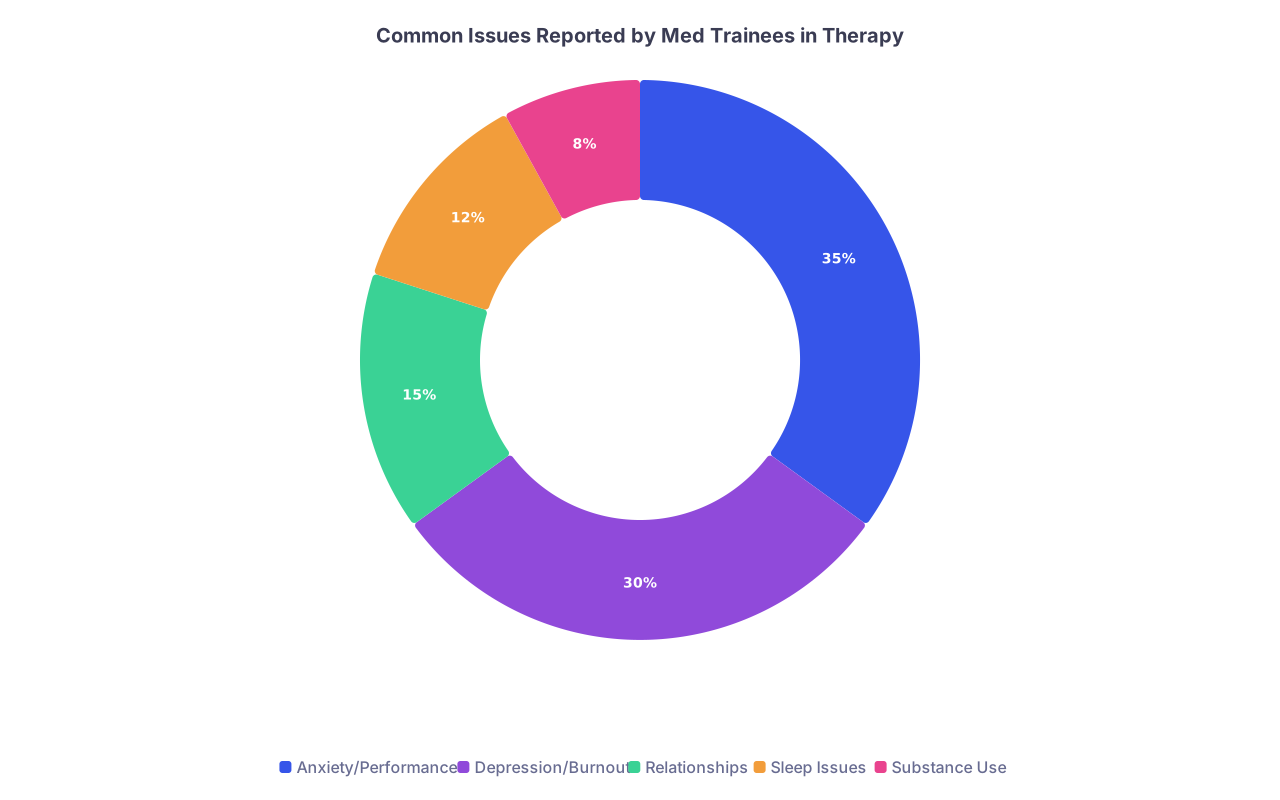
| Category | Value |
|---|---|
| Anxiety/Performance | 35 |
| Depression/Burnout | 30 |
| Relationships | 15 |
| Sleep Issues | 12 |
| Substance Use | 8 |
Signs You’ve Found the Right Therapist (Regardless of Type)
Orientation matters. But the relationship matters more.
You’re with the right person if:
- You feel understood quickly — you don’t have to over-explain the culture
- They balance empathy with directness; they don’t just nod for 50 minutes
- You leave sessions with at least some clarity or next steps, not just emotional hangover
- You feel safe enough to say, “That didn’t really help,” without them getting defensive
- They’re not visibly shocked by the stuff you see on the wards
You’re probably with the wrong person if:
- You’re dumbing down or editing your experiences so they won’t worry or judge you
- They keep advising things that are impossible in training (e.g., “just don’t work more than 40 hours”)
- Every session feels like vague venting with zero structure, and weeks go by without progress
- You consistently dread sessions and feel worse after, not in a “this is hard work” way but in a “why am I paying for this?” way
You’re allowed to switch. That’s not failing therapy. That’s being smart about your own care.

How To Actually Find One (And What To Ask)
Here’s the concrete, non-fluffy version.
Where to look:
- Your med school or GME office website (they often list mental health resources)
- State physician health programs (many list referral networks for confidential care)
- PsychologyToday filters (you can search for CBT, ACT, etc., and put “physician” or “medical student” in keywords)
- Colleagues you trust who’ve been to therapy (whisper network is often better than any directory)
Questions to ask in a 10–15 minute consult:
- “Have you worked with med students or residents before?”
- “What’s your main approach — CBT, ACT, psychodynamic, something else — and what does that look like in practice?”
- “How do you usually work with performance anxiety / burnout / depression?” (plug in your biggest issue)
- “What’s your stance on meds? Do you coordinate with psychiatrists?”
- “What days/times do you offer that could realistically work with an unpredictable schedule?”
If they talk in circles or can’t give you a clear sense of what they’d do with you, keep looking.

Quick Matching Guide: What You’re Feeling vs Who To See
You don’t need a 20-page intake to make a first move. Use this as a rough map.
- “I’m constantly scared I’ll fail exams or get pimped and humiliated” → CBT or ACT
- “I’m numb, cynical, and don’t care about patients the way I used to” → ACT or a therapist who knows burnout and values work
- “I’ve been depressed for months, can’t get out of bed, and I’m thinking about death a lot” → Psychiatrist ASAP + therapist
- “My childhood was a mess and I can see it replaying with attendings and partners” → Psychodynamic or integrative therapist
- “I’m procrastinating, disorganized, can’t focus, suspect ADHD” → Psychiatrist or neuropsych eval, plus CBT
- “I’m mostly okay but I need better coping tools and someone outside medicine to talk to” → CBT/ACT, school counseling or private practice
You’re not picking a specialty for life. You’re picking the next right helper for the next stage.
FAQ (Exactly 6 Questions)
1. Is it better to see a therapist who’s also an MD?
Not necessarily. A psychiatrist (MD/DO) is essential if you’re considering meds or need diagnostic clarification for serious symptoms. But many of the best therapists for med students and residents are psychologists (PhD/PsyD), social workers (LCSW), or counselors (LPC/LMHC) who’ve just spent years working with physicians.
If you can find an MD-therapist who focuses on doctors, great. But don’t wait 6 months on a waitlist for that unicorn if there’s an experienced psychologist who clearly understands medical training and can see you next week.
2. How do I handle therapy with my insane schedule?
Be blunt with therapists upfront: “I’m a PGY-1 on inpatient. My schedule changes every 4 weeks and I have call.” Many who work with clinicians build in flexibility: early mornings, late evenings, telehealth, variable slots.
You can also:
- Book recurring times on your lighter days (e.g., golden weekends, clinic blocks)
- Do telehealth from your car or office on a lunch break when needed
- Use a hybrid: weekly for a while, then bi-weekly once you’re more stable
If a therapist insists you must do the same time every Tuesday at 2 pm and won’t budge, they’re probably not the best fit for a trainee.
3. Will going to therapy hurt my future licensing or credentialing?
For the vast majority of people, no. The bigger risk is untreated mental illness, substance use, or burnout that leads to impairment or major errors.
Most states are slowly moving away from “Have you ever…” questions about mental health to “Are you currently impaired…” questions. Therapy itself, especially if kept separate from your institution (private pay or regular insurance), is rarely an issue. If you’re worried, look up your state medical board’s exact wording and, if needed, talk to a physician health program or an attorney who knows licensure.
Avoid putting unnecessary mental health details in occupational health or employee health records; keep therapy with an outside clinician when in doubt.
4. What if I start with the “wrong” type of therapist?
Then you pivot. You’re not signing a contract for life.
If you start with CBT and realize, “I’ve got deeper identity stuff I need to unpack,” you can add or switch to a psychodynamic therapist later. If you begin insight-oriented therapy and feel like you’re drowning in symptoms, you bring in a psychiatrist for meds or a more skills-based therapist for immediate coping.
Say this out loud in session: “I think I need more tools / more structure / to go deeper into my past / to address meds.” A good therapist will adjust or help you transition, not guilt-trip you.
5. I’m not “that bad.” Is it overkill to get a therapist?
No. Waiting until everything is on fire is overrated and honestly kind of dumb. Therapy doesn’t have to be for “crisis only.”
You can use therapy to:
- Build better coping before Step 2 or intern year
- Learn to set boundaries early so you don’t become the person who always says yes
- Work through perfectionism before it eats your life
- Process early patient deaths or bad outcomes so they don’t calcify into chronic guilt
Think of it like strengthening your back before you herniate a disc lifting a 300-pound trauma patient.
6. What’s one sign I should stop searching and just book someone?
If you’ve read three articles like this, clicked around on multiple directories, and already have two or three therapists whose profiles seem “good enough” and aligned with CBT/ACT or physician experience — you’re stalling.
Pick one and book a consult. Your next clarity move doesn’t come from more research. It comes from a 15–20 minute conversation with an actual human.
Here’s your next step: open a browser, find one therapist who lists CBT or ACT and mentions working with medical professionals, and send a message asking for a brief consult this week. Don’t overthink it. Just get that first call on the calendar.