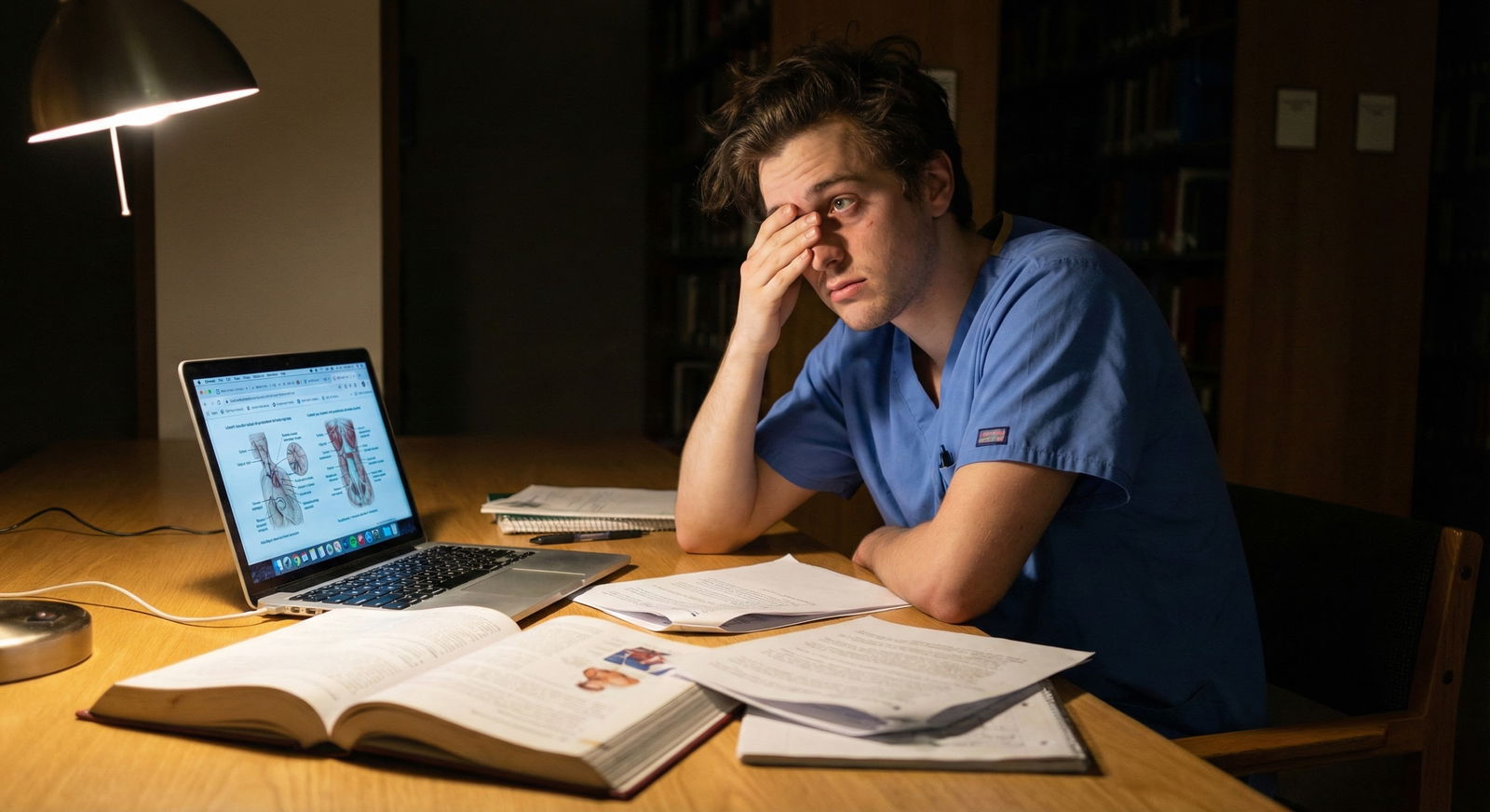
The myth that constant anxiety in med school is “just part of the deal” is dangerous—and wrong.
You will feel stressed. You will feel anxious. That part is normal. But the culture of “if you’re not suffering, you’re not serious” has trained a lot of smart people to ignore very real red flags until they’re in crisis.
Let me cut through the noise for you.
This is the line: normal med school anxiety comes and goes, and you’re still basically yourself. Problem-level anxiety sticks, spreads into everything, and starts running your life.
You need to know what side of that line you’re on.
What “Normal” Anxiety in Med School Actually Looks Like
You are not broken because you:
- Feel your heart race before exams or OSCEs
- Have a few nights of bad sleep before Step 1 or a big practical
- Worry about matching, grades, or clinical performance
- Ruminate for an hour after getting pimped in front of the team
That’s the brain’s normal stress response in a high-pressure environment.
Typical, “expected” med school anxiety has a few consistent features:
It’s tied to something specific.
Big exam. First code. Tough attending. Shelf week. When the thing passes, your anxiety drops.It’s time-limited.
You might be on edge for a few days or even a couple of weeks during an intense block, but you can point to a start and end.You’re still functioning.
You’re stressed but you:- Go to class/clinical
- Study a reasonable amount
- Eat, shower, mostly sleep
- See friends once in a while
You may feel lousy, but life is still moving.
You can calm down with normal strategies.
A walk, gym, talking to a friend, 10 minutes of breathing, watching a show—these things at least help a bit. They don’t fix everything, but they move the needle.You still recognize yourself.
Your baseline personality is there under the stress. You still laugh. You still care about things outside medicine, even if they’ve been pushed to the side.
If this is you, you’re in the “normal but uncomfortable” zone. You still deserve support and better coping tools, but you’re not necessarily in crisis.
Clear Red Flags: When Anxiety Is No Longer “Normal”
Here’s where I stop being gentle: med students normalize some truly alarming symptoms because everyone’s “busy,” “tired,” or “stressed.” That’s how people slide from manageable anxiety into an actual disorder without noticing.
You should consider your anxiety a problem that needs professional help if you recognize a cluster of these:
1. Your body is in constant fight-or-flight
Not just before an exam. All the time, or almost.
- Heart racing out of nowhere
- Chest tightness or feeling like you “can’t get a deep breath”
- GI issues that flare with stress (nausea, diarrhea, stomach pains)
- Trembling, sweating, feeling on edge for hours
- Panic attacks: sudden surges of terror, feeling like you’re dying or going crazy
If your default state feels like you’re about to be hit by a car—even when you’re just sitting at your desk—that’s not “standard med school stress.” That’s chronic hyperarousal and it’s treatable.
2. Your sleep is wrecked for more than a week or two
Everyone has bad nights before a big exam. That’s not what I’m talking about.
Red flags:
- Lying in bed for hours with racing thoughts most nights
- Waking up at 3–4 a.m. with anxiety and not falling back asleep
- Needing alcohol, benzos, or weed almost every night just to knock out
- Having frequent nightmares about medicine, failure, or humiliation
If your sleep is consistently broken down, your brain and mood will follow. This is an early sign that anxiety is out of control.
3. You’re starting to avoid things you actually need to do
Avoidance is a huge tell.
- Skipping lectures, small groups, or clinical days because of dread
- Putting off studying so long that you’re constantly behind
- Avoiding checking email, grades, or your schedule because it spikes your anxiety
- Not going to sim lab, patient encounters, or talking on rounds unless forced
When anxiety is dictating what you do or do not do, that’s a problem. This isn’t “I hate path at 8 a.m.” It’s “I am changing my behavior to not feel anxious in the short term,” and it backfires long term.
4. Your thoughts are stuck on worst-case loops
Normal: “I’m worried I might fail this exam.”
Problem: “If I fail this exam, I’ll never match, I’ll disappoint everyone, my life is over”—on repeat, every day.
Watch for:
- Catastrophic thinking you can’t shut off
- Intrusive “what if” thoughts constantly running in the background
- Mentally replaying mistakes over and over, for days
- Feeling like you can never relax because something bad is always about to happen
If your brain feels like it’s stuck in a doom-scroll of your own life, that’s anxiety driving the bus.
5. Your functioning is falling apart
This is where med students often lie—to themselves and others—because they’re terrified someone will say they “can’t handle it.”
Function impairment looks like:
- Grades dropping significantly with no other clear reason
- Missing deadlines, forgetting tasks, blowing off responsibilities
- Constantly late, disorganized, or unable to start basic tasks
- Needing multiple extensions or remediation due to “stress”
If your anxiety is now messing with the very things you’re anxious about (performance, evaluations, matching), that’s beyond normal.
6. You feel different. And not in a good way.
You’re not just stressed. You’re becoming someone you don’t recognize.
- Short fuse, snapping at friends, partner, or family
- Cynical, numb, or detached from patients, classmates, yourself
- Feeling hopeless, empty, or like nothing will ever get better
- Using alcohol, stimulants, or other substances way more than before
Anxiety and depression often travel together. It’s very common for chronic anxiety to slowly blend into burnout and depression. That combination is serious.
7. You’re having thoughts about not wanting to be here
This is the line where “maybe I should get help” becomes “you need help now.”
Take this seriously if you:
- Think it “would be easier if I just didn’t wake up”
- Fantasize about not existing, disappearing, or “escaping” permanently
- Have passive or active suicidal thoughts
- Have any thoughts of self-harm, even if you “wouldn’t really do it”
If this is you, do not argue with yourself about whether you’re “bad enough” to get help. You are. Right now.
Quick Self-Check: Where Are You on the Anxiety Spectrum?
Use this as a gut-check, not a diagnosis.
| Zone | Typical Signs | Action |
|---|---|---|
| Green (Expected Stress) | Situational, short-lived anxiety; still functioning; coping skills help | Use healthy habits, peer support |
| Yellow (Concerning) | Frequent worry, sleep issues, some avoidance, mild performance impact | Talk to counselor, consider therapy |
| Orange (Impairing) | Persistent anxiety, major sleep issues, avoidance, grades/clinicals suffering | Get formal evaluation, therapy, possibly meds |
| Red (Crisis) | Suicidal thoughts, severe panic, cannot function, unsafe coping (substances/self-harm) | Seek urgent/emergency help immediately |
If you’re clearly in yellow or above, you’re not “overreacting” by asking for help. You’re doing exactly what a competent future physician should do: responding early to a health problem.
Where To Get Help (That Won’t Tank Your Career)
The fear that getting help will ruin your career is exaggerated and badly outdated in most places. What actually ruins careers? Untreated mental illness leading to failures, professionalism issues, or leaving medicine entirely.
Here’s the realistic menu of support:
1. On-campus counseling or student wellness
Almost every med school has:
- Free or low-cost counseling
- Short-term therapy
- Workshops on stress, burnout, or test anxiety
Yes, they’re busy. Yes, sometimes you have to wait. But this is usually the easiest first step.
2. External therapist (off campus)
Good option if:
- You’re worried about confidentiality within your institution
- You want longer-term therapy
- You need someone with specific experience with med trainees
Look for therapists who list: “medical professionals,” “high-achieving anxiety,” “perfectionism,” or “healthcare burnout.”
3. Psychiatrist
Not everyone with anxiety needs meds. But many med students wait way too long to even consider them.
Medication might be appropriate if:
- Your anxiety is clearly impairing your functioning
- You’ve tried therapy/skills and are still stuck
- You have panic attacks, severe insomnia, or mixed anxiety/depression
You, of all people, know this: taking an SSRI or another evidence-based medication is not a moral failure. It’s treatment.
4. Peer and near-peer support
Not “misery bonding” only. Real support.
- A trusted classmate you can be honest with
- An upperclassman who’s been through your phase
- Resident mentors who actually remember what Step 1 felt like
You need at least one person who knows what’s really going on in your head.
Concrete Things You Can Do This Week
I’m not going to throw “self-care” clichés at you. You don’t need bubble baths. You need structure and control where you can actually get it.
Here are practical moves:
Name your zone honestly.
Green, yellow, orange, or red. Write it down. No sugar-coating.Track your sleep and anxiety for 7 days.
In your notes app, jot:- Hours slept
- How anxious you felt (0–10)
- Any panic episodes
That pattern will tell you more than your brain’s vague “I’m always stressed.”
Set a non-negotiable “check-in” appointment.
Decide right now:- “If I’m still orange in 2 weeks, I book counseling.”
or - “If I have one more panic attack, I email student health.”
- “If I’m still orange in 2 weeks, I book counseling.”
Tighten basic routines just a little, not perfectly.
Pick 2 of these and commit:- A 10–15 minute daily walk without your phone
- Fixed bedtime and wake time within a 1-hour window
- Eating something with protein twice a day
- 5 minutes of slow breathing before bed
You’re not rebuilding your life. You’re stabilizing the foundation enough to think clearly.
Exam Anxiety vs Anxiety Disorder: The Real Difference
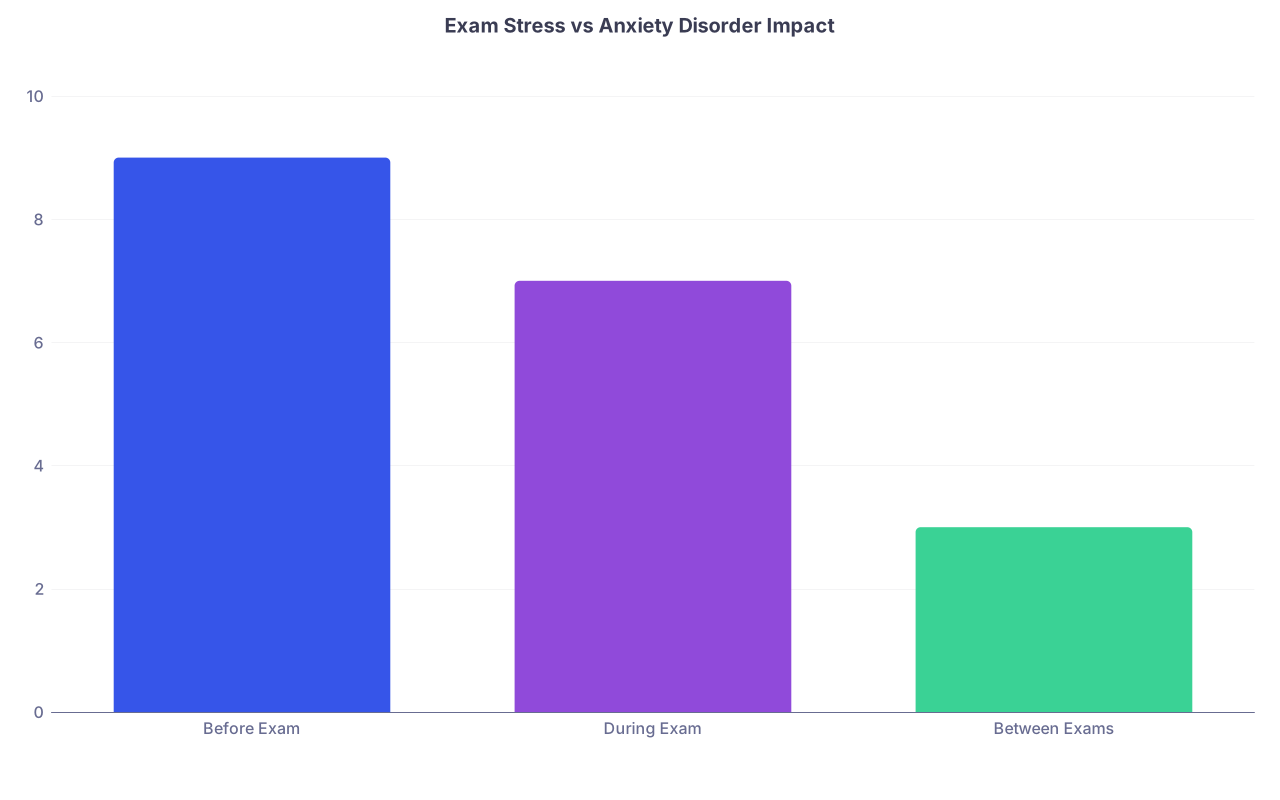
Med school exams are anxiety engines. But again, not all exam anxiety is pathological.
Here’s the clean distinction:
| Category | Value |
|---|---|
| Before Exam | 9 |
| During Exam | 7 |
| Between Exams | 3 |
For most students:
- Anxiety spikes before and during the exam
- Then drops significantly between exams
With an anxiety disorder:
- Anxiety stays high between exams
- You’re already at an 8 out of 10, weeks before
- Even after exams end, your body doesn’t reset
So ask yourself: “On an average week without any major exams, how anxious am I, 0–10?”
If your honest number is 6–8 most days, that’s not just “exam-related.”
How to Talk About This Without Sounding “Weak”
If the idea of saying “I’m not okay” makes you want to throw up, you’re not alone. Med culture trains that reaction into you.
Here’s a script you can adapt when reaching out to:
- A dean
- A counselor
- Student health
- A trusted attending or resident
“I’ve been having persistent anxiety that’s affecting my sleep, concentration, and school performance. It’s not just pre-exam stress anymore. I want to keep doing well here, but I’m struggling, and I need some guidance and support.”
You’re framing it as a performance and health issue (which it is), not a character flaw.
A Simple Mental Flowchart: Do I Need Help?
Use this like an internal checklist.

| Step | Description |
|---|---|
| Step 1 | Feeling Anxious Often |
| Step 2 | Use coping skills, monitor |
| Step 3 | Yellow/Orange Zone: Schedule counseling |
| Step 4 | Red Zone: Seek urgent/emergency help |
| Step 5 | Therapy, consider psychiatry |
| Step 6 | Is it tied to specific events & short-lived? |
| Step 7 | Still functioning in school & life? |
| Step 8 | Persistent, most days for 2+ weeks? |
| Step 9 | Suicidal thoughts or cant function? |
Memorize the key inflection points:
- Persistence
- Functional impairment
- Safety concerns
Any “yes” there pushes you toward professional help—not later, now.
FAQ: Med School Anxiety – 7 Questions You’re Probably Asking
How much anxiety is actually “normal” in med school?
Feeling anxious before exams, new clinical situations, or evaluations is normal. Having a few bad nights of sleep during intense blocks is normal. Worrying about your future is normal. What’s not normal is persistent, high-level anxiety most days for weeks, especially when it affects your sleep, concentration, relationships, or ability to function in class/clinicals.How do I know if I have an anxiety disorder vs just stress?
Focus on three things: duration, intensity, and impairment. If your anxiety has lasted most days for more than 2–4 weeks, feels difficult to control, and is interfering with sleep, studying, showing up to clinicals, or daily tasks, you’re in anxiety-disorder territory. A formal diagnosis should come from a professional, but those are big red flags.Will getting mental health treatment affect my ability to match or get licensed?
In most cases, no. Many physicians and residents have received treatment and still matched into competitive specialties. Boards and licensing bodies increasingly focus on current impairment, not the fact that you sought help. Untreated problems that lead to failures, absences, or professionalism issues are much more damaging than a documented history of treated anxiety.Is it “overkill” to see a therapist just because I’m stressed?
No. Therapy is not just for people in crisis. It’s for building skills, preventing crises, and understanding how you respond to stress. Med school is a pressure cooker; getting tools early is smart, not dramatic. If your anxiety feels like more than you can manage with basic coping strategies, therapy is a reasonable next step.Should I consider medication for anxiety as a med student?
Maybe. You don’t have to “earn” medication by hitting rock bottom. If your anxiety is impairing your functioning, you’ve tried behavioral strategies, and therapy alone is not enough—or you can’t even effectively engage in therapy because you’re too anxious—medication is worth discussing with a psychiatrist or knowledgeable PCP. It’s one tool, not a life sentence.What if I’m afraid to tell faculty or administration I’m struggling?
You’re not obligated to tell everyone. Start with confidential options: counseling services, student health, an outside therapist. If your functioning is affected (missed days, failed exams), it can help to loop in a student affairs dean who has seen this hundreds of times and can coordinate accommodations or schedule adjustments. You can phrase it in performance terms without sharing every detail.What’s one small change I can make this week that actually helps anxiety?
The highest-yield, smallest move for most students is this: fix your sleep window. Choose a consistent 7–8 hour block and stick to it within a 1-hour range, every day, for one week. Limit caffeine after mid-afternoon, no doom-scrolling in bed, and do something calming (not study) for 20 minutes before sleep. Better sleep won’t fix everything, but it will lower baseline anxiety enough that other strategies actually start working.
Open your calendar right now and block 30 minutes in the next 48 hours labeled “Mental health check.” Use that time to honestly rate your anxiety, review this article, and—if you’re in the yellow, orange, or red zone—send one email or make one call to get help.