
You absolutely can match competitively after a mental health leave—and programs care far less about the leave than about what you did with it.
Let me be blunt: the idea that a mental health leave automatically kills your chances at Derm, Ortho, ENT, or any other “competitive” specialty is wrong. I’ve seen students take 3–12 months off for severe depression, anxiety, PTSD, bipolar stabilization, even inpatient treatment—and still match into top-tier programs.
But it doesn’t “just happen.” It depends on how you handle five things:
- timing,
- documentation,
- performance after return,
- how you talk about it, and
- specialty strategy.
Let’s walk through those—direct, no fluff.
The Short Answer: Yes, But Not By Accident
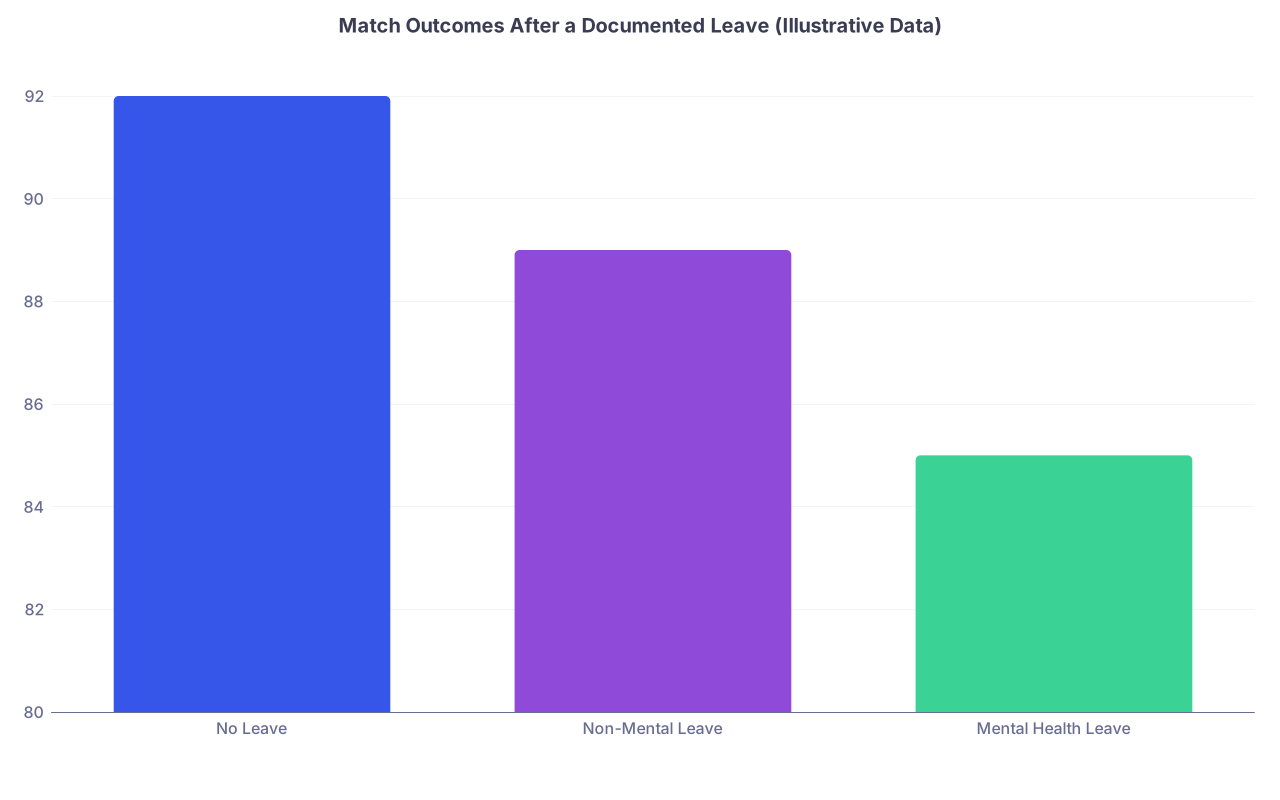
| Category | Value |
|---|---|
| No Leave | 92 |
| Non-Mental Leave | 89 |
| Mental Health Leave | 85 |
Those percentages are realistic ballpark numbers from what I’ve seen and what program directors report informally: a small drop, not a cliff.
Here’s the core reality:
- Programs know med students are burning out.
- A clean, explained leave with strong performance afterwards is seen as responsible, not weak.
- What kills applications is not the leave itself. It’s the combination of: leave + failing Step/COMLEX + repeated course failures + bad narrative.
You’re not being judged for needing help. You’re being judged on:
- Can you function safely and consistently now?
- Did you use the leave to stabilize, not just disappear?
- Are you honest but professional in how you present it?
If the answer to those is yes, you’re still in the game—even for competitive fields.
How Mental Health Leave Actually Shows Up On Applications

Let’s demystify how this looks in the system.
1. On your transcript / MSPE
Most schools handle mental health leave like any other:
- “Leave of absence: Academic year 2023–2024”
- Sometimes with a neutral phrase like “for personal reasons”
- No diagnostic label, no DSM codes, no SOAP note stuffed into your MSPE.
Some schools add a line in the MSPE:
- “Student took a personal leave from X to Y and returned in good standing.”
That’s it. Often the only people who know the leave was mental health–related are:
- You
- Student affairs / Dean
- Whoever wrote your advisor or support letter (if you chose that)
2. On ERAS / residency application
You’re not forced to disclose “depression” or “bipolar” or “panic disorder.”
You do have to account for:
- Gaps in your timeline
- Extended graduation date
- Any repeated rotations or courses
You can frame it as:
- “Medical leave for health reasons, now fully treated and stable.”
- “Personal leave due to a significant health challenge, now resolved.”
Residency PDs usually care more about:
- Have you been stable for at least 6–12 months back in full-time clinical work?
- Are your evaluations solid since returning?
- Do your letters reassure them about reliability and resilience?
What Programs Really Care About After a Mental Health Leave
| Factor | Impact on Competitive Match |
|---|---|
| Step/COMLEX scores | Very High |
| Clinical grades (post-leave) | Very High |
| Strong specialty-specific letters | Very High |
| Length of leave | Low–Moderate |
| Reason for leave (general, not diagnosis) | Moderate |
| Gap explanation quality | High |
1. Your performance after you return
This is the biggest one.
Program directors are pattern-recognition machines. They scan for:
- Shelf scores improving?
- Clinical comments: “reliable,” “prepared,” “team player,” “handles stress well”?
- Any new professionalism issues? Tardiness? Missed pages? Incomplete notes?
A very common trajectory I’ve seen:
- Rough pre-clinical years with untreated depression → leave.
- Student returns on meds/therapy, starts sleeping, functioning.
- Clinical years go much better. Honors or solid High Passes.
- Strong letters saying “transformed student, reliable, emotionally mature.”
That story plays well. They don’t hold the early struggle against you if the turnaround looks real.
2. Time since stabilization
Programs get nervous if:
- You took leave two months ago and are just now back.
- You haven’t had a full, demanding stretch of rotations while stable.
- You’re still mid-diagnostic-workup and changing meds every few weeks.
Ideal?
You’ve been back for at least 6–12 months of full clinical load with no further issues, no incomplete rotations, no new leave requests.
3. Evidence you can handle residency stress
Residency isn’t gentle. PDs know that. They’re not asking “Has this person ever struggled?” They’re asking:
- “Will this person crumble on nights?”
- “Will they disappear mid-ICU month?”
- “Can they handle feedback and long hours without destabilizing?”
What reassures them:
- Rotation comments: “excellent under pressure,” “calm with sick patients,” “great on call.”
- Letters from attendings who saw you in intense settings (ICU, ED, surgery, wards).
- Consistent attendance and reliability.
If your leave resulted in you learning better coping skills, setting boundaries, and using support—say that. That’s not a liability. That’s a selling point.
Should You Disclose The Mental Health Part—or Keep It Vague?

| Step | Description |
|---|---|
| Step 1 | Gap or LOA in record? |
| Step 2 | No disclosure needed |
| Step 3 | Can be explained as general health/personal leave? |
| Step 4 | Use brief, general explanation |
| Step 5 | Consider targeted disclosure |
| Step 6 | Discuss with Dean/Advisor |
| Step 7 | Plan consistent narrative for ERAS & interviews |
This is where people get anxious. They either overshare (“I was hospitalized three times for suicidal ideation”) or under-explain (“personal reasons”) in a way that makes PDs suspicious.
Here’s the framework I use with students:
Rule 1: You do not owe anyone your diagnosis
You’re not ethically or professionally obligated to state:
- “I have bipolar II”
- “I have OCD”
- “I was in residential treatment for eating disorder”
You do owe:
- A clear, honest statement that you had a significant health/personal challenge.
- That it temporarily impaired your ability to meet school requirements.
- That it has been appropriately treated/managed and you’re now stable.
Example language (for ERAS experiences or personal statement if needed):
“During my second year I faced a significant health challenge that required a structured, time-limited leave from school. I used that period to obtain appropriate treatment, reassess my coping strategies, and work with mentors. Since returning I have completed all clinical rotations on schedule, taken on research and teaching responsibilities, and maintained strong evaluations.”
That’s enough for most programs.
Rule 2: Diagnoses are rarely helpful; outcomes are
If you choose to share that it was mental health, keep it outcome-focused:
- “I experienced severe depression, now in remission for 2 years with ongoing treatment and support.”
- “I was treated for anxiety and burnout; the process taught me how to seek help early and build sustainable habits.”
Don’t turn it into a therapy note. No laundry list of meds, symptoms, crises.
Rule 3: Consistency matters more than detail
Whatever you say:
- In your personal statement (if at all)
- In your MSPE
- In your interview answers
…must line up.
Program directors get nervous when:
- MSPE says “leave for medical reasons,”
- You say “family reasons,”
- A letter hints at “periods of being away from school.”
Pick a broad category (health, personal, mental health) and stick with it.
Competitive vs Non-Competitive Specialties After a Mental Health Leave
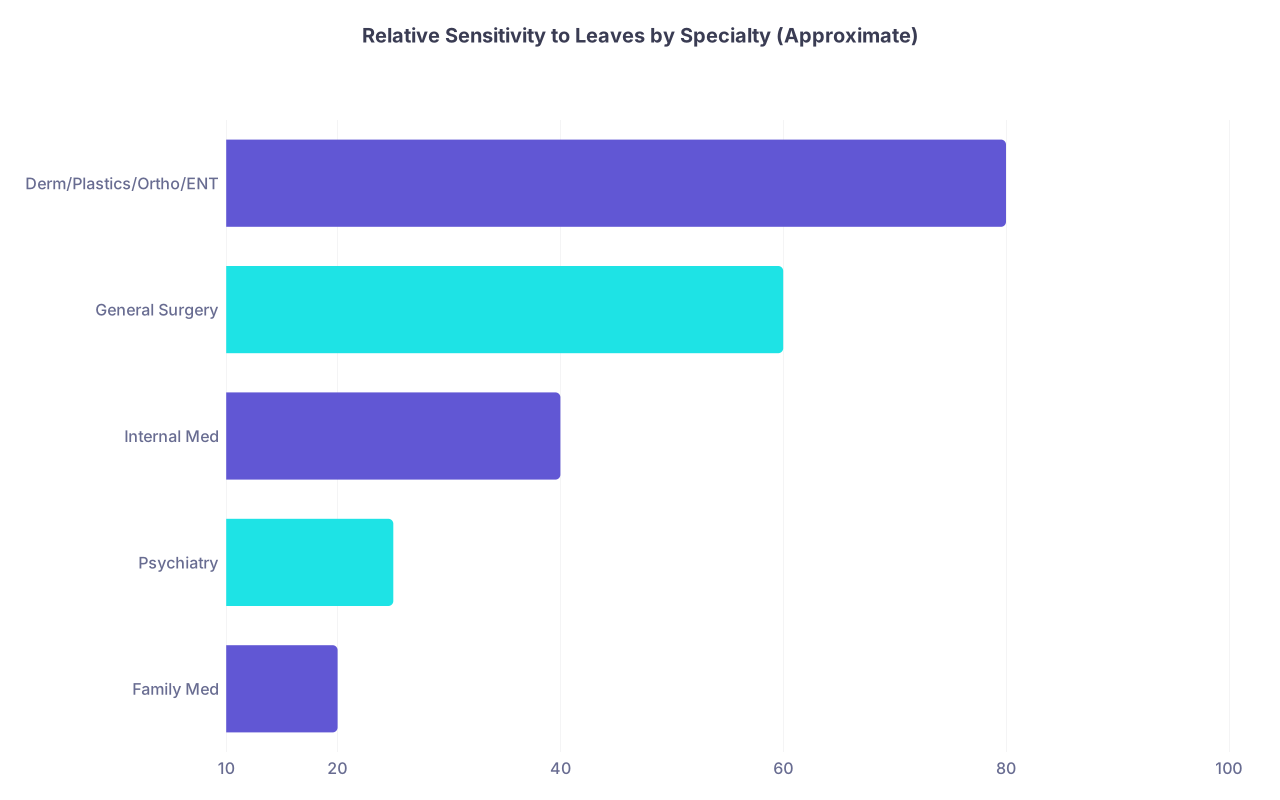
| Category | Value |
|---|---|
| Family Med | 20 |
| Psychiatry | 25 |
| Internal Med | 40 |
| General Surgery | 60 |
| Derm/Plastics/Ortho/ENT | 80 |
Higher number = more likely to scrutinize leaves and “red flags” intensely.
Here’s the unvarnished version.
Easier fields for applicants with a mental health leave
- Family Medicine
- Psychiatry
- Pediatrics (for most programs)
- Neurology
- PM&R
- Many community Internal Medicine programs
These specialties often:
- Have more positions relative to applicants
- Are more used to non-linear paths
- Are openly supportive of mental health treatment
If your record has multiple issues (leave + Step failure + multiple repeats), these are the fields where you still have a very realistic shot.
More cautious but still accessible
- Internal Medicine (academic programs)
- Emergency Medicine
- OB/GYN
- General Surgery (non-top-tier)
Here, your competitiveness will depend heavily on:
- Step 2 CK score
- Strong clinical performance post-leave
- Letters from well-known faculty in the specialty
Highly competitive / risk-averse fields
- Dermatology
- Plastic Surgery
- Orthopedic Surgery
- ENT
- Neurosurgery
- Some integrated programs (IR, Vascular, CTS as PGY-1 spots)
These programs screen hard:
- Highest emphasis on Step/COMLEX
- Strong research expectations
- Preference for “clean” records
Can you still match Derm/Ortho after a mental health leave? Yes, I’ve seen it. But:
- You’ll likely need top-tier scores, real research, and glowing letters.
- Your story must be incredibly tight: leave → treatment → outstanding performance.
- You may want to avoid emphasizing the mental health aspect unless it directly relates to your career narrative (like Psych + lived experience, and even then be careful and polished).
What You Should Do Now If You’re On Leave or Just Returned

Here’s the practical game plan.
If you’re currently on leave
Treat this like rehab for your whole life, not just your diagnosis.
- Sleep schedule
- Exercise in any sustainable form
- Stable therapy/med regimen if applicable
- Basic executive function: planning, task lists, routine
Stay loosely connected to school.
- Periodic check-ins with student affairs or your dean
- Clarify the process and timing for your return
- Ask explicitly: “How will this appear in my MSPE and transcript?”
Don’t rush back to “fix your record.” Coming back too early, crashing during Step studying or clinicals, then needing another leave? That’s far worse than a single, well-managed leave.
If you’ve just returned
Aim for boring consistency for 6–12 months.
- Show up on time, every time
- Turn in notes and tasks reliably
- Ask for feedback and implement it
You want faculty to think: “This student is just solid. No drama.”
Build 2–3 strong faculty relationships.
- Especially in your target specialty
- Tell them (at a high level) you took time away and are very committed now
- Ask if they’d be willing to work with you longitudinally and eventually write a letter
Protect your treatment.
- Do not stop meds or therapy just because things “feel better” and you’re busy
- Schedule follow-ups like mandatory meetings; residency will be harder, not easier
How To Talk About It In Interviews

You’ll usually get some version of:
- “Can you tell me about the gap/leave during X year?”
- “I see you extended your graduation—what happened there?”
You want a tight, 30–60 second answer. Something like:
“During my second year I encountered a significant health issue that affected my ability to keep up with school. In consultation with my dean, I took a structured leave to address it. I obtained appropriate treatment, focused on building healthier coping strategies, and returned once I was stable. Since then I’ve completed all rotations on time, taken on additional responsibilities in [research/teaching/leadership], and my evaluations reflect that I’m functioning well. It was a difficult period, but it made me much more proactive about my own well-being and better able to recognize when colleagues might be struggling.”
If they press:
- You can say “It was a mental health issue, now well-controlled with ongoing care.”
- You do not owe details of symptoms, exact diagnosis, or crisis history.
Notice what that answer does:
- Owns the problem (no blaming the school)
- Emphasizes collaboration with the institution
- Shows growth and stability
- Redirects focus to your strong performance since then
Practice this out loud. With a mirror. With a friend. Not because you’re hiding, but because you want to sound matter-of-fact, not ashamed.
Key Takeaways
- A mental health leave does not automatically kill your chances at a competitive match. Your post-leave performance and stability matter far more than the fact that you stepped away.
- You do not have to disclose your exact diagnosis. You do have to explain gaps honestly, briefly, and consistently—focusing on treatment, growth, and current functioning.
- With smart specialty choice, strong clinical work, and a clear narrative, you can absolutely still match well—and in many cases, your experience can become a quiet strength rather than a permanent red flag.
FAQ: Mental Health Leave and Matching Competitively
1. Do I have to tell residency programs my specific mental health diagnosis?
No. You’re not required to disclose specific diagnoses. You should acknowledge that you experienced a significant health or mental health issue that required a leave, that you obtained appropriate treatment, and that you’re now stable and functioning well. Diagnosis details rarely help and often distract. Focus on outcome and current capacity.
2. Will programs see my therapy notes or psychiatric records?
No. They see your transcript, MSPE, and whatever you put in ERAS. They do not get your clinical chart. The only health-related content they see is what the school chooses to put in the MSPE, which is typically a neutral mention of a leave (dates, general category) without clinical details.
3. Is it safer to call it a “family” or “personal” issue instead of mental health?
It can be, but do not lie. If your dean uses “medical leave” language and you say “family emergency,” that mismatch looks suspicious. A safe middle ground is “health-related” or “significant personal health challenge.” If you’re comfortable, saying “mental health” in general terms can actually demonstrate maturity—especially for fields like Psychiatry or Family Medicine.
4. Will a mental health leave stop me from getting a medical license later?
In most U.S. states, no, as long as you’re currently stable and able to practice safely. Licensing boards have been moving away from asking about past diagnoses and toward asking about current impairment. Always answer licensing questions truthfully, but remember they’re usually focused on whether you’re presently impaired, not whether you ever had depression or anxiety.
5. Does a longer leave (e.g., 1 year) look worse than a shorter one (3–4 months)?
Sometimes, but not always. A single, longer, clearly defined leave that leads to real stabilization is usually better than multiple short, chaotic leaves with ongoing problems. Programs want to see that whatever happened is now under control and that you’ve done a full, uninterrupted stretch of clinical work afterward.
6. Should I write about my mental health leave in my personal statement?
Only if it’s essential to explaining your story and you can frame it professionally. Many students do just fine handling it in the “education interruptions” section of ERAS or in the MSPE language, then elaborating briefly in interviews. If you do include it in your statement, keep it concise, avoid trauma-dump territory, and make sure the focus is on growth, maturity, and your current readiness for residency.
7. If I have both a mental health leave and a Step 1 or Step 2 failure, am I done for competitive specialties?
You’re not automatically done, but your path is narrower. Highly competitive fields will be tougher. You’ll need a strong upward trajectory: better subsequent scores, excellent clinical evaluations, and standout letters. You may want to broaden your specialty list to include less competitive but still fulfilling options where programs are more open to non-linear paths. Strategic advising becomes critical here—talk to your dean, a trusted faculty member, and possibly a residency advisor who’s seen similar applications succeed.