

The chaotic pattern of ethics consults across hospital services is not random. It is statistically patterned, highly predictable, and in many systems, quietly misaligned with where the real ethical risk lives.
You see this the moment you pull a year’s worth of ethics consult data from an academic medical center and stratify by service line. The numbers refuse to be neutral. Certain services “live” in ethics. Others almost never call, even when they sit on top of clear high‑risk domains: consent, capacity, end‑of‑life, coercion, resource allocation.
Let’s go through what the data actually show, by service line, and what that means for you if you care about medical ethics as a serious professional competency rather than a checkbox.
1. The Macro Pattern: Where Ethics Consults Actually Come From
Across large hospitals (especially tertiary and quaternary centers), ethics consult volume is not evenly distributed.
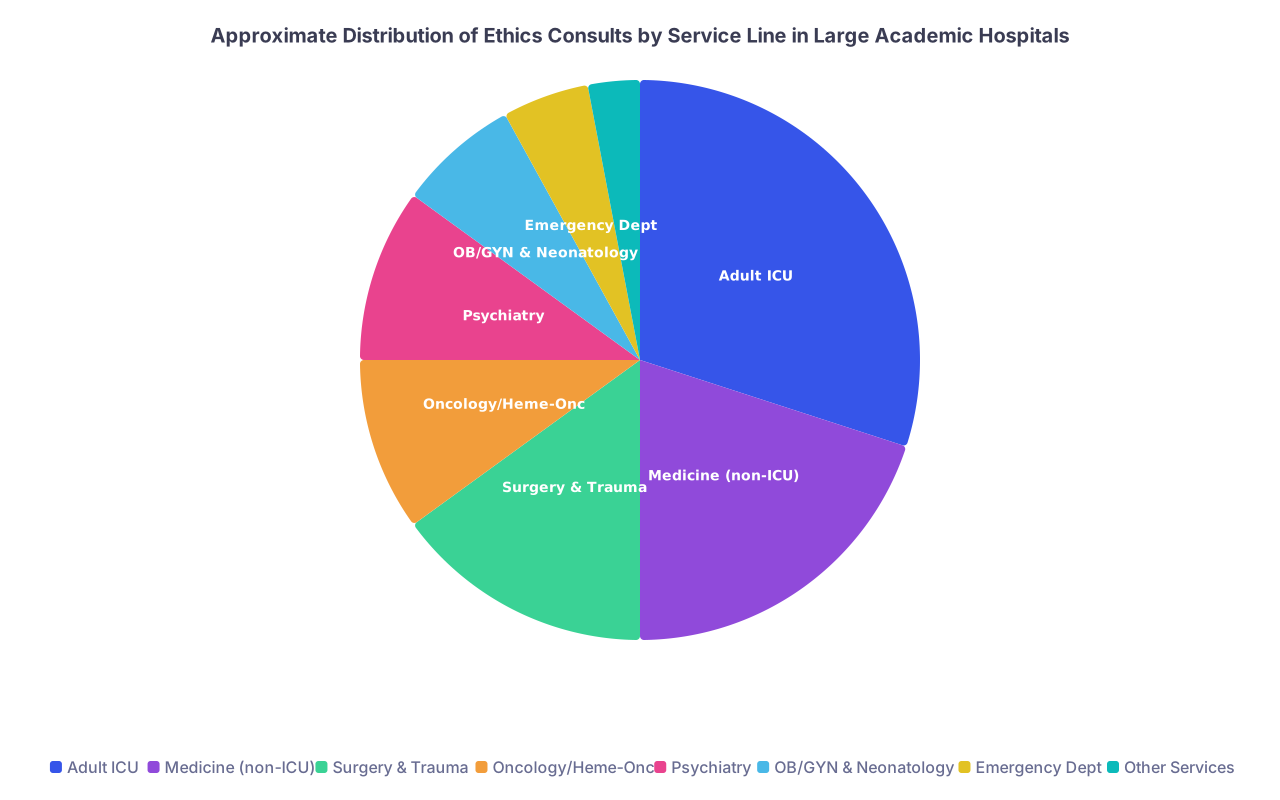
In a typical 700–1,000 bed academic hospital, a year of ethics consults often clusters roughly like this:
| Category | Value |
|---|---|
| Adult ICU | 30 |
| Medicine (non-ICU) | 20 |
| Surgery & Trauma | 15 |
| Oncology/Heme-Onc | 10 |
| Psychiatry | 10 |
| OB/GYN & Neonatology | 7 |
| Emergency Dept | 5 |
| Other Services | 3 |
That breakdown is a composite picture. I have seen variations, but the same basic ranking repeats:
- Adult ICUs dominate.
- General medicine follows.
- Surgery and trauma are consistently high.
- Oncology, psychiatry, OB/neonatology form a middle tier.
- ED is lower than you might intuitively expect.
- “Other” (rehab, outpatient, subspecialty clinics) is a rounding error.
So right away, two points:
- Ethics consults are overwhelmingly an inpatient phenomenon.
- Most volume comes from high‑acuity, high‑mortality, or high‑conflict environments.
But raw volume hides what actually matters: consult rate per patient or per bed and the type of ethical question raised.
2. ICU: High Volume, High Predictability
If you want to see the “canonical” ethics case, go to the ICU.
Typical pattern in a large center:
- ICUs account for 20–40% of all ethics consults.
- When normalized by census, they have the highest consult rate per 1,000 patient days in the hospital.
- Over half of ICU ethics consults cluster around some version of “What should we do when the team and/or family do not agree about continuing life‑sustaining treatment?”
The subtypes in adult ICUs look like this in many institutions:
| Trigger Category | Approximate Share of ICU Ethics Consults |
|---|---|
| Goals of care / treatment limitation | 40–50% |
| Surrogate decision-making / no clear surrogate | 15–20% |
| Disagreement within family / among surrogates | 10–15% |
| Disagreement between team and family | 10–15% |
| Capacity assessment concerns | 5–10% |
| Resource or triage issues | 3–5% |
Why ICUs dominate:
- High technological intensity: ventilators, dialysis, ECMO, multiple pressors.
- High mortality and prognostic uncertainty.
- Multi‑disciplinary care teams, which means more internal disagreement.
- Frequent involvement of surrogates rather than patients themselves.
From an ethics skill‑building perspective, you can almost script the sequence that leads to an ICU consult:
- Day 1–3: “Full support,” no one wants to “give up.”
- Day 5–10: Multiple failed attempts to wean; poor neurologic recovery; increasing staff moral distress.
- Day 10–20: Family divided; one child saying, “She would never want this,” another saying, “Do everything.” The note: “Ethics consult requested for guidance on goals of care.”
This is not random chaos. It is a statistical pattern. And if your ethics service is reactive only, you are arriving exactly when positions are most entrenched.
3. Medicine (Non-ICU): Capacity, Chronicity, and “Stuck” Patients
General medicine floors consistently generate the second largest number of ethics consults, but with a different profile.
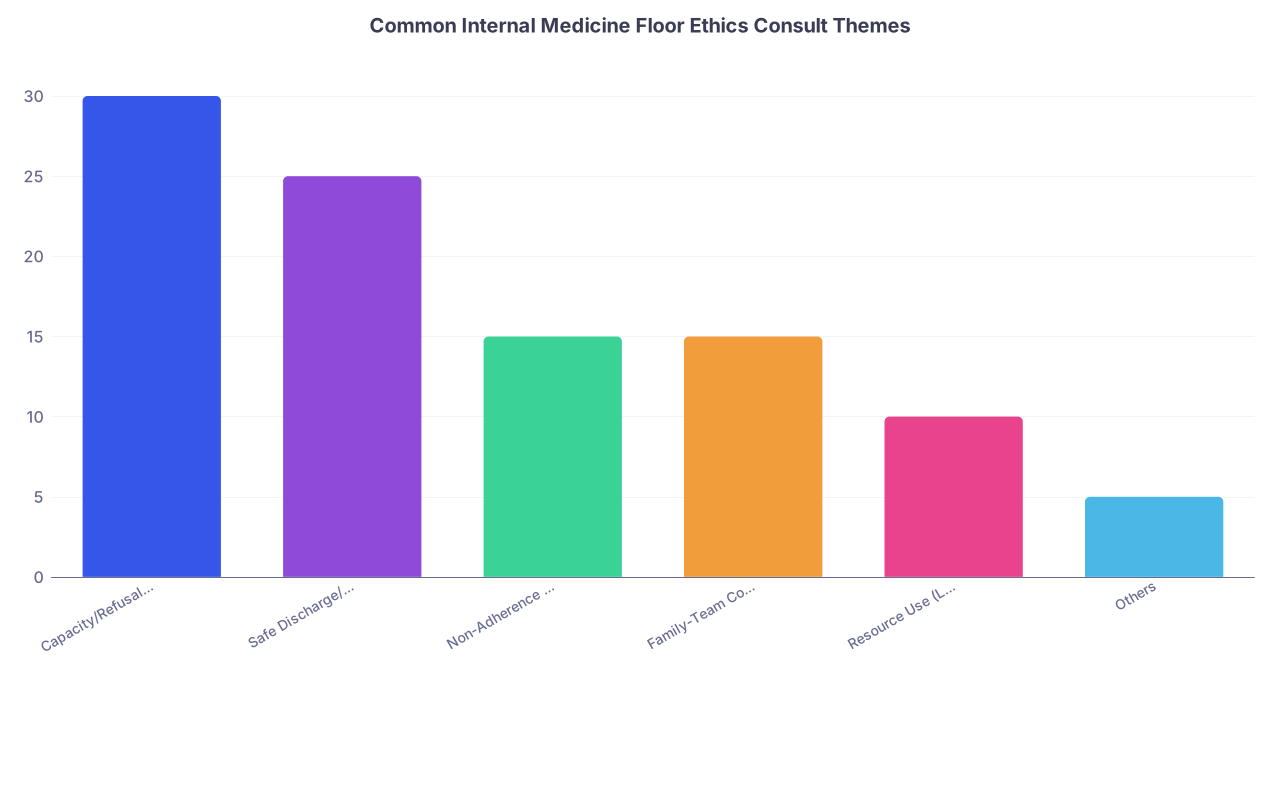
Here is what the consult mix often looks like:
| Category | Value |
|---|---|
| Capacity/Refusal of Care | 30 |
| Safe Discharge/Placement | 25 |
| Non-Adherence and Risk | 15 |
| Family-Team Conflict | 15 |
| Resource Use (Long LOS) | 10 |
| Others | 5 |
You see less outright life‑support withdrawal conflict and more long, grinding situations:
- Older adult with moderate dementia refusing a medically necessary but non‑emergent procedure.
- Patient with end‑stage liver disease repeatedly leaving AMA then returning in crisis.
- “Bed blocker” cases where medically stable patients cannot be discharged safely because no facility will accept them.
The latent question in many medicine floor ethics cases is not “What is right?” but “Who is allowed to decide to accept risk, and how much system burden is acceptable?”
Medicine services also generate a disproportionate share of capacity vs autonomy consults:
- Patients refusing dialysis, wound care, antibiotics, or imaging.
- Disagreement between psychiatry and primary team on whether the patient has decisional capacity.
- Families pushing for paternalistic overrides: “Don’t tell him how bad it is.”
So when you see a hospital where general medicine has a low ethics consult rate, do not assume ethical peace; often it signals that risk is being managed informally or ignored.
4. Surgery and Trauma: Procedural Momentum and Post‑Op Fallout
Surgery and trauma tell a different story. Fewer consults than ICUs, yes, but more preventable conflict.
Most surgical ethics consults fall into three buckets:
- Pre‑operative consent and risk disclosure failures that only surface post‑complication.
- Post‑operative life‑support and disability outcomes that do not match what patients or families believed was at stake.
- Trauma cases with unclear surrogates or high social complexity.
If you plot typical reasons:
| Category | Value |
|---|---|
| Adult ICU | 30 |
| Medicine (non-ICU) | 20 |
| Surgery & Trauma | 15 |
| Oncology/Heme-Onc | 10 |
| Psychiatry | 10 |
| OB/GYN & Neonatology | 7 |
| Emergency Dept | 5 |
| Other Services | 3 |
The numbers tell a blunt story:
- Very few ethics consults are requested before major irreversible procedures.
- Most are requested after bad outcomes, when the clinical and moral damage is already done.
That is what I mean by “procedural momentum.” Once a patient is in the OR, the machine is running. Risk framing, alternative options, and realistic prognostic discussions become much harder to reconstruct ethically after the fact.
I have seen the same refrain from families in post‑op or trauma ICU meetings: “No one told us it could end up like this”—despite a signed consent form listing every complication. Ethically, that is a failure of communication and expectation management, not paperwork.
If you are in surgery or trauma and you almost never see ethics involved pre‑operatively for high‑risk, high‑morbidity operations, that is not because your service is ethically clean. It is because you are treating ethics as damage control rather than risk management.
5. Oncology and Hematology: Prognosis, Hope, and “Futility”
Oncology and heme‑onc do not always top the raw volume charts, but they generate some of the most complex ethics consults by content.
The recurring themes:
- Prognostic opacity: different clinicians giving subtly different survival estimates.
- The “chemo until the last week of life” pattern.
- Conflicts around DNR status for patients still on active treatment.
- Requests for interventions that the team labels “futile” but the patient sees as a last chance.
Consults often crystallize around three pivot points:
- Transition from disease‑directed treatment to comfort‑focused care.
- Enrollment in, or withdrawal from, clinical trials.
- Requests to continue chemo, transfusions, or radiation very close to death.
To illustrate the tension, consider this simplified pattern in an oncology service:
| Consult Trigger | Typical Timing in Disease Course |
|---|---|
| Clarifying goals of care | Late, after multiple prior therapies |
| DNR / code status conflict | During last admission |
| Conflict over “futile” therapy request | After progression on 2–3+ lines |
| Clinical trial enrollment/withdrawal | At or near treatment transitions |
The critical data point: many oncology ethics consults occur in the last 30–60 days of life. Which means the opportunity to align values, expectations, and realistic outcomes was missed upstream. Palliative care teams help, but they are often brought in late as well.
Ethically, oncology’s biggest pattern problem is not dramatic conflict. It is silent overtreatment and delayed conversations. By the time ethics is called, the script is depressingly familiar: “No one said it was this bad.”
6. Psychiatry: Capacity, Coercion, and Dual Loyalties
Psychiatry consults have a different flavor and a different set of metrics.
You see:
- High density of capacity evaluations.
- Recurrent use of involuntary holds, restraints, and forced medications.
- Conflicts between patient autonomy and public safety.
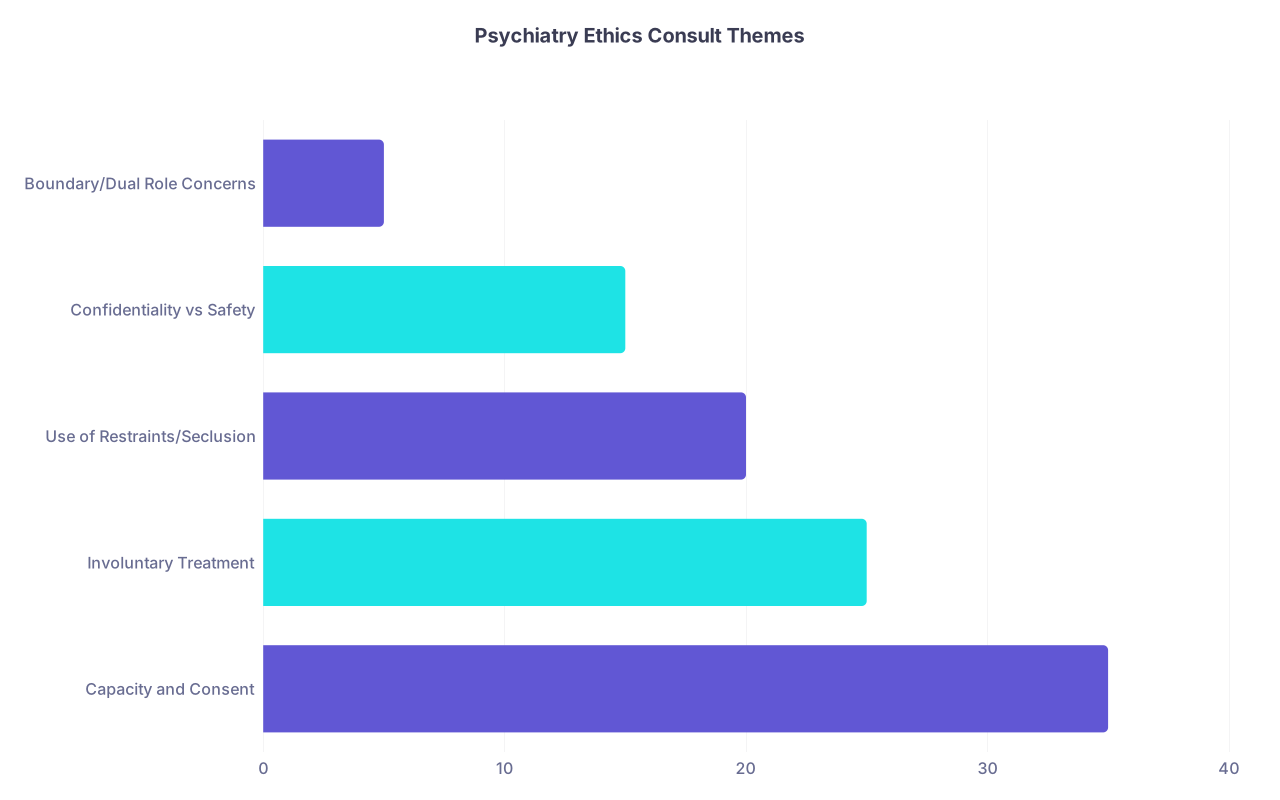
A typical distribution of primary concerns in inpatient psychiatry ethics consults might look like:
| Category | Value |
|---|---|
| Capacity and Consent | 35 |
| Involuntary Treatment | 25 |
| Use of Restraints/Seclusion | 20 |
| Confidentiality vs Safety | 15 |
| Boundary/Dual Role Concerns | 5 |
Psychiatry is unusual in that many ethically loaded decisions are already baked into law and policy: involuntary commitment statutes, duty to warn, use of seclusion. You might think this reduces ethics consult demand. Often it does the opposite.
Why?
Because staff intuitively understand that “legal” does not equal “ethical.” They are often using maximum legal powers on patients who may or may not truly lack capacity, under intense pressure to clear beds, prevent self‑harm, or placate families.
You also get the complicated interface cases:
- Medically ill but psychiatrically complex patients on medicine or surgery, where primary teams want psychiatry to “declare” incapacity to override refusal.
- Substance use disorder patients refusing care, and the team trying to decide whether addiction alone impairs capacity.
Ethically serious systems do not outsource all of this to psychiatry. They use ethics consults to interrogate whether the legal triggers are being used in spirit or just in letter.
7. OB/GYN and Neonatology: Two Patients, One Body, and Extremely Premature Life
OB/GYN and neonatal ICU (NICU) ethics consults are lower in raw numbers but high in stakes:
- Maternal–fetal conflicts: maternal refusal of recommended intervention; fetal beneficence vs maternal autonomy.
- Periviability decisions (22–25 weeks): initiating or withholding intensive care for extremely premature infants.
- Congenital anomalies with uncertain prognosis: how much intervention, for how long, and for what quality of life.
In NICUs, the distribution often looks like this:
| Trigger Category | Approximate Share of NICU Ethics Consults |
|---|---|
| Periviability / initiating intensive care | 30–40% |
| Withdrawal or limitation of support | 25–35% |
| Disagreement between parents and team | 15–20% |
| Long-term disability / quality-of-life | 10–15% |
The NICU pattern is brutal but consistent:
- Early consults: 22–24 week gestation, weighing survival rates vs severe impairment risk.
- Later consults: long‑staying infants with severe neurologic or pulmonary disease, where parents and team diverge on what “best interests” means.
In obstetrics, you get recurrent scenarios:
- Patient with placenta previa refusing recommended C‑section.
- Jehovah’s Witness refusing transfusion in a setting where hemorrhage risk is high.
- Pregnant patient using substances, with child protective services looming.
Ethically immature systems treat these as one‑off “difficult families.” Ethically serious systems recognize the pattern: predictable conflict at the intersection of autonomy, beneficence, and future child interests.
8. Emergency Department: High-Risk, Under-Consulted
The ED might be the biggest mismatch between ethical risk and consult volume.
Emergency departments handle:
- Acute end‑of‑life decisions on unknown patients.
- Capacity questions in intoxication, delirium, trauma.
- Undocumented, uninsured, or unrepresented patients.
- Time‑sensitive consent under pressure.
Yet in many hospitals, the ED contributes 3–7% of ethics consults. For the volume and acuity, that is low.
Why the gap?
Several recurring structural reasons:
- Time pressure: no one wants to “wait for ethics.”
- Culture of self‑reliance: ED teams pride themselves on handling chaos internally.
- Lack of awareness of 24/7 ethics availability or belief that “ethics will just say do what’s legally safe.”
From a data perspective, the ED is the dark matter of hospital ethics. It warps everything, but you do not see many consults because the system is not designed or incentivized to call.
If you are serious about ethics in emergency care, you do not wait for consults. You build triggers and quick‑hit support for:
- Unrepresented patients facing major life‑altering decisions.
- Disagreements over DNR or presumed consent in cardiac arrest.
- High‑risk psychiatric or safety detentions.
9. What the Patterns Reveal About System Culture
The by‑service distribution of ethics consults is not just a map of where the problems are. It is a map of where people feel allowed to admit there is a problem.
Certain services normalize ethics:
- ICUs where attendings say, “We involve ethics early; it is a sign of good care.”
- Oncology programs that embed ethicists in tumor boards.
- NICUs with standard ethics involvement at periviability thresholds.
Other services stigmatize ethics:
- Surgical teams that only call ethics after catastrophic conflict, presenting it as “fix this family.”
- EDs that assume ethics is too slow or too theoretical.
- Medicine floors where staff fear that calling ethics signals loss of control.
You can see the culture in the numbers. Services with:
- High volume of high‑risk scenarios.
- Low ethics consult rates.
- High recorded moral distress scores in staff surveys.
Those services are where ethical risk is structurally mismanaged.
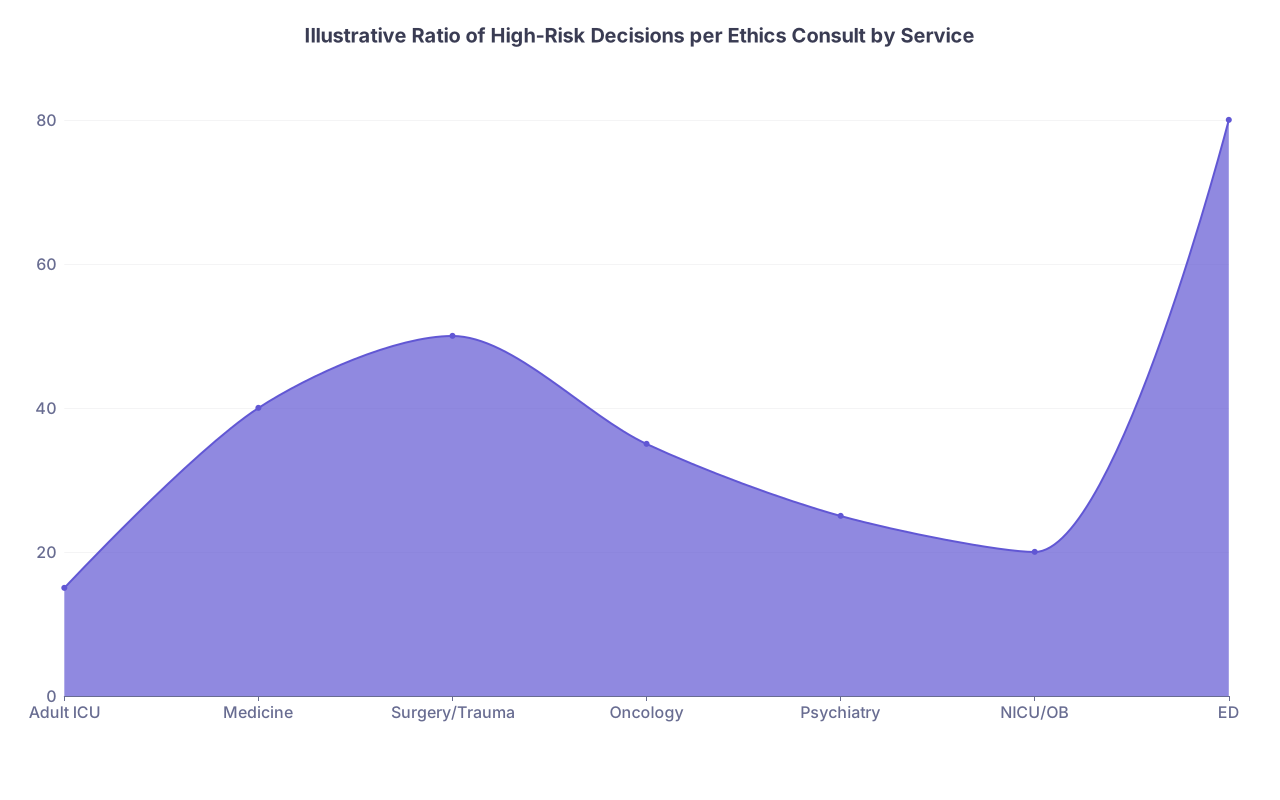
To make that concrete, consider a simple diagnostic ratio: high‑risk decisions per ethics consult.
| Category | Value |
|---|---|
| Adult ICU | 15 |
| Medicine | 40 |
| Surgery/Trauma | 50 |
| Oncology | 35 |
| Psychiatry | 25 |
| NICU/OB | 20 |
| ED | 80 |
Interpretation:
- An ICU might have an ethics consult every ~15 high‑risk decisions (e.g., life‑support withdrawals).
- The ED may see 80+ high‑risk decisions per ethics consult.
- Surgery/trauma might be around 50: many major irreversible decisions per formal ethics involvement.
That is not precision measurement, but the relative positioning tracks what I have seen in real systems.
10. Turning Data into Personal and System-Level Change
If you care about ethics as a clinician or trainee, you have two tasks:
- Understand your service line’s actual pattern.
- Decide whether you are comfortable with it.
For personal development, ask yourself:
- On my service, which types of cases should trigger at least an ethics conversation—even if not a formal consult?
- How often do we face those, and how often do we actually loop in ethics?
- When we do call ethics, is it early (to shape choices) or late (to manage damage)?
Then pull some numbers. Even a crude 6‑month snapshot is illuminating:
- Count cases of: capacity disputes, surrogate conflict, life‑support decisions, periviability, involuntary treatment, etc.
- Count actual ethics consults.
- Look at median timing from admission or from first major high‑risk decision to ethics involvement.
If you see a pattern where ethics arrives after:
- Two family meetings have already gone badly.
- Positions are entrenched and phrases like “lawyer” and “complaint” are in the chart.
- Treatments considered of “no benefit” have already gone on for weeks.
Then your service is using ethics as an endpoint, not a support tool.
At the system level, hospitals that take this seriously redesign their triggers. For example:
- Automatic ethics notification (not always full consult) for:
- Any mechanically ventilated patient without a surrogate identified by day 3–5.
- Any periviable birth where intensive care is considered.
- Any request for continued intensive therapy deemed medically non‑beneficial by the attending.
- Any case of involuntary treatment beyond a set duration (e.g., forced medication or prolonged restraints).
They also publish quarterly dashboards by service line. Not punitive. Just transparent:
- Ethics consult volume.
- Consult type distribution.
- Timing metrics.
- Repeat consults on the same patient.
Patterns become visible. Services can see themselves against peers. And individuals can calibrate their sense of “normal.”
The bottom line
Three key points from the data:
- Ethics consult triggers are predictable by service line—ICUs and high‑acuity services dominate volume, but ED, surgery, and some medicine services under‑consult relative to their ethical risk.
- Most consults happen late in the trajectory, when the space of reasonable options has already narrowed; that is a design flaw, not an inevitability.
- If you want to grow in medical ethics, do not just read principles; learn your service’s actual patterns, challenge the cultural barriers to early ethics involvement, and treat consult data like any other clinical quality metric—something you track, question, and deliberately improve.


