

The casual way many clinicians use social media is an ethics disaster waiting to happen. Patient privacy is getting violated every day by people who would swear they “would never breach HIPAA.”
Let me be blunt: most privacy violations in medicine do not happen from selling data to advertisers or hacking EMRs. They happen from dumb, avoidable social media behavior by otherwise decent people who didn’t think two steps ahead.
If you’re in medicine—student, resident, attending, nurse, therapist—this is how people lose their licenses, their jobs, and their reputation. Not because they’re evil. Because they were careless online.
This is how not to become that story.
1. “De‑Identified” Stories That Aren’t Actually De‑Identified
The most common lie clinicians tell themselves before they hit “post” is: “It’s fine, it’s de‑identified.”
Usually it isn’t.
You violate privacy when a reasonable person could identify the patient from what you shared, even if you never used a name.
How people mess this up
Typical posts I’ve seen:
- “36-year-old pregnant woman, G4P3, BMI 42, presented to [small town] ER at 2am with severe preeclampsia…”
- “Never thought I’d see a bilateral arm amputation from a fireworks accident in my first week as an intern.”
- “The guy who coded at [specific local gym] 30 minutes ago is now stable in our ICU—CPR works people, learn it.”
You think it’s generic. It’s not. In small communities, people know:
- Who was in that car accident
- Who had that rare condition
- Who gave birth that night
- Who collapsed at that gym
Throw in any combination of: age, gender, rare diagnosis, exact time, location, or unique circumstance, and you’re basically pointing a big arrow at the patient.
What’s actually risky information?
Do not assume only names and faces are protected. That’s a novice mistake.
| Detail Type | Why It’s Risky |
|---|---|
| Exact age & gender | Easy to match with local gossip/news |
| Date & time | Maps to specific incidents/EMS logs |
| Specific location | Small hospitals, nursing homes, gyms |
| Rare conditions | Easy to connect with “that one patient” |
| Unique injuries | Car crash, explosion, bizarre trauma |
If a patient, family member, or coworker could reasonably say, “That’s clearly about Mrs. X,” you’re in violation—legally, ethically, or both.
How to avoid this mistake
If you absolutely must tell a story:
- Change non-clinical details heavily (age, timing, gender, number of kids, location) unless those details matter medically.
- Delay the post by weeks or months so it can’t map to a specific encounter.
- Combine stories from multiple patients into a composite to illustrate a point.
- Or better: do not post case stories at all on personal accounts. Especially not in real time.
If you find yourself thinking, “Well technically…”—stop. That’s your warning siren.
2. Photos, Videos, and the Background You Forgot to Check
People obsess about what’s in the foreground of a photo. Privacy violations usually sit in the background.
The selfie in the nurses’ station with a monitor behind you. The TikTok dance in an ICU hallway with a room number and name board in frame. The cute “first day of residency” pic with the ED tracker board half visible.
I’ve seen:
- EHR screens readable when zoomed
- Patient last names partly visible on whiteboards
- Distinctive tattoos, faces, or physical features captured “incidentally”
- Ambulance bay photos where the license plate + context identified the patient’s family
Why “I blurred it a little” isn’t enough
Two problems here:
- Most people don’t know how to properly anonymize media. Cropping is not enough. Sloppy blurring is not enough.
- Screenshots are deadly. If you’re taking photos anywhere patient data is displayed, assume you will capture protected info.
And yes, HIPAA (and similar laws elsewhere) absolutely apply to images, even if you think “you can’t really see it.”

Best practices that actually keep you safe
If you work around patients:
- No photos or videos in any clinical area (wards, ED, OR, clinics) on personal devices. Just don’t.
- No filming “fun” content (TikToks, Reels, dances, skits) in spaces where patients are treated, even if you think the area is “empty.”
- Check reflections. Glass doors, windows, shiny surfaces can mirror monitors or faces.
- Never photograph charts, monitors, scanner screens, even as a “joke” for a group chat.
If your hospital has a media consent process and wants marketing photos or videos, let them handle it. Don’t freelance your own social media “campaign” with patients in the background.
3. Posting About Work in Real Time
Real-time posting is one of the fastest ways to accidentally expose a patient.
“Wild shift in the PICU tonight, just pronounced a kid…”
“EKG freak show tonight in Bed 12.”
“Massive trauma rollover on the I-95 just came in. Unreal.”
You didn’t say a name. You didn’t say the diagnosis. But in the real world, people connect dots quickly:
- EMS crews know who they transported
- Families know their relative is “the kid in the ICU with X”
- Local news covers major crashes, shootings, or unusual incidents
Pair that with your timestamp and hospital, and the picture is clear.
The risk you’re not thinking about
Real-time posting also exposes:
- That a specific person is currently in your hospital
- Their general condition (critical, intubated, coded, terminal, deceased)
- That they just underwent a specific event (code, trauma, surgery)
You’ve essentially published undiluted PHI to an open audience.
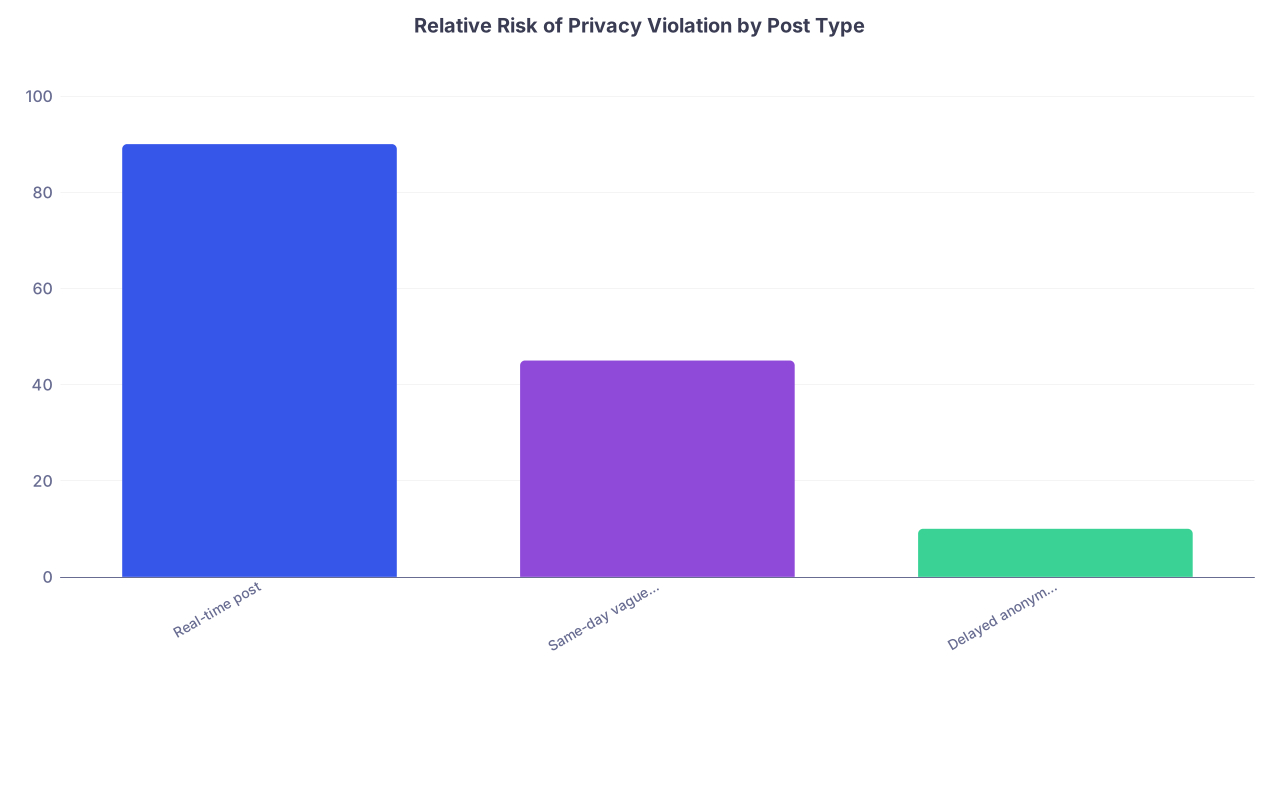
| Category | Value |
|---|---|
| Real-time post | 90 |
| Same-day vague post | 45 |
| Delayed anonymized story | 10 |
Interpretation: the more immediate and specific, the more dangerous.
How to not blow up your future in 30 seconds
- Do not post about your shift while you’re on it.
- Do not post anything that hints at a specific case while it’s still active.
- If you feel the urge to share a “crazy day” story, write it in a private journal, not on Instagram.
- If you insist on case reflections, delay them months and scrub every identifying detail—and still assume you might be wrong about what’s “safe.”
4. Private Groups and “Closed” Forums That Are Not Safe
“I only posted it in a closed Facebook group for doctors.”
“It was just in our residency WhatsApp chat.”
“It’s a private subreddit.”
No. That’s not protection. That’s wishful thinking.
Screenshots exist. People leak things. Members leave and join. Group rules change. Platforms get hacked or subpoenaed. You have zero real control once something is shared digitally.
Where people quietly cross the line
Here’s what I’ve seen in “private” groups:
- Full screenshots of charts “for advice”
- Photos of rashes, wounds, genital lesions with no consent
- Details like: “40-year-old cardiologist at University X with metastatic pancreatic cancer, on FOLFIRINOX, unclear what to tell kids”
- Residents complaining about “that psychotic lawyer in Bed 3 who keeps threatening to sue”
If there’s enough detail that someone in that patient’s life could recognize them, it’s a privacy violation. The size of your audience doesn’t change the principle.

| Step | Description |
|---|---|
| Step 1 | You post in private group |
| Step 2 | Seen by group member |
| Step 3 | Screenshot taken |
| Step 4 | Shared with friend |
| Step 5 | Shared outside medicine |
| Step 6 | Reaches patient or family |
| Step 7 | Complaint to hospital or board |
How to not overtrust “closed” spaces
- Treat every digital space—Slack, WhatsApp, “DoctorsOnly” forums—as public and permanent.
- For clinical advice, use institution-approved, secure, de-identified consultation pathways.
- If a case is so unique that your colleagues will immediately know who it is, do not post it in writing. Call someone instead.
- Never assume “but they’re all healthcare professionals” makes something okay. The patient did not consent to being discussed as case-study entertainment.
5. “Inspirational” Patient Stories Without True Consent
This one catches a lot of well-intentioned people.
You want to share:
- The patient with terminal cancer who cracked a joke before surgery
- The NICU baby who finally went home after six months
- The trauma survivor who walked again against all odds
So you write a heartfelt post. Or you share a photo. Or you repost a hospital marketing story and add extra clinical details “for context.”
The danger: “inspirational” doesn’t cancel out “identifiable.”
Why “they were okay with it” may not actually be okay
Common rationalizations:
- “The patient said it was fine.” (Verbal consent under duress isn’t meaningful.)
- “The family posted about it on their own page.” (Their public sharing doesn’t waive your legal/ethical duty.)
- “It was such a beautiful moment; it felt wrong not to share it.” (Your feelings don’t outrank their privacy.)
- The patient being fully informed what you’re sharing, with whom, and where.
- No pressure or power dynamic abuse (you’re their doctor, nurse, therapist—this alone complicates consent).
- Ideally, a formal process, especially for photos or video.
Even then, you are still responsible for not oversharing.
What you should stop doing
- Stop posting “tearjerker” bedside stories that map clearly to real patients.
- Stop including unnecessary personal details: their profession, number of kids, hometown, exact hospital day, or their famous status.
- Stop assuming terminally ill or emotionally overwhelmed patients can freely consent to social media content.
If you want inspiration, keep a private reflection log. Or publish fictionalized composite stories that cannot be traced to a specific person.
6. Venting About Patients Online
You’re exhausted. Angry. Burned out. You open Twitter (or X, or whatever we’re calling it this month) and type:
- “If one more drunk frequent flyer shows up tonight I’m walking out.”
- “Just had a patient scream at me because I wouldn’t prescribe opioids. People are ridiculous.”
- “Families who refuse to let grandma go peacefully should be forced to watch every code in the ICU.”
Feels cathartic. Gets likes from other jaded clinicians. Also creates a lovely paper trail of:
- Contempt for patients
- Potential disrespect of specific cases
- Evidence that could be used against you in complaints or legal cases
Where privacy sneaks in
Even if you think your rant is generic, details often slip:
- “That famous musician in 312…”
- “The CEO of [local company] screaming at us…”
- “The 29-year-old pregnant woman with twins who refused our recommendation and then coded…”
Your bad day is not an excuse to turn real vulnerable people into content.
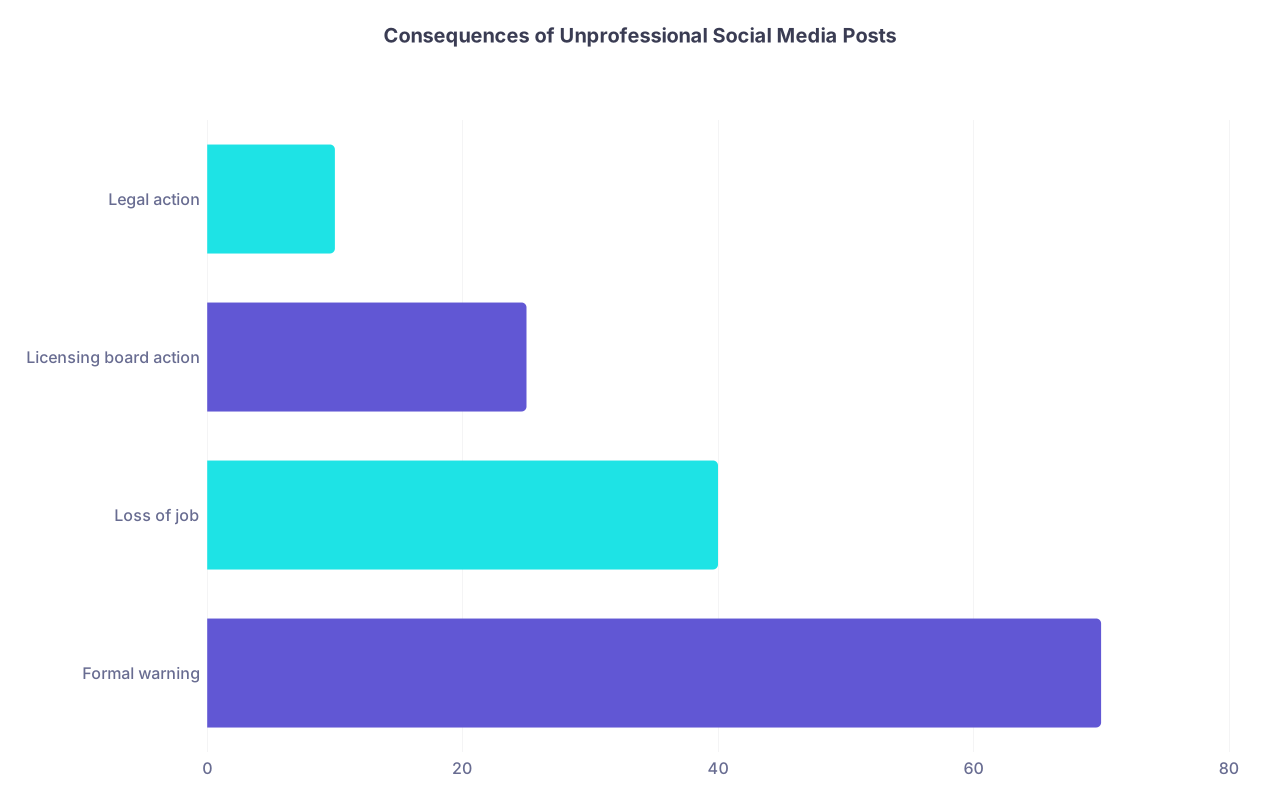
| Category | Value |
|---|---|
| Formal warning | 70 |
| Loss of job | 40 |
| Licensing board action | 25 |
| Legal action | 10 |
(Percentages illustrative, not exact—point is: the risk is very real.)
Safer ways to not explode
- Vent offline to trusted colleagues, in confidential spaces.
- Use anonymous, non-clinical language if you must post: focus on your feelings (“I’m exhausted, this work is heavy”) not patient behavior.
- Never mix time, location, and case details with emotional venting. That’s how it becomes traceable.
If you wouldn’t say it about a specific patient in front of them and your department chair, don’t say it online.
7. Messaging Patients Through Personal Social Media
This one is more obvious but still gets people into trouble.
You add a patient on Instagram. They DM you about their meds. You respond “just this once” because you’re being helpful. Then they:
- Message you at all hours
- Ask for medical advice you can’t document
- Send you personal info, photos, or complaints you didn’t want to see
Congratulations, you’ve now created:
- An undocumented side channel of care
- Potential privacy breaches if someone else sees your phone
- A medicolegal nightmare if something goes wrong
Same goes for you reaching out to patients or families you know clinically on social media “just to check in.”
Where people cross the line
- Commenting on a patient’s public post about their illness with clinical info (“Your labs looked really good today! So proud of you.”)
- Using WhatsApp/Instagram/FB Messenger instead of secure messaging, because “it’s faster.”
- Keeping up ongoing therapeutic communication with patients through your personal accounts.
You’re collapsing boundaries and privacy protections in one move.
How to stay on solid ground
- Do not “friend,” follow, or DM current patients from your personal accounts.
- If they message you, respond with a simple, professional redirect:
“I can’t discuss your care here. Please call the clinic or use the patient portal.” - Keep all clinical communication in documented, secure systems approved by your institution.
You are not their social media friend. You are their clinician. Remember that when they try to pull you into their online world.
8. Believing Anonymity or “Alt Accounts” Will Protect You
Some of you are thinking:
“I use a pseudonym.”
“My account doesn’t list my real name.”
“I locked my profile; only friends see it.”
I’ve watched anonymous accounts get unmasked within days because:
- They shared their residency program
- They posted about their call schedule
- They mentioned a city and a subspecialty
- They posted a photo once without proper cropping
- Someone recognized a case they described
You are not more clever than the combined curiosity of your coworkers, your patients, and the internet.
Once someone links your account to your real identity, every single past post becomes attributable to you—and discoverable in an investigation.
The real risk
Even if you never get “caught,” anonymous accounts that:
- Mock patients
- Share gratutious case details
- Gossip about colleagues
…erode trust in the profession. They make it easier for regulators and hospitals to tighten digital policies for everyone.
If your anonymous account is something you’d be terrified to see printed with your real name in a courtroom, you already know the truth: it’s not defensible.
9. Legal and Career Fallout You’re Underestimating
People hear “HIPAA violation” and picture a slap on the wrist and a stern email. That can happen. So can this:
- You get reported by a coworker who saw your post.
- Risk management and compliance review your entire public footprint.
- You’re suspended pending investigation.
- The hospital terminates your contract.
- The state medical/nursing board is notified.
- You now have to disclose a professionalism or privacy investigation on every future application.
This is not theoretical. It has already happened to med students, residents, and practicing attendings. Some lost their training spots. Some had to report disciplinary actions for years.
Your intent won’t save you. “I didn’t mean to” doesn’t erase a concrete privacy breach.
10. A Simple Filter Before You Post Anything
If you want a quick gut-check before you hit “post,” run through this:
Could any patient, family member, or coworker reasonably recognize the case?
If yes, don’t post it.Would I be comfortable reading this aloud to:
- the patient
- their family
- my program director
- a licensing board panel
If not, don’t post it.
Am I posting this for me (validation, likes, venting) or for a legitimate educational purpose?
If it’s the former, don’t dress it up as “teaching.”Is there any chance this could be screenshot, shared, and used out of context?
Assume yes. Then decide if you still think it’s worth it.
If there’s even a sliver of doubt, close the app and walk away. No tweet or TikTok is worth jeopardizing your license, your training spot, or a patient’s trust.
Final Takeaways
- “De‑identified” is often a lie you tell yourself. If someone could reasonably recognize the patient from your post, you’ve crossed the line—whether you meant to or not.
- Social media is never truly private or temporary. Screenshots, leaks, and unmasking happen every day; posting as if you’re anonymous is how careers quietly implode.
- When in doubt, do not share clinical content on personal social media. Protect your patients’ privacy—and your own future—by keeping their stories off your feeds.


