

It’s 11:45 pm. You’re finally in bed after a brutal call week when your phone buzzes.
It’s your sister: “I feel awful. Can you just call something in for me? I don’t want to deal with urgent care.”
You know the pharmacology. You know the likely diagnosis. And honestly, you can do this in 30 seconds.
But that little ethics voice in your head is whispering: “Are you even supposed to treat family?”
Here’s the answer you’re looking for:
Most professional guidelines say avoid treating family members and close friends — with a few narrow exceptions. And when you do step in, there’s a right way and a very wrong way to do it.
Let’s lay it all out clearly.
1. The Core Rule: Avoid Being Your Family’s Doctor
If you remember nothing else, remember this:
You should not be the primary or ongoing physician for a family member or close friend.
That’s not me being dramatic. That’s straight from major professional groups:
| Organization | Core Position |
|---|---|
| AMA (U.S.) | Strongly discourage treating immediate family; avoid being primary physician |
| GMC (UK) | Must not prescribe controlled drugs for self/family except in emergencies |
| CMA (Canada) | Strongly discouraged; recognize role conflict and impaired objectivity |
| ACGME/Residency Policies | Often prohibit residents from formally caring for family in training clinics |
Why they care so much:
- Your judgment isn’t objective when it’s your kid, spouse, parent, or partner.
- Family members don’t give clean, complete histories to people who changed their diapers.
- It wrecks boundaries. You become “family” and “doctor” at the same time — and those roles don’t mix well.
- When things go wrong (and they do), the fallout is brutal, medically and emotionally.
So the default is simple:
You’re a relative, not the doctor.
Your job? Help them get good care. Not be their ongoing clinician.
2. What the Major Guidelines Actually Say (In Plain English)
You don’t need to memorize chapters of policy. Here’s the distilled version.
AMA (U.S.)
The AMA Code of Medical Ethics says physicians generally should not treat themselves or immediate family members, and shouldn’t serve as their primary or routine care physician.
They flag specific risks:
- impaired professional objectivity
- pressure to prescribe things they shouldn’t
- incomplete or awkward history-taking and exams
- difficulty setting boundaries or refusing inappropriate requests
They carve out narrow exceptions like minor, short-term problems or true emergencies when no other doctor is available.
GMC (UK)
The General Medical Council goes even sharper on prescribing:
- Don’t prescribe for yourself or family, especially controlled drugs or psychotropics,
- Except in emergencies when there’s no one else, and even then keep it minimal and documented.
Other bodies (Canada, Europe, etc.)
The themes repeat:
- Strong discouragement of serving as family’s main doc
- Extra red flags around mental health, controlled substances, chronic disease management, and serious diagnoses
- Emphasis on arranging independent care instead
The pattern is clear:
They’re not banning all help. They’re banning routine, ongoing, blurred-boundary care.
3. The Big Exceptions: When It Is Reasonable to Step In
Here’s where nuance matters. You’re not expected to walk past your bleeding spouse and say, “Sorry, conflict of interest.”
There are a few situations where treating a family member is usually considered acceptable — if you do it right.
1. True Emergencies
If your dad collapses and you’re the only clinician around, you act. You’re a doctor first.
Do CPR. Manage the airway. Give life-saving interventions that fall within your training and the resources you have.
Then hand off to EMS or ED as soon as humanly possible and let them take over.
Key point: emergency intervention is stabilization, not “I’ll just manage his heart failure long term now.”
2. Minor, Self-Limited Issues — When No Better Option Is Available
Examples:
- Simple UTI in a young, otherwise healthy adult
- Mild URTI without red flags
- Minor skin infection that you can clearly diagnose and follow
Even here, guardrails matter. This is safer when:
- You can do an appropriate history and — if needed — an exam
- You’re writing for short-term, non-controlled meds
- You have a plan for follow-up, and you’re quick to refer if things don’t behave as expected
The more complex the issue, the more it shifts from “reasonable favor” to “bad idea.”
3. Logistical Barriers + Time-limited Help
Think rural setting, no access this weekend, or foreign travel with limited medical resources.
Maybe you:
- Refill a non-controlled maintenance med for a few days
- Give a short-acting rescue inhaler while arranging follow-up
- Provide bridge insulin or antihypertensives in a place with zero immediate access
Again: short-term + document + get them real care ASAP.
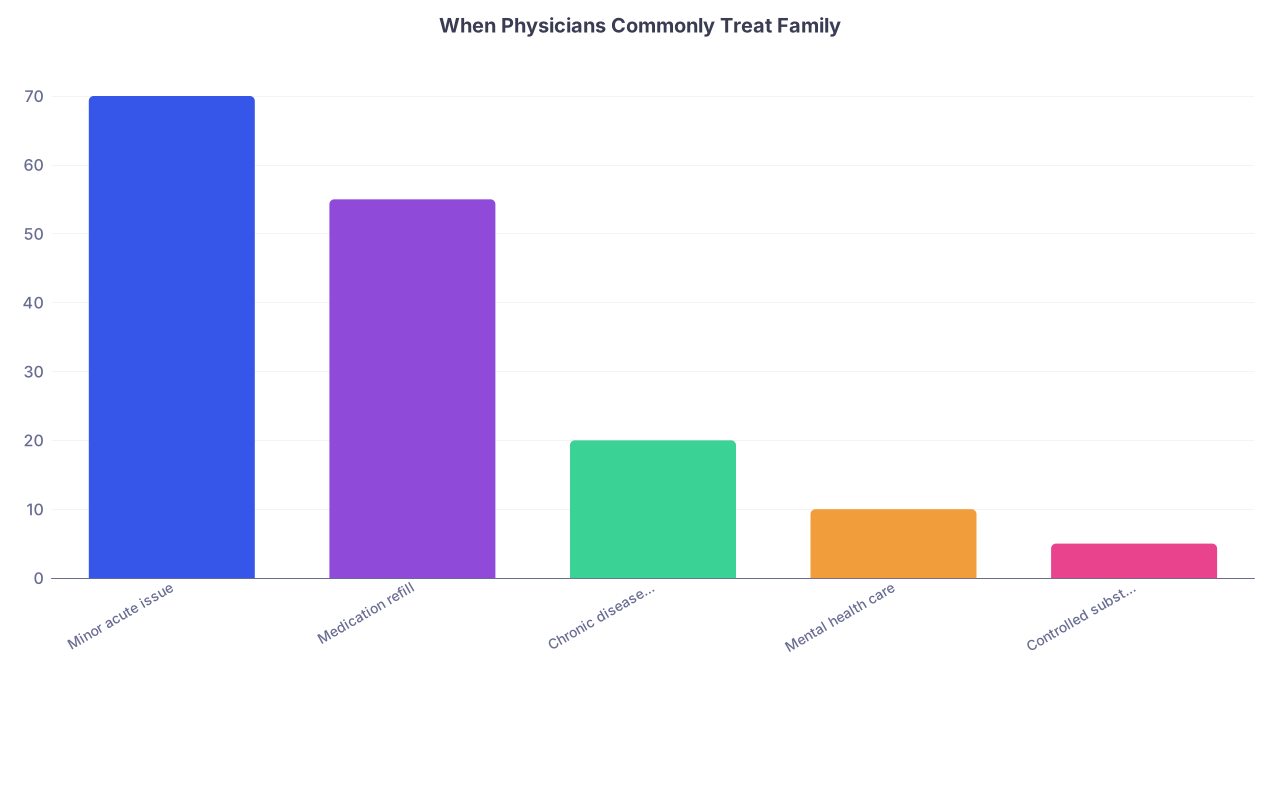
| Category | Value |
|---|---|
| Minor acute issue | 70 |
| Medication refill | 55 |
| Chronic disease management | 20 |
| Mental health care | 10 |
| Controlled substances | 5 |
4. Clear “Do Not Cross” Lines
This is where I stop being gentle.
There are situations where treating family is almost always a bad idea ethically, clinically, and legally.
Don’t manage their chronic diseases
You should not be the primary manager of your parent’s:
- Diabetes
- Hypertension
- CAD
- Cancer
- COPD
- Anything chronic, progressive, or complex
Why? Because safe chronic care needs:
- Regular, unbiased assessment
- Screening you might avoid (“Do I really need to suggest a colonoscopy to my dad again?”)
- Hard conversations about prognosis and behavior change
You will not be objective. I’ve seen residents sugar-coat terrible lifestyle management in their parents in ways they’d never accept in patients.
Don’t be their mental health provider
Just no.
No primary management of:
- Depression
- Anxiety
- Substance use
- Personality disorders
- ADHD meds
- Long-term benzodiazepines
You cannot be their therapist and their sibling/partner/child at the same time. You also cannot safely assess suicidality or safety risk without massive bias.
Don’t prescribe controlled substances
Avoid prescribing:
- Opioids
- Benzodiazepines
- Stimulants
- Sleep meds with abuse potential
Unless it’s a very short emergency bridge with no other option and you document like a lawyer is watching, these are lawsuit magnets and ethics violations waiting to happen.

5. How to Handle Real-Life Requests Without Blowing Up Thanksgiving
You will get these:
“Can you just call in antibiotics?”
“Can you refill my Xanax?”
“Can you look at this mole real quick?”
“Do I really have to see a doctor for this?”
Here’s a simple approach that works.
Step 1: Name the boundary, blame the profession
Something like:
“I actually have professional rules about treating close family. I’m not supposed to be your doctor — I’m supposed to help you get to one.”
You’re not saying “I don’t care about you.” You’re saying, “Being both roles is unsafe.”
Step 2: Still be useful
You can:
- Help them decide if this is urgent vs can-wait
- Suggest appropriate care settings (telehealth, urgent care, ED, their PCP)
- Go with them to the visit if appropriate
- Help them understand what the other doctor said afterward
That way they don’t feel brushed off. They feel supported.
Step 3: Use clear rules for yourself
I like concrete policies. For example:
- I will never prescribe controlled substances or psych meds for family.
- I will not manage chronic disease for family.
- I might treat a minor acute problem once if:
- It’s clearly within my scope
- They have no good immediate alternative
- It’s short-term, straightforward treatment
- I document and tell them this is one-time, not ongoing care
Once you decide your lines, stick to them. Consistency prevents conflicts.

| Step | Description |
|---|---|
| Step 1 | Family asks for medical help |
| Step 2 | Provide immediate care |
| Step 3 | Transfer to formal care ASAP |
| Step 4 | Do NOT treat - help arrange care |
| Step 5 | Consider brief, limited treatment |
| Step 6 | Document and arrange follow up |
| Step 7 | Emergency? |
| Step 8 | Minor, simple issue? |
| Step 9 | No good access to care now? |
6. Documentation, Liability, and All the Boring Stuff That Matters
If you do treat a family member, you’re still functioning as a physician. That comes with all the usual baggage.
You need documentation somewhere
No, a text message doesn’t count.
At minimum:
- Record what you did, when, and why
- Note symptoms, your assessment, and what you prescribed or recommended
- Include the plan and red flags you discussed
Some physicians:
- Create a note in their own EMR system under “informal care” if policy allows
- Use a secure note system or personal encrypted record if EMR isn’t appropriate
What you don’t want:
No record, vague memory, and then a bad outcome 6 months later.
You’re still liable
Treating your sister isn’t a “favor” in the eyes of the law. It’s medical care.
If the care is:
- Below standard
- Inappropriate prescribing
- Harmful due to poor evaluation
…you’re exposed to professional and legal consequences, just like in clinic.
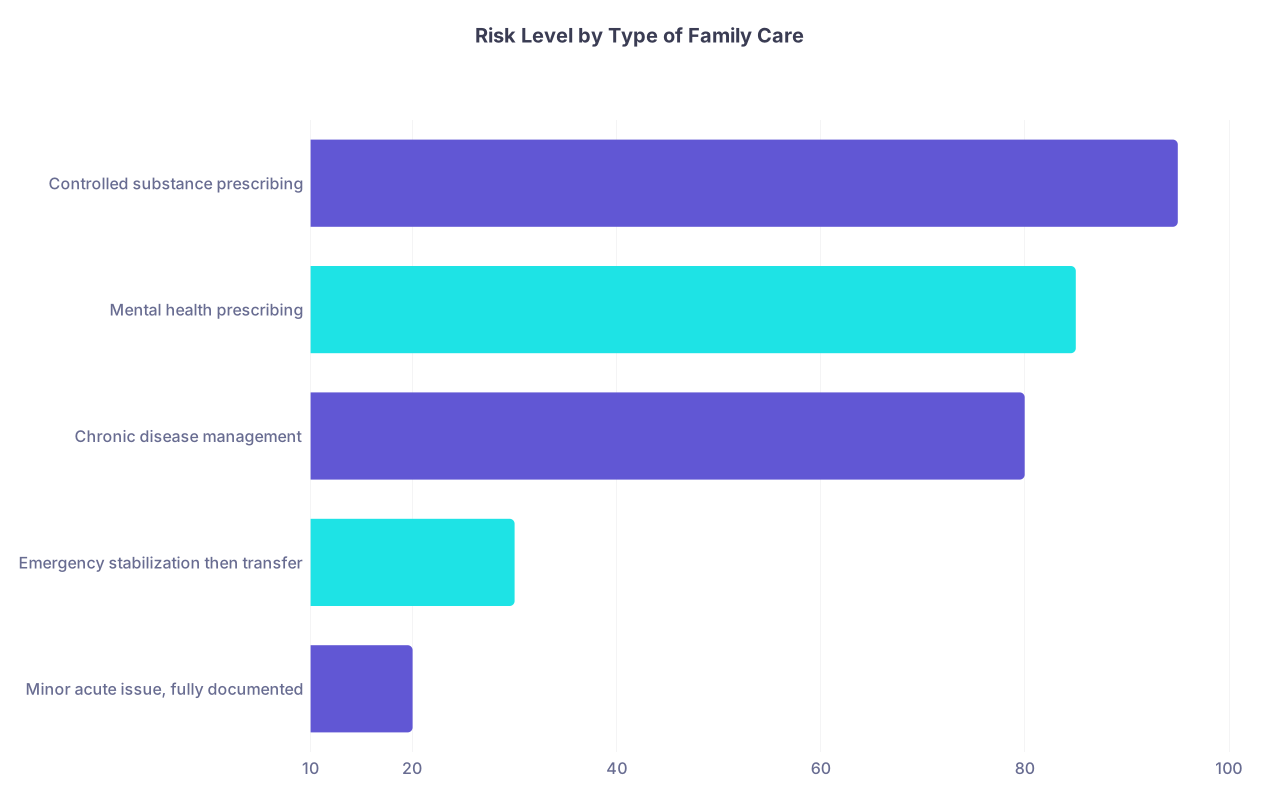
| Category | Value |
|---|---|
| Minor acute issue, fully documented | 20 |
| Emergency stabilization then transfer | 30 |
| Chronic disease management | 80 |
| Mental health prescribing | 85 |
| Controlled substance prescribing | 95 |
7. Special Cases: Kids, Partners, Parents, and Friends
You’ll feel different pressures depending on who’s asking.
Your kids
Pediatricians especially are bad at this. They end up doing:
- All vaccines
- All acute visits
- Most refills
Better approach:
- Have a formal pediatrician for your child
- Use them for routine and chronic care
- You can still:
- Triage at home
- Provide limited bridge care (like antipyretics, basic assessment)
- Help interpret what the pediatrician says
Don’t be the only doc your kid ever sees. That’s how things get missed.
Your partner or spouse
Boundaries are brutal here. They sleep next to you. They’ll ask.
Same rule:
- Help them find and keep a real doctor
- You’re allowed to support, not substitute
Your parents
This one’s emotionally loaded. Adult children in medicine often become de facto care coordinators.
What you can do:
- Sit in on appointments (with their permission)
- Help ask questions, translate jargon, and check treatment plans
- Help them choose specialists and understand risks/benefits
What you should not do:
- Secretly rewrite treatment plans from the sidelines
- Become their only prescriber
- Hide key information from their treating team
Close friends
Treat them like family. The emotional entanglement is often just as strong, especially for mental health or substance issues.

8. A Simple Rule of Thumb
Ask yourself this:
“If a board reviewer looked at this case, and all they knew was:
- This was your family member
- You treated them
- Here’s what you did and documented
…would they say, ‘That seems reasonable,’ or ‘What were you thinking?’”
If you’re even slightly queasy about the answer, don’t do it. Help them get proper care instead.
FAQ (Exactly 5 Questions)
1. Is it ever actually illegal to treat a family member?
Usually the issue is ethical, not strictly criminal, but there are legal hooks. Prescribing controlled substances to family can violate state or national prescribing regulations and trigger disciplinary action. Even non-controlled prescribing can lead to civil liability or board complaints if things go badly. Bottom line: you’re not immune from malpractice just because it’s your cousin.
2. Can I prescribe birth control or emergency contraception for a partner or relative?
Technically, yes in many jurisdictions, and this is a gray area where lots of physicians quietly help. But guidelines still lean toward: arrange proper care instead of becoming the default prescriber. If you do prescribe, treat it like any other patient encounter: history, contraindications, documentation, and a clear explanation that they should establish ongoing care with a primary clinician or OB-GYN.
3. What about quick “curbside” advice to family without prescribing anything?
That’s usually fine. Giving informal advice (“This can wait for clinic tomorrow,” “You need urgent care today”) is part of being a medical person in a non-medical family. The line is crossed when this becomes ongoing diagnosis and management rather than triage or education. When in doubt: advise them to see their own doctor and offer to help them prepare for that visit.
4. I already started managing a parent’s chronic illness. How do I back out without hurting them?
Be honest and direct. Something like: “I’ve been thinking about this, and as your kid I actually shouldn’t be your main doctor. It’s not safe for you or me long term. I’d like to help you find someone excellent, and I’m happy to come to appointments and help ask questions.” Then actively help with the handoff. Don’t just say “find someone” and disappear.
5. Do these rules still apply if I’m “only” a medical student or resident?
Yes. In some ways, even more. Students shouldn’t be diagnosing or prescribing for family at all. Residents are often specifically barred from seeing family in training clinics or using institutional systems to care for relatives. You’re still bound by professional standards and, once you’re prescribing, by legal rules. Use your training to help family get care, not to secretly practice on them.
Key Takeaways
- Don’t be the primary or ongoing doctor for family or close friends. Emergencies and rare, simple, short-term issues are the only semi-safe exceptions.
- Never manage their chronic disease, mental health, or controlled substances — help them get a real, independent clinician instead.
- You’re still liable, ethically and legally, when you treat family. Use clear boundaries, short-term help only when necessary, and always aim to hand off to proper care as soon as possible.


