

Is Saying "I’m Sorry" an Admission of Guilt? Legal Reality vs Fear
You just made a mistake in patient care. Or you think you might have. The room is thick with tension. The family is staring at you, waiting. And in your head one question is screaming: “If I say ‘I’m sorry,’ will this be used against me in court?”
You’ve probably already been told the usual line: “Never apologize, it’s an admission of guilt.”
That’s not just outdated. In many places, it’s flat-out wrong.
Let’s dismantle this myth properly.
The Myth: “I’m Sorry” = “I’m Liable”
In medicine, this fear is baked into the culture. I’ve heard attendings say to residents, “Don’t say ‘sorry’—that’s how you get sued.” Risk management lectures quietly suggest “careful wording” that sounds human but avoids “admissions.” Lawyers are imagined like movie villains, just waiting to pounce on a stray apology.
Now for the reality.
Modern evidence from communication-and-resolution programs, malpractice data, and actual statute books shows:
- Apology ≠ automatic legal liability
- Silence and defensiveness often increase lawsuit risk
- Many jurisdictions now have “apology laws” that explicitly protect certain kinds of “I’m sorry” statements from being used as evidence of liability.
Is it complicated? Yes. Is the blanket “never apologize” rule defensible in 2026? No.
What the Law Actually Says (Not What People Repeat)
Let’s separate folklore from statute.
Many U.S. states, Canadian provinces, and other countries have apology laws in healthcare. These laws generally fall into two buckets:
“Sympathy-only” protections – Protect statements of sympathy (e.g., “I’m so sorry this happened to you”) but not explicit admissions of fault (e.g., “I made a mistake and gave the wrong drug.”)
“Full apology” protections – Protect both sympathy and admissions of fault from being used as evidence of liability in court.
Here’s a simplified snapshot:
| Region / Example | Type of Protection | Fault Admissions Protected? |
|---|---|---|
| California (US) | Sympathy-only | No |
| Texas (US) | Sympathy-only | No |
| Colorado (US) | Full apology | Yes |
| Massachusetts (US) | Full apology | Yes |
| Canada (most provinces) | Full apology | Yes |
That’s not theoretical. These are statutes on the books.
Does that mean you’re totally safe? No. Laws vary by:
- State / province / country
- Setting (healthcare-specific vs general civil cases)
- Exact wording of what you say and how
But the idea that any “I’m sorry” automatically equals legal self-sabotage? That’s a myth.
What the Data Shows About Apologies and Lawsuits
The fear goes like this: “If you admit anything or apologize, patients will run straight to a lawyer.” The actual evidence points the other way.
Let’s talk numbers.
Communication-and-resolution programs
Systems like the University of Michigan’s early-disclosure model and similar “Sorry Works”-style programs have been studied for years. Their approach:
- Rapid disclosure when something goes wrong
- Honest explanation of what happened
- Clear apology
- Appropriate compensation when there’s error
The outcomes?
- Fewer lawsuits filed
- Lower total liability costs
- Faster resolution of claims
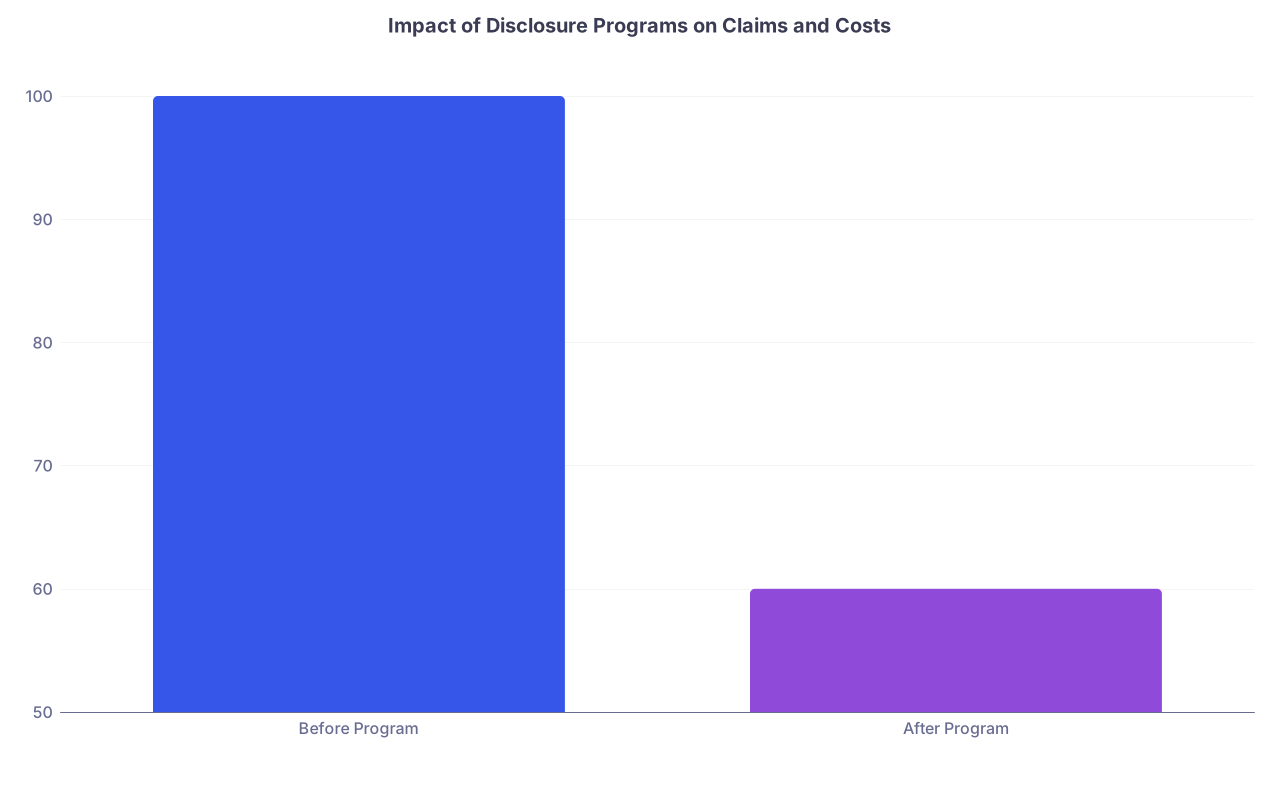
| Category | Value |
|---|---|
| Before Program | 100 |
| After Program | 60 |
That chart isn’t fictional fluff. Real studies have reported around 30–60% drops in claims and significant reductions in total payouts after implementing robust disclosure-and-apology programs.
Here’s the uncomfortable truth:
The silent, defensive, “talk to risk management” posture often provokes litigation, especially when families feel misled, stonewalled, or disrespected.
Apology alone won’t prevent every lawsuit. But pretending silence is safer is fantasy.
Ethics vs Law: They’re Not Always Aligned (But Here They Actually Agree)
In ethics, the case is straightforward:
- Patients have a right to know what happened to them
- Honest disclosure of errors is a professional obligation
- Respect, empathy, and accountability are core ethical duties
Medical ethics bodies (AMA, CMA, GMC, etc.) all endorse disclosure of significant errors. And not with robot-speak either. Real, human communication.
So ethically, “I’m sorry” is not optional when harm has occurred. It’s part of respecting your patient.
The tension comes from the legal fear. But that’s built mostly on:
- Old malpractice stories
- Bad legal advice oversimplified into slogans
- Institutional cowardice dressed up as “risk management”
When you put real law and real data next to ethics, a pattern shows up:
- Ethics says: disclose and apologize
- Data says: disclosure + apology can reduce legal blowback
- Law increasingly says: we’ll protect some (or all) of that apology
The “never apologize” doctrine? It lines up mostly with anxiety, not with any of those three.
The Language Problem: What You Say Matters
Here’s where nuance actually matters. Law doesn’t treat every “sorry” the same.
Roughly, your statements fall into three categories:
Pure empathy / sorrow (usually safest)
- “I’m so sorry this happened.”
- “I’m sorry you’re going through this.”
- “I’m very sorry for your loss.”
Explanation without premature blame
- “Here’s what we know so far…”
- “This was an unexpected complication we’re actively reviewing.”
- “We are investigating exactly what happened and will share what we find.”
Explicit fault admissions (legally sensitive, ethically crucial when true)
- “I made a mistake in ordering your medication.”
- “We missed the finding on your CT that should have been acted on.”
- “The delay in treatment was our error.”
Now, the myth-based advice says: stay in category 1 forever. Never touch 3. Avoid 2 entirely if you can.
Ethically and practically, that’s garbage. Patients are not stupid. A vague “sorry this is hard” while you dodge every specifics question feels like manipulation. And they will remember that.
The more honest framing—especially once facts are clear—is:
- Use category 1 early and generously (empathy is never the problem)
- Use category 2 while you’re still gathering facts
- When it’s clear an error occurred, move into category 3 with support from your institution and legal/risk team, not in opposition to them
The idea that you must choose between “being human” and “being legally smart” is false. You can do both—if your institution isn’t stuck in 1980.
What Actually Drives Patients to Sue
Let’s talk about why people file lawsuits in the first place. It’s often not “because someone apologized.”
Over and over, patient interviews and malpractice research say the same things:
Patients sue because they feel:
- Blindsided by harm they never understood
- Lied to or misled
- Ignored or disrespected
- Shut out of information
- Like no one is being held accountable
Notice what’s not on that list: “The doctor apologized and seemed genuinely remorseful.”
A common pattern I’ve seen:
Family loses a loved one after a complication. They ask what happened. They get evasive language, contradictory explanations, or a cold “the risks were disclosed” speech. They feel stonewalled. One relative says, “We’re going to find out what really happened.” Then the lawyer comes in.
Contrast that with: the physician meets the family, clearly distressed, explains what’s known, says, “I am so sorry this happened. We are reviewing exactly what went wrong. I’ll meet with you again once we understand more, and I’ll be honest with you about our findings.”
Is that comfortable? No.
Is it risk-free? Of course not.
Is it more likely to keep trust and potentially avoid adversarial escalation? Yes.
Where You Can Still Get Into Trouble
Now for the part where I’m not going to sugarcoat things.
There are legal landmines.
You can create problems if you:
- Freestyle a confession before you understand the facts (“This is totally my fault” when it’s not clear yet)
- Speculate or blame colleagues without data (“The night team clearly dropped the ball”)
- Put casual, unreviewed “I screwed up, this is malpractice” language in the medical record
- Ignore local law and hospital policy and assume “apology laws” are a blanket shield everywhere
Two separate but related zones:
- What you say to the patient/family
- What you write in the chart
Most apology laws target #1 (oral or written apologies to the patient/family, in some defined contexts). They do not give you immunity for sloppy charting or admissions of negligence in the medical record. The record is fair game.
Here’s the line:
Be human and honest in your spoken communication.
Be precise and factual in your documentation.
“I am so sorry” belongs in the room.
“The nurse messed up” probably doesn’t belong in the chart until there’s objective, verified information and appropriate institutional processes involved.
Documentation vs Conversation: Don’t Mix Them Up
You’ll sometimes hear panicky advice like “Never say ‘error’ in the chart.” That’s also not accurate.
The problem isn’t acknowledging realities. It’s speculation, blame, and drama.
- States what happened in observable, factual terms
- Avoids guessing at root cause before an investigation
- Doesn’t use inflammatory or conclusory legal terms (“gross negligence,” “malpractice,” “liability”)
- Records the fact that you communicated with the patient/family about the complication, without turning the note into a confessional essay
Bad documentation:
- “I totally messed up the dose. This is clearly negligence.”
- “Family is angry and threatening lawsuit” (adds nothing clinically and just signals chaos)
- “Nurse probably didn’t check the allergy list” (without evidence)
Meanwhile, conversation at the bedside can and should carry more emotional weight:
- “I’m very sorry this happened.”
- “I feel terrible that you’ve been harmed under our care.”
- “We’ll be transparent as we learn more.”
That’s not weakness. It’s leadership.
How to Apologize Without Self-Destructing
Let’s make this practical.
Early phase (event just happened, facts incomplete)
- “I’m so sorry this has happened. I know this is frightening.”
- “Here’s what we know right now…”
- “This was not the outcome we wanted for you.”
- “We’re reviewing everything that happened so we can understand this fully. We will share what we find.”
You’re not pretending nothing went wrong. You’re not inventing causes, either.
Later phase (root cause clearer, actual error confirmed)
- “We have reviewed what happened. I want to share this with you as honestly as I can.”
- “An error occurred in how we managed X.”
- “I am deeply sorry for the role our team’s mistake played in your outcome.”
- “We’re taking these specific steps so this doesn’t happen to someone else.”
If your institution tells you “never say error or mistake,” they’re not aligned with modern disclosure ethics or best practice. And they’re probably increasing your long-term risk.
The Real Risk: Moral Injury From Silence
There’s one more piece that never shows up in risk lectures.
When you feel you caused harm—or your system did—and you’re not allowed to apologize or be honest, it destroys you over time. That’s moral injury.
You carry that conversation in your head for years:
“I wanted to say I was sorry, but legal told me not to.”
“I watched the family leave with that look, and I said nothing real.”
The data on clinician burnout and second-victim syndrome is brutal. Silence after harm doesn’t just protect the hospital (questionable). It corrodes the people delivering care.
Paradoxically, apology isn’t just about legal risk or patient relations. It’s about your own integrity. Being able to say, “I told them the truth. I didn’t hide.”
So, Is “I’m Sorry” an Admission of Guilt?
Legally? Not automatically. In many places, not even admissible as evidence of liability—especially when it’s pure sympathy.
Ethically? It’s closer to the opposite. Failing to say “I’m sorry” when your care contributed to harm is an abdication of responsibility.
Practically? A genuine, well-handled apology is more likely to reduce litigation than to spark it, especially when paired with transparency and fair offers of redress.
To put the myth to bed:
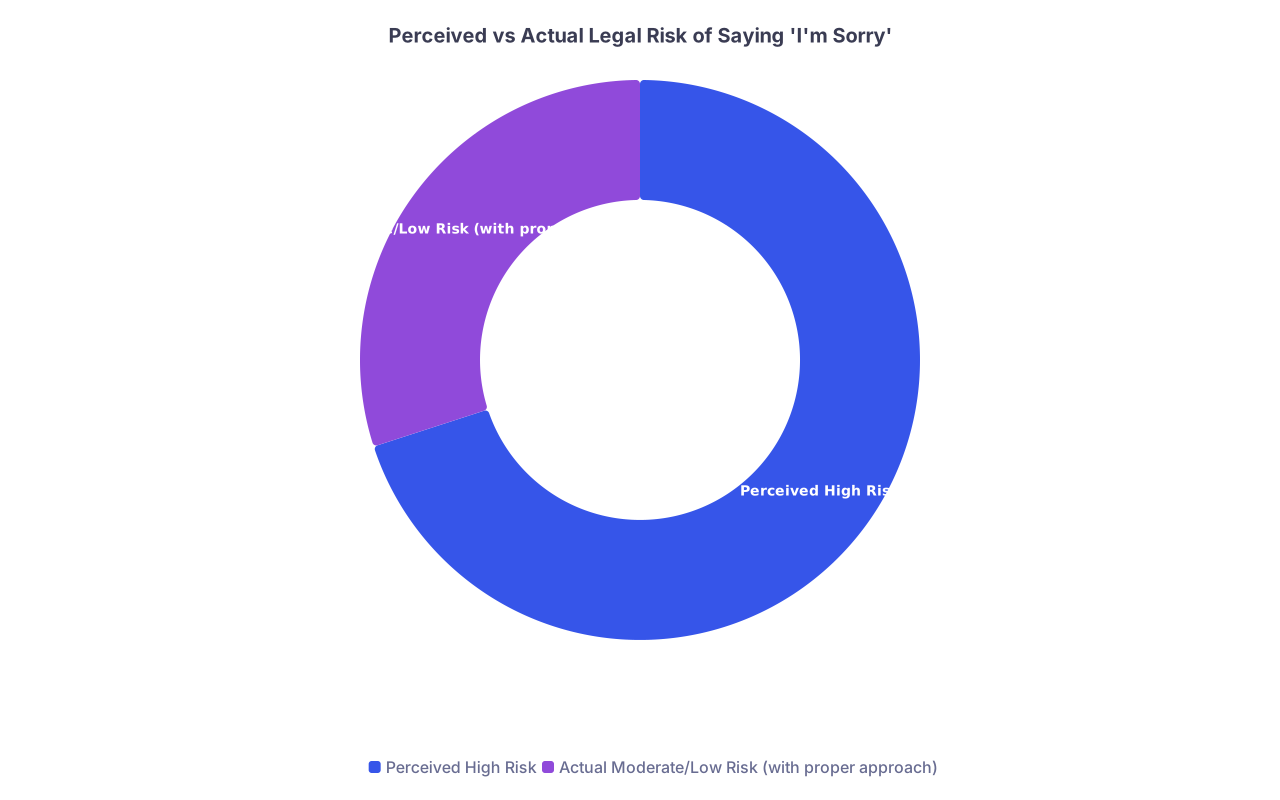
| Category | Value |
|---|---|
| Perceived High Risk | 70 |
| Actual Moderate/Low Risk (with proper approach) | 30 |
The fear is oversized. The actual, evidence-based risk—when you’re thoughtful and supported—is much smaller.
Key Takeaways
- Saying “I’m sorry” is not automatically an admission of legal guilt, and in many jurisdictions, parts of your apology are legally protected.
- Silence, evasion, and defensiveness after harm are more likely to push patients toward litigation than a sincere, honest apology.
- The real skill is not avoiding apology—it’s learning to combine empathy, truthful disclosure, and smart documentation so you protect both your patients and your integrity.


