

The way most residents document “left against medical advice” will get them burned sooner or later.
Not today. Not with this patient. But with the one whose lawyer subpoenas your note two years from now. Or the one whose death review goes to risk management and suddenly ten people are reading every word you wrote at 3:17 a.m.
I’m going to walk you through how AMA discharges actually get judged behind closed doors—by attendings, by risk management, and by plaintiff’s attorneys. And I’ll tell you what they look for in your note when bad outcomes happen.
What AMA Really Signals Behind the Scenes
Everyone pretends AMA is just a patient autonomy tag.
In reality, inside the hospital, “left AMA” is a neon sign that says: “This patient is now legally radioactive. Please document like your career depends on it.”
Here’s the part no one tells you as a student or new intern: an AMA form by itself is almost legally meaningless. Risk management people joke about this all the time.
The form is one small piece. The note is what saves you. Or buries you.
When a bad outcome occurs after an AMA discharge, three groups review your chart:
- Your own leadership – PD, service chief, sometimes the CMO
- Hospital risk management / legal – their job is to decide: settle or fight
- External reviewers – plaintiff’s experts, state board reviewers, M&M committees
They’re all asking the same core questions:
- Did you make a reasonable effort to keep the patient safe?
- Did the patient actually understand the risks?
- Did you document that understanding in real, human language, not checkbox jargon?
- And the killer: if you’d done a proper discharge and they’d still had the same outcome, would your care look defensible?
Your AMA note is not documentation of abandonment. It’s documentation of continued care offered and declined.
If your note only says:
“Pt wishes to leave AMA. Risks explained. AMA form signed.”
you’ve just written a plaintiff attorney’s favorite paragraph.
The Real Sequence of an AMA Discharge

| Step | Description |
|---|---|
| Step 1 | Patient requests to leave |
| Step 2 | Assess capacity |
| Step 3 | Discuss risks and alternatives |
| Step 4 | Reassess, consult psych or senior |
| Step 5 | Offer safer alternatives |
| Step 6 | Document discussion and plan |
| Step 7 | Complete AMA form and discharge note |
| Step 8 | Capacity intact |
| Step 9 | Capacity unclear |
| Step 10 | Patient still insists |
Let’s strip away the idealized policy versions and talk about how this actually unfolds at 1 a.m. on a Tuesday.
Patient says, “I’m done, I’m going home.” Nurse pages you. You’re on hour 26 of a 28‑hour call.
The temptation is to do what I’ve seen countless interns do: walk in, say a few rushed sentences about risk, scribble a one-line note, get the AMA form signed, move on.
Here’s what really happens later if that patient strokes out, codes at home, or comes back septic and dies.
Risk pulls your note. It shows:
- No meaningful capacity evaluation
- No documented explanation of specific risks
- No alternatives offered
- No safety net planning
The phrase that starts floating around in quiet admin meetings: “This is going to be hard to defend.”
So here’s the unspoken rule: AMA encounters are not “quick discharges.” They are high‑risk informed consent conversations that require more documentation than a normal discharge, not less.
You’re tired. I get it. Do it anyway.
Capacity: The First Gate You Cannot Skip
This is where young docs get into real trouble.
If you don’t document capacity, someone else will later claim the patient didn’t have it. And if a lawyer convinces a jury the patient lacked capacity, your AMA discharge looks like negligence or abandonment.
Capacity is not “alert and oriented x3.” That phrase might as well be written in invisible ink.
You need three things, clearly documented, in plain language:
- What you told them
- What they told you back
- Your judgment on whether that showed understanding
Here’s the structure that defends you:
Patient is awake, conversant, and able to participate in decision‑making. I explained that they are being treated for [diagnosis / concern]. I explained that if they leave now, the risks include [X, Y, Z – specific, serious risks]. When asked, the patient was able to describe back in their own words that they understand: “If I leave, I could [repeat key risk]. I could die from this.” The patient states that despite understanding these risks, they still wish to leave.
Notice what’s doing the work there:
- Their own words
- The specificity of risk
- Your explicit conclusion: they understand and still choose to leave
If capacity is borderline, write that. And pull help: senior, attending, psych, ethics, whoever you can get. Behind the scenes, risk management cares way more about “they called for help” than “they were 100% right.”
If capacity is clearly impaired (intoxication, active psychosis, severe hypoxia), you should not be doing an AMA discharge at all. That’s where the hospital’s involuntary hold pathways, psychiatry, and sometimes security get involved. And yes, they will check if you even tried to use those pathways.

The Part Everyone Skips: Documenting the Conversation, Not Just the Decision
Most AMA notes read like bureaucratic tombstones. Lifeless, jargon-filled, and totally useless in a courtroom.
You must document the conversation, not just the outcome.
Here’s how real-world reviewers read your note:
- “Risks explained” = we have no idea what you actually said
- “Patient verbalized understanding” = you checked your mental template, not theirs
- “They understand they may die” (with no further context) = you said the line, they probably shrugged, and you moved on
Let me give you the internal medicine attending version that actually protects you.
Structure your AMA note like this:
- Why they were admitted / current risk
- Their stated reason for wanting to leave
- What you explained – in concrete, not abstract, terms
- What they repeated back to you
- Alternatives you offered
- What you’re still offering despite their leaving
- Your safety plan / return precautions
Looks long. It isn’t. It’s 6–10 sentences when you’re practiced.
Here’s a compressed but defensible example:
54‑year‑old with NSTEMI on heparin gtt states, “I’m leaving right now, I can’t miss work tomorrow.” I explained he has active heart damage and that leaving now means he may have a larger heart attack, arrhythmia, cardiac arrest, or death. I specifically explained that he could die suddenly at home. When asked to repeat back his understanding, he stated, “I know I could have a bigger heart attack or drop dead, but I can’t stay here. I’ll take that risk.” I offered to contact his employer, provide a work note, involve social work, and adjust his plan to facilitate discharge as soon as safely possible after cardiology evaluation and treatment. He declined these options and continued to state he wished to leave immediately. I recommended strongly against leaving and recommended he remain for cardiology evaluation, ongoing telemetry, and completion of medical therapy. He continues to refuse and requests discharge now. We discussed that he may return to the ED at any time for care, and I encouraged him to return urgently for any chest pain, shortness of breath, palpitations, or syncope. He verbalized understanding of this and left the unit ambulating in stable condition.
Versus the disaster version I see in chart reviews:
Pt wants to leave AMA. Risks explained including death. Pt understands and wants to leave.
Guess which one risk management feels comfortable defending.
That AMA Form You Love? It’s Mostly Theater.
Let me tell you a secret from the risk management office: The AMA form is not the shield you think it is.
Most AMA forms are one-size-fits-all, generic, and vaguely worded. They’re designed to show that “some discussion happened,” not that an adequate, specific informed refusal occurred.
That’s why risk managers obsess over the note, not the form.
They look for:
- Who signed it – patient vs family vs “unable to sign”
- Whether the signature is actually theirs (yes, handwriting is checked sometimes)
- Whether your note matches the timing of the form
- Whether any nurse note contradicts your story
Here’s another truth: a patient can refuse to sign the AMA form and still leave. That doesn’t magically convert them into a “regular discharge.” It just means you have to write a better note.
What you do in that case:
Patient was offered AMA form to sign acknowledging understanding of the risks of leaving; they declined to sign but stated, “I’m not signing anything. I’m still leaving.” Witnessed by [nurse / staff name].
Then get that nurse to write a brief corroborating note. Risk people love corroboration.
| Aspect | Weak / Common Practice | Strong / Defensible Practice |
|---|---|---|
| Capacity | "A&O x3" | Concrete description + patient’s own words about risks |
| Risks | "Risks including death explained" | Specific, likely and serious risks spelled out |
| Patient reasoning | Not documented | Direct quote of patient’s reason for leaving |
| Alternatives offered | Omitted | Clear list of options you proposed and their responses |
| AMA form | “AMA form signed” only | Note + form + witness, or note explaining refusal to sign |
The Ugly Truth About Blame After Bad Outcomes
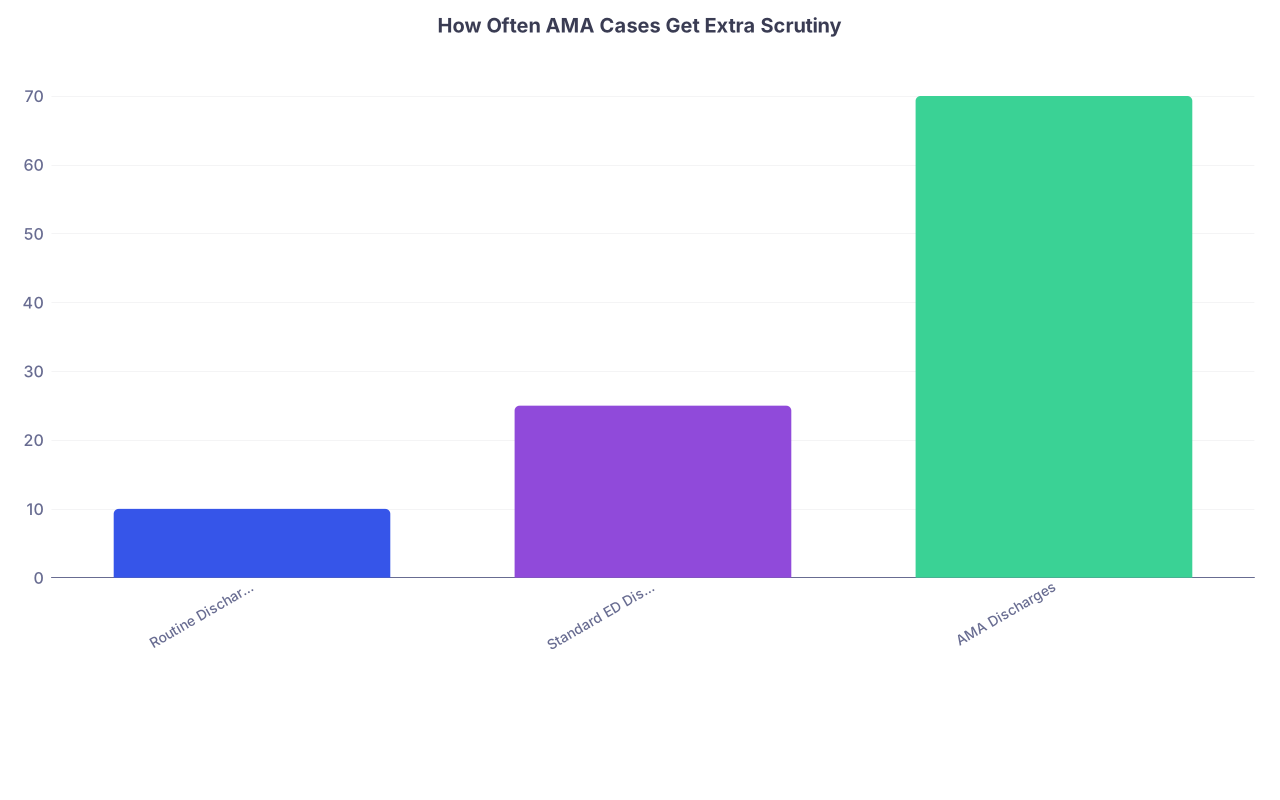
| Category | Value |
|---|---|
| Routine Discharges | 10 |
| Standard ED Discharges | 25 |
| AMA Discharges | 70 |
Inside quality meetings, AMA cases that end badly get dissected.
Not always fairly.
I’ve sat in rooms where people quietly, implicitly, blamed the resident:
“They documented that the patient was ‘stable for discharge’ when they were trying to leave AMA.”
“They didn’t mention the high lactate or the positive troponin in the note.”
“They wrote A&O x3 but the nurse documented confusion.”
Here’s how you avoid being the easy target:
You do not write that the patient is “medically stable for discharge” if that’s not true. You write the opposite. Say what you actually think.
At this time, I do not believe the patient is medically safe for discharge due to [X, Y, Z]. I strongly recommended continued hospitalization. The patient understands this recommendation and the associated risks but declines to stay.
That single sentence has saved more residents in reviews than you’d believe.
Because when a case gets ugly, everyone wants to know:
“Did the physician make it clear they recommended against leaving?”
If your note reads like you shrug-accepted their decision without pushback, you look passive or indifferent. In AMA land, indifference is malpractice’s best friend.
Safety Net: The Part That Proves You Still Cared
There is an unspoken expectation that even when a patient leaves AMA, you still act like their physician to the last possible moment.
Meaning:
- You give them real return precautions, not the EHR canned sentence.
- You arrange whatever scraps of follow-up you can.
- You send necessary prescriptions if appropriate (yes, even AMA).
- You document that you left the door open, not slammed it shut.
The worst thing you can document is anything that sounds like, “Fine, go then.” That attitude leaks onto the page. People recognize it.
Example of properly documented safety net:
I offered prescriptions for [medications] to help manage [condition] should he choose to leave; patient accepted/declined. I recommended follow-up with his primary care physician or cardiologist within [time frame] and instructed him to return to the ED immediately for [specific warning signs]. He stated he understood these instructions.
You are not “rewarding bad behavior” by still treating them. You’re protecting them—and yourself—from the fact that patients have the right to make terrible decisions.

Nurses, Witnesses, and Contradictions
Quiet truth: in legal reviews, nurse notes often carry more credibility weight than you think. Because they’re seen as less “defensive” and more observational.
That means your AMA note cannot live in a vacuum.
The unspoken rules smart residents follow:
- They loop in the nurse early and ask them to be present for part of the conversation.
- They reference that presence in the note: “Discussion also witnessed by RN [Name].”
- They check for glaring contradictions: nurse note saying “patient confused, slurring speech” versus your “capacity intact” masterpiece.
If your note and nursing documentation clash, guess whose version the plaintiff will love.
Also, be careful with anger. A nurse note that says, “Patient yelling, calling staff names, appears intoxicated,” but your note says “calm, appropriate, full capacity” makes you look either lazy or dishonest.
When in doubt, describe what you actually saw, not what you wish were true so the encounter ends faster.
Residents vs Attendings: Who Really Owns the AMA?
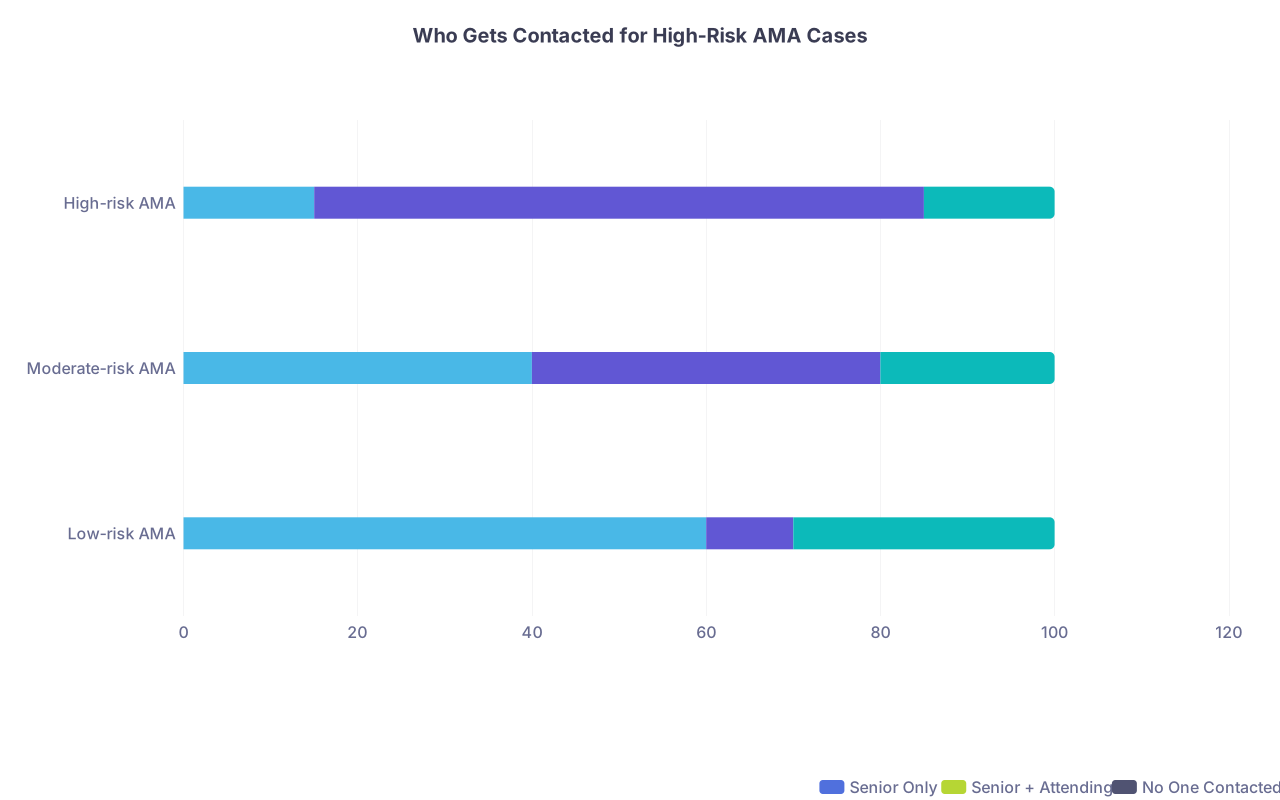
Another unspoken truth: when things go bad, people look at who was the most senior person actively involved in the decision.
If you’re an intern and you handled AMA alone with no attempt to contact your senior or attending, that will come up. In M&M. In PD conversations. Possibly in legal depositions.
Do not be the hero who “doesn’t want to bother the attending.” You are not protecting them. You’re hanging yourself.
Minimum defensible behavior:
- Notify your senior/attending about every significant AMA, especially if:
- The patient is high risk
- The diagnosis is uncertain
- The capacity picture is fuzzy
- The patient is young and could have catastrophic outcomes
And document it.
“Discussed case and AMA request with Dr. [Attending], who agrees patient has capacity and that risks and alternatives have been adequately discussed.”
Risk management loves seeing that. It shows the decision was shared, not dumped on the least experienced person in the room.
| Category | Senior Only | Senior + Attending | No One Contacted |
|---|---|---|---|
| Low-risk AMA | 60 | 10 | 30 |
| Moderate-risk AMA | 40 | 40 | 20 |
| High-risk AMA | 15 | 70 | 15 |
The Legal Lens: How Attorneys Attack AMA Notes
Let me translate how a plaintiff attorney reads your AMA documentation. They’re looking to dismantle four pillars:
- Capacity – “Doctor, what training do you have in assessing decision-making capacity?”
- Specific risk communication – “Where in your note does it show you told him he might [specific event that happened]?”
- Alternatives – “Did you offer any options short of ‘stay or leave’? I don’t see that here.”
- Pressure / coercion – “Did you tell him leaving was against medical advice in a way that felt like a threat rather than a choice?”
Your defense lives in specific sentences, not generalities.
Your strongest defensive posture is:
- Clear, lay-language description of risks that actually happened later
- Patient’s own words acknowledging those risks
- Documented evidence that you tried to accommodate their concerns
- Proof that you recommended against leaving, but respected autonomy
- Evidence of ongoing care: meds offered, follow-up suggested, return precautions given
You’re not expected to be perfect. You are expected to look like you tried.

Quick Reality Checklist Before You Click “Sign”
Right before you finalize an AMA note, ask yourself:
- Does a stranger reading this understand why the patient is high risk?
- Is there at least one direct quote from the patient about their reasons and their understanding of risk?
- Did I explicitly say I recommended against leaving?
- Did I describe at least one alternative or accommodation I offered?
- Is there any other note (nursing, ED, consult) that would make my capacity assessment look ridiculous?
If you can’t honestly say yes to most of those, your AMA documentation is fragile. Fix it before you move on.


