
You’re driving home after a brutal call shift. That one patient keeps replaying in your mind. The bad news conversation. The code status talk. The high‑risk consent discussion. And then it hits you like a truck:
“I never documented that conversation.”
Your stomach drops. You mentally scroll through the chart. No note. No addendum. Nothing. Now you’re sitting in your car in the parking lot, half‑crying, half‑Googling: “I forgot to document critical discussion legal trouble malpractice ruined career.”
Yeah. I know that place. And it feels awful.
Let’s walk through this like an actual human who’s seen how this plays out—not like some fantasy-land risk management brochure that pretends everyone charts perfectly in real time.
First: Are You Automatically in Legal Trouble?
Short answer: no, you are not automatically doomed because you forgot to document one critical discussion.
Longer, honest answer:
Lack of documentation is a problem, and in a lawsuit, it makes your life harder. But a single missing note is almost never the sole reason someone gets sued or loses a case.
Here’s how medicolegal people really look at this stuff:
Lawsuits usually happen when:
- Something bad happened to the patient and
- There’s a perception that care was poor, communication was bad, or follow‑up was lacking.
Documentation is evidence of what happened. Lawyers and experts love notes because notes don’t forget and they don’t contradict themselves on the stand.
So where does that leave you?
No, you’re not “automatically liable.” But yes, you’ve lost an important piece of protection. When it’s your word vs. “if it’s not documented, it didn’t happen,” that’s uncomfortable.
But I’ve sat in quality review meetings where:
- A resident forgot to chart a code status talk
- The family later got upset
- Risk management groaned…
…and then we moved on to: “Okay, what do we do now to clean this up and prevent it?”
That’s where you are. Not at “career over.” At “time to be smart and fix what you can.”
What Actually Matters Legally When Documentation Is Missing
There are a few questions that determine how bad this really is.
1. What kind of discussion was it?
Not all “critical discussions” are equal from a medicolegal standpoint.
| Discussion Type | Legal Sensitivity | Typical Expectation for Documentation |
|---|---|---|
| Code status / goals of care | High | Always documented |
| Informed consent for high-risk procedure | Very High | Detailed consent note or form |
| Disclosing medical error | High | Clear note recommended |
| Routine update / progress | Moderate | Brief mention often enough |
| Minor plan change | Lower | Can be embedded in daily note |
If you forgot to write a separate “Family Meeting Note” but your progress note clearly shows the same plan and understanding? Annoying, but probably survivable.
If you did a tense DNR discussion, everyone was on the verge of meltdown, and there’s zero documentation of any of it? That’s more concerning.
2. Is the rest of the chart consistent with what you say happened?
This part’s big.
If:
- Your orders match what you say you discussed
- Nursing notes mention “family informed,” “patient understands,” “discussed poor prognosis”
- There are prior notes with similar themes or earlier conversations
…then your missing note sits in a supportive context. A lawyer or expert can say, “Look, it’s clear the team was discussing prognosis/goals, even if one conversation wasn’t fully documented.”
It’s worse when:
- The entire chart suggests something different than what you claim was said
- There are contradictions between staff
- Or it looks like a sudden, unexplained shift in care
3. Did harm actually occur, and is it linked to that missing documentation?
Brutal truth: if the patient did fine, no one’s filing a lawsuit over your missing note.
The medicolegal threat grows if:
- There’s a bad outcome, and
- The family or patient says “we weren’t told,” and
- There’s no documentation proving otherwise
No outcome, no complaint? Risk is much lower. Anxiety is still high, I get it, but legally it’s different.
Can You Go Back and Fix It? (And How Without Making It Worse)
You’re probably wondering whether it’s too late to document now. The answer is: you usually should document late rather than not at all—but you have to do it the right way.
This is where people panic and do dumb things.
Never, ever alter a previous note
Do not:
- Edit a signed note to pretend you documented at the time
- Delete anything
- Backdate an entry
If anybody even suspects that, you’ve graduated from “documentation error” to “possible chart tampering.” That’s when people start talking about fraud, license trouble, and losing cases instantly.
What you can do: write a late entry / addendum
Every hospital EMR has some way to do this (sometimes literally called “Late Entry” or “Addendum”). The key is being transparent:
- Clearly time‑stamp when you’re writing it
- Clearly reference when the original conversation occurred
- Stick to facts, not creative story‑building
Something like:
“Late entry written on 2026‑01‑08 for discussion held on 2026‑01‑06 at approximately 18:30.
Met at bedside with patient and spouse to discuss worsening respiratory failure, high risk of intubation, and potential progression to multiorgan failure. Reviewed options, including full code vs DNR/DNI. Patient stated preference to avoid CPR and prolonged mechanical ventilation if prognosis for recovery is poor. Spouse voiced understanding and agreement. Plan at conclusion of discussion was DNR/DNI. Code status order entered accordingly.”
Is this perfect? No. Is it better than nothing? Absolutely.
Is it legally bulletproof? Nothing is. But an honest, time‑stamped late entry is standard practice and way better than pretending the conversation didn’t happen.
If you’re at an institution, you can (and should) ask:
- Risk management
- Your attending
- Your program director or medical director
They do this dance all the time. You’re not the first one to screw up documentation.
How Bad Does This Look in Court, Actually?
Let me be blunt.
In a deposition or trial, the plaintiff’s lawyer is going to say something like:
- “Doctor, where is the documentation of your alleged discussion?”
- “You’re asking this jury to simply take your word for it, correct?”
- “Isn’t it true that your note was written days after the fact?”
And yeah, that sucks. You will feel small and incompetent and like you’re being accused of lying on every sentence.
But that doesn’t automatically mean:
- The jury won’t believe you
- The case is lost
- You’re in “legal trouble” as in criminal charges or license revocation
What actually matters:
- Does your testimony sound coherent, consistent, and aligned with the rest of the chart?
- Does nursing confirm there were family meetings and updates?
- Does anyone else remember being there (consults, subspecialty teams, chaplain, social work)?
I’ve seen cases where there was no pristine “Critical Discussion Note,” but:
- The progress notes hinted at the talks
- Nurses documented “family aware of prognosis”
- Code status orders matched what the doctor said they discussed
The defense expert basically said, “Could documentation be better? Yes. Is it clear the team was discussing these issues? Also yes.” That’s often enough.
Is it annoying? Yes. Avoid it next time. But it’s not automatic career termination.
Worst‑Case Thinking: What’s the Real Ceiling Here?
You’re probably spinning out into complete catastrophe:
- “I’ll lose my license”
- “I’ll never get a job”
- “I’ll be on the front page of the newspaper as The Lying Doctor”
Slow down.
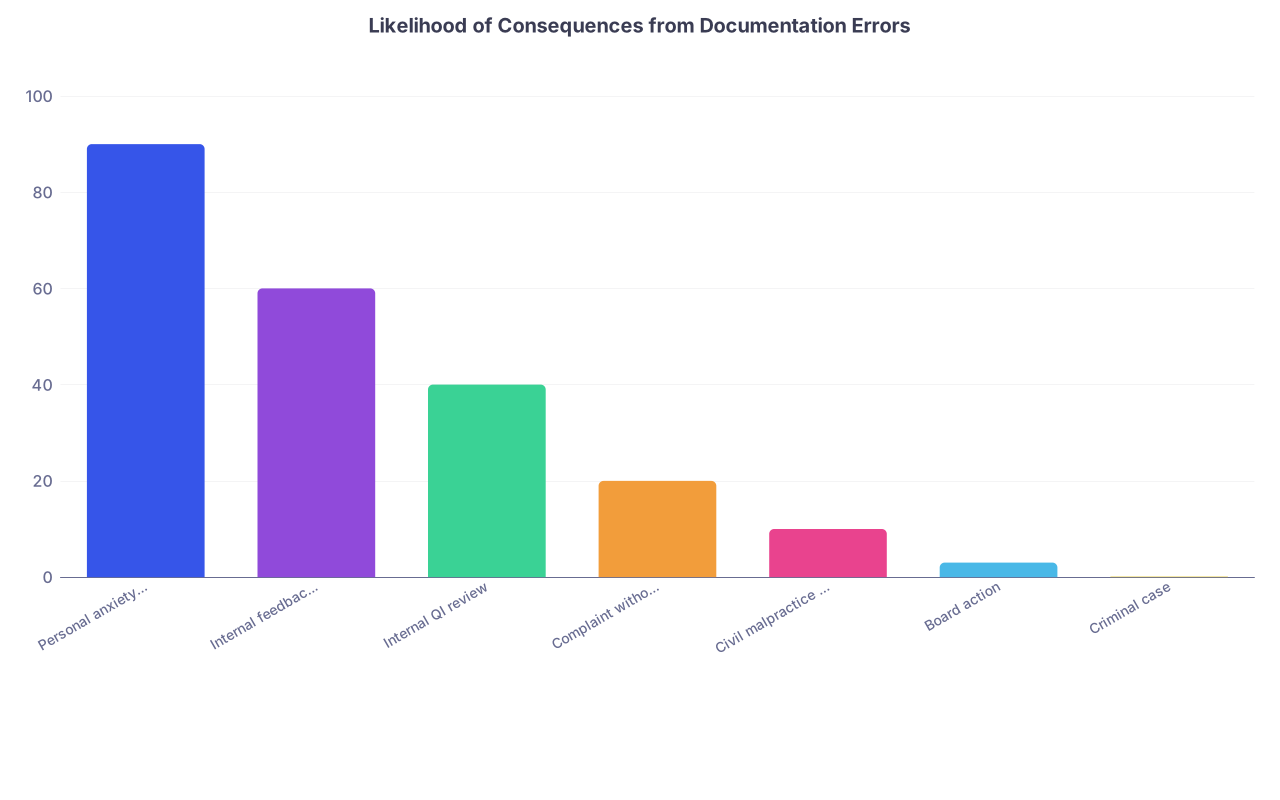
Here’s the real spectrum of consequences, from most common to least:
| Category | Value |
|---|---|
| Personal anxiety only | 90 |
| Internal feedback/education | 60 |
| Internal QI review | 40 |
| Complaint without lawsuit | 20 |
| Civil malpractice suit | 10 |
| Board action | 3 |
| Criminal case | 0.1 |
Rough, but that’s the general pattern. One missing note—especially if you catch it and correct with a late entry—is usually:
- A learning moment
- Maybe a feedback conversation
- Maybe a mention in a morbidity & mortality or QI review
It becomes a bigger deal if:
- There’s a serious adverse outcome linked directly to that decision
- The family strongly disputes ever being informed
- Your documentation looks deceptive or altered instead of just incomplete
Notice the word “deceptive.” Juries and boards hate liars more than they hate imperfect clinicians. If you stay honest, you’re usually in rehab territory, not death penalty.
What You Should Do Right Now (And What Not To Do)
You’re probably looking for actual steps, not just vague reassurance.
Step 1: Check the chart calmly and thoroughly
Don’t doom‑scroll your memory. Log in and actually look:
- Did you really not document anything?
- Did you mention the discussion in a progress note but not as a separate “family meeting” note?
- Did nursing or another team document something that aligns with what happened?
Sometimes your brain catastrophizes and you find out: yeah, it’s not perfect, but you didn’t fully drop the ball.
Step 2: If it’s truly missing, write a late entry
Follow your institution’s policy. Transparent late entry, date/time now, reference when the discussion actually occurred. No backdating.
If you’re in training: tell your senior or attending. Yes, it’s awkward. Say something like:
- “I realized I never documented our goals‑of‑care conversation from Tuesday. I’m going to put in a late entry. Anything specific you’d want documented?”
This shows insight, responsibility, and willingness to fix your mistake—exactly what you want on your side if this ever blows up.
Step 3: If there was an adverse outcome or complaint, loop in risk/leadership
Don’t wait for an email saying “Please come meet with Risk Management.” Be proactive:
- “I realized I didn’t contemporaneously document X discussion about Y. I’ve now placed a late entry. I want to be upfront in case there are any concerns.”
They’d much rather hear that early than discover a stealth addendum during chart review.
Step 4: Do not try to “reconstruct” the perfect conversation
Your brain will want to create the ideal script:
- Patient asked this
- I said this
- They nodded just so
- Their cousin cried on the left side of the bed
No. That’s how you drift from “accurate recollection” into “fiction writing.” Keep it factual and limited to what you actually remember reasonably well. It’s fine—and more credible—to say:
- “We discussed that there was a high risk of X, Y, Z”
- “Patient stated they understood and agreed with plan A”
You’re documenting the essence, not a Hollywood screenplay.
How to Stop This From Becoming Your Permanent Nightly Horror Movie
You can’t retroactively fix every error, but you absolutely can reduce the odds of this happening again.
Here’s what actually helps in real practice, beyond “be more careful” (which is useless advice):
Create “trigger events” for special documentation
Tell yourself: if you do any of these:- Code status / DNR/DNI
- High‑risk procedure consent
- Discussion of poor prognosis / likely death
- Major change in treatment direction (comfort care transition, stopping dialysis, etc.)
Then there must be a discrete note. Not optional.
Use templates or dot phrases
Most EMRs have “family meeting” or “goals of care” note templates. They feel clunky but they protect you. Customize a smart phrase that reminds you to include:- Who was there
- What was explained
- The patient’s/family’s response
- The decision/plan
Document right after the conversation whenever possible
I know, I know, life is chaos. But treat these like procedures. You wouldn’t (hopefully) do a central line and wander off for 10 hours without eventually writing a procedure note.Ask nurses and social work to document as well
This isn’t dumping work on them. It’s corroboration. A quick “Can you also document that we discussed DNR with the family?” is totally reasonable in a high‑stakes conversation.
Quick Reality Check: Are You a Terrible Doctor Because of This?
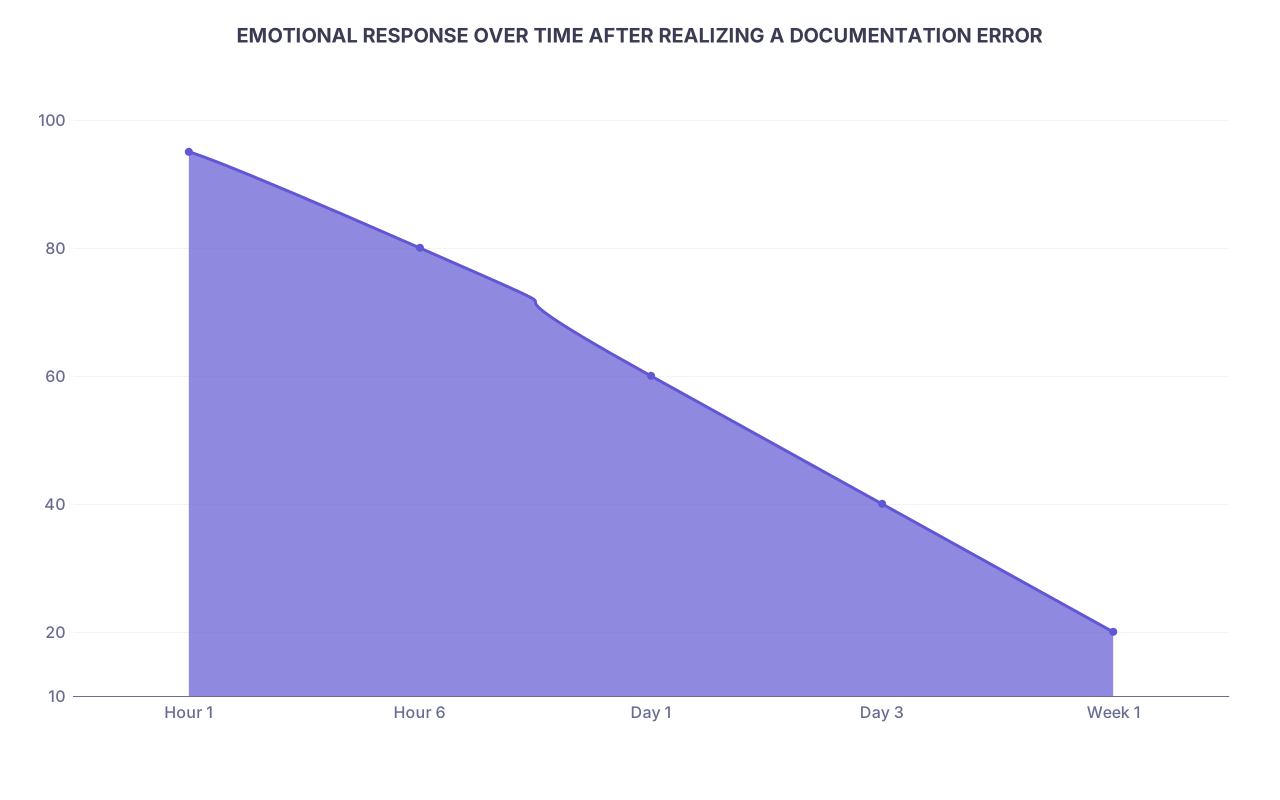
No. You’re a human doctor (or trainee) in a chaotic system, trying to balance patient care, exams, pager explosions, and your own survival. Things slip.
Bad doctors:
- Don’t care they missed documentation
- Lie or alter the chart when caught
- Refuse to learn from it
You:
- Noticed
- Are worried
- Want to fix it and not repeat it
That’s the difference.
Is this a wake‑up call? Probably. Should it be? Also probably.
Is it a career‑ending legal disaster by default? No.
| Category | Value |
|---|---|
| Hour 1 | 95 |
| Hour 6 | 80 |
| Day 1 | 60 |
| Day 3 | 40 |
| Week 1 | 20 |
FAQ (Exactly 4 Questions)
1. If I write a late entry, doesn’t that make me look more guilty?
Not writing anything looks worse. A transparent, time‑stamped late entry is standard and defendable. What looks bad is:
- Backdating
- Sneaky edits
- Or zero documentation plus “just trust me” at deposition
A late entry says, “I realized this was missing and corrected it.” That’s what grown‑ups do.
2. Could I lose my medical license over a missed documentation like this?
Very, very unlikely for a single missed note that you later correct honestly. Boards get involved when there’s:
- Pattern of negligence
- Fraud
- Substance issues
- Repeated, serious professional misconduct
One late document? That’s not license‑revoking territory.
3. Should I tell my attending or just quietly add the late entry and hope no one notices?
If there was any significant risk, complaint, bad outcome, or if you’re in training: tell your attending. Quiet fixes look sneaky when someone later reviews the chart. A simple, “I realized I forgot to document; I’ve added a late entry” is usually enough. They’ve done the same thing at some point, I promise.
4. Everyone always says, “If it’s not documented, it didn’t happen.” Is that literally true in court?
No. It’s a catchy phrase, not a law of physics. Courts consider:
- Your testimony
- Other witnesses (nurses, social work, family)
- The overall chart context
But lack of documentation absolutely weakens your position. It doesn’t erase reality, but it makes proving reality harder. That’s the real meaning.
Key points to walk away with:
- You are almost certainly not instantly in legal or license trouble over one missed critical discussion note, especially if you correct it with a clear late entry.
- The worst thing you could do now is alter old notes or hide it; honest, time‑stamped documentation and looping in the right people is your safest move.
- Let this be a painful but useful nudge to create a personal rule: big conversations get real notes, every time, no exceptions.