
The fear that one sloppy progress note could ruin your entire career is wildly exaggerated—but not completely imaginary.
Let me say this straight: yes, in theory, you can get pulled into a lawsuit over a note you wrote as a medical student or intern. But no, that doesn’t mean one awkward SOAP note is going to have you testifying in front of a jury next year.
You’re right to be nervous. I’ve watched perfectly normal students spiral after attending sign-out with phrases like “document as if you’ll be deposed” and “if it’s not in the chart, it didn’t happen.” Then they go home and reread their notes like they’re legal landmines.
Let’s unpack what’s real, what’s overblown, and what you can actually do about it—so you can stop obsessively checking the EMR at 2 a.m. wondering if you just destroyed your future.
1. Can you actually be sued for a note as a student or intern?
Short answer: yes, technically. But that’s not the full story.
Here’s the uncomfortable reality:
- Any note you write in the chart can become part of a lawsuit.
- Any person whose name appears in that chart can be named in a lawsuit.
- That includes: attendings, residents, interns, PAs, nurses, and yes—medical students.
But here’s the part no one emphasizes enough: plaintiffs’ lawyers care about who had responsibility and decision-making authority, not who typed the most words.
As a medical student:
- You’re not the licensed provider.
- Your note is usually “for educational purposes” and/or must be edited/attested by a resident or attending.
- Ultimate responsibility rests with supervising physicians.
As an intern:
- You are licensed (or practicing under a training license depending on the state).
- You do carry some direct responsibility.
- But you’re still supervised, and attendings are usually the primary legal target.
Is it possible your name appears in a lawsuit? Yes.
Is it common for a med student note to be the core of a malpractice case? Extremely rare.
The more realistic risk:
Your note becomes part of the story—either helping show good care, or suggesting sloppy thinking, poor communication, or lack of follow-up.
2. What actually happens to your notes in a lawsuit?
Let’s be honest about the nightmare scenario you’re picturing.
You’re imagining:
A lawyer pulls up your progress note on a giant screen, zooms in on one sentence, and says:
“Doctor, why did you write this? Were you negligent? Were you lying?”
Does that ever happen? Yes. I’ve seen residents and attendings grilled over charting. But here’s how it usually works with students and interns:
The medical record is pulled
Every note in the chart gets reviewed: H&Ps, consult notes, nursing notes, student notes, telephone notes, even random “addendums.”Lawyers look for inconsistency and contradiction
- Did one person say “no chest pain” and another “complains of severe chest pain”?
- Did someone describe a normal exam and someone else describe obvious pathology an hour later?
- Does the plan match the severity of what’s documented?
Your note becomes evidence of what the team knew
If you wrote: “Patient c/o new severe abdominal pain, appears toxic,” and nothing was done for hours—that note might be used to argue the team ignored warning signs.If you’re an intern
You can be asked: “You wrote this. What did you do about it?”
If the answer is, “I did nothing and didn’t tell anyone,” that’s where you look bad.
As a student, the usual line of questioning (if you’re dragged in at all) is more like:
- “Who supervised you?”
- “Did your attending review this note?”
- “What was your understanding of your role at the time?”
Not fun. But not the career-ending public execution your brain is conjuring.
3. The real legal risks hiding inside your notes
The danger isn’t that you forgot a comma. It’s patterns and content that scream “carelessness,” “dishonesty,” or “nobody was in charge.”
Here are the biggest red flags in student/intern notes that actually matter:
Copy-paste disasters
- “No distress” on a patient who was transferred to the ICU for respiratory failure six hours later because everyone kept pasting yesterday’s exam.
- “No allergies” on a patient who clearly has an allergy banner in bright red across the top of the EMR.
Contradicting yourself (or the rest of the team)
- Your note: “New severe headache, worst of life.”
- Attending note: “Mild tension headache, reassurance given.”
That mismatch can be used to argue that someone missed a subarachnoid hemorrhage—or that no one was paying attention to your documentation.
Documenting things you didn’t actually do
This one is brutal in court.- Writing “neuro exam normal” when you barely checked pupils because you were rushing.
- Writing “discussed risks and benefits” when you didn’t.
Lawyers love this. Because once they catch you in one exaggeration, they can attack your credibility on everything.
Backdating or changing notes without transparency
- Editing a note hours later to “fix” what happened instead of adding a clearly labeled addendum with a timestamp.
- Trying to retroactively cover yourself once an outcome goes bad.
Blamey, emotional, or sarcastic comments
- “Patient refuses to help themselves.”
- “Family uncooperative and rude.”
- “Consult team useless, no recs.”
Looks unprofessional. Juries notice this stuff. It colors the whole view of the care team.
This is the kind of documentation that doesn’t just look bad—it can be weaponized.
4. Student vs intern vs attending: who’s actually on the hook?
Let’s put some structure around your anxiety with a comparison.
| Role | Licensed? | Main Legal Target? | Typical Note Status |
|---|---|---|---|
| Med Student | No | Rarely | Educational, supervised |
| Intern (PGY-1) | Yes | Sometimes | Part of official record |
| Resident | Yes | Often | Central to care decisions |
| Attending | Yes | Almost always | Ultimate responsibility |
As a medical student:
- Your notes are usually not the primary record of care.
- They may require a cosign or separate attestation.
- The supervising physician is expected to verify and correct what you write.
As an intern:
- You’re practicing medicine, not just “learning.”
- Your notes do reflect care you actually provided.
- You can be individually named in a lawsuit, but you’re also generally covered by the hospital’s malpractice insurance.
Key point:
Being named in a lawsuit isn’t the same as being found liable or having your career destroyed.
A lot of trainees get named basically because:
- Lawyers name everyone in the chart.
- Then, as the case progresses, people get dropped.
Stressful? Yes. Career-ending? Usually no.
5. What protects you more than you think
You’re probably not giving yourself enough credit for the protections already around you.
Here’s what usually stands between you and disaster:
Supervision structure
- Attendings are legally and professionally on the hook for supervising trainees.
- They’re expected to confirm the history, exam, and plan—especially for critical decisions.
Institutional malpractice coverage
- Students are typically covered by the school or hospital’s policies while acting within their role.
- Interns and residents are usually covered by the hospital’s malpractice policy as employees.
The standard of care for your level
A med student is not held to the same standard as a board-certified attending with 20 years of practice. The key questions become:- Were you acting within your training and role?
- Did you reasonably rely on supervision?
- Did you deliberately lie, fabricate, or ignore something obvious?
Juries care about intent and pattern
They’re much more disturbed by:- Repeated negligence
- Evidence of dishonesty
- Cruel or dismissive attitudes documented in the chart
Than by a single clumsy or incomplete note from a third-year.
6. How to chart in a way that doesn’t keep you up at night
You can’t turn every note into a legal masterpiece. You don’t have that kind of time. But you can avoid the truly dangerous stuff with some simple habits.
I’m not going to give you bland “be thorough” nonsense. You’re tired, you’re on call, you’re writing 10 notes after midnight. You need rules that are actually usable.
Here’s the short list that will save you:
Never document something you didn’t honestly do or observe
If your neuro exam was “grossly intact” because you did a quick check but not a full detailed exam, then write that.
“Grossly non-focal neuro exam.” Way safer than pretending you tested every cranial nerve.If you’re uncertain, say so clearly
- “History partially limited by confusion.”
- “Unclear if pain is new or chronic; patient gives mixed answers.”
That’s honest. And honesty ages well in the record.
Use your note to show you thought about the serious stuff
Especially as an intern, a line or two can be huge legally:- “Considered meningitis; no fever, neck stiffness, or AMS; will monitor and re-evaluate if symptoms change.”
That shows you didn’t just blow off the headache.
- “Considered meningitis; no fever, neck stiffness, or AMS; will monitor and re-evaluate if symptoms change.”
Avoid copy-paste autopilot
If you must copy, at least:- Re-read vitals, physical exam, and assessment.
- Make sure nothing contradicts the current situation.
If you’re documenting “no edema” while the nurse is giving IV Lasix for massive leg edema, that’s a problem.
Don’t be snarky in the chart—ever
Vent in the call room, not the EMR.
In the record, stick to:- “Patient declined X despite explanation of risks/benefits. Demonstrates understanding by explaining back.”
Cold, factual, unemotional. That’s what you want.
- “Patient declined X despite explanation of risks/benefits. Demonstrates understanding by explaining back.”
When something goes wrong, don’t “fix” the past
If you realize later you missed something:- Don’t silently edit an old note to pretend you caught it.
- Add an “Addendum” with current date/time:
“Addendum 1/8: On review of prior note from 1/7, I recognize that [finding] may have represented early [condition]. At the time, it was interpreted as [reason].”
Messy? Yes. Honest? Also yes. Lawyers can work with honest.
7. How to handle the anxiety right now
Let’s talk about the part your brain is whispering: “What if I already messed up? What if a note from last month is going to come back and destroy me?”
Here’s what I’d actually do in your shoes:
- Stop going back into the chart just to catastrophize about old notes. You’re not allowed to retroactively fix reality.
- If there’s a real, current concern—like you documented something wrong that might actively change care now—talk to your senior or attending. Today. “Hey, I realized my note from yesterday might be misleading about X; can I add an addendum?”
- If your worry is purely hypothetical (“two months ago I might have under-documented a physical exam”), recognize that for what it is: anxiety, not action.
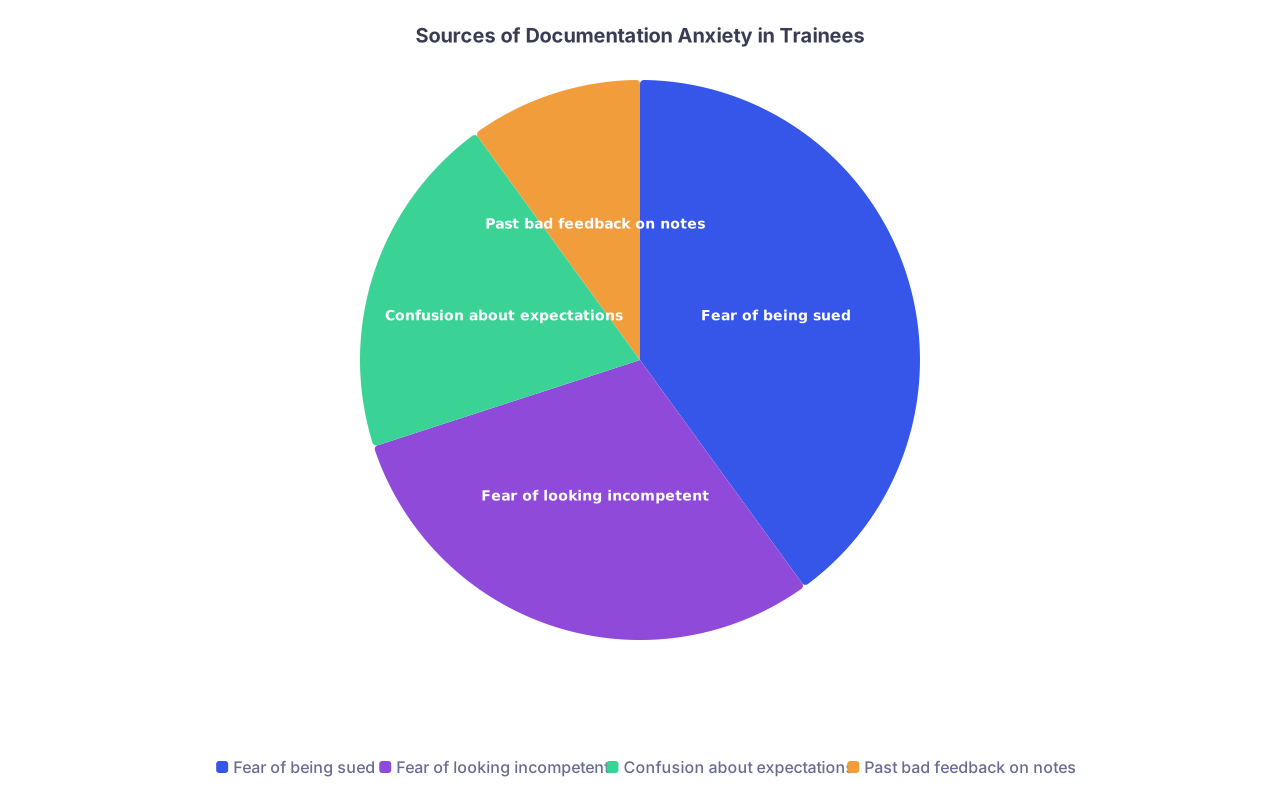
| Category | Value |
|---|---|
| Fear of being sued | 40 |
| Fear of looking incompetent | 30 |
| Confusion about expectations | 20 |
| Past bad feedback on notes | 10 |
Most of what keeps trainees up at night isn’t actual legal risk. It’s:
- Fear that attendings will judge their notes
- Vague warnings about “defensive charting” with zero practical guidance
- Horror stories told with no context
You’re not weird for worrying about this. You’re paying attention. That’s good. Just don’t let the fear paralyze you.
8. Simple checklist before you sign a note
Is this a bit neurotic? Yes. You and I both are. But this 30-second mental pass will catch most real problems:

| Step | Description |
|---|---|
| Step 1 | Finished Note |
| Step 2 | Fix exaggerations |
| Step 3 | Align with current findings |
| Step 4 | Briefly mention key ruled out issues |
| Step 5 | Remove emotional language |
| Step 6 | Sign Note |
| Step 7 | Did I document only what I did or know? |
| Step 8 | Any obvious contradictions? |
| Step 9 | Serious diagnoses considered? |
| Step 10 | Tone factual and professional? |
Run through:
- Am I claiming things I didn’t actually do?
- Does this note match the patient’s current state?
- Did I at least consider the “don’t miss” stuff for this complaint?
- Is the tone neutral, factual, and not petty?
If yes, sign it and move on. Seriously. At some point, more worrying doesn’t make the note safer—it just makes you miserable.

9. When should you actually worry enough to ask for help?
There are times you should escalate your concern:
You realize you documented something materially wrong that might affect ongoing care.
→ Tell your senior or attending and correct it transparently.You’re being pressured to document something you’re not comfortable with.
→ “Please write that the patient refused, even though we didn’t really explain everything.” This is a red flag. Loop in a trusted senior, chief resident, or program director if needed.A patient had a serious bad outcome, and risk management or legal is involved.
→ Answer truthfully. Don’t alter the chart. Don’t “practice” lying. If you’re asked not to discuss certain details, that’s legal strategy, not a coverup order.
You’re allowed to say, “I don’t remember” if you genuinely don’t. You’re allowed to admit you were a trainee and were following supervision. You’re not required to retroactively create a perfect story.
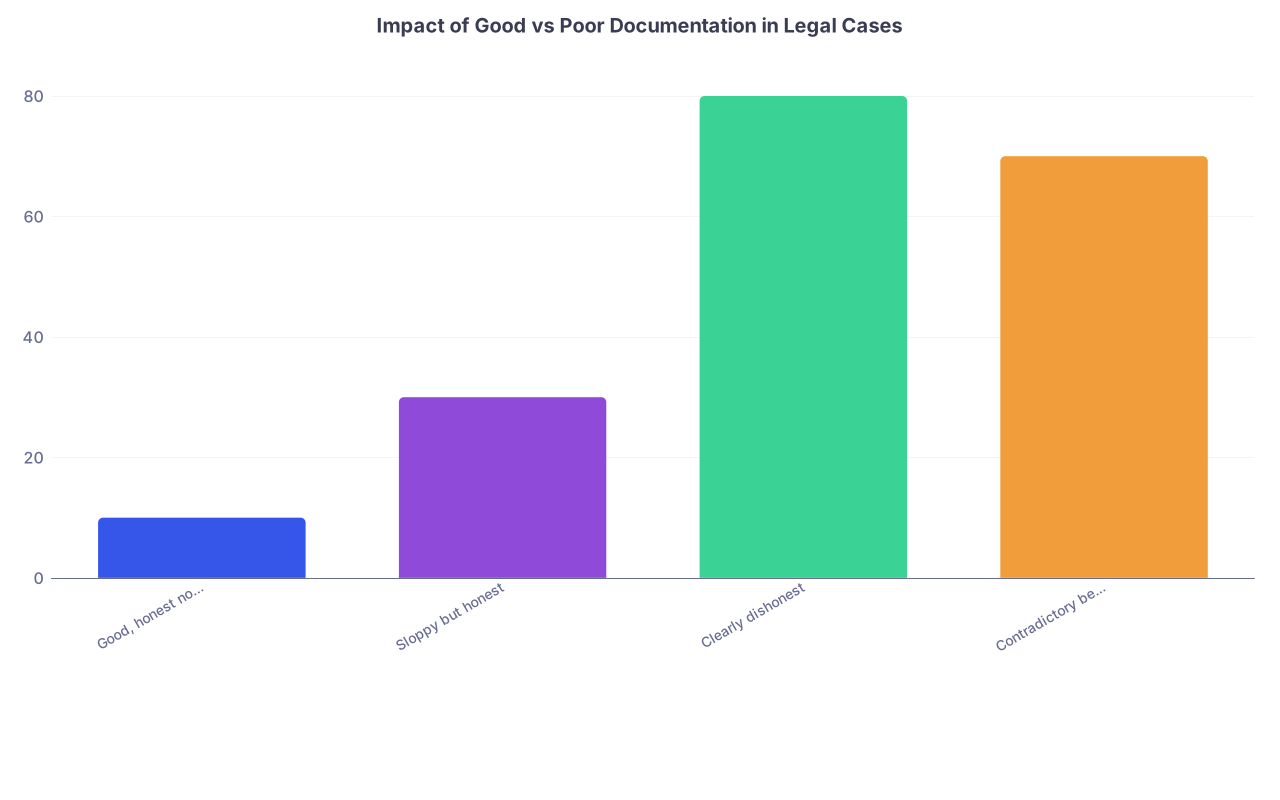
| Category | Value |
|---|---|
| Good, honest notes | 10 |
| Sloppy but honest | 30 |
| Clearly dishonest | 80 |
| Contradictory between providers | 70 |
Interpretation (since you can’t see the legend): higher numbers ≈ greater risk in a lawsuit. Good, honest notes are rarely the problem. Dishonest or contradictory ones are huge problems.
FAQ (Exactly 5 Questions)
1. Can I be personally sued as a medical student for something I wrote?
Yes, you can technically be named in a lawsuit, but it’s rare for students to be the main target. The focus is usually on licensed providers—residents and attendings—who had decision-making authority. Your notes are more likely to be supporting evidence of what the team knew and did, rather than the core of the case. You’re typically covered by your school or hospital while acting within your student role.
2. As an intern, does my documentation carry real legal weight?
Yes. As an intern, your notes are part of the official medical record and reflect care you actually provided. You can be named individually in a suit. However, you’re generally covered by institutional malpractice insurance, and attendings still carry major responsibility. If your notes show reasonable thought, honest documentation, and appropriate escalation to seniors, you’re in a much safer place legally than your anxiety is telling you.
3. Will one bad or incomplete note ruin my career?
Almost certainly not. Lawsuits look at patterns, trajectories, and systems of care, not a single imperfect trainee note taken out of context. What gets people in deep trouble is repeated negligence, blatant dishonesty, or serious contradictions between documentation and reality. One rushed, mediocre note isn’t great, but it’s not a career death sentence.
4. Should I go back and edit old notes if I’m worried about them?
Do not quietly alter old notes trying to “fix” the past. Silent retroactive editing looks terrible if a chart is ever scrutinized. If there’s an active, real clinical concern (for example, your note might be misleading for current providers), talk to your senior or attending and add a clearly labeled addendum with the current date/time. If your concern is purely hypothetical (“six weeks ago my neuro exam wasn’t detailed enough”), that’s anxiety, not a current clinical emergency.
5. How honest should I be if I’m ever questioned about my documentation?
Brutally honest. Trying to “polish” your story under oath is exactly how people destroy their credibility. It is completely acceptable to say:
- “I don’t remember that specific patient.”
- “I wrote that template phrase, but in reality, the exam was grossly normal, not detailed.”
- “As a student/intern, I was following my attending’s lead.”
Lawyers and juries can handle imperfect care a lot better than they can handle lying. Your best protection is accurate, honest documentation and the same honesty if you’re ever asked about it.
Action step for today:
Open your last progress note (or draft one you’re working on) and look at one section—the physical exam or assessment. Ask yourself: “Did I actually do everything I’m claiming here, and would I be comfortable saying that under oath five years from now?” If the answer isn’t a clean yes, fix that section. Then stop. Don’t spiral through your entire chart history.