
The way most residents joke about burnout would get them quietly blacklisted—if program directors were actually laughing.
The Hidden Problem With “Burnout Jokes”
You think you’re being “relatable.”
They think you might be a liability.
That disconnect is the core mistake.
There’s a line between dark humor that bonds your team and comments that make program directors (PDs) and attendings think:
- “Is this person unsafe?”
- “Is this someone who will crash and burn mid-year?”
- “Is this someone I want to vouch for on a fellowship letter?”
Too many trainees cross that line because everyone around them is doing it. Burnout humor is contagious. But PDs are not hearing it the same way your co-interns are.
I’ve watched it happen in real time:
- Resident on rounds: “If I have one more admission, I’m just going to walk into traffic, haha.”
- Attending laughs weakly, then mentions it to the PD later: “He makes concerning comments a lot. I’m not sure how he’s really doing.”
You think you made a joke.
They heard a pattern.
Let me be very clear: joking about burnout is not automatically a problem. Medicine has always had gallows humor. It can be a coping tool. But when you mix:
- A hyper-documented environment,
- Increased focus on wellness and safety,
- And PDs held responsible for “red flags they missed,”
your jokes start living a second life—inside people’s risk radar.
The mistake is assuming everyone understands your intent. They do not. And PDs are trained to look past intent and focus on pattern and risk.
Where Burnout Humor Crosses Into Red-Flag Territory
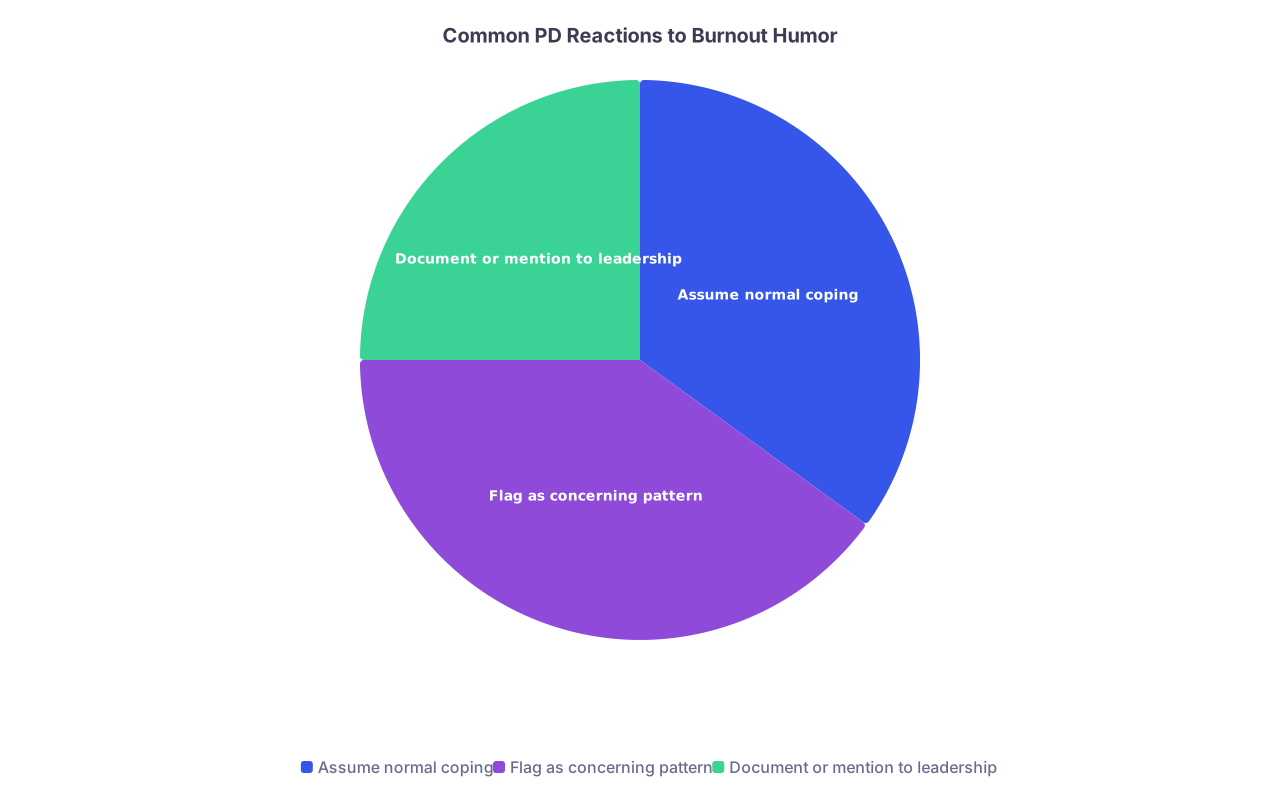
| Category | Value |
|---|---|
| Assume normal coping | 35 |
| Flag as concerning pattern | 40 |
| Document or mention to leadership | 25 |
Not every burnout joke is a problem. The context, frequency, timing, and audience matter. Here’s where I see people step on landmines.
1. Joking in the Wrong Direction
Punching up is different from punching inward.
- “If admin adds one more metric, I’m starting a union.” → Eye-roll, maybe a smirk.
- “If I have to do another code, I’m going to jump off the roof.” → Not just humor anymore.
Red-flag to PDs:
- Self-harm imagery
- “I want to quit medicine”
- “I hate my patients”
- “I don’t care if they live or die, haha”
They’re trained to treat those as possible truth, not just jokes.
You may think: “Everyone talks like this on nights.”
Sure. On nights. With your co-residents. Not in:
- Evaluations
- Teaching sessions
- Morning report
- Applicant dinners
- Emails
- Group chats with faculty
2. Performing Burnout as a Personality
Some residents build a whole “brand” around being over it:
- Constantly introducing themselves as “chronically burned out”
- Turning every story into “I’m dead inside”
- Posting nonstop burnout memes on public accounts
It stops being a coping mechanism and starts looking like an identity. PDs do not want “burnout as identity.” They want:
- “Stressed but functional”
- “Tired but reliable”
- “Candid but still professional”
If every interaction with you includes a burnout joke, the PD starts wondering: is this the only tool you have left?
3. Timing: When Your Joke Ignores the Room
Context is everything.
Wrong times to drop burnout humor:
- Right after an adverse event or patient death
- During M&M when emotions are high
- During a professionalism meeting
- When a faculty member or co-resident has just disclosed their own mental health struggle
PDs are very alert to “emotional misattunement”—people who can’t read the room. Burnout jokes at the wrong moment get coded as:
- Lacking insight
- Lacking empathy
- Or worse, deflecting from serious feedback
4. Turning Evaluations Into Comedy
I’ve seen evaluations, self-assessments, or 360 forms where residents write things like:
- “My long-term plan is to survive this place.”
- “Strengths: sarcasm, caffeine tolerance. Weaknesses: will to live.”
- “Career goals: not crying in the call room.”
You think you’re being funny and self-aware. PDs see:
- Documentation that can be reviewed if there’s later concern
- Written evidence of distress or disengagement
- Something they may need to bring up in CCC or wellness meetings
Once it’s written in an official document or email, it’s evidence. Stop putting stand-up material in anything that might end up in your file.
How PDs Actually Think About These Comments

Let me decode the PD mindset for you. They are not sitting around dissecting your humor style for fun. They’re trying not to be the PD who ignored warning signs.
Their Reality:
- They’re accountable to the GME office for resident wellness and safety.
- They’ve probably been burned once by “We thought he was joking” turning into an actual crisis.
- They balance wanting to be approachable with needing to set boundaries.
So when they hear repeated burnout jokes, their brain goes:
- Is this just normal resident dark humor?
- How often have I heard this from this person?
- Has anyone else mentioned concern?
- Is there any performance or professionalism issue attached?
- Do I need to document this or check in more formally?
If the answer to 2–5 trends the wrong way, your “jokes” quietly move into the “red-flag behavior” pile.
That red-flag pile affects:
- CCC discussions
- Letters of recommendation (“steady, resilient” vs “sometimes overwhelmed”)
- Who gets leadership roles
- Who’s seen as “solid” vs “risky”
You may never even know that your own jokes pushed you into the wrong category.
Places Your Burnout Humor Is Most Dangerous
| Context | Why It’s Risky |
|---|---|
| In front of PDs/associate PDs | They’re responsible for escalation |
| In written forms/emails | Becomes part of your permanent record |
| During feedback/prof meetings | Looks like defensiveness or minimization |
| At interviews or fellowship dinners | Gets remembered, not in a good way |
| Around junior learners | Gets labeled as unprofessional |
1. Interview Settings (Yes, Even “Casual” Dinners)
Applicants love making edgy jokes to seem real. I’ve watched people blow their shot this way.
Example:
Applicant at a resident dinner: “I’m just hoping whichever program I match at doesn’t destroy my soul, you know?”
Residents laugh. One of them later: “He felt pretty negative. Might not thrive in a busy program.”
What gets written back to the PD?
- “Smart, but seemed cynical.”
- “Made several comments about burnout and not sure if joking.”
That’s enough to move you from “rank high” to “rank cautiously” in borderline cases.
2. Emails and Group Chats That Aren’t Just Residents
Don’t put this in writing to attendings, PDs, coordinators, or mixed group threads:
- “Kill me now.”
- “This place is a prison.”
- “I’m fully dead on the inside.”
- “I hate this job.”
You’re handing them documentation that you might be unsafe or disengaged. Then they have to decide whether to:
- Pretend they didn’t see it (risky for them)
- Check in and potentially escalate
- Bring it up at CCC
None of those outcomes help you.
3. Formal Feedback or Wellness Check-Ins
The worst place to default to humor is when someone is seriously asking, “Are you okay?”
Mistake pattern I see all the time:
- PD: “How have you been holding up with nights?”
- Resident: “Oh, you know, just slowly dying like the rest of us, haha.”
- PD: “No seriously—how are you?”
- Resident: [Still joking or deflecting]
That reads as either:
- Lacking insight
- Not trusting leadership enough to be honest
- Or being so far gone you can’t engage
You don’t need to pour your soul out. But you do need to show you’re capable of discussing stress like an adult human, not just hiding behind sarcasm.
When Humor Stops Being Coping and Starts Being a Symptom
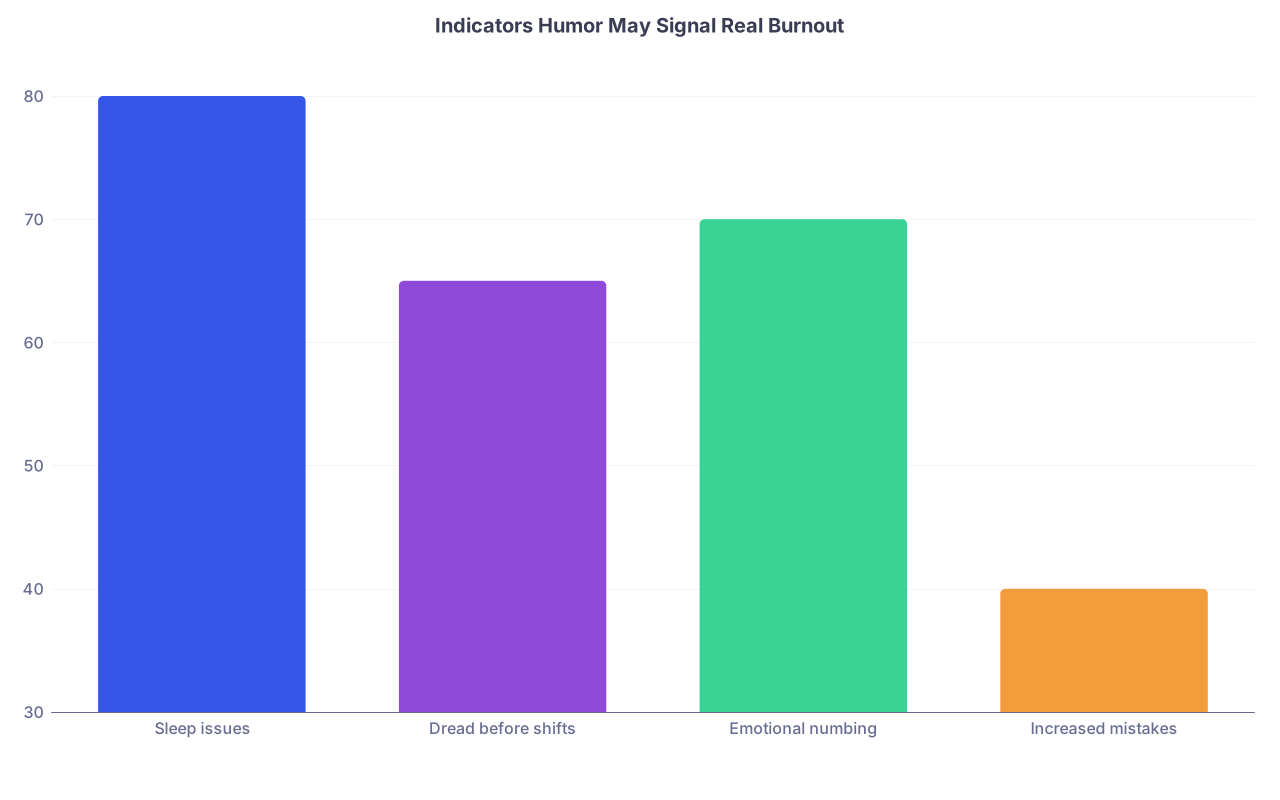
| Category | Value |
|---|---|
| Sleep issues | 80 |
| Dread before shifts | 65 |
| Emotional numbing | 70 |
| Increased mistakes | 40 |
Here’s the scary part: sometimes you’re not “just joking.”
Sometimes the humor is actually your last thin shield over real burnout, depression, or moral injury. And the system is not good at distinguishing the two early.
Red flags in you that your burnout humor is more than a bit:
- You no longer feel anything when you say extreme stuff. It’s flat.
- The idea of getting in trouble for your jokes doesn’t bother you—because nothing does.
- You’re increasingly careless with what you say and to whom.
- You’re making more errors, showing up late, or mentally checking out.
At that point, your “edgy humor” is going to get you labeled unsafe. And honestly? They might not be wrong.
What’s dangerous is pretending you’re fine because everyone around you also “jokes about burnout.” They might be coping. You might be decompensating.
You have to be brutally honest with yourself about which one you are.
How to Use Humor Without Torpedoing Your Reputation

You don’t need to turn into a bland robot. You just need to stop making avoidable mistakes.
1. Keep the Darkest Stuff Resident-Only and Offline
There’s a difference between:
- Eye contact plus a dark one-liner to your co-intern at 3 a.m.
- Blast-emailing your PD and faculty: “I want to die, lol.”
Practical guardrails:
- No self-harm jokes in any channel involving faculty or leadership.
- No “I hate my patients” bits. Ever. That travels.
- No burnout jokes in official documents, evals, or anything that can be screenshot and forwarded.
2. Shift the Target of the Joke
Better targets:
- The absurdity of the system: “I think Epic has seen my face more than my family this year.”
- Yourself in a competent but human way: “I’m now 90% coffee, 10% UpToDate.”
- Shared experience: “Intern year should come with miles; we’d all be Platinum by now.”
Worse targets:
- Your own will to live
- Patient outcomes
- Safety issues
- Your supposed lack of caring
You can still be funny without sounding like a suicide risk.
3. Learn a Simple Filter: “Would I Say This in My Letter?”
Quick test before you speak or type:
If this exact line got quoted in my MSPE, residency file, or fellowship letter, would I be okay with it?
- “Yeah, I was tired but we pulled through.” → Fine.
- “I did not care if that patient lived or died at 3 a.m., haha.” → You just wrote your own professionalism concern.
Anything that would look awful out of context? Don’t say it in a context where it can be stored or repeated.
4. Use Direct Honesty When Asked, Not Jokes
When a PD or attending directly asks about your wellness, switch off the comedy reflex.
Better answers:
- “I’m stretched, but I’m coping. Sleep is off, and I could really use a lighter week soon.”
- “Honestly, I’m more burned out than I expected by this point. I’m still functioning, but I’m worried about how sustainable this is.”
- “I’m okay on paper, but I’m noticing I’m more irritable and detached. I’d like to figure out how to course-correct.”
Those signal:
- Insight
- Responsibility
- Willingness to engage
You’re still showing you’re human. You’re just not hiding behind punchlines.
The Future: More Wellness Talk, More Scrutiny

| Step | Description |
|---|---|
| Step 1 | Casual burnout jokes |
| Step 2 | Repeated dark comments |
| Step 3 | Faculty notice pattern |
| Step 4 | Concern raised at CCC |
| Step 5 | Documented as red flag |
| Step 6 | Impacts letters and opportunities |
Here’s the twist: as medicine finally starts taking wellness seriously, your words carry even more weight.
Ten years ago, “I want to quit medicine” might have been brushed off. Now:
- There are mandatory reporting expectations.
- Institutions are terrified of missing suicide risk.
- PDs are getting formal training on “recognizing warning signs.”
That means:
- Your “bit” about wanting to drive into a wall may trigger a wellbeing check.
- Your pattern of “I hate this specialty” jokes may show up in your file.
- Your social media burnout persona may factor into how people perceive you professionally.
This is not to scare you into silence. It’s to warn you that the culture is shifting. Systems that ignored suffering for years are now overcorrecting in some places. They’re swinging from “deal with it” to “we must act on any possible signal.”
You live in that transition zone. You can’t afford to be naive about how your humor lands.
When You Actually Need Help (Not a Better Joke)

Sometimes the real mistake isn’t the joke. It’s using jokes instead of help.
If any of this sounds familiar:
- You’re having actual thoughts of self-harm or “not wanting to wake up.”
- You’re making more and more extreme jokes and feel…nothing.
- You’ve lost interest in everything outside work.
- You’re starting to resent patients or actively hope for fewer admissions in ways that scare you.
That’s beyond “normal resident cynicism.”
You need:
- A confidential conversation with mental health services (often available via GME, and yes, they exist for this exact reason).
- At least one person in your life who knows the unfiltered truth.
- Less performance, more honesty.
No joke is worth your life. And no PD worth working with wants you to white-knuckle your way through genuinely dangerous burnout.
Two Things to Remember
- Your burnout jokes are not being heard the way you think. PDs are forced to treat repeated dark humor as possible red flags, not just “resident culture.”
- You can keep your sense of humor and protect your career by choosing targets wisely, avoiding extreme self-harm or patient-disregard jokes, and being straightforward—not sarcastic—when leadership asks how you’re really doing.