
Last winter at 3:12 a.m., a brand-new intern at my program got a STAT page: “Code Brown in 7E – please evaluate.” He sprinted down the hall, heart pounding, only to find… a perfectly stable patient, a smirking senior, and a very full bedpan. The nurse just shook her head and said, “Welcome to nights, doc.”
That intern figured out something you’re probably sensing already: in residency, humor is not optional. It’s how people survive. But the way it actually works—the pager pranks, the nicknames, the lines you do not cross—that’s almost never written down.
Let me pull the curtain back a bit.
Why Resident Humor Exists (And Why It’s Dark as Hell)
If you think medicine is all grand rounds and NEJM articles, you’ve never sat in a call room at 4 a.m. with four consults pending, a crashing patient, and your circadian rhythm in shambles.
Here’s the truth:
Humor is one of the only pressure valves residents have that cannot be dictated by administration, duty hours, or wellness modules. So it gets weird. And dark. Fast.
You deal with:
- Death, daily
- Fear of making catastrophic mistakes
- Zero control over your schedule
- Constant evaluation
You cannot meditate your way out of all of that. People joke. They nickname. They prank. They create a shared language that says: “Yes, this is insane. And we’re in it together.”
The attendings know. The PDs know. Most of them did the same things as residents. The unspoken rule is simple: as long as it doesn’t humiliate, harm, or leak outside the team, they look the other way.
But here’s what that actually looks like in practice.
Pager Pranks: The Real Ones (And the Ones That Get You Fired)
These are the stories people tell in the workroom at 2 a.m., but nobody documents because HR would have a stroke.
The “Soft” Pager Pranks
The harmless side first. These are the ones everyone chuckles about—even the victim—once they recover.
- The Infinite Consult Loop
This one’s been around forever. On a slow night, someone pages the medicine resident from “Pager 1234,” which is actually the surgery intern. Then they page surgery from “Pager 5678,” which is actually the medicine intern.
Medicine: “Hi, this is the medicine senior returning a page for consult.”
Surgery: “What? You paged us for a consult.”
Medicine: “No, you paged us.”
…five minutes of confusion, followed by realization and swearing.
Does this still happen? Yes. I’ve watched it in real time.
Is it tolerated? Usually. As long as the hospital isn’t burning down and no patient care is delayed.
- The Phantom STAT Page
Classic version:
“STAT page to the ICU resident: patient in 4B asking for extra ketchup packets.”
Borderline but usually okay if:
- It’s directed at someone known to be in on the joke
- It’s not during an actual code-heavy night
- It doesn’t impersonate a nurse or another service in a way that makes them look bad
The unspoken boundary: you never fake an actual emergency. No fake code blues. No “hypotensive patient” who doesn’t exist. That’s a line. Everyone knows it.
- The Pager Rename Trick
On systems where the display name can be edited, you’ll occasionally see your pager change to “Lord of the Orders,” “STAT Tylenol Distributor,” or “Consult Goblin.”
Annoying? Sure. Malicious? Usually no. It’s an intra-team thing and often reversed by end of shift.
The Pager Pranks That Have Quietly Died (And Why)
Program directors won’t admit this publicly, but some “traditions” have been intentionally killed.
Fake Rapid Response / Code pages – This used to be a “test of readiness.” It’s gone. Too many near-misses, too easy to confuse real with fake, and too much liability. An attending at a big-name East Coast program literally told his chiefs: “If I hear you did a fake code again, I will personally end your fellowship chances.”
Sexual or harassment-adjacent pages – Anything that even hints at being sexually suggestive or targets identity (gender, race, religion, orientation) is now socially and professionally radioactive. If a PD finds out, they will absolutely escalate it. No one will defend you.
Pages impersonating patients or family members – This crosses into ethical and professional misconduct territory very fast. Boundary everyone gets taught quietly: patients and families are never the butt of the prank. That’s the one taboo that’s still pretty universal.
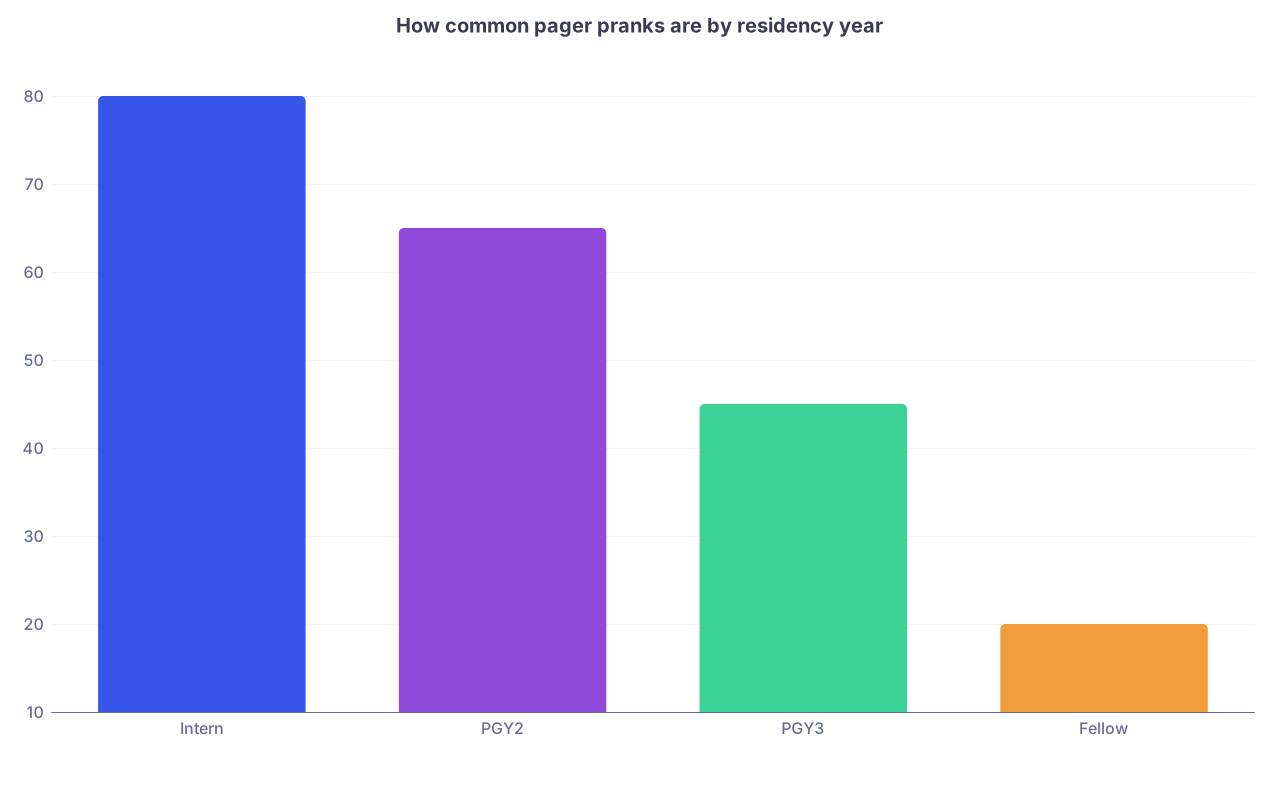
| Category | Value |
|---|---|
| Intern | 80 |
| PGY2 | 65 |
| PGY3 | 45 |
| Fellow | 20 |
The trend is obvious. Interns get hit the most. Seniors are usually the ones orchestrating or retiring from the whole game.
Nicknames: Who Gets One, Why It Sticks, and When It’s a Problem
You can tell a lot about a program by its nicknames. Not whether they exist—they always do—but what they’re about.
The Types of Nicknames You Actually See
- Performance-Based Nicknames
- “CT-Scan Steve” – Orders imaging for everything.
- “Tylenol Tom” – Writes acetaminophen for literally every complaint.
- “One-Note Nancy” – Leaves the same templated note on every patient.
These are half-mocking, half-feedback. People absolutely change their behavior because of them, whether anyone admits it or not.
- Behavioral / Quirk Nicknames
- “Snack Queen” – Carries a fully stocked backpack pantry on nights.
- “Bible Citer” – Quotes UpToDate literally verbatim on rounds.
- “Walkie-Talkie Warrior” – Obsessed with getting everyone out of bed and walking.
These are usually affectionate. If someone uses it to your face with a smile, you’re fine.
- Role-Based Nicknames
- “The Fixer” – Senior you call when everything’s on fire.
- “Spreadsheet Jesus” – Chief who organizes everything down to the minute.
- “Consult Whisperer” – Somehow gets every hostile service to say yes.
If you’re getting nicknames like this, you’re winning.
The Nicknames That Cross the Line
Here’s the part no one tells you directly:
If your nickname is based on something you cannot change in five minutes—your body, accent, identity—it’s high risk. If it’s based on how you act in the hospital, it’s usually fair game.
Things that get programs in trouble:
- Nicknames based on weight, height, skin color
- Nicknames making fun of a foreign accent or country of origin
- Gendered or sexual nicknames
- Anything referencing mental health conditions or disabilities
Those used to be “normal.” They are not anymore. I’ve sat in professionalism committee meetings where a single ugly nickname derailed someone’s entire promotion timeline. Not because everyone was offended. Because it created documentation that the culture tolerated harassment.
Let me be blunt: if your nickname starts getting whispered in a way that makes you uncomfortable, you do not “need to be chill.” You need to:
- Shut it down on the spot with calm but clear language: “Don’t call me that.”
- Loop in a senior you actually trust if it continues.
- Keep it factual and unemotional if HR or GME gets involved.
Most PDs are not out to punish humor. They are out to protect the program from legal and accreditation issues. Once something potentially discriminatory is in writing, they have no choice.
The Unwritten Rules: What’s Actually Allowed vs Career-Suicide
Let me spell out the real rules the way chiefs and attendings talk about them behind closed doors.
Rule 1: Punch Up, Sideways, Never Down
Making fun of:
- Yourself: Always safe
- Your own specialty: Usually fine
- Your peers: Usually fine, if they’re in the same room and laughing
Making fun of:
- Students
- Nurses
- Allied health staff
- Patients
That’s “punching down.” Once that leaks, you’re the problem resident.
A joke about how surgeons write illegible notes? Fine.
A joke about how “these nurses are lazy”? Enjoy your professionalism write-up.
Rule 2: Nothing Goes in the Chart. Ever.
You will be tempted. The “funny” patient description. The meme-level phrasing. Don’t.
Attending story from a real program:
A resident once wrote “poor historian due to chronic stupidity” in an H&P. It was “just a joke” he meant to delete later. He didn’t. The note was discovered during a chart audit. That resident had to appear in front of medical staff leadership and write a formal apology. Every single attending suddenly questioned his judgment.
Behind the scenes, that one line followed him into fellowship letters. I know. I read one of them.
If you want to blow off steam, do it in the resident room, not the EMR.
Rule 3: No Humor in front of Families During Bad Moments
I’ve seen this one kill careers.
Residents sometimes cope with gallows humor by reflex. Most nurses get it. A lot of attendings do too. The problem is when you forget the circle of trust and it leaks into patient-facing areas.
If:
- A patient has just died
- A code just failed
- A family is weeping in the hallway
You keep your mouth shut. Full stop. You can go laugh (or cry) in the stairwell later.
Remember: families watch you more closely than you realize. They don’t hear the nuance of “this is how we cope.” They just see someone joking while their world is ending.
This is the boundary PDs care about most, by the way. You can be weird in the call room. You cannot look cold at the bedside.
Rule 4: No Screenshots, No Social Media, No Exceptions
Here’s what attendings actually say in closed-door meetings now: “Screenshots are discovery. Assume you are under oath every time you text.”
Group chats are tempting. The meme of the ridiculous consult note. The selfie in front of an absurd sign. The “funny” story about that one patient’s request. Everyone does it early. Most people stop after they see it blow up on someone.
Examples of real disasters:
- Resident posted a “funny” TikTok mocking “frequent flyer” patients. A nurse recognized a room layout. Hospital investigated. Contract non-renewed.
- Screenshot of a ridiculous attending note shared in a multi-hospital group chat. It got back to the attending. Guess who did not get a letter for fellowship.
If you’re asking “Is this okay to share?” then the answer is no.

How Attendings and PDs Actually View Resident Humor
Here’s the part no one says out loud: most attendings like that you have an internal culture. They remember theirs. They just need plausible deniability and clear boundaries.
What They Secretly Appreciate
- A team that can laugh together usually functions better under stress.
- Dark humor, contained within the group, is a sign you’re processing the reality of the job.
- Nicknames like “The Closer,” “The Machine,” “Excel Wizard” tell them who the informal leaders are.
I’ve had attendings on rounds say things like, “Ask The Wizard to pull the data,” fully adopting the team’s nickname.
What Makes Them Nervous
- Laughter at the nurses’ station after bad outcomes—because families and administrators see it.
- Group jokes that target one resident relentlessly—because that’s how bullying looks when HR shows up.
- Any sign that humor is preventing honesty. Example: the intern who hides errors because they’re afraid of being the next punchline.
The smartest PDs quietly coach the chiefs:
“Keep the jokes. Kill the cruelty. If someone complains, I want it to be about workload, not culture.”
The Future of Resident Humor: What’s Changing, What Isn’t
No, resident humor is not dying. But it is evolving.
What’s Disappearing
- Openly sexist or racist jokes passed off as “old school.” The old guard still tries, but they get shut down faster now.
- Ritualized humiliations disguised as “pranks.” Making the intern run stairs for no reason? That’s fading. Liability and optics killed it.
- Written evidence of anything borderline. People are much more careful about WhatsApp/Signal/GroupMe content.
What’s Replacing It
- Internal memes. Every program I’ve seen in the last five years has a resident-generated meme ecosystem. Custom stickers. Reaction GIFs.
- Shared “lore.” Stories, nicknames, and inside references that never leave the workroom. Residents become almost tribal about keeping it in-house.
- Irony about the system, not the patient. Jokes about prior auth, pointless metrics, meaningless quality dashboards are safer and more unifying.
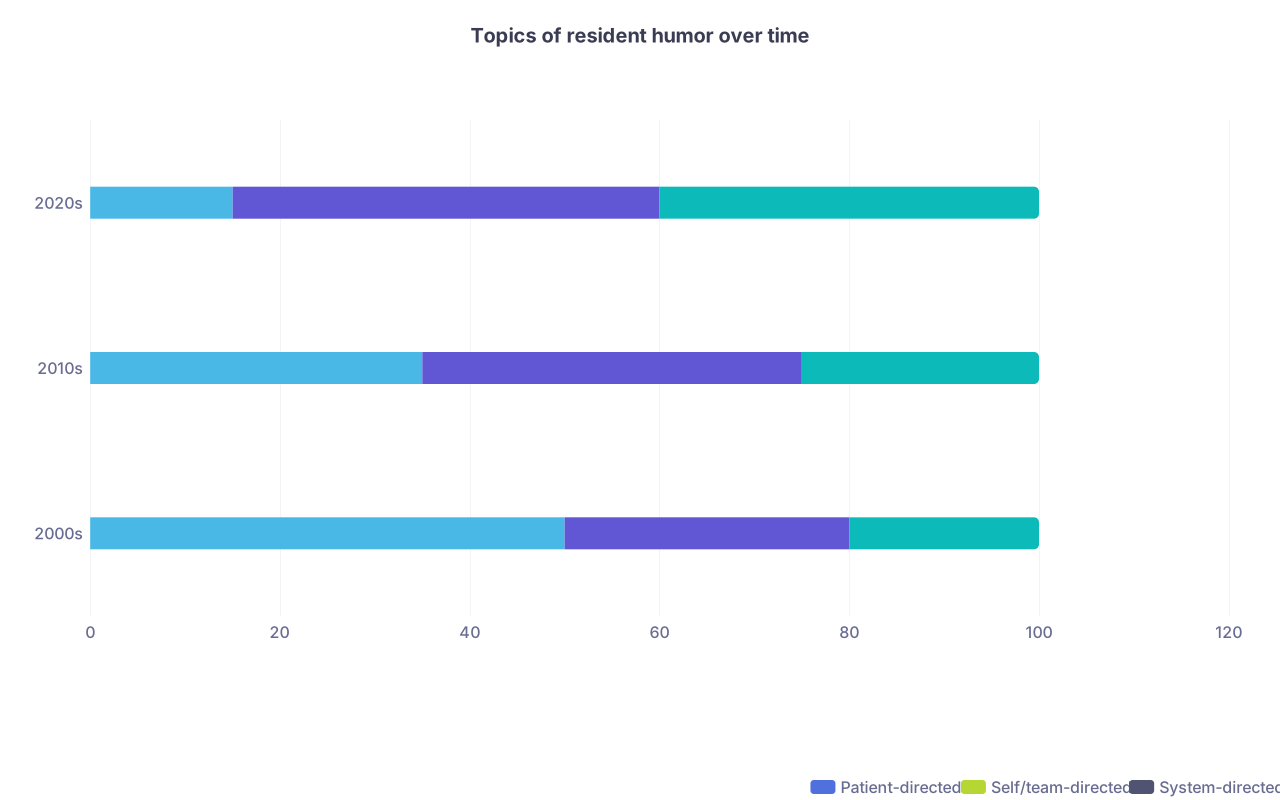
| Category | Patient-directed | Self/team-directed | System-directed |
|---|---|---|---|
| 2000s | 50 | 30 | 20 |
| 2010s | 35 | 40 | 25 |
| 2020s | 15 | 45 | 40 |
Confidentially, a lot of older attendings are relieved. They never loved the cruelty, they just didn’t have the leverage to stop it when they were trainees.
How to Survive (and Enjoy) Resident Humor Without Getting Burned
You don’t need to be the funniest person in the room. In fact, you probably shouldn’t be. But you do need basic survival skills.
1. Read the Room Before You Joke
Every program has its own tolerance level. At some, the chiefs are funnier than the residents. At others, the chiefs are corporate-neutral and the humor is all underground.
Your first month, talk less. Listen more. Notice:
- Who makes the sharpest jokes?
- Who never laughs at the darker ones?
- Where does the line seem to be?
You can always dial humor up later. Walking it back after a misfire is harder.
2. Make Yourself the Punchline First
Safest first step: self-directed humor.
“I’m about to be paged Tylenol Tom if I write one more PRN order.”
“Sorry I’m walking so slow, my soul left my body on that last cross-cover.”
People recognize that as “this person gets it” without risking collateral damage.
3. Use Humor to Connect, Not Exclude
The best residents I’ve seen use jokes to pull others in.
- Remembering a nurse’s running joke about the coffee machine
- Calling the pharmacist “our actual attending” in front of the team (they love that)
- Turning a nickname into a badge of honor (“Yeah, I’m Spreadsheet Jesus. You’re welcome.”)
The worst use it to bond a small in-group at everyone else’s expense. That’ll get you labeled as toxic faster than a bad Step score.
4. When You’re the Target
You will be. At some point. And it’ll sting.
Baseline questions to ask yourself:
- Is it about my work habits or something I can change? → Might be rough feedback in disguise.
- Does the person making the joke also help me, teach me, support me? → Likely affectionate.
- Does it happen only in front of others, to get a laugh, and never with any support behind the scenes? → That’s bordering on bullying.
You’re allowed to say, “Hey, that one’s not really funny to me.” Most normal humans will adjust. If they double down, that’s when you bring in a chief or mentor.

A Quick Reality Check
People outside medicine sometimes hear about pager pranks and dark jokes and think, “How can you laugh at this?”
What they don’t grasp is that the laughter is rarely at the suffering itself. It’s at the absurdity of being 28 years old, holding life-and-death responsibility, drowning in bureaucracy, and somehow still being evaluated on whether your note template matches the attending’s favorite format.
Humor doesn’t mean you don’t care. Often, it’s how you keep caring without completely burning out.
Just remember: the job is serious. You do not have to be. But you do have to be smart about where the jokes land.
| Target Type | Generally Safe? | Why |
|---|---|---|
| Yourself | Yes | Shows insight, low risk |
| Your specialty | Yes | Shared culture |
| Other specialties | Usually | As long as it is light |
| Nurses/Allied staff | Risky | Power dynamics, optics |
| Patients/Families | No | Ethical and professional risk |