
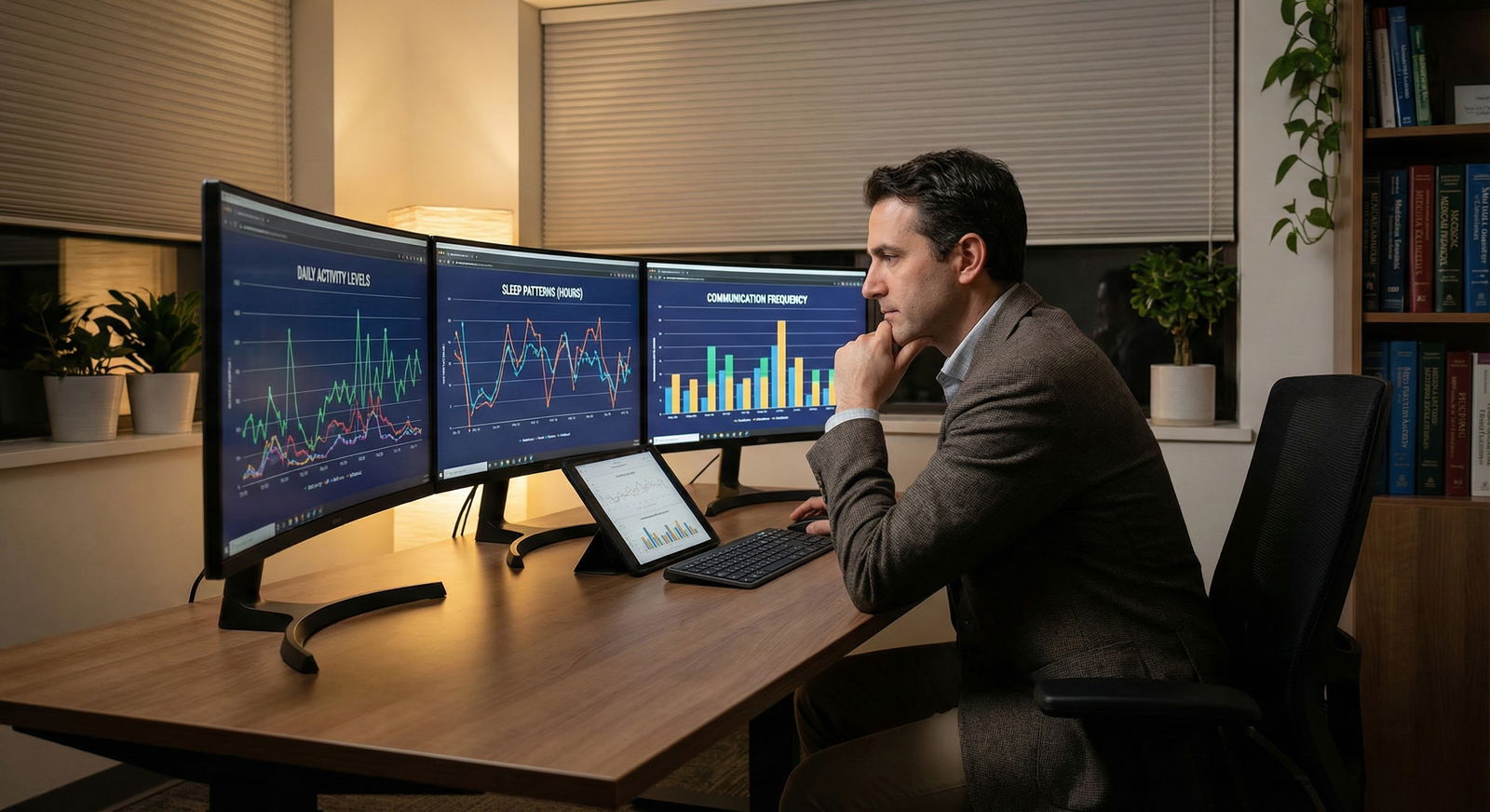
Digital phenotyping in psychiatry is powerful enough to help you and dangerous enough to hurt your patients if you use it uncritically. Both things are true.
Let me break that down specifically.
We are entering an era where your patient’s “mental status exam” is no longer limited to a 45‑minute interview and a self‑report questionnaire. Their gait speed, typing dynamics, sleep–wake pattern, movement within their apartment, and even how they scroll Instagram are all becoming measurable, continuous, and analyzable.
That is digital phenotyping.
The hype is loud. Startups promise early detection of relapse, “passive” monitoring of depression, and personalized care at scale. Regulators and ethicists, meanwhile, are staring at this and seeing a surveillance machine attached to people at their most vulnerable.
If you are a clinician, trainee, or researcher, you cannot just “opt out” of understanding this. You will be practicing alongside these tools, whether or not you helped build them. So the real question is: what exactly are we measuring, where does it actually work, and what are the ethical landmines?
1. What Digital Phenotyping Actually Is (Not the Sales-Pitch Version)
The term sounds more mysterious than it is.
Digital phenotyping is simply: the moment‑to‑moment quantification of behavior and physiology using personal digital devices in real‑world settings, usually smartphones and wearables.
Two big buckets:
Passive data – collected without active input:
- GPS location traces
- Accelerometer and gyroscope (movement, gait, phone handling)
- Screen on/off, app launches, keyboard events
- Call and text logs (meta‑data, not necessarily content)
- Wearable sensors: heart rate, HRV, skin conductance, sleep staging
Active data – patient has to do something:
- Ecological Momentary Assessments (EMAs): multiple brief mood or symptom check‑ins per day
- Cognitive tasks: n‑back tests, reaction time, simple games measuring attention or memory
- Voice recordings: reading a fixed text or answering prompts
Now, here is the part people gloss over: digital phenotyping is not a product; it is a measurement strategy.
The pipeline, in practice, looks like this:

| Step | Description |
|---|---|
| Step 1 | Device sensors |
| Step 2 | Raw data |
| Step 3 | Preprocessing |
| Step 4 | Feature extraction |
| Step 5 | Model training |
| Step 6 | Risk scores or predictions |
| Step 7 | Clinical use or research |
Every step introduces assumptions and potential bias. If you only remember one thing from this section, remember that: wrong assumptions in the pipeline produce clinically seductive nonsense.
2. Core Signals: What We Can Actually Measure
Let us be concrete. Here are the main digital signals psychiatry groups are extracting, and what they plausibly map onto.
2.1 Mobility and Social Rhythms
From GPS, Wi‑Fi, Bluetooth, and accelerometer, you get:
- Total distance traveled per day
- Radius of gyration (how far from “home base” someone roams)
- Number of unique locations visited
- Regularity of movement patterns day‑to‑day
- Time spent at “home” location vs outside
- Co‑location events via Bluetooth (who is physically nearby, in theory)
Clinical interpretations that actually have some data behind them:
- Depression
- Reduced mobility, fewer locations, more time at home.
- Less day‑to‑day regularity.
- Mania/hypomania
- Increased mobility, more nighttime movement, higher variance day‑to‑day.
- Negative symptoms / severe psychosis
- Very low mobility, tightly constrained radius for long periods.
The nuance: low mobility can mean depression, post‑op recovery, working from home, a snowstorm, or just being a grad student writing a thesis. The raw signal is not diagnostic.
2.2 Phone Usage and Communication Patterns
From call logs, SMS logs, app usage, screen events:
- Number and duration of calls per day
- Outgoing vs incoming call ratio
- Number of texts and response latency
- Time of day of communication
- Aggregate time in social media apps vs messaging vs productivity
Clinical links:
- Drop in outgoing communication + increased response latency may track onset or worsening of depression or social withdrawal.
- Irregular, late‑night surges in messaging or app use sometimes track manic episodes.
- Abrupt cessation of contact with a key person can herald relational crisis or acute risk, but the false positive rate is high.
There is no world where you should “call a wellness check” solely because an app reports a 30% drop in call volume. That is how you lose patient trust fast.
2.3 Sleep and Circadian Signals
From accelerometer, gyroscope, light sensor, sometimes wearable PPG:
- Sleep onset and wake time (inferred)
- Total sleep duration
- Sleep regularity from night to night
- Nighttime phone checks (“sleep fragmentation proxy”)
- Daytime napping (inferred from low movement + home location)
This is probably the most clinically interpretable signal:
- Shortened sleep duration and delayed sleep onset → mania, hypomania, or agitation.
- Prolonged time in bed, irregular schedules → depression or shift work, or just jet lag.
- Flattened rhythms in severe illness → chronic psychosis, dementia, or institutionalization.
Still: remember that consumer‑grade sleep staging is mediocre. Use trends, not absolute values.
2.4 Gait, Motor Activity, and Psychomotor Function
From accelerometer, gyroscope, and phone handling:
- Overall activity counts per day
- Gait speed and variability (when walking with phone in pocket)
- Postural transitions (sit to stand)
- Fine motor behavior from keyboard dynamics (key hold time, flight time)
- Device handling patterns (shakiness, dropped phone events, tremor‑like micro‑movements)
There is growing literature linking:
- Slowed typing and reduced activity → psychomotor retardation in depression.
- Increased motor agitation, frequent device pickups → anxiety, akathisia, mania.
- Subtle tremor metrics → early Parkinson’s, medication side effects, sometimes lithium tremor.
You are not going to diagnose akathisia from an iPhone alone. But you may see patterns that trigger a targeted question.
2.5 Voice, Language, and Prosody
From active tasks (reading a passage, open‑ended speech) and sometimes passively (this is where ethics get nasty quickly):
- Speech rate and pause duration
- Fundamental frequency (pitch) and range
- Amplitude variability
- Articulation clarity
- Lexical richness, pronoun use, semantic coherence
Psychiatry has long observed:
- Reduced prosodic variation and longer pauses → negative symptoms, severe depression.
- Disorganized speech, derailment, tangentiality → acute psychosis.
- Pressured speech, high rate → mania.
Digital phenotyping turns this subjective impression into standardized features. That can be powerful in monitoring response to treatment for psychosis or mood disorders. It can also be wildly sensitive to native language, culture, and microphone quality.
2.6 EMA and Symptom Sampling
EMA is old news in research but still underused in clinical practice:
- Repeated 1–3 item scales during the day: mood, anxiety, irritability, craving, suicidal ideation.
- Context tags: alone/not alone, at home/work/outside, perceived stress level.
- Micro cognitive tests: reaction time, Go/No‑Go, simple working memory tasks.
EMA helps:
- Characterize within‑person variability, not just mean symptom scores.
- Link triggers (e.g., social conflict) to symptom spikes.
- Identify early warning signs of relapse.
The limitation is obvious: compliance. Burden. People ignore pings when they feel worst, which is exactly when you want data.
3. Where Digital Phenotyping Helps (When Used Like an Adult, Not a Tech Evangelist)
Let us talk clinical use‑cases that are actually plausible today and ethically defensible if implemented correctly.
3.1 Relapse Detection in Severe Mental Illness
For bipolar disorder and schizophrenia spectrum disorders, relapse is expensive, traumatic, and often predictable in retrospect.
Digital markers that show promise for personalized early‑warning systems:
- Individualized baselines for:
- Sleep onset time
- Daily location variance
- Communication volume
- Then deviations beyond a patient‑specific threshold trigger alerts (to patient first, and possibly to clinician with consent).
The key word is personalized. Group‑level models (“the average bipolar patient’s sleep decreases before mania”) are much weaker than within‑patient models (“this patient’s sleep dropped by 40% from their own baseline for three nights”).
When you see a system that advertises generic cutoffs (“<6 hours sleep → mania risk high”), be skeptical.
3.2 Measurement‑Based Care With Continuous Context
You already know that GAD‑7 or PHQ‑9 snapshots every 4–6 weeks miss a lot. Digital phenotyping can give you:
- Between‑visit trajectories: is the improvement on PHQ‑9 linear, or noisy with huge swings?
- Life context: did symptom improvement track with restored activity and sleep, or did the patient become numb and inactive? Those are different “improvements.”
Concrete example:
A patient’s PHQ‑9 drops from 18 → 8 after 6 weeks of treatment. Looks great.
But their digital data show:
- Severe reduction in mobility
- Drastic cut in social interactions
- More time in bed
- Very flat day‑to‑day rhythms
You should be asking: is this remission, or withdrawal and anhedonia with reduced distress reporting?
3.3 Post‑Discharge and High‑Risk Monitoring
For patients post‑suicide attempt, post‑inpatient stay, or following significant medication changes:
- Passive data can offer low‑burden monitoring in the background.
- EMA could be used very sparingly (e.g., once daily brief mood/risk check‑in) with clear safety plans.
The ethical version of this:
- Time‑limited monitoring with explicit scope and exit conditions.
- Written explanation of what will and will not trigger clinician outreach or emergency services.
- Explicit recognition that digital signals are noisy and that absence of an alert never guarantees safety.
The unethical version: continuous, open‑ended surveillance with vague promises of “keeping you safe.”
3.4 Research: Moving Beyond Cross‑Sectional Snapshots
Digital phenotyping shines for longitudinal phenotyping:
- Mapping heterogeneity in trajectories (e.g., depression with agitation vs depression with psychomotor slowing).
- Testing mechanistic hypotheses about sleep disruption → cognition → mood.
- Augmenting RCTs with objective behavioral endpoints.
Do not underestimate how much psychiatry has been stuck with cross‑sectional tools and recall bias. This is the real scientific opportunity here.
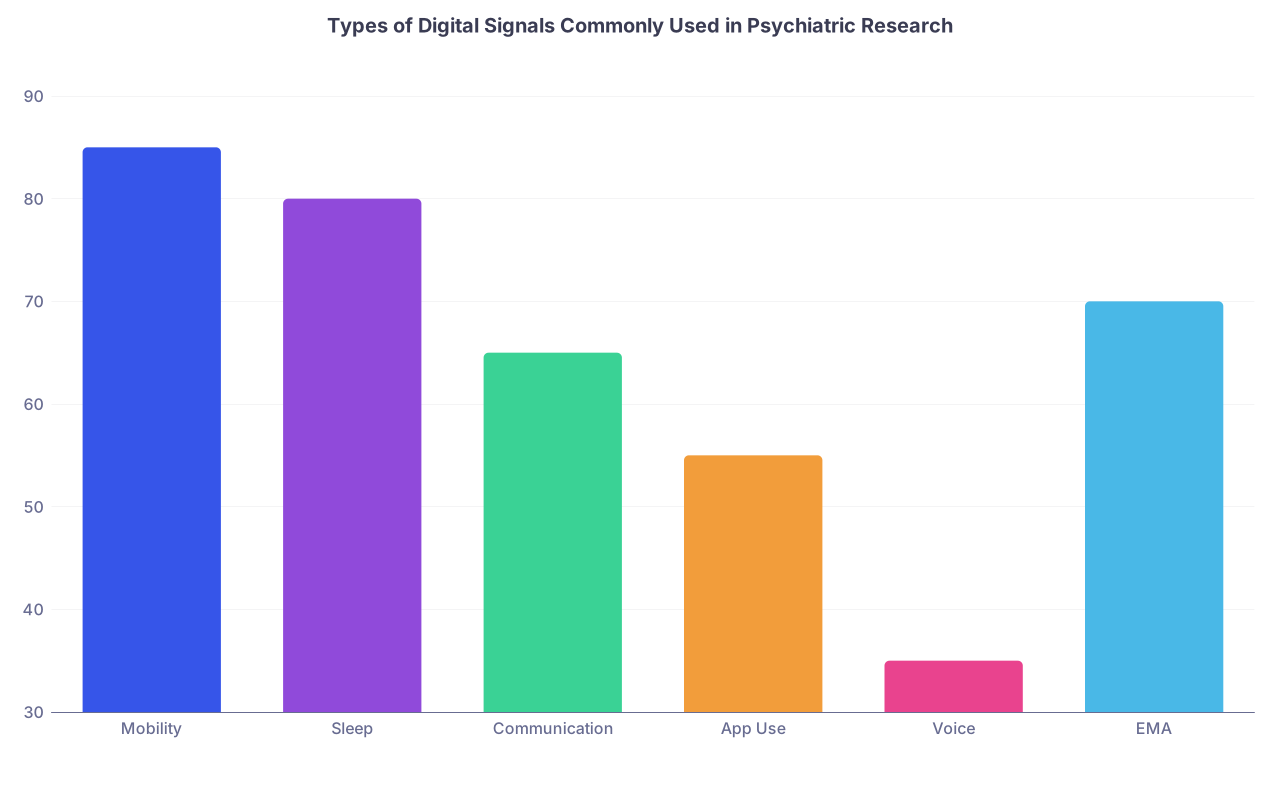
| Category | Value |
|---|---|
| Mobility | 85 |
| Sleep | 80 |
| Communication | 65 |
| App Use | 55 |
| Voice | 35 |
| EMA | 70 |
4. Methodological and Technical Limitations You Cannot Ignore
This is the part the glossy brochures skip. The limitations are not minor; they fundamentally shape what you can trust.
4.1 Data Quality Is a Mess in the Real World
In a controlled study with loaner phones, you get clean data. In reality:
- People carry two phones. Or lose one. Or switch to a new device mid‑study.
- Battery‑saving modes kill background processes.
- OS updates change sensor behavior or app permissions.
- Wi‑Fi vs cellular location accuracy varies wildly by environment.
Result: missing data, inconsistent sampling rates, and device‑specific artifacts.
If you see a paper claim “94% accuracy predicting depression” with no detailed missing‑data analysis and no sensitivity checks by device/OS, treat it like a marketing pamphlet, not science.
4.2 Confounding Everywhere
You think you are measuring depression. You might be measuring:
- Socioeconomic status (who can afford unlimited data and newer phones).
- Occupation type (office worker vs delivery driver).
- Home location (urban vs rural patterns change mobility, app use, even sleep).
- Cultural norms (families who call vs families who text vs families who mostly use WhatsApp voice notes).
I have seen models that “predict social anxiety” light up primarily on immigrant students who use messaging platforms differently than the training set. The model was not catching social anxiety; it was catching culture.
You need:
- Careful covariate handling.
- Stratified analyses.
- Validation in demographically distinct samples, not just “another student sample from a similar university.”
4.3 Label Noise and Ground Truth Problems
Your model is only as good as the labels you train on:
- Single PHQ‑9 at baseline is not a gold standard.
- Self‑reported diagnoses in apps are unreliable.
- Even clinician‑rated diagnoses can be wrong, especially at intake.
If you are training on cross‑sectional labels and then making temporal predictions, you have already broken a fundamental rule: you are treating a state label as ground truth across time.
The stronger approach (harder, but necessary):
- Repeated clinician‑rated assessments across the observation period.
- Use episodes and transitions as labels (onset, remission, relapse), not just static categories.
4.4 Algorithmic Overfitting and Performance Illusions
Common sins:
- Training and testing on data from the same individuals (temporal leakage).
- Splitting by time rather than by person, then boasting of high AUROC.
- Ignoring non‑stationarity: patients change, devices change, environments change.
Real‑world deployment will hammer these models. Performance will drop. And if your clinical workflow assumes “this thing is 90% accurate,” you will be making bad calls based on broken tools.
| Pitfall | Why It Misleads Clinicians |
|---|---|
| Same-person train/test | Inflated accuracy, poor generalizability |
| Single-site data only | Fails on new populations or settings |
| Cross-sectional labels | Weak for predicting future states |
| Ignoring missing data | Biases toward compliant, stable users |
| No external validation | Purely academic result, not usable |
4.5 Device and Platform Dependence
Everything here is contingent on:
- OS policies (Apple vs Android background access).
- Sensor availability (cheaper phones have less precise sensors).
- Wearable integration (closed vs open ecosystems).
Build a beautiful system on Android 12, and then an OS update can silently cripple passive data collection. That is not hypothetical; it has happened to multiple research groups.
5. Ethical Pitfalls: Where Things Go Off the Rails Fast
You are in psychiatry. You do not get to ignore ethics and hide behind “the engineers will handle it.” You prescribe the tools. You are responsible for how they hit actual people.
5.1 Surveillance vs Care: Do Patients Really Have a Choice?
Let me be blunt: “voluntary” consent in psychiatry is often compromised by power dynamics.
Scenarios I have seen:
- Inpatient units where patients are told a smartphone app “is part of your discharge plan,” with minimal explanation about data use.
- Outpatient clinics where using the monitoring app is heavily implied as necessary for “good care” or continued prescriptions.
- People with serious mental illness who say yes because they fear saying no might be interpreted as “noncompliant” or “paranoid.”
You must separate:
- Clinical care that is standard of practice
- Optional digital monitoring that is experimental / additive
Patients need to hear explicitly:
- Saying no will not reduce access to care.
- They can opt out later without penalty.
- What kind of data are collected and who sees what, in human‑readable language.
5.2 Data Ownership and Secondary Use
Most digital phenotyping happens through third‑party apps and often through companies that have their own business models.
Problems:
- Vague consent forms that allow “de‑identified” data sharing with commercial partners.
- Researchers who promise clinical care benefits but are actually more focused on product development.
- No ability for patients to see their raw data, correct errors, or request deletion in any meaningful way.
If your name is anywhere near such a system, you should be asking:
- Who owns the raw data?
- How long are they stored?
- Are they tied to device identifiers that can be re‑linked later?
- Is there any plan to delete data at patient request, and is that technically real or a legal fiction?
Saying “we de‑identify the data, so it’s fine” is lazy. With mobility and communication metadata, true de‑identification is extremely difficult.
5.3 False Positives, False Negatives, and Clinical Responsibility
Picture this:
- An app flags a “high suicide risk” based on reduced mobility and fewer texts.
- The clinician gets an alert but is in clinic with other patients.
- The patient later harms themselves. Family asks: “The app knew. Why didn’t you act?”
You have now created a duty‑to‑respond trap.
You must decide before deployment:
- Who monitors alerts, and how often?
- What thresholds trigger which actions?
- Are patients informed about what is and is not monitored in real time?
- Are you prepared to document “no action taken” when an alert was low confidence?
On the flip side:
If you treat a negative signal (“no alert”) as reassurance and lower your clinical vigilance, you have outsourced judgment to an unproven tool. That is malpractice in slow motion.
5.4 Stigma and Labeling Through Behavior Traces
Behavioral data stick. Algorithms do not forget.
Consider:
- A young person with an episode of mania in college.
- Their app data show “risky” patterns for several months.
- Those patterns become features in their longitudinal digital record.
Ten years later, do you really want an insurer or automated triage tool downgrading their access because their “risk profile” includes a model‑derived flag from a decade ago?
You already know how permanent psychiatric labels can be in charts. Digital phenotyping multiplies that permanence with a continuous stream of behavioral evidence.
5.5 Equity: Who Is Harmed First
The people most likely to be over‑monitored and least able to contest misuse:
- Forensic patients
- Patients under involuntary commitment or court orders
- People with limited literacy or language skills
- People in under‑resourced settings where “free tech tools” are seen as solutions
Combine that with biased training data (mostly high‑income, Western, highly literate populations) and you get the predictable result:
- Worse performance in marginalized groups.
- More false positives (leading to more surveillance).
- More false negatives (missed risk, then blame falls on patient).
If your development dataset is 80% university students with iPhones, do not deploy your model in a public safety‑net clinic and call it “innovative care.” It is lazy and dangerous.
6. Practical Guidelines for Clinicians and Trainees
Let me give you concrete, behavioral rules you can adopt if you are a practicing psychiatrist, psychologist, or trainee.
6.1 When You Are Considering a Digital Phenotyping Tool
Ask, in plain language:
- What exactly is this app collecting — sensors, content, meta‑data?
- Can I see a list of the features they derive (e.g., daily mobility metrics, call counts)?
- What is the validated clinical endpoint, in peer‑reviewed data, in a population like my patients?
- What is the false positive and false negative rate in that context?
If the vendor responds with generic phrases like “AI‑driven insights” and cannot show you at least one external validation, treat it as unproven and do not let it dictate clinical decisions.
6.2 How to Discuss It with Patients
Drop the jargon. You might say:
- “This app can track how much you move around, how regular your sleep is, and how often you use your phone. It does not read your messages or listen to your calls.” (If true. If not, say exactly what it does read or hear.)
- “I will look for big changes from your usual pattern, not small day‑to‑day shifts.”
- “You can withdraw at any time. That will not affect our work together or your medications.”
- “These data are not perfect. They help us ask better questions; they do not replace your own report.”
Then document that conversation.
6.3 How to Interpret the Data Ethically
Use digital signals to refine, not replace:
- Use trends to prompt questions:
- “I see your sleep got more irregular last week. Did something change?”
- Use consistency across domains to strengthen hypotheses:
- Low mobility + late sleep + fewer texts + self‑reported low mood → more confidence in a depressive episode.
- Use discordance as a flag:
- “Your questionnaires look improved, but your activity and communication dropped a lot. How are you experiencing that change?”
And resist the temptation to over‑pathologize everyday variance. Humans are noisy.
6.4 Document Boundaries Explicitly
In your note, specify:
- Whether the tool is experimental or part of standard clinic protocol.
- What data you reviewed (e.g., “passive mobility and sleep metrics for past month; no voice data”).
- That you used it to inform, not dictate, clinical judgment.
If an alert system exists, document your response rationale, especially when you choose not to act on an algorithmic flag.
7. Where This Is Probably Going (If We Do Not Mess It Up)
If we are careful, digital phenotyping can support a version of psychiatry that is:
- Less episodic and more continuous.
- Less reliant on flawed recall and more grounded in lived behavior.
- More personalized, with within‑patient baselines rather than crude group averages.
We will likely see:
- Integrated dashboards in EHRs that show mood scales, sleep patterns, and mobility over months.
- Personalized early‑warning algorithms that are transparent and tuned to each patient.
- Clinical guidelines that treat digital markers as adjuncts, like labs or imaging, not as oracles.
If we are careless, we will get:
- Surveillance apps masquerading as care.
- Black‑box risk scores embedded in triage that no clinician can critique.
- Worsened inequities as the most vulnerable are over‑monitored and under‑protected.
You will see both attempts. Your job is to know the difference.
Three points to carry forward:
- Digital phenotyping measures behavior and physiology, not diagnoses. Treat the signals as probabilistic clues, always interpreted in context and against individual baselines.
- Methodology and ethics are not side issues. Biased training data, poor validation, and vague consent can turn “innovation” into structured harm very quickly.
- Clinicians must stay in charge of judgment. Use these tools to ask sharper questions, not to abdicate responsibility to an algorithm that did not take an oath and will never sit with a grieving family.


