

The public debate about gene editing ethics is badly aimed. We keep arguing about designer babies while quietly doing something far riskier: not fixing obvious, preventable suffering when we have the tools to do it.
Let me be direct. The real ethical fault line in gene editing isn’t “Should humans ever alter DNA?” That ship sailed decades ago with bone marrow transplants, IVF, and preimplantation genetic testing. The real debate is about three far less glamorous questions:
- What kinds of risk are we willing to accept for future people who cannot consent?
- Who gets access to these technologies, and on what terms?
- Who controls the goals—cure, enhancement, profit, or all three?
Most headlines and dinner‑table arguments miss all three.
Myth #1: “Gene Editing Ethics Is Mostly About Designer Babies”
This is the laziest framing, and it dominates anyway. The idea: parents will soon choose eye color, IQ, height, and we must draw a bright moral line before it’s too late.
Here’s what the data actually shows.
The overwhelming majority of real‑world human gene editing today is:
- Somatic, not germline (meaning it affects only the treated person, not their descendants).
- Aimed at severe, often lethal diseases: sickle cell disease, β‑thalassemia, certain leukemias, some rare inherited retinal dystrophies.
We’re not editing embryos to make them taller. We’re editing blood stem cells in 30‑year‑olds who have spent their entire lives in hospitals.
Look at CRISPR‑based sickle cell therapy. The well‑publicized case: a woman with over 30 hospitalizations a year for painful crises, now reportedly free of them years after treatment. That isn’t enhancement. That is dragging someone from negative‑100 back to roughly zero.
Enhancement fantasies make good movie scripts. As an ethical priority in 2026? They are noise.
The deeper issue is this: by obsessing over “designer babies,” we let ourselves ignore the actual ethical tradeoffs around treating versus not treating catastrophic disease. Doing nothing is also a decision. And it has a body count.
If you oppose all germline or embryo‑level editing on abstract principle, you’re implicitly saying you prefer:
- Decades of suffering
- Repeated hospitalizations and surgeries
- Early mortality
over a tightly regulated, evidentially monitored edit that removes a single, well‑characterized, lethal variant.
That might be your position. But own it honestly. Do not hide behind “we’re stopping designer babies” while condemning future patients to diseases we already understand to the single‑letter level in their genome.
Myth #2: “We Just Need a Global Ban on Germline Editing”
You’ll hear this in ethics panels all the time. “We need a global moratorium.” There are already statements: the International Commission on the Clinical Use of Human Germline Genome Editing, WHO guidance, national academies. Politicians love the word “ban.” It sounds decisive.
It is mostly theater.
Technically, meaningful germline editing requires:
- IVF infrastructure (already widespread).
- Access to CRISPR reagents (cheap and trivial to ship).
- High‑throughput sequencing (widely available, dropping in cost).
- Competent embryology and lab technique (present in thousands of clinics worldwide).
This is not enriched uranium. This is molecular biology.
The real ethical question isn’t “ban or not.” It’s: who will do it first, under what standards, with what transparency, and who will get hurt in the process?
We have an instructive case study: the He Jiankui affair. One rogue scientist, weak oversight, opaque recruitment, and highly questionable consent. The world responded with outrage and… more statements and “calls for governance.”
Did a ban prevent that? No. It happened despite a de facto global consensus that germline editing was premature.
The data from that fiasco tells you something uncomfortable: people will push ahead, especially where regulation is weak and fame or profit is on the line. So an ethics conversation that stops at “ban it” is childish. The harder work is:
- Defining what “medically serious” means for future germline indications.
- Building registries and long‑term follow‑up obligations that apply across borders.
- Creating real penalties that bite—for individuals, funders, and institutions—when they skip ethical safeguards.
If your ethical framework doesn’t engage with those details, it isn’t ethics. It’s branding.
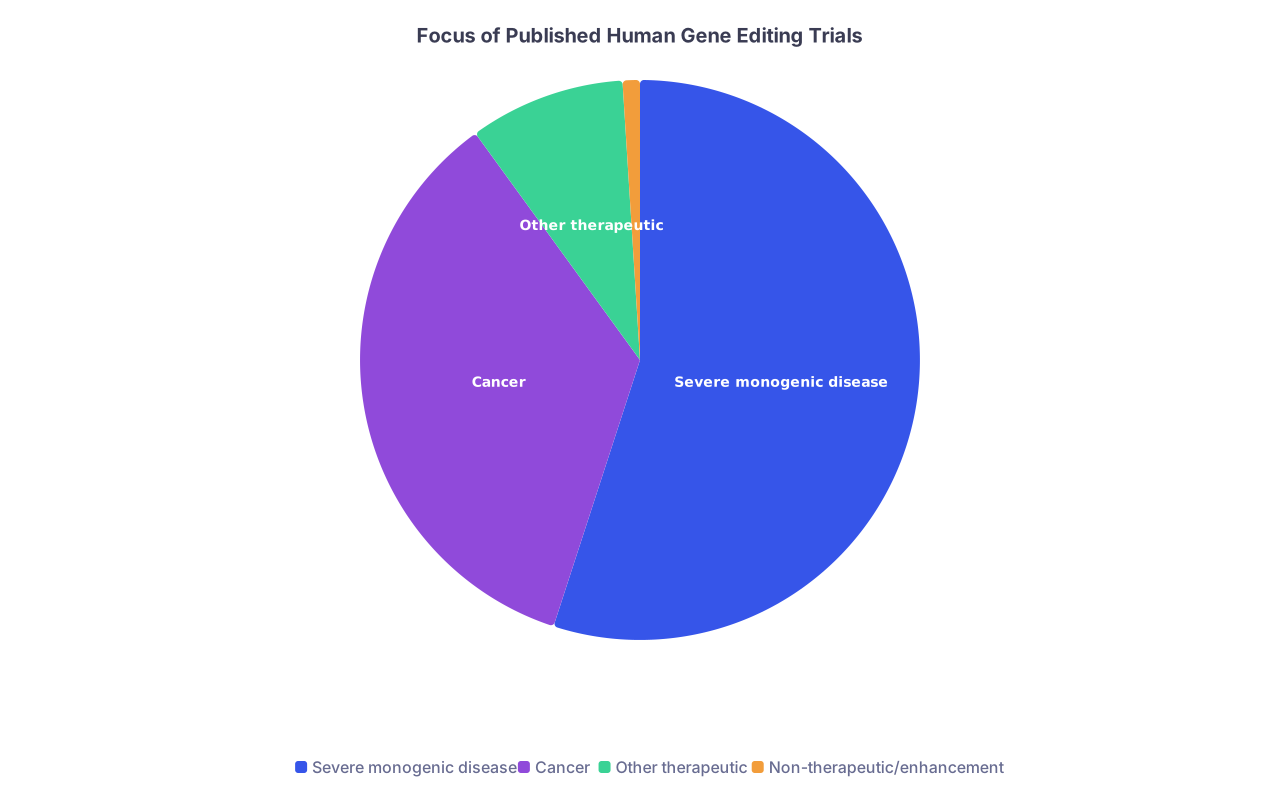
| Category | Value |
|---|---|
| Severe monogenic disease | 55 |
| Cancer | 35 |
| Other therapeutic | 9 |
| Non-therapeutic/enhancement | 1 |
The published trial landscape tells the same story. Over 90% of human gene editing trials target serious disease or cancer. Enhancement is essentially absent from the reality on the ground. Banning “designer babies” solves a problem that barely exists while ignoring where people are already bleeding.
Myth #3: “The Main Risk Is Off‑Target Mutations”
You hear this mantra: “CRISPR is too imprecise; we might cause tumors, we must wait.” That was roughly true a decade ago. It’s a half‑truth now.
Yes, off‑target cuts remain a concern, especially in vivo (editing inside the body). But the risk profile has changed:
- Tools have improved: base editors, prime editors, high‑fidelity Cas9 variants.
- Off‑target detection has improved: Digenome‑seq, GUIDE‑seq, DISCOVER‑seq, long‑read sequencing.
- Delivery methods have matured: lipid nanoparticles, viral vectors with better tropism and control.
Let’s be clinical. The serious, proven risks in gene therapy/ editing so far have often come not from the nuclease cut itself, but from:
- Vector‑related issues (insertional oncogenesis with retroviruses in early trials).
- Immune reactions to vectors or edited cells.
- Poor patient selection and monitoring.
We had tragic deaths in early gene therapy trials for X‑linked SCID and ornithine transcarbamylase deficiency. They were not CRISPR; they were viral vectors and immune toxicity. If your ethical alarm only rings at Cas9 but is silent at AAV immunogenicity, you’ve misunderstood where patients have actually died.
Do off‑target edits matter? Definitely, especially for germline and in vivo uses. But the ethical calculus is comparative, not absolute. We are not choosing between “gene editing with risk” and “perfect safety.” We are choosing between:
- A therapy with quantifiable, shrinking genomic risk and
- A natural history of disease that is often horrific and certain.
I’ve sat in rooms where ethicists demand “zero off‑target edits” for germline work. That standard sounds protective. It’s not. It’s scientifically incoherent.
Even in natural reproduction, every child is born with dozens of new mutations, some de novo, some potentially harmful. Meiotic errors, replication slips, random breaks. Zero is not the baseline. The honest ethical question is:
Can we keep editing‑related risks within or below the background level of mutational risk that sexual reproduction already carries?
Once you phrase it that way, the moral landscape looks very different.
Myth #4: “Equity Is a Side Issue, Not an Ethical Core”
This one really bothers me.
People treat “access and equity” as the soft, feel‑good section at the end of a policy paper. Meanwhile, look at the numbers on who actually gets cutting‑edge biologics and cell therapies.
CAR‑T, for example, is transformative for certain leukemias and lymphomas. But it is six‑figure‑plus, delivered at a limited number of specialized centers, often with restrictive insurance coverage. Unsurprisingly, early uptake has skewed toward patients who are:
- Treated at major academic centers
- Insured (and often well‑insured)
- Able to travel and take time off work
Gene editing will follow the same path unless someone fights hard to change the default.
The ethical question everyone should be asking is not “Is enhancement fair?” but “Are we comfortable creating a world where curable genetic diseases remain endemic in poor populations because the therapies are priced for rich health systems?”
Imagine a sickle cell CRISPR cure that costs $2 million per patient. Technically miraculous. Ethically grotesque if limited to North America and Western Europe while West and Central Africa—where sickle trait prevalence can be above 20%—see almost none of it.
If you think that’s hypothetical, look at how HIV antiretrovirals rolled out in the 1990s: years of life‑saving therapy in rich countries while low‑income countries watched people die waiting for generics and global deals.
| Region | Share of Global SCD Births | Share of Early Gene Editing Trials |
|---|---|---|
| Sub-Saharan Africa | ~75% | <10% |
| India/Middle East | ~15% | <10% |
| North America/Europe | <5% | >70% |
This mismatch is not just a policy nuisance. It is the central ethical crime of modern biomedicine: we innovate where the money is and moralize afterwards.
If your gene editing ethics does not wrestle with IP law, pricing, technology transfer, and capacity building in low‑resource settings, it is performative. Full stop.
Myth #5: “Fixing Genes Is Playing God”
The phrase “playing God” gets thrown around whenever medicine touches the germline. But we’ve been “playing God” by this definition for a very long time.
Examples:
- IVF + preimplantation genetic testing already lets parents choose embryos without specific disease‑causing variants (e.g., BRCA, CFTR, Huntington’s). No one calls it “editing,” so it somehow feels tamer.
- Bone marrow transplant for an inherited immunodeficiency replaces the entire hematopoietic system—effectively a crude form of “whole lineage genetic replacement,” just messier and riskier than CRISPR.
- Prenatal diagnosis combined with selective termination is a silent, widespread form of genetic selection already shaping populations.
The honest contrast isn’t between “natural” reproduction and “unnatural” editing. It’s between:
- Blindly accepting whatever combination of mutations meiosis throws out.
- Selecting among embryos based on genetic data.
- Editing specific variants to change outcomes.
We’re already on that continuum. We’ve been there for decades. The question is not whether to intervene, but how transparent, precise, and ethically reviewed our interventions should be.
There’s also a perverse double standard. Many societies already accept lifetime, multi‑drug interventions for genetic‑driven disease risk—statins, PCSK9 inhibitors, prophylactic surgeries—while recoiling from a one‑time edit that could remove the offending variant itself.
Is it morally superior to:
- Screen a high‑risk BRCA carrier with MRIs for 50 years and perform prophylactic mastectomy and oophorectomy
rather than
- Perform a carefully validated, targeted edit in a zygote to remove the BRCA pathogenic variant altogether, knowing you’ll need decades of follow‑up?
You can argue either way. But pretending only the second is “playing God” while the first is ethically neutral is self‑deception.
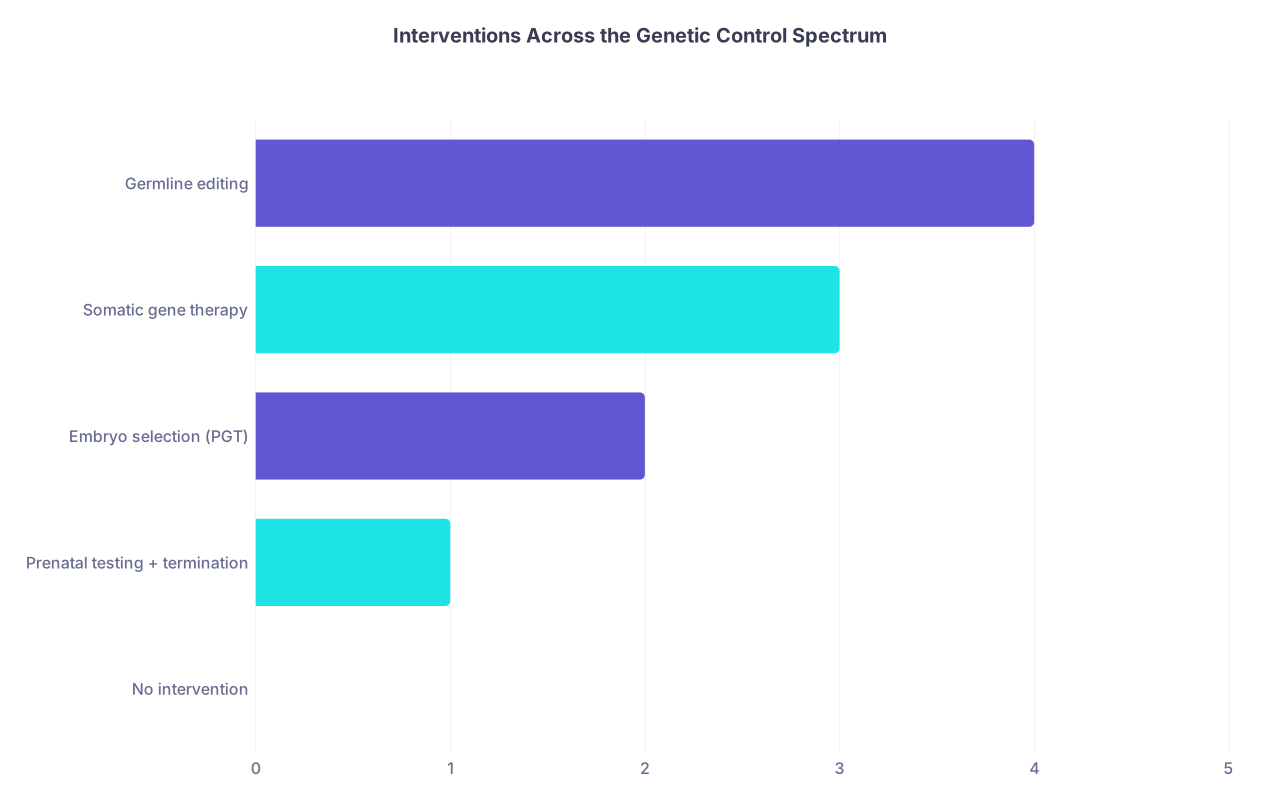
| Category | Value |
|---|---|
| No intervention | 0 |
| Prenatal testing + termination | 1 |
| Embryo selection (PGT) | 2 |
| Somatic gene therapy | 3 |
| Germline editing | 4 |
That spectrum is already real. We’re just more comfortable with the older options.
Where the Real Debate Should Be
Strip away the noise, and gene editing ethics comes down to a few hard, grown‑up questions.
1. What Counts as a “Serious” Condition?
You cannot avoid this line‑drawing problem.
Curing sickle cell disease, spinal muscular atrophy type 1, cystic fibrosis with two severe mutations—most people will sign off on that. But what about:
- Late‑onset conditions like Huntington’s or high‑risk BRCA variants?
- Polygenic risk for schizophrenia or type 2 diabetes?
- Non‑disabling traits that still cause real suffering, like hereditary deafness?
If ethicists dodge this with “case by case,” what they really mean is “please let future committees take the heat.” That’s cowardice.
My view: start with highly penetrant, monogenic, early‑onset, severe disease with no adequate alternatives—especially where we already know from natural loss‑of‑function variants that removing or fixing the gene doesn’t create new disease.
As evidence and tools mature, you revisit the boundaries. But you admit upfront this is a moving target, not a stone tablet.
2. What Level of Consent and Oversight Is Non‑Negotiable?
Future people can’t consent. That’s true whether you’re editing embryos or just letting random mutations happen.
So you build surrogate consent standards:
- Heavy weighting toward conditions where the vast majority of affected adults say, “If you could have fixed this before I was born, you should have.”
- Mandatory, long‑term follow‑up of any germline‑edited individual, with clear governance over who holds the data, who can study it, and how risks are communicated.
- Clear red lines: no first‑in‑human germline editing outside tightly regulated, publicly registered trials with international oversight. No private clinics going solo in legal gray zones.
The He Jiankui episode was not an argument against all germline editing. It was an argument against doing it recklessly, secretly, and for trivial endpoints. That’s a governance failure, not an ontological sin.

| Step | Description |
|---|---|
| Step 1 | Severe monogenic disease |
| Step 2 | Prefer PGT or somatic therapy |
| Step 3 | Consider germline trial |
| Step 4 | Rigorous preclinical data |
| Step 5 | International ethics review |
| Step 6 | Registered clinical trial |
| Step 7 | Long term follow up registry |
| Step 8 | Adequate alternatives? |
That’s the kind of process serious ethics should be fighting to enforce, not vague slogans about bans.
3. How Do We Prevent a Two‑Tier Genetic Future?
If you want a genuinely dystopian scenario, forget blue‑eyed designer babies. Picture this instead:
- Rich countries and individuals eliminate or radically reduce several major genetic diseases in their populations by mid‑century.
- Poor countries cannot access or afford these therapies, locked out by patents, pricing, and infrastructure gaps.
- Global health gaps shift from “infectious vs non‑communicable” to “edited vs unedited.”
That is not science fiction. That is exactly what will happen on current trajectories unless ethics grows a spine around distribution, not just discovery.
A serious ethical position on gene editing must include:
- Pressure on funders and companies for tiered pricing, voluntary licensing, and technology transfer to low‑ and middle‑income countries.
- Public or philanthropic investment in manufacturing and delivery infrastructure where the disease burden actually is.
- Conditions on public funding that require equitable access plans before approval—not as an afterthought.
If your ethics committee signs off on trial design but has nothing to say about eventual access, they’re doing about 40% of the job.
The Bottom Line
Three points to take away.
First, the biggest ethical sin in gene editing is not “tampering with nature.” It’s ignoring preventable suffering when we have the tools to reduce it. Doing nothing is also an intervention—just a cowardly, poorly measured one.
Second, the real debates are about scope, governance, and access: which conditions we target, how rigorously we control experiments that affect future generations, and whether these technologies widen or narrow global health inequities.
Third, if your view on gene editing ethics can be summarized as “designer babies bad, ban germline,” you’re arguing with a fantasy while the real, messy, high‑stakes decisions are already being made without you.


